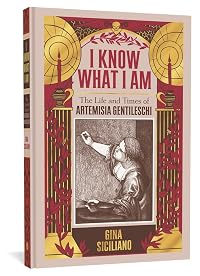
I Know What I Am: The Life and Times of Artemisia Gentileschi
by Gina Siciliano
On This Page
Description
In 17th century Rome, where women are expected to be chaste and yet are viewed as prey by powerful men, the extraordinary painter Artemisia Gentileschi fends off constant sexual advances as she works to become one of the greatest painters of her generation. Frustrated by the hypocritical social mores of her day, Gentileschi releases her anguish through her paintings and, against all odds, becomes a groundbreaking artist. Meticulously rendered in ballpoint pen, this gripping graphic biography show more serves as an art history lesson and a coming-of-age story. Resonant in the #MeToo era, I Know What I Am highlights a fierce artist who stood up to a shameful social status quo. show lessTags
Recommendations































Member Recommendations
Member Reviews
Artemisia Gentileschi has long been one of my faves, since "what if Caravaggio, but with badass ladies" is pretty much my platonic ideal of what art should be.
But I was only familiar with the basic details of her biography, and I'm so glad to know her better! Siciliano does a masterful job synthesizing scholarship on Gentileschi and her cultural and political context, lightly fictionalizing her sources for the sake of a coherent narrative. This is no slouch of a graphic biography - it's dense with text, and at times you will lose track of rival Italian painters (not to mention the finer details of the Thirty Years War). But if you're interested in social history, and in particular the intellectual history of early modern Europe, this show more book is a fantastic entry point. I am now desperate to read more about figures like Arcangela Tarabotti and Masaniello, who destabilize all our old wrong ideas about the pre-industrial world.
I really loved the art - Siciliano uses ballpoint pen as her drawing tool of choice, rendering each page precise yet achingly human. I have such a weakness for pen and ink comics, and Siciliano's copies of Baroque artwork in particular show impeccable draftsmanship. (Not to mention all those Renaissance Italian cityscapes...)
I really wish I had a stuffy aunt, one who chooses all her reading material off the New York Review of Books and hasn't yet discovered that comics are literature. I would give her this book! Instead I will have to be my own stuffy aunt, which is pretty much my vibe anyway. show less
But I was only familiar with the basic details of her biography, and I'm so glad to know her better! Siciliano does a masterful job synthesizing scholarship on Gentileschi and her cultural and political context, lightly fictionalizing her sources for the sake of a coherent narrative. This is no slouch of a graphic biography - it's dense with text, and at times you will lose track of rival Italian painters (not to mention the finer details of the Thirty Years War). But if you're interested in social history, and in particular the intellectual history of early modern Europe, this show more book is a fantastic entry point. I am now desperate to read more about figures like Arcangela Tarabotti and Masaniello, who destabilize all our old wrong ideas about the pre-industrial world.
I really loved the art - Siciliano uses ballpoint pen as her drawing tool of choice, rendering each page precise yet achingly human. I have such a weakness for pen and ink comics, and Siciliano's copies of Baroque artwork in particular show impeccable draftsmanship. (Not to mention all those Renaissance Italian cityscapes...)
I really wish I had a stuffy aunt, one who chooses all her reading material off the New York Review of Books and hasn't yet discovered that comics are literature. I would give her this book! Instead I will have to be my own stuffy aunt, which is pretty much my vibe anyway. show less
An absolutely beautiful biography of the FULL life of Italian Renaissance painter Artemisia Gentilesci. I stress that it's about her FULL life because so much has been made of the fact that her family actually went to court against the man who raped her that it has felt, to me, as though her life has been reduced only to that single incident.
Siciliano, herself a survivor of sexual assault, as she tell us in her introduction, does not shy away from the parts of Gentilesci's story that complicate this image of a victim whose family stood beside her: the fact that she continued to sleep with her rapist, for example; that the decision to go to court was not only for Artemisia, but also for a stolen painting and unpaid debt; and that she show more (likely) later had several extramarital affairs. At the same time, though, Siciliano often draws Gentilesci with an angry, frustrated frown--and while I would certainly understand this later in life, once she had a better sense of her strength and independence and the injustice of being treated as less than her fellow (male) painters, for a 17-year-old girl who had been cloistered away from the world for most of her life and indoctrinated with the church's view of women and sin, it felt a bit too much like casting modern feminist desires on a historical figure. Granted, it must be difficult to display a lot of conflicting emotions in art, but to me it seemed a bit out of place in a society that would have likely stressed demureness and obedience, and for someone quite naive about the man's promises to marry her to be an eye-rolling teenager (p. 49).
Aside from that, and the unavoidable clutter of Renaissance names and Italian politics, Sicilianio does a good job of portraying the scope of the unprecedented trial, and of displaying how widespread the web of artists and intellectuals extended across Europe. Gentileshi's own life took her from Rome to Florence to Venice to Naples to England (briefly) and back to Naples, but she more than brushed elbows with French, Spanish, and Dutch influences as well. Siciliano is careful to point out other long-neglected female artists, composers, and feminist thinkers in Gentileschi's circle, and frequently uses translations of actual trial transcripts, correspondence, and books (all clearly demarcated with the usual lower/upper case combo rather than the comics-traditional all-caps) to let people--especially Gentilesci--speak for themselves. When they don't speak for themselves, there are sometimes jarringly modern phrases--"Guys, stop it!" (p. ?), "...some chick painter" (p. 197). In robust author's notes that go nearly page-by-page, Siciliano provides interesting commentary on her artistic choices--occasionally more than I might think necessary, but since I've rarely seen historical notes like these in comics, I'm going to let my gratitude win the day...for the most part.
In one picture produced later in her life, Gentilesci portrays one of the three Magi as black, as was often done. Siciliano then gives us a several-page essay describing slavery in 1600s Italy and the portrayal of black people in the art of the time, mostly citing male artists. This was all fascinating, but I couldn't help but wish we also had such a robust commentary on portrayals of women in Gentilesci's work and in the work of other women painters. These themes are introduced briefly in the body of the graphic novel, but there's rarely more than a sentence or two about an individual woman or an individual work. I loved that this commentary was embedded into the story and felt that it was in the right proportion in the graphic novel itself, but if we're going to devote so much space to race in the notes, something that doesn't even get a mention in the text, why not devote a little more space to all these women painters and artists who get a passing mention but that most of us don't even know about? There's plenty of room for both--the notes section doesn't require as much work as the art (though there is actually additional art in there as well) . And in fact, several male artists, also little known and mentioned only once or twice, get large paragraphs in the notes about their lives while the women get nothing or almost nothing additional in the notes. I'm greedy about my history--gimmie more!
Siciliano does her characters well. Despite the vast number of faces that parade through the pages--many visible only in a single panel--I never had trouble telling people apart, in contrast to my experiences with some of the men in Calamity Jane and Prince of Cats. Full-page portraits of key players help quite a bit. However, her portrayal of Artemisia is...odd. All of Gentilesci's self-portraits, many of which Siciliano recreates the text, show her with dark hair, but Siciliano draws Gentilesci with blonde hair. She also changes little over time, with the final full-page portrait of Gentilesci at the end of her 60-some year life looking almost the same as her 17-year-old self--maybe a bit wider, maybe with a couple creases at either side of her mouth, but she really doesn't look much older than her daughters do.
Siciliano has my full respect for creating an excellent introduction to the life of Artemesia Gentilesci, complete with actual extracts of contemporary writing, robust and honest notes about artistic liberties and interpretations, introductory explanations of painting themes and feminist art criticism. But the places where modern attitudes and phrases creep in, where the text lingers on artists' lives and political events that seem to have little impact on Gentilesci's life, and where other women artists get shorter shrift in images and notes than men with the same panel space do, kept I Know What I Am from really amazing me. show less
Siciliano, herself a survivor of sexual assault, as she tell us in her introduction, does not shy away from the parts of Gentilesci's story that complicate this image of a victim whose family stood beside her: the fact that she continued to sleep with her rapist, for example; that the decision to go to court was not only for Artemisia, but also for a stolen painting and unpaid debt; and that she show more (likely) later had several extramarital affairs. At the same time, though, Siciliano often draws Gentilesci with an angry, frustrated frown--and while I would certainly understand this later in life, once she had a better sense of her strength and independence and the injustice of being treated as less than her fellow (male) painters, for a 17-year-old girl who had been cloistered away from the world for most of her life and indoctrinated with the church's view of women and sin, it felt a bit too much like casting modern feminist desires on a historical figure. Granted, it must be difficult to display a lot of conflicting emotions in art, but to me it seemed a bit out of place in a society that would have likely stressed demureness and obedience, and for someone quite naive about the man's promises to marry her to be an eye-rolling teenager (p. 49).
Aside from that, and the unavoidable clutter of Renaissance names and Italian politics, Sicilianio does a good job of portraying the scope of the unprecedented trial, and of displaying how widespread the web of artists and intellectuals extended across Europe. Gentileshi's own life took her from Rome to Florence to Venice to Naples to England (briefly) and back to Naples, but she more than brushed elbows with French, Spanish, and Dutch influences as well. Siciliano is careful to point out other long-neglected female artists, composers, and feminist thinkers in Gentileschi's circle, and frequently uses translations of actual trial transcripts, correspondence, and books (all clearly demarcated with the usual lower/upper case combo rather than the comics-traditional all-caps) to let people--especially Gentilesci--speak for themselves. When they don't speak for themselves, there are sometimes jarringly modern phrases--"Guys, stop it!" (p. ?), "...some chick painter" (p. 197). In robust author's notes that go nearly page-by-page, Siciliano provides interesting commentary on her artistic choices--occasionally more than I might think necessary, but since I've rarely seen historical notes like these in comics, I'm going to let my gratitude win the day...for the most part.
In one picture produced later in her life, Gentilesci portrays one of the three Magi as black, as was often done. Siciliano then gives us a several-page essay describing slavery in 1600s Italy and the portrayal of black people in the art of the time, mostly citing male artists. This was all fascinating, but I couldn't help but wish we also had such a robust commentary on portrayals of women in Gentilesci's work and in the work of other women painters. These themes are introduced briefly in the body of the graphic novel, but there's rarely more than a sentence or two about an individual woman or an individual work. I loved that this commentary was embedded into the story and felt that it was in the right proportion in the graphic novel itself, but if we're going to devote so much space to race in the notes, something that doesn't even get a mention in the text, why not devote a little more space to all these women painters and artists who get a passing mention but that most of us don't even know about? There's plenty of room for both--the notes section doesn't require as much work as the art (though there is actually additional art in there as well) . And in fact, several male artists, also little known and mentioned only once or twice, get large paragraphs in the notes about their lives while the women get nothing or almost nothing additional in the notes. I'm greedy about my history--gimmie more!
Siciliano does her characters well. Despite the vast number of faces that parade through the pages--many visible only in a single panel--I never had trouble telling people apart, in contrast to my experiences with some of the men in Calamity Jane and Prince of Cats. Full-page portraits of key players help quite a bit. However, her portrayal of Artemisia is...odd. All of Gentilesci's self-portraits, many of which Siciliano recreates the text, show her with dark hair, but Siciliano draws Gentilesci with blonde hair. She also changes little over time, with the final full-page portrait of Gentilesci at the end of her 60-some year life looking almost the same as her 17-year-old self--maybe a bit wider, maybe with a couple creases at either side of her mouth, but she really doesn't look much older than her daughters do.
Siciliano has my full respect for creating an excellent introduction to the life of Artemesia Gentilesci, complete with actual extracts of contemporary writing, robust and honest notes about artistic liberties and interpretations, introductory explanations of painting themes and feminist art criticism. But the places where modern attitudes and phrases creep in, where the text lingers on artists' lives and political events that seem to have little impact on Gentilesci's life, and where other women artists get shorter shrift in images and notes than men with the same panel space do, kept I Know What I Am from really amazing me. show less
I have been interested in learning more about Artemisia Gentileschi for a few years no, ever since I used to listen to Feminist Backtalk all the time, whose host loved Artemisia's story and talked about her frequently. I even backed a different graphic biography on Kickstarter, and was a bit confused when I saw this one at the library. I had to check it out.
This was heavier on the "the times" than I expected, and there were some times when I got a little impatient with ALL the details — being a graphic novel had given me some expectations about how academic/rigorous/thorough I expected the book to be, and it took a little time to break out of those expectations. Breezy this book is not — both on account of the subject matter and how show more seriously the author takes all of it.
Basically, I learned so much more than I expected to. About Artemisia (I am using her first name because she was not the only artist in the family, though I think it's safe to say she is now the most remembered), art, and the Renaissance. I appreciated the perspective brought by the author — also a woman, artist, and survivor of sexual abuse. Unabashedly feminist, this book is up-front about its biases, and also exhaustively researched.
A fascinating bit of history to shine new light on what we think we know about the past. show less
This was heavier on the "the times" than I expected, and there were some times when I got a little impatient with ALL the details — being a graphic novel had given me some expectations about how academic/rigorous/thorough I expected the book to be, and it took a little time to break out of those expectations. Breezy this book is not — both on account of the subject matter and how show more seriously the author takes all of it.
Basically, I learned so much more than I expected to. About Artemisia (I am using her first name because she was not the only artist in the family, though I think it's safe to say she is now the most remembered), art, and the Renaissance. I appreciated the perspective brought by the author — also a woman, artist, and survivor of sexual abuse. Unabashedly feminist, this book is up-front about its biases, and also exhaustively researched.
A fascinating bit of history to shine new light on what we think we know about the past. show less
I frequently whine that graphic novel biographies are too brief and don't provide enough context for the subject's life, but man does this one go overboard in the other direction. Giant blocks of text nearly squeeze the art out of the panels as we are introduced to every person who touched the life of Artemisia Gentileschi and all the political movements that were going on in the places where she lived.
The first half of the book is fairly interesting as the focus on the Italian painter's personal life is stronger, detailing her rape by one of her father's painting peers and the extended trial that followed. Much of the original testimony was preserved in transcript form and is utilized here.
Having used up the most compelling original show more source material, the second half devolves into a recitation of facts, names, and places as the captions truly get out of control. And there are 40 dreary pages of endnotes awaiting obsessive book completists like me.
The art is fine, but Siciliano tends to have her characters staring face forward out of the panel at the reader way too often.
UPDATE - May 7, 2023
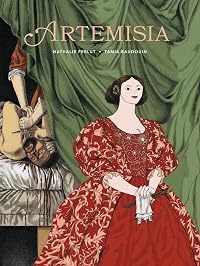
When it comes to graphic novels about Gentileschi, I prefer the more dramatic and fictionalized version provided by writer Nathalie Ferlut and illustrator Tamia Baudouin in Artemisia. show less
The first half of the book is fairly interesting as the focus on the Italian painter's personal life is stronger, detailing her rape by one of her father's painting peers and the extended trial that followed. Much of the original testimony was preserved in transcript form and is utilized here.
Having used up the most compelling original show more source material, the second half devolves into a recitation of facts, names, and places as the captions truly get out of control. And there are 40 dreary pages of endnotes awaiting obsessive book completists like me.
The art is fine, but Siciliano tends to have her characters staring face forward out of the panel at the reader way too often.
UPDATE - May 7, 2023
When it comes to graphic novels about Gentileschi, I prefer the more dramatic and fictionalized version provided by writer Nathalie Ferlut and illustrator Tamia Baudouin in Artemisia. show less
Artemisia Gentileschi was an Italian Baroque painter who lived from 1593 to 1651. She was renowned in Italian, Spanish, and English courts and intellectual circles and was the first woman to become a member of the the Accademia di Arte del Disegno in Florence (and it would be nearly a century before another woman was admitted). She often painted women of myth or allegory, such as Susanna and the Elders and Judith Slaying Holofernes. Originally she worked in the style of Caravaggio, but evolved over time both in response to her own artistic interests and the need to please her patrons.
This very dense pen and ink graphic novel covers not only the life of Artemisia Gentileschi, but also the historical period in some detail. There are show more stories of the lives of fellow painters, of political machinations, and civil unrest. Without much knowledge of the time period, I lost track of who was who and struggled to follow the history. The author did a tremendous amount of research for the book, as evidence by the comprehensive bibliography and forty pages of notes, I simply didn't have the knowledge to fully assimilate all the information. That said, I did learn a lot about Artemisia and her work. I especially enjoyed reading excerpts from the trial in which Artemisia accuses her rapist in court. The author changes from all caps to lower case when quoting from documents, so it was easy to follow. show less
This very dense pen and ink graphic novel covers not only the life of Artemisia Gentileschi, but also the historical period in some detail. There are show more stories of the lives of fellow painters, of political machinations, and civil unrest. Without much knowledge of the time period, I lost track of who was who and struggled to follow the history. The author did a tremendous amount of research for the book, as evidence by the comprehensive bibliography and forty pages of notes, I simply didn't have the knowledge to fully assimilate all the information. That said, I did learn a lot about Artemisia and her work. I especially enjoyed reading excerpts from the trial in which Artemisia accuses her rapist in court. The author changes from all caps to lower case when quoting from documents, so it was easy to follow. show less
I've been a fan of Artemisia for a while, and am so glad she's getting the attention she deserves now. Siciliano clearly made this a labor of love, and it shows.
The reproductions of the artwork are wonderful, clear and detailed. Though a lot of the impact of the color (and thus the art) is lost in the black-and-white. Why not do colored art and black-and-white narrative?
Incredibly well-researched and exhaustive, this truly follows Artemisia from birth till death, and makes you care about this fierce, strong woman.
The reproductions of the artwork are wonderful, clear and detailed. Though a lot of the impact of the color (and thus the art) is lost in the black-and-white. Why not do colored art and black-and-white narrative?
Incredibly well-researched and exhaustive, this truly follows Artemisia from birth till death, and makes you care about this fierce, strong woman.
Ratings
Members
- Recently Added By
Lists

Best Graphic Novel Nonfiction
199 works; 101 members
Author Information
3 Works 80 Members
Awards and Honors
Common Knowledge
- Canonical title
- I Know What I Am: The Life and Times of Artemisia Gentileschi
- Original publication date
- 2019-09
- People/Characters
- Artemisia Gentileschi; Orazio Gentileschi (father of Artemisia Gentileschi); Giordano Bruno; Beatrice Cenci; Francesco Cenci; Olimpio Calvetti (show all 75); Giacomo Cenci; Lucrezia Cenci; Bernardo Cenci; Michelangelo Merisi da Caravaggio; Mario Minniti; Onorio Longhi; Simone Peterzano; Cavalier D'Arpino: Guiseppe Cesare; Prudenzia Gentileschi (mother of Artemisia Gentileschi); Giovanni Battista Gentileschi; Giulio Gentileschi; Marco Gentileschi; Francesco Gentileschi; Giovanni Baglione; Filippo Trisegni; Sofonisba Anguissola; Lavinia Fontana; Francesco Scalpelino; Cosimo Quorli; Agostino Tassi; Tuzia Medaglia; Filippo Franchini; Costanza Franchini (nee Connodoli); Olimpia Bagellis (nee Tassi); Salvatore Bagellis; Giovanni Battista Stiattesi; Girolamo Modenese; Nicolo Bedino; Guiliano Formicino; Donna Fausta; Pietro Giordano; Marco Antonio Copino; Giovanni Pietro; Pietro Hernandes; Antinoro Bertucci; Valerio Ursino; Christine of Lorraine, Grand Duchess consort of Ferdinand I; Maria Maddalena Medici; Cosimo II de' Medici; Galileo Galilei; Pierantonio Stiattesi; Cristofano Allori; Michelangelo the Younger; Michelangelo Buonarroti the Younger; Francesca Caccini; Francesco Maria Maringhi; Giovanni Battista Stiattesi; Lisabella Stiattesi; Cristofano Stiattesi; Prudenzia "Palmira" Stiattesi; Elena Cassandra (illegitimate child of Artemisia Gentileschi); Fernando Afán de Ribera, duke of Alcalá de los Gazules; Domenichino; Guercino; Giovanni Lanfranco; Cassiano Dal Pozzo; Simon Vouet; Giovanni Francesco Loredan; Arcangela Tarabotti; Lucrezia Marinella; Nicholas Lanier; Giovanna Garzoni; Massimo Stanzione; Bernardo Cavallino; Jusepe de Ribera; Cardinal Richelieu; Diana de Rosa (a/k/a Annella de Rosa); Annella de Rosa (a/k/a Diana de Rosa); Masaniello
- Important places
- Rome, Italy; Florence, Tuscany, Italy; Naples, Campania, Italy; Venice, Veneto, Italy
- Dedication
- Dedicated to: Isaac, Ava, and Alina. The will to create is in our blood.
- First words
- Rome, 1600. Orazio Gentileschi knew his life was about to change.
- Last words
- (Click to show. Warning: May contain spoilers.)Nonetheless, Artemisia's fame grows, as new generations of artists discover her and are inspired by her story.
- Original language
- English
Classifications
Statistics
- Members
- 76
- Popularity
- 415,969
- Reviews
- 6
- Rating
- (3.63)
- Languages
- English
- Media
- Paper
- ISBNs
- 1