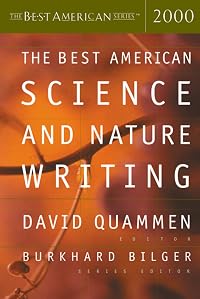
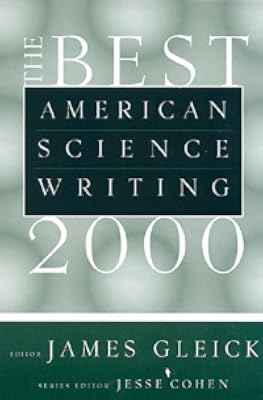
The Best American Science and Nature Writing 2000
by David Quammen (Editor), Burkhard Bilger (Series Editor)
The Best American Science and Nature Writing (2000), Best American (2000)
On This Page
Description
A collection of nature and science based essays by such authors as Anne Fadiman, Brian Hayes, Cullen Murphy, and Gary Taubes.Tags
Recommendations

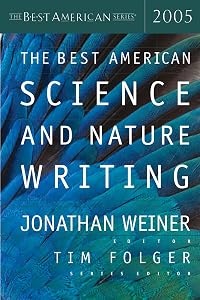
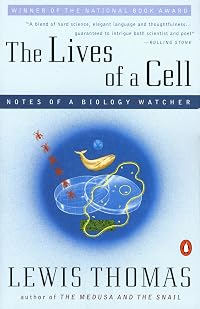
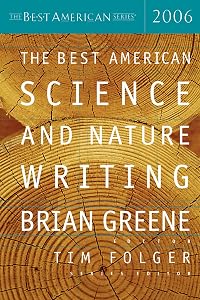
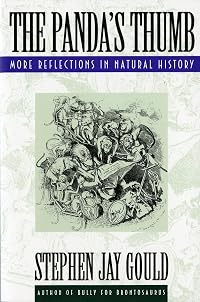
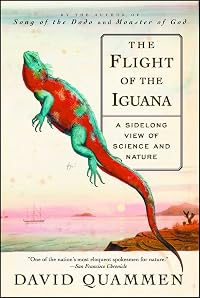
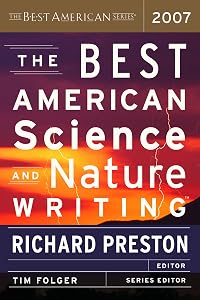
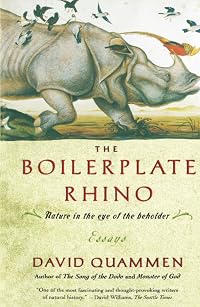
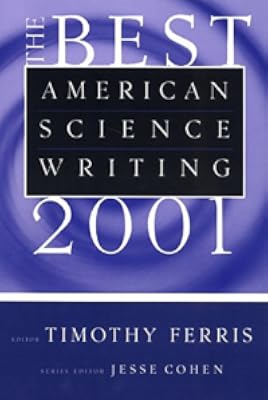

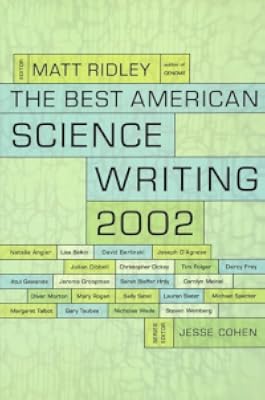
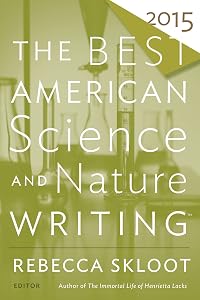
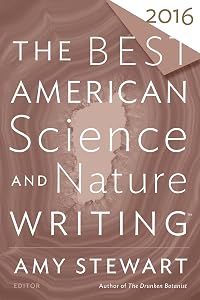

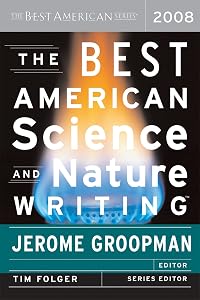
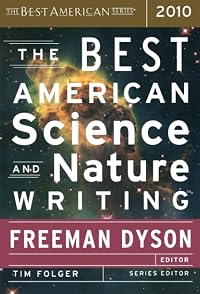
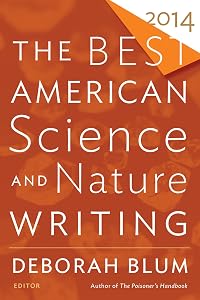
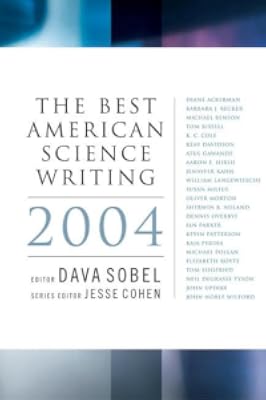


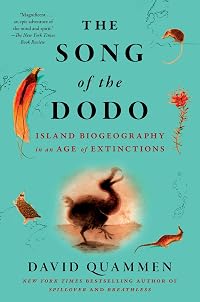

Member Recommendations
by anonymous user
Member Reviews
This was quite the mixed bag, and a more accurate rating would be 2.5 stars.
Although written 20 years ago, some of the selections are still relevant today. There are essays about germ theory, AIDS, and smallpox, one of the worst epidemic viruses of all time. Others are either too boring or too technical. One of the most poorly written articles which got the future of computing really wrong was written by an English major turned Computer Science professor.
Clock of Ages discusses ambitions to build an astronomical clock that will keep time for the next 10,000 years, to encourage long-term thinking about the needs of future generations. The projects preamble states "Civilization is revving itself into a pathologically short attention show more span. The trend might be coming from the acceleration of technology, the short-horizon perspective of market-drive economics, the next-election perspective of democracies, or the distractions of personal multi-tasking" In the seeming time-warp of a covid19 world and ensuing chaos it has both created as well as merely highlighted, I doubt civilization will survive another 10 millennia. It is unlikely even a few more hundred years is in the cards.
During these quarantine times, I read what I can from my bookshelf full of $1 books from the thrift shop. If you happen to have this on hand, here are the selections that are worth your time:
Something Happened (Helen Epstein)
The Cancer-Cluster Myth (Atul Gawande)
Clock of Ages (Brian Hayes)
A New Germ Theory (Judith Hooper)
The Demon in the Freezer (Richard Preston)
This is Not the Place (Hampton Sides)
Gorilla Warfare (Craig B. Standford) show less
Although written 20 years ago, some of the selections are still relevant today. There are essays about germ theory, AIDS, and smallpox, one of the worst epidemic viruses of all time. Others are either too boring or too technical. One of the most poorly written articles which got the future of computing really wrong was written by an English major turned Computer Science professor.
Clock of Ages discusses ambitions to build an astronomical clock that will keep time for the next 10,000 years, to encourage long-term thinking about the needs of future generations. The projects preamble states "Civilization is revving itself into a pathologically short attention show more span. The trend might be coming from the acceleration of technology, the short-horizon perspective of market-drive economics, the next-election perspective of democracies, or the distractions of personal multi-tasking" In the seeming time-warp of a covid19 world and ensuing chaos it has both created as well as merely highlighted, I doubt civilization will survive another 10 millennia. It is unlikely even a few more hundred years is in the cards.
During these quarantine times, I read what I can from my bookshelf full of $1 books from the thrift shop. If you happen to have this on hand, here are the selections that are worth your time:
Something Happened (Helen Epstein)
The Cancer-Cluster Myth (Atul Gawande)
Clock of Ages (Brian Hayes)
A New Germ Theory (Judith Hooper)
The Demon in the Freezer (Richard Preston)
This is Not the Place (Hampton Sides)
Gorilla Warfare (Craig B. Standford) show less
2000 is the inaugural volume in the wonderful Best American series, which is still going strong 10 volumes later in 2010. In the Introduction and Forward the vision for the series is explained, and it says the pieces must be timeless and not ephemeral. Since 10 years have gone by, I can say about half of them still hold up, the rest seem like period pieces from another era.
My favorite pieces include Natalie Angier's "Men, Women, Sex, and Darwin" which is a revealing look at how men see women, and women see men, in the age old debate concerning older men being attracted to younger men (or the other way around). Angier suggests it's not because men are attracted to more fertile women for Darwinian reasons, but because women are attracted show more to older men because they are less egotistical(!). I don't know if I believe it, but there are other eye opening perspectives in this piece. Atul Gawande in "The Cancer-Cluster Myth" shows that it's nearly impossible to find any case where cancer cases cluster - in towns or streets or schools - due to environmental factors (toxic dumps etc..). Cancers cluster for no reason at all, it's the mathematical nature of the distribution of random events, yet people refuse to believe there is no reason and look for a cause.
Brian Hayes in "Clock of Ages" talks about the efforts to build mechanical clocks that will last thousands of years, such as the Long Now Foundation. Humorously, in the end he surmises any such clock will eventually cease to be maintained by future ancestors, because they will be far more interested in building their own long-lasting clocks, and so the cycle repeats. Cullen Murphy in "Lulu, Queen of the Camels" gives a fascinating overview of the efforts by wealthy Arab's to biologically enhance the camel, to run faster for racing, to produce more milk, meat, better temperament etc.. even to create a new species by cross breeding with Lama's. It ends on the ominous note that as the world sees more desertification from global warming, the camel will become more important and will be the domestic animal of the future.
Richard Preston's "The Demon in the Freezer" (later a book of the same name) is an epic piece on smallpox that is just as relevant today as it was 10 years ago. Forget Ebola, Anthrax or any other scary disease, a single person with a vial of liquid smallpox could do a "soft kill" of the United States because the virus spreads to fast, is so deadly, and there are no stocks of immunizations available to stop it. Apparently Russia has a few tons of the stuff leftover from the cold war without much control, it seems like a bigger threat than nuclear. Fascinating piece and extremely scary, written before 9/11 and the anthrax mailings.
--Review by Stephen Balbach, via CoolReading (c) 2010 cc-by-nd show less
My favorite pieces include Natalie Angier's "Men, Women, Sex, and Darwin" which is a revealing look at how men see women, and women see men, in the age old debate concerning older men being attracted to younger men (or the other way around). Angier suggests it's not because men are attracted to more fertile women for Darwinian reasons, but because women are attracted show more to older men because they are less egotistical(!). I don't know if I believe it, but there are other eye opening perspectives in this piece. Atul Gawande in "The Cancer-Cluster Myth" shows that it's nearly impossible to find any case where cancer cases cluster - in towns or streets or schools - due to environmental factors (toxic dumps etc..). Cancers cluster for no reason at all, it's the mathematical nature of the distribution of random events, yet people refuse to believe there is no reason and look for a cause.
Brian Hayes in "Clock of Ages" talks about the efforts to build mechanical clocks that will last thousands of years, such as the Long Now Foundation. Humorously, in the end he surmises any such clock will eventually cease to be maintained by future ancestors, because they will be far more interested in building their own long-lasting clocks, and so the cycle repeats. Cullen Murphy in "Lulu, Queen of the Camels" gives a fascinating overview of the efforts by wealthy Arab's to biologically enhance the camel, to run faster for racing, to produce more milk, meat, better temperament etc.. even to create a new species by cross breeding with Lama's. It ends on the ominous note that as the world sees more desertification from global warming, the camel will become more important and will be the domestic animal of the future.
Richard Preston's "The Demon in the Freezer" (later a book of the same name) is an epic piece on smallpox that is just as relevant today as it was 10 years ago. Forget Ebola, Anthrax or any other scary disease, a single person with a vial of liquid smallpox could do a "soft kill" of the United States because the virus spreads to fast, is so deadly, and there are no stocks of immunizations available to stop it. Apparently Russia has a few tons of the stuff leftover from the cold war without much control, it seems like a bigger threat than nuclear. Fascinating piece and extremely scary, written before 9/11 and the anthrax mailings.
--Review by Stephen Balbach, via CoolReading (c) 2010 cc-by-nd show less
My favorite parts of this book were the Forward, by Burkhard Bilger and the Introduction, by David Quammen. The Forward expounded on what the parameters were for the selections in this book, and the Introduction on what defines "science," "nature," and "culture." The first two, science and nature, qualifying essays for this series, but not the third.
As for the actual essays, none of them were bad. I am no expert in science or nature, but I love to explore. These essays were interesting especially since they were written twenty-five years ago. Many of them focused on the plight of our planet with dire predictions, and though some were not wrong, many of them proved to be darker than the actuality when it came to extinction of species, show more etc. Possibly the better outcome is partly due to writers like these who sounded the clarion all those years ago bringing the problems to the attention of the world.
My favorites were:
"Clock of Ages" by Brian Hayes. I don't enjoy math, and so couldn't understand some of this, but I liked his viewpoint on longevity of our cleverest plans.
"A New Germ Theory" by Judith Hooper. Fascinating. Looking at some of our chronic illnesses through the light of evolution and the possibility that they are caused by infections rather than diet/culture (That is a huge oversimplification of the article).
"The Demon in the Freezer" by Richard Preston. Probably the most frightening thing I've read in ages. The history and possible future of smallpox.
"Brilliant Light" by Oliver Sacks. I loved reading about his childhood and the encouragement he received from his parents and other relatives, to explore his interests in chemistry. It turned a bit sad when he was pressured at age fourteen to "get on with real life" and study to be a doctor, but what a contribution he has made as a doctor! This gave insights into an exceptional mind. show less
As for the actual essays, none of them were bad. I am no expert in science or nature, but I love to explore. These essays were interesting especially since they were written twenty-five years ago. Many of them focused on the plight of our planet with dire predictions, and though some were not wrong, many of them proved to be darker than the actuality when it came to extinction of species, show more etc. Possibly the better outcome is partly due to writers like these who sounded the clarion all those years ago bringing the problems to the attention of the world.
My favorites were:
"Clock of Ages" by Brian Hayes. I don't enjoy math, and so couldn't understand some of this, but I liked his viewpoint on longevity of our cleverest plans.
"A New Germ Theory" by Judith Hooper. Fascinating. Looking at some of our chronic illnesses through the light of evolution and the possibility that they are caused by infections rather than diet/culture (That is a huge oversimplification of the article).
"The Demon in the Freezer" by Richard Preston. Probably the most frightening thing I've read in ages. The history and possible future of smallpox.
"Brilliant Light" by Oliver Sacks. I loved reading about his childhood and the encouragement he received from his parents and other relatives, to explore his interests in chemistry. It turned a bit sad when he was pressured at age fourteen to "get on with real life" and study to be a doctor, but what a contribution he has made as a doctor! This gave insights into an exceptional mind. show less
So far I've found all the Best American Science & Nature Writing anthologies that I've read to be well worthwhile. I used to try to read Scientific American, but most of the articles were not well-written and I had trouble getting through them. These anthologies at least guarantee that the article will be well-written.
Some of my favorites from this year:
Helen Epstein's "Something Happened" on the questions surrounding how AIDS spread to humans
Richard Preston's "The Demon in the Freezer" about the stockpiles of small pox around the world
Hampton Sides' "This is not the Place" on the vicissitudes of Mormon archaeology
Some of my favorites from this year:
Helen Epstein's "Something Happened" on the questions surrounding how AIDS spread to humans
Richard Preston's "The Demon in the Freezer" about the stockpiles of small pox around the world
Hampton Sides' "This is not the Place" on the vicissitudes of Mormon archaeology
Some great articles in here, but a few snoozers as well. The one about smallpox just about gave me nightmares.
Some great articles in here, but a few snoozers as well. The one about smallpox just about gave me nightmares.
They don't have 2002 in Sonoma here ~
Members
- Recently Added By
Author Information

Writer David Quammen grew up in Cincinnati, Ohio and was later educated at both Yale and Oxford Universities. Quammen began his career by writing for The Christian Science Monitor, the National Center for Appropriate Technology, and Audubon, Esquire, Rolling Stone, and Harpers Magazines. He wrote the novels The Soul of Viktor Tronko and The Song show more of the Dodo: Island Biogeography in an Age of Extinctions, which won the 1997 New York Public Library Helen Bernstein Award for Excellence in Journalism. He also received two National Magazine Awards for his column "Natural Acts" in Outside magazine. (Bowker Author Biography) David Quammen is the author of "The Boilerplate Rhino" & "The Song of the Dodo." Among his honors are two National Magazine Awards for his writing in "Outside." (Bowker Author Biography) David Quammen is a two-time winner of the National Magazine Award for his science essays & other work in "Outside" magazine. He is the author of three novels & several other books, including the award-winning "The Song of the Dodo". He lives in Bozeman, Montana. (Bowker Author Biography) show less
Burkhard Bilger is a senior editor at "Discover" & a contributing editor at "Health." (Bowker Author Biography)
Series


Common Knowledge
- Canonical title
- The Best American Science and Nature Writing 2000
- Original publication date
- 2000
Classifications
- Genres
- Science & Nature, Nonfiction
- DDC/MDS
- 808.80356 — Literature & rhetoric Literature, rhetoric & criticism Rhetoric and collections of literary texts from more than two literatures Literature Collections > By Theme Humanity General anthologies about science and medicine
- LCC
- Q1 — Science Science (General) General
- BISAC
Statistics
- Members
- 197
- Popularity
- 166,594
- Reviews
- 8
- Rating
- (3.59)
- Languages
- English
- Media
- Paper
- ISBNs
- 2
- UPCs
- 2