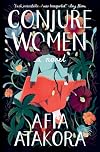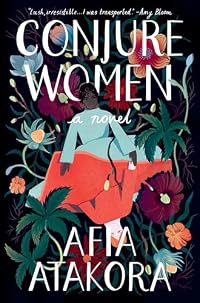
Conjure Women
by Afia Atakora
On This Page
Description
"Conjure Women is a sweeping story that brings the world of the South before and after the Civil War vividly to life. Spanning eras and generations, it tells of the lives of three unforgettable women: Miss May Belle, a wise healing woman; her precocious and observant daughter Rue, who is reluctant to follow in her mother's footsteps as a midwife; and their master's daughter Varina. The secrets and bonds among these women and their community come to a head at the beginning of a war and at the show more birth of an accursed child, who sets the townspeople alight with fear and a spreading superstition that threatens their newly won, tenuous freedom. Magnificently written, brilliantly researched, richly imagined, Conjure Women moves back and forth in time to tell the haunting story of Rue, Varina, and May Belle, their passions and friendships, and the lengths they will go to save themselves and those they love. ("-- show lessTags
Recommendations







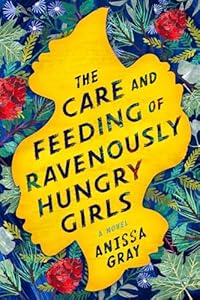


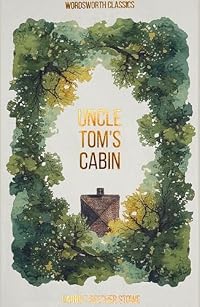

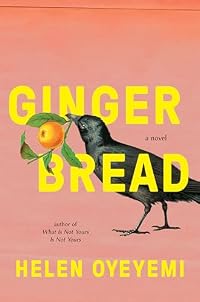
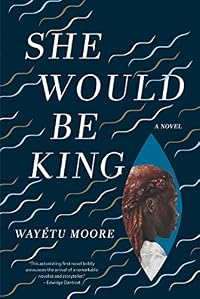

Member Reviews
I was drawn to this book because of the cover (yes, I do judge a book by it’s cover!) and the title, since I really enjoy books involving witches, voodoo, and hoodoo. I don’t read a lot of historical fiction, although I usually like it when I do, but one of my reading goals this year is to read more historical fiction, so I really wanted to give Conjure Women by Afia Atakora a read. And I am very glad I did since this book is very well written and stayed with me for days after I finished.
Atakora writes very complex characters that show how deeply they are flawed and how full of life and hope they are filled, during a horrendous point in history. May and Rue work helping fellow slaves and the plantation owner’s family through show more herbs, midwifery, and hoodoo, but they are human and have wants and needs that benefit only them. Miss May Belle wants to shield Rue as much as possible, but in doing so makes Rue’s life harder in ways. And after May is gone, Rue continues on with her mother’s work, but she too has people she is trying to shield from harsh realities and this does not always work out in a good way.
Atakora also takes a look at how village’s wise women have been held in esteem until something can’t be fixed with herbal magic (a plague that starts killing the children) or when a man (in this case, a preacher named Abel) starts making the people question the wise woman via religion or a western approach to medicine. This is something that has been happening for thousands of years and still happens today.
This review doesn’t even cover a tenth of what takes place in the book. I highly recommend you read it and discover the amazing story for yourself. show less
Atakora writes very complex characters that show how deeply they are flawed and how full of life and hope they are filled, during a horrendous point in history. May and Rue work helping fellow slaves and the plantation owner’s family through show more herbs, midwifery, and hoodoo, but they are human and have wants and needs that benefit only them. Miss May Belle wants to shield Rue as much as possible, but in doing so makes Rue’s life harder in ways. And after May is gone, Rue continues on with her mother’s work, but she too has people she is trying to shield from harsh realities and this does not always work out in a good way.
Atakora also takes a look at how village’s wise women have been held in esteem until something can’t be fixed with herbal magic (a plague that starts killing the children) or when a man (in this case, a preacher named Abel) starts making the people question the wise woman via religion or a western approach to medicine. This is something that has been happening for thousands of years and still happens today.
This review doesn’t even cover a tenth of what takes place in the book. I highly recommend you read it and discover the amazing story for yourself. show less
This is a lovely if somewhat flawed novel about a Black community on a Southern plantation before and during the Civil War and then in the years just after, and the story, within that community, of a mother and a daughter: two generations of conjure women--community healers, midwives and, when need be, spell casters. The narrative jumps back and forth between the two time periods and the two women. The mother, Miss May Belle, tries to keep the plantation's slaves healthy and to soothe them as best she can. She is given extra privileges by the plantation's owner because of her ability to keep his workforce working and help the women bear their children, which of course then immediately owns. Her daughter is Miss Rue, a child during show more slavery days, and her mother's protégée, and then the heir to May's practice and position in the community. It's Rue's job to tend to the community after Emancipation. We're told that the plantation is large enough, and in a spot so remote, that once the owner and his family are gone, the freed slaves are left to fend for themselves. This is the first of the not-quite-believable elements to the story. At any rate, modern readers will know, although this is only hinted at in the narrative, that Reconstruction is not going to last forever, or for very long, and that soon enough the White world will come calling, bringing terror and death. Rue's doomed attempts to forestall this calamity provides some of the novel's best, and skillfully understated, tension. The descriptions of the worlds of slavery and the times just after are handled well, with close in portraits of living conditions and the social aspects of those world's as well. In particular, I appreciated the Atakora's avoidance of cliche in this respect. However, that's not to say that the book is wholly free of cliche. The arrival of a charismatic traveling preacher of questionable morals and intent, for example, and the resulting tension between the old ways of Rue's natural learning and the preacher's wielding of Christianity as a weapon, as well as their battle for the loyalty of the community. It's not that these elements, and a few others I'll refrain from detailing here, aren't handled well, it's just that they represent very familiar tropes that I'd hoped perhaps could have been steered around. I do want to say that I thought the relationship between mother and daughter was very well imagined and described.
The narrative moves slowly at times. That's OK, as I mostly found it fine to luxuriate in some of the descriptions of character and place, but still I thought the book could have been trimmed about about a quarter. The two timelines come together skillfully at the end, though some of the most dramatic situations of what had seemed at times to be the heart of the story seemed by them to be mostly have been dispensed with. Additionally, at times the characters' motivations for actions that, again, are at the heart of the story, are a bit obscure.
I feel, as can happen with these reviews, that I've over-emphasized the faults I found to the extent perhaps of overshadowing this novel's many virtues. There's a lot here to like, a lot of terrific writing, and this is a first novel. I will absolutely be tracking Atakor's career and look forward to seeing what she does next. show less
The narrative moves slowly at times. That's OK, as I mostly found it fine to luxuriate in some of the descriptions of character and place, but still I thought the book could have been trimmed about about a quarter. The two timelines come together skillfully at the end, though some of the most dramatic situations of what had seemed at times to be the heart of the story seemed by them to be mostly have been dispensed with. Additionally, at times the characters' motivations for actions that, again, are at the heart of the story, are a bit obscure.
I feel, as can happen with these reviews, that I've over-emphasized the faults I found to the extent perhaps of overshadowing this novel's many virtues. There's a lot here to like, a lot of terrific writing, and this is a first novel. I will absolutely be tracking Atakor's career and look forward to seeing what she does next. show less
A very beautifully written book set in the south both at the outbreak of the civil war and in the time after, when now freed enslaved people are transitioning to a world where they now free, no more accepted, however, and fighting to survive.
The story is told by Rue, both when she is a young enslaved girl living on a large plantation with her mother May Belle, and as a freed adult. There are a few chapters told from May Belle's perspective as well. The story switches back and forth in time, and between May Belle and Rue, as well as a bit about Varina, the daughter of the slave owner. As the timelines shift back and forth, the storylines start to come together and fill in the missing bits. The switching of perspectives and narrators was show more smooth and there was no confusion about who was speaking or where I was.
Rue's mother is the healer on the plantation, and later Rue takes over the role, but as an adult, starts to believe she is losing her magick. (This "magick" is more of the folk kind, not the fantasy kind.) This is a story about their lives, their traditions, their beliefs - and what Rue does to survive.
The writing is rich and atmospheric, and really well-plotted, with plenty of twists. The characters are well-drawn - complex and realistic. There are so many words to describe this tale: heartbreaking, cruel, beautiful, haunting - especially haunting, as the story stayed with me long after I'd turned the last page. Truly memorable.
I was provided a copy of the book via NetGalley for review purposes. All opinions are my own. show less
The story is told by Rue, both when she is a young enslaved girl living on a large plantation with her mother May Belle, and as a freed adult. There are a few chapters told from May Belle's perspective as well. The story switches back and forth in time, and between May Belle and Rue, as well as a bit about Varina, the daughter of the slave owner. As the timelines shift back and forth, the storylines start to come together and fill in the missing bits. The switching of perspectives and narrators was show more smooth and there was no confusion about who was speaking or where I was.
Rue's mother is the healer on the plantation, and later Rue takes over the role, but as an adult, starts to believe she is losing her magick. (This "magick" is more of the folk kind, not the fantasy kind.) This is a story about their lives, their traditions, their beliefs - and what Rue does to survive.
The writing is rich and atmospheric, and really well-plotted, with plenty of twists. The characters are well-drawn - complex and realistic. There are so many words to describe this tale: heartbreaking, cruel, beautiful, haunting - especially haunting, as the story stayed with me long after I'd turned the last page. Truly memorable.
I was provided a copy of the book via NetGalley for review purposes. All opinions are my own. show less
The setting is a plantation somewhere in the American South. Most of the action takes place during the Reconstruction Era, when a community of once-enslaved people continue to live in the cabins that used to be "the quarters", in close proximity to the burned-out ruin of the former home of Marse Charles. With glimpses back to pre-war times, and to the latter days of the war itself, we learn through the eyes of the "conjure women" May Belle and her daughter Rue, what life was like for slaves with some small measure of privilege based on their healing skills. May Belle's knowledge of plants and their concoction into medicines often seemed like magic to master and slaves alike. Her power was both sought after and feared. Her judicious use show more of actual "spells" was usually her own secret, not available upon demand. Rue was reluctant to follow in her mother's footsteps, knowing that a birth gone wrong could be seen as the result of hoo-doo; an infection that would not yield, blamed on the healer's ill will toward the sufferer. The true magic to be found in this novel comes from the way the past and present are intermingled, the way bits of secrets are revealed in precisely the proper way, and the way the reader is drawn into the characters' lives. There is no galloping story line, but there are plenty of developments along the way, some of which could be expected, others of which are surprising. The ending is satisfying without being too pat. It is clear that a lot of research went into this book, yet it never comes across as "educational", and even more miraculously, to me, it doesn't feel like an MFA product. Highly recommended. show less
I came to this novel looking for witches, and while I didn’t get quite what I wanted I heartily enjoyed reading this story. Delving into a poignant moment in the history of slavery in the U.S., author Atakora introduces us to Rue, a young woman tied to the healer’s past and knowledge instilled in her by her mother, to the newly freed slave community she was raised in, and to the daughter of the plantation owner who was her best friend growing up. Rue may rail against the monicker of conjure woman that (the title of the book and) her community has thrust upon her, but she can’t help but have care for the challenging people in her community no matter their faults. The story revolves around Rue’s conflict with the community over show more the seemingly cursed birth of Black-eyed Bean, the boy who is born with pitch black eyes and too light (and patterned) skin, but grows to explore the deeper conflicts that encompass the whole community. At times it seems like all Rue has is conflict with the world, as she quietly protests against the light-skinned preacher who visits their community, keeps secrets about the South’s loss in the Civil War, and fights to make her own place in the world separate from her mother’s legacy. Through these complexities, Atakora has woven an intriguing story that at once perfectly encapsulates a moment in time and personifies the greater struggles of the Black community, while treading on common themes that are recognizable throughout humanity. The book itself may not be one to easily capture, but its small moments of gemlike precision in storytelling provide inevitable food for thought. Like Rue, we are maybe all just trying to make our ways through the hardships of our lives, seeing too much and never enough to clearly guide us, but somehow making it through another day. show less
Conjure Women is a richly structured novel, moving between the last years of southern slavery and the risky freedom that followed. Multiple stories play out in alteration, informing each other, as well as functioning on their own. Because I kept wanting the next part of this two-sided puzzle, I found Conjure Women a very difficult book to put down.
Conjure Women does nothing to "whitewash" either slavery or the dangerous years after it, but it also doesn't indulge in gratuitous violence. There is cruelty, both across and within races. There are also badly made choices, when characters, addressing pressing needs, create entirely news set of problems and injustices. Afia Atakora's insight into the complicated natures of human identity and show more desires gives us a world both blemished and carefully observed.
Given the wonderful quality of its plotting, characters, and prose, I feel compelled to call Conjure Women on of this years must-read novels. Don't miss it.
I received a free electronic review copy of this book from the publisher via NetGalley. The opinions are my own. show less
Conjure Women does nothing to "whitewash" either slavery or the dangerous years after it, but it also doesn't indulge in gratuitous violence. There is cruelty, both across and within races. There are also badly made choices, when characters, addressing pressing needs, create entirely news set of problems and injustices. Afia Atakora's insight into the complicated natures of human identity and show more desires gives us a world both blemished and carefully observed.
Given the wonderful quality of its plotting, characters, and prose, I feel compelled to call Conjure Women on of this years must-read novels. Don't miss it.
I received a free electronic review copy of this book from the publisher via NetGalley. The opinions are my own. show less
Upon finishing this book, I knew that I needed to read more books by Afia Atakora. A quick search tells me Conjure Women is actually her debut novel? All I can say to that is… wow.
Set just before, during, and after the American Civil War in the antebellum south, this striking novel tells the story of healer and slave Miss May Belle, her daughter and somewhat reluctant protege, Rue, and their master’s daughter, Varina. Rue and Varina are the same age and grow up together amidst the brutality and tragedy of slavery on a southern plantation. Secrets, lies, betrayals, magic, and spiritualism pervade the story of this community of slaves as they become free men and women and their struggles continue.
Atakora’s writing is fantastic and show more affecting. All of the characters are well-developed and authentic, but Rue especially stole my heart. What a beautifully complex and layered character. She’s very much a product of her life and environment , but she’s alsoindependent, smart and headstrong.
This is definitely not an easy read—as one expects, its dark, heartbreaking, and full of terribleness. It feels realistic, painful, and important, and despite all of the sadness, this book has much to offer of joy and hope. Rue, May Belle, and Varina will stick with me for a long while. show less
Set just before, during, and after the American Civil War in the antebellum south, this striking novel tells the story of healer and slave Miss May Belle, her daughter and somewhat reluctant protege, Rue, and their master’s daughter, Varina. Rue and Varina are the same age and grow up together amidst the brutality and tragedy of slavery on a southern plantation. Secrets, lies, betrayals, magic, and spiritualism pervade the story of this community of slaves as they become free men and women and their struggles continue.
Atakora’s writing is fantastic and show more affecting. All of the characters are well-developed and authentic, but Rue especially stole my heart. What a beautifully complex and layered character. She’s very much a product of her life and environment , but she’s alsoindependent, smart and headstrong.
This is definitely not an easy read—as one expects, its dark, heartbreaking, and full of terribleness. It feels realistic, painful, and important, and despite all of the sadness, this book has much to offer of joy and hope. Rue, May Belle, and Varina will stick with me for a long while. show less
Members
- Recently Added By
Lists

Top Five Books of 2020
982 works; 348 members

ALA Reading List: Historical Fiction 2021-2026
30 works; 4 members

Black Authors
381 works; 28 members

Fiction: BLM
60 works; 1 member
Author Information

1 Work 852 Members
Awards and Honors
Awards
Common Knowledge
- Canonical title
- Conjure Women
- Original publication date
- 2020-04-07
- Canonical DDC/MDS
- 813.6
- Canonical LCC
- PS3601.T35
Classifications
Statistics
- Members
- 852
- Popularity
- 31,896
- Reviews
- 21
- Rating
- (3.94)
- Languages
- English
- Media
- Paper, Audiobook, Ebook
- ISBNs
- 15
- ASINs
- 3