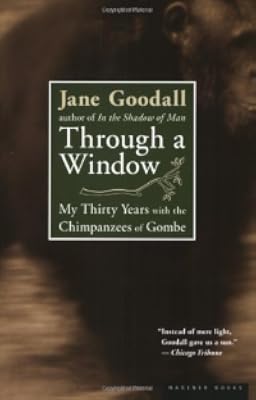
Through a Window: My Thirty Years with the Chimpanzees of Gombe
by Jane Goodall
On This Page
Description
In her classic, In the Shadow of Man, Jane Goodall wrote of her first ten years at Gombe. In Through a Window she continues the story, painting a more complete and vivid portrait of our closest relatives. On the shores of Lake Tanganyika, Gombe is a community where the principal residents are chimpanzees. Through Goodall's eyes we watch young Figan's relentless rise to power and old Mike's crushing defeat. We learn how one mother rears her children to succeed and another dooms hers to show more failure. We witness horrifying murders, touching moments of affection, joyous births, and wrenching deaths. As Goodall compellingly tells the story of this intimately intertwined community, we are shown human emotions stripped to their essence. In the mirror of chimpanzee life, we see ourselves reflected. show lessTags
Recommendations





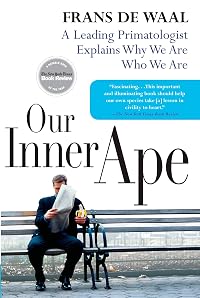
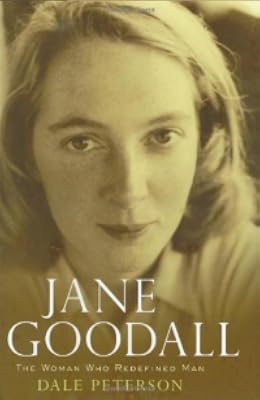
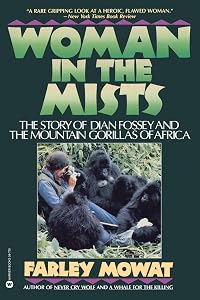
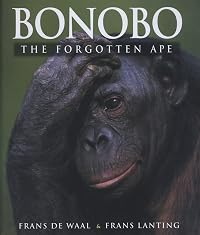










Member Reviews
Jane Goodall has done decades of groundbreaking research on the chimpanzees of Gombe National Park in Tanzania. This is her account of her work there over thirty years, starting when it was still scientific heresy to describe animals as having thoughts and emotions--even animals so obviously close to us in evolutionary terms as chimpanzees. Goodall didn't have a degree at all, much less in ethology, when Louis Leakey recruited her to study chimpanzees, so she described what she saw in the chimpanzees' behavior. When Leakey arranged funding and sent her to Cambridge University in 1962 to get a PhD in ethology, Goodall discovered the narrow view of the scientific establishment. In order to get her scientific work published, she pushed show more back where she could and compromised where she had to, and gradually had an impact on the silly practice of talking about higher mammals as inanimate objects.
But this book is mostly about the chimpanzees of Gombe, their interactions with each other and with her. Chimpanzee society is complex and in many ways very familiar, though also very different. Biology alone means that sexual relations among chimpanzees are rather different than among humans. Yet chimpanzees have clear family bonds, and maternal child-rearing skills make a significant impact on the kind of adults the young chimps mature into them. She observed not only tool use, but tool making, and suggested, to the skepticism of many, that different chimp communities would prove to have different tool-making cultures and practices. (She was right.) I remember the outrage and distress when that mean Jane Goodall claimed chimpanzees engaged in war against other chimp communities they were in conflict with. (She documented it happening between two chimp communities in Gombe.)
The personalities of the chimpanzees of Gombe are beautifully and compellingly described, and, careful observer that she is, it's highly informative. Politics and power structures among chimpanzees, our closest relatives, are quite recognizable. On the one hand, chimps aren't going to be building multistory buildings anytime in the next few millennia. On the other hand, we can definitely see ourselves in them in many ways.
It's a fascinating look at chimpanzees by one of the people on this planet who knows them best. Recommended.
I bought this audiobook. show less
But this book is mostly about the chimpanzees of Gombe, their interactions with each other and with her. Chimpanzee society is complex and in many ways very familiar, though also very different. Biology alone means that sexual relations among chimpanzees are rather different than among humans. Yet chimpanzees have clear family bonds, and maternal child-rearing skills make a significant impact on the kind of adults the young chimps mature into them. She observed not only tool use, but tool making, and suggested, to the skepticism of many, that different chimp communities would prove to have different tool-making cultures and practices. (She was right.) I remember the outrage and distress when that mean Jane Goodall claimed chimpanzees engaged in war against other chimp communities they were in conflict with. (She documented it happening between two chimp communities in Gombe.)
The personalities of the chimpanzees of Gombe are beautifully and compellingly described, and, careful observer that she is, it's highly informative. Politics and power structures among chimpanzees, our closest relatives, are quite recognizable. On the one hand, chimps aren't going to be building multistory buildings anytime in the next few millennia. On the other hand, we can definitely see ourselves in them in many ways.
It's a fascinating look at chimpanzees by one of the people on this planet who knows them best. Recommended.
I bought this audiobook. show less
My first question was: How come I've never read any of Goodall's books before??? And my second was: Where can I get more???
What a fascinating account of Goodall's work in Gombe. I really had no idea just how complex chimpanzee society is, nor the level of intelligence these creatures retain. It's one thing to know primates are smart, and quite another thing to actually read about what they do and how they function on a daily basis. The picture Goodall paints is one of a harsh reality in the wild, as the chimps struggle to survive amongst themselves and against outside invaders.
At one point, Goodall witnessed a schism in her study group - half the chimps broke away from the other half, and began methodically killing off the chimps from show more the half they left behind. It's heartbreaking to read, but truly sends home the message that these primates are indeed animals, not humans, but at the same time have that level of unharnessed intelligence and passion that allows them to carry out both acts of extreme violence and extreme compassion.
Perhaps what I found most fascinating out of the whole book was the discussion on the visibly different parenting styles of mother chimps, and how their parenting styles contributed to the development of their daughter offspring... and how their daughters' own parenting style became reflective of their own. Absolutely incredible.
The final chapter of this book is one I wish I didn't have to read, but I suppose it was a necessity. I would like to see this book re-released with an updated final chapter, however, because I suspect a lot of the information is dated by about 15 years. It discusses chimps as research subjects & pets (ie. chimps who are chained to a wall in the basement for 50 years because their "owners" couldn't handle them), and the disgusting, inhumane conditions in which they have to live in many facilities. I found it depressing because while they are animals (and Goodall definitely stresses this, repeating that all told, chimpanzees are animals and not humans), they are intelligent enough to understand what's going on. Locking a chimp in a tiny metal cage is not like locking a rat in its cage. That chimp will look at you and know what you've done...
After reading this book, I admit that I'm highly compelled to read more of her work, especially the scientific studies that give more detailed analysis of behavioral patterns. If you're interested in animal behavior at all, this is an excellent place to learn not only about the chimpanzees Goodall studied, but also the local species that shared the same living space. show less
What a fascinating account of Goodall's work in Gombe. I really had no idea just how complex chimpanzee society is, nor the level of intelligence these creatures retain. It's one thing to know primates are smart, and quite another thing to actually read about what they do and how they function on a daily basis. The picture Goodall paints is one of a harsh reality in the wild, as the chimps struggle to survive amongst themselves and against outside invaders.
At one point, Goodall witnessed a schism in her study group - half the chimps broke away from the other half, and began methodically killing off the chimps from show more the half they left behind. It's heartbreaking to read, but truly sends home the message that these primates are indeed animals, not humans, but at the same time have that level of unharnessed intelligence and passion that allows them to carry out both acts of extreme violence and extreme compassion.
Perhaps what I found most fascinating out of the whole book was the discussion on the visibly different parenting styles of mother chimps, and how their parenting styles contributed to the development of their daughter offspring... and how their daughters' own parenting style became reflective of their own. Absolutely incredible.
The final chapter of this book is one I wish I didn't have to read, but I suppose it was a necessity. I would like to see this book re-released with an updated final chapter, however, because I suspect a lot of the information is dated by about 15 years. It discusses chimps as research subjects & pets (ie. chimps who are chained to a wall in the basement for 50 years because their "owners" couldn't handle them), and the disgusting, inhumane conditions in which they have to live in many facilities. I found it depressing because while they are animals (and Goodall definitely stresses this, repeating that all told, chimpanzees are animals and not humans), they are intelligent enough to understand what's going on. Locking a chimp in a tiny metal cage is not like locking a rat in its cage. That chimp will look at you and know what you've done...
After reading this book, I admit that I'm highly compelled to read more of her work, especially the scientific studies that give more detailed analysis of behavioral patterns. If you're interested in animal behavior at all, this is an excellent place to learn not only about the chimpanzees Goodall studied, but also the local species that shared the same living space. show less
I borrowed Jane Goodall's Through a window: My thirty years with the Chimpanzees of Gombe on a whim when in fact, I was looking for a book by Anthony Bourdain that I could not find. I devoured the Sue Grafton I had borrowed with Goodall's book and quite reluctantly started leafing through it. I read the first few pages about a bunch of chimpanzees, all named, and felt the irritating pressure I often feel when I push myself to read a book in which I have little interest. I typically prod on for a while, until it becomes too much of an effort, eye the other tempting books waiting on my bookshelf and give up, angry at the wasted time. In this case however, happily, this story did not repeat itself. Not only was the book a surprising joy to show more read, but it also gave me plenty of food for thought.
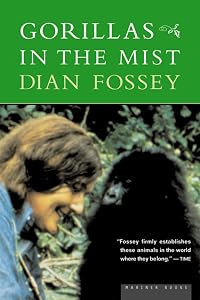
The first time I encountered the great apes was on National Geographic, where I often saw two women, in two different parts of Africa, living and working among their (and our) cousins. Goodall's good natured face I remember, peering through the foliage, observing chimps. Dian Fossey puzzled me, because the mountain gorillas she befriended were far far bigger and more intimidating than the chimpanzees of Gombe. Fossey's tragic murder, as the murder of her favorite gorilla Digit, continued to linger in my mind for long after we stopped subscribing to National Geographic. And so, while the image of a frizzy haired, and for some reason a pig-tailed, Fossey stayed on in my head, Goodall's gentle face and her work with chimpanzees became a hazy blur.
30 years can be a long time. I haven't even lived that long yet. Even 3 years in one place seems like eternity to me now. But that is how long it takes to make any sense of another species' way of life. 30 years is but a glimpse through a window. And that snapshot not only offers us amazing insights about chimpanzees, which I can't imagine more than a handful would be really interested in, but into our own lives. We learn with shock and horror that chimpanzees can be murderers and cannibalistic, but also that they are mothers, sisters, aunts, and protectors, assuming many meaningful roles and responsibilities.
Being a new mom myself when I first read this book, I learnt much more from this book than any new mommy's self help books. Chimpanzee mothers can be capable and not so capable, and in each case shape their offspring's lives in very many ways (as can nature). Being a social, supportive, stern, playful mommy can make your baby chimpanzee the alpha male. Being asocial and indifferent, can make your baby reticent, reclusive and inept in many ways. At best, it can successfully halt the propagation of his/her (and the mother's own) genes. At worst, it can contribute to the infant's premature death.
Reading this book jolted me out of partly post partum induced and partly self-induced lethargy and gave me a sense of direction. I wanted to be a Fifi, not a Gilka (both chimp mommies).
Of course, after a while I got lost in the ocean of chimp names: Flint, Flo, Fifi, Freud, Frodo, Figan, Melissa, Goblin, Gremlin, Getty, Groucho, Gigi and Satan, though I know each of these chimpanzees had a unique life and a unique character. I learnt about chimp wars, jealousy, tantrums, family dramas, love triangles and quadrangles.
It may well be the most entertaining, most thought provoking and most educational soap I have ever read. So what if it featured an exclusive (almost) star cast of chimps? show less
The first time I encountered the great apes was on National Geographic, where I often saw two women, in two different parts of Africa, living and working among their (and our) cousins. Goodall's good natured face I remember, peering through the foliage, observing chimps. Dian Fossey puzzled me, because the mountain gorillas she befriended were far far bigger and more intimidating than the chimpanzees of Gombe. Fossey's tragic murder, as the murder of her favorite gorilla Digit, continued to linger in my mind for long after we stopped subscribing to National Geographic. And so, while the image of a frizzy haired, and for some reason a pig-tailed, Fossey stayed on in my head, Goodall's gentle face and her work with chimpanzees became a hazy blur.
30 years can be a long time. I haven't even lived that long yet. Even 3 years in one place seems like eternity to me now. But that is how long it takes to make any sense of another species' way of life. 30 years is but a glimpse through a window. And that snapshot not only offers us amazing insights about chimpanzees, which I can't imagine more than a handful would be really interested in, but into our own lives. We learn with shock and horror that chimpanzees can be murderers and cannibalistic, but also that they are mothers, sisters, aunts, and protectors, assuming many meaningful roles and responsibilities.
Being a new mom myself when I first read this book, I learnt much more from this book than any new mommy's self help books. Chimpanzee mothers can be capable and not so capable, and in each case shape their offspring's lives in very many ways (as can nature). Being a social, supportive, stern, playful mommy can make your baby chimpanzee the alpha male. Being asocial and indifferent, can make your baby reticent, reclusive and inept in many ways. At best, it can successfully halt the propagation of his/her (and the mother's own) genes. At worst, it can contribute to the infant's premature death.
Reading this book jolted me out of partly post partum induced and partly self-induced lethargy and gave me a sense of direction. I wanted to be a Fifi, not a Gilka (both chimp mommies).
Of course, after a while I got lost in the ocean of chimp names: Flint, Flo, Fifi, Freud, Frodo, Figan, Melissa, Goblin, Gremlin, Getty, Groucho, Gigi and Satan, though I know each of these chimpanzees had a unique life and a unique character. I learnt about chimp wars, jealousy, tantrums, family dramas, love triangles and quadrangles.
It may well be the most entertaining, most thought provoking and most educational soap I have ever read. So what if it featured an exclusive (almost) star cast of chimps? show less
This book's primary fault is it follows 'In the Shadow of Man' which is a masterpiece of natural and personal discovery. Not to say this is a bad book, but structurally and emotionally less complex. Like an under-accomplished younger sibling struggling to find a unique voice in the shadow of a famous elder brother or sister. Towards the end Goodall does begin to venture beyond Gombe chimp behavior stories to discuss zoos and lab chimps.
4.5 stars
This was originally written in 1990, 30 years after Jane Goodall went to Gombe National Park in Tanzania to study chimpanzees My edition was published in 2010, so there is even extra info with a preface and an afterword written by Jane in 2009. This continues/updates her first book on the chimps of Gombe, In the Shadow of Man.
I read In the Shadow of Man a number of years ago, but I loved revisiting the same chimps and their offspring, and following them later in the their lives! Jane is also an adamant activist/conservationist, so at the end of the book, after all the extra chimp information and updates (which really is the bulk of the book), she writes a little bit about human-raised chimps, chimps used in experiments, chimps show more losing their habitat, etc. There are a number of photos of the chimps included, as well. Overall, I really really enjoyed reading this! show less
This was originally written in 1990, 30 years after Jane Goodall went to Gombe National Park in Tanzania to study chimpanzees My edition was published in 2010, so there is even extra info with a preface and an afterword written by Jane in 2009. This continues/updates her first book on the chimps of Gombe, In the Shadow of Man.
I read In the Shadow of Man a number of years ago, but I loved revisiting the same chimps and their offspring, and following them later in the their lives! Jane is also an adamant activist/conservationist, so at the end of the book, after all the extra chimp information and updates (which really is the bulk of the book), she writes a little bit about human-raised chimps, chimps used in experiments, chimps show more losing their habitat, etc. There are a number of photos of the chimps included, as well. Overall, I really really enjoyed reading this! show less
Through a Window: My Thirty Years with the Chimpanzees of Gombe – J. Goodall
4 stars
In 1971, Jane Goodall published In the Shadow of Man, documenting her first ten years of studying chimpanzees in their native environment. Through a Window, published in 1990, continues the story for a further 20 years. I read the first book not long after it was published and I’ve read several of her more recent books, but somehow, I’d missed this one.
This book follows original chimp colony and the descendents of the individuals featured in the first book. Although many of the observations and conclusions presented in this book seem somewhat dated, I enjoyed reading the chapters devoted to different individual chimps. Goddall writes simply, with show more great empathy for her subjects and with modest authority in her conclusions. She documents the social dynamics of the chimpanzees, but is also provides a record of how our human perspective has changed since the mid –twentieth century. show less
4 stars
In 1971, Jane Goodall published In the Shadow of Man, documenting her first ten years of studying chimpanzees in their native environment. Through a Window, published in 1990, continues the story for a further 20 years. I read the first book not long after it was published and I’ve read several of her more recent books, but somehow, I’d missed this one.
This book follows original chimp colony and the descendents of the individuals featured in the first book. Although many of the observations and conclusions presented in this book seem somewhat dated, I enjoyed reading the chapters devoted to different individual chimps. Goddall writes simply, with show more great empathy for her subjects and with modest authority in her conclusions. She documents the social dynamics of the chimpanzees, but is also provides a record of how our human perspective has changed since the mid –twentieth century. show less
This is one of my favorite non-fiction books! I read this in a psychology course in college and was shocked by the insight you can get into human behavior by learning from animals. It reads like a family saga and really made me tear up. You will never look at Chimpanzees at the zoo the same again.
Members
- Recently Added By
Lists

Recommended Nature Writing
346 works; 180 members

al.vick-parents books
301 works; 1 member

Favorite Animal Non-Fiction
293 works; 144 members

Books Cited in Blueprint by Nicholas Christakis
261 works; 1 member
Author Information

69+ Works 10,121 Members
Jane Goodall, 1934 - Jane Goodall, a well-respected English zoologist, is famous for her fieldwork with chimpanzees in Africa. An early interest in African wild animals and the opportunity, at age 18, to stay on a friend's farm in Kenya, led her to Dr. Louis Leakey; then curator of the National Museum of Natural History in Nairobi. Almost show more immediately Leakey hired Goodall as his assistant secretary, and she was soon accompanying Leakey and his wife on their expeditions. Following Leakey's suggestion that a field study of some of the higher primates would be a major contribution to the understanding of animal behavior, she began studying the chimpanzees of the Gombe Stream Research Center in Tanganyika (now Tanzania) in 1960. Although she had no undergraduate degree, Goodall earned a Ph.D. from Cambridge University in 1965, based on her first five years of research at the Gombe Center. After more than 20 years of extensive study and direct contact with wild chimpanzees in their natural habitat, Goodall continues to research, teach, and write about primate behavior today. (Bowker Author Biography) Jane Goodall's research at Gombe, Tanzania, is entering its fifth decade. Her books include "In the Shadow of Man", "Through a Window: My Thirty Years with the Chimpanzees of Gombe", & "Africa in My Blood: An Autobiography in Letters", edited by Dale Peterson. She resides in Dar es Salaam, Tanzania. (Bowker Author Biography) show less
Some Editions
Awards and Honors
Distinctions
Work Relationships
Common Knowledge
- Canonical title
- Through a Window: My Thirty Years with the Chimpanzees of Gombe
- Original publication date
- 1990
- People/Characters
- Jane Goodall
- Important places
- Gombe, Tanzania
- Dedication
- To the chimpanzees of the world, those still living free in the wild and those held captive and enslaved by humans. For all that they have contributed to knowledge and understanding.
And to all those who have helped a... (show all)nd who are helping in the fight to conserve the chimpanzees in Africa and to bring comfort and new hope to those in captivity.
And in memory of Derek. - First words
- I rolled over and looked at the time - - 5:44 a.m. Long years of early rising have led to an ability to wake just before the unpleasant clamour of an alarm clock.
Classifications
Statistics
- Members
- 816
- Popularity
- 33,997
- Reviews
- 13
- Rating
- (4.26)
- Languages
- 8 — Danish, Dutch, English, Finnish, German, Italian, Polish, Spanish
- Media
- Paper, Audiobook, Ebook
- ISBNs
- 22
- UPCs
- 2
- ASINs
- 8