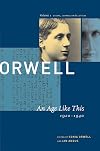
The Collected Essays, Journalism and Letters of George Orwell, Volume 1: An Age Like This, 1920-1940
by George Orwell 
The collected essays, journalism, and letters of George Orwell (1)
On This Page
Description
In his 46 years, Orwell managed to publish ten books and two collections of essays. This volume, one in a set of four, brings together a selection of his non-fiction work - letters, essays, reviews and journalism. His work is broad in scope, moving from English cooking to totalitarianism.Tags
Recommendations

















Member Reviews
I haven't read any of Orwell's books beyond Animal Farm and 1984, so I don't know how much overlap there is. This book contains extensive notes of Orwell's travels that turned into the Wigan Pier book. And certainly there was a huge transformation very apparent out of his experience in the Spanish Civil War: his awareness of the corruption of the Communists. This part of the book reminded me of Doris Lessing's Golden Notebook. Stalin has always been the devil for me, so it is a bit difficult to comprehend the disappointment of folks for whom that was a revelation.
A delightful surprise here was the essay on Charles Dickens. I am no deep thinker or wide reader in these realms. Probably much profounder insight on Dickens is well known in show more the right circles. But for me, it was just great to have my eyes opened. Orwell is a very generous writer. These days I am just tired of books where the author struts on a stage that is impossibly above me. In a bookstore recently I opened a book of Badiou that dove immediately into some parable of Hegel, into the profound depths. I don't object to such diving, of course. No doubt there is some elite audience for which that parable is already well known at the shallower depths, that is ready for that next step. What little expertise I have is more mathematical: certainly there are math books that start this way, that just start e.g. with ring theory or some such and move immediately into some specialized problem. Ah, even with math books, it is possible to guide the general reader too, in short stages. Of course we all get lost soon enough, unless we are willing to put in the work. But the author can still cut steps into the cliff the whole way.
Orwell, here, doesn't push like that. He is not a professional political theorist or historian or any of that. He is writing for a general audience, and not trying to put himself above his audience.
This is definitely a grand fun book. We get to see all these fun personal details... his laying hens and his potato patch. His settling on the pseudonym George Orwell. An easy book to pick up now and again and work through in small-to-medium bites. I look forward to the later volumes! show less
A delightful surprise here was the essay on Charles Dickens. I am no deep thinker or wide reader in these realms. Probably much profounder insight on Dickens is well known in show more the right circles. But for me, it was just great to have my eyes opened. Orwell is a very generous writer. These days I am just tired of books where the author struts on a stage that is impossibly above me. In a bookstore recently I opened a book of Badiou that dove immediately into some parable of Hegel, into the profound depths. I don't object to such diving, of course. No doubt there is some elite audience for which that parable is already well known at the shallower depths, that is ready for that next step. What little expertise I have is more mathematical: certainly there are math books that start this way, that just start e.g. with ring theory or some such and move immediately into some specialized problem. Ah, even with math books, it is possible to guide the general reader too, in short stages. Of course we all get lost soon enough, unless we are willing to put in the work. But the author can still cut steps into the cliff the whole way.
Orwell, here, doesn't push like that. He is not a professional political theorist or historian or any of that. He is writing for a general audience, and not trying to put himself above his audience.
This is definitely a grand fun book. We get to see all these fun personal details... his laying hens and his potato patch. His settling on the pseudonym George Orwell. An easy book to pick up now and again and work through in small-to-medium bites. I look forward to the later volumes! show less
1984, being his last book, is probably the most representative of Orwell's political beliefs and writing style, and probably has influenced most people's idea of Orwell as a person. However less well-formed his previous stances and sentences were, I've still nevertheless enjoyed this collection for showing me the man Orwell was before he became Orwell.
While I have not always agreed with him (he sure does have some dated views about women and non-English people which I want to attribute to his context but he's also so thoughtful and considered when presenting his viewpoints about socialism but you also couldn't and shouldn't have expected him to be perfect), it has still been a pleasure to get to know him via his personal letters and to show more track his growth as a person, a writer, and something of a social activist.
Favourite bits: My favourite sections are really the private Orwell persona, mainly whenever he mentioned his home life, taking care of his goats and chickens and garden. My favourite activity was to pick out clues for the germination of ideas which eventually lead to 1984. Also interesting, his wife Eileen worked for the government's Censorship Department. How I chuckled!
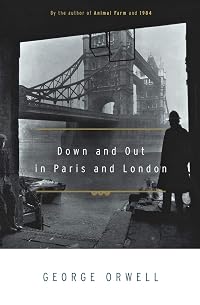
Aside: Ever since I read Down and Out in Paris and London a few weeks ago, I've been hankering for some young Orwell nonfiction.
Reading this collection has been like catching up with an old friend. This familiarity has only been increased whenever I recognise Orwell's casual references to some of his contemporaries, such as Mr Murry - lover and husband of Katherine Mansfield, he found Adelphi which Orwell often wrote for -, or Oswald - as in the fascist brother-in-law of my favourite Mitford, Decca, who I suddenly recall seemed to have been pals with a Sonia Orwell -, or John Lehmann to whom he pitched Shooting an Elephant who is of course the brother of Rosamond Lehmann.
It's a thrill when your literary worlds collide and the more I read, the more I really understand the people who organise their bookshelves by "I think these writers/books would enjoy/loathe being next to each other and have great conversations". show less
While I have not always agreed with him (he sure does have some dated views about women and non-English people which I want to attribute to his context but he's also so thoughtful and considered when presenting his viewpoints about socialism but you also couldn't and shouldn't have expected him to be perfect), it has still been a pleasure to get to know him via his personal letters and to show more track his growth as a person, a writer, and something of a social activist.
Favourite bits: My favourite sections are really the private Orwell persona, mainly whenever he mentioned his home life, taking care of his goats and chickens and garden. My favourite activity was to pick out clues for the germination of ideas which eventually lead to 1984. Also interesting, his wife Eileen worked for the government's Censorship Department. How I chuckled!
Aside: Ever since I read Down and Out in Paris and London a few weeks ago, I've been hankering for some young Orwell nonfiction.
Reading this collection has been like catching up with an old friend. This familiarity has only been increased whenever I recognise Orwell's casual references to some of his contemporaries, such as Mr Murry - lover and husband of Katherine Mansfield, he found Adelphi which Orwell often wrote for -, or Oswald - as in the fascist brother-in-law of my favourite Mitford, Decca, who I suddenly recall seemed to have been pals with a Sonia Orwell -, or John Lehmann to whom he pitched Shooting an Elephant who is of course the brother of Rosamond Lehmann.
It's a thrill when your literary worlds collide and the more I read, the more I really understand the people who organise their bookshelves by "I think these writers/books would enjoy/loathe being next to each other and have great conversations". show less
It is hard to believe how much work Orwell crammed into a short life. He was dead before fifty, and his entire impressive oevre was produced in a period of little over twenty years - indeed this four volume set devotes three volumes to his final decade - devoting much of this volume to what would be described as juvenilia were he not in his thirties by the time he started wrting.
It is all good stuff, however, full of precise observation, and robust common sense. The portrait that emerges is that of a frustrated bibliophile - a man who would love just to lose himself in the appreciation of fine literature, but is forced despite himself, to engage in politics. The subtitle "An Age like This" is from a poem reproduced in the first piece. show more It is a bad poem - poetry was not really Orwell's strength - but has a few striking lines in it. He"was born alas in an evil time" and "was not made for an age like this".
There is, it should be said, enough material in here to satisy fy the devil's advocate in opposing Orwell's canonisation. His own belief - and that of his admirers - that he was the only person willing to tell the real truth about Spain does not stand up to scrutiny. From 1937 to 1939 he was espousing a peculiar ultra-left tendency that not only denounced the Soviets as counter-revolutionaries - there is a good argument for that - but opposed preparation for war with Germany apparently on the grounds that the Communists wanted it. He even went so far as to talk of the "anti-Fascist racket".
But he got a lot more right than he got wrong. And his epitaph must be "everything I have written has been against fascism and for democratic socialism". show less
It is all good stuff, however, full of precise observation, and robust common sense. The portrait that emerges is that of a frustrated bibliophile - a man who would love just to lose himself in the appreciation of fine literature, but is forced despite himself, to engage in politics. The subtitle "An Age like This" is from a poem reproduced in the first piece. show more It is a bad poem - poetry was not really Orwell's strength - but has a few striking lines in it. He"was born alas in an evil time" and "was not made for an age like this".
There is, it should be said, enough material in here to satisy fy the devil's advocate in opposing Orwell's canonisation. His own belief - and that of his admirers - that he was the only person willing to tell the real truth about Spain does not stand up to scrutiny. From 1937 to 1939 he was espousing a peculiar ultra-left tendency that not only denounced the Soviets as counter-revolutionaries - there is a good argument for that - but opposed preparation for war with Germany apparently on the grounds that the Communists wanted it. He even went so far as to talk of the "anti-Fascist racket".
But he got a lot more right than he got wrong. And his epitaph must be "everything I have written has been against fascism and for democratic socialism". show less
Considering that he was one of the most important writers of all time, I found it incredibly hard to obtain a collection of Orwell's complete works. According to Wikipedia only two were ever done; one four-volume set published by his second wife, and one twenty-volume set which included all his novels and books. I just wanted his essays and short pieces, so I went with the first set, but both The Book Depository and AbeBooks came up stumped; I had to order the four separate books from four separate websites, two of which eventually emailed me back to say they didn't actually have them in stock. I have all four now (split across two different publishing editions, so they look a bit mismatched) but geez, that was difficult.
An Age Like show more This covers the period from 1920 to 1940; which is to say, it has three letters from the 1920s and then jumps to 1930, when Orwell's surviving work is a bit more substantial. Letters, nonetheless, comprise the vast majority of the book. I've never read a collection of an author's letters before, and I can't say I enjoyed it all that much. They weren't something I was ever interested in reading, and at times they didn't seem to be particularly relevant to anything, which left me feeling like a voyeur. I'd hate to think that sixty years after I died somebody was reading all of my old correspondence to my friends. (Well, actually, I wouldn't, because it would mean I became hugely important. But still.)
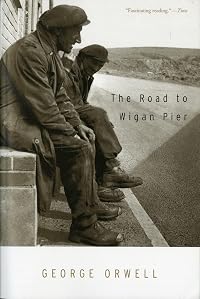
But there's still some fairly interesting bits and pieces throughout: a diary Orwell kept while living in the slums of northern England for The Road to Wigan Pier, letters he sent while in the trenches of the Spanish Civil War, observations of Morocco, and a good understanding of his opinions leading up to WWII. Nowadays that war has been all but deified, the last Good War where the Free Men stood up to Nazi Oppression, but Orwell makes it clear that public opinion in Britain (and presumably elsewhere) was complex and divided; he himself clearly had no illusions about nations standing up for what is right, as opposed to what was in their (capital) interest.
There's also a particularly hilarious reply (the only piece in the volume not written by Orwell) to the essay "Boy's Weeklies," which I read a long time ago, and which remains one of Orwell's most interesting essays. Frank Richards, the writer of the weeklies in question, actually responded to Orwell. In his indignant, rambling response he refers to himself in third person, suggests that he is a better writer than Bernard Shaw, Thackeray or Chekhov, and declares that "noblemen generally are better fellows than commoners" and "foreigners are funny."
I read An Age Like This in bits and pieces, and found it fairly easy going. If I'd tried to read it all at once I probably would have been bored. Nonetheless, I expect to enjoy the later volumes more, when there's less personal correspondence and more essays and opinion pieces. show less
An Age Like show more This covers the period from 1920 to 1940; which is to say, it has three letters from the 1920s and then jumps to 1930, when Orwell's surviving work is a bit more substantial. Letters, nonetheless, comprise the vast majority of the book. I've never read a collection of an author's letters before, and I can't say I enjoyed it all that much. They weren't something I was ever interested in reading, and at times they didn't seem to be particularly relevant to anything, which left me feeling like a voyeur. I'd hate to think that sixty years after I died somebody was reading all of my old correspondence to my friends. (Well, actually, I wouldn't, because it would mean I became hugely important. But still.)
But there's still some fairly interesting bits and pieces throughout: a diary Orwell kept while living in the slums of northern England for The Road to Wigan Pier, letters he sent while in the trenches of the Spanish Civil War, observations of Morocco, and a good understanding of his opinions leading up to WWII. Nowadays that war has been all but deified, the last Good War where the Free Men stood up to Nazi Oppression, but Orwell makes it clear that public opinion in Britain (and presumably elsewhere) was complex and divided; he himself clearly had no illusions about nations standing up for what is right, as opposed to what was in their (capital) interest.
There's also a particularly hilarious reply (the only piece in the volume not written by Orwell) to the essay "Boy's Weeklies," which I read a long time ago, and which remains one of Orwell's most interesting essays. Frank Richards, the writer of the weeklies in question, actually responded to Orwell. In his indignant, rambling response he refers to himself in third person, suggests that he is a better writer than Bernard Shaw, Thackeray or Chekhov, and declares that "noblemen generally are better fellows than commoners" and "foreigners are funny."
I read An Age Like This in bits and pieces, and found it fairly easy going. If I'd tried to read it all at once I probably would have been bored. Nonetheless, I expect to enjoy the later volumes more, when there's less personal correspondence and more essays and opinion pieces. show less
Contains a large piece of writings leading to Homage to Catalonia, also research for Down and Out in London and Paris and The Road to Wigan Pier.
The Collected Essays, Journalism and Letters of George Orwell Vols 1-5
Orwell is a victim of his own versatility. Because he transitioned from journalist to novelist his posthumous fame centres on the novels 1984 and Animal Farm. Yet for most of his life Orwell was a working journalist and eloquent witness to the political ructions of the 1930s and 1940s. These volumes of his collected journalism are not merely a masterclass in journalistic prose, they’re history written in real time. No one skewered the hypocrisies of his age with greater precision and no one was more willing to own up to his own mistakes and misplaced loyalties. In my view, if you’re a journalist and Orwell isn’t one of your heroes then something’s gone show more wrong.
By David Olusoga in The Guardian, 8 January 2017
Describes my thoughts well. show less
Orwell is a victim of his own versatility. Because he transitioned from journalist to novelist his posthumous fame centres on the novels 1984 and Animal Farm. Yet for most of his life Orwell was a working journalist and eloquent witness to the political ructions of the 1930s and 1940s. These volumes of his collected journalism are not merely a masterclass in journalistic prose, they’re history written in real time. No one skewered the hypocrisies of his age with greater precision and no one was more willing to own up to his own mistakes and misplaced loyalties. In my view, if you’re a journalist and Orwell isn’t one of your heroes then something’s gone show more wrong.
By David Olusoga in The Guardian, 8 January 2017
Describes my thoughts well. show less
Très, très impressionné par la justesse de ton et d'analyse, mais surtout, incroyablement, je regardé maintes fois la date de parution des articles... Et oui, Orwell est nettement en avance sur son temps.
Dec 3, 2015French
Members
- Recently Added By
Lists

Mustich's 1000 Books to Read Before You Die: A Life Changing List
1,001 works; 19 members
Author Information

388+ Works 221,144 Members
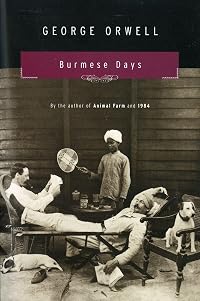
George Orwell was born Eric Arthur Blair on June 25, 1903 in Motihari in Bengal, India and later studied at Eton College for four years. He was an assistant superintendent with the Indian Imperial Police in Burma. He left that position after five years and moved to Paris, where he wrote his first two books: Burmese Days and Down and Out in Paris show more and London. He then moved to Spain to write but decided to join the United Workers Marxist Party Militia. After being decidedly opposed to communism, he served in the British Home Guard and with the Indian Service of the BBC during World War II. After the war, he wrote for the Observer and was literary editor for the Tribune. His best known works are Animal Farm and 1984. His other works include A Clergyman's Daughter, Keep the Aspidistra Flying, The Road to Wigan Pier, Homage to Catalonia, and Coming Up for Air. He died on January 21, 1950 at the age of 46. (Bowker Author Biography) show less
George Orwell has a Legacy Library. Legacy libraries are the personal libraries of famous readers, entered by LibraryThing members from the Legacy Libraries group.
All Editions
Awards and Honors
Distinctions
Notable Lists
Series

Work Relationships
Common Knowledge
- Canonical title
- The Collected Essays, Journalism and Letters of George Orwell, Volume 1: An Age Like This, 1920-1940
- Original publication date
- 1968
- First words
- From a very early age, perhaps the age of five or six, I knew that when I grew up I should be a writer.
- Quotations
- This business of libel is becoming a nightmare – it appears that there now exist firms of crook solicitors who make a regular income by blackmailing publishers. (#71)
What worries me at present is the uncertainty as to whether the ordinary people in countries like England grasp the difference between democracy and despotism well enough to want to defend their liberties. (#158) - Disambiguation notice
- This is Volume 1 of The Collected Essays, Journalism, and Letters of George Orwell (of 4 volumes)
Classifications
- Genres
- Nonfiction, Literature Studies and Criticism
- DDC/MDS
- 828.91209 — Literature & rhetoric English & Old English literatures English miscellaneous writings English miscellaneous writings 1900- English miscellaneous writings 1900-1999 English miscellaneous writings 1900-1945 Individual authors not limited to or chiefly identified with one specific form.
- LCC
- PR6029 .R8 .A6 — Language and Literature English English Literature 1900-1960
- BISAC
Statistics
- Members
- 553
- Popularity
- 53,559
- Reviews
- 7
- Rating
- (4.15)
- Languages
- English, French, Hungarian
- Media
- Paper
- ISBNs
- 7
- ASINs
- 12