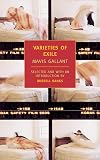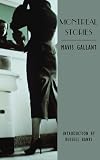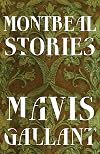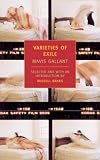
Montreal Stories
by Mavis Gallant
On This Page
Description
Mavis Gallant is the modern master of what Henry James called the international story, the fine-grained evocation of the quandaries of people who must make their way in the world without any place to call their own. The irreducible complexity of the very idea of home is especially at issue in the stories Gallant has written about Montreal, where she was born, although she has lived in Paris for more than half a century.Varieties of Exile, Russell Banks's extensive new selection from show more Gallant's work, demonstrates anew the remarkable reach of this writer's singular art. Among its contents are three previously uncollected stories, as well as the celebrated semi-autobiographical sequence about Linnet Muir--stories that are wise, funny, and full of insight into the perils and promise of growing up and breaking loose. show lessTags
Recommendations

















Member Reviews
This collection of short stories brings together Mavis Gallant’s work about Montréal: the uneasy mixing between English and French before the Quiet Revolution, the province coming into its own as the twentieth century progresses, women finding their way in the workplace. As someone whose grandparents came from this era of Anglo Montréal, I found the atmosphere absorbing, and I liked best the stories about Linnet Muir, which are more closely autobiographical. Some of the stories just kind of end without tying things up neatly, so if you like or expect neat endings or pithy concluding statements, you may have a harder time with this collection. But I thought it interesting for the era it evoked.
The first three stories in this book were nicely observed portraits of charcters whose thoughts and words are at cross purposes. Nice, but not too memorable. However, the first story of the Linnet Muir sequence (several semi-autobiographical first person narratives) hooked me and I eagerly read the rest of the stories. “The Doctor” is Linnet’s look back at her childhood in Montreal, which is continued in “Voices in the Snow”. Her independence is chronicled in “In Youth is Pleasure” and “Between Zero and One” describes her employment in the mostly male section of an engineering firm. The title story is a portrait of an acquaintance of hers, a married man who she derogatorily calls a “remittance man” – one who has show more been paid by his family in the Britain to go away. The next set of stories follows the Carette family, the widowed mother and her two daughters, strong and independent Berthe and fragile Marie. The Carettes are mentioned in Linnet’s sequence but do not play a large role. The last set of stories describes the life of Steven Burnet, his long-ago ex-wife Lily and their friends.
I enjoyed all the sequences – they were sharply observed, well-written (a lot of sentences that I admiringly read a second time) and you came to know the characters in a short space. Many of the stories deal with the tension between the present and the past. In the Linnet Muir stories, the narrator remembers her childhood and is able to comment on the true meaning of some of the events or pass judgment on her own childish beliefs. At the same time, though, the child’s attachments and thoughts come through. The books that she treasured as a child are now judged didactic and she now knows that they were only read the one time, but there’s still some sadness at their loss – she doesn’t know quite where they were lost. The narrator also is able to create a wonderful portrait of a specific place and time and notes now that it is all gone. Her incisive analyses also expose the characters for what they really are. About her co-workers at the firm and their petty complaints – “They were like that prisoner of Mussolini, shut up for life, who burst into tears because the soup was cold.” The men are much older than Linnet and she notes that they all complained about difficult childhoods. "What struck me was the good they thought it had done them (I had yet to meet an adult man with a poor opinion of himself) and their desire to impose the same broken fortunes on other people, particularly on the young - though not their own young, of course." The tension continues as she grows up though instead the distance between what Linet believes she is – an independent adult – and how everyone treats her.
The Carette family stories are narrated in the third person and the disparities there are between expectations and reality. The same attention to detail and social nuances are there as well. Their mother tries to maintain their social status after being widowed which necessarily involves some privation. Later, she and Berthe try to find a husband for Marie but all the superficial fuss overlays some sadness and resignation at the way things are. Marie’s son, Raymond, continually disappoints his mother and aunt. Detached bachelor Steven Burnet narrates stories centered on his marriage to Lily Quale. Initially, he presents the marriage as something he’s practically forgotten, but his detailed narrative – as well as the fact that all his relationships since have been commitment-free – demonstrates his self-delusion. As in the Muir stories, the conflict between the present and the past is seen in the Burnet stories. Steven, going by S. Blake in the present, chaperones Lily’s daughter around the south of France while memories of his marriage are dredged up. He recalls their childhood love, now complete with instances of her betrayal. He juxtaposes past and present again in another story describing the party that led to the disintegration of not only his own marriage, but the marriage of their friends in France.
Often, Gallant’s sharp eye is directed towards the divisions between all stripes of Canadians – the French-Catholics, English-Protestants and those in between. The French language is used as a class marker, a weapon, a source of grief and shame. Many of the characters remain ambivalent about Britian and the Queen, America and Americans, and the wars that crop up and affect the families in different ways. All masterfully done of course. The book is named after one of the stories but the title would be applicable to many of the stories that appear in this collection as the characters are stuck in their own kinds of exile – physical, social, emotional. Wonderfully portrayed – will definitely be reading more by Gallant. show less
I enjoyed all the sequences – they were sharply observed, well-written (a lot of sentences that I admiringly read a second time) and you came to know the characters in a short space. Many of the stories deal with the tension between the present and the past. In the Linnet Muir stories, the narrator remembers her childhood and is able to comment on the true meaning of some of the events or pass judgment on her own childish beliefs. At the same time, though, the child’s attachments and thoughts come through. The books that she treasured as a child are now judged didactic and she now knows that they were only read the one time, but there’s still some sadness at their loss – she doesn’t know quite where they were lost. The narrator also is able to create a wonderful portrait of a specific place and time and notes now that it is all gone. Her incisive analyses also expose the characters for what they really are. About her co-workers at the firm and their petty complaints – “They were like that prisoner of Mussolini, shut up for life, who burst into tears because the soup was cold.” The men are much older than Linnet and she notes that they all complained about difficult childhoods. "What struck me was the good they thought it had done them (I had yet to meet an adult man with a poor opinion of himself) and their desire to impose the same broken fortunes on other people, particularly on the young - though not their own young, of course." The tension continues as she grows up though instead the distance between what Linet believes she is – an independent adult – and how everyone treats her.
The Carette family stories are narrated in the third person and the disparities there are between expectations and reality. The same attention to detail and social nuances are there as well. Their mother tries to maintain their social status after being widowed which necessarily involves some privation. Later, she and Berthe try to find a husband for Marie but all the superficial fuss overlays some sadness and resignation at the way things are. Marie’s son, Raymond, continually disappoints his mother and aunt. Detached bachelor Steven Burnet narrates stories centered on his marriage to Lily Quale. Initially, he presents the marriage as something he’s practically forgotten, but his detailed narrative – as well as the fact that all his relationships since have been commitment-free – demonstrates his self-delusion. As in the Muir stories, the conflict between the present and the past is seen in the Burnet stories. Steven, going by S. Blake in the present, chaperones Lily’s daughter around the south of France while memories of his marriage are dredged up. He recalls their childhood love, now complete with instances of her betrayal. He juxtaposes past and present again in another story describing the party that led to the disintegration of not only his own marriage, but the marriage of their friends in France.
Often, Gallant’s sharp eye is directed towards the divisions between all stripes of Canadians – the French-Catholics, English-Protestants and those in between. The French language is used as a class marker, a weapon, a source of grief and shame. Many of the characters remain ambivalent about Britian and the Queen, America and Americans, and the wars that crop up and affect the families in different ways. All masterfully done of course. The book is named after one of the stories but the title would be applicable to many of the stories that appear in this collection as the characters are stuck in their own kinds of exile – physical, social, emotional. Wonderfully portrayed – will definitely be reading more by Gallant. show less
Known as Varieties of Exile outside Canada, many of these stories were originally printed in The New Yorker. Most were set in the mid-20th century, before Quebec's Quiet Revolution (Révolution tranquille), at a time when social conventions and manners were quite rigid. Gallant accents many details that create a very realistic social memory of a Montreal now gone. Several stories feature the same characters, such as Linnet Muir, an independent young woman seeking emancipation and liberation.
Unlike most collections of short stories where some appeal more than others, my enjoyment of this collection was even. One that stood out was Between Zero and One about a young woman working in an office of men during WWII: is she taking a job from a show more man; should she earn as much as she does - or even anything at all? After all, she doesn't have to support a family. A new female supervisor proves to be even more antagonistic. Although Gallant was obliged to tolerate this anti-feminist attitude, this story gave her the last word.
Gallant shows an outstanding perception and ability to describe the most minute of social graces and domestic niceties. Highly recommended.
This was an audiobook with excellent narration by Margot Dionne. The stories were interspersed by Twelve Fantasias for violin without bass by Teleman, performed by Angèle Dubeau. show less
Unlike most collections of short stories where some appeal more than others, my enjoyment of this collection was even. One that stood out was Between Zero and One about a young woman working in an office of men during WWII: is she taking a job from a show more man; should she earn as much as she does - or even anything at all? After all, she doesn't have to support a family. A new female supervisor proves to be even more antagonistic. Although Gallant was obliged to tolerate this anti-feminist attitude, this story gave her the last word.
Gallant shows an outstanding perception and ability to describe the most minute of social graces and domestic niceties. Highly recommended.
This was an audiobook with excellent narration by Margot Dionne. The stories were interspersed by Twelve Fantasias for violin without bass by Teleman, performed by Angèle Dubeau. show less
Absolutely fell in love with Mavis Gallant here. I'd highly reccommend it to anyone interested in short stories, she hasn't got nearly as much exposure as she deserves.
Its a collection of fantastic short stories about people apart, or outside, or in some way, well, exiled. They're set in canada, which adds another interesting element... i had no idea the dynamics in quebec....
Its a collection of fantastic short stories about people apart, or outside, or in some way, well, exiled. They're set in canada, which adds another interesting element... i had no idea the dynamics in quebec....
Interminable. Stories without drama read by a woman without theatricality, this is a great treatment for insomnia.
Ratings
Members
- Recently Added By
Author Information

54+ Works 3,020 Members
Mavis Gallant was born in Montreal, Canada on August 11, 1922. Her parents sent her to live at a French convent when she was 4. When she was 10, her father died from kidney disease. Her mother quickly remarried and moved to New York - leaving her daughter behind. During World War II, Gallant worked in the cutting room at the National Film Board of show more Canada and as a reporter for the Montreal Standard. She eventually became a columnist and feature writer. Two of her short stories appeared in the December, 1944, issue of Preview. She published more than 100 stories in The New Yorker beginning in 1951. During her lifetime, she wrote two novels and several short story collections. Her works include Green Water, Green Sky; A Fairly Good Time; Overhead in a Balloon; Across the Bridge; The Pegnitz Junction; Paris Stories; and The Cost of Living. She received several awards including the Governor-General's Award for Home Truths: Selected Canadian Stories, the Pen Nabokov Award for career achievement, the Matt Cohen Prize in 2000, and the Rea Award for the Short Story in 2002. In 1981, she was made Officer of the Order of Canada for her contribution to literature that year. She died on February 18, 2014 at the age 91. (Bowker Author Biography) show less
Some Editions
Awards and Honors
Series
Belongs to Publisher Series
Common Knowledge
- Canonical title
- Montreal Stories
- Original title
- Montreal Stories
- Alternate titles
- Varieties of Exile
- Original publication date
- 2003
- Important places
- Montréal, Québec, Canada
- Dedication
- To William Toye
- First words
- In a long room filled with cots and undesired infants, Nora Abbott had her first sight of Neil, who belonged to Mr. and Mrs. Boyd Fenton.
- Last words
- (Click to show. Warning: May contain spoilers.)I wonder now if there was anything about us for the children to remember: There was that long table of English-speaking people, still in bud.
- Original language
- English
Classifications
Statistics
- Members
- 302
- Popularity
- 106,634
- Reviews
- 5
- Rating
- (4.40)
- Languages
- English, Italian
- Media
- Paper, Audiobook, Ebook
- ISBNs
- 8
- ASINs
- 3