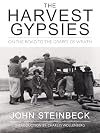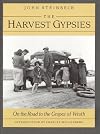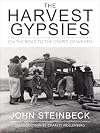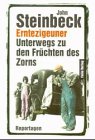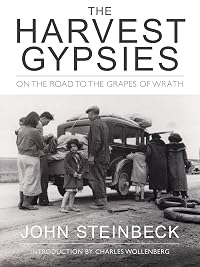
The Harvest Gypsies: On the Road to the Grapes of Wrath
by John Steinbeck
On This Page
Description
A collection of newspaper articles about Dust Bowl migrants in California's Central Valley by the author of The Grapes of Wrath, accompanied by photos. Three years before his triumphant novel The Grapes of Wrath-a fictional portrayal of a Depression-era family fleeing Oklahoma during a disastrous period of drought and dust storms-John Steinbeck wrote seven articles for the San Francisco News about these history-making events and the hundreds of thousands who made their way west to work as show more farm laborers. With the inquisitiveness of an investigative reporter and the emotional power of a novelist in his prime, Steinbeck toured the squatters' camps and Hoovervilles of rural California. The Harvest Gypsies gives us an eyewitness account of the horrendous Dust Bowl migration, and provides the factual foundation for Steinbeck's masterpiece. Included are twenty-two photographs by Dorothea Lange and others, many of which accompanied Steinbeck's original articles. show lessTags
Recommendations























Member Reviews
This year marks the 75th anniversary of John Steinbeck’s [Grapes of Wrath]. Three years before publishing what would be his best known and most critically acclaimed novel, Steinbeck loaded himself into an old bakery van and toured the ‘Hoovervilles’ and ‘Little Oklahomas’ in Northern and Central California’s agricultural valleys. They had sprouted from the influx of migrant laborers who had fled to California to escape the dust and poverty of the Midwest. His notes formed the basis of seven articles that were published in the San Francisco News October 5-12, 1936.
Journalism has fueled many literary careers – ask after Jack London or Ernest Hemingway or Edgar Allen Poe. In 1936, Steinbeck had seen the publication of little show more that stands as classic Steinbeck – only [Tortilla Flat] in 1935. But the opportunity to rub elbows with the poverty ridden migrant class in the very fields and pastures where his own youth was rooted was too much to pass on. And the result was the creative seeds that quickened the Joad family for us all and promised Steinbeck the notoriety he felt his writing deserved.
[The Harvest Gypsies] collects the seven articles from 1936. The context for the substance of the articles, as well as for Steinbeck, is laid out in a detailed and thorough introduction written by Charles Wollenberg, a Berkeley professor and expert in California’s labor history. Wollenberg lays out the basics for those of us who wouldn’t understand California in 1936. But it is Steinbeck who looks at the issues from a multitude of facets, beginning with a rare description of the classes of poverty in the camps – even in destitution, there are degrees. Steinbeck breaks out the warring principles that drove the creation of the labor movement in California’s agricultural enterprises, the seeds of which eventually inspired Cesar Chavez in the 1960s.
Steinbeck’s articles evince a depth that is missing from most of today’s journalism, providing context and facts, but also taking a stance rather than merely describing a problem. An issue is never as fully explained as when the writer makes the bold choice of an opinion, regardless of the agreement of the reader. The articles even portend the eventual labor movements that changed the face of agriculture in the United States.
The detail and positions of Steinbeck’s articles never completely find their way into [The Grapes of Wrath]. Many issue-based novels devolve into little more than a platform for a political or ideological stance that the author wants to deliver. Steinbeck chose to use his research and experience to create an authentic place and time for his characters. And while [The Grapes of Wrath] is certainly tied to the issues of the time, it is first, and foremost, a story, and it never loses its way. [The Harvest Gypsies] is the deeper and more pointed examination of the issues, a companion book and a mirror for Steinbeck’s later novel.
What is still in evidence in [The Harvest of Gypsies] is Steinbeck’s straightforward, declarative writing. While anchored in a different medium, the articles are still classic Steinbeck. More of our modern writers would do well to practice their fledgling art in the world of print journalism, as it provides instruction on simple and powerful sentence writing and the ability to get to the meaning without meandering.
Bottom Line: A companion and mirror to [The Grapes of Wrath].
5 bones!!!!! show less
Journalism has fueled many literary careers – ask after Jack London or Ernest Hemingway or Edgar Allen Poe. In 1936, Steinbeck had seen the publication of little show more that stands as classic Steinbeck – only [Tortilla Flat] in 1935. But the opportunity to rub elbows with the poverty ridden migrant class in the very fields and pastures where his own youth was rooted was too much to pass on. And the result was the creative seeds that quickened the Joad family for us all and promised Steinbeck the notoriety he felt his writing deserved.
[The Harvest Gypsies] collects the seven articles from 1936. The context for the substance of the articles, as well as for Steinbeck, is laid out in a detailed and thorough introduction written by Charles Wollenberg, a Berkeley professor and expert in California’s labor history. Wollenberg lays out the basics for those of us who wouldn’t understand California in 1936. But it is Steinbeck who looks at the issues from a multitude of facets, beginning with a rare description of the classes of poverty in the camps – even in destitution, there are degrees. Steinbeck breaks out the warring principles that drove the creation of the labor movement in California’s agricultural enterprises, the seeds of which eventually inspired Cesar Chavez in the 1960s.
Steinbeck’s articles evince a depth that is missing from most of today’s journalism, providing context and facts, but also taking a stance rather than merely describing a problem. An issue is never as fully explained as when the writer makes the bold choice of an opinion, regardless of the agreement of the reader. The articles even portend the eventual labor movements that changed the face of agriculture in the United States.
The detail and positions of Steinbeck’s articles never completely find their way into [The Grapes of Wrath]. Many issue-based novels devolve into little more than a platform for a political or ideological stance that the author wants to deliver. Steinbeck chose to use his research and experience to create an authentic place and time for his characters. And while [The Grapes of Wrath] is certainly tied to the issues of the time, it is first, and foremost, a story, and it never loses its way. [The Harvest Gypsies] is the deeper and more pointed examination of the issues, a companion book and a mirror for Steinbeck’s later novel.
What is still in evidence in [The Harvest of Gypsies] is Steinbeck’s straightforward, declarative writing. While anchored in a different medium, the articles are still classic Steinbeck. More of our modern writers would do well to practice their fledgling art in the world of print journalism, as it provides instruction on simple and powerful sentence writing and the ability to get to the meaning without meandering.
Bottom Line: A companion and mirror to [The Grapes of Wrath].
5 bones!!!!! show less
This short book is a collection of articles Steinbeck wrote for the San Francisco News in 1936 about the issues of migrant labourers in California. His articles not only expose starkly the horrible conditions in which many migrant families lived, which progressively worsened over time on the road and in encampments, but also covers the earlier history of migrant labourers in the state, Chinese, Japanese, Mexicans and Filipinos, as well as proposing some practical solutions to the problems. These are worthy and well argued, but clearly did not have anywhere near the impact on public and wider opinion that The Grapes of Wrath has had. What a talent to write so well in both reportage and fictional form.
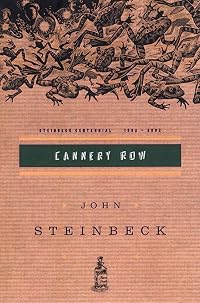
. I'm not really a fan of Steinbeck (The Grapes of Wrath and Cannery Row), but found this short writing to be excellent reading. It was originally 7 newspaper articles that has been made into a short non-fiction book. Steinbeck heart wrenchingly describes the plight of the Okies during the Great Depression. He describes in detail their living conditions in the Hoovervilles. He also does a good job making these gypsies so very human. They were mostly small family farmers that lost their farms during the dust bowl. He tells us how the people in California hated them but needed them. Without these migrant workers most of the California peach and apples orchards would have failed. The book also includes photographs by Dorothea Lange and show more others, which were published when the columns were. Certainly much better than The Grapes of Wrath IMHO. 82 pages show less
In 1936, John Steinbeck toured the migrant camps and government camps of California. He wrote seven articles about the plight of the migrant workers that were published in The San Francisco News. The Harvest Gypsies is the compilation of those articles.
Having read The Grapes of Wrath there's not much to say about The Harvest Gypsies. It's clear Steinbeck was greatly moved by his experience in 1936, and it was this series of encounters that was the catalyst for his 1938 Pulitzer-winning novel. Elements of many of the stories Steinbeck tells in The Grapes of Wrath are first seen here. Told in a concise, largely journalistic voice, The Harvest Gypsies doesn't leave too much room for the Steinbeck we love, but he does make brief show more appearances.
The Harvest Gypsies is a very thin book primarily for Steinbeck fans. It also serves as a great companion to The Grapes of Wrath. It's not one I'd recommend to readers who have not read and loved The Grapes of Wrath. show less
Having read The Grapes of Wrath there's not much to say about The Harvest Gypsies. It's clear Steinbeck was greatly moved by his experience in 1936, and it was this series of encounters that was the catalyst for his 1938 Pulitzer-winning novel. Elements of many of the stories Steinbeck tells in The Grapes of Wrath are first seen here. Told in a concise, largely journalistic voice, The Harvest Gypsies doesn't leave too much room for the Steinbeck we love, but he does make brief show more appearances.
The Harvest Gypsies is a very thin book primarily for Steinbeck fans. It also serves as a great companion to The Grapes of Wrath. It's not one I'd recommend to readers who have not read and loved The Grapes of Wrath. show less
'Grapes of Wrath' is one of my all-time favorites and i just finished reading 'In Dubious Battle,' so this was an interesting take on John Steinbeck's inspiration and motivation for these works concerning California migrant workers in the 1930's. I picked it up at the Steinbeck museum in Salinas 2 years ago and i finally got around to reading it. Harsh reality that is hard to relate to in our comfy worlds today......much appreciated and recommended..
Excellent series of articles on the problems of the dust bowl era. Much will seem familiar to the reader of "Grapes of Wrath". Thought provoking.
A collection of seven newspaper articles written by Steinbeck about migrant farm workers during the Depression. These writings led to The Grapes of Wrath.
Members
- Recently Added By
Author Information

482+ Works 207,133 Members
In recent years Steinbeck has been elevated to a more prominent status among American writers of his generation. If not quite at the world-class artistic level of a Hemingway or a Faulkner, he is nonetheless read very widely throughout the world by readers of all ages who consider him one of the most "American" of writers. Born in Salinas County, show more California on February 27, 1902, Steinbeck was of German-Irish parentage. After four years as a special student at Stanford University, he went to New York, where he worked as a reporter and as a hod carrier. Returning to California, he devoted himself to writing, with little success; his first three books sold fewer than 3,000 copies. Tortilla Flat (1935), dealing with the paisanos, California Mexicans whose ancestors settled in the country 200 years ago, established his reputation. In Dubious Battle (1936), a labor novel of a strike and strike-breaking, won the gold medal of the Commonwealth Club of California. Of Mice and Men (1937), a long short story that turns upon a melodramatic incident in the tragic friendship of two farm hands, written almost entirely in dialogue, was an experiment and was dramatized in the year of its publication, winning the New York Drama Critics Circle Award. It brought him fame. Out of a series of articles that he wrote about the transient labor camps in California came the inspiration for his greatest book, The Grapes of Wrath (1939), the odyssey of the Joad family, dispossessed of their farm in the Dust Bowl and seeking a new home, only to be driven on from camp to camp. The fiction is punctuated at intervals by the author's voice explaining this new sociological problem of homelessness, unemployment, and displacement. As the American novel "of the season, probably the year, possibly the decade," it won the Pulitzer Prize in 1940. It roused America and won a broad readership by the unusual simplicity and tenderness with which Steinbeck treated social questions. Even today, The Grapes of Wrath remains alive as a vivid account of believable human characters seen in symbolic and universal terms as well as in geographically and historically specific ones. Ma Joad is one of the most memorable characters in twentieth-century American fiction. It is her courage that sustains the family. Steinbeck's best and most ambitious novel after The Grapes of Wrath is East of Eden (1952), a saga of two American families in California from before the Civil War through World War I. Cannery Row (1945), The Wayward Bus (1947), and Sweet Thursday (1955) are lighter works that find Steinbeck returning to the lighthearted tone of Tortilla Flat as he recounts picaresque adventures of modern-day picaros. The Winter of Our Discontent (1961) struck some reviewers as being appropriately titled because of its despairing treatment of humanity's fall from grace in a wasteland world where money is king. Steinbeck also wrote important nonfiction, including Russian Journal (1948) in collaboration with the photographer Robert Capa; Once There Was a War (1958) and America and Americans (1966), which features pictures by 55 leading photographers and a 70-page essay by Steinbeck. His interest in marine biology led to two books primarily about sea life, Sea of Cortez (1941) (with Edward F. Ricketts) and The Log from the Sea of Cortez (1951). Travels with Charley (1962) is an engaging account of his journey of rediscovery of America, which took him through approximately 40 states. Steinbeck was married three times and died in New York City on December 20, 1968 of heart disease and congestive heart failure. He was 66, and had been a life-long smoker. (Bowker Author Biography) show less
Some Editions
Work Relationships
Common Knowledge
- Canonical title*
- 収穫するジプシー
- Original publication date
- 1936
*Some information comes from Common Knowledge in other languages. Click "Edit" for more information.
Classifications
Statistics
- Members
- 350
- Popularity
- 90,214
- Reviews
- 11
- Rating
- (3.89)
- Languages
- 6 — English, French, German, Italian, Japanese, Spanish
- Media
- Paper, Audiobook, Ebook
- ISBNs
- 11
- ASINs
- 9