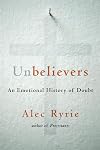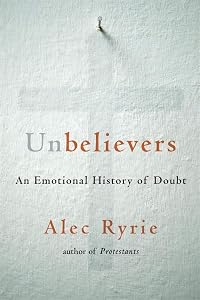
Unbelievers: An Emotional History of Doubt
by Alec Ryrie
On This Page
Description
"Looking back to the crisis of the Reformation and beyond, Unbelievers shows how, long before philosophers started to make the case for atheism, powerful cultural currents were challenging traditional faith. These tugged in different ways not only on celebrated thinkers such as Machiavelli, Montaigne, Hobbes, and Pascal, but on men and women at every level of society whose voices we hear through their diaries, letters, and court records. Ryrie traces the roots of atheism born of anger, a show more sentiment familiar to anyone who has ever cursed a corrupt priest, and of doubt born of anxiety, as Christians discovered their faith was flimsier than they had believed. As the Reformation eroded time-honored certainties, Protestant radicals defended their faith by redefining it in terms of ethics. In the process they set in motion secularizing forces that soon became transformational. Unbelievers tells a powerful emotional history of doubt with potent lessons for our own angry and anxious age"-- show lessTags
Recommendations










Member Reviews
I enjoyed reading the book for its historical content and anecdotes. The author is engaging and writes well. But it was not what I thought it would be. I kept asking myself, when is the author going to make his point?
In the introduction, the author asks: What if people stopped believing and found that they needed arguments to justify their unbelief?
The author also states in the introduction that it is not only religious belief which is chosen for instinctive, inarticulate, intuitive reasons. So is unbelief.
He says that the crucial juncture in the history of atheism is the period before the philosophers made it intellectually respectable. I.e., there is pre-Enlightenment atheism and post-Enlightenment atheism. Those who came before the show more Enlightenment were atheists for emotional reasons. This history continued through the Enlightenment but became hidden because philosophers gave unbelievers sophisticated rationalizations to hide the emotional non-rational reasons for their unbelief.
The author mines the pre-Enlightenment past to find the real emotional reasons for disbelief before Westerners became tainted by philosophers’ high-minded justifications for disbelief which masked their true reasons.
The author provides a series of descriptions of seventeenth century unbelievers in the Christian god in an attempt to show that that most people who were unbelievers did so for emotional rather than rational reasons. He doesn't establish his thesis in my opinion.
There are a lot of problems with his thesis. Two that stand out for me are the confusion of some with all and the confusion of cause and effect.
It is easy to find examples of people who believe all sorts of things for emotional reasons. There are also examples of people who believe or disbelieve many things for rational reasons as well. Some is not all.
Some people report seeing their deceased loved one after death. Margaret Thatcher is one of them. It doesn’t mean a person actually came back from the dead. For emotional reasons, some believe that they did. Others know that this is impossible and that they were hallucinating. They disbelieve for rational reasons.
The examples the author uses to illustrate disbelief based on emotion actually seemed to me to be very good reasons for not believing rather than ad hoc confabulations used to justify unbelief. He reports one person as saying that he had never seen a person come back from the dead. Others were angry at the corruption of the clergy. You have to remember that Christianity is the only religion that claims that once you become a believer, God himself through the Holy Spirit indwells you and helps you overcome your fallen nature through a process of sanctification. Seeing the corruption of the clergy would seem to me to be a very good refutation of that idea and would tend to make one an unbeliever.
Not everyone is a philosopher or reads philosophy, but that does not mean that they don’t have very good rational reasons for disbelief. The brute facticity and immense weight of a mundane godless world constantly confronts every human being. It can be a slow grinding process. The world not making sense is a very good reason for not believing. Because it is not articulated through a sophisticated philosophy and eventually expresses itself through an emotion does not mean that it is non-rational. It is a very rational conclusion. It is believers who make the ad hoc rationalizations. Oh, it is god’s will. It is part of his plan. There’s a higher purpose. His ways are unknowable…on and on until belief falls before a thousand cuts…cause and effect.
In the final chapter, the author jumps from the seventeenth century to today and wonders why the world is giving up on Christianity.
Gee...maybe it's that people no longer interpret the world through a magical lens. It is like the old-hag beautiful-woman optical illusion. We have flipped from viewing the world magically to viewing it through a secular-scientific lens. Seeing a thunderbolt hit the ground near you is not viewed as a sign from god as Martin Luther viewed it. We look at people who have 'messages from god' as mentally ill and not as prophets. If you take evolution seriously, you think that humans evolved and were not created in god's image. Science has demystified and disenchanted the world. Why is this so hard to get?
Humans may need religion. We may need a larger story to give our lives meaning. For most, science doesn’t provide that. But it doesn’t mean we need a religion like Christianity based on magic and miracles and a historical narrative that has been largely falsified (see The Historical Jesus Question: The Challenge of History to Religious Authority (2001) by Gregory W. Dawes).
The larger subtext of the book seems to be the claim that we hold our ultimate beliefs for non-rational reasons. This is a common theme among modern Christian thinkers trying to rationally justify their adherence to Christianity. In their opinion, since all ultimate commitments are held for non-rational reasons, they are immunized from refutation since they are not doing anything that everyone else is doing (tu quoque). Being a Christian is no more or less rational than being an unbeliever. However, unless our ultimate commitments are open to revision, then we are being dogmatic and one has to give up the claim to being rational. A book that makes this point explicitly using Protestantism as an example of a rational belief system that degenerated into an ideology is Retreat to Commitment, by W.W. Bartley. Another is Hans Albert's book Treatise on Critical Reason.
We’ve seen the atrocities that belief can produce. Maybe it’s time to give disbelief a chance. show less
In the introduction, the author asks: What if people stopped believing and found that they needed arguments to justify their unbelief?
The author also states in the introduction that it is not only religious belief which is chosen for instinctive, inarticulate, intuitive reasons. So is unbelief.
He says that the crucial juncture in the history of atheism is the period before the philosophers made it intellectually respectable. I.e., there is pre-Enlightenment atheism and post-Enlightenment atheism. Those who came before the show more Enlightenment were atheists for emotional reasons. This history continued through the Enlightenment but became hidden because philosophers gave unbelievers sophisticated rationalizations to hide the emotional non-rational reasons for their unbelief.
The author mines the pre-Enlightenment past to find the real emotional reasons for disbelief before Westerners became tainted by philosophers’ high-minded justifications for disbelief which masked their true reasons.
The author provides a series of descriptions of seventeenth century unbelievers in the Christian god in an attempt to show that that most people who were unbelievers did so for emotional rather than rational reasons. He doesn't establish his thesis in my opinion.
There are a lot of problems with his thesis. Two that stand out for me are the confusion of some with all and the confusion of cause and effect.
It is easy to find examples of people who believe all sorts of things for emotional reasons. There are also examples of people who believe or disbelieve many things for rational reasons as well. Some is not all.
Some people report seeing their deceased loved one after death. Margaret Thatcher is one of them. It doesn’t mean a person actually came back from the dead. For emotional reasons, some believe that they did. Others know that this is impossible and that they were hallucinating. They disbelieve for rational reasons.
The examples the author uses to illustrate disbelief based on emotion actually seemed to me to be very good reasons for not believing rather than ad hoc confabulations used to justify unbelief. He reports one person as saying that he had never seen a person come back from the dead. Others were angry at the corruption of the clergy. You have to remember that Christianity is the only religion that claims that once you become a believer, God himself through the Holy Spirit indwells you and helps you overcome your fallen nature through a process of sanctification. Seeing the corruption of the clergy would seem to me to be a very good refutation of that idea and would tend to make one an unbeliever.
Not everyone is a philosopher or reads philosophy, but that does not mean that they don’t have very good rational reasons for disbelief. The brute facticity and immense weight of a mundane godless world constantly confronts every human being. It can be a slow grinding process. The world not making sense is a very good reason for not believing. Because it is not articulated through a sophisticated philosophy and eventually expresses itself through an emotion does not mean that it is non-rational. It is a very rational conclusion. It is believers who make the ad hoc rationalizations. Oh, it is god’s will. It is part of his plan. There’s a higher purpose. His ways are unknowable…on and on until belief falls before a thousand cuts…cause and effect.
In the final chapter, the author jumps from the seventeenth century to today and wonders why the world is giving up on Christianity.
Gee...maybe it's that people no longer interpret the world through a magical lens. It is like the old-hag beautiful-woman optical illusion. We have flipped from viewing the world magically to viewing it through a secular-scientific lens. Seeing a thunderbolt hit the ground near you is not viewed as a sign from god as Martin Luther viewed it. We look at people who have 'messages from god' as mentally ill and not as prophets. If you take evolution seriously, you think that humans evolved and were not created in god's image. Science has demystified and disenchanted the world. Why is this so hard to get?
Humans may need religion. We may need a larger story to give our lives meaning. For most, science doesn’t provide that. But it doesn’t mean we need a religion like Christianity based on magic and miracles and a historical narrative that has been largely falsified (see The Historical Jesus Question: The Challenge of History to Religious Authority (2001) by Gregory W. Dawes).
The larger subtext of the book seems to be the claim that we hold our ultimate beliefs for non-rational reasons. This is a common theme among modern Christian thinkers trying to rationally justify their adherence to Christianity. In their opinion, since all ultimate commitments are held for non-rational reasons, they are immunized from refutation since they are not doing anything that everyone else is doing (tu quoque). Being a Christian is no more or less rational than being an unbeliever. However, unless our ultimate commitments are open to revision, then we are being dogmatic and one has to give up the claim to being rational. A book that makes this point explicitly using Protestantism as an example of a rational belief system that degenerated into an ideology is Retreat to Commitment, by W.W. Bartley. Another is Hans Albert's book Treatise on Critical Reason.
We’ve seen the atrocities that belief can produce. Maybe it’s time to give disbelief a chance. show less
“How has unbelief come to dominate so many Western societies? The usual account invokes the advance of science and rational knowledge. Ryrie’s alternative, in which emotions are the driving force, offers new and interesting insights into our past and present.”―Charles Taylor, author of A Secular Age
“Most of us like to believe that we believe what we believe because rigorous reasoning and reliable evidence have led us there. Most of us are wrong…In reality, as Alec Ryrie shows in this short but beautifully crafted history of early doubt, unbelief was (and is) chosen for ‘instinctive, inarticulate and intuitive’ reasons just as much as is belief…He…[argues] persuasively that unbelief was as much, if not more, about show more what people felt as what they thought, in particular a confluence of moral outrage and personal anxiety…Unbelievers covers much ground in a short space with deep erudition and considerable wit.”―The Spectator
“Take[s] in nearly 750 years of doubt and disbelief in the professedly Christian West…Not only a convincing rejection of what one might call the Great Godless Man theory of history but a stirring glimpse into the souls of everyday citizens, whose struggles to maintain their faith in a complex world feel all too familiar.”―Graham Hillard, National Review
“Well-researched and thought-provoking…Ryrie is definitely on to something right and important.”―Timothy Larsen, Christianity Today
The award-winning author of Protestants offers a new vision of the birth of the secular age, looking to the feelings of ordinary men and women―so often left out of the history of atheism.
Why have societies that were once overwhelmingly Christian become so secular? We think we know the answer, but in this lively and startlingly original reconsideration, Alec Ryrie argues that people embraced unbelief much as they have always chosen their worldviews: through their hearts more than their minds.
Looking back to the crisis of the Reformation and beyond, Unbelievers shows how, long before philosophers started to make the case for atheism, powerful cultural currents were challenging traditional faith. These tugged in different ways not only on celebrated thinkers such as Machiavelli, Montaigne, Hobbes, and Pascal, but on men and women at every level of society whose voices we hear through their diaries, letters, and court records.
Ryrie traces the roots of atheism born of anger, a sentiment familiar to anyone who has ever cursed a corrupt priest, and of doubt born of anxiety, as Christians discovered their faith was flimsier than they had believed. As the Reformation eroded time-honored certainties, Protestant radicals defended their faith by redefining it in terms of ethics. In the process they set in motion secularizing forces that soon became transformational. Unbelievers tells a powerful emotional history of doubt with potent lessons for our own angry and anxious age. show less
“Most of us like to believe that we believe what we believe because rigorous reasoning and reliable evidence have led us there. Most of us are wrong…In reality, as Alec Ryrie shows in this short but beautifully crafted history of early doubt, unbelief was (and is) chosen for ‘instinctive, inarticulate and intuitive’ reasons just as much as is belief…He…[argues] persuasively that unbelief was as much, if not more, about show more what people felt as what they thought, in particular a confluence of moral outrage and personal anxiety…Unbelievers covers much ground in a short space with deep erudition and considerable wit.”―The Spectator
“Take[s] in nearly 750 years of doubt and disbelief in the professedly Christian West…Not only a convincing rejection of what one might call the Great Godless Man theory of history but a stirring glimpse into the souls of everyday citizens, whose struggles to maintain their faith in a complex world feel all too familiar.”―Graham Hillard, National Review
“Well-researched and thought-provoking…Ryrie is definitely on to something right and important.”―Timothy Larsen, Christianity Today
The award-winning author of Protestants offers a new vision of the birth of the secular age, looking to the feelings of ordinary men and women―so often left out of the history of atheism.
Why have societies that were once overwhelmingly Christian become so secular? We think we know the answer, but in this lively and startlingly original reconsideration, Alec Ryrie argues that people embraced unbelief much as they have always chosen their worldviews: through their hearts more than their minds.
Looking back to the crisis of the Reformation and beyond, Unbelievers shows how, long before philosophers started to make the case for atheism, powerful cultural currents were challenging traditional faith. These tugged in different ways not only on celebrated thinkers such as Machiavelli, Montaigne, Hobbes, and Pascal, but on men and women at every level of society whose voices we hear through their diaries, letters, and court records.
Ryrie traces the roots of atheism born of anger, a sentiment familiar to anyone who has ever cursed a corrupt priest, and of doubt born of anxiety, as Christians discovered their faith was flimsier than they had believed. As the Reformation eroded time-honored certainties, Protestant radicals defended their faith by redefining it in terms of ethics. In the process they set in motion secularizing forces that soon became transformational. Unbelievers tells a powerful emotional history of doubt with potent lessons for our own angry and anxious age. show less
Ratings
Members
- Recently Added By
Lists

Books 2021
2 works; 1 member
Books Read in 2021
3 works; 1 member
Author Information

18+ Works 739 Members
Alec Ryrie is Professor of the History of Christianity at Durham University. His previous publications include Protestants (2017), Being Protestant in Reformation Britain (2013), The Sorcerer's Tale (2008), The Origins of the Scottish Reformation (2006) and The Gospel and Henry VIII (2003).
Common Knowledge
- Original publication date
- 2019
- People/Characters
- Richard Baxter; John Bunyan; Jesus of Nazareth (Christ); Niccolò Machiavelli; Christopher Marlowe; Michel de Montaigne (show all 8); Blaise Pascal; Baruch Spinoza
- Epigraph
- Most of us, I suspect . . . make an instinctive decision, then build up an infrastructure of reasoning to justify it. And call the result common sense.
Julian Barnes, The Sense of an Ending - Dedication
- for Victoria, my believer
- First words
- Two friends, Christian and Hopeful, are travelling in search of Heaven. (Introduction)
Frederick II, Holy Roman Emperor, King of Sicily, German, Italy and Jerusalem, was perhaps the most powerful ruler of the Middle Ages. - Quotations
- In the 1540s, the English scholar John Cheke wrote a Latin treatise in which he lambasted
those who live . . . as if God was altogether without care of them; and who neither consider with themselves, nor care whether ... (show all)there be a God or no [...] it is most agreeable to our present purpose to call them [atheists*]
We might question whether such people are atheists or if the nineteenth century word 'agnostic' would fit better but the point is that Cheke wasn't talking about metaphysics at all. His targets were, as we might say, the godless, regardless of what beliefs they formally professed.This was the standard usage until the eighteenth century and even beyond. As well as 'contemplative' or 'speculative' atheists - philosophical deniers of God - there were 'practical' atheists, who claim to believe but live as though they did not. As the seventeenth-century essayist Thomas Fuller put it, the practical atheist is not someone who 'thinks there is no God', but someone who thinks not there is a God'. (Introduction, p. 8, Harvard U press, 2019) (elision added, *in Greek letters in the original)
Wherever we find serious unbelief in medieval or early modern Europe, we find this 'mortalist' claim - that dead means dead, end of story. Mortalism in entirely compatible with a belief in God, but [...] Medieval and early mo... (show all)dern Christianity was intensely focused on salvation, the last judgement and the state of the dead. Strip that out, and while you might still have a rather abstract God, you have precious little religion. In theory, mortalism is not atheism. In practice, it might as well be. (Chapter 1, An Age of Suspicion: The Fool's Heart, p.22, Harvard U press, 2019) (elision added)
Medieval Europeans respected authority, but they could also think for themselves. The conundrum that our lives seem as if they mean something, while the world looks as if it means nothing, confronted them, as it confronts us ... (show all)all. (Chapter 1, An Age of Suspicion: The Fool's Heart, p.24, Harvard U press, 2019)
[Christopher] Marlowe was accused of claiming that 'the first beginning of Religion was only to keep men in awe.' Machievelli's contribution was to say out loud what others had long whispered, breathing new confidence into th... (show all)e long-standing suspicion that religion was all a giant trick. (Chapter 1, An Age of Suspicion: From Ancient to Modern, p.39, Harvard U press, 2019)
The accusation of incredulity was an invaluable way of explaining why your arguments had failed to persuade the other side. It was not because they were idiots who could not follow a line of reasoning. It was because they wer... (show all)e fools, who were saying in their hearts that there is no God - even if they did not realize the fact. Your dispute was therefore not fundamentally about doctrine or interpretation. It was about your opponents' carnal inability to see the ravishing spiritual vision which was before your own eyes. (Chapter 2, The Reformation and the Battle for Credulity: Between Superstition and impiety, p.58, Harvard U press, 2019)
In a famous essay on the cannibals of the New World, [Montaigne] argued that only parochial prejudice convinced Europeans that they were civilized and indigenous Americans were barbarians. Torturing and burning heretics was n... (show all)ot obviously nobler than cooking and eating people. (Chapter 2, The Reformation and the Battle for Credulity: 'Doubt Wisely': From Innocence to Experience, p.62, Harvard U press, 2019)
Religions, [Gabriel/Uriel Acosta] argued, either taught futile ceremonies and self-serving regulations, or else made demands - such as the command to love your enemies - that went beyond nature, and so were not merely impossi... (show all)ble but destructive. This was why 'false religion, invented by weak and wicked men', led believers into tormenting themselves with self-denial, using tales of hellfire, 'to frighten weak people out of their senses, torturing or killing out of a terrible zeal to save non-existent immortal souls. Acosta had become convinced that irreligious morality was not only possible, but truer and purer than the religious kind. (Chapter 3, The Atheist's Comedy: The Good Atheist, p.99-100, Harvard U press, 2019)
Protestants and theological liberals, 'honest but timid souls' who God 'is a nebulous, illusory being that vanishes into nothing at the at the first attempt to grasp it', were beneath [Mikhail Bakunin's] contempt. (Chapter 6,... (show all) The Abolition of God: From Then to Now, 1: Anger, p.189, Harvard U press, 2019)
Modern humanism is, perhaps unfortunately, in no sense an expression of universal human values. Its ethical markers [...] are, in a long historical perspective, very unusual indeed. [...]
[Callum] Brown does, however, ... (show all)observe that the dominance of these values in Western culture can be dated to 1945, and in particular, to 'to the notion of human rights which emerged from the second World War. As well as being the most catastrophic war in human history, the Second World War and in particular the Nazi genocide was the defining moral event of our age, which reset our culture's notions of good and evil. [...] in the wider sense that the global crisis revealed that Christianity's moral priorities were wrong. It now seemed plain that cruelty, discrimination and murder were evil in a way that fornication, blasphemy, and impiety were not.
(Chapter 6, The Abolition of God: From Jesus to Hitler, 1: Anger, p.189, Harvard U press, 2019) - Last words
- (Click to show. Warning: May contain spoilers.)Believers and unbelievers alike share an interest in where the story goes next.
- Blurbers
- Noll, Mark; Taylor, Charles; Gordon, Bruce; O'Malley, John
Classifications
Statistics
- Members
- 131
- Popularity
- 249,997
- Reviews
- 2
- Rating
- (3.20)
- Languages
- English, Italian
- Media
- Paper, Audiobook, Ebook
- ISBNs
- 11
- ASINs
- 3