On This Page
Description
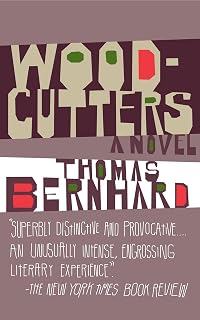
Fiercely observed, often hilarious, and "reminiscent of Ibsen and Strindberg" (The New York Times Book Review), this exquisitely controversial novel was initially banned in its author's homeland. A searing portrayal of Vienna's bourgeoisie, it begins with the arrival of an unnamed writer at an 'artistic dinner' hosted by a composer and his society wife-a couple he once admired and has come to loathe. The guest of honor, a distinguished actor from the Burgtheater, is late. As the other guests show more wait impatiently, they are seen through the critical eye of the writer, who narrates a silent but frenzied tirade against these former friends, most of whom have been brought together by Joana, a woman they buried earlier that day. Reflections on Joana's life and suicide are mixed with these denunciations until the famous actor arrives, bringing an explosive end to the evening that even the writer could not have seen coming. show lessTags
Recommendations






















Member Recommendations

Member Reviews
Cada vez son menos las obras de Thomas Bernhard que me quedan por leer, es por ello que me las voy racionando, porque después ya sé que no habrán nuevas obras de mi admirado Bernhard por leer, y sólo me quedará releer sus obras. Crítica severa de la sociedad artística y cultural de Viena, y crítica despiadada de la propia Viena, ‘Tala’ (1984) es un monólogo interior, desde su sillón de orejas, de un narrador y protagonista que ha sido invitado a una cena artística por los Auersberger, a los que llevaba muchos años sin ver, cena artística que también rememora a la fallecida Joanna, que se ha suicidado. Durante dicha velada, el protagonista repasará parte de su vida, haciendo hincapié en las relaciones con algunos de show more los invitados a esta cena artística. ‘Tala’, por tanto, es una crítica a la sociedad artística vienesa, a su falta de autenticidad, hipocresía y mediocridad, además de una reflexión sobre la estulticia humana. Bernhard despliega una excelente prosa que se encuentra en el culmen de su carrera. Un prosa circular, repetitiva, hipnótica, con palabras clave que se repiten durante la narración, exponiendo una idea repetidamente, volviendo sobre sus pasos para retomarla, exponiendo unos hechos para volver sobre ellos periódicamente, por los mismos hechos. En fin, es Bernhard. show less
It says something about modernity that Austria chose to ban this Bernhard novel, the one that ends (spoiler alert, but really, this is a Bernhard novel, and you're not reading for plot) with a (for Bernhard) grand affirmation of the worthwhileness of human and specifically Viennese existence, to wit, everything is worth hating, but everything is also worth loving.
Austria, c'est nous: more worried about being personally offended than about rampant nihilism.
That aside, this is great. Not quite the stylistic brilliance of The Loser, but very good. I occasionally worry about diminishing returns with Tommy, but so far so good. It helps that he mocks people who claim to be interested in Wittgenstein:
"That Joana should commit suicide was show more the last thing they would have expected, the Auersbergers had said in the Graben, and before rushing off with all their parcels they told me that they had bought *everything by Ludwig Wittgenstein*, so that they could *immerse themselves in Wittgenstein during the coming weeks.* They've probably got Wittgenstein in the smallest parcel, I thought, the one dangling from her right arm."
I imagine that they, like so many readers of Wittgenstein, will both be ravished by his construction of the ideal logical system, outlining everything that can possibly be said in philosophy, which turns out to be nothing, and thus leaves philosophers with nothing to do--and thrilled by his belated recognition that that probably wasn't the case, nor is such a thing possible, and that academic philosophers should stop thinking it is. They will be ravished and thrilled despite not being academic philosophers.
Sigh. show less
Austria, c'est nous: more worried about being personally offended than about rampant nihilism.
That aside, this is great. Not quite the stylistic brilliance of The Loser, but very good. I occasionally worry about diminishing returns with Tommy, but so far so good. It helps that he mocks people who claim to be interested in Wittgenstein:
"That Joana should commit suicide was show more the last thing they would have expected, the Auersbergers had said in the Graben, and before rushing off with all their parcels they told me that they had bought *everything by Ludwig Wittgenstein*, so that they could *immerse themselves in Wittgenstein during the coming weeks.* They've probably got Wittgenstein in the smallest parcel, I thought, the one dangling from her right arm."
I imagine that they, like so many readers of Wittgenstein, will both be ravished by his construction of the ideal logical system, outlining everything that can possibly be said in philosophy, which turns out to be nothing, and thus leaves philosophers with nothing to do--and thrilled by his belated recognition that that probably wasn't the case, nor is such a thing possible, and that academic philosophers should stop thinking it is. They will be ravished and thrilled despite not being academic philosophers.
Sigh. show less
The action of Holzfällen can be summed up in a single paragraph - and that's exactly what Bernhard does, but the paragraph in question is 320 pages long. The narrator has been invited to an "artistic supper party" in the rather grand Gentzgasse apartment of some old acquaintances, the Auersbergers (a composer and a singer), whom he happened to bump into in the street after having been away from Vienna for a long time. The guest of honour at the party is an actor, who keeps everyone else waiting until long after midnight before he arrives from the Burgtheater, where he's starring in Ibsen's Wild duck. In the first half of the book the narrator thinks in a wing-chair about the party, the pretentious literary guests, and the funeral of show more his old friend Joana, which he and most of the others had attended that afternoon. Then the dinner starts, with the actor dominating the conversation in a fatuous monologue (Bernhard carefully constructs this so that Ibsen is never actually mentioned, and several of the guests are left with the impression that he's talking about where you can eat the best wild duck...). After the meal, the guests move into the music room, and the actor gets so drunk that his pretentious façade drops and in a mock-Joycean epiphany he actually talks good sense for a short while. This inspired monologue ends with the enigmatic words "Wald, Hochwald, Holzfällen, das ist es immer gewesen" (Forest, high forest, tree-felling, that's what it's always been), which the narrator takes as an ironic summary of Viennese cultural life, and then the party breaks up, with the narrator deciding as he walks home (in a typical Bernhard touch, he's going in precisely the wrong direction) that he must write about this evening right away, before it's too late.
On the surface this is a satirical novel about a bunch of pretentious artistic people spending an evening in fatuous, self-important posing, and about the way artists and critics live by chopping down whatever is beautiful around them. And it's also presumably a roman-à-clef, since it became a runaway bestseller in Austria as soon as it emerged that Bernhard was being sued for libel by a composer with a name very like Auersberger. (Not that Bernhard was any stranger to libel actions: this one, eventually settled out of court, must have been at least his third.) But the real joy of it, as with everything Bernhard wrote, is the way he uses language to drill down and discover meaning. He manipulates words and phrases the way a composer would in a piece of music, modulating, transposing, inverting, repeating, saying something in three or four or a dozen slightly different ways to help us explore exactly what he might mean by using that particular term or expression. He can take a complete cliché and make us see a profound and quite unexpected meaning in it, or he can make an innocent-looking phrase bounce back and expose the shallowness and hypocrisy of the person who used it (you can imagine the unfortunate Frau Auersberger having nightmares about the expression künstlerisches Abendessen for the rest of her life, even as she strikes Bernhard off her guest-list...).
Wonderful, seriously depressing and hilariously funny all at the same time. show less
On the surface this is a satirical novel about a bunch of pretentious artistic people spending an evening in fatuous, self-important posing, and about the way artists and critics live by chopping down whatever is beautiful around them. And it's also presumably a roman-à-clef, since it became a runaway bestseller in Austria as soon as it emerged that Bernhard was being sued for libel by a composer with a name very like Auersberger. (Not that Bernhard was any stranger to libel actions: this one, eventually settled out of court, must have been at least his third.) But the real joy of it, as with everything Bernhard wrote, is the way he uses language to drill down and discover meaning. He manipulates words and phrases the way a composer would in a piece of music, modulating, transposing, inverting, repeating, saying something in three or four or a dozen slightly different ways to help us explore exactly what he might mean by using that particular term or expression. He can take a complete cliché and make us see a profound and quite unexpected meaning in it, or he can make an innocent-looking phrase bounce back and expose the shallowness and hypocrisy of the person who used it (you can imagine the unfortunate Frau Auersberger having nightmares about the expression künstlerisches Abendessen for the rest of her life, even as she strikes Bernhard off her guest-list...).
Wonderful, seriously depressing and hilariously funny all at the same time. show less
After a friend (failed artist, of course) commits suicide, our narrator is reunited with some former friends he hasn't met in 20-30 years at what passes for a wake, but is really just yet another opportunity for a gang of aging authors, musicians, critics and actors to hang out, talk about their own genius and talk shit about each other. And he sits there, grieving, in a corner, chewing over one long internal stream-of-consciousness monologue of Captain Haddockisms aimed at the others (perfidious society onanists! crafty, state-sponsored gloryhounds! arch-catholic art abusers!) as he goes over their history together and tries to deal with the fact that they're all growing old and pointless, all their promises given up for comfort and show more routine, all the ideals they had as the first post-war generation solidified into self-congratulatory nothings, and he's no different.
I expected this to be funny, and it is. I expected it to be cathartic, and it is. I hadn't expected it to be actually quite moving, but it is. Not my last Bernhard. show less
I expected this to be funny, and it is. I expected it to be cathartic, and it is. I hadn't expected it to be actually quite moving, but it is. Not my last Bernhard. show less
I almost gave up on this book. Every single person described in it is loathsome, the unreliable narrator most of all. And somewhere in the middle I was getting close to being bored, which I have noted in other reviews is, in my view, an unpardonable sin of writing. Nonetheless, in the end I was won over by the combination of Bernhard’s brilliant writing and the authentic human emotions the narrator reveals layer by layer as the story progresses. The ending was perfect, where the narrator finally confronts the truth in just a few short paragraphs. In sum: don’t give up on this book it is definitely worth the ride.
Thomas Bernhard is my go-to author when I need to read a Thomas Bernhard novel. That is to say, I've developed a taste for Thomas Bernhard. Just as in classical music I sometimes have a sudden aching desire that only hearing a Bruckner symphony can satisfy, I'm now periodically subject to the odd, fierce, undeniable Bernhard craving.
Seated in my wingchair, I found Woodcutters screamingly funny. The narrator protagonist, is the ultimate early mid-century Viennese shaky, pretentious, breathlessly non-stop failed musician/composer's ego who hates his oldest friends even more than they hate him. A more acidic send-up of an artificial society you will be unlikely to find. A caveat, though: after finishing this you may find yourself having show more purchased your own wingchair and sitting and sitting in it as your mind's most insistently claustrophobic, neurotic loop tape plays and plays and plays. show less
Seated in my wingchair, I found Woodcutters screamingly funny. The narrator protagonist, is the ultimate early mid-century Viennese shaky, pretentious, breathlessly non-stop failed musician/composer's ego who hates his oldest friends even more than they hate him. A more acidic send-up of an artificial society you will be unlikely to find. A caveat, though: after finishing this you may find yourself having show more purchased your own wingchair and sitting and sitting in it as your mind's most insistently claustrophobic, neurotic loop tape plays and plays and plays. show less
When the "late style" is an unraveled "middle style"
This book may finally have cured me of my Bernhard addiction. It's a late work, and it's been praised very highly for its social satire. (It was apparently the object of a lawsuit by one of the main characters, who is depicted as an alcoholic composer who has failed to live up to his early claims about himself.)
The narrator, who speaks as the author, despises everyone he meets at an "artistic dinner" that occupies the entire book. In a brief review of the English translation in the New York Times in 1988, Mark Anderson noted that "the narrator's own credibility is constantly undermined by the anxious excessiveness of his attacks, which one gradually comes to see as being aimed as much show more at himself and his own fear of death as at the guests." This is too little, for two reasons: the "realization" shouldn't be gradual, because it is explicit; and it shouldn't undermine the narrator's "credibility" because he himself turns the invective against himself a number of times, most importantly when he says of one of the characters that he realizes he had abandoned her, and not the other way around--exactly opposite to what he thinks about another character at the end of the book.
We are to understand that the narrator is conflicted, in the current way of putting things, and that is why he has to run home, at the end, and write everything down immediately--before he becomes either more or less lucid. That balance is nicely done, but it is undermined by several traits that I read as naked or poorly articulated versions of writing strategies that are much more effective in other books:
--In other books Bernhard, the author and narrator-as-author, keeps his distance from actual people he knew, providing crucial breathing room for his invectives, rants, and polemics, which are at their best when they are free to make the broadest possible gestures.
--In other books that same concatenation of narrative voices keeps clear of actual cultural details, which again lets the invective grow and spread without limit. "Woodcutters" names many actual artists--Webern, Ibsen, Strindberg--and even individual works of art. In doing so it pinches off the metastasizing hatred that flowers so wonderfully when its object is generalized. (As Wittgenstein is in other books; here, one of the characters has "the complete Wittgenstein" in a bag.)
--In other books, the narrator is not so narrowly Bernhard himself. Because he is himself here, the many passages in which people talk to him--especially about his own writing--have to be truncated or muted. Several times people turn to him but don't speak, and several other times he doesn't answer. He's supposedly known as a fiction writer, and has talent, but no one talks to him about it, and he doesn't tell anyone about it--even though the kind of fiction he was actually writing was exactly what he puts in the mouths of everyone around him. Bernhard solves this problem in the first half of the novel by planting the narrator in a dark corner, where he sits in a wingback chair unnoticed, making his acid observations. But that can't last forever, and later he's seated between the host and the guest of honor, and yet no one talks to him. To accept this would be to accept an unexplained gap between the realism of the dinner party and the conceit of an invisible guest, and nothing in the narrative itself addresses or solves it. The result is that the narrator seems to be outlandishly egocentric, despite his intermittent self-accusations: his work is simply too large to find a place in the story that's being told here--a story that involves friends he's had for most of his life.
For me, this is the book Bernhard should have written when he was young, before he learned how to generalize, how to expand, how to distance, how to relinquish realism. But it also shows, in retrospect, a weakness of some earlier books: they avoid the trope of narrator-as-author, even when they seem to have solved it. show less
This book may finally have cured me of my Bernhard addiction. It's a late work, and it's been praised very highly for its social satire. (It was apparently the object of a lawsuit by one of the main characters, who is depicted as an alcoholic composer who has failed to live up to his early claims about himself.)
The narrator, who speaks as the author, despises everyone he meets at an "artistic dinner" that occupies the entire book. In a brief review of the English translation in the New York Times in 1988, Mark Anderson noted that "the narrator's own credibility is constantly undermined by the anxious excessiveness of his attacks, which one gradually comes to see as being aimed as much show more at himself and his own fear of death as at the guests." This is too little, for two reasons: the "realization" shouldn't be gradual, because it is explicit; and it shouldn't undermine the narrator's "credibility" because he himself turns the invective against himself a number of times, most importantly when he says of one of the characters that he realizes he had abandoned her, and not the other way around--exactly opposite to what he thinks about another character at the end of the book.
We are to understand that the narrator is conflicted, in the current way of putting things, and that is why he has to run home, at the end, and write everything down immediately--before he becomes either more or less lucid. That balance is nicely done, but it is undermined by several traits that I read as naked or poorly articulated versions of writing strategies that are much more effective in other books:
--In other books Bernhard, the author and narrator-as-author, keeps his distance from actual people he knew, providing crucial breathing room for his invectives, rants, and polemics, which are at their best when they are free to make the broadest possible gestures.
--In other books that same concatenation of narrative voices keeps clear of actual cultural details, which again lets the invective grow and spread without limit. "Woodcutters" names many actual artists--Webern, Ibsen, Strindberg--and even individual works of art. In doing so it pinches off the metastasizing hatred that flowers so wonderfully when its object is generalized. (As Wittgenstein is in other books; here, one of the characters has "the complete Wittgenstein" in a bag.)
--In other books, the narrator is not so narrowly Bernhard himself. Because he is himself here, the many passages in which people talk to him--especially about his own writing--have to be truncated or muted. Several times people turn to him but don't speak, and several other times he doesn't answer. He's supposedly known as a fiction writer, and has talent, but no one talks to him about it, and he doesn't tell anyone about it--even though the kind of fiction he was actually writing was exactly what he puts in the mouths of everyone around him. Bernhard solves this problem in the first half of the novel by planting the narrator in a dark corner, where he sits in a wingback chair unnoticed, making his acid observations. But that can't last forever, and later he's seated between the host and the guest of honor, and yet no one talks to him. To accept this would be to accept an unexplained gap between the realism of the dinner party and the conceit of an invisible guest, and nothing in the narrative itself addresses or solves it. The result is that the narrator seems to be outlandishly egocentric, despite his intermittent self-accusations: his work is simply too large to find a place in the story that's being told here--a story that involves friends he's had for most of his life.
For me, this is the book Bernhard should have written when he was young, before he learned how to generalize, how to expand, how to distance, how to relinquish realism. But it also shows, in retrospect, a weakness of some earlier books: they avoid the trope of narrator-as-author, even when they seem to have solved it. show less
Members
- Recently Added By
Lists

German Literature
518 works; 55 members

Novels set over the course of a single day (or less)
72 works; 8 members

Books Read in 2014
2,343 works; 89 members

Llibres que he llegit el 2012
28 works; 1 member

Books Read in 2016
4,666 works; 199 members

Schwob Nederland
207 works; 2 members

Harold Bloom - The Western Canon: D. The Chaotic Age
833 works; 24 members

Die besten Werke der deutschsprachigen Erzählliteratur von 1924 bis 2024
100 works; 2 members
Author Information

282+ Works 16,450 Members
Thomas Bernhard was born to Austrian parents in Holland and reared by his mother in the vicinity of Salzburg. His temperament and erratic health created difficulties for him as he grew up in a society governed by National Socialists. Bernhard found the alpine landscapes of his native Austria far more harsh than lyrical. The isolation of the show more characters in his novels is only slightly mitigated by friendship, generally only between men, and never by love. Yet many readers feel this lack of sentimentality gives Bernhard's work an epic power. (Bowker Author Biography) show less
Some Editions
Awards and Honors
Series

Belongs to Publisher Series
Work Relationships
Is contained in
Common Knowledge
- Canonical title
- Woodcutters
- Original title
- Holzfällen: Eine Erregung
- Original publication date
- 1984; 1987 (David McLintock's translation; first published in the US) (David McLintock's translation | first published in the US)
- Important places
- Vienna, Austria
- Epigraph
- Being unable to make people more reasonable,
I preferred to be happy away from them.
Voltaire - First words
- While everyone was waiting for the actor, who had promised to join the dinner party in the Gentzgasse after the premiere of The Wild Duck, I observed the Auersbergers carefully from the same wing chair I had sat in nea... (show all)rly every day during the fifties, reflecting that it had been a grave mistake to accept their invitation. [David McLintock translation]
- Original language
- German
Classifications
- Genres
- General Fiction, Fiction and Literature
- DDC/MDS
- 833.914 — Literature & rhetoric German & related literatures German fiction 1900- 1900-1990 1945-1990
- LCC
- PT2662 .E7 .H6513 — Language and Literature German, Dutch and Scandinavian literatures German literature Individual authors or works 1961-2000
- BISAC
Statistics
- Members
- 1,157
- Popularity
- 21,723
- Reviews
- 21
- Rating
- (4.19)
- Languages
- 15 — Catalan, Czech, Danish, Dutch, English, Finnish, French, German, Italian, Norwegian (Bokmål), Polish, Portuguese, Spanish, Swedish, Turkish
- Media
- Paper, Audiobook, Ebook
- ISBNs
- 42
- ASINs
- 8