On This Page
Description
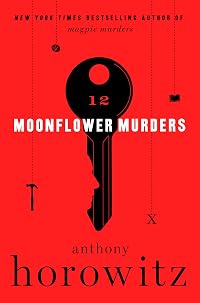
Featuring his famous literary detective Atticus Pund and Susan Ryeland, hero of the worldwide bestseller Magpie Murders, a brilliantly complex literary thriller with echoes of Agatha Christie from bestselling author Anthony Horowitz. Retired publisher Susan Ryeland is living the good life. She is running a small hotel on a Greek island with her long-term boyfriend Andreas. It should be everything she's always wanted. But is it? She's exhausted with the responsibilities of making everything show more work on an island where nothing ever does, and truth be told she's beginning to miss London. And then the Trehearnes come to stay. The strange and mysterious story they tell, about an unfortunate murder that took place on the same day and in the same hotel in which their daughter was married-a picturesque inn on the Suffolk coast named Farlingaye Halle-fascinates Susan and piques her editor's instincts. One of her former writers, the late Alan Conway, author of the fictional Magpie Murders, knew the murder victim-an advertising executive named Frank Parris-and once visited Farlingaye Hall. Conway based the third book in his detective series, Atticus Pund Takes the Cake, on that very crime. The Trehearne's, daughter, Cecily, read Conway's mystery and believed the book proves that the man convicted of Parris's murder-a Romanian immigrant who was the hotel's handyman-is innocent. When the Trehearnes reveal that Cecily is now missing, Susan knows that she must return to England and find out what really happened. Brilliantly clever, relentlessly suspenseful, full of twists that will keep readers guessing with each revelation and clue, Moonflower Murders is a deviously dark take on vintage English crime fiction from one of its greatest masterminds, Anthony Horowitz. show lessTags
Recommendations


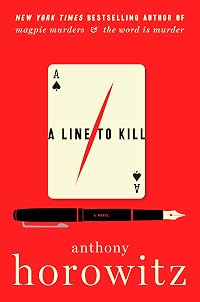










Member Recommendations
Member Reviews
I read Magpie Murders, the first book in this series, a few years ago and thought it was a readable pastiche of Christie et al which also featured a smugly self-satisfied authorial voice. This sequel fails to build on the strengths of the previous book, and has far more weaknesses.
Some of these are structural weaknesses. The pacing is poor. I get that writing in this genre requires some level of plot contrivance/coincidence, but there were just too many here, and too many things that Susan doesn’t do/think/follow up on for me to be able to ignore.And “evidence” presented that doesn’t prove jack shit. One of the identifying things about the killer is that they claimed to have read a book when it’d previously been established show more that there’d been a nationwide issue with distributing this one specific bestselling book series for months, months! Impossible for them to have been able to procure a copy of the novel, ergo lying about having read it, ergo killer! Except like… sometimes book shops won’t shift copies of something for a while? Or, since this book is set in the 2020s, there are ebooks? There are libraries? Hell, we also explicitly get told that there are many charity shops in the local town which might well have copies of a book series that we are told repeatedly is a bestseller.
Just as in the first previous installment, this is about clues to a real life murder being embedded in a fictional text, and you get that entire “book” reproduced within this one, down to its front matter, at the centre of the book. We're told that someone read the novel, realised that the wrong person had been convicted for a murder that was committed almost a decade ago, and was killed for that knowledge. Our amateur detective, Susan, waits like a week to then sit and read Atticus Pund Takes the Case because.... well, if she read it like anyone else realistically would have, on the plane from Crete back to England, there would have been a whole other novel inserted after about Chapter Three and that would have been disconcerting for the reader. But we’ve got to wait, for Doyleist rather than Watsonian reasons, to get to this text which we are told is vital for solving the murder. And what we’re given as this embedded novella is just unbelievable as something that would have multiple people recognise themselves in, would worry about someone else recognising their hotel in, or would make the average person say “wait, there are embedded metafictional clues in this!”
This book is like 600 pages long. It’s such a long, long way to walk to get to the big reveal of whodunnit, when whodunnit is pretty obvious fairly on, for reasons to do both with the plot and with Anthony Horowitz’s characterisation tics.
And whoo boy, what issues there are with the characters. (This is even setting aside the fact that none of these characters are really people, they’re just 2D stock types. Flat. Which, okay, it’s a cosy murder mystery. They can be perfectly enjoyable when peopled only with the literary equivalent of paper dolls.) I'm going to bet a quid that Anthony Horowitz describes himself as a political "moderate" or a "commonsense centrist" or something like that, but that he's also at some point made dinner table comments about why these LGBTQ people insist on rubbing things in your face, he'd be fine with them if they weren't so obvious about it. There’s so much of an undercurrent here of “well you can’t say anything these days because of the PC brigade!” or “of course I’m not racist/homophobic, but!”
Yet again we’ve got men who sleep with other men (I’m using that phrasing deliberately here) framed as perverse, devious, manipulative, camp, and generally dead, their sexual identities and practices equated very firmly with their personal and moral flaws. We’ve got lies about how an off-stage dead queer character contracted HIV, because of course those people lie about their status. There are repeated clear microaggressions, or sometimes just aggressive aggressions, about the gay characters that are generally preceded by “I don’t care that he’s gay of course, but…” which never once are challenged, even in her inner monologue, by our “good person” main character.
The framing of a character who is fat and who has some kind of unspecified learning difficulty is cringey. The frequent linking of unfuckability with shrillness/hysteria in female characters (particularly one who has a facial scar) is telling. The only Black character—in fact I'm pretty sure the only non-white character in the book, when England in the 2020s is roughly 20% non-white—is also the only person whom the narrative ever explicitly tells us is racist (against Romanian people). Despite being the only person who actually has the authority to investigate a murder, as a police officer, he is a passive character hovering on the edge of the narrative. He’s incompetent and of him we are told: "That was his manner... always on the edge of violence. It was as if he had caught something, some sort of virus perhaps, from the criminals he investigated."
To be clear, this is not me saying that LGBTQ people can’t be flawed, or that non-white characters can only be depicted as angelic, or that people are always going to think in the “correct” ways about people with intellectual disabilities, but that Horowitz seems incapable of writing such characters in anything other than a certain set of very narrow ways, and unaware of the connotations of what he’s writing. I don’t think he sees such characters as human in the same way that he’s human—and given that crime/mystery fiction only really works when it’s grounded in specific, recognisable, and believable human behaviour and emotions, well, maybe it shouldn’t be a surprise then that Horowitz doesn’t seem capable of delivering a good example of the genre. show less
Some of these are structural weaknesses. The pacing is poor. I get that writing in this genre requires some level of plot contrivance/coincidence, but there were just too many here, and too many things that Susan doesn’t do/think/follow up on for me to be able to ignore.
Just as in the first previous installment, this is about clues to a real life murder being embedded in a fictional text, and you get that entire “book” reproduced within this one, down to its front matter, at the centre of the book. We're told that someone read the novel, realised that the wrong person had been convicted for a murder that was committed almost a decade ago, and was killed for that knowledge. Our amateur detective, Susan, waits like a week to then sit and read Atticus Pund Takes the Case because.... well, if she read it like anyone else realistically would have, on the plane from Crete back to England, there would have been a whole other novel inserted after about Chapter Three and that would have been disconcerting for the reader. But we’ve got to wait, for Doyleist rather than Watsonian reasons, to get to this text which we are told is vital for solving the murder. And what we’re given as this embedded novella is just unbelievable as something that would have multiple people recognise themselves in, would worry about someone else recognising their hotel in, or would make the average person say “wait, there are embedded metafictional clues in this!”
This book is like 600 pages long. It’s such a long, long way to walk to get to the big reveal of whodunnit, when whodunnit is pretty obvious fairly on, for reasons to do both with the plot and with Anthony Horowitz’s characterisation tics.
And whoo boy, what issues there are with the characters. (This is even setting aside the fact that none of these characters are really people, they’re just 2D stock types. Flat. Which, okay, it’s a cosy murder mystery. They can be perfectly enjoyable when peopled only with the literary equivalent of paper dolls.) I'm going to bet a quid that Anthony Horowitz describes himself as a political "moderate" or a "commonsense centrist" or something like that, but that he's also at some point made dinner table comments about why these LGBTQ people insist on rubbing things in your face, he'd be fine with them if they weren't so obvious about it. There’s so much of an undercurrent here of “well you can’t say anything these days because of the PC brigade!” or “of course I’m not racist/homophobic, but!”
The framing of a character who is fat and who has some kind of unspecified learning difficulty is cringey. The frequent linking of unfuckability with shrillness/hysteria in female characters (particularly one who has a facial scar) is telling. The only Black character—in fact I'm pretty sure the only non-white character in the book, when England in the 2020s is roughly 20% non-white—is also the only person whom the narrative ever explicitly tells us is racist (against Romanian people). Despite being the only person who actually has the authority to investigate a murder, as a police officer, he is a passive character hovering on the edge of the narrative. He’s incompetent and of him we are told: "That was his manner... always on the edge of violence. It was as if he had caught something, some sort of virus perhaps, from the criminals he investigated."
To be clear, this is not me saying that LGBTQ people can’t be flawed, or that non-white characters can only be depicted as angelic, or that people are always going to think in the “correct” ways about people with intellectual disabilities, but that Horowitz seems incapable of writing such characters in anything other than a certain set of very narrow ways, and unaware of the connotations of what he’s writing. I don’t think he sees such characters as human in the same way that he’s human—and given that crime/mystery fiction only really works when it’s grounded in specific, recognisable, and believable human behaviour and emotions, well, maybe it shouldn’t be a surprise then that Horowitz doesn’t seem capable of delivering a good example of the genre. show less
Background: Alan Conway is the author of the successful Atticus Pund detective series and Susan Ryland is his editor. Conway is murdered in the first book, Magpie Murders, and Susan investigates both the author’s death and the lack of a final chapter in the last completed manuscript, putting herself in grave danger.
Moonflower Murders finds Susan managing a small hotel in Crete with her boyfriend Andreas. She is restless, not enjoying the day to day running of a somewhat run-down hotel, doubting her relationship with Andreas and missing her editing career, a career that was essentially her life.
Along come Lawrence and Pauline Treherne, owners of a posh hotel in Suffolk, England, seeking out Susan. Eight years earlier, on the day of show more their daughter Cecily’s wedding at their hotel, a guest, Frank Parris, was bludgeoned to death. Stefan Codrescu, a Romanian ex-convict who worked as a handyman at the hotel confessed to the crime and was imprisoned.
Several weeks after the crime, Alan Conway stayed at the hotel. On the pretext of being an interested observer, he questioned family and staff regarding Parris’ murder, recording all the interviews. Unbeknownst to the interviewees, Conway used what he learned to write Atticus Pund Takes the Case, a coded fictional reinterpretation on Parris’ murder. Based in the 1950s instead of 2000s, it recounts the murder of beautiful young actress, Melissa James, who has a handsome, younger husband, and the chance of landing a major movie role to rejuvenate a lagging career. She is murdered before she gets the role.
The Trehernes told Susan that several days earlier, Cecily phoned her parents and told them the wrong man was convicted of the crime. She had just finished reading Atticus Pund Takes the Case, and based on what she read she knew who the real murderer was. She has since disappeared without a trace.
As Conway is dead and Cecily is missing, Lawrence Treherne thought Susan, who edited the book and was as close to Conway as anyone, might be able to discern what Cecily read and offered her 10,000 pounds to investigate. Being at loose ends in Crete, Susan accepts and flies off to Suffolk, to Andreas’s consternation.
Moonflower Murders is a book within a book or mystery within a mystery. The first third of the book recounts Susan’s investigation into both Frank Parris’ murder and Cecily’s disappearance. Having spoken to all those involved, she then reads Atticus Pund Takes the Case, which is presented in its entirety, including title and publication pages, dedication, author bio and celebrity endorsements. Initially, the similarities between the two murders eludes her, but, of course, I’m not giving anything away when I say she has an epiphany. Finally, she wraps up the case in grand style.
Despite its 600 pages, Moonflower Murders is a fast and totally enjoyable, escapist mystery. Horowitz pays homage to the Golden Age of Mysteries with a Hercule Poirot-like character in German born Atticus Pund. Susan’s wrap up of the case by getting everyone in a room, pointing the finger at each individual as they all had motive to kill Frank Parris, and finally identifying the killer is pure Agatha Christie, as well. Conway’s obsession with wordplay, anagrams and puns play a role in solving the puzzle.
Midway through the book is a list of golden age of mystery authors, some of whom are not currently popular. It is the start of a great reading list. One reviewer said it is “…brimming with red herrings and deliciously devious suspects.” Another said “This is a flawless update of classic golden age whodunits.” I whole heartedly agree with both.
I for one, cannot wait to see this on the screen as well as read any forthcoming Susan Ryland/Atticus Pund mysteries. show less
Moonflower Murders finds Susan managing a small hotel in Crete with her boyfriend Andreas. She is restless, not enjoying the day to day running of a somewhat run-down hotel, doubting her relationship with Andreas and missing her editing career, a career that was essentially her life.
Along come Lawrence and Pauline Treherne, owners of a posh hotel in Suffolk, England, seeking out Susan. Eight years earlier, on the day of show more their daughter Cecily’s wedding at their hotel, a guest, Frank Parris, was bludgeoned to death. Stefan Codrescu, a Romanian ex-convict who worked as a handyman at the hotel confessed to the crime and was imprisoned.
Several weeks after the crime, Alan Conway stayed at the hotel. On the pretext of being an interested observer, he questioned family and staff regarding Parris’ murder, recording all the interviews. Unbeknownst to the interviewees, Conway used what he learned to write Atticus Pund Takes the Case, a coded fictional reinterpretation on Parris’ murder. Based in the 1950s instead of 2000s, it recounts the murder of beautiful young actress, Melissa James, who has a handsome, younger husband, and the chance of landing a major movie role to rejuvenate a lagging career. She is murdered before she gets the role.
The Trehernes told Susan that several days earlier, Cecily phoned her parents and told them the wrong man was convicted of the crime. She had just finished reading Atticus Pund Takes the Case, and based on what she read she knew who the real murderer was. She has since disappeared without a trace.
As Conway is dead and Cecily is missing, Lawrence Treherne thought Susan, who edited the book and was as close to Conway as anyone, might be able to discern what Cecily read and offered her 10,000 pounds to investigate. Being at loose ends in Crete, Susan accepts and flies off to Suffolk, to Andreas’s consternation.
Moonflower Murders is a book within a book or mystery within a mystery. The first third of the book recounts Susan’s investigation into both Frank Parris’ murder and Cecily’s disappearance. Having spoken to all those involved, she then reads Atticus Pund Takes the Case, which is presented in its entirety, including title and publication pages, dedication, author bio and celebrity endorsements. Initially, the similarities between the two murders eludes her, but, of course, I’m not giving anything away when I say she has an epiphany. Finally, she wraps up the case in grand style.
Despite its 600 pages, Moonflower Murders is a fast and totally enjoyable, escapist mystery. Horowitz pays homage to the Golden Age of Mysteries with a Hercule Poirot-like character in German born Atticus Pund. Susan’s wrap up of the case by getting everyone in a room, pointing the finger at each individual as they all had motive to kill Frank Parris, and finally identifying the killer is pure Agatha Christie, as well. Conway’s obsession with wordplay, anagrams and puns play a role in solving the puzzle.
Midway through the book is a list of golden age of mystery authors, some of whom are not currently popular. It is the start of a great reading list. One reviewer said it is “…brimming with red herrings and deliciously devious suspects.” Another said “This is a flawless update of classic golden age whodunits.” I whole heartedly agree with both.
I for one, cannot wait to see this on the screen as well as read any forthcoming Susan Ryland/Atticus Pund mysteries. show less
This was an engrossing and clever mystery within a mystery and novel within a novel. Favorite character and amateur detective from Horowitz’s Magpie Murders Susan Ryeland, returns to solve another mystery involving her now-deceased author client Alan Conway. In the middle of this new mystery, where Susan is asked to solve the disappearance of Cecily, the daughter of Branlow Hall’s owner, she rereads Alan’s fictional novel Atticus Pund Takes the Case because Cecily claims it proves who the real murderer is.
While the plot description sounds confusing, it’s actually coherent when you’re reading it. The story itself is full of twists, clues, and suspects galore, and I couldn’t put the book down. I appreciated how it all comes show more together for a brilliant homage to vintage English crime fiction à la Agatha Christie.
You don’t have to read Magpie Murders before reading this one, but I recommend you do. And you’ll certainly want to do so afterwards.
As Susan says while reading the fictional Atticus Pund novel, “There’s something satisfying about a complicated whodunnit that actually makes sense.” Yes! This is definitely an enjoyable, complicated whodunit I highly recommend. show less
While the plot description sounds confusing, it’s actually coherent when you’re reading it. The story itself is full of twists, clues, and suspects galore, and I couldn’t put the book down. I appreciated how it all comes show more together for a brilliant homage to vintage English crime fiction à la Agatha Christie.
You don’t have to read Magpie Murders before reading this one, but I recommend you do. And you’ll certainly want to do so afterwards.
As Susan says while reading the fictional Atticus Pund novel, “There’s something satisfying about a complicated whodunnit that actually makes sense.” Yes! This is definitely an enjoyable, complicated whodunit I highly recommend. show less
First sentence: The Polydorus is a charming family-run hotel, located a short walk away from the lively town of Agios Nikolaos, one hour from Heraklion. Rooms cleaned daily, all with Wi-Fi and air con, some with sea views. Coffee and home-cooked meals served on our lovely terraces. Visit our website or find us on booking.com. You have no idea how long it took me to write that.
Premise/plot: Moonflower Murders is the sequel to Magpie Murders. Susan Ryeland (editor/amateur detective) is now living on Crete running a small hotel with her boyfriend Andreas. Two of their guests have arrived with a proposition for Susan. Their daughter, Cecily, has gone missing. Before Cecily disappeared, she'd called her parents saying that reading Atticus show more Pund Takes The Cake has changed her mind about who murdered their own guest so many years before. Stefan Codrescu may have been convicted of the crime and may be in prison, but, he's innocent. The proof is hidden within Alan Conway's mystery novel.
The Trehernes are offering to pay Susan to investigate both crimes. Perhaps as Alan's editor she can spot what Cecily spotted in the text. And she did have success in solving who murdered Alan, after all. Susan takes the case for two reasons--she's TIRED and worn down from running the hotel and misses her old life, and the MONEY will prove useful whether she stays or goes.
As she begins detecting the two cases--surely Cecily disappeared because she knew too much--Susan tries to sort out where she belongs and what she really wants.
About three-quarters through this one, Alan Conway's novel ATTICUS PUND TAKES THE CAKE is embedded.
My thoughts: What a wearisome novel this was!!! The pacing was all over the place--and obviously not in a good way. I didn't mind Alan Conway's novel kicking off the first book. The fact that the missing end chapters was the literal conflict (or one of them) in the "main" story helped me stay engaged. It was a fun, premise-driven novel. I didn't love, love, love it. But it always kept me reading.
Moonflower Murders doesn't have a great premise working on its behalf. Susan is retired. She is no longer an editor; she is no longer in the book business. If Susan had been less bored or less in need of money, chances are she'd not left the island or her boyfriend to play detective.
My biggest issue with this one, however, is that almost all the characters are so unlikable and in some cases so disgusting. It's hard to spend HUNDREDS of pages (felt like thousands of pages) with characters that you despise/dislike. My neutral feelings for Susan and Andreas weren't enough to really rescue this one.
I don't know that this one needs a trigger warning exactly. But so much of the unfolding mystery surrounds adult men (aged 50+) engaging with very young barely-legal (and perhaps not legal) young teen male prostitutes. And it gets descriptive/graphic. Okay, that may not be fair. I don't think it's meant to be graphic in a romantic/sensual way. But it's a LOT to process.
I wrestled with whether to keep reading this one or to abandon it. It was just so wearisome. show less
Premise/plot: Moonflower Murders is the sequel to Magpie Murders. Susan Ryeland (editor/amateur detective) is now living on Crete running a small hotel with her boyfriend Andreas. Two of their guests have arrived with a proposition for Susan. Their daughter, Cecily, has gone missing. Before Cecily disappeared, she'd called her parents saying that reading Atticus show more Pund Takes The Cake has changed her mind about who murdered their own guest so many years before. Stefan Codrescu may have been convicted of the crime and may be in prison, but, he's innocent. The proof is hidden within Alan Conway's mystery novel.
The Trehernes are offering to pay Susan to investigate both crimes. Perhaps as Alan's editor she can spot what Cecily spotted in the text. And she did have success in solving who murdered Alan, after all. Susan takes the case for two reasons--she's TIRED and worn down from running the hotel and misses her old life, and the MONEY will prove useful whether she stays or goes.
As she begins detecting the two cases--surely Cecily disappeared because she knew too much--Susan tries to sort out where she belongs and what she really wants.
About three-quarters through this one, Alan Conway's novel ATTICUS PUND TAKES THE CAKE is embedded.
My thoughts: What a wearisome novel this was!!! The pacing was all over the place--and obviously not in a good way. I didn't mind Alan Conway's novel kicking off the first book. The fact that the missing end chapters was the literal conflict (or one of them) in the "main" story helped me stay engaged. It was a fun, premise-driven novel. I didn't love, love, love it. But it always kept me reading.
Moonflower Murders doesn't have a great premise working on its behalf. Susan is retired. She is no longer an editor; she is no longer in the book business. If Susan had been less bored or less in need of money, chances are she'd not left the island or her boyfriend to play detective.
My biggest issue with this one, however, is that almost all the characters are so unlikable and in some cases so disgusting. It's hard to spend HUNDREDS of pages (felt like thousands of pages) with characters that you despise/dislike. My neutral feelings for Susan and Andreas weren't enough to really rescue this one.
I don't know that this one needs a trigger warning exactly. But so much of the unfolding mystery surrounds adult men (aged 50+) engaging with very young barely-legal (and perhaps not legal) young teen male prostitutes. And it gets descriptive/graphic. Okay, that may not be fair. I don't think it's meant to be graphic in a romantic/sensual way. But it's a LOT to process.
I wrestled with whether to keep reading this one or to abandon it. It was just so wearisome. show less
Wonderfully intriguing and so very clever ... AGAIN!
Following the incidents of Magpie Murders and Alan Conway’s death, Susan Ryeland relocated to the island of Crete with her beloved Andreas. They invested all their savings in buying a hotel and had become innkeepers, Andreas’s dream. But Susan was restless, dissatisfied with the direction of her new life. She and Andreas had become engaged, but she had put off taking the next step blaming the chaos and constant demands of running the hotel. She also missed her past career in publishing much more than she’d imagined she would. So, when Lawrence and Pauline Trehearne showed up at their hotel looking to hire her to find their missing daughter, Cicely, she fairly jumped at the show more opportunity to return to England.
The Trehearnes own and operate a hotel themselves: Farlingaye Halle, in Suffolk. Seven years previously, on the day of Cecily’s wedding on the grounds, one of their guests had been discovered murdered in his room, brutally bludgeoned to death with a hammer. The police identified the hotel handyman, a Romanian immigrant with a criminal history, as the perpetrator, and he was subsequently sent to prison for the crime. However, Cecily always and steadfastly believed that Stefan was an innocent man.
Weeks after the trial, author Alan Conway, Susan’s former client, visited the hotel, talking to staff and other witnesses about the crime. But when Alan had returned home from his research trip to Suffolk, he had confided to his partner, James, that he knew the police had got the wrong man. Still, he never shared what he’d discovered that caused him to make this claim with anyone, including the police. The result was his next bestselling mystery, Atticus Pund Takes the Case, based on the events of the murder and the people involved.
Now, years later, Cecily had finally read Conway’s book and something in it clicked, making her realize who the real killer was. She telephoned her parents, who were away on holiday, asking them to return home immediately so she could share her revelation with them before taking further action. But that was the last time they ever spoke with their daughter; the following day, Cecily disappeared while walking the dog, leaving behind her husband and small child. The Trehearnes turned to Susan because she had worked so closely with Alan Conway on the book, and they felt she might be able to figure out what Cecily saw in the book and find out where she had gone.
Moonflower Murders is the second book in Anthony Horowitz’s Susan Ryeland series and is again an intriguing book within a book with a murder to solve in each separate plotline. Susan is an intrepid investigator as she retraces Alan’s footsteps, steadily recreating the picture he must have seen seven years earlier. People are not happy to help her either. Without the authority of a police badge backing her up, she has a tough time as she questions those involved, and she ends up talking to a LOT of unpleasant people. On top of that, she’s trying to sort out her personal feelings about her relationship and future with Andreas as well as testing the waters of the current state of the publishing industry by contacting old colleagues from her working past should she decide to stay in England.
As in the previous book, the Atticus Pund mystery is embedded within the current investigation, so two for one. It is a clever mélange of elements similar to an Agatha Christie-style story. I also enjoyed the little hidden “Easter eggs” found throughout the Pund book, kindly pointed out for those of us that weren’t paying attention at the time.
Readers get a wonderfully-plotted mystery and a deep look inside our heroine’s heart and soul in this second adventure. I can tell you I was rooting for Susan Ryeland every step of the way. I recommend MOONFLOWER MURDERS for mystery readers who like a longer, more intricate story (it clocks in at over 600 pages or 15 discs or 18-plus hours of listening) with the look and feel of one of the classics from the Golden Age of Mysteries. show less
Following the incidents of Magpie Murders and Alan Conway’s death, Susan Ryeland relocated to the island of Crete with her beloved Andreas. They invested all their savings in buying a hotel and had become innkeepers, Andreas’s dream. But Susan was restless, dissatisfied with the direction of her new life. She and Andreas had become engaged, but she had put off taking the next step blaming the chaos and constant demands of running the hotel. She also missed her past career in publishing much more than she’d imagined she would. So, when Lawrence and Pauline Trehearne showed up at their hotel looking to hire her to find their missing daughter, Cicely, she fairly jumped at the show more opportunity to return to England.
The Trehearnes own and operate a hotel themselves: Farlingaye Halle, in Suffolk. Seven years previously, on the day of Cecily’s wedding on the grounds, one of their guests had been discovered murdered in his room, brutally bludgeoned to death with a hammer. The police identified the hotel handyman, a Romanian immigrant with a criminal history, as the perpetrator, and he was subsequently sent to prison for the crime. However, Cecily always and steadfastly believed that Stefan was an innocent man.
Weeks after the trial, author Alan Conway, Susan’s former client, visited the hotel, talking to staff and other witnesses about the crime. But when Alan had returned home from his research trip to Suffolk, he had confided to his partner, James, that he knew the police had got the wrong man. Still, he never shared what he’d discovered that caused him to make this claim with anyone, including the police. The result was his next bestselling mystery, Atticus Pund Takes the Case, based on the events of the murder and the people involved.
Now, years later, Cecily had finally read Conway’s book and something in it clicked, making her realize who the real killer was. She telephoned her parents, who were away on holiday, asking them to return home immediately so she could share her revelation with them before taking further action. But that was the last time they ever spoke with their daughter; the following day, Cecily disappeared while walking the dog, leaving behind her husband and small child. The Trehearnes turned to Susan because she had worked so closely with Alan Conway on the book, and they felt she might be able to figure out what Cecily saw in the book and find out where she had gone.
Moonflower Murders is the second book in Anthony Horowitz’s Susan Ryeland series and is again an intriguing book within a book with a murder to solve in each separate plotline. Susan is an intrepid investigator as she retraces Alan’s footsteps, steadily recreating the picture he must have seen seven years earlier. People are not happy to help her either. Without the authority of a police badge backing her up, she has a tough time as she questions those involved, and she ends up talking to a LOT of unpleasant people. On top of that, she’s trying to sort out her personal feelings about her relationship and future with Andreas as well as testing the waters of the current state of the publishing industry by contacting old colleagues from her working past should she decide to stay in England.
As in the previous book, the Atticus Pund mystery is embedded within the current investigation, so two for one. It is a clever mélange of elements similar to an Agatha Christie-style story. I also enjoyed the little hidden “Easter eggs” found throughout the Pund book, kindly pointed out for those of us that weren’t paying attention at the time.
Readers get a wonderfully-plotted mystery and a deep look inside our heroine’s heart and soul in this second adventure. I can tell you I was rooting for Susan Ryeland every step of the way. I recommend MOONFLOWER MURDERS for mystery readers who like a longer, more intricate story (it clocks in at over 600 pages or 15 discs or 18-plus hours of listening) with the look and feel of one of the classics from the Golden Age of Mysteries. show less
Two books in one! A very interesting concept. Susan Ryeland is a retired publisher/editor who is approached by the Treherns, parents of a missing woman, for help in finding out where their daughter Cecily is and what has happened to her. Why? Because before she disappeared, Cecily mentioned that she had read a book by an author Susan used to represent, and that book gave her the solution to a real-life murder at the hotel her family owns and operates.
This is book two in a series featuring this literary detective, Susan Ryeland. And like the first novel, the secret to this one lies in a book Susan edited which featured the master German detective, Atticus Pünd (think Hercule Poirot). So, of course, Susan must re-read the book in show more question, and the mystery of what has happened to Cecily is interrupted after 227 pages, to allow the reader to experience the Atticus Pünd novel in its entirety, before returning to Cecily’s disappearance (and to the murder she felt she had solved using the Pünd book).
Sound confusing? Well, that’s because I am nowhere near the talented writer that Anthony Horowitz is. I was completely mesmerized by this book (these books?). I enjoyed the difference in style between the two storylines and was equally immersed in each mystery (or really three mysteries … the one that Pünd is solving; the murder that Cecily believed she had solved by reading the Pünd novel; the disappearance of Cecily).
I like Susan as a character, and I like Atticus Pünd. Both are meticulous and thorough and deliberate in analyzing the evidence they uncover. And I love the way that Horowitz plays with words
I haven’t read the first in the series - Magpie Murders - yet, but I definitely will, and I look forward to future installments as well. show less
This is book two in a series featuring this literary detective, Susan Ryeland. And like the first novel, the secret to this one lies in a book Susan edited which featured the master German detective, Atticus Pünd (think Hercule Poirot). So, of course, Susan must re-read the book in show more question, and the mystery of what has happened to Cecily is interrupted after 227 pages, to allow the reader to experience the Atticus Pünd novel in its entirety, before returning to Cecily’s disappearance (and to the murder she felt she had solved using the Pünd book).
Sound confusing? Well, that’s because I am nowhere near the talented writer that Anthony Horowitz is. I was completely mesmerized by this book (these books?). I enjoyed the difference in style between the two storylines and was equally immersed in each mystery (or really three mysteries … the one that Pünd is solving; the murder that Cecily believed she had solved by reading the Pünd novel; the disappearance of Cecily).
I like Susan as a character, and I like Atticus Pünd. Both are meticulous and thorough and deliberate in analyzing the evidence they uncover. And I love the way that Horowitz plays with words
I haven’t read the first in the series - Magpie Murders - yet, but I definitely will, and I look forward to future installments as well. show less
Susan Ryeland is hired by distraught parents to find their daughter, Cecily. She had phoned her parents about a murder that had occurred in their hotel several years before. The only clue they provide Susan - Cecily claimed that, having read Alan Conway’s book Atticus Pund Takes the Case which was based on the murder, she knows who was guilty. However, she vanished before she got a chance to reveal the guilty party. The police seem unable to find her and they hope Susan can do better based on her success in solving the magpie murders (from the first book in the series) and because they hoped that having been Conway’s editor, she can spot the same clue that Cecily did hoping it might lead to Her whereabouts.
Anthony Horowitz has an show more uncanny ability to recreate the voice of writers from the Golden Age of mysteries, most specifically Agatha Christie, while maintaining his own unique voice. In Moonflower Murders, the second (and hopefully not the last) book in the Susan Ryeland series, he gives us a book within a book and makes them both unputdownable. As in most Golden Age mysteries, there is little action and the crimes, in this case from both books, are solved through careful investigation, talking with a myriad of suspects, and, of course, the ‘little grey cells’ of the investigator with lots of red herrings and twists and turns thrown in to keep the reader guessing. Loved it!
Thanks to Netgalley & HarperCollins Canada for the opportunity to read this book in exchange for an honest review show less
Anthony Horowitz has an show more uncanny ability to recreate the voice of writers from the Golden Age of mysteries, most specifically Agatha Christie, while maintaining his own unique voice. In Moonflower Murders, the second (and hopefully not the last) book in the Susan Ryeland series, he gives us a book within a book and makes them both unputdownable. As in most Golden Age mysteries, there is little action and the crimes, in this case from both books, are solved through careful investigation, talking with a myriad of suspects, and, of course, the ‘little grey cells’ of the investigator with lots of red herrings and twists and turns thrown in to keep the reader guessing. Loved it!
Thanks to Netgalley & HarperCollins Canada for the opportunity to read this book in exchange for an honest review show less
Members
- Recently Added By
Lists

Staff Picks
11 works; 1 member

Fiction: Crime, Detective, Mystery
350 works; 3 members

Books Read in 2021
5,361 works; 113 members

Books Read in 2022
5,166 works; 112 members

Books Read in 2023
5,547 works; 145 members

Books Read in 2024
4,623 works; 126 members

Library Books
70 works; 1 member
Author Information

234+ Works 84,149 Members
Author and television scriptwriter Anthony Horowitz was born in Stanmore, England on April 5, 1956. At the age of eight, he was sent to a boarding school in London. He graduated from the University of York and published his first book, Enter Frederick K. Bower (1979), when he was 23. He writes mostly children's books, including the Alex Rider show more series, The Power of Five series, and the Diamond Brothers series. The Alex Rider series is about a 14-year-old boy becoming a spy and was made into a movie entitled Stormbreaker. He has won numerous awards including the 1989 Lancashire Children's Book of the Year Award for Groosham Grange and the 2003 Red House Children's Book Award for Skeleton Key. He also writes novels for adults including The Killing Joke and The Magpie Murders. He has created Foyle's War and Midsomer Murders for television as well as written episodes for Poirot and Murder Most Horrid. He made The New York Times Best Seller list with his titles The House of Silk Russian Roulette: The Story of an Assassin and Moriarity.Most recently he was commissioned by the Ian Fleming Estate to write the James Bond novel Trigger Mortis. Anthony was awarded an OBE for his services to literature in January 2014. (Bowker Author Biography) show less
Some Editions
Awards and Honors
Awards
Distinctions
Series

Work Relationships
Has the adaptation
Common Knowledge
- Canonical title
- Moonflower Murders
- Original title
- Moonflower Murders
- Original publication date
- 2020-08-20
- People/Characters
- Susan Ryeland; Atticus Pünd; Richard Locke; Alan Conway; James Taylor; Sajid Khan (show all 7); Andreas Patakis
- Important places
- Woodbridge, Suffolk, England
- Dedication
- For Eric Hamlish and Jan Salindar – with thanks for so many good times
- First words
- The Polydorus is a charming family-run hotel, located a short walk away from the lively town of Agios Nikolaos, one hour from Heraklion. Rooms cleaned daily, all with Wi-Fi and air con, some with sea views.
- Quotations
- Cecily got upset because she'd lost a pen that she was going to have with her when we got married. It belonged to her dad. He collects antique fountain pens. He never stopped going on about it on the day. He'd only just bough... (show all)t it from a dealer in Snape - it was brand new, unused. And it was blue.... It was old but it was also new. It was borrowed and it was blue!"
Cecily had managed to lose a pen which I'd lent her. It was a 1956 Montblanc 342 with a gold nib - a really lovely piece, in its original box and never been used.
Pund had been speaking rapidly and it took Miss Cain a few moments to catch up. He heard the scratch of her nib on the page as she underlined his last words.
Alan always played games with the names of his characters. In "Night Comes Calling" they were all English rivers. in "Atticus Pund Abroad", they were manufacturers of fountain pens. - Blurbers
- Finn, A. J.; Hannah, Sophie; Jonasson, Ragnar; Foley, Lucy; Mosse, Kate
- Original language
- English
Classifications
Statistics
- Members
- 2,130
- Popularity
- 9,606
- Reviews
- 85
- Rating
- (3.86)
- Languages
- 12 — Bulgarian, Czech, English, Estonian, German, Greek, Italian, Japanese, Polish, Russian, Spanish, Chinese, simplified
- Media
- Paper, Audiobook, Ebook
- ISBNs
- 32
- ASINs
- 10