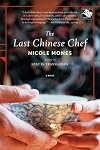
The Last Chinese Chef
by Nicole Mones
On This Page
Description
The bestselling author of Lost in Translation "unlocks the deepest mysteries of legendary Chinese culinary arts to produce a feast for the human heart" (David Henry Hwang, author of M. Butterfly).This alluring novel of friendship, love, and cuisine brings the bestselling author of Lost in Translation and A Cup of Light to one of the great Chinese subjects: food. As in her previous novels, Mones's captivating story also brings into focus a changing China—this time the hidden world of high show more culinary culture.
When Maggie McElroy, a widowed American food writer, learns of a Chinese paternity claim against her late husband's estate, she has to go immediately to Beijing. She asks her magazine for time off, but her editor counters with an assignment: to profile the rising culinary star Sam Liang.
In China, Maggie unties the knots of her husband's past, finding out more than she expected about him and about herself. With Sam as her guide, she is also drawn deep into a world of food rooted in centuries of history and philosophy. To her surprise she begins to be transformed by the cuisine, by Sam's family—a querulous but loving pack of cooks and diners—and most of all by Sam himself. The Last Chinese Chef is the exhilarating story of a woman regaining her soul in the most unexpected of places and "a stunning picture of a country caught between tradition and modern life" (Entertainment Weekly).
World Gourmand Award Winner
"I don't think there's ever been anything quite like this. It's a love story, it's a mystery, and it's also the most thorough explanation of Chinese food that I've ever read in the English language."—Ruth Reichl
. show less
Tags
Recommendations

















Member Reviews
Maggie McElroy, a widowed American food writer, is still trying to overcome her grief at her husband’s death in a hit-and-run accident, when she is stunned by a call from his law firm’s satellite office in Beijing. There is a paternity claim against her husband’s estate, and Maggie needs to go to Beijing to convince the child’s mother to agree to a DNA test. Immersing herself in work is what has helped her deal with her grief, so she is distressed when she tells her editor she will need to be gone for several weeks. But her editor has just learned of an interesting story in Beijing that Maggie could cover. Sam Liang, a Chinese-American, has returned to Beijing to open a new restaurant, paying homage to the grand tradition of show more famous chefs of the imperial era. In fact, he is descended from the Last Chinese Chef who worked for the Dowager Empress.
Maggie is a woman consumed by grief, surviving in a bubble of memories that has just been shattered. Did she really know her husband? Did he really love her? How could he have fathered this child, AND kept it a secret from her? Dealing with such a claim would be difficult and trying enough in America. But now she finds herself in a city where she does not understand the language, culture or customs, and must rely on strangers to help her. Her planned article on Sam Liang is the only area where she can feel somewhat normal as a journalist, researching her subject and crafting the written portrait. They are both surprised to find in one another an ally and friend, and they nurture one another with food, with understanding, with encouragement and with hope.
Mones deftly combines Sam’s story with Maggie’s, and with the tradition and history of Chinese cuisine, philosophy, culture and dining. The descriptions of the menus and dishes are nothing short of delicious – a sensory feast of tastes, sounds, smells, textures, and visual images. Just as much attention is paid to developing these characters; Mones reveals them a little at a time allowing the reader to get to know them as they deal with various disappointments and unexpected joys. There were a few times when Mones switched narrators that momentarily confused me, but it didn’t take long to understand where she was going with these sections, and then appreciate how they contributed to developing the characters and story. Take your time reading it – savor every page. show less
Maggie is a woman consumed by grief, surviving in a bubble of memories that has just been shattered. Did she really know her husband? Did he really love her? How could he have fathered this child, AND kept it a secret from her? Dealing with such a claim would be difficult and trying enough in America. But now she finds herself in a city where she does not understand the language, culture or customs, and must rely on strangers to help her. Her planned article on Sam Liang is the only area where she can feel somewhat normal as a journalist, researching her subject and crafting the written portrait. They are both surprised to find in one another an ally and friend, and they nurture one another with food, with understanding, with encouragement and with hope.
Mones deftly combines Sam’s story with Maggie’s, and with the tradition and history of Chinese cuisine, philosophy, culture and dining. The descriptions of the menus and dishes are nothing short of delicious – a sensory feast of tastes, sounds, smells, textures, and visual images. Just as much attention is paid to developing these characters; Mones reveals them a little at a time allowing the reader to get to know them as they deal with various disappointments and unexpected joys. There were a few times when Mones switched narrators that momentarily confused me, but it didn’t take long to understand where she was going with these sections, and then appreciate how they contributed to developing the characters and story. Take your time reading it – savor every page. show less
There are certain times where I feel a certain condescension when I read foreigners trying to read meanings and poetry into what I feel is my domain as a person of Chinese ancestry. This isn't one of those times. In fact I feel humbled and delighted by the lessons that Nicole Mones was able to impart upon me.
It is rare that I get up from a book about China so totally enthralled and educated from a tome written by a yang ren, a foreigner. This book is the second book that has made me feel this way in the last few years. The first was Oracle Bones: A Journey Between China's Past and Present by Peter Hessler, it was a non-fictional observation about China and the impact that globalization has had on Chinese society. This book is a work of show more fiction, by virtue of that fact, it was able to draw me further into all that it had to convey: on being Chinese, on the complicated intertwining of Chinese food culture and general culture, on the meaning of guanxi, on the wonders of Chinese cuisine.
I had always felt that due to the unsavory nature of Chinese-American food as it is, that the true nature of Chinese cuisine has never been fully unleashed on the American palate. I have stewed on the fact that the French and Italian cuisines rank so much higher on the sophistication scale of the American gastronome versus the lowly Chinese cuisine. I felt it but I was unable to express it adequately. Nicole Mones has done this and more with this story. Her descriptions of the dishes, her attention to the details of the preparation, her insistence on relaying the philosophical nature of food, on presentation, on the small details and gestures so very important in China, on the little puns and literary allusions of Chinese food had opened my eyes and sent me headlong into a frenzy to rediscover my heritage through my ample stomach. Thankfully, she was good enough to have included an afterward full of resources for research so that I can research these ideas on my own.
To top it all off, she was able to wrap all of the scholarly work in a very touching and suspenseful story. After all, guanxi is all about people. The characters in this book are not necessarily completely developed, except maybe for Sam and Maggie but the other characters are developed enough to elicit emotional responses, I cared about what happened to these characters. The relationships drawn in the story are very Chinese and yet also very western, the ending had a nice and tangy sweetness to it which made me smile.
I really liked this book, it combined a lot of my own personal loves: my ancestry, food, methods of writing, and China itself to pull me in and stay there until the end. It was informative with out being didactic, sentimental without being maudlin, philosophical without being humorless, and dramatic without dropping into melodrama.
I guess you can say that I endorse this book highly. show less
It is rare that I get up from a book about China so totally enthralled and educated from a tome written by a yang ren, a foreigner. This book is the second book that has made me feel this way in the last few years. The first was Oracle Bones: A Journey Between China's Past and Present by Peter Hessler, it was a non-fictional observation about China and the impact that globalization has had on Chinese society. This book is a work of show more fiction, by virtue of that fact, it was able to draw me further into all that it had to convey: on being Chinese, on the complicated intertwining of Chinese food culture and general culture, on the meaning of guanxi, on the wonders of Chinese cuisine.
I had always felt that due to the unsavory nature of Chinese-American food as it is, that the true nature of Chinese cuisine has never been fully unleashed on the American palate. I have stewed on the fact that the French and Italian cuisines rank so much higher on the sophistication scale of the American gastronome versus the lowly Chinese cuisine. I felt it but I was unable to express it adequately. Nicole Mones has done this and more with this story. Her descriptions of the dishes, her attention to the details of the preparation, her insistence on relaying the philosophical nature of food, on presentation, on the small details and gestures so very important in China, on the little puns and literary allusions of Chinese food had opened my eyes and sent me headlong into a frenzy to rediscover my heritage through my ample stomach. Thankfully, she was good enough to have included an afterward full of resources for research so that I can research these ideas on my own.
To top it all off, she was able to wrap all of the scholarly work in a very touching and suspenseful story. After all, guanxi is all about people. The characters in this book are not necessarily completely developed, except maybe for Sam and Maggie but the other characters are developed enough to elicit emotional responses, I cared about what happened to these characters. The relationships drawn in the story are very Chinese and yet also very western, the ending had a nice and tangy sweetness to it which made me smile.
I really liked this book, it combined a lot of my own personal loves: my ancestry, food, methods of writing, and China itself to pull me in and stay there until the end. It was informative with out being didactic, sentimental without being maudlin, philosophical without being humorless, and dramatic without dropping into melodrama.
I guess you can say that I endorse this book highly. show less
A crispy coating that seems to explode as one bites into the food, a silkiness of soup, creating contrasts of flavors and textures; food to serve the mind, body and the soul; these were just a few of many food lessons in Nicole Mones’ The Last Chinese Chef.
Sam Liang, last in a lineage of Chinese Chefs, is himself, half Chinese and half Jewish. He had planned to meet with food columnist, Maggie McElroy to promote his soon to open restaurant. When his financing unexpectedly disappeared, Maggie persuaded Sam to be interviewed as one of ten chefs competing in an audition to make the Chinese national cooking team for the Beijing 2008 Games. With the recent ending of the Cultural Revolution, The Last Chinese Chef bubbles with shared history show more and shared food.
Mones takes the reader seamlessly from one narrative to another - Sam’s and Maggie’s stories, but also a variety of others whose lives so intimately interweave with Sam and Maggie. Families are more than blood relations, and relationships are complicated. A two hour conversation may contain one rich nugget of choice information. Proprieties must be observed whether in verbal exchanges or sharing a meal. Food isn’t treated as simply an idea to connect the characters, but as a character in its own right. Just as people prove to be complicated beings, full of paradoxes and intricacies in behaviors, feelings; circumstances and human action; and the meshing of actions and dreams so food is also. Sam explains the importance westerners give to plating food while Chinese cooking places importance on flavor and texture. Food is theater.
In reading The Last Chinese Chef, I came to understand how Chinese food is about community, Chinese culture, and history - in preparation, in eating, in the actual foods and sources. This is the first book I’ve read by Nicole Mones, and it has whet my appetite.
sh 8/8/2011 show less
Sam Liang, last in a lineage of Chinese Chefs, is himself, half Chinese and half Jewish. He had planned to meet with food columnist, Maggie McElroy to promote his soon to open restaurant. When his financing unexpectedly disappeared, Maggie persuaded Sam to be interviewed as one of ten chefs competing in an audition to make the Chinese national cooking team for the Beijing 2008 Games. With the recent ending of the Cultural Revolution, The Last Chinese Chef bubbles with shared history show more and shared food.
Mones takes the reader seamlessly from one narrative to another - Sam’s and Maggie’s stories, but also a variety of others whose lives so intimately interweave with Sam and Maggie. Families are more than blood relations, and relationships are complicated. A two hour conversation may contain one rich nugget of choice information. Proprieties must be observed whether in verbal exchanges or sharing a meal. Food isn’t treated as simply an idea to connect the characters, but as a character in its own right. Just as people prove to be complicated beings, full of paradoxes and intricacies in behaviors, feelings; circumstances and human action; and the meshing of actions and dreams so food is also. Sam explains the importance westerners give to plating food while Chinese cooking places importance on flavor and texture. Food is theater.
In reading The Last Chinese Chef, I came to understand how Chinese food is about community, Chinese culture, and history - in preparation, in eating, in the actual foods and sources. This is the first book I’ve read by Nicole Mones, and it has whet my appetite.
sh 8/8/2011 show less
The Last Chinese Chef by Nicole Mones was a wonderful novel about culture and relationship and food and how they all can be woven together. I loved the book and found it almost poetically beautiful. I would read it again.
This was a quick but thoroughly satisfying read. I borrowed it from a friend and it was so pleasurable that I kept looking for moments when i could read some more. I don't tend to get so excited about fiction, but this was an exception. I need to seek out more of Mones' works.
This really is a food book. The main characters are a food reviewer and a chef, and the chef introduces the reviewer to authentic classical Chinese cuisine. Which is a nice device to introduce the reader...
This really is a food book. The main characters are a food reviewer and a chef, and the chef introduces the reviewer to authentic classical Chinese cuisine. Which is a nice device to introduce the reader...
Clearly, with the exception of one memorable supper in San Francisco's China Town, orchestrated by a friend whose family is from Beijing, I have been going about Chinese food all wrong. This book is a sensual blend of words and tastes, with a dash of history and a good modern story thrown in. Read it, but not on an empty stomach.
The Last Chinese Chef by Nicole Mones is a satisfying novel about the connections between food and culture and, specifically, the cultural role of cooking in imperial and communist China.
The story centers on magazine columnist and recent widow, Maggie McElroy, as she travels to China to handle a matter involving her husband's estate. She combines the trip with an assignment to write about an up and coming Chinese American chef competing for a spot on the 'culinary Olympics' team.
Through Sam, and his grandfather's famous book, The Last Chinese Chef, Maggie is introduced to the culinary history of China. She also comes to appreciate the Chinese concept of guanxi -- 'connection, relationship, mutual indebtedness . . . . the safety net of show more obligation and mutuality that held up society.' She sees how guanxi works among the people she meets, and also how the concept is reflected in China's cooking and dining. Sam teaches her that the finest Chinese cooking looks to make connections, not only between flavor and texture, but between the food and literature, art, and history.
There are several layers to the story. Like the classic Chinese cuisine Mones writes about, the book combines flavors and textures in ways that are enjoyable, complex, and often surprising.
Also posted on Rose City Reader. show less
The story centers on magazine columnist and recent widow, Maggie McElroy, as she travels to China to handle a matter involving her husband's estate. She combines the trip with an assignment to write about an up and coming Chinese American chef competing for a spot on the 'culinary Olympics' team.
Through Sam, and his grandfather's famous book, The Last Chinese Chef, Maggie is introduced to the culinary history of China. She also comes to appreciate the Chinese concept of guanxi -- 'connection, relationship, mutual indebtedness . . . . the safety net of show more obligation and mutuality that held up society.' She sees how guanxi works among the people she meets, and also how the concept is reflected in China's cooking and dining. Sam teaches her that the finest Chinese cooking looks to make connections, not only between flavor and texture, but between the food and literature, art, and history.
There are several layers to the story. Like the classic Chinese cuisine Mones writes about, the book combines flavors and textures in ways that are enjoyable, complex, and often surprising.
Also posted on Rose City Reader. show less
Members
- Recently Added By
Lists

Food Fiction
24 works; 7 members
Author Information

10 Works 1,974 Members
Awards and Honors
Awards
Common Knowledge
- Canonical title
- The Last Chinese Chef
- Important places
- Beijing, China
- Epigraph
- Apprentices have asked me, what is the most exalted peak of cuisine? Is it the freshest ingredients, the most complex flavors? Is it the rustic, or the rare? It is none of these. The peak is neither eating nor cooking, but th... (show all)e giving and sharing of food. Great food should never be taken alone. What pleasure can a man take in fine cuisine unless he invites cherished friends, counts the days until the banquet, and composes and anticipatory poem for his letter of invitation? - Liang Wei, The Last Chinese Chef, pub. Peking, 1925
- First words
- Maggie McElroy felt her soul spiral away from her in the year following her husband's death; she felt strange wherever she was.
- Last words
- (Click to show. Warning: May contain spoilers.)"Now eat, children. Another day lies ahead."
Classifications
Statistics
- Members
- 929
- Popularity
- 28,690
- Reviews
- 50
- Rating
- (3.67)
- Languages
- 5 — English, French, Greek, Italian, Portuguese
- Media
- Paper, Audiobook, Ebook
- ISBNs
- 12
- UPCs
- 2
- ASINs
- 5