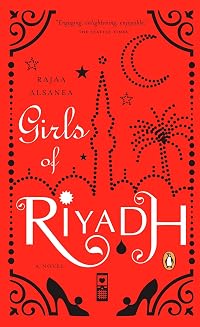
Girls of Riyadh
by Rajaa Alsanea
On This Page
Description
Fiction. Literature. HTML:GIRLS OF RIYADH was released in Lebanon in Arabic in 2005. The novel, about women from Saudi Arabia's upper classes, immediately became a sensation all over the Arab world. Scholars and critics throughout the Arab world hailed the book as a breakthrough in Arabic literature, some going so far as to label it "the first modern Arab novel."In this bold debut, Rajaa Alsanea reveals the social, romantic, and sexual tribulations of four young women from the elite classes show more of Riyadh, Saudi Arabia. Every week after Friday prayers, an anonymous female narrator sends e-mails to the subscribers of her online list-serv. In fifty such e-mails, spanning more than a year, the Scheherazade-like narrator unfolds little by little the comic-tragic reality of a small group of girlfriends–Gamrah, Michelle, Sadeem, and Lamees–as they negotiate their love lives, their professional successes, and their rebellions, large and small, against their cultural traditions.
Riyadh is the larger setting of the novel, but the characters travel all over the globe shedding traditional garb as they literally and figuratively cross over into Western society. These women understand the Western worldview and experiment with reconciling pieces of it with their own. This groundbreaking novel opens up the hidden world of the Saudi woman to the rest of us–now, for the first time, we are able to understand their conflicts, struggles, and frustrations; their hopes, beliefs, and dreams. show less
Tags
Recommendations

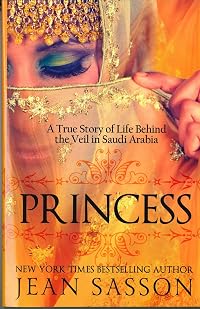

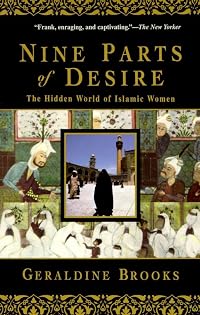
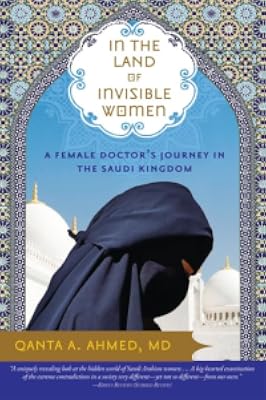

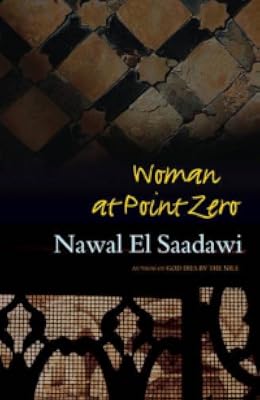










Member Reviews
This book was a great window into the reality behind my theoretical understanding of Islamic law and practice when it comes to women. There are no men as primary characters here. This is a book about women’s experiences in Saudi Arabia. Different angles and aspects are illustrated through the lives of the four (or five?) women whose experiences navigating love, relationships, sex, and marriage are described the unknown narrator’s voice. This is a modern epistolatory novel, the updates sent out via email with a discussion of reactions and comments that the narrator is receiving from her readers at the beginning of each chapter. But these women are from the “velvet” set: relatively well-off and mobile women who can shake off the show more shackles once in a while with a trip away from the country where they can let their hair out and down away from the policing and prying eyes of other Saudis. I can only imagine how it is for the more marginalized parts of Saudi society who don’t have the ability to escape the oppression. I admit that I don’t have a lot of other experience with Saudi culture to juxtapose this book with; only Abdelraman Munif’s City of Salt, in which women are pretty invisible and in which it is never specifically stated that the setting is Saudi Arabia. One of the women sums up the situation pretty succinctly in this passage: ‘[Saudi men are]...passive and weak. They are slaves to reactionary customs and ancient traditions even if their enlightened minds pretend to reject such things! That's the mold for all men in this society. They’re just pawns their families move around on a chessboard! I could have challenged the whole world if my love had been from somewhere else, not a crooked society that raises children on contradictions and double standards. A society where one guy divorces his wife because she's not responsive enough in bed to arouse him, while the other divorces his wife because she doesn't hide from him how much she likes it!"’
Lest this review be seen as a polemic against Islam or Saudis, I will state that I’m a yogi that isn’t affiliated with any of the established religions or sub-religions. I’m a satyagraha who believes in non-harm, so I am supportive and appreciative of those parts of all the world’s religions, beliefs, and societies that don’t oppress or do harm to other inside or outside of their personal beliefs and institutions. So I am equally critical of the damage Christian fundamentalism and other “-isms” are doing to women in my country. But I am very familiar with that side, having grown up with the expansion of Civil and Women’s Rights and now having to watch it rolled back by fascism and fundamentalism. This is why I read so wide. I am expanding my world view by reading literature from other countries, languages, and cultures to wrap my head around our differences and try to walk a path of peace and love through those differences. It is especially gratifying when the voice of the writer is from a woman’s or other marginalized perspective. Books like this broaden my understanding of the world in ways that one from the dominant voice of a religion, country, or culture can’t. As one would expect, this book was a sensation in the Arab world that was simultaneously celebrated and condemned depending on the reader’s perspective and privilege. I am very appreciative of the insight Alsanea has given me by writing (and translating) this novel even as I understand she is not speaking necessarily for all Saudis. show less
Lest this review be seen as a polemic against Islam or Saudis, I will state that I’m a yogi that isn’t affiliated with any of the established religions or sub-religions. I’m a satyagraha who believes in non-harm, so I am supportive and appreciative of those parts of all the world’s religions, beliefs, and societies that don’t oppress or do harm to other inside or outside of their personal beliefs and institutions. So I am equally critical of the damage Christian fundamentalism and other “-isms” are doing to women in my country. But I am very familiar with that side, having grown up with the expansion of Civil and Women’s Rights and now having to watch it rolled back by fascism and fundamentalism. This is why I read so wide. I am expanding my world view by reading literature from other countries, languages, and cultures to wrap my head around our differences and try to walk a path of peace and love through those differences. It is especially gratifying when the voice of the writer is from a woman’s or other marginalized perspective. Books like this broaden my understanding of the world in ways that one from the dominant voice of a religion, country, or culture can’t. As one would expect, this book was a sensation in the Arab world that was simultaneously celebrated and condemned depending on the reader’s perspective and privilege. I am very appreciative of the insight Alsanea has given me by writing (and translating) this novel even as I understand she is not speaking necessarily for all Saudis. show less
The author has taken an intriguing and unconventional approach to presenting her novel: it unfolds through 50 emails addressed to a group of readers from Saudi Arabia at the dawn of the 21st century. Through these emails, she narrates the romantic escapades of four best friends brought together by life in the capital city of Riyadh—hence the novel's title.
On the surface, the story follows the conventions of chick lit—a genre that humorously and often lightheartedly explores the contemporary lives of women. However, a closer reading reveals a deeper narrative, shedding light on the realities of contemporary Saudi society, where men occupy the central role. Each of the Riyadh girls embarks on her unique journey to love, encountering show more men from diverse social strata, upbringings, and cultural contexts, all bound by the enduring patriarchal traditions inherited from generations past.
The novel's underlying message, as I interpret it, is that beneath the hijab—which often unifies and depersonalizes women in the Arab world—lies a rich and complex individuality with aspirations, emotions, dignity, and a yearning for freedom and fulfillment. This story immerses readers in the contemporary realities of Saudi Arabia—a world that can surprise, fascinate, shock, or leave Western audiences speechless. show less
On the surface, the story follows the conventions of chick lit—a genre that humorously and often lightheartedly explores the contemporary lives of women. However, a closer reading reveals a deeper narrative, shedding light on the realities of contemporary Saudi society, where men occupy the central role. Each of the Riyadh girls embarks on her unique journey to love, encountering show more men from diverse social strata, upbringings, and cultural contexts, all bound by the enduring patriarchal traditions inherited from generations past.
The novel's underlying message, as I interpret it, is that beneath the hijab—which often unifies and depersonalizes women in the Arab world—lies a rich and complex individuality with aspirations, emotions, dignity, and a yearning for freedom and fulfillment. This story immerses readers in the contemporary realities of Saudi Arabia—a world that can surprise, fascinate, shock, or leave Western audiences speechless. show less
"We-the Girls of Riyadh - have been forbidden many things. Do not take the blessing of love away from us too!"
By sally tarbox on 5 June 2017
Format: Kindle Edition
Sex and the City in Saudi! A very readable narrative following four well-to-do young women in Riyadh. The book opens with perhaps the "least favoured" of the group being the first to get married. A triumph - or is it?
In short chapters, the nameless narrator tells of her friends' lives in a series of e-mails. A message from her introduces each chapter - she discusses the comments that her soap opera has provoked - some sympathetic, many shocked and critical. She quotes poetry and the koran, mulls over possible book deals that seem to be heading her way...
But the true story rests show more with the four friends - their careers, their families, but principally their love-lives. And what a sorry lot many of their menfolk prove to be!
"They are slaves to reactionary customs and ancient traditions even if their enlightened minds pretend to reject such things!"
When a relationship fails, of course, there is not just the heartbreak but the social devastation as a woman finds herself no longer eligible, struggling to find a match at all once she's been repudiated by one. And all this alongside the ultra-conservative Saudi world, where women can't drive, organise a business or socialise with men...
"The two of us had an agreement not to meet in Riyadh. It's just too difficult, dangerous and awkward. It wouldn't be relaxing like it would be if we were abroad. Outside the country, you can loosen up, you can breathe without worrying who's watching you."
Very entertaining read. show less
By sally tarbox on 5 June 2017
Format: Kindle Edition
Sex and the City in Saudi! A very readable narrative following four well-to-do young women in Riyadh. The book opens with perhaps the "least favoured" of the group being the first to get married. A triumph - or is it?
In short chapters, the nameless narrator tells of her friends' lives in a series of e-mails. A message from her introduces each chapter - she discusses the comments that her soap opera has provoked - some sympathetic, many shocked and critical. She quotes poetry and the koran, mulls over possible book deals that seem to be heading her way...
But the true story rests show more with the four friends - their careers, their families, but principally their love-lives. And what a sorry lot many of their menfolk prove to be!
"They are slaves to reactionary customs and ancient traditions even if their enlightened minds pretend to reject such things!"
When a relationship fails, of course, there is not just the heartbreak but the social devastation as a woman finds herself no longer eligible, struggling to find a match at all once she's been repudiated by one. And all this alongside the ultra-conservative Saudi world, where women can't drive, organise a business or socialise with men...
"The two of us had an agreement not to meet in Riyadh. It's just too difficult, dangerous and awkward. It wouldn't be relaxing like it would be if we were abroad. Outside the country, you can loosen up, you can breathe without worrying who's watching you."
Very entertaining read. show less
Even though the gossipy format of the book wasn't exactly my cup of tea, the plight of young women of Saudi Arabia (before and right after their arranged marriages) came through rather poignantly. The humiliation they undergo during the process of arranging the marriage, having not much say in the process but hoping sincerely with all their heart for a decent husband, is overwhelming. Of course, we know in general terms about the treatment of women in Saudi Arabia, but even then it was a shock to read this explosive account of what's going on - "religious police" was one stark example...
Yet the author just touches the surface: she describes the most elite, upper-crust society of Riyadh, with all its privileges. So if those girls suffer show more that much, what to speak of the general population, who are not as fortunate economically... Unthinkable... (I am familiar with arranged marriages in India, but it's nothing like this, not even close...).
The author calls it "a society that raises children on contradictions and double standards", and it seems she is right about that. She calls the men of Saudi Arabia "passive and weak", "slaves to the reactionary customs and ancient traditions" and "just pawns their families move around on the chessboard" - with the result that crushes the very essence of life for young women. No wonder this book caused such a stir in the Arab world. show less
Yet the author just touches the surface: she describes the most elite, upper-crust society of Riyadh, with all its privileges. So if those girls suffer show more that much, what to speak of the general population, who are not as fortunate economically... Unthinkable... (I am familiar with arranged marriages in India, but it's nothing like this, not even close...).
The author calls it "a society that raises children on contradictions and double standards", and it seems she is right about that. She calls the men of Saudi Arabia "passive and weak", "slaves to the reactionary customs and ancient traditions" and "just pawns their families move around on the chessboard" - with the result that crushes the very essence of life for young women. No wonder this book caused such a stir in the Arab world. show less
Gamrah, Sadeem, Lamees, and Michelle are young, well-off, educated Saudi women. Having completed secondary education, they are looking ahead -- some to university, and all to marriage. Their story is told by an anonymous friend, via weekly e-mails sent to a far-reaching distribution list. The messages create a sensation in Saudi Arabian society, by revealing the "real life" feelings, hopes, and aspirations of these women. The weekly messages also cast Saudi men in a fairly negative light: fathers and uncles are controlling, making decisions about the women's lives without consultation. Young male prospects generally see women as fit for one thing only. And yet, everyone in this story is constrained by the conservative culture. Even the show more philandering young men are bound by tradition and family expectations concerning marriage. No one is free to choose a life partner based on love alone, even though they all dream of this possibility.
While this book is a light read, and might be billed by some as "chick lit," it really captured my attention. Using "scandalous" e-mails to convey the story reminded me of 19th-century serializations, with a high-tech twist. This is one of the few books I've read about contemporary Muslim culture where I felt I was truly inside women's heads. Recommended. show less
While this book is a light read, and might be billed by some as "chick lit," it really captured my attention. Using "scandalous" e-mails to convey the story reminded me of 19th-century serializations, with a high-tech twist. This is one of the few books I've read about contemporary Muslim culture where I felt I was truly inside women's heads. Recommended. show less
'Saudi Arabia' and 'chick lit' are not words which you expect to see in close proximity, but Girls of Riyadh is just that: a Middle Eastern take on Sex and the City, looking at the lives and loves of four young Saudi women from privileged backgrounds.
As chick lit, it's not incredibly engaging; it's not a genre I'm usually wild about, and Alsanea doesn't have the writing skills to make the girl-meets-boy aspect of the novel terribly fresh. There's a lot of telling-not-showing, little depth to the characters, and I don't think Girls of Riyadh would have received much attention were it not for its context. But its context was what made it an interesting read for me. It's so rare, in the West, to get an account of what life is like for show more young women within Saudi Arabia, and it was interesting to see what aspects of her culture Alsanea clearly likes, and how much her faith is important to her, as well as to see what aspects she deplores. (The decision of one of the characters to wear hijab full-time is greeted by the others as a 'bold spiritual step'—challenging to the preconceptions of a Western reader?) In some ways, it's a very sad and dispiriting novel to read: the characters she writes about are intelligent and educated and wealthy, yet their lives are still circumscribed in a number of ways that are both familiar to me and not. There is never any question, it seems, of any of them not getting married: they can only be fulfilled through love-expressed-as-marriage. I'm not sure if that was because Alsanea felt she could go thus-far-and-no-further in her critique, or if she could just not envision something beyond the ending she gave them for her characters.
Lastly, as a translation, I'm not sure how successful it was. The foreword states that it was difficult to capture the original style—a blend of literary Arabic with slang, regional dialects and class markers—in English, and that shows in the rather flat and weak English prose. The styles jar sometimes, as do the shifts in tense and point of view, made all the more frustrating when you don't know if that's mostly a result of the translator, the original author, or Arabic/Saudi literary conventions shaping the book in a way that I'm just not used to. show less
As chick lit, it's not incredibly engaging; it's not a genre I'm usually wild about, and Alsanea doesn't have the writing skills to make the girl-meets-boy aspect of the novel terribly fresh. There's a lot of telling-not-showing, little depth to the characters, and I don't think Girls of Riyadh would have received much attention were it not for its context. But its context was what made it an interesting read for me. It's so rare, in the West, to get an account of what life is like for show more young women within Saudi Arabia, and it was interesting to see what aspects of her culture Alsanea clearly likes, and how much her faith is important to her, as well as to see what aspects she deplores. (The decision of one of the characters to wear hijab full-time is greeted by the others as a 'bold spiritual step'—challenging to the preconceptions of a Western reader?) In some ways, it's a very sad and dispiriting novel to read: the characters she writes about are intelligent and educated and wealthy, yet their lives are still circumscribed in a number of ways that are both familiar to me and not. There is never any question, it seems, of any of them not getting married: they can only be fulfilled through love-expressed-as-marriage. I'm not sure if that was because Alsanea felt she could go thus-far-and-no-further in her critique, or if she could just not envision something beyond the ending she gave them for her characters.
Lastly, as a translation, I'm not sure how successful it was. The foreword states that it was difficult to capture the original style—a blend of literary Arabic with slang, regional dialects and class markers—in English, and that shows in the rather flat and weak English prose. The styles jar sometimes, as do the shifts in tense and point of view, made all the more frustrating when you don't know if that's mostly a result of the translator, the original author, or Arabic/Saudi literary conventions shaping the book in a way that I'm just not used to. show less
Sadeem, Gamrah, Lamees and Mashael are 'velvet' class girls in their first year of university: rich, privileged, and constantly brushing up against the strictures of Saudi society. They accept the teachings of Islam without question, but they long for love and hope to find men of their own choosing who will accept them as the free-spirited thinkers that they try to be.
On the surface of it, this is exactly the sort of book I hate: chick lit, in which 4 smart, independent girls define themselves almost entirely through their (much-imagined) love lives. The book is entirely given over to their dreams and heartbreak. But I didn't hate it. I swept through it rapidly, intrigued by the conflict between the girls aspirations and their show more situation, and fascinated by this rare glimpse into a society I know fairly little about: Saudi Arabia.
Ultimately, it is a paean to the right to make your own choices; to abandon social prejudices (or at least some of them; the section dealing with a Sunni/Shiite friendship remains awkwardly underdeveloped - crossing this religious boundary seems to remain beyond the pale); and a rallying cry to recognise the value of a smart, independent woman rather than abandon her for an uneducated, sheltered girl who can be dominated. A searing moment - a critic writing in to question why a man wouldn't marry another man if he was looking for that sort of relationship. Ouch.
But it is worth noting that it focuses strictly on a class showered with money and privilege. Compared with less well-off girls, the friends are bemoaning the cultural equivalent of #firstworldproblems - I was reminded of A Thousand Splendid Suns precisely because there are no similarities here. Regardless, this was a good read and I'm glad I finally got to it. show less
On the surface of it, this is exactly the sort of book I hate: chick lit, in which 4 smart, independent girls define themselves almost entirely through their (much-imagined) love lives. The book is entirely given over to their dreams and heartbreak. But I didn't hate it. I swept through it rapidly, intrigued by the conflict between the girls aspirations and their show more situation, and fascinated by this rare glimpse into a society I know fairly little about: Saudi Arabia.
Ultimately, it is a paean to the right to make your own choices; to abandon social prejudices (or at least some of them; the section dealing with a Sunni/Shiite friendship remains awkwardly underdeveloped - crossing this religious boundary seems to remain beyond the pale); and a rallying cry to recognise the value of a smart, independent woman rather than abandon her for an uneducated, sheltered girl who can be dominated. A searing moment - a critic writing in to question why a man wouldn't marry another man if he was looking for that sort of relationship. Ouch.
But it is worth noting that it focuses strictly on a class showered with money and privilege. Compared with less well-off girls, the friends are bemoaning the cultural equivalent of #firstworldproblems - I was reminded of A Thousand Splendid Suns precisely because there are no similarities here. Regardless, this was a good read and I'm glad I finally got to it. show less
Members
- Recently Added By
Lists

Best Friendship Stories
205 works; 16 members

Books Read in 2016
4,666 works; 199 members

Books Read in 2022
5,226 works; 115 members

Women in Islam
120 works; 8 members

Around the World in 80 Books
79 works; 4 members

Arab and Arab Diaspora Literature We Recommend
112 works; 53 members
Author Information

3 Works 1,318 Members
Some Editions
Awards and Honors
Common Knowledge
- Canonical title
- Girls of Riyadh
- Original title
- بنات الرياض
- Original publication date
- 2007-07-05
- People/Characters
- Sadeem Al-Horaimli; Gamrah Al-Qusmanji; Lamees Jeddawi; Mashael 'Michelle' Al-Abdulrahman; Rashid Al-Tanbal; Faisal Al-Batran (show all 41); Waleed Al-Shari; Firas Al-Sharqawi; Um Nuwayyir; Tamadur Jeddawi; Aunt Badriyyah; Tariq; Meshaal 'Misho' Al-Abdulrahman; Naflah Al-Qusmanji; Hessah Al-Qusmanji; Shahla Al-Qusmanji; Mohammed Al-Qusmanji; Ahmad Al-Qusmanji; Nayif Al-Qusmanji; Nawwaf Al-Qusmanji; Matthew (Matti); Ali; Mudi; Sultan; Abu Musa'ed; Ahmed; Saleh; Nizar; Jumana; Fatimah; Hamdan; Shaikhah; Sattam; Kari; Khalid; Tahir; Nuri; Dr. Asim Hijazi; Dr. Fatin Khalil; Ms. Elham; Madame Sawsan
- Important places
- Riyadh, Saudi Arabia; Jeddah, Saudi Arabia; Khobar, Saudi Arabia; Venice, Veneto, Italy; Chicago, Illinois, USA; San Francisco, California, USA (show all 7); London, England, UK
- Epigraph
- "Verily, Allah does not change a people's condition until they change what is in themselves." -- Qur'an, Surat Al-Ra'd (The Chapter of Thunder), Verse 11
- Dedication
- To my most beloved; Mom and sister Rasha and to all my friends, the Girls of Riyadh
- First words
- Ladies and Gentlemen: You are invited to join me in one of the most explosive scandals and noisiest, wildest all-night parties around.
- Last words*
- (Click to show. Warning: May contain spoilers.)Er nahm ihre Hände, sgtrahlte und sagte: "Mensch Alter, wär dir das doch bloss schon früher passiert!"
- Blurbers
- Al-Shawaf, Rayyan; Hardy, Roger; Beresford, Lucy; Seymenliyska, Elena; Ahmed, Fetema
- Original language
- Arabic
*Some information comes from Common Knowledge in other languages. Click "Edit" for more information.
Classifications
- Genres
- Fiction and Literature, General Fiction
- DDC/MDS
- 892.736 — Literature & rhetoric Literatures of other languages Afro-Asiatic literatures Arabic (Egypt, Lebanon, Palestine, Saudi Arabia, Sudan) Arabic fiction 1945–2000
- LCC
- PJ7962 .A55 .B3613 — Language and Literature Oriental languages and literatures Oriental philology and literature Arabic Arabic literature Individual authors or works
- BISAC
Statistics
- Members
- 1,316
- Popularity
- 18,393
- Reviews
- 78
- Rating
- (3.35)
- Languages
- 15 — Arabic, Catalan, Danish, Dutch, English, Finnish, French, German, Italian, Marathi, Norwegian (Bokmål), Norwegian, Portuguese, Spanish, Swedish
- Media
- Paper, Audiobook, Ebook
- ISBNs
- 41
- UPCs
- 1
- ASINs
- 12