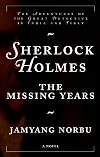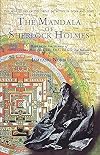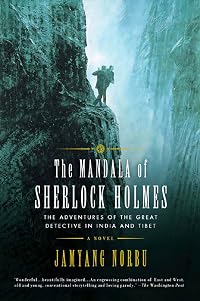
The Mandala of Sherlock Holmes
by Jamyang Norbu
On This Page
Description
In 1891, the public was horrified to learn that Sherlock Holmes had perished in a deadly struggle with the archcriminal Professor Moriarty at the Reichenbach Falls. Then, to their amazement, he reappeared two years later, informing the stunned Watson: 'I travelled for two years in Tibet, therefore, and amused myself by visiting Lhasa' Nothing has been known of those two missing years until Jamyang Norbu's discovery, in a rusting tin dispatch box in Darjeeling, of a flat packet carefully show more wrapped in waxed paper and neatly tied with stout twine. When opened the packet revealed Hurree Chunder Mookerjee's own account of his travels with Sherlock Holmes. Now, for the first time, we learn of Sherlock Holmes's brush with the Great Game, with Colonel Creighton, Lurgan Sahib and the world of Kim. We follow him north across the hot and dusty plains of India to Simla, summer capital of the British Raj, and over the high passes to the vast emptiness of the Tibetan plateau. In the medieval splendour that is Lhasa, intrigue and black treachery stalk the shadows, and in the remote and icy fastnesses of the Trans-Himalayas good and evil battle for ascendancy. As Patrick French has written, 'Read th show lessTags
Recommendations







































Member Reviews
The premise of "The Mandala of Sherlock Holmes" lies in what is known among the many fans of Sherlockiana as the Great Hiatus — a period between 1891, when Arthur Conan Doyle decided to kill off his intrepid detective along with his arch-nemesis Professor Moriarty in The Adventure of the Final Problem to 1894, when the author finally caved in to the persistent requests by his readers as well as publishers and brought Sherlock Holmes back in The Adventure of the Empty House. Upon his return from what turned out a faked death and while explaining the ever baffled Dr. Watson what had happened, Sherlock Holmes gave a brief mention of having '… travelled for two years in Tibet, therefore, and amused myself by visiting Lhassa , and show more spending some days with head Lama. You may have read of the remarkable exploration of a Norwegian named Sigerson, but I am sure it never occurred to you that you were receiving news from your friend.'
"The Mandala of Sherlock Holmes" is actually a homage to two writers — Arthur Conan Doyle and Rudyard Kipling (with some additional traces of H. Rider Haggard). The book is a treasure trove of references to and direct quotes from both authors — literally dozens of them — and I am no expert on either, so there must be plenty that I missed.
Norbu’s story of Sherlock Holmes is told by words of Huree Chunder Mookerjee, a Bengali spy out of a well-regarded novel Kim by Rudyard Kipling. It is Kipling’s character that assumes the place of Watson for the rest of the story — and this turns out it is an ingenious move, as it also alters the perspective. "The Mandala" that begins as a skillful and honest homage to Sherlock Holmes slowly turns into something else. Despite of both of his sources being victorian and colonial, Norbu’s novel manages to put a very interesting twist to them. The Empire that in Concan Doyle and Kipling is either an exotic backdrop or source of a threatening menace acquires a voice of its own as our access to the narrative and the point of association is provided through a babu of Indian origin rather than a British doctor. This has some far-reaching ramifications, all of which might not be to the best liking to the fans of original Sherlock Holmes — but this is not simply a story of what Mr. Holmes did in Tibet during his “missing years”. It is a case of the Empire writing back and appropriating the two most famous and well-loved colonial writers to serve the ends of the colonized, and as such it is truly well executed. show less
"The Mandala of Sherlock Holmes" is actually a homage to two writers — Arthur Conan Doyle and Rudyard Kipling (with some additional traces of H. Rider Haggard). The book is a treasure trove of references to and direct quotes from both authors — literally dozens of them — and I am no expert on either, so there must be plenty that I missed.
Norbu’s story of Sherlock Holmes is told by words of Huree Chunder Mookerjee, a Bengali spy out of a well-regarded novel Kim by Rudyard Kipling. It is Kipling’s character that assumes the place of Watson for the rest of the story — and this turns out it is an ingenious move, as it also alters the perspective. "The Mandala" that begins as a skillful and honest homage to Sherlock Holmes slowly turns into something else. Despite of both of his sources being victorian and colonial, Norbu’s novel manages to put a very interesting twist to them. The Empire that in Concan Doyle and Kipling is either an exotic backdrop or source of a threatening menace acquires a voice of its own as our access to the narrative and the point of association is provided through a babu of Indian origin rather than a British doctor. This has some far-reaching ramifications, all of which might not be to the best liking to the fans of original Sherlock Holmes — but this is not simply a story of what Mr. Holmes did in Tibet during his “missing years”. It is a case of the Empire writing back and appropriating the two most famous and well-loved colonial writers to serve the ends of the colonized, and as such it is truly well executed. show less
Sherlock Holmes aficionados refer to the period from 1891 to 1894--the time between Holmes's disappearance and presumed death in The Adventure of the Final Problem (at the hands of Moriarity at Reichenbach Falls) and his reappearance in The Adventure of the Empty House--as "the Great Hiatus."
So, what really happened during these lost years?
Holmes tells Dr. Watson in laconic fashion: "I travelled for two years in Tibet, therefore, and amused myself by visiting Lhasa and spending some days with the head Lama."
Two years is a long time. There must have been more to it than that, but without Dr. Watson as the faithful scribe, how could anyone know the truth?
Author Jamyang Norbu offers an explanation in The Mandala of Sherlock Holmes, a show more non-canonical Sherlock Holmes pastiche novel.
After surviving the incident at the Reichenbach Falls, Holmes travels east to escape Moriarty's henchmen. One wonders, if Holmes survived, what happened to Moriarty? His agents are still active, it seems. In India, Holmes meets a Bengali spy, Huree Chunder Mookherjee, assigned to accompany and protect Holmes during his mission to Tibet, for mission it was. Holmes has adopted the disguise of a Norwegian explorer called Sigerson so that he is able to protect the young 13th Dalai Lama from assassination by a Chinese-backed evil sorcerer, whose secret identity will come as no surprise when revealed. Holmes, ever pragmatic, finds himself at the mercy of mystical elements that almost (but not quite) overpower him as his expedition leads him into the fabled Shambala and events beyond common understanding. Mookherjee admirably takes on the role of narrator, with a quaint turn of phrase and shocked exclamations as things become considerably more dangerous with every passing day. A helpful glossary at the back of the book assists readers with unfamiliar words and phrases.
The author draws heavily on books and descriptions of the era, notably Kipling's Kim and Charles Allen's Plain Tales from the Raj. I loved this book, although the plot veers into a kind of mysticism, which Conan Doyle is more famous for, than his creation. However, the Great Game is wonderfully evident. Holmesian aficionados will not be disappointed although some Baker Street purists might disapprove. The author has perfectly captured Holmes' dry wit and abrasive, often mercurial personality. Added to this is Holmes' particular manner of speech and deduction.
There are several extremely amusing references in this helter-skelter tale of darkness and derring-do. Note: readers who wondered about the Giant Red Leech, hinted at by Watson, will have their questions answered here. I thought the book admirably echoed the tradition of Watson and Holmes' many adventures.
A sad, one could say tragic element of the story is the author's concern with China's occupation of Tibet. He weaves in a pertinent political message, but in a subtle way that never interferes with the story. show less
So, what really happened during these lost years?
Holmes tells Dr. Watson in laconic fashion: "I travelled for two years in Tibet, therefore, and amused myself by visiting Lhasa and spending some days with the head Lama."
Two years is a long time. There must have been more to it than that, but without Dr. Watson as the faithful scribe, how could anyone know the truth?
Author Jamyang Norbu offers an explanation in The Mandala of Sherlock Holmes, a show more non-canonical Sherlock Holmes pastiche novel.
After surviving the incident at the Reichenbach Falls, Holmes travels east to escape Moriarty's henchmen. One wonders, if Holmes survived, what happened to Moriarty? His agents are still active, it seems. In India, Holmes meets a Bengali spy, Huree Chunder Mookherjee, assigned to accompany and protect Holmes during his mission to Tibet, for mission it was. Holmes has adopted the disguise of a Norwegian explorer called Sigerson so that he is able to protect the young 13th Dalai Lama from assassination by a Chinese-backed evil sorcerer, whose secret identity will come as no surprise when revealed. Holmes, ever pragmatic, finds himself at the mercy of mystical elements that almost (but not quite) overpower him as his expedition leads him into the fabled Shambala and events beyond common understanding. Mookherjee admirably takes on the role of narrator, with a quaint turn of phrase and shocked exclamations as things become considerably more dangerous with every passing day. A helpful glossary at the back of the book assists readers with unfamiliar words and phrases.
The author draws heavily on books and descriptions of the era, notably Kipling's Kim and Charles Allen's Plain Tales from the Raj. I loved this book, although the plot veers into a kind of mysticism, which Conan Doyle is more famous for, than his creation. However, the Great Game is wonderfully evident. Holmesian aficionados will not be disappointed although some Baker Street purists might disapprove. The author has perfectly captured Holmes' dry wit and abrasive, often mercurial personality. Added to this is Holmes' particular manner of speech and deduction.
There are several extremely amusing references in this helter-skelter tale of darkness and derring-do. Note: readers who wondered about the Giant Red Leech, hinted at by Watson, will have their questions answered here. I thought the book admirably echoed the tradition of Watson and Holmes' many adventures.
A sad, one could say tragic element of the story is the author's concern with China's occupation of Tibet. He weaves in a pertinent political message, but in a subtle way that never interferes with the story. show less
God this book was so good. The setting was well-realized, Holmes was depicted faithfully, and the mystery was compelling.
The story takes a hard-right supernatural turn that will irk a lot of readers, but I *loved* it.
The story takes a hard-right supernatural turn that will irk a lot of readers, but I *loved* it.
The basic premise was essentially to document the hows and whys of Holmes visit to Tibet during the great hiatus. The intriguing bit is that the amusing Babu, Hurree Chunder Mookerjee, of Rudyard Kipling's classic work, Kim, narrates the story. As a fan of the Flashman books as well as being interested in the British presence in India, I found the book to be a vital addition to my collection. By making the narrator someone other than Watson, the author did himself a great favour. The biggest fault with most pastiches is the inability of the author to effectively mimic the voice of Watson. Thankfully Norbu doesn't try, and it has been far too long since I read Kim to take exception with the voice of Huree.
The story begins with Holmes show more arrival in India, as Sigerson of course. Huree is an agent of the Raj and is assigned to keep an eye on the unlikely foreigner. I rather liked that one of Holmes' first lines to Huree was "You have been in Afghanistan I perceive." That one familiar line would pretty much define the relationship between these two characters. Much of the next few chapters are spent in creating a bond between these two unlikely fellows and all handled rather effectively I thought. The characterization of Holmes is fairly good, even if he is prone to quoting a bit too much Horace. He is also somewhat distant, and is clearly exploring, to some degree, the meaning of life. Myself, I was expecting Holmes to become involved at Mycroft's request in the fascinating double-play of Kipling's Great Game, which surprisingly, he doesn't. Holmes is of course on the run from the minions of the late Professor Moriarty, which begs the question as to why he would venture into Moran's home ground, and is besieged on all fronts. After an encounter with a giant red leech and a group of dacoits or more correctly Thugs, we move onto the trip to Tibet. The intrigues and action are both excellent. Norbu knows his plot pacing.
The journey is not quite as evocative as I had hoped, as it goes rather quickly, which progresses the story admirably, but leaves me without the details of Indian life that I had hoped for. On arrival in Tibet, we find that Holmes has been expected and is requested to help defend the life of the youthful Dalai Lama to be. He turns the request down flat, but of course ends up doing the right thing. It is on the night of the attack that brings Holmes round that the story suddenly veers into left field. It was at this point that what I thought was going to be one of the better pastiches that I had ever read turned suddenly sour. While I expected a good deal of mysticism in this story, I certainly wasn't prepared for the revelations presented here. I found myself thinking of Robert Lee Hall's Exit Sherlock Holmes rather than Kipling's "Kim". Pretty much the last thing I was expecting actually. The revelation of the identity of the "Dark One" who was behind the whole thing left me cold, particularly as I was half expecting Fu Manchu to make an appearance. Well, he didn't, but I won't spoil the finish for any of those curious enough to tackle this book, but I will say that a good deal of paranormal activity takes place and that the motivation for Holmes trip to Tibet is a huge let down. Don't get me wrong, I thoroughly enjoyed the first half of the book, but can't give it the recommendation that I had hoped for. The writing style is exemplary for a pastiche, as is the representation of Holmes, but...in the end I was not satisfied. If you enjoy the X- Files and don't mind mixing Holmes with the paranormal, then you really will love this, but for me, it missed the mark.
Originally published by Harper Collins Publishers India, the book is now readily available in UK and US editions. show less
The story begins with Holmes show more arrival in India, as Sigerson of course. Huree is an agent of the Raj and is assigned to keep an eye on the unlikely foreigner. I rather liked that one of Holmes' first lines to Huree was "You have been in Afghanistan I perceive." That one familiar line would pretty much define the relationship between these two characters. Much of the next few chapters are spent in creating a bond between these two unlikely fellows and all handled rather effectively I thought. The characterization of Holmes is fairly good, even if he is prone to quoting a bit too much Horace. He is also somewhat distant, and is clearly exploring, to some degree, the meaning of life. Myself, I was expecting Holmes to become involved at Mycroft's request in the fascinating double-play of Kipling's Great Game, which surprisingly, he doesn't. Holmes is of course on the run from the minions of the late Professor Moriarty, which begs the question as to why he would venture into Moran's home ground, and is besieged on all fronts. After an encounter with a giant red leech and a group of dacoits or more correctly Thugs, we move onto the trip to Tibet. The intrigues and action are both excellent. Norbu knows his plot pacing.
The journey is not quite as evocative as I had hoped, as it goes rather quickly, which progresses the story admirably, but leaves me without the details of Indian life that I had hoped for. On arrival in Tibet, we find that Holmes has been expected and is requested to help defend the life of the youthful Dalai Lama to be. He turns the request down flat, but of course ends up doing the right thing. It is on the night of the attack that brings Holmes round that the story suddenly veers into left field. It was at this point that what I thought was going to be one of the better pastiches that I had ever read turned suddenly sour. While I expected a good deal of mysticism in this story, I certainly wasn't prepared for the revelations presented here. I found myself thinking of Robert Lee Hall's Exit Sherlock Holmes rather than Kipling's "Kim". Pretty much the last thing I was expecting actually. The revelation of the identity of the "Dark One" who was behind the whole thing left me cold, particularly as I was half expecting Fu Manchu to make an appearance. Well, he didn't, but I won't spoil the finish for any of those curious enough to tackle this book, but I will say that a good deal of paranormal activity takes place and that the motivation for Holmes trip to Tibet is a huge let down. Don't get me wrong, I thoroughly enjoyed the first half of the book, but can't give it the recommendation that I had hoped for. The writing style is exemplary for a pastiche, as is the representation of Holmes, but...in the end I was not satisfied. If you enjoy the X- Files and don't mind mixing Holmes with the paranormal, then you really will love this, but for me, it missed the mark.
Originally published by Harper Collins Publishers India, the book is now readily available in UK and US editions. show less
Although I am not a fan of mystery novels, like most people I've read several Shelock Holmes stories over the years. I found them generally entertaining but would not call myself a person who would look forward to reading another Sherlock Holmes story.
This one, received as a gift, intrigued me because of the mysteriousness of the title and the setting. The story starts in the great city of Bombay (now called Mumbai) with Hurree Chunder Mookerjee assigned the task of picking up a Norwegian visitor arriving on a ship. The story follows Hurree and the Norwegian, who turns out to be none other than Sherlock himself, in many encounters with criminal elements that are working for Sherlock's nemesis, Moriarty
Both of them follow clues that show more leads them to Simla, in Northern India and then to Tibet where they meet with the Grand Lama. They help save the Lama and defeat and kill Moriarty through a series of events, some of them rather fantastical.
The story is well written and the author, a Tibetan political activist living in Dharamsala, successfully carries on the Conan Doyle's writing style and portrays Holme's character and personality very well.
It's an enjoyable read that brings to light some of the aspects of Tibet's historical struggles against China and the latter's continuous attempts to integrate Tibet into China- which was successfully done in 1950 under the current Communist regime. show less
This one, received as a gift, intrigued me because of the mysteriousness of the title and the setting. The story starts in the great city of Bombay (now called Mumbai) with Hurree Chunder Mookerjee assigned the task of picking up a Norwegian visitor arriving on a ship. The story follows Hurree and the Norwegian, who turns out to be none other than Sherlock himself, in many encounters with criminal elements that are working for Sherlock's nemesis, Moriarty
Both of them follow clues that show more leads them to Simla, in Northern India and then to Tibet where they meet with the Grand Lama. They help save the Lama and defeat and kill Moriarty through a series of events, some of them rather fantastical.
The story is well written and the author, a Tibetan political activist living in Dharamsala, successfully carries on the Conan Doyle's writing style and portrays Holme's character and personality very well.
It's an enjoyable read that brings to light some of the aspects of Tibet's historical struggles against China and the latter's continuous attempts to integrate Tibet into China- which was successfully done in 1950 under the current Communist regime. show less
Based on the reminiscences of Hurree Chunder Mookerjee CIE, FRS, FRGS, Rai Bahadur
In 1891, a horrified British public learnt that Sherlock Holmes -- in a last deadly struggle with the archcriminal Professor Moriarty -- had perished at the Reichenbach Falls in Switzerland. Two years later, popular demand made Conan Doyle resurrect the great detective. Holmes informs a stunned Dr. Watson: ""I travelled for two years in Tibet, therefore, and amused myself by visiting Lhasa.""
This is all that the world has known of Sherlock Holmes's journey to the East. Jamyang Norbu -- an avid reader of Kipling and Doyle -- decides to take the matter in his hands; to investigate Holmes's stay in Lhasa, Tibet. What he unearths is the Mandala, written by a show more wily Bengali scholar, Hurrie Chunder Mookerjee, Holmes's travelling companion. The Mandala holds the key to the mystery and reveals Holmes in a landscape so fascinating, a game so intriguing that it is difficult to resist.
An exciting, often richly humourous detective story The Mandala of Sherlock Holmes also evokes the romance of Kipling's India. show less
In 1891, a horrified British public learnt that Sherlock Holmes -- in a last deadly struggle with the archcriminal Professor Moriarty -- had perished at the Reichenbach Falls in Switzerland. Two years later, popular demand made Conan Doyle resurrect the great detective. Holmes informs a stunned Dr. Watson: ""I travelled for two years in Tibet, therefore, and amused myself by visiting Lhasa.""
This is all that the world has known of Sherlock Holmes's journey to the East. Jamyang Norbu -- an avid reader of Kipling and Doyle -- decides to take the matter in his hands; to investigate Holmes's stay in Lhasa, Tibet. What he unearths is the Mandala, written by a show more wily Bengali scholar, Hurrie Chunder Mookerjee, Holmes's travelling companion. The Mandala holds the key to the mystery and reveals Holmes in a landscape so fascinating, a game so intriguing that it is difficult to resist.
An exciting, often richly humourous detective story The Mandala of Sherlock Holmes also evokes the romance of Kipling's India. show less
A must-read for any Buddhist-inclined Sherlock Holmes fan, or anyone interested in contemporary Tibetan/western cultural crossover. By a Tibetan with a first-rate grasp of the style and the idiosyncrasies of the original Sherlock Holmes stories. Does it have anything serious to say about Buddhism? Possibly not.
Members
- Recently Added By
Lists

Slightly Foxed 1
21 works; 1 member
Author Information

10+ Works 476 Members
Awards and Honors
Awards
Common Knowledge
- Canonical title
- The Mandala of Sherlock Holmes
- Original title
- The Mandala Of Sherlock Holmes
- Alternate titles
- Sherlock Holmes : The Missing Years
- Original publication date
- 1999
- People/Characters
- Sherlock Holmes; Hurrish Chunder Mookerji
- Important places
- Tibet; India
- Epigraph
- I travelled for two years in tibet, therefore, and amused myself by visiting Lhassa and spending some days with the head Lama. You may have read of the remarkable explorations of a Norwegian named Sigerson, but I am sure th... (show all)at it never occurred to you that you were receiving news of your friend.
Sherlock Holmes
The Empty House
Is not all life pathetic and futile? ...We reach. We grasp. And what is left in our hands at the end? A Shadow. Or worse than a shadow -- misery.
Sherlock Holmes
The Retired Colourman
The Mandala (Tib: dkyil-'khor) is a sacred circle surrounded by light rays or the place purified of all transitory or dualist ideas. It is experienced as the infinitely wide and pure sphere of consciousness in which ... (show all)deities spontaneously manifest themselves ... Mandalas have to be seen as inward pictures of a whole (integral) world; they are creative primal symbols of cosmic evolution and involution, emerging and passing in accordance with the same laws. From this perspective, it is but a short step to conceiving of the Mandala as a creative principle in relation to the external world, the macrocosmos -- thus making it the centre of all existence.
Detlef Ingo Lauf
Tibetan Sacred Art
From time to time, God causes men to be born - and thou art one of them - who have a lust to go abroad at the risk of their lives and discover news - today it may be of far-off things, tomorrow of some hidden mountain, and th... (show all)e next day of some nearby men who have done a foolishness against the state. These souls are very few; and of these few, not more than ten are of the best. Among these ten I count the Babu.
Rudyard Kipling
Kim
When everyone is dead the Great Game is finished. Not before. Listen to me until the end.
Rudyard Kipling
Kim - First words
- The post-monsoon sky over the Arabian sea is hazeless and clear blue as a piece of Persian turquoise.
- Last words
- (Click to show. Warning: May contain spoilers.)Let the tale now end.
(Click to show. Warning: May contain spoilers.)As I sat across from him in that dark room, lit only by a single butter lamp, he commenced to laugh softly in a peculiar noiseless fashion, (Epilogue) - Blurbers
- French, Patrick
- Disambiguation notice
- Published as
Sherlock Holmes-- the missing years : the adventures of the great detective in India and Tibet : a novel
by Bloomsbury, New York.
Classifications
Statistics
- Members
- 417
- Popularity
- 74,278
- Reviews
- 15
- Rating
- (3.55)
- Languages
- 6 — Dutch, English, French, German, Italian, Spanish
- Media
- Paper
- ISBNs
- 13