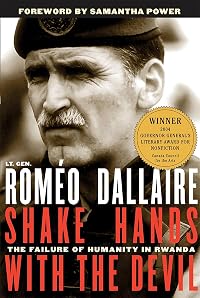
Shake Hands with the Devil: The Failure of Humanity in Rwanda
by Roméo Dallaire
On This Page
Description
A Canadian general and former United Nations peacekeeper shares his harrowing eyewitness account of the genocide in Rwanda, revealing how he and his men managed to rescue thousands of people despite the orgy of bloodletting that was erupting all around them. Reprint.Tags
Recommendations













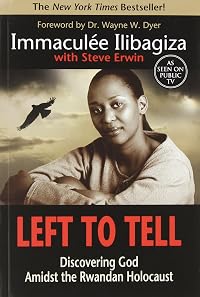
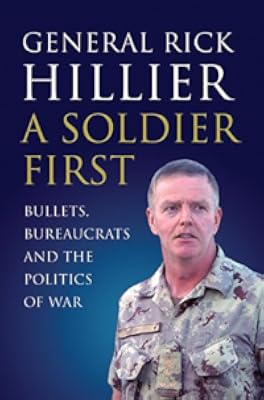


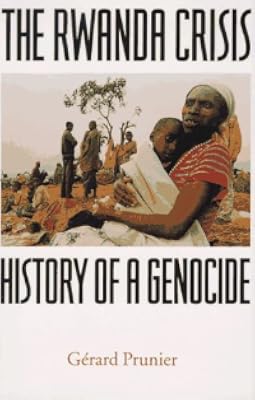
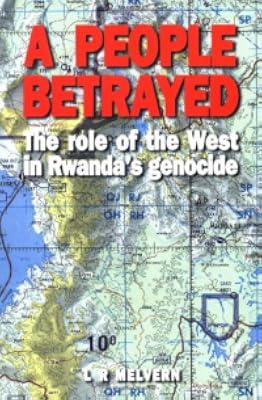












Member Recommendations


Member Reviews
This book is in your face raw. I read this for a book review in university and it ended with me writing my most passionate and well thought essay of that span. What happened in Rwanda was devastating and Dallaire pulls no punches in describing it to you. It seems like a very emotional and well thought out account of what happened during his time and his reasonings for his actions while in command. It would be impossible to try and understand the mental anguish he would have gone through day in and day out.
This is a must read for everyone.
This is a must read for everyone.
In 1994, between April 7 and July 15, nearly one million innocent people were killed in the Rwandan Genocide. Subsequent wars in the region killed more than five million people. The genocide was planned years in advice, perpetrated by racist nationalists bent on removing Tutsis from the planet. In "Shake Hands with the Devil: The Failure of Humanity in Rwanda," Roméo Dallaire convinces readers that these tragedies were easily preventable, but dithering politicians and bureaucrats all over the world watched in disinterest.
The book is compelling. Having read extensively for academic and personal reasons about the genocide, I knew many of the details listed below, so Dallaire's book had been sitting on my shelf unread for almost 15 show more years. I wish I had read it sooner because it is Dallaire and his military subordinates - not international aide groups or politicians - who were the international witnesses to these crimes.
The book moves quickly because it reads like a daily journal. Although it can be very disturbing and depressing given the nature of the genocide, there are moments of manic highs, too. It is emotional and frustrating because readers will be able to quickly identify with Dallaire's heart. He is effuse in praising his his-working aides and does not hold back at offering his personal assessments of the people who impede his work.
Dallaire's book, dedicated to victims, including the soldiers killed under his command, details his negotiations to stop the genocide and his actions during the genocide to bring an end to it. Assigned to Rwanda as part of a United Nations team in the summer of 1993 in order to help implement a peace agreement between the standing government and an incoming rebel army, he saw firsthand that a humanitarian crisis was coming. His documented pleas for help from New York, Paris, Nairobi, Geneva, Washington DC, and London in the first part of the book were willfully ignored as he and his small team of military observers shuttled around the country trying to avert the disaster. He was denied requests for funding for communications equipment, rations for his soldiers, office space, and even simple soccer balls to replace the banana-leaf balls used in refugee camps.
Extremist politicians on the government side began openly looking for a way to instigate the attack that led to the genocide. Their wish was granted when their moderate president's plane went down, probably from their own missile. Even after this catalyst, Dallaire's team's cries for help continued to be ignored. The bulk of "Shake Hands with the Devil" documents the daily routine of these brave observers who were abandoned by the UN and their supporting states. The book presents awful images and stories of the genocide and the people whom the UN also abandoned.
Dallaire asked for only 5,000 troops in order to save the country, but he was denied time and time again as bureaucrats and politicians in cities around the world took weekends off and justified his cries by telling him that the UN doesn't work quickly. That time was dizzying, destructive, and counter-productive when the French finally arrived to establish camps that protected runaway génocidaires, those responsible for openly slaughtering Tutsis in churches, orphanages, hamlets, and checkpoints in cities. By that time, nearly a million people had been cut down with machetes. The génocidaires rearmed themselves in the international refugee camps, leading to the subsequent Congo Wars.
In the last, shortest section of the book, Dallaire offers suggestions for improving how governments respond to humanitarian crises outside their borders. His suggestions are reasonable. In the case of Rwanda, simple support for implementing the peace agreement would have been enough. Unfortunately, as we have seen time and again, from Sudan to Myanmar to Wester China, the international community, including national capitals, relief organizations, and the UN, refuse to use the needed fiscal and physical muscle in order to save lives.
"Shake Hands with the Devil" has an extensive index and a glossary of terms and names, although Dallaire's easy-to-read style reminds readers of who he is meeting and working with, so there is little reason to consult it. show less
The book is compelling. Having read extensively for academic and personal reasons about the genocide, I knew many of the details listed below, so Dallaire's book had been sitting on my shelf unread for almost 15 show more years. I wish I had read it sooner because it is Dallaire and his military subordinates - not international aide groups or politicians - who were the international witnesses to these crimes.
The book moves quickly because it reads like a daily journal. Although it can be very disturbing and depressing given the nature of the genocide, there are moments of manic highs, too. It is emotional and frustrating because readers will be able to quickly identify with Dallaire's heart. He is effuse in praising his his-working aides and does not hold back at offering his personal assessments of the people who impede his work.
Dallaire's book, dedicated to victims, including the soldiers killed under his command, details his negotiations to stop the genocide and his actions during the genocide to bring an end to it. Assigned to Rwanda as part of a United Nations team in the summer of 1993 in order to help implement a peace agreement between the standing government and an incoming rebel army, he saw firsthand that a humanitarian crisis was coming. His documented pleas for help from New York, Paris, Nairobi, Geneva, Washington DC, and London in the first part of the book were willfully ignored as he and his small team of military observers shuttled around the country trying to avert the disaster. He was denied requests for funding for communications equipment, rations for his soldiers, office space, and even simple soccer balls to replace the banana-leaf balls used in refugee camps.
Extremist politicians on the government side began openly looking for a way to instigate the attack that led to the genocide. Their wish was granted when their moderate president's plane went down, probably from their own missile. Even after this catalyst, Dallaire's team's cries for help continued to be ignored. The bulk of "Shake Hands with the Devil" documents the daily routine of these brave observers who were abandoned by the UN and their supporting states. The book presents awful images and stories of the genocide and the people whom the UN also abandoned.
Dallaire asked for only 5,000 troops in order to save the country, but he was denied time and time again as bureaucrats and politicians in cities around the world took weekends off and justified his cries by telling him that the UN doesn't work quickly. That time was dizzying, destructive, and counter-productive when the French finally arrived to establish camps that protected runaway génocidaires, those responsible for openly slaughtering Tutsis in churches, orphanages, hamlets, and checkpoints in cities. By that time, nearly a million people had been cut down with machetes. The génocidaires rearmed themselves in the international refugee camps, leading to the subsequent Congo Wars.
In the last, shortest section of the book, Dallaire offers suggestions for improving how governments respond to humanitarian crises outside their borders. His suggestions are reasonable. In the case of Rwanda, simple support for implementing the peace agreement would have been enough. Unfortunately, as we have seen time and again, from Sudan to Myanmar to Wester China, the international community, including national capitals, relief organizations, and the UN, refuse to use the needed fiscal and physical muscle in order to save lives.
"Shake Hands with the Devil" has an extensive index and a glossary of terms and names, although Dallaire's easy-to-read style reminds readers of who he is meeting and working with, so there is little reason to consult it. show less
Dallaire was a Canadian peacekeeper sent by the UN as commander of the peacekeeping effort in Rwanda a few months before the genocide in 1994. It was very interesting (and extremely frustrating at times) to read about what happened from this perspective. It was the perspective of the people on the ground who were trying with what (very) little resources they had (not nearly enough) to find peace in the country before the genocide and civil war broke out.
This is a heart-wrenching read. Already the introduction made me choke. Dallaire gives no quarters, he wrote down what happened and what he has seen in Rwanda during the genocide. He also gets into the roots of the conflict, a racist ideology left behind by the belgian colonial power ("inferior" Hutu vs. "superior" Tutsi). While heroes are being trotted out almost daily, here is one of the few people I'd consider a hero. In the face of almost unsurmountable odds, he and his handful of UN troops tried to save lives in the bloodied streets of Kigali and Rwanda. This book has been fiercely discussed by me and my friends. Should we scrap UN peacekeeping missions? Are they any good the way they are being managed? Why could this happen only show more 50 years after Auschwitz? A Must Read. show less
Extremely heartbreaking, yet you come out of it feeling more optimistic than ever.
I read Dallaire's book for a class on International Intervention. I already made an analytical book report for my professor on it. Thus, here, putting aside the aspiring peacekeeper self for a while and switching back to a mode of being the common reader, I would only highlight my personal impression.
What's most striking about it is that it's full of memorable characters and episodes that are not necessarily always bleak. Some details are even comical; there are the cowardly Bangladeshi troops, Dallaire’s aide-de-camp who was crazy about animals and kept all sorts of pets, or how unusual request came to UNAMIR from the military genius Paul Kagame for show more help finding ten members of his extended family hiding in Kigali seven weeks into the genocide – ‘How was it possible that he, the bitterest foe of the extremists, still had surviving family in this extremist-controlled ghost town?’ These episodes might pose as insignificant to other readers, but to my mind, they are all faithful accounts of our lives, they render Dallaire’s narration very real, convincing that Rwanda is not just another case study, and above all serve as reminder of the human dimension of the whole process. In effect, it greatly resonates with Dallaire’s principal message on how humanity should be the main force behind international intervention.
Peux ce que veux. Allons-y.
(When there's a will, there's a way. Let's go.) show less
I read Dallaire's book for a class on International Intervention. I already made an analytical book report for my professor on it. Thus, here, putting aside the aspiring peacekeeper self for a while and switching back to a mode of being the common reader, I would only highlight my personal impression.
What's most striking about it is that it's full of memorable characters and episodes that are not necessarily always bleak. Some details are even comical; there are the cowardly Bangladeshi troops, Dallaire’s aide-de-camp who was crazy about animals and kept all sorts of pets, or how unusual request came to UNAMIR from the military genius Paul Kagame for show more help finding ten members of his extended family hiding in Kigali seven weeks into the genocide – ‘How was it possible that he, the bitterest foe of the extremists, still had surviving family in this extremist-controlled ghost town?’ These episodes might pose as insignificant to other readers, but to my mind, they are all faithful accounts of our lives, they render Dallaire’s narration very real, convincing that Rwanda is not just another case study, and above all serve as reminder of the human dimension of the whole process. In effect, it greatly resonates with Dallaire’s principal message on how humanity should be the main force behind international intervention.
Peux ce que veux. Allons-y.
(When there's a will, there's a way. Let's go.) show less
Romeo Dallaire is a true Canadian hero - sent into an untenable sitaution in Rwanda in 1994, Dallaire was forced to bear witness to a genocidal massacre whose scope was almost beyond the capacity of the modern North American mind to countenance. With brutal honesty about not only his frustrations and fears, but about his own limitations, Dallaire puts before the Western world a stark picture of the results of our superficial, high handed and ill conceived approach to modern warfare on one of the world's most unstable areas. Through courageous and candid revelations, and after battling personal demons of alcholism and depression as a result of his experience, Dallaire challenges all Canadians, indeed, all citiizens of the modern world, show more to re-examine the meanings of humanity, mercy, and peace and to examine how governments and individuals alike can - in fact must - contribute to how we might still, ultimately, prevail over conflict. show less
This is an absolutely stunning insider's look at the travesty of the Rwanda genocide and the United Nations mission led by General Romeo Dallaire.The book explores two stories. The first being General Dallaire's personal journey from a strong, confident warrior to the broken, suicidal man he became upon his return to Canada. A man consumed by the guilt and the horror of a genocide that very well could have been prevented had his warnings to the United Nations been heeded and had he been given the resources he required.The second story is that of the genocide itself and the refusal of the world to recognize the atrocities that were being committed and the UN's complete failure to act in any constructive way to stop it. Both stories are show more interwoven masterfully as we see the brave General's refusal to abandon his mission and the people of Rawanda in the face of overwhelming odds and his countless attempts to make the world pay attention. He repeatedly risks his own life in pursuit of that goal.This is a profoundly important piece of modern history that needed to be brought to the fore for so many reasons, and General Dallaire does that in this wickedly honest, no holds barred biography. It was both haunting and captivating, and above all, it was honest.General Romeo Dallaire is a forgotten hero who deserves to be remembered for all he tried to do in the face of overwhelming odds. It is a rare person capable of such a feat.Read this book... you will never forget it. show less
Members
- Recently Added By
Lists

Best Biographies, Autobiographies and Memoirs
465 works; 160 members

CBC's 100 True Stories
100 works; 6 members

History can be Interesting (or Horrifying or Fun...)
14 works; 2 members

Books I Would Love to See Everyone Read
5 works; 1 member

Books I Often Recommend
8 works; 1 member

Books Set In Africa
81 works; 4 members

CBC's Great Canadian Reading List
149 works; 5 members

Books With Body Parts in the Title
153 works; 9 members

Evergreen Award™ Winners and Nominees 2005–2024
200 works; 3 members

Africa
109 works; 8 members
Author Information

6+ Works 2,211 Members
Lieutenant General Romeo Dallaire joined the Canadian army in 1964. After returning from Rwanda, he was promoted to three-star general and served in various senior positions including assistant deputy minister in the Canadian Ministry of Defence. He is the highest-ranking military officer ever to suffer so publicly from post-traumatic stress show more disorder, and advises international militaries on PTSD. In January 2002 he received the inaugural Aegis Award for Genocide Prevention in London. In 2004-2005 he will be a Fellow at the Carr Center for Human Rights in the Kennedy School of Government at Harvard University show less
All Editions
Some Editions
Awards and Honors
Awards
Distinctions
Common Knowledge
- Canonical title
- Shake Hands with the Devil: The Failure of Humanity in Rwanda
- Original publication date
- 2003
- People/Characters
- Roméo Dallaire; Brent Beardsley
- Important places
- Rwanda; Kigali, Rwanda; United Nations Headquarters, New York, New York, USA
- Important events
- Rwandan Genocide (1994)
- Related movies
- Shake Hands with the Devil (2007 | IMDb); Shake Hands with the Devil: The Journey of Roméo Dallaire (2004 | IMDb); Hotel Rwanda (2004 | IMDb)
- Dedication
- To my family and the families of all those who served with me in Rwanda, with deepest gratitude
- First words
- It was an absolutely magnificent day in May 1994.
- Quotations
- May this book help inspire people around the globe to rise above national interest and self-interest to recognize humanity for what it really is: a panoply of human beings who, in their essence, are the same.
The police were protecting the soldiers who were there to protect law and order! - Last words
- (Click to show. Warning: May contain spoilers.)Peux ce que veux. Allons-y.
Classifications
- Genres
- Nonfiction, General Nonfiction, History, Biography & Memoir
- DDC/MDS
- 967.5710431092 — History & geography History of Africa Central Africa: Congo, Angola, Chad Democratic Republic of the Congo (Congo-Kinshasa); Rwanda & Burundi Rwanda and Burundi Rwanda 1962- Civil War Rwanda 1994
- LCC
- DT450.435 .D35 — History of Europe, Asia, Africa and Oceania Africa History of Africa Eastern Africa Burundi History
- BISAC
Statistics
- Members
- 1,870
- Popularity
- 11,523
- Reviews
- 30
- Rating
- (4.24)
- Languages
- 5 — Dutch, English, French, German, Japanese
- Media
- Paper, Audiobook, Ebook
- ISBNs
- 17
- ASINs
- 10