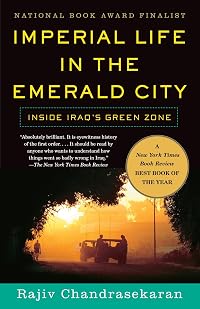
Imperial Life in the Emerald City: Inside Iraq's Green Zone
by Rajiv Chandrasekaran
On This Page
Description
Finalist for the National Book Award, this is the startling portrait of an Oz-like place where a vital aspect of our government's folly in Iraq played out. The Washington Post's former Baghdad bureau chief, Raviv Chandrasekaran, takes us with him into the Zone, into a bubble, cut off from wartime realities, where the task of reconstructing a devastated nation competed with the distractions of a Little America. A half-dozen bars stocked with cold beer, a disco where women showed up in hot show more pants, and a parking lot filled with shiny new SUV's, much of it run by Halliburton. Most Iraqis were barred from entering the Emerald City for fear they would blow it up. show lessTags
Recommendations










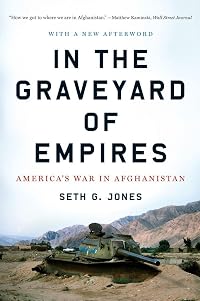



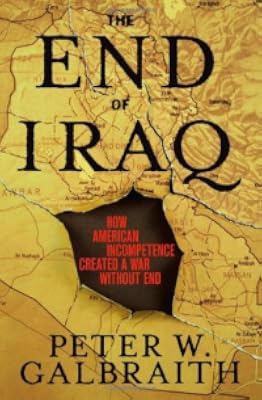
Member Recommendations
rakerman Assassin's Gate gives a different but overlapping perspective on many of the issues covered in Imperial Life in the Emerald City; they are good companion books.
wandering_star Plus ça change... life as a foreign occupier, however friendly, seems to have faced similar challenges in very different environments.
Member Reviews
The US did a series of terrible things to the Iraqi people, often pretty much the worst possible choice at any given time. I don’t want to downplay the human cost, but one way to read this book about the insulated lives of Americans within the Baghdad Green Zone and the truly stupid things they thought and then did is as a management book: It sets out very clearly the disastrous consequences of ignoring reality in favor of ideology, desires, and best-case scenarios.
Repeatedly, the US ignored people with actual experience in postwar management—or in some extra galling cases, removed them once they’d come in—in order to give jobs to (1) well-connected contractors or (2) young Republican operatives, often straight out of college or show more campaign jobs. Money gushed as from a slashed artery, but only into the coffers of American contractors or other wasteful projects, rather than being targeted to Iraqi needs and priorities. They routinely chose to imagine the best possible outcome in the best of all possible worlds—creating the most advanced stock exchange in the developing world, for example—and wasted huge amounts of money, time, and even lives when what would have helped was a stock exchange that was open. I’d known about the ill-timed de-Baathification of the army, but that kind of blunder was repeated fractally, including the decision that the accounts of state owned industries were so mixed up that it would be better to start from scratch, thus taking away the money that the marginally functional ones had on hand and giving a huge windfall to the worst-off ones. Often ideology was the extra toxin that ensured disaster: the guy brought in to run Iraqi health care (replacing a guy who had actual post-conflict medical management experience), a Republican who's managed an HMO in Michigan, instituted an anti-smoking campaign and made it his mission to make sure that Iraqis got used to paying for health care, instead of having it provided by the government, when what they needed was to get the standard drugs distributed to hospitals and clinics. (Of course that supposedly libertarian ideology went along with huge handouts to Republican donors who got no-bid, cost-plus contracts and used the money to buy themselves Hummers and import labor rather than hiring any Iraqis despite the massive and destabilizing unemployment making conditions worse.)
Imperialism comes off as a perniciously awful form of mismanagement: when you care only about your own priorities, and not those of the people you’re supposedly there to help, anything you do right will be unlikely and accidental. The book implicitly argues for doing good enough when a crisis happens, for figuring out what people need right now when disaster strikes and then building larger structures over the long term. (Chandrasekaran doesn’t address the decision to go to war in the first place, because his focus is on what happened once the Americans arrived to "govern," but he does suggest that the lack of planning and understanding was consistent over time.) show less
Repeatedly, the US ignored people with actual experience in postwar management—or in some extra galling cases, removed them once they’d come in—in order to give jobs to (1) well-connected contractors or (2) young Republican operatives, often straight out of college or show more campaign jobs. Money gushed as from a slashed artery, but only into the coffers of American contractors or other wasteful projects, rather than being targeted to Iraqi needs and priorities. They routinely chose to imagine the best possible outcome in the best of all possible worlds—creating the most advanced stock exchange in the developing world, for example—and wasted huge amounts of money, time, and even lives when what would have helped was a stock exchange that was open. I’d known about the ill-timed de-Baathification of the army, but that kind of blunder was repeated fractally, including the decision that the accounts of state owned industries were so mixed up that it would be better to start from scratch, thus taking away the money that the marginally functional ones had on hand and giving a huge windfall to the worst-off ones. Often ideology was the extra toxin that ensured disaster: the guy brought in to run Iraqi health care (replacing a guy who had actual post-conflict medical management experience), a Republican who's managed an HMO in Michigan, instituted an anti-smoking campaign and made it his mission to make sure that Iraqis got used to paying for health care, instead of having it provided by the government, when what they needed was to get the standard drugs distributed to hospitals and clinics. (Of course that supposedly libertarian ideology went along with huge handouts to Republican donors who got no-bid, cost-plus contracts and used the money to buy themselves Hummers and import labor rather than hiring any Iraqis despite the massive and destabilizing unemployment making conditions worse.)
Imperialism comes off as a perniciously awful form of mismanagement: when you care only about your own priorities, and not those of the people you’re supposedly there to help, anything you do right will be unlikely and accidental. The book implicitly argues for doing good enough when a crisis happens, for figuring out what people need right now when disaster strikes and then building larger structures over the long term. (Chandrasekaran doesn’t address the decision to go to war in the first place, because his focus is on what happened once the Americans arrived to "govern," but he does suggest that the lack of planning and understanding was consistent over time.) show less
The enormity of the incompetence and insanity of the American occupation of Iraq is difficult to grasp, but Chandrasekaran gives us a pretty good picture of the 15 month misrule that was the Coalition Provisional Authority. The CPA started out small, without resources or personnel, and never improved, as short-timers selected primarily for their loyalty to the Bush Administration rather than any expertise in reconstruction or Iraq rotated through. There was just enough energy to implement yet another inane privatization scheme or meaningless law, but not enough to build civic institutions or repair the damage caused by decades of Saddam's neglect, the war, and looting. CPA staffers lived in an Americanized bubble, protected by 17 foot show more blast walls and armed guards, and almost never got out into the real Iraq.
Some people come off better than I expected. I always thought L. Paul Bremer was a "heckuva job, Brownie!"-style incompetent, but he was actually a legitimate diplomatic professional, albeit a micromanager with far too broad of a mandate, forced to push a delusional agenda, and without good coordination with the military. Chandasekaran points out the few successes where he finds them: Haliburton's excellent customer service for Green Zone workers; a successful science diplomacy effort by State/AAAS fellow Alex Dehgan; some of the crisis-management in public health and electrification by Stephen Browning, a US Army Corps of Engineers engineer who headed five ministries. Mostly though, the story is of economic shock therapy gone nuts: Privatizing Iraq's state owned industries in the blind faith that the Free Market would sort it out (the Free Market decided no deal was worth getting shot and declined to invest). A public health manager who focused on a new national pharmacy formulary and anti-smoking campaign when Iraq's trauma care was collapsing under the insurgency. The utter shambles of picking politicians, which exacerbated Iraq's sectional tensions. In almost every instance, mismanagement and incompetence carried the day, giving the insurgency vital space to develop.
Chandasekaran is an excellent reporter, which is part of why this book gets just four stars. There are a finely detailed moments, but they're disconnected from a broader theory of reconstruction or narrative arc (aside from 'bad to worse'). The Green Zone was a profoundly weird place, as the dozen or vignettes of daily life show, but Chandasekaran is too much of a professional to go full gonzo. I've heard it say that reporting is history's first draft, and this is a great first draft, but we're still waiting for the final edition. show less
Some people come off better than I expected. I always thought L. Paul Bremer was a "heckuva job, Brownie!"-style incompetent, but he was actually a legitimate diplomatic professional, albeit a micromanager with far too broad of a mandate, forced to push a delusional agenda, and without good coordination with the military. Chandasekaran points out the few successes where he finds them: Haliburton's excellent customer service for Green Zone workers; a successful science diplomacy effort by State/AAAS fellow Alex Dehgan; some of the crisis-management in public health and electrification by Stephen Browning, a US Army Corps of Engineers engineer who headed five ministries. Mostly though, the story is of economic shock therapy gone nuts: Privatizing Iraq's state owned industries in the blind faith that the Free Market would sort it out (the Free Market decided no deal was worth getting shot and declined to invest). A public health manager who focused on a new national pharmacy formulary and anti-smoking campaign when Iraq's trauma care was collapsing under the insurgency. The utter shambles of picking politicians, which exacerbated Iraq's sectional tensions. In almost every instance, mismanagement and incompetence carried the day, giving the insurgency vital space to develop.
Chandasekaran is an excellent reporter, which is part of why this book gets just four stars. There are a finely detailed moments, but they're disconnected from a broader theory of reconstruction or narrative arc (aside from 'bad to worse'). The Green Zone was a profoundly weird place, as the dozen or vignettes of daily life show, but Chandasekaran is too much of a professional to go full gonzo. I've heard it say that reporting is history's first draft, and this is a great first draft, but we're still waiting for the final edition. show less
Broken Promises & Missed Opportunities
Rajiv Chandrasekaran’s IMPERIAL LIFE IN THE EMERALD CITY: INSIDE IRAQ’S GREEN ZONE is an important piece of investigative journalism; indeed, it should be required reading for every politico on Capitol Hill. IMPERIAL LIFE IN THE EMERALD CITY is an account of what went wrong in Iraq – politically and practically speaking - in the aftermath of the American military invasion. It's a story of broken promises and missed opportunities, nepotism and cronyism, bureaucracy and incompetence. The Green Zone, much like the Bush administration’s vision of a post-war Iraq, is a fantasyland, a veritable Oz, subject not to the realities of the times but only to the whims of its creators. Day-to-day life in show more Iraq’s Green Zone, then, is emblematic of our failure in Iraq.
But let's start at the beginning. After the invasion of Iraq, American forces set up shop in the Green Zone, a 4-square-mile gated area of villas and palaces in central Baghdad which had previously been occupied by select government officials, ministries, and Saddam Hussein and his family. From here the so-called "coalition of the willing" (read: America) tried to rebuild and restructure Iraq via a transitional government called the Coalitional Provisional Authority (CPA), which was formed on April 21, 2003 and disbanded on June 28, 2004. By chronicling the CPA’s exploits in the Green Zone, Chandrasekaran explains how our utter lack of post-war planning stretched a war that was supposed to last “weeks rather than months” into an occupation that recently passed the five-year mark.
The CPA was doomed from the start. Instead of sending out best and brightest minds to help the Iraqis build a democracy in their newly-liberated country, the Bush administration vetted recruits for loyalty and partisanship. Rather than cooperating with the Iraqi people, CPA eggheads tried to foist changes upon them – and radical changes, at that (e.g., a shift from a socialist to capitalist economy…in a period of months, not years). Programs were underfunded, or not funded at all. Sectarian differences were stressed and reinforced by clueless newbies, leading to a highly fractured and contentious interim government. Meanwhile, de-Ba’athification purged the Iraqi government of all experienced politicians.
Bush loyalists, charged with recreating Iraq in America’s image, had little or no knowledge of Iraqi culture and society – an oversight that was not corrected once CPA employees arrived in Iraq, as they were rarely allowed to leave the Green Zone and experience Iraq first-hand. Instead, they remained sequestered in the Green Zone, which had been remade into a “little America”, a “bubble”, an “American subdivision”. Though many of the cafeteria workers in the Green Zone were Muslims, CPA employees expected them to serve pork dishes with a smile. (Even this secular atheist is aghast at the religious and cultural insensitivity!) Whereas the economy of Iraq could have benefited by providing for the CPA’s needs in the Green Zone, much of the work was outsourced to American companies, and most of the supplies were imported. All the while, essential services (for the Iraqis, that is) suffered; water, electricity, food, jobs – to date, Saddam has proven more able to provide the necessities for the Iraqi people than have the occupying American forces. This is perhaps why we have lost their hearts and minds – and why America is still engaged in warfare with militia groups five years after the invasion.
Watching the Senate Armed Services hearings on Iraq on the teevee today, it’s striking how quickly the Democrats and Republicans alike are to blame our current problems on the Iraqis themselves. It’s almost like listening to a spousal abuser blame his wife for her beatings. We invaded Iraq – and then we failed to help them rebuild a country, a government, that was already in rough shape to begin with; one that we further decimated by waging war upon it. Afterwards, we tried to ram our version of a democratic, free society down their throats, instead of working hand-in-hand with the Iraqi citizens to build a viable and stable country. The problems that we face today are our own, as is illustrated in IMPERIAL LIFE IN THE EMERALD CITY.
Whether you believe that the war in Iraq was a justified preemptive strike or an impeachable offense, there is no denying that America has a responsibility to the people of Iraq. By showing us the many ways in which we have failed to fulfill these obligations, Rajiv Chandrasekaran also gives us an important roadmap for change and success.
http://www.easyvegan.info/2008/04/09/imperial-life-in-the-emerald-city-by-rajiv-... show less
Rajiv Chandrasekaran’s IMPERIAL LIFE IN THE EMERALD CITY: INSIDE IRAQ’S GREEN ZONE is an important piece of investigative journalism; indeed, it should be required reading for every politico on Capitol Hill. IMPERIAL LIFE IN THE EMERALD CITY is an account of what went wrong in Iraq – politically and practically speaking - in the aftermath of the American military invasion. It's a story of broken promises and missed opportunities, nepotism and cronyism, bureaucracy and incompetence. The Green Zone, much like the Bush administration’s vision of a post-war Iraq, is a fantasyland, a veritable Oz, subject not to the realities of the times but only to the whims of its creators. Day-to-day life in show more Iraq’s Green Zone, then, is emblematic of our failure in Iraq.
But let's start at the beginning. After the invasion of Iraq, American forces set up shop in the Green Zone, a 4-square-mile gated area of villas and palaces in central Baghdad which had previously been occupied by select government officials, ministries, and Saddam Hussein and his family. From here the so-called "coalition of the willing" (read: America) tried to rebuild and restructure Iraq via a transitional government called the Coalitional Provisional Authority (CPA), which was formed on April 21, 2003 and disbanded on June 28, 2004. By chronicling the CPA’s exploits in the Green Zone, Chandrasekaran explains how our utter lack of post-war planning stretched a war that was supposed to last “weeks rather than months” into an occupation that recently passed the five-year mark.
The CPA was doomed from the start. Instead of sending out best and brightest minds to help the Iraqis build a democracy in their newly-liberated country, the Bush administration vetted recruits for loyalty and partisanship. Rather than cooperating with the Iraqi people, CPA eggheads tried to foist changes upon them – and radical changes, at that (e.g., a shift from a socialist to capitalist economy…in a period of months, not years). Programs were underfunded, or not funded at all. Sectarian differences were stressed and reinforced by clueless newbies, leading to a highly fractured and contentious interim government. Meanwhile, de-Ba’athification purged the Iraqi government of all experienced politicians.
Bush loyalists, charged with recreating Iraq in America’s image, had little or no knowledge of Iraqi culture and society – an oversight that was not corrected once CPA employees arrived in Iraq, as they were rarely allowed to leave the Green Zone and experience Iraq first-hand. Instead, they remained sequestered in the Green Zone, which had been remade into a “little America”, a “bubble”, an “American subdivision”. Though many of the cafeteria workers in the Green Zone were Muslims, CPA employees expected them to serve pork dishes with a smile. (Even this secular atheist is aghast at the religious and cultural insensitivity!) Whereas the economy of Iraq could have benefited by providing for the CPA’s needs in the Green Zone, much of the work was outsourced to American companies, and most of the supplies were imported. All the while, essential services (for the Iraqis, that is) suffered; water, electricity, food, jobs – to date, Saddam has proven more able to provide the necessities for the Iraqi people than have the occupying American forces. This is perhaps why we have lost their hearts and minds – and why America is still engaged in warfare with militia groups five years after the invasion.
Watching the Senate Armed Services hearings on Iraq on the teevee today, it’s striking how quickly the Democrats and Republicans alike are to blame our current problems on the Iraqis themselves. It’s almost like listening to a spousal abuser blame his wife for her beatings. We invaded Iraq – and then we failed to help them rebuild a country, a government, that was already in rough shape to begin with; one that we further decimated by waging war upon it. Afterwards, we tried to ram our version of a democratic, free society down their throats, instead of working hand-in-hand with the Iraqi citizens to build a viable and stable country. The problems that we face today are our own, as is illustrated in IMPERIAL LIFE IN THE EMERALD CITY.
Whether you believe that the war in Iraq was a justified preemptive strike or an impeachable offense, there is no denying that America has a responsibility to the people of Iraq. By showing us the many ways in which we have failed to fulfill these obligations, Rajiv Chandrasekaran also gives us an important roadmap for change and success.
http://www.easyvegan.info/2008/04/09/imperial-life-in-the-emerald-city-by-rajiv-... show less
Disappointingly often, I find that I disagree completely with the exultant praises strewn liberally across the covers of books. ‘Superb!’ and ‘Amazing!’ often turns out to mean dull and ponderous, especially where non-fiction is concerned. Surprisingly, then, I feel compelled to state that I agree with every last one of the quotations printed on the cover of Chandrasekaran’s exploration of the management of Iraq post-invasion. It is indeed ‘black comedy’ (John le Carre) and ‘a tragic tale of naivety, hubris, waste and wilful ignorance’ (Richard Wyre, Guardian). The almost unbelievable tales of how an American led, continually shifting coalition attempted to create a Western democracy inside a war-torn Middle Eastern show more country create a consistently engaging – and frustrating – read.
The quotation from T. E. Lawrence placed at the front of this book sums up the writer’s views on the Iraq reconstruction project perfectly, which is why I’m going to reproduce it in full here:
‘Do not try to do too much with your own hands. Better the Arabs do it tolerably than that you do it perfectly. It is their war, and you are to help them, not to win it for them. Actually, also, under the very odd conditions of Arabia, your practical work will not be as good as, perhaps, you think it is.’
This, according to Chandrasekaran’s work, is the error the Americans leading the reconstruction effort made. Faced with a country that lacked sufficient sources of clean water, a people desperate to access basic healthcare facilities and medications, the Americans tackled what they felt were the medical necessities: they began an anti-smoking campaign. Faced with the outmoded Iraq stock exchange, the minister in charge began drawing up complicated plans to computerise everything and bring the exchange up to ‘international standards of transparency and efficiency’ – in less than four months. All the Iraqs wanted was a building, some cell phones and a blackboard. Blinded by the idea that democracy and capitalism are things you can create by splashing some cash around, the Coalition Provisional Authority continued to flounder as the Iraq people began to lose patience with their supposed rescuers.
Based on interviews and documentation completed during and since his months spent in Iraq, Chandrasekaran traces the activities of the CPA in sixteen well written chapters, which are interspersed with scenes from ‘the Green zone’, the secure area those governing Iraq lived and worked in throughout the occupation. The book is neatly split into two halves: ‘building the bubble’, which tends to feature the optimistic attitudes of the various ministers, and ‘shattered dreams’, which typically focuses on the CPA’s increasing recognition of the volatility of Iraq.
My thoughts
The book is well laid out for reading and information assimilation purposes. There are two maps placed at the beginning, one of the Green Zone and one of Baghdad. These did come in useful later in the book, for example, when I wanted to quickly check where an attack on the zone was coming from. I find maps in non-fiction books worrying as it normally suggests they will be necessary to understanding the story and I just don’t want to have to work that hard mentally (ooh, where is this character going now?). In non-fiction, however, they can be vital, and while that is not quite the case here, they were helpful to get a sense of place and size.
The scenes chosen from the Green Zone ‘show’ a lot of the things that Chandrasekaran tells the reader at other points, so they work well to reinforce the key messages the writer wishes to express. For instance, the first scene demonstrates the lack of direction and organisation behind the rebuilding as soldiers wait peaceably to be told what to do with some zoo animals by the incoming administration staff. The brief episode (barely two pages long) creates an uneasy atmosphere due to the preceding two chapters, in which the writer has already outlined the lack of established plans. We never hear about the zoo animals again, which is possibly simply because there is too much else worth showing and telling, but also neatly suggests the lack of attention shown to Iraq lifestyles.
Chandrasekaran usefully introduces each major player in this history with a brief biography containing all the necessary details – and sometimes, perhaps, slightly more than necessary. The people he describes are generally terribly well meaning, but they all become consumed by impossible projects. They are led by their sense of what would suit America, rather than any real understanding of life in Iraq. Alternatively, if they have developed thoughtful, well reasoned, implementable suggestions, they are immediately sent home to America and a thoroughly harebrained scheme is pursued instead.
The truly chilling aspect of this book is the sense of what might have been, could have been, achieved, if only the sole criteria for leading the reconstruction efforts wasn’t the political convictions of those recruited. Chandrasekaran demonstrates convincingly through his use of interviews and discussions that political connections were more important than qualifications or even experience. At times, I became quite frustrated as the journalist clearly outlined what the problems were, and then how the Americans tackled a completely different set of issues.
Of course, it is difficult to understand a country if you never really experience it. Chandrasekaran shows how the decision to move into a republican palace and create a ‘bubble’ of American life on Iraq soil leads to a sense of dissociation from the place. Gradually, as tensions build, it becomes impossible to leave this sanctuary, which heightens the sense that they have become oppressors to the very people they are there to help. In this sense, it is a sad book, although Chandrasekaran never adopts an overtly pitying approach. In fact, one of his strengths as a writer is that he conveys his ideas clearly without needing to manipulate the reader in any obvious way.
Of course, ultimately this is a work of journalism and different writers may have slightly different viewpoints, and everyone has their own agenda to follow, but the details that Chandrasekaran chooses usually speak for themselves. The titles of his chapters are quite forceful in emphasising his opinions, heading up the chunks of text with phrases like ‘a fool’s errand’ and ‘crazy, if not suicidal’, but I did not otherwise feel overtly manipulated.
The index is comprehensive and all notes are clearly referenced, so this could be a useful introductory work for someone exploring this period in recent modern history.
Conclusion
I enjoyed reading this well researched and thoughtful book, even though I found the decision making it recorded nearly unbelievable at times. I do not claim to know anything about running a country, but I’m fairly sure that buying desks and books for classrooms is usually of more use to students than organising departmental affiliations with American universities. Equally, I am no economist, but I would anticipate that having the stock market running again would be more of a priority for those waiting to take back their jobs than an immediate and prolonged revamping of all systems. Of course, I could be wrong. It seems that many good-hearted people were.
Highly recommended. show less
The quotation from T. E. Lawrence placed at the front of this book sums up the writer’s views on the Iraq reconstruction project perfectly, which is why I’m going to reproduce it in full here:
‘Do not try to do too much with your own hands. Better the Arabs do it tolerably than that you do it perfectly. It is their war, and you are to help them, not to win it for them. Actually, also, under the very odd conditions of Arabia, your practical work will not be as good as, perhaps, you think it is.’
This, according to Chandrasekaran’s work, is the error the Americans leading the reconstruction effort made. Faced with a country that lacked sufficient sources of clean water, a people desperate to access basic healthcare facilities and medications, the Americans tackled what they felt were the medical necessities: they began an anti-smoking campaign. Faced with the outmoded Iraq stock exchange, the minister in charge began drawing up complicated plans to computerise everything and bring the exchange up to ‘international standards of transparency and efficiency’ – in less than four months. All the Iraqs wanted was a building, some cell phones and a blackboard. Blinded by the idea that democracy and capitalism are things you can create by splashing some cash around, the Coalition Provisional Authority continued to flounder as the Iraq people began to lose patience with their supposed rescuers.
Based on interviews and documentation completed during and since his months spent in Iraq, Chandrasekaran traces the activities of the CPA in sixteen well written chapters, which are interspersed with scenes from ‘the Green zone’, the secure area those governing Iraq lived and worked in throughout the occupation. The book is neatly split into two halves: ‘building the bubble’, which tends to feature the optimistic attitudes of the various ministers, and ‘shattered dreams’, which typically focuses on the CPA’s increasing recognition of the volatility of Iraq.
My thoughts
The book is well laid out for reading and information assimilation purposes. There are two maps placed at the beginning, one of the Green Zone and one of Baghdad. These did come in useful later in the book, for example, when I wanted to quickly check where an attack on the zone was coming from. I find maps in non-fiction books worrying as it normally suggests they will be necessary to understanding the story and I just don’t want to have to work that hard mentally (ooh, where is this character going now?). In non-fiction, however, they can be vital, and while that is not quite the case here, they were helpful to get a sense of place and size.
The scenes chosen from the Green Zone ‘show’ a lot of the things that Chandrasekaran tells the reader at other points, so they work well to reinforce the key messages the writer wishes to express. For instance, the first scene demonstrates the lack of direction and organisation behind the rebuilding as soldiers wait peaceably to be told what to do with some zoo animals by the incoming administration staff. The brief episode (barely two pages long) creates an uneasy atmosphere due to the preceding two chapters, in which the writer has already outlined the lack of established plans. We never hear about the zoo animals again, which is possibly simply because there is too much else worth showing and telling, but also neatly suggests the lack of attention shown to Iraq lifestyles.
Chandrasekaran usefully introduces each major player in this history with a brief biography containing all the necessary details – and sometimes, perhaps, slightly more than necessary. The people he describes are generally terribly well meaning, but they all become consumed by impossible projects. They are led by their sense of what would suit America, rather than any real understanding of life in Iraq. Alternatively, if they have developed thoughtful, well reasoned, implementable suggestions, they are immediately sent home to America and a thoroughly harebrained scheme is pursued instead.
The truly chilling aspect of this book is the sense of what might have been, could have been, achieved, if only the sole criteria for leading the reconstruction efforts wasn’t the political convictions of those recruited. Chandrasekaran demonstrates convincingly through his use of interviews and discussions that political connections were more important than qualifications or even experience. At times, I became quite frustrated as the journalist clearly outlined what the problems were, and then how the Americans tackled a completely different set of issues.
Of course, it is difficult to understand a country if you never really experience it. Chandrasekaran shows how the decision to move into a republican palace and create a ‘bubble’ of American life on Iraq soil leads to a sense of dissociation from the place. Gradually, as tensions build, it becomes impossible to leave this sanctuary, which heightens the sense that they have become oppressors to the very people they are there to help. In this sense, it is a sad book, although Chandrasekaran never adopts an overtly pitying approach. In fact, one of his strengths as a writer is that he conveys his ideas clearly without needing to manipulate the reader in any obvious way.
Of course, ultimately this is a work of journalism and different writers may have slightly different viewpoints, and everyone has their own agenda to follow, but the details that Chandrasekaran chooses usually speak for themselves. The titles of his chapters are quite forceful in emphasising his opinions, heading up the chunks of text with phrases like ‘a fool’s errand’ and ‘crazy, if not suicidal’, but I did not otherwise feel overtly manipulated.
The index is comprehensive and all notes are clearly referenced, so this could be a useful introductory work for someone exploring this period in recent modern history.
Conclusion
I enjoyed reading this well researched and thoughtful book, even though I found the decision making it recorded nearly unbelievable at times. I do not claim to know anything about running a country, but I’m fairly sure that buying desks and books for classrooms is usually of more use to students than organising departmental affiliations with American universities. Equally, I am no economist, but I would anticipate that having the stock market running again would be more of a priority for those waiting to take back their jobs than an immediate and prolonged revamping of all systems. Of course, I could be wrong. It seems that many good-hearted people were.
Highly recommended. show less
Movie has very little to do with the book; and I found the movie to be very disappointing, very simple-minded. The book, on the other hand, is extremely powerful, extremely sad. The pathetic, criminal ignorance and ineptitude of the Bush Administration, Rumsfeld's DOD, and the neo-conservatives running the show makes this a very hard read. Chandrasekaran was the bureau chief for the Washington Post before the war and went back immediately after the invasion. He talks to everybody. (I've been following Chandrasekaran's career since he was writing Wash. Post Metro stories about Old Town Alexandria! as he worked with a friend of mine. He went on to become a foreign correspondent.) Great, great job of reporting.
Imperial Life in the Emerald City spends three hundred tightly compressed pages detailing the many ways in which the United States -- no, let's be honest, the Bush Administration -- screwed up the occupation of Iraq.
Rajiv Chandrasekaran writes from first-hand experience, for he saw much of what happened in the Green Zone with his own two eyes. He watched as troops of buraucrats, chosen not because they were qualified but because they were loyal Bushies, came into Iraq and set about trying to establish a Jeffersonian democracy...or at least a free market, the kind that American companies could exploit. They wrote manifestos. They debated how the new stock market should work. They spent a lot of time on interdepartmental turf wars. While show more they did all this, the country all around them -- the one they knew nothing about -- went up in flames. And then they wondered why the Iraqis were so damned ungrateful.
If you think six years of the Bush Administration has damaged the United States, you should read about what they've done in Iraq. It's worth noting that when the Iraqis were forced to live under the kind of regime the Bushies have tried so hard to establish here, they reached for their AK-47s.
Chandraseksaran writes very well about all this, and much more calmly than I ever could. He's been compared to Orwell, and rightly so. I wish he'd never had the chance to write this excellent book. show less
Rajiv Chandrasekaran writes from first-hand experience, for he saw much of what happened in the Green Zone with his own two eyes. He watched as troops of buraucrats, chosen not because they were qualified but because they were loyal Bushies, came into Iraq and set about trying to establish a Jeffersonian democracy...or at least a free market, the kind that American companies could exploit. They wrote manifestos. They debated how the new stock market should work. They spent a lot of time on interdepartmental turf wars. While show more they did all this, the country all around them -- the one they knew nothing about -- went up in flames. And then they wondered why the Iraqis were so damned ungrateful.
If you think six years of the Bush Administration has damaged the United States, you should read about what they've done in Iraq. It's worth noting that when the Iraqis were forced to live under the kind of regime the Bushies have tried so hard to establish here, they reached for their AK-47s.
Chandraseksaran writes very well about all this, and much more calmly than I ever could. He's been compared to Orwell, and rightly so. I wish he'd never had the chance to write this excellent book. show less
This is an extremely well written and researched book about the absolute disaster George W. Bush created when he invaded Iraq. The lack of planning, chronyism in appointing people to handle problems (most of whom had no background in the issue they were sent to fix and were never, ever given enough money to do the job), insistence on trying to turn Iraq into another democratic country, and the utter inability of President Bush, et al. to see the catastrophe created by the White House was eye-opening, depressing, and terrifying. The events in this book often made me so angry that I had to put it down for a day or two and it made me want to cry. Recommended to anyone who wants to know why Iraq hates America.
Members
- Recently Added By
Lists

The Emergence of the Modern Middle East
289 works; 13 members

Read This Next
120 works; 3 members

Remember Shuffle Podcast| Iraq War Series: Parts I - VI
13 works; 1 member
Author Information

6 Works 1,937 Members
Rajiv Chandrasekaran is a senior correspondent and associate editor at The Washington Post, where he has worked since 1994. He has been the newspaper's bureau chief in Baghdad, Cairo, and Southeast Asia. He is the author or co-author of Little America, Imperial Life in the Emerald City, and For Love of Country: What Our Veterans Can Teach Us about show more Citizenship, Heroism, and Sacrifice. (Bowker Author Biography) show less
Awards and Honors
Awards
Distinctions
Work Relationships
Inspired
Common Knowledge
- Canonical title*
- Dans La Zone Verte. Les Américains À Bagdad
- Original title
- Imperial Life in the Emerald City: Inside Iraq's Green Zone
- Original publication date
- 2006
- Important places
- Baghdad, Iraq
- Important events*
- Irakkrieg (2003); Besetzung des Irak (ab 2003)
- Related movies
- Green Zone (2010 | IMDb)
- Epigraph*
- Do not try to do too much your own hands. Better the Arabs do it tolerably than that you do it perfectly. It is their war, nad you are to help them, not to win it for them. Actually, also, under the very odd conditions of Ara... (show all)bia, your practical work will not be as good as, perhaps, you think it is. (T. E. Lawrence, August 20, 1917)
*Some information comes from Common Knowledge in other languages. Click "Edit" for more information.
Classifications
Statistics
- Members
- 1,726
- Popularity
- 12,820
- Reviews
- 44
- Rating
- (4.00)
- Languages
- 6 — English, Estonian, French, German, Italian, Spanish
- Media
- Paper, Audiobook, Ebook
- ISBNs
- 28
- ASINs
- 19