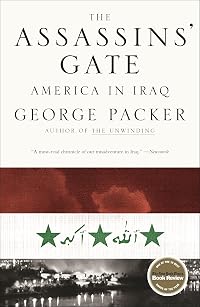
The Assassins' Gate: America in Iraq
by George Packer
On This Page
Description
This book recounts how the United States set about changing the history of the Middle East and became ensnared in a guerrilla war in Iraq. It brings to life the people and ideas that created the Bush administration's war policy and led America to the Assassins' Gate--the main point of entry into the American zone in Baghdad. The consequences of that policy are shown in the author's reporting on the ground in Iraq for The New Yorker. We see up close the struggles of American soldiers and show more civilians and Iraqis from all backgrounds, thrown together by a war that followed none of the preconceived scripts. The book also describes the war in American life: the ideological battles in Washington, the ordeal of a fallen soldier's family, and the political culture of a country too polarized to realize such a vast and morally complex undertaking.--From publisher description. show lessTags
Recommendations

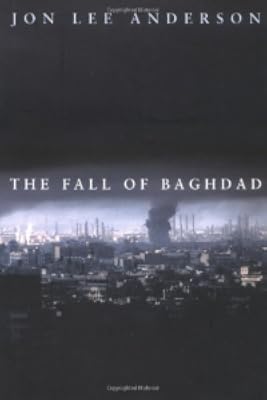

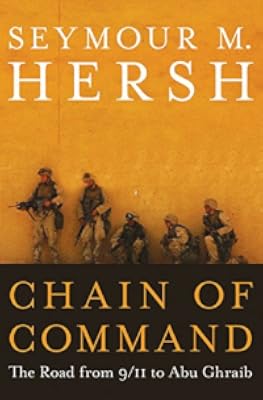
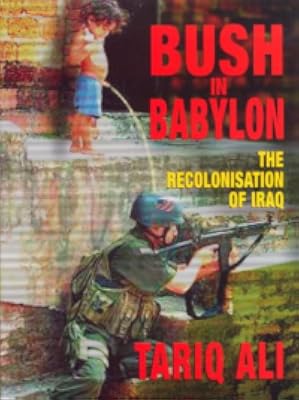

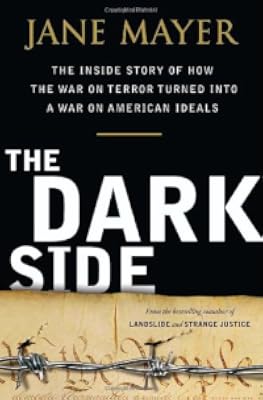

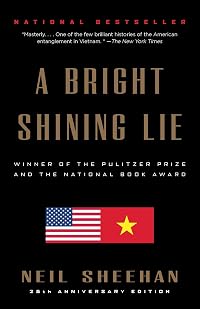
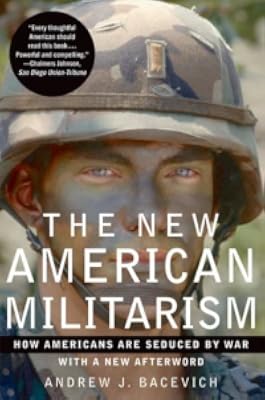
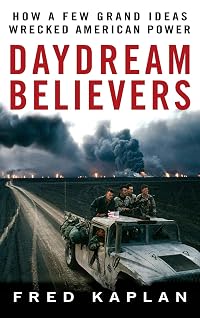
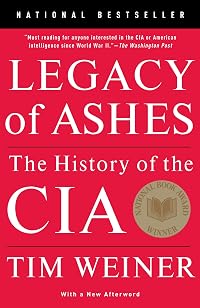
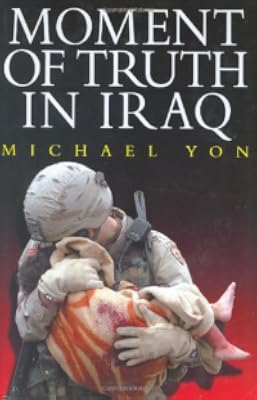
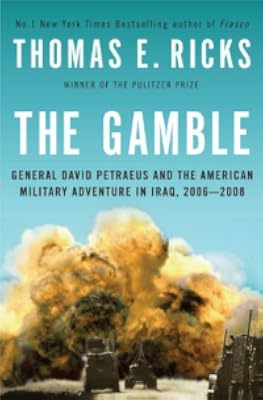
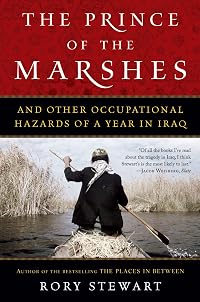
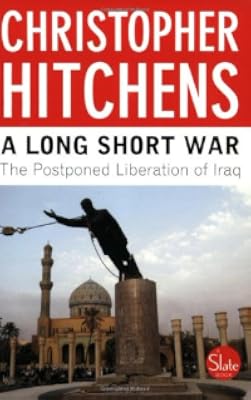
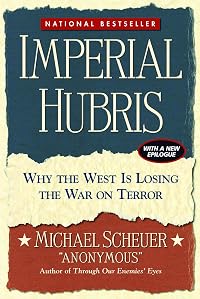
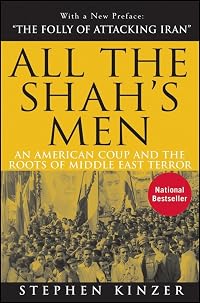
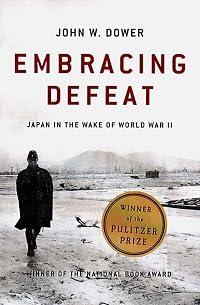
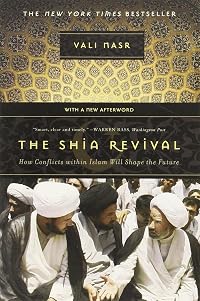
Member Recommendations
rakerman Assassin's Gate gives a different but overlapping perspective on many of the issues covered in Imperial Life in the Emerald City; they are good companion books.
Member Reviews
This book is not, by a long shot, the last word on the meaning of the overthrow of the Baathist regime in Iraq. However, it is the best description to date of how the idealists who dreamed of a better Iraq, the ideologues who dreamed of a revival of American hegemony, and the inscrutable core of the current administration interacted to produce the looming debacle in Iraq. That Packer still believes in the fight to build a better Iraq (though he now has little but disdain for the Bush administration) is a tribute to the man's idealism. A more cynical person might wonder when Packer is going to wise up about the prospects of Iraq being anything more than another unhappy Islamist state for a generation or so. This is speaking as someone show more who did believe that there was something to the humanitarian interventionist argument. show less
George Packer's reporting brings the human element back into the Iraq narrative. His book is partly about the ignorance, incompetence and corruption typical of the Bush administration in Iraq, partly it is a prism of US and Iraqi voices struggling for survival. While the neo-con initiation of the war is a gripping read, it is old news. What I find interesting in the book, is the amount of space Packer dedicates to present the different viewpoints of ordinary Iraqis who normally appear only as numbers and props in the American narrative. We learn about their challenges and moods of optimism and despair in a time of war and occupation. Surprisingly (but typically American), he ends his gory tale with a sunny, idealistic outlook to which show more history has not been kind. Packer still is an idealist, something all the blood spilt has not changed. show less
George Packer does a very good job tracing the ideological and political reasons behind the war, in particular the part that neo-cons like Paul Wolfowitz and Douglas Feith played. He also details in heart-breaking detail the incompetence with which the 'post-war' has been executed.
Packer excels, howver, with his repeated interviews with Iraqis and soldiers that humanize the war in a way no one else has done by following about a dozen Iraqis through a series of interviews over a period of some two years. As a non-embedded reporter for the New Yorker magazine he was able to talk to Iraqis in their own homes (at least until things really fell apart and it became too unsafe for him and them to have an American visit their homes). The show more reader ends up deeply caring about these Iraqis after their long suffering under Saddam and now the war and 'post' war. I couldn't escape the thought that they deserve a better end than they are likely to get.
I found myself also wanting to read more about the war and by Packer. Fortunately, Packer continues to write about Iraq for the New Yorker.
The Assassin's Gate is a great work of extended journalism written under extremely difficult conditions. Not a happy story, but hugely important and informative. show less
Packer excels, howver, with his repeated interviews with Iraqis and soldiers that humanize the war in a way no one else has done by following about a dozen Iraqis through a series of interviews over a period of some two years. As a non-embedded reporter for the New Yorker magazine he was able to talk to Iraqis in their own homes (at least until things really fell apart and it became too unsafe for him and them to have an American visit their homes). The show more reader ends up deeply caring about these Iraqis after their long suffering under Saddam and now the war and 'post' war. I couldn't escape the thought that they deserve a better end than they are likely to get.
I found myself also wanting to read more about the war and by Packer. Fortunately, Packer continues to write about Iraq for the New Yorker.
The Assassin's Gate is a great work of extended journalism written under extremely difficult conditions. Not a happy story, but hugely important and informative. show less
Most people, I think, want the Iraq War to be simple. Depending on your ideology, it's a mistake that started with lies, or a determined war for democracy.
George Packer demonstrates convincingly that either position is a vast oversimplification. There were many reasons people wanted to or decided to go to war, and there were many reasons that things went wrong.
Once the war is underway, the book documents the downward spiral that has led us to the current situation of civil war. Packer explores all the complexity and contradictions of the reality of Iraq, its shattered politics and broken people. He details the hard work of ordinary Iraqs, the CPA, and the American soldiers on the ground.
In terms of analysis, there are a few main show more themes:
1. The understanding of the realities of 21st century Iraq under Saddam was very poor outside of the country. In particular, Iraq exiles had rather lofty and unrealistic expectations of a democratic flowering that would fill the void immediately after Saddam was removed.
2. It seems clear that the plan at the top of the American administration was to get rid of Saddam and immediately replace him with a compliant Iraqi puppet government, led by Chalabi. Because of this, there was no plan for the post-war. They had assembled a small team that was supposed to hand everything over to the Iraqis, that was the entire plan.
As the situation changed on the ground, the reality filtered up to the top of the American leadership only in vague and distorted ways, and the postwar turned into bureaucratic bungling and inept management on a grand, tragic scale.
Having gotten to this point, it is really not clear to what extent the entire enterprise can be redeemed. show less
George Packer demonstrates convincingly that either position is a vast oversimplification. There were many reasons people wanted to or decided to go to war, and there were many reasons that things went wrong.
Once the war is underway, the book documents the downward spiral that has led us to the current situation of civil war. Packer explores all the complexity and contradictions of the reality of Iraq, its shattered politics and broken people. He details the hard work of ordinary Iraqs, the CPA, and the American soldiers on the ground.
In terms of analysis, there are a few main show more themes:
1. The understanding of the realities of 21st century Iraq under Saddam was very poor outside of the country. In particular, Iraq exiles had rather lofty and unrealistic expectations of a democratic flowering that would fill the void immediately after Saddam was removed.
2. It seems clear that the plan at the top of the American administration was to get rid of Saddam and immediately replace him with a compliant Iraqi puppet government, led by Chalabi. Because of this, there was no plan for the post-war. They had assembled a small team that was supposed to hand everything over to the Iraqis, that was the entire plan.
As the situation changed on the ground, the reality filtered up to the top of the American leadership only in vague and distorted ways, and the postwar turned into bureaucratic bungling and inept management on a grand, tragic scale.
Having gotten to this point, it is really not clear to what extent the entire enterprise can be redeemed. show less
George Packer has written a truly enlightening and intriguing book about our descent into Iraq. Packer is a lucid and engaging writer who can clearly summarize the intellectual debate between the neoconservatives and the realists. It's also a sad book. Learning how policy is arrived out and then justified and implemented can be very discouraging.
The neocons and Bush had decided to go after Iraq for a variety of reasons before 9/11. The concern then became how to sell that decision. Shortly after the fall of Baghdad Paul Wolfowitz fold an interviewer: "The truth is that for reasons that have a lot to do with the U.S, government bureaucracy, we settled on the one issue that everyone could agree on, which was weapons of mass destruction." show more The real rationale for the war was to realign American power in the Middle East, toward a democratic society and away from Saudi Arabia, home of the Wahhabi sect that virtually controlled Saudi society and government and had been the home to almost all of the 9/11 terrorists. (See Sandra MacKey's very excellent book on Saudi Arabia -- [b:The Saudis Inside the Desert Kingdom|511872|The Saudis Inside the Desert Kingdom|Sandra Mackey|http://photo.goodreads.com/books/1175397999s/511872.jpg|1488726] -- for a detailed view of what it's like to live in such a theocracy.)
The job then became to selectively use pieces of intelligence that supported their common justification. "Just a year earlier, Iraq had been viewed as an outlaw state that was beginning to slip free of international constraints and might present a threat to the region or, more remotely, the United States in five years or so. Now, suddenly, there wasn't a day to be lost. . . It didn't matter that there was no strong evidence to back up the doomsday prognosis." show less
The neocons and Bush had decided to go after Iraq for a variety of reasons before 9/11. The concern then became how to sell that decision. Shortly after the fall of Baghdad Paul Wolfowitz fold an interviewer: "The truth is that for reasons that have a lot to do with the U.S, government bureaucracy, we settled on the one issue that everyone could agree on, which was weapons of mass destruction." show more The real rationale for the war was to realign American power in the Middle East, toward a democratic society and away from Saudi Arabia, home of the Wahhabi sect that virtually controlled Saudi society and government and had been the home to almost all of the 9/11 terrorists. (See Sandra MacKey's very excellent book on Saudi Arabia -- [b:The Saudis Inside the Desert Kingdom|511872|The Saudis Inside the Desert Kingdom|Sandra Mackey|http://photo.goodreads.com/books/1175397999s/511872.jpg|1488726] -- for a detailed view of what it's like to live in such a theocracy.)
The job then became to selectively use pieces of intelligence that supported their common justification. "Just a year earlier, Iraq had been viewed as an outlaw state that was beginning to slip free of international constraints and might present a threat to the region or, more remotely, the United States in five years or so. Now, suddenly, there wasn't a day to be lost. . . It didn't matter that there was no strong evidence to back up the doomsday prognosis." show less
They lose faith in us by the minute: My headline is a quote from the book and refers to Iraqis' attitude soon after the invasion. The level of neglect and incompetence was beyond belief and gave rise to the most amazing conspiracy theories.
Packer describes his own pre-war attitude as "ambivalently pro-war liberal", meaning he came somehow from the same direction as Tony Blair, who publicly based his support for the invasion mainly on the human rights view that the regime needed to be removed (that's at least what he said after the wmd scam was destroyed). I can respect that, although I never bought it. My main objection always has been, that I did not trust the invaders to do the job.
One of the main themes of the book is to show how show more the main leaders of the invasion never wanted to do more than invade, assuming or believing, on whatever basis, that things would be alright once liberation was achieved. Rumsfeld's dictum that "bad things happen" when people are free exemplifies this attitude. I assume he meant that good prevails in the end. Well, it does not seem to do so.
I wish I could feel good about this "told you so" attitude of mine. The situation is too damaging to enjoy having been right.
The book is worth reading for mainly two reasons: it gives a broader overview of the political schools of thought involved in the run up debates, in this way tracing the motives for the war. I became more clearly aware of the two different reasons to want to invade, i.e. the neocons' national missionarydom and the hawkishness of the human rights school. I think Packer describes this process very fairly, although it is obvious where his sympathies are. I also learned to be aware about the two opposing historic analogies that were used in the debate: pro war positions referred to the Munich appeasement before WWII, while anti war debaters spoke about the Tonkin deception which led to a larger engagement in Vietnam.
Second reason to read the book: it shows how the lack of planning for "phase IV", i.e. the time after the victory of the invasion, led to the downward spiral of destruction and murder that we are observing now. I find the current debates, whether this is civil war already or not yet, utterly ridiculous.
The sad thing is that this kind of book will be wasted on the true believers of the government line. Just look at the recent review here who found the book "too liberal". show less
Packer describes his own pre-war attitude as "ambivalently pro-war liberal", meaning he came somehow from the same direction as Tony Blair, who publicly based his support for the invasion mainly on the human rights view that the regime needed to be removed (that's at least what he said after the wmd scam was destroyed). I can respect that, although I never bought it. My main objection always has been, that I did not trust the invaders to do the job.
One of the main themes of the book is to show how show more the main leaders of the invasion never wanted to do more than invade, assuming or believing, on whatever basis, that things would be alright once liberation was achieved. Rumsfeld's dictum that "bad things happen" when people are free exemplifies this attitude. I assume he meant that good prevails in the end. Well, it does not seem to do so.
I wish I could feel good about this "told you so" attitude of mine. The situation is too damaging to enjoy having been right.
The book is worth reading for mainly two reasons: it gives a broader overview of the political schools of thought involved in the run up debates, in this way tracing the motives for the war. I became more clearly aware of the two different reasons to want to invade, i.e. the neocons' national missionarydom and the hawkishness of the human rights school. I think Packer describes this process very fairly, although it is obvious where his sympathies are. I also learned to be aware about the two opposing historic analogies that were used in the debate: pro war positions referred to the Munich appeasement before WWII, while anti war debaters spoke about the Tonkin deception which led to a larger engagement in Vietnam.
Second reason to read the book: it shows how the lack of planning for "phase IV", i.e. the time after the victory of the invasion, led to the downward spiral of destruction and murder that we are observing now. I find the current debates, whether this is civil war already or not yet, utterly ridiculous.
The sad thing is that this kind of book will be wasted on the true believers of the government line. Just look at the recent review here who found the book "too liberal". show less
4104 The Assassins' Gate: America in Iraq, by George Packer (read 13 Dec 2005) The New York Times calls this one of the 10 best books published in 2005. It is a more nuanced book than A Pretext for War, by James Banford, which I read 26 Aug 2004, and agreed with totally. This author was for the war because he thought Saddam was so awful, but that was of course not the reason we were told we should attack Iraq. The author calls Iraq a nightmare, but thinks there is hope it will turn out all right. The book tells well what it sets out to tell, but I often did not find it absorbing reading. Because it was more balanced than I wanted? Perhaps. But the book would not be a favorite for Bushites, either.
Members
- Recently Added By
Published Reviews
ThingScore 75
Hard as it is to believe, the Bush administration took on the largest foreign policy project in a generation with little planning or forethought. It occupied a foreign country of 25 million people in the heart of the Middle East pretty much on the fly. Packer, who was in favor of the war, reserves judgment and commentary in most of the book but finally cannot contain himself: "Swaddled in show more abstract ideas . . . indifferent to accountability," those in positions of highest responsibility for Iraq "turned a difficult undertaking into a needlessly deadly one," he writes. "When things went wrong, they found other people to blame." show less
added by danielx
Lists

Stories of War and Revolution
143 works; 54 members
Author Information

26+ Works 3,747 Members
George Packer is an American writer, teacher, and former Peace Corps volunteer. He was also a writing instructor at Harvard, Bennington, and Emerson Universities. Packer was born on August 13, 1960, in Santa Clara, California. Packer's experience with the Peace Corps helped him write the book The Village is Waiting. He has also written The Half show more Man, Central Square and The Assassins' Gate: America in Iraq. He was a supporter of the Iraq war. He was a finalist for the 2004 Michael Kelly Award. In 2013, Packer's work of nonfiction entitled, The Unwinding: An Inner History of the New America, won the U.S. National Book Award. (Bowker Author Biography) George Packer's journalism & essays have appeared in "Harper's", "Dissent", "The New York Times", "The 1997 Pushcart Prize" anthology, "The Art of the Essay", & elsewhere. His latest books is "Blood of the Liberals" (FSG, 2000). He lives in Brooklyn, New York. (Publisher Provided) show less
Awards and Honors
Awards
Distinctions
Common Knowledge
- Original title
- The Assassins' Gate: America in Iraq
- Original publication date
- 2005
- People/Characters
- George W. Bush; Dick Cheney; Paul Wolfowitz; Douglas Feith; Condoleeza Rice; David Wurmser (show all 9); Richard Pearle; Richard Haas; Donald Rumsfeld
- Important places
- Iraq; USA
- Disambiguation notice
- Full title (2005): The assassins’ gate : America in Iraq.
Classifications
Statistics
- Members
- 1,194
- Popularity
- 20,853
- Reviews
- 16
- Rating
- (4.04)
- Languages
- Dutch, English
- Media
- Paper, Audiobook, Ebook
- ISBNs
- 12
- ASINs
- 10