On This Page
Description
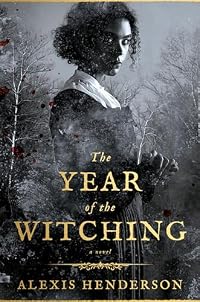
"A young woman living in a rigid, repressive society discovers dark powers within herself, with terrifying and far-reaching consequences, in this stunning, feminist fantasy debut. In the lands of Bethel, where the Prophet's word is law, Immanuelle Moore's very existence is blasphemy. The daughter of an union with an outsider that cast her once-proud family into disgrace, Immanuelle does her best to worship the Father, follow Holy Protocol, and lead a life of submission, devotion, and show more absolute conformity, like all the women in the settlement. But a chance mishap lures her into the forbidden Darkwood surrounding Bethel, where the first prophet once chased and killed four powerful witches. Their spirits are still walking there, and they bestow a gift on Immanuelle: the diary of her dead mother, who Immanuelle is shocked to learn once sought sanctuary in the wood. Fascinated by secrets in the diary, Immanuelle finds herself struggling to understand how her mother could have consorted with the witches. But when she begins to learn grim truths about the Church and its history, she realizes the true threat to Bethel is its own darkness. And she starts to understand that if Bethel is to change, it must begin with her"-- show lessTags
Recommendations
Member Reviews
Year of the Witching was an excellently written ride through a witchy town and the nightmarish forest that cradled it. It is an unputdownable read and I'm sad to have reached its end so quickly. The atmosphere was tense and thick... rife with endless (ghoulish) possibilities. It definitely felt like anything could happen at any given moment... things could easily have gone well or very very wrong and I, for one, was constantly wondering... waiting with bated breath.
Bethel, the focal town, was home to a sinister Prophet, his diametrically opposed heir apparent, the myopic cult-like flock of followers, some women that may or may not have been witches, and the malevolent forest dwellers. It was also chock full of rampant tropes (not show more necessarily a bad thing). From the evil, pious "holy men" that took grievous advantage of their naive (though others might call them complicit) congregants... those they had sworn to their diety of choice, here it's The Father, to protect. To the Puritanical, Patriarchal, sexist society with their unapologetic oppression of women. It was a perfect breeding ground for birthing a rebellious female activist, fed up with the injustices she and the rest of the women were made to endure... even if she was blissfully unaware of her radical inclinations early on. She became hellbent on changing the wrongs of her progenitors while still honoring her heritage. Eventually she found the fortitude to rise up and help fix what she could... she, her family, the menacingly spooky forest occupants and Ezra all worked together as a disjointed, unlikely yet effective ghoulish team that brought into the light (and might have subsequently decimated with unholy wrath) the patriarchal and societal ills. I mentioned Ezra... yummy yummy Ezra. He's the next in line to be the holy grand-poo-ba and not only does he abhor his father and his father's practices, he also is our MC, Immanuelle's, love interest. This paramore seemed to fall deeply in love without much preamble or foreplay... I might even go as far as to call his devotion to her as bewitched. (hehehe) I adored both Ezra and Immanuelle. I even loved/loathed much of the secondary characters especially Immanuelle's family... they were amazingly (low key) supportive (in a Tough Love sort of way) and truly came through when it mattered most.
All of these feelings made possible due to Alexis Henderson's beautifully rich prose and superb character and background development.
Overall:
What a debut novel! I was enthralled... enraptured... beguiled. There are definite Handmaid's Tale vibes and all sorts of Salem influences. I was creeped out and entranced at the same time. What a good read!
~ Enjoy show less
Bethel, the focal town, was home to a sinister Prophet, his diametrically opposed heir apparent, the myopic cult-like flock of followers, some women that may or may not have been witches, and the malevolent forest dwellers. It was also chock full of rampant tropes (not show more necessarily a bad thing). From the evil, pious "holy men" that took grievous advantage of their naive (though others might call them complicit) congregants... those they had sworn to their diety of choice, here it's The Father, to protect. To the Puritanical, Patriarchal, sexist society with their unapologetic oppression of women. It was a perfect breeding ground for birthing a rebellious female activist, fed up with the injustices she and the rest of the women were made to endure... even if she was blissfully unaware of her radical inclinations early on. She became hellbent on changing the wrongs of her progenitors while still honoring her heritage. Eventually she found the fortitude to rise up and help fix what she could... she, her family, the menacingly spooky forest occupants and Ezra all worked together as a disjointed, unlikely yet effective ghoulish team that brought into the light (and might have subsequently decimated with unholy wrath) the patriarchal and societal ills. I mentioned Ezra... yummy yummy Ezra. He's the next in line to be the holy grand-poo-ba and not only does he abhor his father and his father's practices, he also is our MC, Immanuelle's, love interest. This paramore seemed to fall deeply in love without much preamble or foreplay... I might even go as far as to call his devotion to her as bewitched. (hehehe) I adored both Ezra and Immanuelle. I even loved/loathed much of the secondary characters especially Immanuelle's family... they were amazingly (low key) supportive (in a Tough Love sort of way) and truly came through when it mattered most.
All of these feelings made possible due to Alexis Henderson's beautifully rich prose and superb character and background development.
Overall:
What a debut novel! I was enthralled... enraptured... beguiled. There are definite Handmaid's Tale vibes and all sorts of Salem influences. I was creeped out and entranced at the same time. What a good read!
~ Enjoy show less
I have very mixed feelings about The Year of the Witching by Alexis Henderson. On the one hand, there is a lot to love in this debut novel full of witchcraft, a pseudo-Puritanical society, and identity-finding. Ms. Henderson incorporates characters of color, LGBTQ+ relationships, feminist awakenings, and magic, all of which are story elements I adore. Yet, I tore through the novel only to feel disappointment at the story.
To me, the fault of The Year of the Witching lies in its ending. It is as if Katniss sat back and let Peeta make all the decisions about the resistance and Panem after they won their first Hunger Games. Katniss would never do that, and neither would Emmanuelle. In fact, most of the story’s conflict revolves around the show more requirement that she not only accept her power but utilize it. Except, after the big battle, she relinquishes all responsibility and decision-making. This one action contradicts the growth Emmanuelle shows for 90 percent of the novel and leaves a bitter aftertaste.
The Year of the Witching has other faults. I believe Ms. Henderson leaves room for a sequel, which feels unnecessary. While I sort of enjoyed the story, I didn’t love it or the characters enough to want more of it. Plus, I kept thinking the story would turn out like the movie The Village and was expecting THAT big reveal when Emmanuelle finally leaves the confines of her little settlement. I cannot pinpoint what exactly caused me to think this, but that feeling was there nonetheless.
Ultimately, I wanted to love The Year of the Witching a lot more than I did. To me, Ms. Henderson was 75 percent success with her debut story. Unfortunately, her choices for Emmanuelle’s actions at the end felt too contradictory to the character we got to know. As a result, my ending reaction is one of dislike, no matter how much I enjoyed the story to that point. show less
To me, the fault of The Year of the Witching lies in its ending. It is as if Katniss sat back and let Peeta make all the decisions about the resistance and Panem after they won their first Hunger Games. Katniss would never do that, and neither would Emmanuelle. In fact, most of the story’s conflict revolves around the show more requirement that she not only accept her power but utilize it. Except, after the big battle, she relinquishes all responsibility and decision-making. This one action contradicts the growth Emmanuelle shows for 90 percent of the novel and leaves a bitter aftertaste.
The Year of the Witching has other faults. I believe Ms. Henderson leaves room for a sequel, which feels unnecessary. While I sort of enjoyed the story, I didn’t love it or the characters enough to want more of it. Plus, I kept thinking the story would turn out like the movie The Village and was expecting THAT big reveal when Emmanuelle finally leaves the confines of her little settlement. I cannot pinpoint what exactly caused me to think this, but that feeling was there nonetheless.
Ultimately, I wanted to love The Year of the Witching a lot more than I did. To me, Ms. Henderson was 75 percent success with her debut story. Unfortunately, her choices for Emmanuelle’s actions at the end felt too contradictory to the character we got to know. As a result, my ending reaction is one of dislike, no matter how much I enjoyed the story to that point. show less
Immanuelle, the daughter of a known witch, must confront her past and that of the town of Bethel, after a terrifying encounter with the four great witches of the Darkwood Lilith, Delilah, Mercy and Jael. Immanuelle is a great character. She is intelligent but not wise, brave but stubborn. She struggles to undo what Bethel has taught her, and that's growth. Her dialogue is carefully handled and no relentless inner monologue. She wants to protect her family from the plagues despite their faults, which is admirable. And thank goodness the author didn't turn her into an all powerful magical girl.
Then there's Ezra, the Prophet's son and heir. Both want to protect Bethel, both have the ability to command. But their methods are different: the show more perverse Prophet prefers purging fire and torture. Ezra is open-minded, wants fair justice for the women of Bethel, a system ruled by mercy. A fine friend, if noticeably selfish. He's not dismissive like other Bethleans. However his rescues were a little predictable. The romance between him and Immanuelle was also slightly forced. When you're bleeding in a pool in the woods or looking Lilith in the eye on any given day, it's hard to imagine anything blossoming. Immanuelle and poor Leah were far closer. Also! The Blight! I swear the description was ergotism exactly. The author MUST have used what happened in Pont Saint Esprit in 1951 for inspiration.
Overall, I enjoyed this book very much, and I don't read fiction often! I'm here for the dark and bloody theme, definitely my kind of witchcraft. It wouldn't pass the Bechdel test precisely, but still a strong woman in a fight against sexist religious oppression is what we need these days! show less
Then there's Ezra, the Prophet's son and heir. Both want to protect Bethel, both have the ability to command. But their methods are different: the show more perverse Prophet prefers purging fire and torture. Ezra is open-minded, wants fair justice for the women of Bethel, a system ruled by mercy. A fine friend, if noticeably selfish. He's not dismissive like other Bethleans. However his rescues were a little predictable. The romance between him and Immanuelle was also slightly forced. When you're bleeding in a pool in the woods or looking Lilith in the eye on any given day, it's hard to imagine anything blossoming. Immanuelle and poor Leah were far closer. Also! The Blight! I swear the description was ergotism exactly. The author MUST have used what happened in Pont Saint Esprit in 1951 for inspiration.
Overall, I enjoyed this book very much, and I don't read fiction often! I'm here for the dark and bloody theme, definitely my kind of witchcraft. It wouldn't pass the Bechdel test precisely, but still a strong woman in a fight against sexist religious oppression is what we need these days! show less
"It isn't a question of belief. It's a question of who's being creative with the truth."
I absolutely loved this one. I felt Immanuelle's rage, I saw her horrors and tasted her vengeance. Witches. Women were always labeled, tortured and murdered - labeled as witches. It's hard not to feel the anger at so many women who were hurt in the name of "purity."
We enter in to Immanuelle's life. She's a simple girl, just tending to her flock of sheep, as is her job in the family. She's watchful, seeing her friends married off and talking of babies, even though they are young. She doesn't fit in with her family, kids her age. Because her mother ran off into the woods, the very woods labeled as harboring the horror of horrors - Women Witches.
This show more is a compelling story, one that kept me flipping the pages and wanting to know more. I had no idea it would be broken in parts and what those parts would represent, but when I realized it, I held my breath. Woah, we would see these play out. They are as horrifying and wonderous as you would imagine. I'm so excited there will be a book 2 and I will anxiously keep this book on the shelf and re-read it before I devour book 2. I can hardly wait! show less
I absolutely loved this one. I felt Immanuelle's rage, I saw her horrors and tasted her vengeance. Witches. Women were always labeled, tortured and murdered - labeled as witches. It's hard not to feel the anger at so many women who were hurt in the name of "purity."
We enter in to Immanuelle's life. She's a simple girl, just tending to her flock of sheep, as is her job in the family. She's watchful, seeing her friends married off and talking of babies, even though they are young. She doesn't fit in with her family, kids her age. Because her mother ran off into the woods, the very woods labeled as harboring the horror of horrors - Women Witches.
This show more is a compelling story, one that kept me flipping the pages and wanting to know more. I had no idea it would be broken in parts and what those parts would represent, but when I realized it, I held my breath. Woah, we would see these play out. They are as horrifying and wonderous as you would imagine. I'm so excited there will be a book 2 and I will anxiously keep this book on the shelf and re-read it before I devour book 2. I can hardly wait! show less
This was a fun book to read. It also calls out the patriarchy in the most beautiful way. I actually ended up really loving the message, it hit me at a point when I was getting bored and then BAM I was hooked again
Immanuelle Moore is an outcast in her home of Bethel because her mother broke the society’s rigid rules and fell in love with an outsider of another race. Because of this, Immanuelle tries to fit in as much as possible and worship the father properly. When she finds herself going into the forbidden Darkwood, she is met with the spirits of four powerful witches who were killed by the very first profit of Bethel. They give Immanuelle her mother’s diary, and she begins to understand some terrifying truths about the world she lives in.
Even though The Year of the Witching is set in a fictional universe, the allusions to our own past and present are very clear. The town of Bethel brings to mind early Puritanical societies where women were show more seen as inferior, and everything revolves around the church. Even several names were biblical; Immanuelle, Leah, And Ezra, to name a few. Intersectionality also plays a big role. Immanuelle, being a woman, is seen as inferior in Bethel, a place where men have all the power and can have multiple wives who are often much younger than them. She’s also biracial, which adds to her feelings of not belonging anywhere.
The only critique I have is with the witches. I wanted to know more about them, and I was disappointed by how little time was spent with them and the direction their story went. Despite that, I loved this book.
Henderson blends supernatural themes with the fears women and people of color deal with all the time. Her description of the witches is incredible and terrifying, and yet the book gave me the same kind of vibes that the movie The VVitch did. It has a very foreboding feeling to it. The Year of the Witching is an excellent comment on religious hypocrisy, patriarchy, and racism, but it’s also a frightening dark fantasy with witches, blood, and ghosts. show less
Even though The Year of the Witching is set in a fictional universe, the allusions to our own past and present are very clear. The town of Bethel brings to mind early Puritanical societies where women were show more seen as inferior, and everything revolves around the church. Even several names were biblical; Immanuelle, Leah, And Ezra, to name a few. Intersectionality also plays a big role. Immanuelle, being a woman, is seen as inferior in Bethel, a place where men have all the power and can have multiple wives who are often much younger than them. She’s also biracial, which adds to her feelings of not belonging anywhere.
The only critique I have is with the witches. I wanted to know more about them, and I was disappointed by how little time was spent with them and the direction their story went. Despite that, I loved this book.
Henderson blends supernatural themes with the fears women and people of color deal with all the time. Her description of the witches is incredible and terrifying, and yet the book gave me the same kind of vibes that the movie The VVitch did. It has a very foreboding feeling to it. The Year of the Witching is an excellent comment on religious hypocrisy, patriarchy, and racism, but it’s also a frightening dark fantasy with witches, blood, and ghosts. show less
Pros: interesting characters, quite scary and intense
Cons: uncomfortable race relations
Sixteen year old Immanuelle Moore is the daughter of a black man from the Outskirts, who burned on a pyre for having relations with her mother. Her mother was a white bride of the Prophet, who went mad after seeing her lover die. Raised as a good believer in the Holy Scriptures, she doesn’t understand why the Darkwood, home of the witches who once terrorized Bethel, calls to her so strongly. When she finally succumbs to that call, she unwittingly unleashes a series of curses on her home.
Immanuelle is a great protagonist, conflicted in her beliefs and desires. She’s strong willed and passionate. Her terror of the witches and determination to end show more the curses were palpable. I loved the slow burn romance with Ezra.
The world itself was terrifying for a liberal reader. Bethel is a closed community with very strict religious rules and no recourse against the hidden evils Immanuelle discovers taking place within the church: abuse of power - physical and sexual - and the subjugation of women.
The division between the villages of the ‘holy’ white congregation and the shanty towns on the Outskirts of the black former refugees was stark and left me feeling uncomfortable. I would have thought that with the conversion of the refugees, more intermingling would have occurred. The fact that Lilith, the head witch, was a black woman also left me feeling unsettled as it seems to continue this ‘black is evil, white is good’ theme, which is clearly undercut by the churches’ abuses on one hand but not really by anything on the other. Yes, Immanuelle fought against the witches, but as she was from the village and not the Outskirts it didn’t feel like she broke that aphorism. Nor does Vera, as it’s unclear if she ever practiced witchcraft or simply used protective sigils.
The horror elements are very terrifying. There’s a lot of blood and the story centres on events in womens’ lives that feature blood. The witches are evil and things get so grim I had to take breaks when reading this. Descriptions aren’t overly graphic, so though the imagery can be intense, it never feels gratuitous.
The writing is quite lyrical, which brings the world to life and really drives home the terror.
On the whole this is a fantastic story, provided you can handle a horror novel right now. show less
Cons: uncomfortable race relations
Sixteen year old Immanuelle Moore is the daughter of a black man from the Outskirts, who burned on a pyre for having relations with her mother. Her mother was a white bride of the Prophet, who went mad after seeing her lover die. Raised as a good believer in the Holy Scriptures, she doesn’t understand why the Darkwood, home of the witches who once terrorized Bethel, calls to her so strongly. When she finally succumbs to that call, she unwittingly unleashes a series of curses on her home.
Immanuelle is a great protagonist, conflicted in her beliefs and desires. She’s strong willed and passionate. Her terror of the witches and determination to end show more the curses were palpable. I loved the slow burn romance with Ezra.
The world itself was terrifying for a liberal reader. Bethel is a closed community with very strict religious rules and no recourse against the hidden evils Immanuelle discovers taking place within the church: abuse of power - physical and sexual - and the subjugation of women.
The division between the villages of the ‘holy’ white congregation and the shanty towns on the Outskirts of the black former refugees was stark and left me feeling uncomfortable. I would have thought that with the conversion of the refugees, more intermingling would have occurred. The fact that Lilith, the head witch, was a black woman also left me feeling unsettled as it seems to continue this ‘black is evil, white is good’ theme, which is clearly undercut by the churches’ abuses on one hand but not really by anything on the other. Yes, Immanuelle fought against the witches, but as she was from the village and not the Outskirts it didn’t feel like she broke that aphorism. Nor does Vera, as it’s unclear if she ever practiced witchcraft or simply used protective sigils.
The horror elements are very terrifying. There’s a lot of blood and the story centres on events in womens’ lives that feature blood. The witches are evil and things get so grim I had to take breaks when reading this. Descriptions aren’t overly graphic, so though the imagery can be intense, it never feels gratuitous.
The writing is quite lyrical, which brings the world to life and really drives home the terror.
On the whole this is a fantastic story, provided you can handle a horror novel right now. show less
Members
- Recently Added By
Lists

Diverse Horror
262 works; 6 members

Books Read in 2021
5,361 works; 114 members

Novels About Witchcraft
8 works; 1 member

GoodReads Horror Choice Awards
160 works; 4 members

Witchy Fiction
253 works; 126 members

Horror: Creature Features
70 works; 9 members

Kate & Cheyanne's Horror Extravaganza
144 works; 6 members

2022 Challenge
24 works; 1 member

TBR of Books I Don't Own
132 works; 1 member

Horror (Owned TBR)
60 works; 1 member
Author Information

6+ Works 2,908 Members
Awards and Honors
Series

Common Knowledge
- Canonical title
- The Year of the Witching
- Original title
- The Year of the Witching
- Original publication date
- 2020-07-21
- People/Characters
- Immanuelle Moore; Abram Moore; Glory Moore; Anna Moore; Honor Moore; Martha Moore (show all 22); Leah; Ezra Chambers; Judith Chambers; Grant Chambers, The Prophet; Miriam Elizaneth Moore; Lilith; Delilah; Mercy; Jael; Daniel Lewis Ward; Vera Ward; Apostle Isaac; David Ford; Esther Chambers; Sage; Saul Chambers
- Important places
- Bethel; The Outskirts; The Darkwood; Ishmel
- Epigraph
- From the light came the Father. From the darkness, the Mother. That is both the beginning and the end. - The Holy Scriptures
- Dedication
- For my mom, to whom I owe everything.
- First words
- She was born breech, in the deep of night. The midwife, Martha, had to seize her by the ankles and drag her from the womb.
- Last words
- (Click to show. Warning: May contain spoilers.)Immanuelle narrowed her eyes and watched as the rising sun crested the treetops. "I think we should call it Year of the Dawn."
- Publisher's editor
- Wade, Jessica
- Blurbers
- Chakraborty, S. A.; Morgan, Louisa; Clayton, Dhonielle; Ernshaw, Shea; Henry, Christina; Lee, Fonda (show all 8); Duncan, Emily A.; Barron, Rena
- Original language
- English
- Canonical DDC/MDS
- 813.6
- Canonical LCC
- PS3608.E52548
Classifications
Statistics
- Members
- 1,611
- Popularity
- 13,936
- Reviews
- 47
- Rating
- (3.73)
- Languages
- 6 — English, German, Hungarian, Polish, Portuguese, Spanish
- Media
- Paper, Audiobook, Ebook
- ISBNs
- 15
- ASINs
- 6