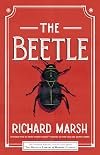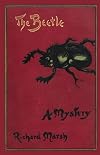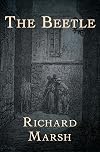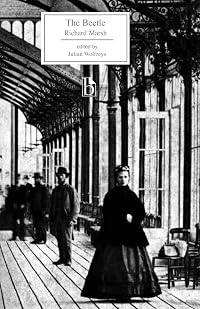
The Beetle
by Richard Marsh
On This Page
Description
Richard Marsh's best-selling supernatural thriller The Beetle: A Mystery, was even more popular than Bram Stoker's Dracula when it was first released; both being published in the same year, 1897. Inflicting damage with his hypnotic and shape-shifting powers, a strange oriental figure shadows an English politician to London..
Tags
Recommendations















Member Recommendations

Member Reviews
It is easy to see how Richard Marsh’s The Beetle: A Mystery was so wildly popular upon its publication in 1897, as it was quite different, in its horror and supernatural elements, than anything that had come before. Also, the public fascination with mesmerism (and its characteristic theories of mind control and animal magnetism), which is central to the action, was in full bloom at that time. This bizarre story of a repulsive man (or perhaps a woman?)/creature who can suddenly change into a giant beetle, control minds, and reduce his victims to zombie-like slaves, is told in four parts, each with a series of events from a different character’s point of view. While Marsh can get a little wordy in his narrative and a bit show more repetitive with dialogue, The Beetle still manages to move at a fairly brisk pace, though the story’s central love triangle inevitably slows things down occasionally. That said, the climax is perhaps a bit too melodramatic, a la “ The Perils of Pauline”, and Marsh doesn’t offer much of an explanation of the creature’s origin or motives, but overall it’s an entertaining book, and remains a classic of early weird fiction. show less
As he came on, something entered into me, and forced itself from between my lips, so that I said, in a low, hissing voice, which I vow was never mine, “THE BEETLE!”
***
Paul Lessingham! Beware! THE BEETLE!
Poisoned Pen Press is an American publisher of (primarily) crime and detection novels, including the US editions of the highly successful British Library Crime Classics series which is resurrecting many forgotten classics of the Golden Age of crime fiction. Poisoned Pen has recently embarked on a new project which promises to be just as exciting Together with the Horror Writers Association, it is launching The Haunted Library of Horror Classics, a collection of classic horror novels presented in new editions, with commentaries and show more notes to introduce the contemporary reader to the historical and cultural context of the featured works.
One of the first publications in the series is The Beetle by Richard Bernard Heldmann, better known by his pen-name Richard Marsh. The novel was originally issued as “The Beetle: A Mystery” in 1897. This was the same year which saw the publication of Bram Stoker’s Dracula and it may come as a surprise that The Beetle initially outsold Stoker’s cult vampire novel, going into no less than 15 editions before the Great War. Like Dracula, Marsh imagines a supernatural entity unleashed in Victorian London, except that the monster here is no vampire, but an entity rather more difficult to pin down: a “Nameless Thing” which, although vaguely bearing the features of a hideous man, scarcely seems to be human and, if it is, is of indeterminate sex. This Being, which calls itself one of the “Children of Isis”, and I therefore, presumably, of Egyptian origin, appears to have mesmeric powers and the magical ability to turn into a beetle – or rather THE BEETLE. Indeed, the characters who come across this infernal monster tend to lose their composure as soon as they hear the said two words, which Marsh generally expresses in GARISH CAPITAL LETTERS whenever they appear in the text. Although it is not clear how THE eponymous BEETLE ended up in Kensington, it seems that the main purposes of its City sojourn is to haunt one Paul Lessingham, an upcoming politician who, in younger days, made the fatal mistake of visiting a dubious Egyptian establishment, ending up a prisoner of an ancient esoteric cult. Lessingham’s past has caught up with him with a vengeance and threatens to put his and his fiancée’s life in mortal danger.
As is common in many Gothic and sensation novels of the era, each one of The Beetle’s four “books” features a different first-person narrator. In “The House with the Open Window”, unemployed clerk Robert Holt seeks shelter in a seemingly abandoned house, only to fall under the mesmeric powers of the Egyptian fiend. In “The Haunted Man”, the story is taken up by eccentric, hyperactive inventor Sydney Atherton, an acquaintance of Lessingham and his rival in love. The object of their attention is Miss Marjorie Lindon, who seems to be the most wanted young woman in London and is also being pursued by the monster him/her/itself. Marjorie is also the narrator of the third Book: “The Terror by Night and the Terror by Day”. The novel ends with notes “extracted from the Case-Book of the Hon. Augustus Champnell, Confidential Agent”, a Sherlock-Holmes-like figure who tries to bring his detective skills to bear on the lurid mystery of THE BEETLE and leads a feverish hunt all over London for the elusive Egyptian insectoid.
This edition opens with a rather convoluted warning that THE BEETLE and novels of its ilk might “exemplify ideas that are no longer current, attitudes and behaviours that are no longer tolerated, standards that are no longer judged valid”. You don’t say so! Like most examples of “Egyptian Gothic”, Marsh’s novel relies for its effect on racist and xenophobic fears, much as first and second-wave Gothic was often decidedly prejudiced against Southern Europeans and Roman Catholics. Knowing the cultural context helps one to turn a blind eye on ideas which are past their sell-by date. Even so, the constant references to “that Arab” and “diabolical Asiatic” and the idea that the civilised Western world is under threat from a creature hailing from the “dirty streets and evil smells” of Egypt starts to become jarring. And, frankly, the very thought that an ancient cult favours as choice cuts for human sacrifice, not just “white women” but, more specifically, fine examples of English maidenhood, is frankly ludicrous.
Marsh’s attitudes to women and the working classes are not much better. In that respect, however, the narrative has several redeeming features, not least the strong character of Marjorie Lindon (so much more than just a demure “damsel in distress) and the fact that he lampoons all sectors of society (the farcical figure of Marjorie’s politician father is a case in point).
This brings me to another aspect of Marsh’s novel which might be puzzling to a modern reader. Horrific though it is, THE BEETLE has an underlying comedic streak, which is particularly evident in Atherton’s narrative segment. This ambivalence might not be to everyone’s taste and, to be honest, I found that the changes in tone dampened the more horrific aspects of the novel and sometimes hovered towards self-parody. To a generation used to explicit horror or, on the other hand, to subtly unsettling psychological thrills, THE BEETLE might seem like a madcap roller-coaster ride.
There’s no doubt however that at its best, as in Holt’s encounter with the fiend, or the final, thrilling chapters, THE BEETLE still packs a punch and is a worthy addition to The Horror Library. This edition features an introduction by Chelsea Quinn Yarbro, together with biographical details about Richard Marsh (including the fact that he is the grandfather of Robert Aickman, celebrated author of ‘weird fiction’), questions for discussion and suggestions for further “horrific reading”. show less
***
Paul Lessingham! Beware! THE BEETLE!
Poisoned Pen Press is an American publisher of (primarily) crime and detection novels, including the US editions of the highly successful British Library Crime Classics series which is resurrecting many forgotten classics of the Golden Age of crime fiction. Poisoned Pen has recently embarked on a new project which promises to be just as exciting Together with the Horror Writers Association, it is launching The Haunted Library of Horror Classics, a collection of classic horror novels presented in new editions, with commentaries and show more notes to introduce the contemporary reader to the historical and cultural context of the featured works.
One of the first publications in the series is The Beetle by Richard Bernard Heldmann, better known by his pen-name Richard Marsh. The novel was originally issued as “The Beetle: A Mystery” in 1897. This was the same year which saw the publication of Bram Stoker’s Dracula and it may come as a surprise that The Beetle initially outsold Stoker’s cult vampire novel, going into no less than 15 editions before the Great War. Like Dracula, Marsh imagines a supernatural entity unleashed in Victorian London, except that the monster here is no vampire, but an entity rather more difficult to pin down: a “Nameless Thing” which, although vaguely bearing the features of a hideous man, scarcely seems to be human and, if it is, is of indeterminate sex. This Being, which calls itself one of the “Children of Isis”, and I therefore, presumably, of Egyptian origin, appears to have mesmeric powers and the magical ability to turn into a beetle – or rather THE BEETLE. Indeed, the characters who come across this infernal monster tend to lose their composure as soon as they hear the said two words, which Marsh generally expresses in GARISH CAPITAL LETTERS whenever they appear in the text. Although it is not clear how THE eponymous BEETLE ended up in Kensington, it seems that the main purposes of its City sojourn is to haunt one Paul Lessingham, an upcoming politician who, in younger days, made the fatal mistake of visiting a dubious Egyptian establishment, ending up a prisoner of an ancient esoteric cult. Lessingham’s past has caught up with him with a vengeance and threatens to put his and his fiancée’s life in mortal danger.
As is common in many Gothic and sensation novels of the era, each one of The Beetle’s four “books” features a different first-person narrator. In “The House with the Open Window”, unemployed clerk Robert Holt seeks shelter in a seemingly abandoned house, only to fall under the mesmeric powers of the Egyptian fiend. In “The Haunted Man”, the story is taken up by eccentric, hyperactive inventor Sydney Atherton, an acquaintance of Lessingham and his rival in love. The object of their attention is Miss Marjorie Lindon, who seems to be the most wanted young woman in London and is also being pursued by the monster him/her/itself. Marjorie is also the narrator of the third Book: “The Terror by Night and the Terror by Day”. The novel ends with notes “extracted from the Case-Book of the Hon. Augustus Champnell, Confidential Agent”, a Sherlock-Holmes-like figure who tries to bring his detective skills to bear on the lurid mystery of THE BEETLE and leads a feverish hunt all over London for the elusive Egyptian insectoid.
This edition opens with a rather convoluted warning that THE BEETLE and novels of its ilk might “exemplify ideas that are no longer current, attitudes and behaviours that are no longer tolerated, standards that are no longer judged valid”. You don’t say so! Like most examples of “Egyptian Gothic”, Marsh’s novel relies for its effect on racist and xenophobic fears, much as first and second-wave Gothic was often decidedly prejudiced against Southern Europeans and Roman Catholics. Knowing the cultural context helps one to turn a blind eye on ideas which are past their sell-by date. Even so, the constant references to “that Arab” and “diabolical Asiatic” and the idea that the civilised Western world is under threat from a creature hailing from the “dirty streets and evil smells” of Egypt starts to become jarring. And, frankly, the very thought that an ancient cult favours as choice cuts for human sacrifice, not just “white women” but, more specifically, fine examples of English maidenhood, is frankly ludicrous.
Marsh’s attitudes to women and the working classes are not much better. In that respect, however, the narrative has several redeeming features, not least the strong character of Marjorie Lindon (so much more than just a demure “damsel in distress) and the fact that he lampoons all sectors of society (the farcical figure of Marjorie’s politician father is a case in point).
This brings me to another aspect of Marsh’s novel which might be puzzling to a modern reader. Horrific though it is, THE BEETLE has an underlying comedic streak, which is particularly evident in Atherton’s narrative segment. This ambivalence might not be to everyone’s taste and, to be honest, I found that the changes in tone dampened the more horrific aspects of the novel and sometimes hovered towards self-parody. To a generation used to explicit horror or, on the other hand, to subtly unsettling psychological thrills, THE BEETLE might seem like a madcap roller-coaster ride.
There’s no doubt however that at its best, as in Holt’s encounter with the fiend, or the final, thrilling chapters, THE BEETLE still packs a punch and is a worthy addition to The Horror Library. This edition features an introduction by Chelsea Quinn Yarbro, together with biographical details about Richard Marsh (including the fact that he is the grandfather of Robert Aickman, celebrated author of ‘weird fiction’), questions for discussion and suggestions for further “horrific reading”. show less
When I saw that this was published in the same time frame as Dracula and was for a time even more popular than Bram Stoker's masterpiece I knew I had to read it. Now for me that comparison is a high standard to live up to, and The Beetle did not quite make it.
A homeless man climbs through a window of what he thinks is an empty dwelling, in a desperate attempt to find shelter from the cold rain. Instead he finds himself under the control of a strange being with supernatural powers. After this fascinating start it began to lose me towards the middle and just did not measure up to it's contemporary. Others may enjoy it more than I did.
I received a complimentary copy for review.
A homeless man climbs through a window of what he thinks is an empty dwelling, in a desperate attempt to find shelter from the cold rain. Instead he finds himself under the control of a strange being with supernatural powers. After this fascinating start it began to lose me towards the middle and just did not measure up to it's contemporary. Others may enjoy it more than I did.
I received a complimentary copy for review.
It's been five years since I read The Beetle (this review is a tad belated), and I feel like I need to reread it to assess it. But I also feel like that would be the case even if I had just read it. It is a strange book, a weird window into Victorian exoticism and eroticism. It is not surprising, however, that while it originally outsold its contemporary supernatural thriller Dracula, Dracula has persisted while The Beetle has not. Both are very Victorian, but The Beetle is perhaps particularly Victorian. The kind of racialized and sexualized Other that haunts this novel no longer haunts us, or at least not in this way. The book is almost impossible to describe, though; when I find myself wanting to recommend it to someone (and show more that takes a very particular kind of someone), all I can really do is just shove it into their hands because anything I can say would be inadequate. show less
As he came on, something entered into me, and forced itself from between my lips, so that I said, in a low, hissing voice, which I vow was never mine, “THE BEETLE!”
***
Paul Lessingham! Beware! THE BEETLE!
Poisoned Pen Press is an American publisher of (primarily) crime and detection novels, including the US editions of the highly successful British Library Crime Classics series which is resurrecting many forgotten classics of the Golden Age of crime fiction. Poisoned Pen has recently embarked on a new project which promises to be just as exciting Together with the Horror Writers Association, it is launching The Haunted Library of Horror Classics, a collection of classic horror novels presented in new editions, with commentaries and show more notes to introduce the contemporary reader to the historical and cultural context of the featured works.
One of the first publications in the series is The Beetle by Richard Bernard Heldmann, better known by his pen-name Richard Marsh. The novel was originally issued as “The Beetle: A Mystery” in 1897. This was the same year which saw the publication of Bram Stoker’s Dracula and it may come as a surprise that The Beetle initially outsold Stoker’s cult vampire novel, going into no less than 15 editions before the Great War. Like Dracula, Marsh imagines a supernatural entity unleashed in Victorian London, except that the monster here is no vampire, but an entity rather more difficult to pin down: a “Nameless Thing” which, although vaguely bearing the features of a hideous man, scarcely seems to be human and, if it is, is of indeterminate sex. This Being, which calls itself one of the “Children of Isis”, and I therefore, presumably, of Egyptian origin, appears to have mesmeric powers and the magical ability to turn into a beetle – or rather THE BEETLE. Indeed, the characters who come across this infernal monster tend to lose their composure as soon as they hear the said two words, which Marsh generally expresses in GARISH CAPITAL LETTERS whenever they appear in the text. Although it is not clear how THE eponymous BEETLE ended up in Kensington, it seems that the main purposes of its City sojourn is to haunt one Paul Lessingham, an upcoming politician who, in younger days, made the fatal mistake of visiting a dubious Egyptian establishment, ending up a prisoner of an ancient esoteric cult. Lessingham’s past has caught up with him with a vengeance and threatens to put his and his fiancée’s life in mortal danger.
As is common in many Gothic and sensation novels of the era, each one of The Beetle’s four “books” features a different first-person narrator. In “The House with the Open Window”, unemployed clerk Robert Holt seeks shelter in a seemingly abandoned house, only to fall under the mesmeric powers of the Egyptian fiend. In “The Haunted Man”, the story is taken up by eccentric, hyperactive inventor Sydney Atherton, an acquaintance of Lessingham and his rival in love. The object of their attention is Miss Marjorie Lindon, who seems to be the most wanted young woman in London and is also being pursued by the monster him/her/itself. Marjorie is also the narrator of the third Book: “The Terror by Night and the Terror by Day”. The novel ends with notes “extracted from the Case-Book of the Hon. Augustus Champnell, Confidential Agent”, a Sherlock-Holmes-like figure who tries to bring his detective skills to bear on the lurid mystery of THE BEETLE and leads a feverish hunt all over London for the elusive Egyptian insectoid.
This edition opens with a rather convoluted warning that THE BEETLE and novels of its ilk might “exemplify ideas that are no longer current, attitudes and behaviours that are no longer tolerated, standards that are no longer judged valid”. You don’t say so! Like most examples of “Egyptian Gothic”, Marsh’s novel relies for its effect on racist and xenophobic fears, much as first and second-wave Gothic was often decidedly prejudiced against Southern Europeans and Roman Catholics. Knowing the cultural context helps one to turn a blind eye on ideas which are past their sell-by date. Even so, the constant references to “that Arab” and “diabolical Asiatic” and the idea that the civilised Western world is under threat from a creature hailing from the “dirty streets and evil smells” of Egypt starts to become jarring. And, frankly, the very thought that an ancient cult favours as choice cuts for human sacrifice, not just “white women” but, more specifically, fine examples of English maidenhood, is frankly ludicrous.
Marsh’s attitudes to women and the working classes are not much better. In that respect, however, the narrative has several redeeming features, not least the strong character of Marjorie Lindon (so much more than just a demure “damsel in distress) and the fact that he lampoons all sectors of society (the farcical figure of Marjorie’s politician father is a case in point).
This brings me to another aspect of Marsh’s novel which might be puzzling to a modern reader. Horrific though it is, THE BEETLE has an underlying comedic streak, which is particularly evident in Atherton’s narrative segment. This ambivalence might not be to everyone’s taste and, to be honest, I found that the changes in tone dampened the more horrific aspects of the novel and sometimes hovered towards self-parody. To a generation used to explicit horror or, on the other hand, to subtly unsettling psychological thrills, THE BEETLE might seem like a madcap roller-coaster ride.
There’s no doubt however that at its best, as in Holt’s encounter with the fiend, or the final, thrilling chapters, THE BEETLE still packs a punch and is a worthy addition to The Horror Library. This edition features an introduction by Chelsea Quinn Yarbro, together with biographical details about Richard Marsh (including the fact that he is the grandfather of Robert Aickman, celebrated author of ‘weird fiction’), questions for discussion and suggestions for further “horrific reading”. show less
***
Paul Lessingham! Beware! THE BEETLE!
Poisoned Pen Press is an American publisher of (primarily) crime and detection novels, including the US editions of the highly successful British Library Crime Classics series which is resurrecting many forgotten classics of the Golden Age of crime fiction. Poisoned Pen has recently embarked on a new project which promises to be just as exciting Together with the Horror Writers Association, it is launching The Haunted Library of Horror Classics, a collection of classic horror novels presented in new editions, with commentaries and show more notes to introduce the contemporary reader to the historical and cultural context of the featured works.
One of the first publications in the series is The Beetle by Richard Bernard Heldmann, better known by his pen-name Richard Marsh. The novel was originally issued as “The Beetle: A Mystery” in 1897. This was the same year which saw the publication of Bram Stoker’s Dracula and it may come as a surprise that The Beetle initially outsold Stoker’s cult vampire novel, going into no less than 15 editions before the Great War. Like Dracula, Marsh imagines a supernatural entity unleashed in Victorian London, except that the monster here is no vampire, but an entity rather more difficult to pin down: a “Nameless Thing” which, although vaguely bearing the features of a hideous man, scarcely seems to be human and, if it is, is of indeterminate sex. This Being, which calls itself one of the “Children of Isis”, and I therefore, presumably, of Egyptian origin, appears to have mesmeric powers and the magical ability to turn into a beetle – or rather THE BEETLE. Indeed, the characters who come across this infernal monster tend to lose their composure as soon as they hear the said two words, which Marsh generally expresses in GARISH CAPITAL LETTERS whenever they appear in the text. Although it is not clear how THE eponymous BEETLE ended up in Kensington, it seems that the main purposes of its City sojourn is to haunt one Paul Lessingham, an upcoming politician who, in younger days, made the fatal mistake of visiting a dubious Egyptian establishment, ending up a prisoner of an ancient esoteric cult. Lessingham’s past has caught up with him with a vengeance and threatens to put his and his fiancée’s life in mortal danger.
As is common in many Gothic and sensation novels of the era, each one of The Beetle’s four “books” features a different first-person narrator. In “The House with the Open Window”, unemployed clerk Robert Holt seeks shelter in a seemingly abandoned house, only to fall under the mesmeric powers of the Egyptian fiend. In “The Haunted Man”, the story is taken up by eccentric, hyperactive inventor Sydney Atherton, an acquaintance of Lessingham and his rival in love. The object of their attention is Miss Marjorie Lindon, who seems to be the most wanted young woman in London and is also being pursued by the monster him/her/itself. Marjorie is also the narrator of the third Book: “The Terror by Night and the Terror by Day”. The novel ends with notes “extracted from the Case-Book of the Hon. Augustus Champnell, Confidential Agent”, a Sherlock-Holmes-like figure who tries to bring his detective skills to bear on the lurid mystery of THE BEETLE and leads a feverish hunt all over London for the elusive Egyptian insectoid.
This edition opens with a rather convoluted warning that THE BEETLE and novels of its ilk might “exemplify ideas that are no longer current, attitudes and behaviours that are no longer tolerated, standards that are no longer judged valid”. You don’t say so! Like most examples of “Egyptian Gothic”, Marsh’s novel relies for its effect on racist and xenophobic fears, much as first and second-wave Gothic was often decidedly prejudiced against Southern Europeans and Roman Catholics. Knowing the cultural context helps one to turn a blind eye on ideas which are past their sell-by date. Even so, the constant references to “that Arab” and “diabolical Asiatic” and the idea that the civilised Western world is under threat from a creature hailing from the “dirty streets and evil smells” of Egypt starts to become jarring. And, frankly, the very thought that an ancient cult favours as choice cuts for human sacrifice, not just “white women” but, more specifically, fine examples of English maidenhood, is frankly ludicrous.
Marsh’s attitudes to women and the working classes are not much better. In that respect, however, the narrative has several redeeming features, not least the strong character of Marjorie Lindon (so much more than just a demure “damsel in distress) and the fact that he lampoons all sectors of society (the farcical figure of Marjorie’s politician father is a case in point).
This brings me to another aspect of Marsh’s novel which might be puzzling to a modern reader. Horrific though it is, THE BEETLE has an underlying comedic streak, which is particularly evident in Atherton’s narrative segment. This ambivalence might not be to everyone’s taste and, to be honest, I found that the changes in tone dampened the more horrific aspects of the novel and sometimes hovered towards self-parody. To a generation used to explicit horror or, on the other hand, to subtly unsettling psychological thrills, THE BEETLE might seem like a madcap roller-coaster ride.
There’s no doubt however that at its best, as in Holt’s encounter with the fiend, or the final, thrilling chapters, THE BEETLE still packs a punch and is a worthy addition to The Horror Library. This edition features an introduction by Chelsea Quinn Yarbro, together with biographical details about Richard Marsh (including the fact that he is the grandfather of Robert Aickman, celebrated author of ‘weird fiction’), questions for discussion and suggestions for further “horrific reading”. show less
Classic Victorian horror, replete with racism, colonialism, English supremacy, xenophobia. It quite literally posits that the evil Isis worshipers want our (i.e., white, English) women. I prefer Dracula or H. Rider Haggard’s She. The Victorians must have found it very titillating: the most lurid of topics treated in the coyest way possible (e.g., more than one reference to the fate “worse than death”).
Apparently, this novel once outsold Bram Stoker's Dracula, and it is easy to see why. It tells the strange tale of the creature called The Beetle that plays tricks on and catch with London's polite society, a secret and ancient Egyptian cult, human sacrifice of innocent maidens, mesmerism, a nobody rising to political power who might be hiding a mysterious secret in his past, and you can see why it may have intrigued and fascinated its readership. It does have its faults: its language and settings feel quite old-fashioned today and some of the plot developments are full of melodrama and incredible coincidences. That said, it is still a cracking good read, with the plot gathering pace after the first third of the book, and the passages show more where the heroine, Marjorie Lindon, is left alone with the creature in her room are truly terrifying. show less
Members
- Recently Added By
Lists

Lovecraft's 'Supernatural Horror in Literature' Reading List
216 works; 8 members
Jones & Newman: Best Horror Books Further Recommended Reading
577 works; 4 members
Author Information

61+ Works 997 Members
Some Editions
Awards and Honors
Awards
Series
Belongs to Publisher Series
Work Relationships
Common Knowledge
- Canonical title
- The Beetle
- Original title
- The Peril of Paul Lessingham: The Story of a Haunted Man
- Original publication date
- 1897
- People/Characters
- Robert Holt; The Beetle; Paul Lessingham; Marjorie Lindon
- Important places
- Piccadilly Circus, London, England, UK; London, England, UK; Palace of Westminster, London, England, UK (House of Commons); Cairo, Egypt
- First words
- 'No room! - Full up!'
- Last words
- (Click to show. Warning: May contain spoilers.)So far as I am personally concerned, experience has taught me that there are indeed more things in heaven and earth than are dreamed of in our philosophy, and I am quite prepared to believe that the so-called Beetle, which others saw, but I never, was - or is, for it cannot be shown that the Thing is not still existing - a creature born neither of God nor man.
- Blurbers
- Miller, J. Hillis; Daly, Nicholas; Dollimore, Jonathan
Classifications
Statistics
- Members
- 722
- Popularity
- 39,229
- Reviews
- 28
- Rating
- (3.48)
- Languages
- 9 — Czech, English, French, German, Lithuanian, Polish, Spanish, Swedish, Turkish
- Media
- Paper, Audiobook, Ebook
- ISBNs
- 92
- UPCs
- 1
- ASINs
- 29