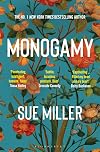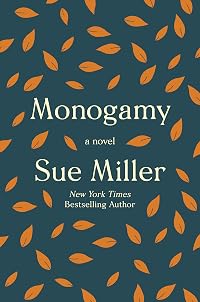
Monogamy
by Sue Miller
On This Page
Description
Derailed by the sudden passing of her husband of thirty years, an artist on the brink of a gallery opening struggles to pick up the pieces of her life before discovering harrowing evidence of her husband's affair.Tags
Recommendations





Member Recommendations
Member Reviews
In Sue Miller's "Monogamy," Annie meets Graham McFarlane in his Cambridge, Massachusetts bookstore. Unlike Annie, who wed when she was young and regretted it, Graham still maintains an amicable relationship with first wife, Frieda. He does not blame Frieda for leaving him when she grew tired of his unfaithfulness. Graham and Annie eventually marry, have a daughter, and remain together for almost thirty years.
The author depicts Graham as a large man with a resonant voice who is amiable, enjoys delicious food, and dotes on his family. When an unexpected tragedy occurs, Annie becomes unmoored, and in the months that follow, she reexamines the past in light of revelations that make her question her most cherished memories and beliefs. This show more intimate work of fiction is filled with lengthy and sometimes repetitious passages of introspection and exposition. More than once, Miller informs us that Graham lavishes attention on others and, in turn, basks in the admiration of his family and friends. Frieda is always there in the background. She is a plain woman who has almost no social life apart from her ongoing friendship with Graham and Annie.
Although there are lighthearted and romantic passages in "Monogamy," as the narrative progresses, its tone grows more pensive and somber. Miller suggests that although many believe that they know their spouses inside and out, there may be surprises in store. Furthermore, Graham and Annie's relationship demonstrates how challenging it is to keep a marriage vibrant. Entrusting our hearts to others exposes us to disappointment and hurt. On the other hand, when we avoid making commitments out of fear, we risk missing out on life's sweetest moments. "Monogamy" is a thought-provoking exploration of the joys, sorrows, and complexities of marriage and parenthood. show less
The author depicts Graham as a large man with a resonant voice who is amiable, enjoys delicious food, and dotes on his family. When an unexpected tragedy occurs, Annie becomes unmoored, and in the months that follow, she reexamines the past in light of revelations that make her question her most cherished memories and beliefs. This show more intimate work of fiction is filled with lengthy and sometimes repetitious passages of introspection and exposition. More than once, Miller informs us that Graham lavishes attention on others and, in turn, basks in the admiration of his family and friends. Frieda is always there in the background. She is a plain woman who has almost no social life apart from her ongoing friendship with Graham and Annie.
Although there are lighthearted and romantic passages in "Monogamy," as the narrative progresses, its tone grows more pensive and somber. Miller suggests that although many believe that they know their spouses inside and out, there may be surprises in store. Furthermore, Graham and Annie's relationship demonstrates how challenging it is to keep a marriage vibrant. Entrusting our hearts to others exposes us to disappointment and hurt. On the other hand, when we avoid making commitments out of fear, we risk missing out on life's sweetest moments. "Monogamy" is a thought-provoking exploration of the joys, sorrows, and complexities of marriage and parenthood. show less
Although the title reflects one of the possible states of relationships/marriage, the story is really about appetites of all sorts. Graham and Annie are married, the second go-around for him, and he's still closely tied to the first wife, Freida, with whom he has a son. All three live relatively peacefully in Avon Hill, outside of Harvard Square, and Graham owns a renowned bookstore, and Annie is a photographer. These are people who, if you know the locale, could be easily observed and recognized every day on the streets and, if you were lucky, in the backyards of their Elizabeth Warren neighborhood (the reader almost expects her to pop in at one of their many parties). Graham is a self-described fat man with a hearty laugh, a sumptuous show more beard, and is a beloved, iconic local legend to his piles of friends and admirers. He revels in his status in this rarefied world, and they seem to be one of those perfect couples (or trios, with Freida as the best friend to both). All’s well until Graham begins and ends an affair within their friend group before he dying of a heart attack in bed. Annie finds that the discovery of his betrayal (she stumbles upon the girlfriend loudly weeping in Graham's study during the post-death gathering) destroys, at least temporarily, her memories of their bliss, as mourning becomes electric and grief begets rage. Annie’s unexpected encounter with a former almost-lover enables a brilliant conclusion, creatively executed while avoiding the cliched possibilities.
Graham's inner thoughts are occasionally revealed, as are those of their children (the son with Freida and a daughter with Annie), and his seems to be the larger and more intensely lived life. Perhaps there should be another novel, as Evan S. Connell did with his two mirrored novels, Mr. Bridge and Mrs. Bridge. Residents of Cambridge will feel quite at home, as the author plies her craft movingly in her very own backyard.
Quotes: “One of the things Graham loves about having lived in the same place for so long is the layers of time you’re always moving through.”
“She was understanding, for the first time, how confined his life was. Confined by the small size of his ambitions, and by his actual enjoyment of all his familiar, repetitive routines. And that meant her life was confined too. The fears she’d overcome to be with him, the fears of being eaten by him, absorbed by him, by his appetites, seemed suddenly confirmed.” show less
Graham's inner thoughts are occasionally revealed, as are those of their children (the son with Freida and a daughter with Annie), and his seems to be the larger and more intensely lived life. Perhaps there should be another novel, as Evan S. Connell did with his two mirrored novels, Mr. Bridge and Mrs. Bridge. Residents of Cambridge will feel quite at home, as the author plies her craft movingly in her very own backyard.
Quotes: “One of the things Graham loves about having lived in the same place for so long is the layers of time you’re always moving through.”
“She was understanding, for the first time, how confined his life was. Confined by the small size of his ambitions, and by his actual enjoyment of all his familiar, repetitive routines. And that meant her life was confined too. The fears she’d overcome to be with him, the fears of being eaten by him, absorbed by him, by his appetites, seemed suddenly confirmed.” show less
There is possibly nothing more calming than a traditionally-structured novel about ordinary people leading ordinary lives, especially when that novel is solidly written in a way that doesn't draw attention to itself.
Sue Miller writes about the marriage of Graham and Annie, from when they met in the seventies at the opening party for his bookstore, until a few years after Graham's death. This is a novel about grief; the pain of missing someone you love as well as the pain of discovering that that person was not who you thought he was. It's also about the roles we end up taking in a family and how impossible it is to change that.
This is a quiet novel, with a lot going on and I appreciated getting to spend time with each member of this show more family. It felt very honest and real and normal. show less
Sue Miller writes about the marriage of Graham and Annie, from when they met in the seventies at the opening party for his bookstore, until a few years after Graham's death. This is a novel about grief; the pain of missing someone you love as well as the pain of discovering that that person was not who you thought he was. It's also about the roles we end up taking in a family and how impossible it is to change that.
This is a quiet novel, with a lot going on and I appreciated getting to spend time with each member of this show more family. It felt very honest and real and normal. show less
I felt like Sue Miller was talking directly to me in this book about marriage. Although I haven’t experienced the unfaithfulness in the story, which makes the title ironic. Her second marriage to Graham and their romantic side as well as their close friendship rings true for someone who has been married a long time. I, too, am friends with my husband’s first wife. Although, my husband has not died, I am grieving his loss as he slowly disappears to dementia. I loved the reflections of the grown children as they seek love and careers just as their parents did. They add to the richness of the story and help fill in the dimensions of Annie, as she tells her story of marriage to Graham. I listened to the audio version as I lay in bed. show more The tranquil voice, the story in which I had so much in common with Annie, the sorrow at loss I identified. And although, my husband didn’t have an affair, the f*cking demon, Dementia, has stolen my husband just as unfaithfulness seemed to steal Graham from Annie. I imagine that people’s response to this book will depend on their age and their life experiences. For older readers, Miller’s ability to capture the internal lives of the characters will resonate. show less
This is a character driven exploration of the marriage between Annie and Graham (Hmm...is that a pun for anagram?) and the extended family that surrounds their marriage. Early in the story, Graham is troubled by an inexplicable infidelity that arose out of an insensitive joke. Annie is not aware of this, but Graham has confided in his ex-wife, Freida, and his long time friend, John. After breaking of his extramarital relationship, Graham dies in his sleep.
The rest of the novel explores Annie's grief, her relationship with her daughter, Sarah, and stepson, Lucas, and her long term friendship with Grahams ex, Freida. Graham's outsized personality overshadowed all of those relationships and Annie must navigate them in her new reality.
At show more the house party after Graham's memorial service, Annie becomes aware of the infidelity based on the grieving behavior of the other woman. At this point she begins to question everything about her marriage. Her musings, and her relationships with Freida and the adult children, lead the reader to think through what it means to be monogamous and the various forms that infidelity can take within that relationship. Ultimately, Annie works through her grief and anger and establishes a life built on her own terms.
This book might not be for everyone, but I found it interesting to reflect upon as I read it and gave it 4 stars. show less
The rest of the novel explores Annie's grief, her relationship with her daughter, Sarah, and stepson, Lucas, and her long term friendship with Grahams ex, Freida. Graham's outsized personality overshadowed all of those relationships and Annie must navigate them in her new reality.
At show more the house party after Graham's memorial service, Annie becomes aware of the infidelity based on the grieving behavior of the other woman. At this point she begins to question everything about her marriage. Her musings, and her relationships with Freida and the adult children, lead the reader to think through what it means to be monogamous and the various forms that infidelity can take within that relationship. Ultimately, Annie works through her grief and anger and establishes a life built on her own terms.
This book might not be for everyone, but I found it interesting to reflect upon as I read it and gave it 4 stars. show less
Monogamy by Sue Miller is a highly recommended character-driven domestic drama about marriage, love, family, happiness and sorrow.
Graham and Annie McFarlane have been married for nearly thirty years. They were both married previously but now their long and devoted relationship is well known and admired by friends. Graham is a big, outgoing bookstore owner whose gregarious nature is an essential part of his personality. In contrast Annie is small, reserved, introspective photographer. Just as she is preparing for her first gallery show in six years, Graham suddenly dies. Annie is mourning him and wondering how she can go on when she finds out he was having an affair which he ended just before his death. Annie is heartbroken, but feeling show more betrayed over his unfaithfulness. She thought their marriage was strong and that she was the love of Graham's life, so how could he have an affair? How could he be unfaithful to her?
This is a character-driven novel so we are provided with insight into Graham, Annie, Frieda (Graham's first wife and Annie's friend) and their two adult children, Lucas and Sarah. We meet Annie and Graham when they first met and started their relationship. Then the novel jumps ahead in time. The readers learn of Graham's affair and know about it long before Annie, so when he dies and Annie is drowning in grief, it creates a tension of what is left unsaid. When she learns of the affair, the novel changes. There is still grief, but also anger that she needs to suppress and hide from their children and others. The novel becomes much more thoughtful after Annie learns of the affair and begins to question their whole life together.
As expected the quality of the writing is excellent. She handles descriptions with a lyrical, poetic writing style. Miller delivers in this character-driven drama, covering both the realistic characters and depicting the inner working of their lives. The novel progresses with multiple layers of complexities, introspection, memories, and inner turmoil. Those who have experienced a loss of someone close to them will understand the characters. Ultimately the question is how well do we really know those we love?
There are a few issues. First, for me, neither Graham nor Annie are all that appealing as characters and I really wondered if I wanted to read it. After his death, the novel begins to deal with some real issues and insight into the characters. Then the novel begins to drone on a bit too long and becomes tiresome. It's a very good novel, but it could have used some editing.
Disclosure: My review copy was courtesy of HarperCollins
http://www.shetreadssoftly.com/2020/09/monogamy.html
https://www.goodreads.com/review/show/3540120584 show less
Graham and Annie McFarlane have been married for nearly thirty years. They were both married previously but now their long and devoted relationship is well known and admired by friends. Graham is a big, outgoing bookstore owner whose gregarious nature is an essential part of his personality. In contrast Annie is small, reserved, introspective photographer. Just as she is preparing for her first gallery show in six years, Graham suddenly dies. Annie is mourning him and wondering how she can go on when she finds out he was having an affair which he ended just before his death. Annie is heartbroken, but feeling show more betrayed over his unfaithfulness. She thought their marriage was strong and that she was the love of Graham's life, so how could he have an affair? How could he be unfaithful to her?
This is a character-driven novel so we are provided with insight into Graham, Annie, Frieda (Graham's first wife and Annie's friend) and their two adult children, Lucas and Sarah. We meet Annie and Graham when they first met and started their relationship. Then the novel jumps ahead in time. The readers learn of Graham's affair and know about it long before Annie, so when he dies and Annie is drowning in grief, it creates a tension of what is left unsaid. When she learns of the affair, the novel changes. There is still grief, but also anger that she needs to suppress and hide from their children and others. The novel becomes much more thoughtful after Annie learns of the affair and begins to question their whole life together.
As expected the quality of the writing is excellent. She handles descriptions with a lyrical, poetic writing style. Miller delivers in this character-driven drama, covering both the realistic characters and depicting the inner working of their lives. The novel progresses with multiple layers of complexities, introspection, memories, and inner turmoil. Those who have experienced a loss of someone close to them will understand the characters. Ultimately the question is how well do we really know those we love?
There are a few issues. First, for me, neither Graham nor Annie are all that appealing as characters and I really wondered if I wanted to read it. After his death, the novel begins to deal with some real issues and insight into the characters. Then the novel begins to drone on a bit too long and becomes tiresome. It's a very good novel, but it could have used some editing.
Disclosure: My review copy was courtesy of HarperCollins
http://www.shetreadssoftly.com/2020/09/monogamy.html
https://www.goodreads.com/review/show/3540120584 show less
I really do not know what I think of this book. It is cleverly written and the story is interesting; however, there was nothing that really drove the story after the death of Graham. We learn who Graham really was fro how he affected the lives of the people he associated with. This was really interesting; however, I could not sympathizes with Annie, his second wife. While Graham cheated on her, ear; in there marriage, she was also tempted to do the same.
If we twist the story around and make Graham the central character them we have a much more compelling story. He knew that he had his faults, he was like Falstaff in that he like to live his life to the fullest though he associated himself with the intelligentsia and not the petty show more criminal. Maybe he was more like Bacchus who lived life to the largest and was also a good father to his children.
I think that we should leave it to the reader to figure out the story that they would like to follow. However, Richard Russo, in his review, said that it was a story about a pretty successful marriage. In the end are not all stories about love? show less
If we twist the story around and make Graham the central character them we have a much more compelling story. He knew that he had his faults, he was like Falstaff in that he like to live his life to the fullest though he associated himself with the intelligentsia and not the petty show more criminal. Maybe he was more like Bacchus who lived life to the largest and was also a good father to his children.
I think that we should leave it to the reader to figure out the story that they would like to follow. However, Richard Russo, in his review, said that it was a story about a pretty successful marriage. In the end are not all stories about love? show less
Members
- Recently Added By
Lists

Top Five Books of 2020
982 works; 350 members

Books Read in 2021
5,361 works; 114 members
Author Information

24+ Works 12,547 Members
Sue Miller was born November 29, 1943. She received a B.A. from Radcliffe College in 1964. She was a high school teacher, a cocktail waitress and a model before becoming a full time mother. Soon after the birth of her child, she divorced her first husband. Afterwards, she founded the Harvard Day Care Centers and worked as a preschool teacher. At show more the age of 35, she began writing after joining a writing workshop. Her first novel The Good Mother (1986), which is about a divorced woman caught up in a fierce custody battle, was on the bestsellers list for six months. Her other works include Family Pictures (1990), For Love (1993), The Distinguished Guest (1995), and While I Was Gone (1999). She also has a short story collection titled Inventing the Abbotts and Other Stories (1987). Several of her books have been adapted into movies including The Good Mother (1988), which was directed by Leonard Nimoy and starred Diane Keaton and Liam Neeson; Family Pictures (1993), which starred Anjelica Houston and Sam Neill; and Inventing the Abbotts (1997), which starred Liv Tyler. She is currently a professor of creative writing at Smith College. (Bowker Author Biography) show less
Awards and Honors
Common Knowledge
- Canonical title
- Monogamy
- Original publication date
- 2020
- People/Characters
- Annie McFarlane; Graham McFarlane; Lucas McFarlane; Sarah McFarlane; Frieda McFarlane; Rosemary Gregory (show all 14); Karen; John Norris; Thomas; Jeanne McFarlane; Claire McFarlane; Edith Hodges; Sofie Kahn; Ian Pedersen
- Important places
- Cambridge, Massachusetts, USA; Vermont, USA; Chicago, Illinois, USA
- Dedication
- For Doug,
mainstay - First words
- Annie had been single for seven years when she met Graham.
- Quotations
- "Are you allowed to say that your own child makes you almost unbearably sad?"
"Love isn't just what two people have together, it's what two people make together, so of course, it's never the same."
She was lost. She'd lost herself. When?
This was how you did it, she thought. How you managed in life. And she had, hadn't she? Right now, the conscious noticing of the sun over the beautiful sweeps of pale-gold spartina, over the dark sea, the faraway boats. These... (show all) last days, holding the baby, singing to her. At home, the careful preparation of the meal for one. The ritual glass of wine. The slow making of music from the patterns of notes on the lined page.
All in the service of some sense of...what? Purpose, she supposed. Order.
Or loveliness. A sense of loveliness that made everything possible.
Why shouldn't you have to work to hold on to it?
She felt—she had felt for months—that she had nothing of interest to say to anyone.
She'd thought she was memorable. How clear it was that she was not.
It wasn't a quality you possessed, she thought now. It was a quality other people endowed you with.
She felt small and foolish. Exposed.
But more, she thought, for his honest embrace of pleasure. Pleasure was who Graham was. It was his gift. It was the reason he'd said yes. As he almost always did.
"And me?" she thought, whispering it to herself. I said no,... (show all) of course. But I didn't say no because of who I was, because I was the moral being that Graham wasn't. The reason I didn't do it was because I was scared, because Ian had scared me.
The night he died, when they were talking in the shadowy kitchen, he had called her an open book. A book, open to him. She remembers that now too.
She whispers, "Reader, I married you." - Last words
- (Click to show. Warning: May contain spoilers.)She feels it coming then, and she welcomes its return---the grief that seizes her.
Classifications
Statistics
- Members
- 713
- Popularity
- 39,929
- Reviews
- 39
- Rating
- (3.58)
- Languages
- English, Italian
- Media
- Paper, Audiobook, Ebook
- ISBNs
- 20
- ASINs
- 4