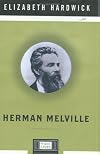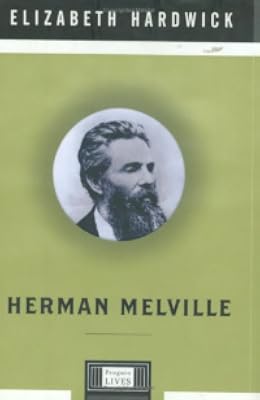
Herman Melville
by Elizabeth Hardwick
On This Page
Description
The complex author of the quintessential American masterpiece is demystified by a leading contemporary critic. Hardwick's novelistic flair reveals a former whaleship deck-hand whose voyages were the stuff of travel romances that seduced the public. A single novel, an eternal classic, established him as a founding father of American literature. Now, a century after his death, a new popular surge of interest in Herman Melville calls for Elizabeth Hardwick's rich analysis of "the whole of show more Melville's works, uneven as it is, & the challenging shape of his life, a story of the creative history of an extraordinary American genius." Hardwick's superb critical interpretation & award-winning novelistic flair reveal a former whaleship deck hand whose voyages were the stuff of travel romances that seduced the public. Later, a self-described "thought-diver" into "the truth of the human heart" Melville harbored a bitterness that knew no bounds when that same public failed to embrace his masterwork, Moby-Dick. Invaluable for enthusiasts of American literature, Herman Melville is itself a masterpiece of critical commentary in the tradition of D.H. Lawrence's Studies in Classic American Literature. show lessTags
Recommendations






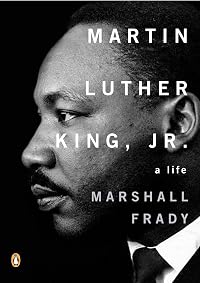
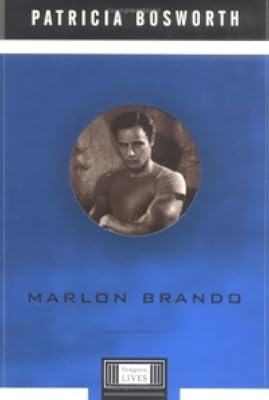
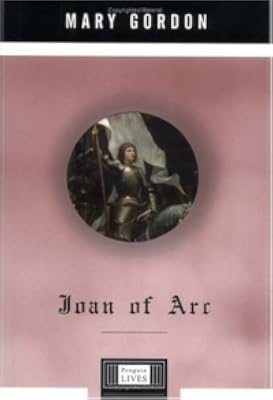


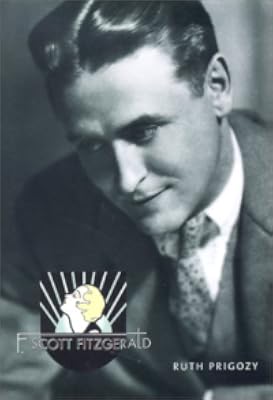





Member Reviews
It has often been observed that what we as readers take away from a book is largely dependent of what we bring to it, in the way of preconception, attitude, and belief. Bearing this in mind, I will confess that I approached Elizabeth Hardwick's biography of Herman Melville as a poor substitute for the massive two-volume work produced by Hershel Parker on the same subject - a book whose tremendous size and scope suggested nothing so much as a mountain that I wasn't entirely sure I wanted to climb. This ungracious approach may be partly responsible for the almost-violent dislike I felt for Hardwick's book throughout the first third of the volume.
I found the author's grasp of certain aspects of American history somewhat wanting, and show more although this manifested itself mostly in incidental, "throwaway" lines and paragraphs, largely irrelevant to the main topic of the book, the historian in me was still somewhat perturbed. Hardwick's careless comments about Joseph Brant and the Iroquois Confederacy (found in one paragraph on page 12), particularly irked me, owing no doubt, to the fact that I am doing some reading on that very topic at the moment. I realize that this book is devoted neither to the Revolutionary War, nor to the Six Nations, but when an author slips up on a topic I do know something about, I find myself wondering if there are other errors of understanding, pertaining to subjects about which I'm less well-informed, that I'm just not catching.
I also found it very difficult to acclimate to Hardwick's stylistic quirks, which include a tendency to transform sentences into long lists of adjectives, frequently dispensing with the verb altogether. She has a habit of beginning a sentence with a name or short phrase, followed by a colon and a short description, as if she were either too busy or too clever to write in a more traditional fashion that would better serve communication. I found the overall effect of Hardwick's prose pretentious, and it was something of a distraction from the topic at hand. It is my understanding that Hardwick has won some acclaim as a novelist, but this is meant to be a work of nonfiction, something of which her editor would have done well to remind her.
While my initial reaction to this short biography, part of the Penguin Lives series, was overwhelmingly negative, I should note that, contrary to my expectations, it did improve somewhat. Hardwick seemed to "settle down" after a while, and as her stylistic idiosyncrasies became less pronounced, the text became more lucid. When she wasn't trying too hard to dazzle, her writing had an almost-luminous quality that truly bespoke her great love for the topic at hand. I found myself interested, and even charmed occasionally, by her ruminations on some of Melville's masterpieces. The chapter on Moby Dick was quite enjoyable, although I found myself wishing that she had devoted more space to some of the other great works, The Confidence-Man in particular.
Which brings me to my final point. The author seemed undecided in this book, as to whether she was writing a biography or a work of literary criticism, and the book does not succeed in either category. There is simply not enough material about the life of Meville to make this an adequate biography. By the same token, the textual criticism is just not detailed or extensive enough to satisfy. Despite these, and my earlier criticisms, I am glad, on the whole, that I read this book. As a friend pointed out to me, this series provides an excellent starting point for further investigation. In other words, it looks like I'll be reading that Hershel Parker after all... show less
I found the author's grasp of certain aspects of American history somewhat wanting, and show more although this manifested itself mostly in incidental, "throwaway" lines and paragraphs, largely irrelevant to the main topic of the book, the historian in me was still somewhat perturbed. Hardwick's careless comments about Joseph Brant and the Iroquois Confederacy (found in one paragraph on page 12), particularly irked me, owing no doubt, to the fact that I am doing some reading on that very topic at the moment. I realize that this book is devoted neither to the Revolutionary War, nor to the Six Nations, but when an author slips up on a topic I do know something about, I find myself wondering if there are other errors of understanding, pertaining to subjects about which I'm less well-informed, that I'm just not catching.
I also found it very difficult to acclimate to Hardwick's stylistic quirks, which include a tendency to transform sentences into long lists of adjectives, frequently dispensing with the verb altogether. She has a habit of beginning a sentence with a name or short phrase, followed by a colon and a short description, as if she were either too busy or too clever to write in a more traditional fashion that would better serve communication. I found the overall effect of Hardwick's prose pretentious, and it was something of a distraction from the topic at hand. It is my understanding that Hardwick has won some acclaim as a novelist, but this is meant to be a work of nonfiction, something of which her editor would have done well to remind her.
While my initial reaction to this short biography, part of the Penguin Lives series, was overwhelmingly negative, I should note that, contrary to my expectations, it did improve somewhat. Hardwick seemed to "settle down" after a while, and as her stylistic idiosyncrasies became less pronounced, the text became more lucid. When she wasn't trying too hard to dazzle, her writing had an almost-luminous quality that truly bespoke her great love for the topic at hand. I found myself interested, and even charmed occasionally, by her ruminations on some of Melville's masterpieces. The chapter on Moby Dick was quite enjoyable, although I found myself wishing that she had devoted more space to some of the other great works, The Confidence-Man in particular.
Which brings me to my final point. The author seemed undecided in this book, as to whether she was writing a biography or a work of literary criticism, and the book does not succeed in either category. There is simply not enough material about the life of Meville to make this an adequate biography. By the same token, the textual criticism is just not detailed or extensive enough to satisfy. Despite these, and my earlier criticisms, I am glad, on the whole, that I read this book. As a friend pointed out to me, this series provides an excellent starting point for further investigation. In other words, it looks like I'll be reading that Hershel Parker after all... show less
This short biography successfully integrates Herman Melville's life with his literary works. Following a couple of introductory chapters Hardwick identifies most of the remainder with specific novels or shorter works by the author. While its brevity prevents this biography from the "Penguin Lives" series from being comprehensive it still is worth reading for both the insights of Elizabeth Hardwick and her impeccable prose. With the inclusion of a thoughtful afterword and useful bibliographic suggestions for further reading this book presents a good introduction to Melville or a traversal of familiar territory for others who can read and enjoy the author's portrayal of one of America's and the World's greatest authors.
Elizabeth Hardwick’s last book, wherein she shares her considerable enthusiasm for Melville. (Her four-page discussion of Bartleby is a revised version of her essay published in 1983.) Of course, in this short, highly readable book (this is in the Penguin Lives Series) you get neither a full biography nor a full critical review – which she’s the first to admit. Her purpose is to promote reading of Typee, Redburn, and The Confidence-Man in addition to the more popular works like Moby-Dick. I certainly agree about that, but wish she had something more to say about Melville’s poetry, and less re-telling of Moby-Dick. It’s interesting that she praises and relies on and even quotes from the first volume of Hershel Parker’s show more Melville biography (although I take it that Parker does not approve of her book), but at the time she wrote it, the second volume (1852-1891) was not yet published. So I wonder how she might have done things differently had she had the full biography. Includes a selected bibliography, but no index. show less
A quick, yet good, biography of Melville that doesn't delve into whacky theories that he was gay or an occultist or any stupid thing like that.
Did not enjoy Hardwick's writing style at all. Also, the book was cobbled together from other, earlier writings and was often repetitive. Could not recommend this at all.
Considerada como la mejor introducción a la desmesurada vida de Herman Melville, este breve volumen de Hardwick intenta coser las dos piezas del tejido, la vida y la obra del padre de Moby Dick. Fiel a su estilo, Hardwick habla de la vida desde la obra y da algunas claves que arrojan luz sobre la existencia mitseriosa a veces de Melville, su pasión aventurera pero también sus relaciones tempestuosas con el mundo y con los avatares de su tiempo y circunstancias.
Dec 30, 2024Spanish
Ratings
Members
- Recently Added By
Author Information

24+ Works 2,837 Members
Elizabeth Hardwick was born on July 27, 1916, in Lexington, Kentucky. Hardwick earned her undergraduate and graduate degrees from the University of Kentucky, then she enrolled at Columbia University for additional study. Formerly an adjunct associate professor of English at Barnard College in New York, Hardwick has spent most of her adult life show more writing novels and essays. Hardwick's first novel, The Ghostly Lover, a story about a Kentucky family, was published in 1945. Since then, Hardwick has also written the novels The Simple Truth and Sleepless Nights. Her books of essays include A View of My Own, Sight-Readings: American Fiction, and Seduction and Betrayal: Women and Literature. Once nominated for the National Book Award, Seduction and Betrayal focuses on American writers, especially women writers, including Edith Wharton, Gertrude Stein, Katherine Anne Porter, among others. The founder and advisory editor of the New York Review of Books, Hardwick's works have appeared in periodicals such as The New Yorker, The London Times Literary Supplement, and Harper's. She died at the age of 91 on December 2, 2007. (Bowker Author Biography) show less
Series
Belongs to Publisher Series
Common Knowledge
- Canonical title
- Herman Melville
- Alternate titles
- Herman Melville
- Original publication date
- 2000-06-01
- People/Characters
- Herman Melville
Classifications
- Genres
- Literature Studies and Criticism, Biography & Memoir
- DDC/MDS
- 813.3 — Literature & rhetoric American literature in English American fiction in English Middle 19th Century 1830-1861
- LCC
- PS2386 .H34 — Language and Literature American literature American literature Individual authors 19th century
- BISAC
Statistics
- Members
- 241
- Popularity
- 135,229
- Reviews
- 6
- Rating
- (3.45)
- Languages
- English, French, German, Spanish
- Media
- Paper, Audiobook
- ISBNs
- 6
- ASINs
- 2