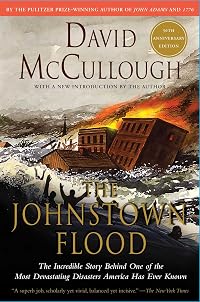
The Johnstown Flood
by David McCullough
On This Page
Description
The stunning story of one of America's great disasters, a preventable tragedy of Gilded Age America, brilliantly told by master historian David McCullough.At the end of the nineteenth century, Johnstown, Pennsylvania, was a booming coal-and-steel town filled with hardworking families striving for a piece of the nation's burgeoning industrial prosperity. In the mountains above Johnstown, an old earth dam had been hastily rebuilt to create a lake for an exclusive summer resort patronized by show more the tycoons of that same industrial prosperity, among them Andrew Carnegie, Henry Clay Frick, and Andrew Mellon. Despite repeated warnings of possible danger, nothing was done about the dam. Then came May 31, 1889, when the dam burst, sending a wall of water thundering down the mountain, smashing through Johnstown, and killing more than 2,000 people. It was a tragedy that became a national scandal.
Graced by David McCullough's remarkable gift for writing richly textured, sympathetic social history, The Johnstown Flood is an absorbing, classic portrait of life in nineteenth-century America, of overweening confidence, of energy, and of tragedy. It also offers a powerful historical lesson for our century and all times: the danger of assuming that because people are in positions of responsibility they are necessarily behaving responsibly. show less
Tags
Recommendations


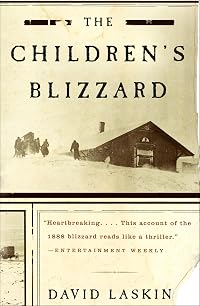

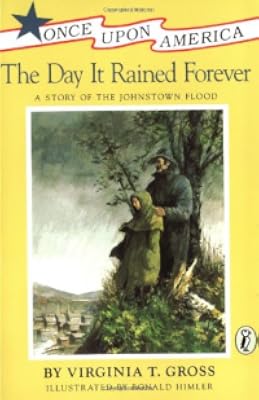

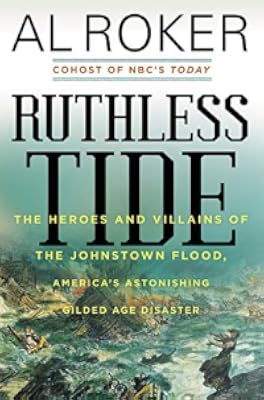




Member Recommendations
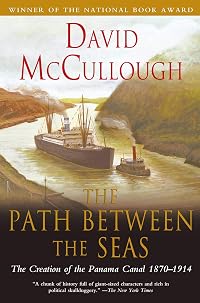
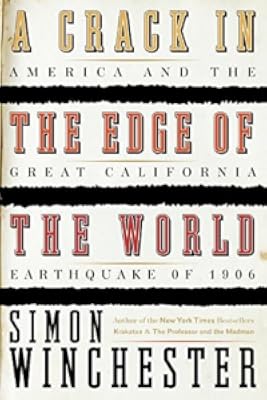
Stbalbach McCullough dissected Lord's book for style and technique and was "greatly influenced by Walter Lord's example" in writing The Johnstown Flood.
20


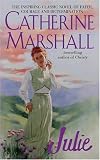
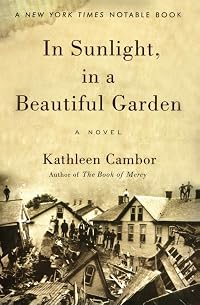
dara85 Marshall used a lot of the details from the Johnstown Flood to create the flood in the fictional book, Julie.
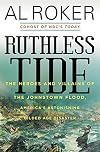
Ruthless Tide: The Heroes and Villains of The Johnstown Flood, America's Astonishing Gilded Age Disaster by Al Roker
anonymous user One reviewer on Goodreads claimed that both books are similar with Roker's focusing a bit more of the members of the South Fork club than McCullough does.
Member Reviews
David McCullough, who died last year, was one of America’s best writers on historical subjects. He studied English and art at Yale, went to work for the U.S. Information Agency during the Kennedy administration, and discovered his true calling when he saw a Library of Congress display of photographs of the devastation caused by the 1889 collapse of a reservoir dam above a Pennsylvania coal mining town. The reservoir was a private fishing resort owned by the titans of the steel industry in Pittsburgh, 65 miles away. The flood wiped out several closely packed communities and killed more than 2,000 people.
When McCullough could not find a book that told him what he wanted to know about the event, he decided to write the book he wanted to show more read. He faced a significant problem sifting out the “wild exaggerations and outright nonsense” of newspaper accounts that many people of the time found credible. He sifted through photographs, letters, diaries, and interviews with survivors.
The result reads like the best new journalism, letting people tell their stories with enough factual background to make the events clear and vivid. For many, the flood was experienced first as a sound in the dark: “It began as a deep, steady rumble, they would say; then it grew louder and louder until it became an avalanche of sound, ‘a roar like thunder.’” One man described it memorably as “just like a lot of horses grinding oats.”
McCullough’s conclusions are few but telling. The dam builders were not the experts they pretended to be, and the people of Johnstown mistakenly assumed that “the people who were responsible for their safety were behaving responsibly.” These are lessons we still need to learn. show less
When McCullough could not find a book that told him what he wanted to know about the event, he decided to write the book he wanted to show more read. He faced a significant problem sifting out the “wild exaggerations and outright nonsense” of newspaper accounts that many people of the time found credible. He sifted through photographs, letters, diaries, and interviews with survivors.
The result reads like the best new journalism, letting people tell their stories with enough factual background to make the events clear and vivid. For many, the flood was experienced first as a sound in the dark: “It began as a deep, steady rumble, they would say; then it grew louder and louder until it became an avalanche of sound, ‘a roar like thunder.’” One man described it memorably as “just like a lot of horses grinding oats.”
McCullough’s conclusions are few but telling. The dam builders were not the experts they pretended to be, and the people of Johnstown mistakenly assumed that “the people who were responsible for their safety were behaving responsibly.” These are lessons we still need to learn. show less
Even in this, his first published book, McCullough exhibits his trademark style of gathering a wealth of information from contemporary sources, subsequent reflections and current reassessments, and then weaving it all together into a gripping narrative. There was a lot of engineering talk in the first third of the book, which I found sluggish going. But McCullough is a master at engaging the reader; once I got past the tricky technical bits about the construction and maintenance (or lack of it) of the South Fork dam, he had me totally hooked. You know that cliche about not being able to look away from a train wreck...that's what reading this was like for me. I could wish the photos and maps included in the book had been more sharply show more reproduced. Even with McCullough's fairly comprehensive descriptions of what was being represented, it was difficult to make out details. Most of them are available on-line, though, where they show to much better effect. The Johnstown Flood is a piece of history that just begs for a treatment like this. If only we could learn from what happens when disaster strikes... show less
On May 31, 1899, after days of heavy rainfall, the South Fork Dam perched in the mountains 14 miles upstream of Johnstown, Pennsylvania, failed. The result was a catastrophic loss of human lives and an unimaginable level of destruction. In this book first published in 1968, McCullough paints a full and detailed picture of Johnstown and its citizens, industry and culture, as well as the causes of the flood itself and the practical and legal aftermath.
I picked this book up solely because it was McCullough's first book. Previously, I had just barely heard of the flood and had no clue as to its causes or when it even occurred. Told in an engaging narrative nonfiction style, as with all McCullough's books the story and writing here are show more excellent. The sequence of events, on the other hand, is rather horrifying. Are the wealthy who placed their own enjoyment above the safety of others ever held to account for the 2,208 lives lost? I think you know the answer. Highly recommended. show less
I picked this book up solely because it was McCullough's first book. Previously, I had just barely heard of the flood and had no clue as to its causes or when it even occurred. Told in an engaging narrative nonfiction style, as with all McCullough's books the story and writing here are show more excellent. The sequence of events, on the other hand, is rather horrifying. Are the wealthy who placed their own enjoyment above the safety of others ever held to account for the 2,208 lives lost? I think you know the answer. Highly recommended. show less
I’ve read many of David McCullough’s highly researched books about the building of the Brooklyn Bridge, the lives of the Wright Brothers, the movement west of The Pioneers, the building of the Panama Canal and others, and now about the tragedy in 1889 of the Johnstown Pennsylvania flood. McCullough continues to amaze me with his ability to research the lives of individuals to the point that the details are almost uncanny. It is as if he was at the scene for days, maybe weeks as an eye witness to the events he reports on. This book is no exception. I was vaguely familiar with the Johnstown flood, but I had no idea the extent to which the damage caused and the lives lost were the result of greed on the part of the super rich in that show more part of the country. These robber barons built a resort to be their playground and in doing so built a sub-standard dam to create their own private fishing hole, which resulted in the release of hundreds of millions of gallons of water to the valley below it where Johnstown was located when the rains came. In the end, no one paid a price for that greed and liability, which is typical in this country when the haves step on the have nots. The weather, torrents of rain in a short period of time, couldn’t have been prevented. The engineering of the dam, however, could have been designed to withstand that water to the point that property damage below would have been much reduced and lives lost could have been eliminated. It is a sad tale, one that we owe our appreciation to David McCullough for researching and reporting. I listened to the audio book version of this book. The narration (not by McCullough himself but by Edward Hermann, one of Hollywood’s best actors, who passed away in 2014) is excellent. show less
David McCullough is a grand master of narrative nonfiction. The Johnstown Flood is his first book, written in 1968, though you'd might think it was written this year it feels so timeless. The audio performance by Edward Herrmann is equally great.
Why did the Johnstown Flood happen? In the end McCullough blames it on man's hubris. Specifically by denuding the hills of trees, thereby making flooding more likely, and bad dam design. Man attained great power over nature, but failed to fully understand the implications, accepting the benefits of technology but ignoring the risks ("that dam will never break"). It is a lesson still relevant today, society is causing industrial-scale disruptions to the atmosphere, earth and oceans. The show more environment may hold together for many generations, but like the dam breaking above Johnstown, all it takes is one big unexpected natural event to tip things over into a condition no one expected, magnified by mans own doings - nature and man work in concert because they are the same. The Johnstown disaster was not inevitable, it didn't have to happen, it was a man-made conflagration pushed over the edge by nature.
--Review by Stephen Balbach, via CoolReading (c) 2011 cc-by-nd show less
Why did the Johnstown Flood happen? In the end McCullough blames it on man's hubris. Specifically by denuding the hills of trees, thereby making flooding more likely, and bad dam design. Man attained great power over nature, but failed to fully understand the implications, accepting the benefits of technology but ignoring the risks ("that dam will never break"). It is a lesson still relevant today, society is causing industrial-scale disruptions to the atmosphere, earth and oceans. The show more environment may hold together for many generations, but like the dam breaking above Johnstown, all it takes is one big unexpected natural event to tip things over into a condition no one expected, magnified by mans own doings - nature and man work in concert because they are the same. The Johnstown disaster was not inevitable, it didn't have to happen, it was a man-made conflagration pushed over the edge by nature.
--Review by Stephen Balbach, via CoolReading (c) 2011 cc-by-nd show less
David McCullough's first book is a gripping read about a man-made natural disaster near Pittsburgh, Pennsylvania in 1889. The Pittsburgh plutocracy, among them Andrew Carnegie and Henry Clay Frick, refurbished a dam on the cheap to create a private fishing resort. They only cared about their recreation. The poor steel workers toiling down below the dam in Johnstown and their families do not enter into their consideration. McCullough is a masterful storyteller who knows not to shatter the illusion of the American Dream.
Johnstown illustrates some of the common patterns of typically American catastrophes. A basic neglect, a preference for laisser faire and an absence of regulation and regulatory power means everybody and nobody is in show more charge. Critical voices do not find listeners, neither in government nor by the dam's owners. Much of the work is outsourced, delegated until nobody feels responsible to check the quality and assume responsibility for the work. When the disaster finally happens, there are no plans nor precautions. The victims, thus, are the poor and the weak. On the positive side, there is a tremendous outburst of human interest, help and contributions, which diminishes as soon as media attention moves on. The corporate owned media is unwilling to call out the real bad guys. The judicial system is unable and unwilling to punish them. Politicians want their contributions, so the guilty robber barons ride into the sunset, free and unpunished, leaving the public to clear up the mess. show less
Johnstown illustrates some of the common patterns of typically American catastrophes. A basic neglect, a preference for laisser faire and an absence of regulation and regulatory power means everybody and nobody is in show more charge. Critical voices do not find listeners, neither in government nor by the dam's owners. Much of the work is outsourced, delegated until nobody feels responsible to check the quality and assume responsibility for the work. When the disaster finally happens, there are no plans nor precautions. The victims, thus, are the poor and the weak. On the positive side, there is a tremendous outburst of human interest, help and contributions, which diminishes as soon as media attention moves on. The corporate owned media is unwilling to call out the real bad guys. The judicial system is unable and unwilling to punish them. Politicians want their contributions, so the guilty robber barons ride into the sunset, free and unpunished, leaving the public to clear up the mess. show less
Exquisitely evocative descriptions of place, event, and aftermath. As my father would have said, “Monday morning quarterbacking isn’t worth a damn unless your performance improves in the next game”. We don’t have a very good track record of learning from our mistakes so skepticism about prevention of future disasters through careful planning, quality assurance and monitoring seems appropriate. The important message, at least to me, is that those involved in any way with projects, initiatives, businesses, or R&D that involve the forces of nature should consider the safety requirements needed not only for what is normal and expected but also for events that rare and even unthinkable.
Members
- Recently Added By
Lists

Disaster Books
74 works; 19 members

Best History Books about Disasters
33 works; 19 members

Accidents, Disasters, and Tragedies
175 works; 7 members

Non-Fiction Worth Reading
1,016 works; 257 members

BingoDOG - Books With Natural Disasters: Nonfiction
18 works; 5 members

Top Five Books of 2016
795 works; 229 members

Unread books
1,063 works; 87 members

Books Read in 2012
816 works; 34 members

Best Sellers / Popular 1968
237 works; 5 members
Author Information

58+ Works 64,489 Members
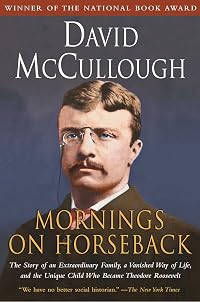
David McCullough was born in Pittsburgh, Pennsylvania on July 7, 1933. He received a bachelor's degree in English literature from Yale University in 1955. After graduation, he moved to New York City and worked as a trainee at Sports Illustrated. He later worked as a writer and editor for the United States Information Agency, in Washington, D.C., show more including a position at American Heritage. His first book, The Johnstown Flood, was published in 1968. His other books include 1776, Brave Companions, The Great Bridge, and The Greater Journey: Americans in Paris. He received the Pulitzer Prize twice for Truman and John Adams and the National Book Award twice for The Path Between the Seas: The Creation of the Panama Canal and Mornings on Horseback. He also won two Francis Parkman Prizes, the Los Angeles Times Book Award, and New York Public Library's Literary Lion Award. Two of his books, Truman and John Adams, have been adapted into a television movie and mini-series, respectively, by HBO. In December 2006, he received the Presidential Medal of Freedom. He also made the New York Times Best Seller List in 2015 with his book The Wright Brothers, and in 2017 with The American Spirit: Who We Are and What We Stand For. (Bowker Author Biography) David McCullough is a writer, historian, lecturer, & teacher. He has received the Pulitzer Prize for "Truman", as well as the Francis Parkman Prize, & the "Los Angeles Times" Book Award. He is also a two-time winner of the National Book Award, for history & for biography. He lives in Massachusetts. (Publisher Provided) show less
Work Relationships
Common Knowledge
- Original publication date
- 1968
- People/Characters
- David Beale; Andrew Carnegie; John Fulton; Daniel Hartman Hastings; Daniel J. Morrell; John G. Parke, Jr. (show all 16); Benjamin F. Ruff; Elias J. Unger; Clara Barton; Robert Pitcairn; H. L. Chapman; Horace Rose; Victor Heiser; George Heiser; Gertrude Quinn; Henry Clay Frick
- Important places
- Johnstown, Pennsylvania, USA; Lake Conemaugh, Pennsylvania, USA; South Fork Creek, Pennsylvania, USA; East Connemaugh, Pennsylvania, USA; Mineral Point, Pennsylvania, USA; Conemaugh River, Pennsylvania, USA (show all 13); Little Conemaugh River, Pennyslvania, USA; South Fork, Pennsylvania, USA; Pittsburgh, Pennsylvania, USA; Altoona, Pennsylvania, USA; South Fork Dam, Pennsylvania, USA; Stony Creek, Pennsylvania, USA; Woodvale, Pennsylvania, USA
- Important events
- Disaster: Flood; Disaster: Dam Break; Johnstown Flood (1889-05-31)
- Epigraph
- We are creatures of the moment; we live from one little space to another; and only one interest at a time fills these.
—William Dean Howells in A Hazard of New Fortunes, 1889. - Dedication
- For Rosalee
- First words
- Again that morning there had been a bright frost in the hollow below the dam, and the sun was not up long before storm clouds rolled in from the southeast.
- Last words
- (Click to show. Warning: May contain spoilers.)Then the choir sang "God Moves in a Mysterious Way"; the monument was unveiled, and people started back along the winding road that led down into town.
- Blurbers
- Leonard, John
- Original language
- English
- Canonical DDC/MDS
- 974.877
- Canonical LCC
- F159.J7
Classifications
- Genres
- History, General Nonfiction, Nonfiction
- DDC/MDS
- 974.877 — History & geography History of North America Northeastern United States (New England and Middle Atlantic states) Pennsylvania Southwest central counties; Bedford group Cambria
- LCC
- F159 .J7 — Local History of the United States, Canada and Latin America United States local history Pennsylvania
- BISAC
Statistics
- Members
- 2,613
- Popularity
- 7,252
- Reviews
- 81
- Rating
- (4.05)
- Languages
- English
- Media
- Paper, Audiobook, Ebook
- ISBNs
- 20
- ASINs
- 13