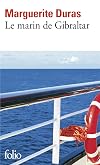
The Sailor from Gibraltar
by Marguerite Duras
On This Page
Description
"A haunting tale of strange and random passion."--New York Times Disaffected, bored with his career at the French Colonial Ministry (where he has copied out birth and death certificates for eight years), and disgusted by a mistress whose vapid optimism arouses his most violent misogyny, the narrator ofThe Sailor from Gibraltar finds himself at the point of complete breakdown while vacationing in Florence. After leaving his mistress and the Ministry behind forever, he joins the crew of The show more Gibraltar, a yacht captained by Anna, a beautiful American in perpetual search of her sometime lover, a young man known only as the "Sailor from Gibraltar." First published in 1952, this early novel of Duras's--which was made into a film in 1967--shows those preoccupations which have so deeply concerned her in her later novels and film scripts: loneliness, boredom, the inevitability and intangibility of love. The lambent poetry of the book, and the limning of a woman's mind, her love and sense of the inevitability of that love are singularly Marguerite Duras. Marguerite Duras wrote dozens of plays, film scripts, and novels, includingThe Ravishing of Lol Stein,The Sea Wall, andHiroshima, Mon Amour. She's most well known forThe Lover which received the Goncourt prize in 1984 and was made into a film in 1992. Barbara Bray translated several works by Marguerite Duras, includingThe Malady of Death,The Lover, andThe War. In addition, she has translated Jean Genet, Ismail Kadare, and Tahar Ben Jelloun, and has received the French-American Foundation Translation Prize. show lessTags
Recommendations












































Member Reviews
In this contemporary novel written in 1952, the narrator, after many boring, unhappy years in a minor clerical position at the French Colonial Ministry, and an unfulfilling two-year affair with a coworker, decides to throw away his unsatisfying life and start anew. While on vacation in Italy with his mistress, he hears about the wealthy Anna, who sails the world in her yacht searching for her former lover, the sailor from Gibraltar. He finds Anna, leaves his mistress and, with only the clothes on his back, joins the crew in the search for the sailor.
The Sailor from Gibraltar feels very, very French--a lot of conversation over drinks, while all of the real story is happening in the pauses. Duras' lovely prose, in this well-written show more translation by Barbara Bray, explores perennial themes in a way that manages to seem fresh and new. show less
The Sailor from Gibraltar feels very, very French--a lot of conversation over drinks, while all of the real story is happening in the pauses. Duras' lovely prose, in this well-written show more translation by Barbara Bray, explores perennial themes in a way that manages to seem fresh and new. show less
 This review was written for LibraryThing Early Reviewers.
I confess that in spite of having studied French I had never read Marguerite Duras until picking up The Sailor From Gibraltar. It is a stunning gem of a book. I found myself wanting to put it down not because it wasn’t good but because it was too effective. The kind of malaise, boredom, and drunken, sun-addled stupor in which the characters are adrift comes off the page and settles on the reader.
The plot is deceptively simple; it starts with the narrator, who is on vacation from a Bartleby-like job in the Foreign Service, where he copies birth and death certificates. He is oppressed by the heat, often drunken and annoyed with his mistress who insists on playing the tourist and has expectations of marriage. Feeling trapped, the show more narrator abandons her and his job in a little Italian coastal village in favor of Anna, a mysterious widow who searches the ocean in her yacht for the sailor from Gibraltar, a fugitive murderer with whom she had an affair as a young woman.
The real story takes place in the subtle nuances of the narrator’s growing relationship with Anna, the crew of the yacht and the influence of the unseen sailor from Gibraltar. The characters are selfish, indulgent, and often ridiculous and yet it is compelling to watch them in their lazy and never ending quest for the sailor. Even these vapid individuals become existential fodder for Duras.
Indeed, seems to come out of the same world from which Albert Camus wrote The Stranger. In this world, the heat of the sun could make you quit your job, abandon your mistress and travel around the world or murder a man.
It is no surprise that The Sailor from Gibraltar was adapted for film. Duras conjures intense, haunting imagery. I can almost see the camera angles and the shimmer of sunlight reflecting off sand and water.
This is the second imprint from Open Letter Books that I have read and if their choices for works in translation continue to be this good, I will start to seek out more works from their catalog. Kudos to Barbara Bray for a dazzling translation. Please note: this review refers to an early reviewer copy. show less
The plot is deceptively simple; it starts with the narrator, who is on vacation from a Bartleby-like job in the Foreign Service, where he copies birth and death certificates. He is oppressed by the heat, often drunken and annoyed with his mistress who insists on playing the tourist and has expectations of marriage. Feeling trapped, the show more narrator abandons her and his job in a little Italian coastal village in favor of Anna, a mysterious widow who searches the ocean in her yacht for the sailor from Gibraltar, a fugitive murderer with whom she had an affair as a young woman.
The real story takes place in the subtle nuances of the narrator’s growing relationship with Anna, the crew of the yacht and the influence of the unseen sailor from Gibraltar. The characters are selfish, indulgent, and often ridiculous and yet it is compelling to watch them in their lazy and never ending quest for the sailor. Even these vapid individuals become existential fodder for Duras.
Indeed, seems to come out of the same world from which Albert Camus wrote The Stranger. In this world, the heat of the sun could make you quit your job, abandon your mistress and travel around the world or murder a man.
It is no surprise that The Sailor from Gibraltar was adapted for film. Duras conjures intense, haunting imagery. I can almost see the camera angles and the shimmer of sunlight reflecting off sand and water.
This is the second imprint from Open Letter Books that I have read and if their choices for works in translation continue to be this good, I will start to seek out more works from their catalog. Kudos to Barbara Bray for a dazzling translation. Please note: this review refers to an early reviewer copy. show less
This review was written for LibraryThing Early Reviewers.I haven't thought about Hemingway’s The Sun Also Rises since I read it in college. Before reading Marguerite Duras’ The Sailor from Gibraltar, I had no desire to return to this Hemingway classic, but now … I’m at least mildly interested in re-reading some passages from it. The Sailor from Gibraltar, translated by Barbara Bray and issued by Open Letter, follows the emotional breakdown of its narrator, a French civil servant who decides during a vacation to Florence to send his girlfriend, and traveling companion, back to France so he can join an American named Anna as she drifts from port to port on her yacht searching for a lost love, the sailor from Gibraltar. In spite of being written 30 years and a world war apart, The Sun show more Also Rises reads like a brother to The Sailor from Gibraltar. Or perhaps in a nod to Hemingway we should set the two books up in a ring and let them fight it out: Hemingway vs. Duras on the young, the lonely and the sexually restless.
Both writers have a penchant for alcohol-laden scenes and ping-ponging dialogue that is eerily similar. Here’s Hemingway:
“I say. We have had a day.”
“You don’t remember anything about a date with me at the Crillon?”
“No. Did we have one? I must have been blind.”
“You were quite drunk, my dear,” said the count.
“Wasn’t I, though? And the count’s been a brick, absolutely.”
“You’ve got hell’s own draw with the concierge now.”
“I ought to have. Gave her two hundred francs.”
“Don’t be a damned fool.”
Here’s Duras:
“I’m going back,” I said.
“I’ll have dinner with you,” she said calmly.
I didn’t answer.
“Perhaps Eolo will be shocked. Are you sure you still want to?”
“I don’t know.”
“Do you often have changes of mood like this?”
“Yes, often,” I said. “But today it isn’t that I’ve had a change of mood.”
“What then?”
“I don’t know exactly. Perhaps too many things have happened to me in two days. Shall we have a drink then?”
“Nothing easier. There’s everything we want in the bar.”
However, Duras packs more punch than Hemingway, because, for one, she has more change-ups when it comes to artful use of the written word – subtlety and humor to name but two. Perhaps this is also a case where a Frenchwoman can write about affairs of the heart much more authentically than this particular American man. While my days with Hemingway are over, after reading The Sailor from Gibraltar, I’m looking forward to a long reading future with Duras. show less
Both writers have a penchant for alcohol-laden scenes and ping-ponging dialogue that is eerily similar. Here’s Hemingway:
“I say. We have had a day.”
“You don’t remember anything about a date with me at the Crillon?”
“No. Did we have one? I must have been blind.”
“You were quite drunk, my dear,” said the count.
“Wasn’t I, though? And the count’s been a brick, absolutely.”
“You’ve got hell’s own draw with the concierge now.”
“I ought to have. Gave her two hundred francs.”
“Don’t be a damned fool.”
Here’s Duras:
“I’m going back,” I said.
“I’ll have dinner with you,” she said calmly.
I didn’t answer.
“Perhaps Eolo will be shocked. Are you sure you still want to?”
“I don’t know.”
“Do you often have changes of mood like this?”
“Yes, often,” I said. “But today it isn’t that I’ve had a change of mood.”
“What then?”
“I don’t know exactly. Perhaps too many things have happened to me in two days. Shall we have a drink then?”
“Nothing easier. There’s everything we want in the bar.”
However, Duras packs more punch than Hemingway, because, for one, she has more change-ups when it comes to artful use of the written word – subtlety and humor to name but two. Perhaps this is also a case where a Frenchwoman can write about affairs of the heart much more authentically than this particular American man. While my days with Hemingway are over, after reading The Sailor from Gibraltar, I’m looking forward to a long reading future with Duras. show less
This review was written for LibraryThing Early Reviewers.A languid, tropical meditation on boredom, desire and an obsessive quest.
Cigarettes, whiskey and the ironic conversation of a broad cast of interesting characters carries what is, essentially, a travel novel that journeys across Italy, through the Mediterranean, Tangier and the north coast of Africa, south to the tropics, leaving the sea and ending in the dense humidity of the Congo.
The book is narrated by a man vacationing in Italy shortly after the war, bored and uninterested in anything to do with this holiday. He decides to leave his painfully optimistic girlfriend and the dull job that awaits his return at the French Colonial Ministry (where he has copied out birth and death certificates for eight years). He joins the crew of the show more Gibraltar, a yacht owned by Anna, a beautiful American searching the Seven Seas for an old lover, a man known only as the “Sailor from Gibraltar” – a desperate murderer that may be anywhere in the world. The narrator accepts that he is perhaps only a temporary lover, one of many, taken on during this never-ending quest.
Ennui, boredom and dissatisfaction are curiously melded with eternal passivity. The book finally collapse into an overextended drunken dialog about kudus, saurians and the Ice Age in the heart of Africa, before returning to the coast, and the continuing journey. show less
Cigarettes, whiskey and the ironic conversation of a broad cast of interesting characters carries what is, essentially, a travel novel that journeys across Italy, through the Mediterranean, Tangier and the north coast of Africa, south to the tropics, leaving the sea and ending in the dense humidity of the Congo.
The book is narrated by a man vacationing in Italy shortly after the war, bored and uninterested in anything to do with this holiday. He decides to leave his painfully optimistic girlfriend and the dull job that awaits his return at the French Colonial Ministry (where he has copied out birth and death certificates for eight years). He joins the crew of the show more Gibraltar, a yacht owned by Anna, a beautiful American searching the Seven Seas for an old lover, a man known only as the “Sailor from Gibraltar” – a desperate murderer that may be anywhere in the world. The narrator accepts that he is perhaps only a temporary lover, one of many, taken on during this never-ending quest.
Ennui, boredom and dissatisfaction are curiously melded with eternal passivity. The book finally collapse into an overextended drunken dialog about kudus, saurians and the Ice Age in the heart of Africa, before returning to the coast, and the continuing journey. show less
This review was written for LibraryThing Early Reviewers.Bored with his job, tired of his fiance, a civil servant walks away from it all. He joins a mysterious, ridiculously wealthy woman sailing the Mediterranean and the African coast in search of her lover (the sailor in the title).
During the course of the voyage, she tells him the story of her life. Former crew members contact her with reports of "sightings" of the sailor. These take them on onshore adventures.
But mostly they talk - and drink. She has nothing in life to do except look for the sailor and tell her story. He has nothing to do but go along on the search and listen.
The theme is loneliness, boredom, ennui. "Darkness covered the deck and the sea. It spread over me too, and ate at my heart."
Are they looking for the sailor? Or for show more happiness? Or for the elusive "meaning of life"?
It's quite a trip and I'm glad I went along. show less
During the course of the voyage, she tells him the story of her life. Former crew members contact her with reports of "sightings" of the sailor. These take them on onshore adventures.
But mostly they talk - and drink. She has nothing in life to do except look for the sailor and tell her story. He has nothing to do but go along on the search and listen.
The theme is loneliness, boredom, ennui. "Darkness covered the deck and the sea. It spread over me too, and ate at my heart."
Are they looking for the sailor? Or for show more happiness? Or for the elusive "meaning of life"?
It's quite a trip and I'm glad I went along. show less
This is the first of Marguerite Duras' works that I have read, so I went into it without expectations. It is a book that I need to return to when my life is a bit less chaotic, as I didn't feel I was able to give it full justice on my first reading. It is a vivid depiction of ennui - the prose is phenomenal, and you feel like you are right there with the main character, sweating in a cafe in Italy. It is very much a character study, and well worth reading. As a bonus, the Open Letter reprint is a beautiful edition.
This review was written for LibraryThing Early Reviewers.This book is a translation.
The book was a little difficult for me to get into but I have a baby with a lot of distractions. This book takes time to think about and get involved with.
The beginning felt slow, but that's because Duras has a tendency to describe things so dispassionately that it feels dull. Later in the novel, all those descriptions had laid a necessary foundation for events and conversations that would have seemed completely disjointed without a solid background. The plot sounds like a soap opera: man on vacation decides to leave boring girlfriend and dull job meets a rich widow sailing around the world in search of long lost lover. However, and thank goodness, it's not that simple, and not nearly that sappy. Both man and show more woman aggressively resist falling in love. Neither of them want to, but they do, but they don't.... Plus, there are a handful of colorful characters they meet and travel with along the way.
It's a character-intense novel that uses a simple plot as a basis to develop complicated personalities and relationships.
I recommend this for folks who like to analyze and then re-analyze followed by over-analyze life's happenings and participants. Be prepared to not want to put it down towards the end! show less
The book was a little difficult for me to get into but I have a baby with a lot of distractions. This book takes time to think about and get involved with.
The beginning felt slow, but that's because Duras has a tendency to describe things so dispassionately that it feels dull. Later in the novel, all those descriptions had laid a necessary foundation for events and conversations that would have seemed completely disjointed without a solid background. The plot sounds like a soap opera: man on vacation decides to leave boring girlfriend and dull job meets a rich widow sailing around the world in search of long lost lover. However, and thank goodness, it's not that simple, and not nearly that sappy. Both man and show more woman aggressively resist falling in love. Neither of them want to, but they do, but they don't.... Plus, there are a handful of colorful characters they meet and travel with along the way.
It's a character-intense novel that uses a simple plot as a basis to develop complicated personalities and relationships.
I recommend this for folks who like to analyze and then re-analyze followed by over-analyze life's happenings and participants. Be prepared to not want to put it down towards the end! show less
This review was written for LibraryThing Early Reviewers.Members
- Recently Added By
Lists

Nobel non-laureates, non-male
30 works; 10 members

Books With Place Names in the Title
257 works; 11 members

le donne raccontano
116 works; 1 member
Talk Discussions
Past Discussions
1914: Duras - The Sailor from Gibraltar in Literary Centennials (January 2014)
Author Information

232+ Works 18,872 Members
Marguerite Duras was born in Gia-Dinh, Indochina on April 4, 1914. After attending school in Saigon, she moved to Paris, France to study law and political science. After graduation, she worked as a secretary in the French Ministry of the Colonies until 1941. During World War II, she joined the Resistance and published her first books. After the show more liberation, she became a member of the French Communist Party, and though she later resigned, she always described herself as a Marxist. Her first book, Les Impudents, was published in 1943. During her lifetime, she wrote more than 70 novels, plays, screenplays and adaptations. Her novels include The Sea Wall, The Lover, The Lover from Northern China, The War, and That's All. In 1959, she wrote her first film scenario, Hiroshima, Mon Amour, and has since been involved in a number of other films, including India Song, Baxter, Vera Baxter, Le Camion (The Truck), and The Lover. She died on March 4, 1996 at the age of 81. (Bowker Author Biography) show less
Some Editions
Series
Belongs to Publisher Series
Common Knowledge
- Canonical title
- The Sailor from Gibraltar
- Original title
- Le marin de Gibraltar
- Original publication date
- 1952
- Related movies
- The Sailor from Gibraltar (1967)
- Dedication
- To Dionys
- First words
- We'd seen Milan and Genoa and been in Pisa two days when I decided we'd go to Florence. Jacqueline made no objection. She never made any objection.
Classifications
Statistics
- Members
- 338
- Popularity
- 93,989
- Reviews
- 12
- Rating
- (3.71)
- Languages
- 10 — Catalan, Dutch, English, French, German, Italian, Portuguese, Spanish, Swedish, Turkish
- Media
- Paper, Ebook
- ISBNs
- 23
- ASINs
- 4