On This Page
Description
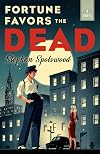
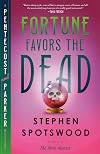
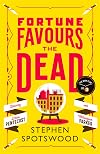
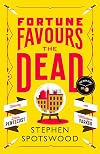
A wildly charming and fast-paced mystery written with all the panache of the hardboiled classics, Fortune Favors the Dead introduces Pentecost and Parker, an audacious new detective duo for the ages.“Razor-sharp style, tons of flair, a snappy sense of humor, and all the most satisfying elements of a really good noir novel, plus plenty of original twists of its own.”—Tana French, bestselling author of The Searcher
It's 1942 and Willowjean "Will" Parker is a scrappy circus runaway whose show more knife-throwing skills have just saved the life of New York's best, and most unorthodox, private investigator, Lillian Pentecost. When the dapper detective summons Will a few days later, she doesn't expect to be offered a life-changing proposition: Lillian's multiple sclerosis means she can't keep up with her old case load alone, so she wants to hire Will to be her right-hand woman. In return, Will is to receive a salary, room and board, and training in Lillian's very particular art of investigation.
Three years later, Will and Lillian are on the Collins case: Abigail Collins was found bludgeoned to death with a crystal ball following a big, boozy Halloween party at her home—her body slumped in the same chair where her steel magnate husband shot himself the year before. With rumors flying that Abigail was bumped off by the vengeful spirit of her husband (who else could have gotten inside the locked room?), the family has tasked the detectives with finding answers where the police have failed.
But that's easier said than done in a case that involves messages from the dead, a seductive spiritualist, and Becca Collins—the beautiful daughter of the deceased, who Will quickly starts falling for. When Will and Becca's relationship dances beyond the professional, Will finds herself in dangerous territory, and discovers she may have become the murderer's next target. show less
Tags
Recommendations





Member Reviews
It's the mid-1940s, and Lillian Pentecost is the most famous female private investigator in New York. She has relatively recently hired an assistant, Willowjean "Will" Parker," as a concession to the slowly advancing state of her multiple sclerosis, which is beginning to take a physical toll. Will is a former circus worker, and the many skills she learned there prove to be useful in unexpected ways.
In this novel, they're hired by Rebecca and Randolph Collins to investigate the murder of their mother, Abigail. It's the sad capper to a rough stretch for the Collins twins; their father, Alistair, died by suicide a year earlier. The twins are accompanied by their godfather, who is the acting CEO of the Collins family steel business.
Abigail show more was throwing a party on the night of her murder, so the house was chock full o'suspects: the medium whose seance was the evening's main entertainment, her nerdy assistant, the professor who's writing a book on the occult, the crude and burly factory plant manager.
The mystery is reasonably entertaining, and Spotswood introduces his victims and suspects with crisp efficiency, giving them just enough rounding to be more than mere archetypes. The solution and motives feel fairly prepared, and Pentecost and Parker are a clever pair of detectives.
But:
This novel has a massive "Tiffany Problem." That's a coinage of Jo Walton, who points out that the name "Tiffany" is much older than most people think it is, but it can't be used in historical fiction, because readers will perceive it as an anachronism, even if it's historically possible. The Tiffany Problem in this novel is Lillian Pentecost's use of the honorific "Ms."
It is true that "Ms." goes back to the 17th century, when (like "Miss" and "Mrs." at the time) it was just another abbreviation for "Mistress;" none of those words originally conveyed anything about marital status. But as "Miss" and "Mrs." took on marital connotations in the 19th century, "Ms." faded into general disuse. There were occasional attempts throughout the 20th century to revive it, but they never really caught on until Gloria Steinem founded Ms. Magazine in 1972.
So is it possible that a successful single women in 1942 New York would use "Ms."? Maaaaaybe, but it's unlikely, and it would certainly be unusual enough that other characters ought to react to it with some surprise and confusion, which none of Spotswood's characters do. And even if it's historically defensible on the narrowest of grounds, it reads as thumpingly anachronistic, and I was jolted out of the narrative with every reference to "Ms. Pentecost". Other readers may not be bothered by it, but it was jarring enough to me that it will probably keep me from continuing on to the next volume in the series. show less
In this novel, they're hired by Rebecca and Randolph Collins to investigate the murder of their mother, Abigail. It's the sad capper to a rough stretch for the Collins twins; their father, Alistair, died by suicide a year earlier. The twins are accompanied by their godfather, who is the acting CEO of the Collins family steel business.
Abigail show more was throwing a party on the night of her murder, so the house was chock full o'suspects: the medium whose seance was the evening's main entertainment, her nerdy assistant, the professor who's writing a book on the occult, the crude and burly factory plant manager.
The mystery is reasonably entertaining, and Spotswood introduces his victims and suspects with crisp efficiency, giving them just enough rounding to be more than mere archetypes. The solution and motives feel fairly prepared, and Pentecost and Parker are a clever pair of detectives.
But:
This novel has a massive "Tiffany Problem." That's a coinage of Jo Walton, who points out that the name "Tiffany" is much older than most people think it is, but it can't be used in historical fiction, because readers will perceive it as an anachronism, even if it's historically possible. The Tiffany Problem in this novel is Lillian Pentecost's use of the honorific "Ms."
It is true that "Ms." goes back to the 17th century, when (like "Miss" and "Mrs." at the time) it was just another abbreviation for "Mistress;" none of those words originally conveyed anything about marital status. But as "Miss" and "Mrs." took on marital connotations in the 19th century, "Ms." faded into general disuse. There were occasional attempts throughout the 20th century to revive it, but they never really caught on until Gloria Steinem founded Ms. Magazine in 1972.
So is it possible that a successful single women in 1942 New York would use "Ms."? Maaaaaybe, but it's unlikely, and it would certainly be unusual enough that other characters ought to react to it with some surprise and confusion, which none of Spotswood's characters do. And even if it's historically defensible on the narrowest of grounds, it reads as thumpingly anachronistic, and I was jolted out of the narrative with every reference to "Ms. Pentecost". Other readers may not be bothered by it, but it was jarring enough to me that it will probably keep me from continuing on to the next volume in the series. show less
I straight up loved this book. I don’t read a lot of mystery so it takes a bit of convincing to get me to pick one up. Making it queer will do it 90% of the time though. This one hooked me by saying: “Fortune Favors the Dead introduces Pentecost and Parker, an audacious new detective duo for the ages. It’s 1942 and Willowjean “Will” Parker is a scrappy circus runaway whose knife-throwing skills have just saved the life of New York’s best, and most unorthodox, private investigator, Lillian Pentecost.”
It’s a classic film noir detective story, but Will is queer and she’s learning the ropes from this badass mentor who is struggling with chronic illness. It’s told as a recollection from Will’s POV who says if she’s show more only ever going to tell the reader about one case she worked with Lillian, it’s got to be this one.
Favorite Parts - Will going out dancing at a nightclub, seeing Lillian go into full on overprotective “touch my people and I will BRING YOU DOWN”. Love that trope when it’s done well.
Read This If You - are a fan of noir mysteries, want to see happy queers in historical settings, ever wanted to run away with the circus. show less
It’s a classic film noir detective story, but Will is queer and she’s learning the ropes from this badass mentor who is struggling with chronic illness. It’s told as a recollection from Will’s POV who says if she’s show more only ever going to tell the reader about one case she worked with Lillian, it’s got to be this one.
Favorite Parts - Will going out dancing at a nightclub, seeing Lillian go into full on overprotective “touch my people and I will BRING YOU DOWN”. Love that trope when it’s done well.
Read This If You - are a fan of noir mysteries, want to see happy queers in historical settings, ever wanted to run away with the circus. show less
I haven’t read a book that gave me as much enjoyment as Fortune Favors the Dead in a long time. Spunky and clever Willowjean Parker has left the circus which became her home for five years after she ran away. Now, wooed by “New York’s most famous lady detective,” Lillian Pentecost, Will is learning the ropes of private investigation. Her circus skills (including knife throwing) come in handy but she has much to learn as together they unravel the clues of a locked room murder. Every page sparkles with snappy dialogue and wry commentary. Fans of noir film will revel in how Stephen Spotswood brings his feminist characters and New York of the 1940s to life. I’m thrilled that the sequel has just been released and can’t wait to show more get my hands on it next! show less
Brooklyn, 1942. Willowjean Parker, a circus performer, has a temporary gig on her off nights guarding a building site, trying to earn some extra dough. That leads her to make two significant connections. First, she interrupts what might be an attempted murder, having deduced that a particular mug is trouble and intervenes at the right moment. Second, the potential victim she rescues is Lillian Pentecost, the city’s most famous private detective, who offers Willowjean (known as Will) a job. Lillian suffers from MS, and she needs someone to perform legwork, preferably someone who’s agile, observant, and able to defend herself. Thus begins a fruitful partnership.
Three years later, a headline case involves the detectives. The prior show more year, Alistair Collins, whose steel company got fabulously rich on wartime government contracts, shot himself, which raised questions at the time. Now, the war has ended, and the board of directors resists calls to abandon the weapons business and return to peacetime manufactures. Those demands come from Abigail Collins, Alistair’s widow — and, as it happens, his former secretary. But she too dies at a Halloween party where a medium conducts a séance, and practically everyone in the phone book is a suspect.
However, when the police get nowhere solving Abigail’s murder, the Collins family calls in Lillian and Will, hoping to make headway on the investigation without drawing attention. The insistence on secrecy might be only natural, given the Collins name and position of wealth and power, except that everybody seems to be lying. To add to the confusion, Will has a thing for Becca Collins, the late industrialist’s beautiful daughter, and the attraction seems mutual.
Throw in that Will, the proverbial child who grew up rough and ran away to join the circus, has a narrative style that will remind you, if the circumstances don’t, of the hard-boiled detective novels she devours. One quip reads, “She’d filled up with enough coffee to get Rip van Winkle doing the jitterbug”; or, about Becca, a “borderline wild child,” Will observes, “Though ‘wild’ by the standards of her tax bracket might constitute using the salad fork on the entrée.”
Falling for a key witness is also an oldie, though the gender reversal provides a twist. You get the idea, though, that Spotswood’s aware of what he’s imitating, and his obvious love for the genre shows through. He also knows better than to take it too seriously.
The author weaves the mystery with a sure hand, and though you may guess at a fact or two, he hides the trail well while still leaving everything in plain sight. Or just about; I’ll get to that in a second.
The real divergence from convention centers on the characters: They’re vulnerable. Lillian holds back more, because she’s naturally reserved, but you get her around the edges, and she’s human. I wish she came across more fully, but here’s a woman who knows she’s dying, yet asks no favors and gives her services pro bono to people who couldn’t afford her, like those with abusive husbands or crooked employers. Lillian has a cause, helping other women, which in part led her to Will.
Will’s more out there emotionally, and though her bio sounds like a cliché, she herself isn’t. She has passions and principles, and if she’s more likely to show the latter than the former, you do see them, and she’s not in the least buttoned down like her boss. She too will respond to a woman in distress, as she once was herself, a worthy feminist twist on an old formula. Always, beneath the tough exterior lurks a frightened child:
A few chapters from the end, when the detectives are close to solving the mystery, Spotswood plainly withholds conclusions they’ve reached or specifics about preparations they’re making. I wish he hadn’t, but I understand why he does so. He also pulls a punch in the great revelatory scene, in which the detectives spill all (another trope, that). On a minor note, the courtesy title Ms. appears throughout, oddly enough. There’s a hint that Will is narrating from the distant future, but that would not explain why characters in 1945 would even think to speak like that.
However, these are quibbles. Fortune Favors the Dead is a terrific mystery, and this first volume in an intended series promises entertaining adventures. show less
Three years later, a headline case involves the detectives. The prior show more year, Alistair Collins, whose steel company got fabulously rich on wartime government contracts, shot himself, which raised questions at the time. Now, the war has ended, and the board of directors resists calls to abandon the weapons business and return to peacetime manufactures. Those demands come from Abigail Collins, Alistair’s widow — and, as it happens, his former secretary. But she too dies at a Halloween party where a medium conducts a séance, and practically everyone in the phone book is a suspect.
However, when the police get nowhere solving Abigail’s murder, the Collins family calls in Lillian and Will, hoping to make headway on the investigation without drawing attention. The insistence on secrecy might be only natural, given the Collins name and position of wealth and power, except that everybody seems to be lying. To add to the confusion, Will has a thing for Becca Collins, the late industrialist’s beautiful daughter, and the attraction seems mutual.
Throw in that Will, the proverbial child who grew up rough and ran away to join the circus, has a narrative style that will remind you, if the circumstances don’t, of the hard-boiled detective novels she devours. One quip reads, “She’d filled up with enough coffee to get Rip van Winkle doing the jitterbug”; or, about Becca, a “borderline wild child,” Will observes, “Though ‘wild’ by the standards of her tax bracket might constitute using the salad fork on the entrée.”
Falling for a key witness is also an oldie, though the gender reversal provides a twist. You get the idea, though, that Spotswood’s aware of what he’s imitating, and his obvious love for the genre shows through. He also knows better than to take it too seriously.
The author weaves the mystery with a sure hand, and though you may guess at a fact or two, he hides the trail well while still leaving everything in plain sight. Or just about; I’ll get to that in a second.
The real divergence from convention centers on the characters: They’re vulnerable. Lillian holds back more, because she’s naturally reserved, but you get her around the edges, and she’s human. I wish she came across more fully, but here’s a woman who knows she’s dying, yet asks no favors and gives her services pro bono to people who couldn’t afford her, like those with abusive husbands or crooked employers. Lillian has a cause, helping other women, which in part led her to Will.
Will’s more out there emotionally, and though her bio sounds like a cliché, she herself isn’t. She has passions and principles, and if she’s more likely to show the latter than the former, you do see them, and she’s not in the least buttoned down like her boss. She too will respond to a woman in distress, as she once was herself, a worthy feminist twist on an old formula. Always, beneath the tough exterior lurks a frightened child:
A few chapters from the end, when the detectives are close to solving the mystery, Spotswood plainly withholds conclusions they’ve reached or specifics about preparations they’re making. I wish he hadn’t, but I understand why he does so. He also pulls a punch in the great revelatory scene, in which the detectives spill all (another trope, that). On a minor note, the courtesy title Ms. appears throughout, oddly enough. There’s a hint that Will is narrating from the distant future, but that would not explain why characters in 1945 would even think to speak like that.
However, these are quibbles. Fortune Favors the Dead is a terrific mystery, and this first volume in an intended series promises entertaining adventures. show less
THE OVERSIMPLIFIED SETUP
It's a gender-flipped Nero Wolfe/Archie Goodwin. Instead of staying home habitually because of eccentricity, detective Lillian Pentecost has multiple sclerosis. Her assistant, Willowjean “Will” Parker has a much more colorful history than Archie Goodwin—she spent years in the circus after running away from a terrible home in her teens. Will is game to get physical with suspects if necessary, but she's not up to Archie's level and doesn't necessarily give as good as she gets.
Pentecost is much more active outside the home than Wolfe, and the pair are more socially active—with social consciences that would be far more at home in Twenty-First century American than in the 1940s. But largely the duo operates show more like their archetypes.
WHAT'S FORTUNE FAVORS THE DEAD ABOUT?
The book begins with how the two met and started working together, then it jumps three years to after the partnership had been established and prospective clients show up.
A year ago, Abigail Collins' husband shot himself when it looked like everything was going the way the steel magnate wanted it to (in the mid-1940s, selling steel to the U.S. Government was a license to print money). Now, she's been murdered, and her body was found in the same chair as her husband. Her son, daughter, and an old family friend (now head of the company) come to Pentecost to do what the police have been unable to—find the killer and assuage the worries of the company's stockholders.
It's practically a true-locked room mystery, which gets Pentecost's attention. As an added bonus for the detectives, hovering around the case is a famed spiritualist that Pentecost has been wanting to expose for a fraud.
SO, WHAT DID I THINK ABOUT FORTUNE FAVORS THE DEAD?
When it comes to re-imaginings, or characters based on Wolfe/Archie, I thought this was one of the more inventive and successful (DeAndra's Lobo Black/Quinn Booker might be better, but it's been so long since I read it, I'm not sure). Don't take anything negative I say—or if I'm not that enthusiastic about it—as being a reaction to being a Wolfe purist.
When you think of Stout's works—it's about the case, the mystery. Sure, you stick around because of the characters—but it's about watching the characters at work in and around the case. This was about Will Palmer first and foremost—with Pentecost clearly a secondary character—and her relationships/interactions with the principals related to the case and her background. The next priority of the novel was in creating and revealing the world of Pentecost and Palmer—how they were active in it and related to people in the world. The case—and everything else—came in as a tertiary concern.
This is all fine and good for a first novel—but it didn't seem to fit the setup either as something modeled on Wolfe/Archie novels, or as something in a vaguer 1940s detective mold. That's me carrying in assumptions to the text, I realize. But it still felt like Smallwood's emphasis was misplaced.
The mystery/mysteries were clever enough and the plotlines were well-executed, and the emotional beats—particularly in the final chapter—were handled perfectly by both Spotswood and Porter.
Fortune Favors the Dead was not the novel I expected, but it was good enough to get me to come back for the second in the series. show less
It's a gender-flipped Nero Wolfe/Archie Goodwin. Instead of staying home habitually because of eccentricity, detective Lillian Pentecost has multiple sclerosis. Her assistant, Willowjean “Will” Parker has a much more colorful history than Archie Goodwin—she spent years in the circus after running away from a terrible home in her teens. Will is game to get physical with suspects if necessary, but she's not up to Archie's level and doesn't necessarily give as good as she gets.
Pentecost is much more active outside the home than Wolfe, and the pair are more socially active—with social consciences that would be far more at home in Twenty-First century American than in the 1940s. But largely the duo operates show more like their archetypes.
WHAT'S FORTUNE FAVORS THE DEAD ABOUT?
The book begins with how the two met and started working together, then it jumps three years to after the partnership had been established and prospective clients show up.
A year ago, Abigail Collins' husband shot himself when it looked like everything was going the way the steel magnate wanted it to (in the mid-1940s, selling steel to the U.S. Government was a license to print money). Now, she's been murdered, and her body was found in the same chair as her husband. Her son, daughter, and an old family friend (now head of the company) come to Pentecost to do what the police have been unable to—find the killer and assuage the worries of the company's stockholders.
It's practically a true-locked room mystery, which gets Pentecost's attention. As an added bonus for the detectives, hovering around the case is a famed spiritualist that Pentecost has been wanting to expose for a fraud.
SO, WHAT DID I THINK ABOUT FORTUNE FAVORS THE DEAD?
When it comes to re-imaginings, or characters based on Wolfe/Archie, I thought this was one of the more inventive and successful (DeAndra's Lobo Black/Quinn Booker might be better, but it's been so long since I read it, I'm not sure). Don't take anything negative I say—or if I'm not that enthusiastic about it—as being a reaction to being a Wolfe purist.
When you think of Stout's works—it's about the case, the mystery. Sure, you stick around because of the characters—but it's about watching the characters at work in and around the case. This was about Will Palmer first and foremost—with Pentecost clearly a secondary character—and her relationships/interactions with the principals related to the case and her background. The next priority of the novel was in creating and revealing the world of Pentecost and Palmer—how they were active in it and related to people in the world. The case—and everything else—came in as a tertiary concern.
This is all fine and good for a first novel—but it didn't seem to fit the setup either as something modeled on Wolfe/Archie novels, or as something in a vaguer 1940s detective mold. That's me carrying in assumptions to the text, I realize. But it still felt like Smallwood's emphasis was misplaced.
The mystery/mysteries were clever enough and the plotlines were well-executed, and the emotional beats—particularly in the final chapter—were handled perfectly by both Spotswood and Porter.
Fortune Favors the Dead was not the novel I expected, but it was good enough to get me to come back for the second in the series. show less
I feel as though Fortune Favors the Dead should win some sort of special award. You see, it's the first audiobook I've listened to that didn't put me to sleep in under thirty seconds. Granted, I wised up and had my knitting needles busy while I was listening, but I think the book would have kept me awake regardless.
Stephen Spotswood has written an engaging story set in 1940s New York City that has a hint of noir, a dash of humor, and two unusual and mesmerizing characters in Willowjean "Will" Parker and her boss, Lillian Pentecost. It's not often that you read a mystery that involves a female circus runaway and a middle-aged woman with multiple sclerosis and a glass eye. Will is the book's voice, and that voice drew me right into the show more story with its sass and spark. She kept me listening as the story unfolded, and I didn't even particularly mind that the identity of the killer wasn't that difficult to deduce.
As a novice audiobook listener, it hasn't taken me long to learn that the narrator has a lot to do with a book's success. I found that the narrator of this book, Kirsten Potter, was perfect. Her Will was smart and sassy and her Lillian was calm and determined. She did a good job of creating different voices for all the characters even though I don't find that to be a necessity. (Just don't have a run-of-the-mill voice that drones.) In fact, I found Potter to be so good that Spotswood's series is one that I'll continue to follow in audiobook format. Now all I have to do is wait patiently for Pentecost and Parker to make another appearance. show less
Stephen Spotswood has written an engaging story set in 1940s New York City that has a hint of noir, a dash of humor, and two unusual and mesmerizing characters in Willowjean "Will" Parker and her boss, Lillian Pentecost. It's not often that you read a mystery that involves a female circus runaway and a middle-aged woman with multiple sclerosis and a glass eye. Will is the book's voice, and that voice drew me right into the show more story with its sass and spark. She kept me listening as the story unfolded, and I didn't even particularly mind that the identity of the killer wasn't that difficult to deduce.
As a novice audiobook listener, it hasn't taken me long to learn that the narrator has a lot to do with a book's success. I found that the narrator of this book, Kirsten Potter, was perfect. Her Will was smart and sassy and her Lillian was calm and determined. She did a good job of creating different voices for all the characters even though I don't find that to be a necessity. (Just don't have a run-of-the-mill voice that drones.) In fact, I found Potter to be so good that Spotswood's series is one that I'll continue to follow in audiobook format. Now all I have to do is wait patiently for Pentecost and Parker to make another appearance. show less
This book was a ton of fun! I loved that it was set in the 1940s, adding to the aura of an old-fashioned detective novel. I enjoyed the quirky characters and the way the murder mystery was laid out for you to solve. I appreciated that the main characters are a bit flawed.
In the first novel in the series, we are introduced to Ms. Lillian Pentecost and Miss Willowjean Parker. Willowjean recounts the story of the Collins case, where a wealthy couple are both found dead, a year apart. Clairvoyants, family secrets, and a little romance all play a part in this entertaining novel. I look forward to book 2!
In the first novel in the series, we are introduced to Ms. Lillian Pentecost and Miss Willowjean Parker. Willowjean recounts the story of the Collins case, where a wealthy couple are both found dead, a year apart. Clairvoyants, family secrets, and a little romance all play a part in this entertaining novel. I look forward to book 2!
Members
- Recently Added By
Lists

Best Lesbian Fiction (And Narrative Non-Fiction)
155 works; 36 members

Best Mysteries With a Historical Setting
292 works; 160 members

Books Read in 2025
4,128 works; 98 members

Kindle Mystery/Thriller Re-Read
15 works; 1 member
Author Information

5+ Works 1,180 Members
Awards and Honors
Series

Work Relationships
Is abridged in
Common Knowledge
- Canonical title
- Fortune Favors the Dead
- Original title
- Fortune Favors the Dead
- Original publication date
- 2020-10-27
- People/Characters
- Willowjean Parker 'Will'; Lillian Pentecost
- Important places
- New York, New York
- Epigraph
- Very few of us are what we seem to be.
--Agatha Christie, The Man in the Mist - Dedication
- To my father, Bob Spotswood, who taught me to love a good mystery
- First words
- The first time I met Lillian Pentecost, I nearly caved her skull in with a piece of lead pipe.
- Last words
- (Click to show. Warning: May contain spoilers.)Unless we make it.
- Blurbers
- Bradley, Alan; Raybourn, Deanna
- Canonical DDC/MDS
- 813.6
- Canonical LCC
- PS3619.P68
Classifications
Statistics
- Members
- 540
- Popularity
- 55,261
- Reviews
- 33
- Rating
- (3.86)
- Languages
- 7 — Catalan, English, French, German, Greek, Italian, Spanish
- Media
- Paper, Audiobook, Ebook
- ISBNs
- 16
- ASINs
- 4