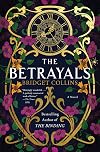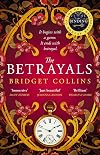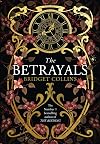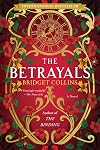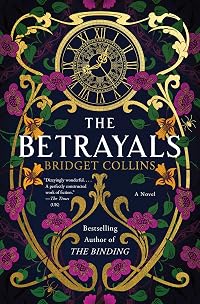
The Betrayals
by Bridget Collins
On This Page
Description
International Bestseller!"Dizzyingly wonderful . . . a perfectly constructed work of fiction, with audacious twists . . . Collins plays her own game here with perfect skill." — The Times (UK)
An intricate and utterly spellbinding literary epic brimming with enchantment, mystery, and dark secrets from the highly acclaimed author of the #1 international bestseller The Binding.
If your life was based on a lie, would you risk it all to tell the truth?
At Montverre, an ancient and elite show more academy hidden high in the mountains, society's best and brightest are trained for excellence in the grand jeu—the great game—an arcane and mysterious competition that combines music, art, math, poetry, and philosophy. Léo Martin once excelled at Montverre but lost his passion for scholarly pursuits after a violent tragedy. He turned to politics instead and became a rising star in the ruling party, until a small act of conscience cost him his career. Now he has been exiled back to Montverre, his fate uncertain.
But this rarified world of learning Léo once loved is not the same place he remembers. Once the exclusive bastion of men, Montverre's most prestigious post is now held by a woman: Claire Dryden, also known as the Magister Ludi, the head of the great game. At first, Léo feels an odd attraction to the magister—a mysterious, eerily familiar connection—though he's sure they've never met before.
As the legendary Midsummer Game approaches—the climax of the academy's year—long-buried secrets rise to the surface and centuries-old traditions are shockingly overturned.
A highly imaginative and intricately crafted literary epic, The Betrayals confirms Bridget Collins as one of the most inventive and exquisite new voices in speculative fiction.
. show less
Tags
Recommendations






Member Reviews
‘’Tonight the moonlight makes the floor of the Great Hall into a game board. Every high window casts a bright lattice, dividing the hall into black and white, squares and margins. The ranks of wooden benches face one another on three sides; in the space between them, there is nothing but straight shadows on stone, an abstract in pen and ink. It is as still as a held breath.’’
In a country ruled by the Party, a minister who has fallen out of favour returns to the place that marked his course in life twenty years ago. A time of immense potential and endless egotism. Montverre is the beating heart of the grand jeu, the game where music, maths, dreams and concentration neet to form a peculiar combination. The jewel of the land, the show more pride of the nation, the mirror of the ‘’purity’’ enforced by the Party. It is there that Leo meets Claire, the Magister Ludi. It is there that the past returns, demanding retribution. For every betrayal must be punished…
‘’There were grands jeux played in the Hagia Sophia, and in the Al-Aqsa Mosque, and at the Western Wall. It is modern arrogance to imagine that the divinity we hope to touch through the grand jeu is better than, or even different to the deities of other religions. A young way to worship is not necessarily a better way; nor is it the only way.’’
‘’We remake the world so that we can submit to it.’’
Bridget Collins has created a world that is claustrophobic, ruthless, secretive, yet enticing. Frighteningly so. A country that vaguely resembles France in an era that seems to fall between the 30s and 40s, is ruled by a ruthless version of an Orwellian government. Religion -especially Christianity- is persecuted, the believers are placed in the margin of society and women are seen as a commodity with few exceptions that are closely monitored and controlled. The atmosphere is full of threat and persecution, betrayal is the only way to advance. Through the eyes of a disgraced politician, a magister that has defied the adversities in her way, and a strange girl called the Rat, we dive into a world where a game is all there is and life and freedom have been labelled as expendable.
‘’Show weakness, and you’re doomed.’’
With its dragon laws, the mystery and vague setting, I was reminded of the world created in Gormenghast. I can’t describe the feeling of ‘’walking’’ down the nightly corridors or trying to grasp the concept and essence of the grand jeu. Collins took me on a journey through moonlight and silence, steps lit by the all-seeing moon in a place stuck in time. Night provides the perfect scenery, creeping in hiding places and keeping secrets that must not see the light of day. Secrecy is a major theme in this beautiful novel, reflecting the tempest of oppression and repressed feelings in a harrowing danse macabre. The dynamics between Claire and Leo are brilliantly depicted and Claire is a formidable, memorable character as is Rat whose haunting presence elevates the novel.
From the mystery of winter to the magic of Midsummer’s Eve, this is a story that stay with is and transports us to a powerful ‘’what-if’’.
‘’Look at me, I can bleed without being wounded. I can empty myself again and again and again.’’
Many thanks to HarperCollins and NetGalley for the ARC in exchange for an honest review.
My reviews can also be found on https://theopinionatedreaderblog.wordpress.com/ show less
In a country ruled by the Party, a minister who has fallen out of favour returns to the place that marked his course in life twenty years ago. A time of immense potential and endless egotism. Montverre is the beating heart of the grand jeu, the game where music, maths, dreams and concentration neet to form a peculiar combination. The jewel of the land, the show more pride of the nation, the mirror of the ‘’purity’’ enforced by the Party. It is there that Leo meets Claire, the Magister Ludi. It is there that the past returns, demanding retribution. For every betrayal must be punished…
‘’There were grands jeux played in the Hagia Sophia, and in the Al-Aqsa Mosque, and at the Western Wall. It is modern arrogance to imagine that the divinity we hope to touch through the grand jeu is better than, or even different to the deities of other religions. A young way to worship is not necessarily a better way; nor is it the only way.’’
‘’We remake the world so that we can submit to it.’’
Bridget Collins has created a world that is claustrophobic, ruthless, secretive, yet enticing. Frighteningly so. A country that vaguely resembles France in an era that seems to fall between the 30s and 40s, is ruled by a ruthless version of an Orwellian government. Religion -especially Christianity- is persecuted, the believers are placed in the margin of society and women are seen as a commodity with few exceptions that are closely monitored and controlled. The atmosphere is full of threat and persecution, betrayal is the only way to advance. Through the eyes of a disgraced politician, a magister that has defied the adversities in her way, and a strange girl called the Rat, we dive into a world where a game is all there is and life and freedom have been labelled as expendable.
‘’Show weakness, and you’re doomed.’’
With its dragon laws, the mystery and vague setting, I was reminded of the world created in Gormenghast. I can’t describe the feeling of ‘’walking’’ down the nightly corridors or trying to grasp the concept and essence of the grand jeu. Collins took me on a journey through moonlight and silence, steps lit by the all-seeing moon in a place stuck in time. Night provides the perfect scenery, creeping in hiding places and keeping secrets that must not see the light of day. Secrecy is a major theme in this beautiful novel, reflecting the tempest of oppression and repressed feelings in a harrowing danse macabre. The dynamics between Claire and Leo are brilliantly depicted and Claire is a formidable, memorable character as is Rat whose haunting presence elevates the novel.
From the mystery of winter to the magic of Midsummer’s Eve, this is a story that stay with is and transports us to a powerful ‘’what-if’’.
‘’Look at me, I can bleed without being wounded. I can empty myself again and again and again.’’
Many thanks to HarperCollins and NetGalley for the ARC in exchange for an honest review.
My reviews can also be found on https://theopinionatedreaderblog.wordpress.com/ show less
Originally posted on Just Geeking by.
Content warnings:
This book focuses around a teenage suicide and how it affects the lives of various people. There are scenes of bullying told through flashback scenes from a diary of one of the bullies. There are also scenes featuring misogyny, homophobia and religious persecution throughout.
Please note that this book features a suicide and this review discusses that part of the book. That discussion is the spoiler section of the review.
This would have been a very different review if I had not learned that the author had been seen actively engaging with anti-transgender tweets on Twitter before writing it. I’d already had some misgivings while reading The Betrayals and finding this out about the show more author confirms some thoughts I had previously dismissed. As a result this review is not completely spoiler free, however, don’t worry I’ll be placing the spoiler section under a spoiler cut, so it can be skipped if wished.
I thoroughly enjoyed Collins’ previous novel, The Binding, a historical fantasy novel which blew me away and was looking forward to more of the same in The Betrayals. In some ways Collins did deliver, with the same twists and turns that kept me on the edge of my seat. I found the whole setting of this one quite confusing, and it took me a while to realise that despite being described as “an arcane and mysterious contest” the grand jeu is a belief system where male students learn to compete against one another to create compositions that are more akin to a type of musical composition than magic. I kept expecting them to get to a point where they would have grand magical duels once they had got through all the theory and philosophy (and there is a lot of both) and it never happened.
The Betrayals is listed as fantasy and honestly, I’m not quite sure why, at best it is alternative historical fiction due to the belief system that shuns Christianity. As a Pagan, I have to admit it was interesting to see a book where there was another leading religion and Christians were the ones being ostracised, although one organised religion is much the same as another as seen by their actions.
Like her previous book, the tangle weave of relationships is at the heart of Collins’ novel and this is the part I need to talk about in detail. This spoils the entire plot of the book, so please do not read any further if you do not want the book spoiled for you.
I went into this novel expecting an LGBTQIA relationship as this was the focus of The Binding and how Collins’ made her name. The Betrayals tells the story of Léo Martin as a disgraced politician returning to his old academy at Montverre. Through diary entries written by Léo during his time as a student the novel flashbacks to when he was at school. We learn how he met a fellow student called Carfax, who he initially clashes with. Carfax is a social outcast, and is bullied by his classmates including Léo. A joint assignment forces the two boys to work together and Léo begins to realise how badly he has misunderstood Carfax, recognising his genius and beginning to stand up for him against the other boys.
The boys grow closer, and it becomes evident that they care more for each other than friends, however, intimacy between boys is not socially acceptable and would get them expelled. They do eventually grow close, but Léo submits a piece of work for Carfax’s final assignment assuming he will win. It is an extremely experimental piece and Léo does so without consulting Carfax. It is the wrong decision, and Carfax fails. He leaves, and Léo wins the coveted position they were competing for. He does not get to enjoy it though because the news comes that Carfax has committed suicide.
It is revealed that Claire Dryden, the current and first ever female Magister Lundi of the academy, is in fact Carfax’s sister and went to Montverre in her brother’s stead. Her brother was mentally ill and Claire rushed home to find that he had committed suicide. Having been betrayed and humiliated by Léo and without her brother’s name to reclaim the Carfax identity, she disappeared under her own identity again. As the Carfax that Léo fell in love with was a woman, not a man the homosexual relationship that Collins alludes to in the flashbacks does not actually exist. When I read The Betrayals and got to this big reveal I felt ill. I had already started to realise that Claire must have been at the academy and thought that perhaps Carfax was transgender. I realise now that Collins probably would never have considered that idea.
The girl pretends to be a boy to attend a male only school trope is nothing new, although usually the girl’s identity is revealed when a romance starts. She doesn’t continue the pretence. While on the one hand we could praise Collins for subverting this trope, I feel we also need to ask whether there was any need for her to set up a gay relationship between Léo and Carfax in the first place when she knew that Carfax was really Claire. As the flashbacks are taken from Léo‘s diary we only get his perspective, and we get it in excruciating teenage detail, filled will all the angst and personal detail that a teenager spills out in a private diary. From Léo‘s perspective he is falling in love with another boy. That is how Collins chooses to portray their relationship to the reader for most of the book.
By the time Léo realises that Claire is Carfax he has already fallen in love with her as a woman. The fact that this happens means that there is no room at all to mention or discuss his sexuality. His sexuality is just completely glossed over and now finding out that Collins has particular ideas about gender I don’t think that was an accident. Especially since this book had very clear feminist overtones as well. It also leaves me feeling that she has used queer pairings in her books (or the illusion of them) to draw in readers, and I’m not here for that. It feels very much like a quota is being ticked off rather than an author who actually cares about the representation of realistic diversity. It’s safe to say that this will be the last book of Collins’ that I’ll be reading.
BLOG | REVIEWS | REVIEW SCHEDULE | TWITTER | INSTAGRAM | PINTEREST |
show less
Content warnings:
Please note that this book features a suicide and this review discusses that part of the book. That discussion is the spoiler section of the review.
This would have been a very different review if I had not learned that the author had been seen actively engaging with anti-transgender tweets on Twitter before writing it. I’d already had some misgivings while reading The Betrayals and finding this out about the show more author confirms some thoughts I had previously dismissed. As a result this review is not completely spoiler free, however, don’t worry I’ll be placing the spoiler section under a spoiler cut, so it can be skipped if wished.
I thoroughly enjoyed Collins’ previous novel, The Binding, a historical fantasy novel which blew me away and was looking forward to more of the same in The Betrayals. In some ways Collins did deliver, with the same twists and turns that kept me on the edge of my seat. I found the whole setting of this one quite confusing, and it took me a while to realise that despite being described as “an arcane and mysterious contest” the grand jeu is a belief system where male students learn to compete against one another to create compositions that are more akin to a type of musical composition than magic. I kept expecting them to get to a point where they would have grand magical duels once they had got through all the theory and philosophy (and there is a lot of both) and it never happened.
The Betrayals is listed as fantasy and honestly, I’m not quite sure why, at best it is alternative historical fiction due to the belief system that shuns Christianity. As a Pagan, I have to admit it was interesting to see a book where there was another leading religion and Christians were the ones being ostracised, although one organised religion is much the same as another as seen by their actions.
Like her previous book, the tangle weave of relationships is at the heart of Collins’ novel and this is the part I need to talk about in detail. This spoils the entire plot of the book, so please do not read any further if you do not want the book spoiled for you.
I went into this novel expecting an LGBTQIA relationship as this was the focus of The Binding and how Collins’ made her name. The Betrayals tells the story of Léo Martin as a disgraced politician returning to his old academy at Montverre. Through diary entries written by Léo during his time as a student the novel flashbacks to when he was at school. We learn how he met a fellow student called Carfax, who he initially clashes with. Carfax is a social outcast, and is bullied by his classmates including Léo. A joint assignment forces the two boys to work together and Léo begins to realise how badly he has misunderstood Carfax, recognising his genius and beginning to stand up for him against the other boys.
The boys grow closer, and it becomes evident that they care more for each other than friends, however, intimacy between boys is not socially acceptable and would get them expelled. They do eventually grow close, but Léo submits a piece of work for Carfax’s final assignment assuming he will win. It is an extremely experimental piece and Léo does so without consulting Carfax. It is the wrong decision, and Carfax fails. He leaves, and Léo wins the coveted position they were competing for. He does not get to enjoy it though because the news comes that Carfax has committed suicide.
It is revealed that Claire Dryden, the current and first ever female Magister Lundi of the academy, is in fact Carfax’s sister and went to Montverre in her brother’s stead. Her brother was mentally ill and Claire rushed home to find that he had committed suicide. Having been betrayed and humiliated by Léo and without her brother’s name to reclaim the Carfax identity, she disappeared under her own identity again. As the Carfax that Léo fell in love with was a woman, not a man the homosexual relationship that Collins alludes to in the flashbacks does not actually exist. When I read The Betrayals and got to this big reveal I felt ill. I had already started to realise that Claire must have been at the academy and thought that perhaps Carfax was transgender. I realise now that Collins probably would never have considered that idea.
The girl pretends to be a boy to attend a male only school trope is nothing new, although usually the girl’s identity is revealed when a romance starts. She doesn’t continue the pretence. While on the one hand we could praise Collins for subverting this trope, I feel we also need to ask whether there was any need for her to set up a gay relationship between Léo and Carfax in the first place when she knew that Carfax was really Claire. As the flashbacks are taken from Léo‘s diary we only get his perspective, and we get it in excruciating teenage detail, filled will all the angst and personal detail that a teenager spills out in a private diary. From Léo‘s perspective he is falling in love with another boy. That is how Collins chooses to portray their relationship to the reader for most of the book.
By the time Léo realises that Claire is Carfax he has already fallen in love with her as a woman. The fact that this happens means that there is no room at all to mention or discuss his sexuality. His sexuality is just completely glossed over and now finding out that Collins has particular ideas about gender I don’t think that was an accident. Especially since this book had very clear feminist overtones as well. It also leaves me feeling that she has used queer pairings in her books (or the illusion of them) to draw in readers, and I’m not here for that. It feels very much like a quota is being ticked off rather than an author who actually cares about the representation of realistic diversity. It’s safe to say that this will be the last book of Collins’ that I’ll be reading.
BLOG | REVIEWS | REVIEW SCHEDULE | TWITTER | INSTAGRAM | PINTEREST |
show less
I was a big fan of Bridget Collins' first book, The Binding, so I jumped at the chance to read The Betrayals. I'm not a fan of the fantasy genre and probably wouldn't have picked up The Betrayals had it not been for enjoying the earlier book so much, but I would say that Collins writes enchanted stories that aren't completely fantastical.
The story is set almost entirely at Montverre, a mysterious school where the students (who are exclusively male) prepare for the grand jeu, a game which seems to consist of various elements which only really become clear as the story progresses. Léo is forced to return there, ten years after leaving, and he meets Claire who holds the highest position of Magister Ludi and is the only woman allowed to be show more there. He feels there is something between them, but what?
We are thrust between Léo and Claire in the current time, Léo's diary from his previous stint at Montverre and brief intersections from The Rat. This device works well to tell the story of what happened in the past and how it is affecting the present.
I struggled a little with the grand jeu sections, probably I needed to understand better what it actually was a little earlier. But I enjoyed the overall story of friendship, rivalry, love, and competitiveness. There were events in the story that I just never saw coming and the author did an amazing job at letting it unfold organically without giving anything away.
The Betrayals is a beautifully written book, focusing on study and those difficult formative years in an unusual and enigmatic learning establishment. Collins seems to excel at writing historical fantasy with a toe in reality. I will admit I didn't always 'get' this book and that certain parts didn't completely work for me, but I'm glad I read it and the last 100 pages or so had me turning them as fast as I could to find out what would happen to Léo and Claire. show less
The story is set almost entirely at Montverre, a mysterious school where the students (who are exclusively male) prepare for the grand jeu, a game which seems to consist of various elements which only really become clear as the story progresses. Léo is forced to return there, ten years after leaving, and he meets Claire who holds the highest position of Magister Ludi and is the only woman allowed to be show more there. He feels there is something between them, but what?
We are thrust between Léo and Claire in the current time, Léo's diary from his previous stint at Montverre and brief intersections from The Rat. This device works well to tell the story of what happened in the past and how it is affecting the present.
I struggled a little with the grand jeu sections, probably I needed to understand better what it actually was a little earlier. But I enjoyed the overall story of friendship, rivalry, love, and competitiveness. There were events in the story that I just never saw coming and the author did an amazing job at letting it unfold organically without giving anything away.
The Betrayals is a beautifully written book, focusing on study and those difficult formative years in an unusual and enigmatic learning establishment. Collins seems to excel at writing historical fantasy with a toe in reality. I will admit I didn't always 'get' this book and that certain parts didn't completely work for me, but I'm glad I read it and the last 100 pages or so had me turning them as fast as I could to find out what would happen to Léo and Claire. show less
In an unnamed country with fascist undertones, disgraced politician Léonard Martin is sent back to Montverre, a monastery-like school in the mountains where they teach the grand jeu. There he meets Claire Dryden, the magister responsible for teaching the game, and the only woman ever to cross the school's threshold. Torn between resentment and a growing attraction, the two perform a delicate dance, while the school suddenly becomes the focus of the government's cultural policy changes.
The plot – whatever there is of it – is very difficult to describe, as the reader seems to spend a great deal of time inside the two main protagonists' heads, with excursions into Léo's diary entries during his training at Montverre, and the show more enigmatic character of the Rat. While this isn't exactly a page turner, the internal dialogue of Léo and Claire gets under your skin, and I couldn't stop thinking about the two of them. And while the book can't be called a whole-hearted success because there were sections where the novel definitely dragged – the passages about the intricacies of the grand jeu, for example, maybe because the novel thought itself too clever? – Bridget Collins' prose is once again worth savouring. show less
The plot – whatever there is of it – is very difficult to describe, as the reader seems to spend a great deal of time inside the two main protagonists' heads, with excursions into Léo's diary entries during his training at Montverre, and the show more enigmatic character of the Rat. While this isn't exactly a page turner, the internal dialogue of Léo and Claire gets under your skin, and I couldn't stop thinking about the two of them. And while the book can't be called a whole-hearted success because there were sections where the novel definitely dragged – the passages about the intricacies of the grand jeu, for example, maybe because the novel thought itself too clever? – Bridget Collins' prose is once again worth savouring. show less
The Binding by Bridget Collins was a reading highlight in 2019 and I loved it so much it made my Top 5 Books of 2019 list. As soon as I learned a new book The Betrayals was being published in 2020, it immediately became one of my most hotly anticipated books of the year. I even placed a pre-order so that I could enjoy the limited edition signed hardcopy with gold foiling and sprayed edges from Waterstones.
I can't remember the last time I pre-ordered a book but I also requested a review copy, so desperate was I to get my hands on this as soon as it came out. I hoped The Betrayals would whisk me away into another magical bookish world and deliver a repeat five star reading experience.
The Betrayals by Bridget Collins is hard to define. It show more reads like a college style campus novel, taking place as it does in an all male academy called Montverre located in a remote and mountainous countryside. At times it felt like a combination of Dead Poets Society with a dash of the Harry Potter series (for the Hogwarts setting and syllabus, not the magic).
However, it's also kind of dystopian as the oppressive party politics of the day are different to our own, with a growing lack of tolerance for those of a particular faith that begins to infiltrate the academy.
The students are there to study the grand jeu which is a series of movements that flow together to form a performance of intellectual expression. Students study mathematics, music and a tonne of arcane subjects that definitely gave me Harry Potter vibes. Students spend months writing and practising their grand jeu and compete with each other to achieve the highest marks.
Leo Martin is a politician and our protagonist, and at the beginning of the book he finds himself ousted from the political party and sent to Montverre in disgrace. The narrative also includes diary entries and scenes from Leo's time as a student at the academy and secrets and old heartbreaks from that time are gradually revealed.
There is plenty to admire about the grand jeu, but of course it's up to the reader to imagine the movements and the overall impact of the performance on the audience. In my mind, it took the form of an intellectual Tai chi, but that's because I lack any further imagination.
This is a coming-of-age romance novel set in an undetermined time and location that straddles multiple genres, including historical fiction, urban fantasy and dystopian fiction. The character struggles were real but the academy setting was the real highlight, with secret passages, countless windows, attic spaces, hidey holes and oh, those libraries!
However, by the end of the last page, I wasn't able to relive the magical five star reading experience that was The Binding. Perhaps it's an unfair comparison, but when you've greatly enjoyed a special book, it does create a certain level of hope and expectation for whatever is to follow from the author.
What is certain, is that The Betrayals by Bridget Collins is a glorious book that I will look at lovingly on my shelves in years to come. Not only for the stunning book cover design that is easily my favourite of 2020, but for the promise it contained.
* Copy courtesy of Harper Collins * show less
I can't remember the last time I pre-ordered a book but I also requested a review copy, so desperate was I to get my hands on this as soon as it came out. I hoped The Betrayals would whisk me away into another magical bookish world and deliver a repeat five star reading experience.
The Betrayals by Bridget Collins is hard to define. It show more reads like a college style campus novel, taking place as it does in an all male academy called Montverre located in a remote and mountainous countryside. At times it felt like a combination of Dead Poets Society with a dash of the Harry Potter series (for the Hogwarts setting and syllabus, not the magic).
However, it's also kind of dystopian as the oppressive party politics of the day are different to our own, with a growing lack of tolerance for those of a particular faith that begins to infiltrate the academy.
The students are there to study the grand jeu which is a series of movements that flow together to form a performance of intellectual expression. Students study mathematics, music and a tonne of arcane subjects that definitely gave me Harry Potter vibes. Students spend months writing and practising their grand jeu and compete with each other to achieve the highest marks.
Leo Martin is a politician and our protagonist, and at the beginning of the book he finds himself ousted from the political party and sent to Montverre in disgrace. The narrative also includes diary entries and scenes from Leo's time as a student at the academy and secrets and old heartbreaks from that time are gradually revealed.
There is plenty to admire about the grand jeu, but of course it's up to the reader to imagine the movements and the overall impact of the performance on the audience. In my mind, it took the form of an intellectual Tai chi, but that's because I lack any further imagination.
This is a coming-of-age romance novel set in an undetermined time and location that straddles multiple genres, including historical fiction, urban fantasy and dystopian fiction. The character struggles were real but the academy setting was the real highlight, with secret passages, countless windows, attic spaces, hidey holes and oh, those libraries!
However, by the end of the last page, I wasn't able to relive the magical five star reading experience that was The Binding. Perhaps it's an unfair comparison, but when you've greatly enjoyed a special book, it does create a certain level of hope and expectation for whatever is to follow from the author.
What is certain, is that The Betrayals by Bridget Collins is a glorious book that I will look at lovingly on my shelves in years to come. Not only for the stunning book cover design that is easily my favourite of 2020, but for the promise it contained.
* Copy courtesy of Harper Collins * show less
This book started out with such promise, with beautiful writing, insane world building and some really pertinent messages about discrimination.
And then it turned out that this whole time the main woman had been deceiving the main man for YEARS.
This novel in the last 150 pages left a really sour taste in my mouth. The ending was just out of nowhere and I feel like I didn't get a proper resolution, and I just felt like I'd been queerbaited along for the ride and I don't like that feeling at all.
Basically, this could have been amazing. And it wasn't through some interesting writing choices. I'm mad I wasted so much time reading this.
And then it turned out that this whole time the main woman had been deceiving the main man for YEARS.
This novel in the last 150 pages left a really sour taste in my mouth. The ending was just out of nowhere and I feel like I didn't get a proper resolution, and I just felt like I'd been queerbaited along for the ride and I don't like that feeling at all.
Basically, this could have been amazing. And it wasn't through some interesting writing choices. I'm mad I wasted so much time reading this.
Like a beautiful orchestration. When I began reading this, I thought I was in for a treat, but that feeling dissipated. I felt dumped into a setting, into a world I didn’t quite understand. I doubt many of us have heard of the term Grand jeu, and even when I looked it up, the idea of a university situated around this ‘game of music’ made little sense to me. However, as the story continued, it worked like a gentle rift, building up to a majestic crescendo. The plot could be called basic, but it’s the style of the writing where individual notes tug on the heartstrings in various ways that’s slowly gripping. The even obvious plot points weren’t at all diminished even if I spotted them. A strange but unexpected love story.
Members
- Recently Added By
Lists

Dark Academia Novels
59 works; 11 members

Best School Stories
219 works; 22 members

FAB 2021
14 works; 1 member

Academia in Fiction
158 works; 23 members

READ IN 2021
239 works; 4 members

Books Read in 2021
5,361 works; 114 members
Author Information

4+ Works 3,633 Members
Common Knowledge
- Canonical title
- The Betrayals
- Original title
- The Betrayals
- Original publication date
- 2020
- People/Characters
- Léo Martin; The Rat; Claire Dryden; Aimé Carfax de Courcy; Émile Fallon; Simon Charpentier (show all 7); Magister Holt
- Important places
- Montverre
- Epigraph
- But that the present order of things was not to be taken for granted, that it presupposed a certain harmony between the world and the guardians of culture, that this harmony could always be disrupted, and that world history t... (show all)aken as a whole by no means furthered what was durable, rational and beautiful in the life of men, but at best only tolerated it as an exception---all this they did not realize. ---The Glass Bead Game, Hermann Hesse, trans. Richard and Clara Winston
- Dedication
- For Sarah Ballard
- First words
- Tonight the moonlight makes the floor of the Great Hall into a game board.
- Last words
- (Click to show. Warning: May contain spoilers.)The circle holds the grand jeu like a shallow cup. It trembles on the brim, incomplete, on the edge of spilling over.
- Blurbers
- Ditum, Sarah; Kelly, Erin
- Original language*
- Engels UK
*Some information comes from Common Knowledge in other languages. Click "Edit" for more information.
Classifications
Statistics
- Members
- 915
- Popularity
- 29,325
- Reviews
- 24
- Rating
- (3.59)
- Languages
- 6 — Dutch, English, German, Hungarian, Italian, Spanish
- Media
- Paper, Audiobook, Ebook
- ISBNs
- 26
- ASINs
- 6