On This Page
Description
"McGee has become part of our national fabric."SEATTLE POST INTELLIGENCER
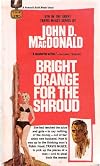
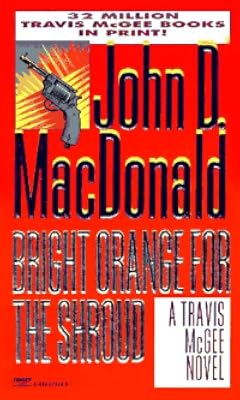
Usually women came to take refuge aboard The Busted Flush. But this time a man stumbled on board, a walking zombie who fell into bed. Turned out poor Arthur Wilkinson was the latest victim of a fragile-looking blonde sexpot who used the blackest arts of love to lure unsuspecting suckers into a web of sordid schemes. Travis had thought he'd have a quiet summer. Instead he took on the most cunning, heartless, vicious show more con artists he'd ever met....
. show less
Tags
Recommendations




















Member Reviews
"A tall, frail, sallow-looking fellow in a wrinkled tan suit too large for him stared up at me with an anxious little smile that came and went—a mendicant smile, like dogs wear in the countries where they kick dogs."
The man McGee is talking about is Arthur Wilkinson, or rather the shell that’s left after becoming entangled with Wilma Ferners in Bright Orange for the Shroud. Though it is Boone “Boo” Waxwell who understandably gets mentioned most whenever this entry in the legendary Travis McGee series is spoken of or written about, Wilma is nearly his predatory equal. MacDonald the writer knew that for every Waxwell in the world, there also exists a female counterpart; in this case the sexy but amoral Wilma Ferners. MacDonald show more paints each in their charming, venomous tones to perfection. The real literary achievement here, upon any serious reflection, is how MacDonald was able to make the small and beautiful, outwardly sweet yet inwardly predatory and sadistic Wilma so memorable. While McGee has more than one face to face encounter with Waxwell, we basically only get to “see” Wilma in flashbacks; but they are painted so vividly that when McGee concludes halfway through the narrative that she’s no longer among the living, the reader simply doesn't care. Not after what she almost did to the Alabama Tiger, and to Arthur Wilkinson. Arthur has been taken for every penny, mercilessly cleaned out. This includes his manhood, and his dignity. Wilma and Boone were simply part of a slick con.
McGee enlists the aid of Chookie in this one, who will be familiar to any true fan of this great series. MacDonald paints her as a real flesh and blood woman with faults, but also a heart. She is, in fact, one of the great recurring characters in this series, memorable in the overall mythology of Travis McGee as the tarnished white knight grew older, and the entries became more resonating. The particulars of Bright Orange are unimportant, just another instance of McGee running a con, to get back money that was taken in a con. But this one is unique in that it has one of the most dangerous and memorable villains in crime fiction, and because it is also salvage work — McGee is attempting to salvage Arthur himself, including his manhood. Chook works toward that end and becomes involved with Arthur, but when you’ve been stripped of everything, it is a long and rough road back.
Waxwell is physically dangerous, with a quick and instinctive predilection for danger and violence. But he can also exude a fascination that while it repulses, also attracts:
"Bogart, Mitchum, Gable, Flynn—the same flavor was there, a seedy, indolent brutality, a wisdom of the flesh. Women, sensing exactly what he was, and knowing how casually they would be used, would yet accept him, saying yes on a basis so primitive they could neither identify nor resist it."
Waxwell is predatory in every manner possible, and has a yen for Vivian, the neglected wife of an ineffectual and alcoholic lawyer involved in the original scam. MacDonald poignantly paints her so that the reader feels a sense of doom closing in on a fine woman:
"A man going sour puts an attractive wife in a strange bind. Still tied to him by what remains of her security, and by all the weight of the sentimentalities and warmths remembered, she is aware of her own vulnerability and, more importantly, aware of how other men might be appraising that vulnerability, hoping to use it."
"Houses where love is dead or dying acquire a transient look. Somewhere there are people who, though they don't know it yet, are going to move in."
In painting Vivian with such nuance, MacDonald is setting up one of the most horrific scenes in crime fiction, which I’ll get back to in a bit. Boone uses everyone, including a plump fifteen-year old deep in the remote area of Florida he calls home. She keeps coming back for more, unable to break the hold Waxwell has on her despite being smart enough to know he’s ruining her. It is a desperation you feel from almost everyone throughout the narrative of Bright Orange for the Shroud — Arthur, Vivian Crane and the alcoholic husband she still loves, even Chook; her involvement with Arthur on the Busted Flush brings to the surface problems she’s been unwilling to face.
There is Stebber and others that McGee must make his way through in an effort to get the money back — if he can find it, and if he can stay alive while doing so. Chook makes an observation about McGee’s similarity to Waxwell which angers McGee at first, because the very thought of that potential, were McGee to have taken a different path in life, is vile:
"Maybe he is you, gone bad. Maybe that's what he smelled. Maybe that's why you can handle him."
When trying to smoke Wilma out doesn’t work, McGee realizes Waxwell had murdered her:
"I had a sudden and vivid image of that small, delicate, pampered face, watery under the black slow run of water, of fine silver hair strung into the current flow, of shadowy pits, half seen, where sherry eyes had been."
The reader doesn’t care, because in essence she had it coming. So does Waxwell:
"After exposure to Boone Waxwell, the look of Chook and Arthur on the early afternoon beach had the flavor of great innocence."
McGee’s plan to enlist Vivian’s help in distracting Boone away from Marcos so that he can search for Arthur’s money is pre-empted when Waxwell strikes first, unexpectedly. A miscalculation by McGee gets him shot in the head, leaving him dazed and paralyzed on one side as he is forced to lay helplessly by a window and listen to the sounds of Waxwell, smug and toying as he rapes Vivian Watts Crane. The scene is one of the most brutal in the series. Yet it needs to be pointed out that the brutality is all in the mind of the reader. McGee can only hear the sounds, the voices, for most of it. He can hear Vivian’s desperation — lonely and neglected, hating her physical and involuntary response to an act of violence, and a man she truly despises. It is a brilliant piece of writing, using the device of McGee’s helplessness, his ability to only hear what’s happening, while avoiding completely any gore or painfully graphic details. It makes the scene all the more powerful and harrowing, because through McGee’s helplessness, we feel Vivian Crane’s.
"From the mortgaged house came the finishing cry of the tennis player, a tearing hypersonic howl like a gun-shot coyote. Her eyes were a very dark blue, and with sun-coin on the tawny forearm, she had closed her eyes and shuddered at the thought of any Waxwell touch."
With Arthur just beginning to feel like a man again, but still incredibly fearful — rightfully so — of Waxwell, it takes an attack of conscience by Wilkinson to finally come back and help McGee. Rather than go to the police, McGee has Arthur take him to a hospital, where he makes up a story about the bullet wound. Not fit to be released, still partially paralyzed and with bone fragments in his skull, McGee goes back for Vivian. It is a sticking point for many readers. Yes, it does make things work out later, so it was a plot choice, and yes, it did expose Vivian to further abuse by Waxwell. But, with a bullet shattering part of his skull, McGee is in no condition to be making rational decisions. And even were we to assume he was, there is something hugely important being overlooked, and it is this:
Earlier in the narrative, Vivian has a conversation with McGee which reveals just how close to the edge she really is. In that conversation, she shudders at the thought of Waxwell ever getting hold of her, because he makes “her skin crawl” and as she tells McGee: “He makes me feel naked and sick.” — “It’s like nightmares where you’re a kid. I think that if Boone Waxwell ever…got me, I might walk around afterwards and look just the same, but my heart would be dead as a stone forever.” By the time we’ve reached this point in the narrative, we have such a nuanced portrait of Vivian, a fine woman sliding toward oblivion because of a husband gone sour, we have reason to believe her, and so does McGee. With what McGee overheard, Vivian is already gone. Proof of that is what McGee finds when he does return — what she has done after Waxwell leaves, in regard to her passed out husband, and herself:
"It's what they so often do in the night. Maybe some forlorn fading desire to keep the darkness back. But if they could turn on all the lights in the world, it wouldn't help them."
It is terribly sad, yet somehow inevitable, as Chandler noted the conclusion should be to a great crime mystery. It affords McGee an opportunity to set up Waxwell, however, while at the same time the reader gets to hear the terrible regret and compassion for Vivian that McGee has in his head, as he tidies up the scene:
"They'll pretty you up for burying. But not in orange. That's a color to be alive in. To smile in. They won't bury you in it."
But even when this one seems over, it isn’t, because on the water, Boone Waxwell pays one last call. The end is brutal and fitting, in one of the most memorable books in the series. This one definitely isn’t for the snowflakes, and it isn’t even for McGee, as it sours him a bit in the immediate present. That is borne out when he is propositioned by the beautiful Debra at the end, who is simply another version of Wilma:
"Sweet," I said, "you are a penny from heaven. And you probably know lots and lots of tricks. But every one would remind me that you are a pro, from Wilma's old stable of club fighters. Call me a sentimentalist. The bloom is too far off the rose sweetie. I'd probably keep leaving money on the bureau. You better peddle it. Thanks but no thanks."
And seconds later we get this:
"The lips curled back and her face went so tight, I saw what a pretty and delicate little skull she'd make, picked clean, as Wilma now was, in the dark bottom of Chevalier Bay."
This is one of the best and most resonating entries in the series, despite the violence and the harrowing rape scene, and despite it being at the earlier end of the Travis McGee canon. It is, in fact, the last in the series I’ll be reviewing for a while. I highly recommend Pale Gray for Guilt and The Long Lavender Look, two other stellar entries. I’ll probably review them eventually, but not soon. Bright Orange for the Shroud is highly recommended. Brutal, sad, but resonating. A great writer at what seemed like his peak, until near the end of the series, when he raised the bar even higher. show less
The man McGee is talking about is Arthur Wilkinson, or rather the shell that’s left after becoming entangled with Wilma Ferners in Bright Orange for the Shroud. Though it is Boone “Boo” Waxwell who understandably gets mentioned most whenever this entry in the legendary Travis McGee series is spoken of or written about, Wilma is nearly his predatory equal. MacDonald the writer knew that for every Waxwell in the world, there also exists a female counterpart; in this case the sexy but amoral Wilma Ferners. MacDonald show more paints each in their charming, venomous tones to perfection. The real literary achievement here, upon any serious reflection, is how MacDonald was able to make the small and beautiful, outwardly sweet yet inwardly predatory and sadistic Wilma so memorable. While McGee has more than one face to face encounter with Waxwell, we basically only get to “see” Wilma in flashbacks; but they are painted so vividly that when McGee concludes halfway through the narrative that she’s no longer among the living, the reader simply doesn't care. Not after what she almost did to the Alabama Tiger, and to Arthur Wilkinson. Arthur has been taken for every penny, mercilessly cleaned out. This includes his manhood, and his dignity. Wilma and Boone were simply part of a slick con.
McGee enlists the aid of Chookie in this one, who will be familiar to any true fan of this great series. MacDonald paints her as a real flesh and blood woman with faults, but also a heart. She is, in fact, one of the great recurring characters in this series, memorable in the overall mythology of Travis McGee as the tarnished white knight grew older, and the entries became more resonating. The particulars of Bright Orange are unimportant, just another instance of McGee running a con, to get back money that was taken in a con. But this one is unique in that it has one of the most dangerous and memorable villains in crime fiction, and because it is also salvage work — McGee is attempting to salvage Arthur himself, including his manhood. Chook works toward that end and becomes involved with Arthur, but when you’ve been stripped of everything, it is a long and rough road back.
Waxwell is physically dangerous, with a quick and instinctive predilection for danger and violence. But he can also exude a fascination that while it repulses, also attracts:
"Bogart, Mitchum, Gable, Flynn—the same flavor was there, a seedy, indolent brutality, a wisdom of the flesh. Women, sensing exactly what he was, and knowing how casually they would be used, would yet accept him, saying yes on a basis so primitive they could neither identify nor resist it."
Waxwell is predatory in every manner possible, and has a yen for Vivian, the neglected wife of an ineffectual and alcoholic lawyer involved in the original scam. MacDonald poignantly paints her so that the reader feels a sense of doom closing in on a fine woman:
"A man going sour puts an attractive wife in a strange bind. Still tied to him by what remains of her security, and by all the weight of the sentimentalities and warmths remembered, she is aware of her own vulnerability and, more importantly, aware of how other men might be appraising that vulnerability, hoping to use it."
"Houses where love is dead or dying acquire a transient look. Somewhere there are people who, though they don't know it yet, are going to move in."
In painting Vivian with such nuance, MacDonald is setting up one of the most horrific scenes in crime fiction, which I’ll get back to in a bit. Boone uses everyone, including a plump fifteen-year old deep in the remote area of Florida he calls home. She keeps coming back for more, unable to break the hold Waxwell has on her despite being smart enough to know he’s ruining her. It is a desperation you feel from almost everyone throughout the narrative of Bright Orange for the Shroud — Arthur, Vivian Crane and the alcoholic husband she still loves, even Chook; her involvement with Arthur on the Busted Flush brings to the surface problems she’s been unwilling to face.
There is Stebber and others that McGee must make his way through in an effort to get the money back — if he can find it, and if he can stay alive while doing so. Chook makes an observation about McGee’s similarity to Waxwell which angers McGee at first, because the very thought of that potential, were McGee to have taken a different path in life, is vile:
"Maybe he is you, gone bad. Maybe that's what he smelled. Maybe that's why you can handle him."
When trying to smoke Wilma out doesn’t work, McGee realizes Waxwell had murdered her:
"I had a sudden and vivid image of that small, delicate, pampered face, watery under the black slow run of water, of fine silver hair strung into the current flow, of shadowy pits, half seen, where sherry eyes had been."
The reader doesn’t care, because in essence she had it coming. So does Waxwell:
"After exposure to Boone Waxwell, the look of Chook and Arthur on the early afternoon beach had the flavor of great innocence."
McGee’s plan to enlist Vivian’s help in distracting Boone away from Marcos so that he can search for Arthur’s money is pre-empted when Waxwell strikes first, unexpectedly. A miscalculation by McGee gets him shot in the head, leaving him dazed and paralyzed on one side as he is forced to lay helplessly by a window and listen to the sounds of Waxwell, smug and toying as he rapes Vivian Watts Crane. The scene is one of the most brutal in the series. Yet it needs to be pointed out that the brutality is all in the mind of the reader. McGee can only hear the sounds, the voices, for most of it. He can hear Vivian’s desperation — lonely and neglected, hating her physical and involuntary response to an act of violence, and a man she truly despises. It is a brilliant piece of writing, using the device of McGee’s helplessness, his ability to only hear what’s happening, while avoiding completely any gore or painfully graphic details. It makes the scene all the more powerful and harrowing, because through McGee’s helplessness, we feel Vivian Crane’s.
"From the mortgaged house came the finishing cry of the tennis player, a tearing hypersonic howl like a gun-shot coyote. Her eyes were a very dark blue, and with sun-coin on the tawny forearm, she had closed her eyes and shuddered at the thought of any Waxwell touch."
With Arthur just beginning to feel like a man again, but still incredibly fearful — rightfully so — of Waxwell, it takes an attack of conscience by Wilkinson to finally come back and help McGee. Rather than go to the police, McGee has Arthur take him to a hospital, where he makes up a story about the bullet wound. Not fit to be released, still partially paralyzed and with bone fragments in his skull, McGee goes back for Vivian. It is a sticking point for many readers. Yes, it does make things work out later, so it was a plot choice, and yes, it did expose Vivian to further abuse by Waxwell. But, with a bullet shattering part of his skull, McGee is in no condition to be making rational decisions. And even were we to assume he was, there is something hugely important being overlooked, and it is this:
Earlier in the narrative, Vivian has a conversation with McGee which reveals just how close to the edge she really is. In that conversation, she shudders at the thought of Waxwell ever getting hold of her, because he makes “her skin crawl” and as she tells McGee: “He makes me feel naked and sick.” — “It’s like nightmares where you’re a kid. I think that if Boone Waxwell ever…got me, I might walk around afterwards and look just the same, but my heart would be dead as a stone forever.” By the time we’ve reached this point in the narrative, we have such a nuanced portrait of Vivian, a fine woman sliding toward oblivion because of a husband gone sour, we have reason to believe her, and so does McGee. With what McGee overheard, Vivian is already gone. Proof of that is what McGee finds when he does return — what she has done after Waxwell leaves, in regard to her passed out husband, and herself:
"It's what they so often do in the night. Maybe some forlorn fading desire to keep the darkness back. But if they could turn on all the lights in the world, it wouldn't help them."
It is terribly sad, yet somehow inevitable, as Chandler noted the conclusion should be to a great crime mystery. It affords McGee an opportunity to set up Waxwell, however, while at the same time the reader gets to hear the terrible regret and compassion for Vivian that McGee has in his head, as he tidies up the scene:
"They'll pretty you up for burying. But not in orange. That's a color to be alive in. To smile in. They won't bury you in it."
But even when this one seems over, it isn’t, because on the water, Boone Waxwell pays one last call. The end is brutal and fitting, in one of the most memorable books in the series. This one definitely isn’t for the snowflakes, and it isn’t even for McGee, as it sours him a bit in the immediate present. That is borne out when he is propositioned by the beautiful Debra at the end, who is simply another version of Wilma:
"Sweet," I said, "you are a penny from heaven. And you probably know lots and lots of tricks. But every one would remind me that you are a pro, from Wilma's old stable of club fighters. Call me a sentimentalist. The bloom is too far off the rose sweetie. I'd probably keep leaving money on the bureau. You better peddle it. Thanks but no thanks."
And seconds later we get this:
"The lips curled back and her face went so tight, I saw what a pretty and delicate little skull she'd make, picked clean, as Wilma now was, in the dark bottom of Chevalier Bay."
This is one of the best and most resonating entries in the series, despite the violence and the harrowing rape scene, and despite it being at the earlier end of the Travis McGee canon. It is, in fact, the last in the series I’ll be reviewing for a while. I highly recommend Pale Gray for Guilt and The Long Lavender Look, two other stellar entries. I’ll probably review them eventually, but not soon. Bright Orange for the Shroud is highly recommended. Brutal, sad, but resonating. A great writer at what seemed like his peak, until near the end of the series, when he raised the bar even higher. show less
If you have been reading Spillane's Mike Hammer and Westlake's Parker, turning to MacDonald's Travis McGee is a bit like going from Van Halen to Jimmy Buffett. McGee is a guy who lives on a houseboat ("The Busted Flush") on the Gulf Coast waterways of Florida. He putters about and fishes and only works when he needs a stake. These novels have a relaxed pace that takes some getting used to.Reading these Travis McGee books is more like listening to a guy on a boat on a lazy afternoon spin his yarn. He meanders as he talks to tell you about the type of characters the people he's talking about are. He talks about the fishing off Marcos Island and Naples. He bemoans the fact that modern American cities are designed for cars not people, not show more even Ybor City which is being converted into some fake New Orleans.
In "Bright Orange For The Shroud," McGee is planning a lazy summer, getting by on the few bucks he has, when Arthur Wilkinson stumbles onto his boat. Arthur used to have a nearby boat where there was always an endless party and he had a cushy inheritance. Had is the operative word before little Wilma Ferner got a hold of him, married him, twisted him around and around her finger till his balls were practically in a jar on her nightstand. Wilma had a lush body and a husky voice. She was always on, always putting on her act, and all the gals were wary of her. And, he had his money before she introduced him to a bunch of land option swindlers who milked every last cent out of him and left him as nothing but a rotting husk of a man. That's when Wilma had disappeared.
This novel keeps the Florida boating feel throughout. It is a more complete work than "Nightmare in Pink." Worth a read just to journey onto the houseboat and listen to the waves lap at the sides of the boat. show less
In "Bright Orange For The Shroud," McGee is planning a lazy summer, getting by on the few bucks he has, when Arthur Wilkinson stumbles onto his boat. Arthur used to have a nearby boat where there was always an endless party and he had a cushy inheritance. Had is the operative word before little Wilma Ferner got a hold of him, married him, twisted him around and around her finger till his balls were practically in a jar on her nightstand. Wilma had a lush body and a husky voice. She was always on, always putting on her act, and all the gals were wary of her. And, he had his money before she introduced him to a bunch of land option swindlers who milked every last cent out of him and left him as nothing but a rotting husk of a man. That's when Wilma had disappeared.
This novel keeps the Florida boating feel throughout. It is a more complete work than "Nightmare in Pink." Worth a read just to journey onto the houseboat and listen to the waves lap at the sides of the boat. show less
Really, really good. A little darker than my usual fare, but the characters are just so good with all of their humanity on full display. The thing that really amazes me is that, although this book was released in 1965, it is not the least bit dated. Other than a couple of minor references (and what the stolen money was really worth), it could have been written today. A lot of that has to do with McGee living off the grid, I suppose. But good writing is good writing and this holds up nicely.
Now this might be the quintessential McGee mystery. Travis helps out a friend who's been played for a sucker and lost a quarter of a million dollars. Travis traces through the chain of nasty lawyer and accountant types, runs across a few sexy girls, and finally gets a chance to use his fists on a bad guy who has almost, but not quite, the chops to go toe-to-toe with him. All the elements that you read a MacDonald novel to find, with a nice pacing and some interesting characters, all wrapped up into a couple of hundred pages. What more could you ask?
A well done story allowing Trav to make mistakes that almost get him killed. Both the food and bad guys were well realized. It is fun to get on the time machine going back to the Florida of the fifties. I have to wonder if MacDonald himself had bad experience with real estate syndications. He seems to enjoy poking fun at country clubs and tennis. Everglades City and the sportsman's club haven't changed a lot, but Marco island is unrecognizable. The are still some elements of old Florida in Goodland and Chocoloskee (spelling?).
MacDonald certainly demonstrates the writing advice of show don't tell.
MacDonald certainly demonstrates the writing advice of show don't tell.
Maybe 3.5 stars. As I am beginning to expect with this series, this isn't really a mystery. Travis McGee is a 1960s version of the gang in the TV show "Leverage", only he works mostly alone and without all the cool gadgets. In this entry of the series, McGee doesn't get a romantic interest but that is OK as it is taken up by the client and a dancer friend of McGee's.
If you like suspense/thrillers and don't mind a high body count, this McGee novel might appeal. It was less dated than some of the previous books in the series and had less snide social-commentary. For me, the first of those was a plus but the second a minus...
If you like suspense/thrillers and don't mind a high body count, this McGee novel might appeal. It was less dated than some of the previous books in the series and had less snide social-commentary. For me, the first of those was a plus but the second a minus...
A more pleasant ride than most of the earlier Travis McGee stories. As is becoming common, the most interesting characters tend to be the women, although whether MacDonald's conception of women has any connection to the real thing remains to be proven. We men can never really understand women--we can just pretend to. McGee's old acquaintance Arthur stumbles on board the Busted Flush after being cleaned out by a group of con artists, and McGee has to nurse him back to health and see if he can recover any of the money. This requires him to do a lot of planning rather than just rushing around and scaring people to death as is his wont. It's an interesting trip around Florida before the boom, and McGee's houseboat, the Busted Flush, itself show more plays a pretty big part in the story. Which is not to say this is some sort of happy travelogue cruising through the Everglades and rivers of Florida. The tone is dark throughout, and the villian, Boone Waxwell, is despicable. show less
Members
- Recently Added By
Lists

A Rainbow of Books: Colors in the Title
570 works; 24 members
Author Information

John D. MacDonald was born in Sharon, Pennsylvania on July 24, 1916. He received a B.S. from Syracuse University in 1938 and an M.B.A. from the Harvard Graduate School of Business Administration in 1939. During World War II, he served in the Army. His first novel, Brass Cupcake, was published in 1950. He wrote about 70 books during his lifetime show more including the Travis McGee series, Condominium, No Deadly Drug, Nothing Can Go Wrong, and A Friendship: The Letters of Dan Rowan and John Dann MacDonald. A Flash of Green was adapted into a movie by the same name and The Excuse was adapted into a movie entitled Cape Fear. He received numerous awards including the Ben Franklin Award for the best American short story in 1955, the Grand Prix de Litterature Policiere for A Key to the Suite in 1964, the Mystery Writers of America's Grand Master Award in 1972, the American Book Award for The Green Ripper in 1980. He died from complications of an earlier heart bypass surgery on December 28, 1986 at the age of 70. (Bowker Author Biography) show less
Series

Work Relationships
Common Knowledge
- Original publication date
- 1965-09
- People/Characters
- Barbara Jean McCall "Chookie"; Travis McGee; Wilma Ferner; Cindy Ingerfeldt; Mildred Mooney; Calvin Stebber (show all 10); Crane Watts; Viv Watts; Boone Waxwell "Boo"; Arthur Wilkinson
- Important places
- Fort Lauderdale, Florida, USA; Naples, Florida, USA; Everglades City, Florida, USA; Tampa, Florida, USA; Florida, USA; Broward County, Florida, USA (show all 7); Hillsborough County, Florida, USA
- First words
- Another season was ending.
- Last words
- (Click to show. Warning: May contain spoilers.)I sat down there in the hot gloom like a big petulant baby, sucking on my knuckles, remembering the shape and sway of her in gray, walking away, and thinking some of the blackest thoughts I own.
Classifications
Statistics
- Members
- 979
- Popularity
- 26,966
- Reviews
- 19
- Rating
- (3.93)
- Languages
- Dutch, English, German, Russian
- Media
- Paper, Audiobook, Ebook
- ISBNs
- 26
- UPCs
- 2
- ASINs
- 23