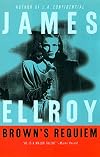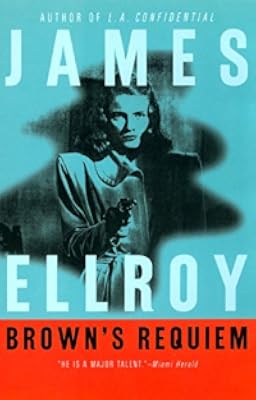
Brown's Requiem
by James Ellroy
On This Page
Description
Fritz Brown's L.A. and his life - are masses of contradictions, like stirring chorales sung for the dead. A less-than-spotless former cop with a drinking problem - a private eye-cum-repo man with a taste for great musiche has been known to wallow in the grime beneath the Hollywood glitter. But Fritz Brown's life is about to change, thanks to the appearance of a racist psycho who flashes too much cash for a golf caddie and who walked away clean from a multiple murder rap. Reopening this cas show more could be Fritz's redemption; his welcome back to a moral world and his path to a pure and perfect love. But to get there, he must make it through a grim, lightless place where evil has no national borders; where lies beget lies and death begets death; where there's little tolerance for Bach or Beethoven and deadly arson is a lesser mortal sin; and where a p.i.'s unhealthy interest in the past can turn beautiful music into funeral dirge. show lessTags
Recommendations









Member Reviews
This is the 10th Ellroy I've read but I've only listed 2 on Goodreads so far & only given one of them a very quickie, very inadequate 'review'. Ellroy deserves better - & probably gets it elsewhere - it's not like he's a neglected writer.
When the movie "L.A. Confidential" came out I thought it was the only Noir movie I'd seen in recent yrs that measured up to what made the original noir interesting in the 1st place. But I didn't know it was written by Ellroy then. It wasn't until many yrs later that I started reading him. &, yes, he's utterly great. As I've written elsewhere, I consider him to be one of the 4 greatest crime fiction writers. The other 3 being Dashiell Hammett, Raymond Chandler, & Patricia Highsmith. Then again, I don't show more read that much crime fiction writing so maybe there's far more great stuff out there than I know of.
This is the earliest Ellroy I've read yet. He wd've been, what?, in his early 30s when he wrote it? It's intense & wise & grim but, thank goodness?, not nearly as brutal as his later work (but still very brutal). For me, this is the 1st thing I've read by him in wch his writing still has a taste of his predecessors - in particular, Raymond Chandler. In fact, somewhat to my surprise, his detective character, Fritz Brown, even references Chandler's most famous detective:
"The flat finished stucco walls, ratty Persian carpets in the hallway and mahogany doors almost had me convinced it was 1938 and that my fictional predecessor Philip Marlowe was about to confront me with a wisecrack."
Not that that was an especially important moment in the bk or anything - I just found it interesting that Ellroy wd even tip his hat, so to speak. & the writing is great - as w/ the best of 'pulp' fiction this was a page-turner extraordinaire. I was completely engrossed. & if this had been written by Chandler, perhaps some of the at-1st-apparently-nice characters wd've turned out to be even more vicious than anyone else. But Ellroy surprises the reader here by making that NOT SO.
Anyone who reads crime fiction shd read Ellroy. He exemplifies "hard-boiled". show less
When the movie "L.A. Confidential" came out I thought it was the only Noir movie I'd seen in recent yrs that measured up to what made the original noir interesting in the 1st place. But I didn't know it was written by Ellroy then. It wasn't until many yrs later that I started reading him. &, yes, he's utterly great. As I've written elsewhere, I consider him to be one of the 4 greatest crime fiction writers. The other 3 being Dashiell Hammett, Raymond Chandler, & Patricia Highsmith. Then again, I don't show more read that much crime fiction writing so maybe there's far more great stuff out there than I know of.
This is the earliest Ellroy I've read yet. He wd've been, what?, in his early 30s when he wrote it? It's intense & wise & grim but, thank goodness?, not nearly as brutal as his later work (but still very brutal). For me, this is the 1st thing I've read by him in wch his writing still has a taste of his predecessors - in particular, Raymond Chandler. In fact, somewhat to my surprise, his detective character, Fritz Brown, even references Chandler's most famous detective:
"The flat finished stucco walls, ratty Persian carpets in the hallway and mahogany doors almost had me convinced it was 1938 and that my fictional predecessor Philip Marlowe was about to confront me with a wisecrack."
Not that that was an especially important moment in the bk or anything - I just found it interesting that Ellroy wd even tip his hat, so to speak. & the writing is great - as w/ the best of 'pulp' fiction this was a page-turner extraordinaire. I was completely engrossed. & if this had been written by Chandler, perhaps some of the at-1st-apparently-nice characters wd've turned out to be even more vicious than anyone else. But Ellroy surprises the reader here by making that NOT SO.
Anyone who reads crime fiction shd read Ellroy. He exemplifies "hard-boiled". show less
Even though "Brown's Requiem" is James Ellroy's first novel, it's still unmistakably “Ellroy.” In most respects it is your typical sordid tale of crime and mystery, but Ellroy gives it that extra helping of depravity and malfeasance that makes his works what they are. There’s a hopelessness about the story, a grim reality that all of the characters struggle against but never truly overcome, no matter if the ending is a “happy” one. When he wrote “Requiem” he hadn’t quite refined that “kick you in the nards” voice of his, but you can still see it lurking at the core of his first work.
The story is narrated by Fritz Brown, an ex-cop repo man/private detective in love with the greats of classical music and eleven months show more off the sauce. He is hired by a crazed, anti-Semitic caddy named “Fat Dog” Baker to dig up dirt on an elderly Jewish businessman who has taken up the role of guardian for Baker’s sister. As Brown begins his investigation, he quickly realizes that there is more to the story than he was first led to believe. He finds himself embroiled in a world of crooked cops, down and out caddies, sexual perversion, and old family sins—and in the process manages to fall in love with Fat Dog’s sister. He resolves to redeem himself for his past failings by busting wide open an old murder and ridding the world of a series of bad hombres, all while battling the specter of alcoholism looming over his shoulder.
“Brown’s Requiem” was a really good read, but at the same time, you can definitely tell that it was Ellroy’s first novel. The story seems to meander at times, but he pulls the plot together pretty well. My main gripe is that the Brown character’s interaction with other characters seems somewhat… off. That’s the only way I can describe it. He has crazed outbursts at times, other times is uncharacteristically gentle. And the conversations with Jane Baker, his love interest, seem stilted at best. While this type of character interaction could be a great plot device, it wasn’t integrated into the story well enough to be effective, and it really seemed like an area the author hadn’t completely honed his skills. Also, I felt the ending was a little too much on the happy side. It wasn’t a “happily ever after” type of ending, but at the same time I don’t feel like it did justice to the bleak nihilism present throughout the rest of the narrative.
Overall, I really did like the book. It was a great detective tale, and though it made use of a lot of tried and true tropes of the genre, still managed to be innovative and entertaining. I wish I could give it a 3.75 star rating, but since I can’t, it’ll have to be a 3.5. show less
The story is narrated by Fritz Brown, an ex-cop repo man/private detective in love with the greats of classical music and eleven months show more off the sauce. He is hired by a crazed, anti-Semitic caddy named “Fat Dog” Baker to dig up dirt on an elderly Jewish businessman who has taken up the role of guardian for Baker’s sister. As Brown begins his investigation, he quickly realizes that there is more to the story than he was first led to believe. He finds himself embroiled in a world of crooked cops, down and out caddies, sexual perversion, and old family sins—and in the process manages to fall in love with Fat Dog’s sister. He resolves to redeem himself for his past failings by busting wide open an old murder and ridding the world of a series of bad hombres, all while battling the specter of alcoholism looming over his shoulder.
“Brown’s Requiem” was a really good read, but at the same time, you can definitely tell that it was Ellroy’s first novel. The story seems to meander at times, but he pulls the plot together pretty well. My main gripe is that the Brown character’s interaction with other characters seems somewhat… off. That’s the only way I can describe it. He has crazed outbursts at times, other times is uncharacteristically gentle. And the conversations with Jane Baker, his love interest, seem stilted at best. While this type of character interaction could be a great plot device, it wasn’t integrated into the story well enough to be effective, and it really seemed like an area the author hadn’t completely honed his skills. Also, I felt the ending was a little too much on the happy side. It wasn’t a “happily ever after” type of ending, but at the same time I don’t feel like it did justice to the bleak nihilism present throughout the rest of the narrative.
Overall, I really did like the book. It was a great detective tale, and though it made use of a lot of tried and true tropes of the genre, still managed to be innovative and entertaining. I wish I could give it a 3.75 star rating, but since I can’t, it’ll have to be a 3.5. show less
Between 20o3 and 2008, I went through a phase where I thought James Ellroy was the best living novelist. I loved his schtick so much that my own writing--fiction or non--read like a pastiche of Ellroy's telegraphic style. While I still appreciate him (most of his novels survived the various pre-/post-moving book culls I made), I feel like I've calmed down and grown up, I guess? At the very least, his flaws--which were always there--have become really apparent, so much so that I just don't have the energy or heart to dive back into his novels again.
But I've had Brown's Requiem, his 1980 debut, on my "unread" shelf for nearly a decade, and I just grabbed it on a whim and dived in (via audiobook). From page one, Brown's Requiem reads like show more a trial run for every other book Ellroy has written. It's all here: an obsessed protagonist; a hilariously over-complicated plot; lots of focus on classical music as "good music"; gonzo violence (including the good ol' "empty gun into someone's face" deal that Ellroy uses all of the time); and so on. Fritz Brown is, however, not as insanely racist as almost every other Ellroy protagonist, and he even defends minorities in a few spots...though these moments feel really forced.
The writing is cleaner and more traditional than Ellroy's later books, but his staccato pacing is still here. The book made me remember why I liked Ellroy so much, but it also reminded me why I no longer obsess over him. The guy has basically been writing the same book over and over from this point on--he's rehashing the same worldview that's guided him since his mom's murder, and I just have a hard time with it these days. show less
But I've had Brown's Requiem, his 1980 debut, on my "unread" shelf for nearly a decade, and I just grabbed it on a whim and dived in (via audiobook). From page one, Brown's Requiem reads like show more a trial run for every other book Ellroy has written. It's all here: an obsessed protagonist; a hilariously over-complicated plot; lots of focus on classical music as "good music"; gonzo violence (including the good ol' "empty gun into someone's face" deal that Ellroy uses all of the time); and so on. Fritz Brown is, however, not as insanely racist as almost every other Ellroy protagonist, and he even defends minorities in a few spots...though these moments feel really forced.
The writing is cleaner and more traditional than Ellroy's later books, but his staccato pacing is still here. The book made me remember why I liked Ellroy so much, but it also reminded me why I no longer obsess over him. The guy has basically been writing the same book over and over from this point on--he's rehashing the same worldview that's guided him since his mom's murder, and I just have a hard time with it these days. show less
Two weeks before the Utopia Club was consumed by an arsonist's torch, private investigator and car repossessor Fritz Brown was having a drink there when the man next to him spilled his drink in Fritz's lap. The man immediately apologized. Re cognition of that man was to be the key unraveling a mystery almost ten years later.
Fritz Brown is James Ellroy's first creation and a worthy successor to Philip Marlowe. Brown is an ex-cop, dismissed from the L.A.P.D. for having broken the legs of the Vice Department's favorite snitch. Brown was incensed that the department continued to support the informer, even after learning of the man's pedophilic practices.
Brown is hired by a sadist to dig up dirt on his sister's "boyfriend." Soon he is show more mired in murder, arson, swindles, police corruption, and enough perversion to keep an entire squad of detectives busy. Brown has to face his own demons before resolving the crime in his own extra-legal fashion.
I recommend listening to Mahler's Second Symphony while reading this fast-paced novel. It's not called the Resurrection Symphony for nothing. show less
Fritz Brown is James Ellroy's first creation and a worthy successor to Philip Marlowe. Brown is an ex-cop, dismissed from the L.A.P.D. for having broken the legs of the Vice Department's favorite snitch. Brown was incensed that the department continued to support the informer, even after learning of the man's pedophilic practices.
Brown is hired by a sadist to dig up dirt on his sister's "boyfriend." Soon he is show more mired in murder, arson, swindles, police corruption, and enough perversion to keep an entire squad of detectives busy. Brown has to face his own demons before resolving the crime in his own extra-legal fashion.
I recommend listening to Mahler's Second Symphony while reading this fast-paced novel. It's not called the Resurrection Symphony for nothing. show less
It is to much to hope that every great writer's first attempt will be a home run. Sure, Joseph Heller catch-phrased American irony with Catch-22, Harper Lee moved us to tears with To Kill a Mockingbird, and John Kennedy Toole changed the world (or my world, anyway) with A Confederacy of Dunces. But for every astonishing debut, there are innumerable debuts that only hint at greatness to come. John Irving's meandering Setting Free the Bears. Neal Stephenson's self-indulgent The Big U. Kurt Vonnegut, Jr.'s Player Piano, a good book that only hinted at how truly astonishing its creator could be. And let us not forget Brian Horeck's Minnow Trap, the worst novel ever written (I realize Boreck is not considered a great writer by anyone, but I show more couldn't come up with a more-memorable example).
And so it is with James Ellroy. His later works such as L.A. Confidential, The Big Nowhere, and American Tabloid are breathtaking masterpieces of the darkest criminal noir. Ellroy's never having been awarded a Pulitzer Prize is one of modern literature's great oversights.
Yet Brown's Requiem, his first novel, barely whispers the spectacular heights Ellroy is capable of. Where his later works (most specifically his L.A. trilogy) combine grotesque crimes, gnarled plots, and dialogue so hard-boiled it leaves bruises, Brown's Requiem displays all the hallmarks of an author struggling to find his voice.
The plot, it must be said, is the weakest element, a limp mix of Hammett, Chandler, and every other influence a novice writer may try to emulate. Fritz Brown is an L.A. detective/repo man who unwittingly becomes embroiled in a bizarre case involving arsonists, welfare fraud, crooked cops, sexy dames, heroin, and many other standards of the crime thriller. As Brown tries to sort out the mess, he begins to view the overall case as his chance to make a change in his life.
So far, so good. No one ever said a plot had to be overtly original to be entertaining. The greatest detective novel ever published, Raymond Chandler's The Long Goodbye, has very little plot at all. What matters in these cases is style, voice, and attitude. Chandler had it in spades. Current Ellroy wields attitude like a bludgeon. Early Ellroy is all pose, no threat.
Part of the problem is the anachonistic tone Ellroy sets up. Brown is set in 1980 (very late, for Ellroy), yet the story reads like something set in 1950. It's the way the characters talk, the use of dialogue like "Do your stuff, Daddy-O," and "Onward, Hot Rod," and so forth: for whatever reason, the fact that this story takes place in 1980 is never remotely believable. Perhaps this is why Ellroy's later works are unabashedly nostalgic for the fedora-and-cigarette world of 1950's Los Angeles. Ellroy's L.A. of 1950 is effortless; his L.A. of 1980 is faintly ridiculous.
All this sounds like an out-and-out pan, but it's not; Brown is still quite entertaining, with a labyrinth of a plot and a firm grasp of what drives a scene, and is worth a read by those familiar with the ouvre of hard-boiled detective fiction. If nothing else, Brown's Requiem could serve as an example of how much an author can improve, given time. Ellroy is one of the finest novelists in America today. Comparing his newer efforts to his earlier ones only serves to prove it.
Link to blog show less
And so it is with James Ellroy. His later works such as L.A. Confidential, The Big Nowhere, and American Tabloid are breathtaking masterpieces of the darkest criminal noir. Ellroy's never having been awarded a Pulitzer Prize is one of modern literature's great oversights.
Yet Brown's Requiem, his first novel, barely whispers the spectacular heights Ellroy is capable of. Where his later works (most specifically his L.A. trilogy) combine grotesque crimes, gnarled plots, and dialogue so hard-boiled it leaves bruises, Brown's Requiem displays all the hallmarks of an author struggling to find his voice.
The plot, it must be said, is the weakest element, a limp mix of Hammett, Chandler, and every other influence a novice writer may try to emulate. Fritz Brown is an L.A. detective/repo man who unwittingly becomes embroiled in a bizarre case involving arsonists, welfare fraud, crooked cops, sexy dames, heroin, and many other standards of the crime thriller. As Brown tries to sort out the mess, he begins to view the overall case as his chance to make a change in his life.
So far, so good. No one ever said a plot had to be overtly original to be entertaining. The greatest detective novel ever published, Raymond Chandler's The Long Goodbye, has very little plot at all. What matters in these cases is style, voice, and attitude. Chandler had it in spades. Current Ellroy wields attitude like a bludgeon. Early Ellroy is all pose, no threat.
Part of the problem is the anachonistic tone Ellroy sets up. Brown is set in 1980 (very late, for Ellroy), yet the story reads like something set in 1950. It's the way the characters talk, the use of dialogue like "Do your stuff, Daddy-O," and "Onward, Hot Rod," and so forth: for whatever reason, the fact that this story takes place in 1980 is never remotely believable. Perhaps this is why Ellroy's later works are unabashedly nostalgic for the fedora-and-cigarette world of 1950's Los Angeles. Ellroy's L.A. of 1950 is effortless; his L.A. of 1980 is faintly ridiculous.
All this sounds like an out-and-out pan, but it's not; Brown is still quite entertaining, with a labyrinth of a plot and a firm grasp of what drives a scene, and is worth a read by those familiar with the ouvre of hard-boiled detective fiction. If nothing else, Brown's Requiem could serve as an example of how much an author can improve, given time. Ellroy is one of the finest novelists in America today. Comparing his newer efforts to his earlier ones only serves to prove it.
Link to blog show less
This book took me longer as I thought. Partly because I somehow lost interest in the middle (because I confused the characters…) partly because I started reading the daily papers more carefully (aprox 3h reading a day). That’s that. But as soon as I had reached the last third of the book I was hooked again. Brown’s irritating case really got a good drive to the end and I really enjoyed following him to strange places in L.A. and Mexico often linked to golf and dodgy caddies.
After reading my first noir (and road trip) novel The Cold Kiss by John Rector few weeks ago, I really feared that Ellroy would be somehow equally boring as Rector. But my fear was unfounded because Ellroy’s writing is extremley beautiful and colorful. He got show more this special ability to draw real pictures in one’s head while reading. And because of this talent of fictional drawing and a complex and surprising plot I will joyfully continue reading the following novels by this highly entertaining noir thriller writer. show less
After reading my first noir (and road trip) novel The Cold Kiss by John Rector few weeks ago, I really feared that Ellroy would be somehow equally boring as Rector. But my fear was unfounded because Ellroy’s writing is extremley beautiful and colorful. He got show more this special ability to draw real pictures in one’s head while reading. And because of this talent of fictional drawing and a complex and surprising plot I will joyfully continue reading the following novels by this highly entertaining noir thriller writer. show less
Forse il più simil Conelly dei romanzi di Ellroy, e per questo dotato di meno livelli interpretativi. Comunque opera pregevole e ottima per il divertimento.
Members
- Recently Added By
Lists

Llibres que he llegit el 2012
28 works; 1 member
Author Information

James Ellroy was born in Los Angeles in 1948. His L. A. Quartet novels - "The Black Dahlia", "The Big Nowhere", "L. A. Confidential", & "White Jazz" - were international best-sellers. His novel "American Tabloid" was Time magazine's Novel of the Year for 1995; his memoir, "My Dark Places", was a "Time" Best Book of the Year & a "New Yorker Times" show more Notable Book for 1996. He lives in Kansas City. (Publisher Provided) James Ellroy was born in Los Angeles, California on March 4, 1948. His parents were divorced and he moved in with his father after his mother was murdered in 1958. The story of his mother's unsolved murder would become the basis for his 1996 nonfiction work entitled My Dark Places. He attended Fairfax High School, where he sent Nazi pamphlets to girls he liked and criticized JFK, while advocating the reinstatement of slavery. He was eventually expelled for preaching Nazism in his English class. He joined the army after his expulsion from school, but after realizing that he did not belong there, he faked a stutter and convinced the army psychologist that he was not mentally fit for combat. After three months, he received a dishonorable discharge and returned home. His father died soon thereafter. He was thrown in juvenile hall for stealing a steak from the local market. When he got out, his father's friend became his guardian, but by the age of eighteen, he was back on the streets. He was sleeping outside, stealing, drinking and experimenting with drugs. It wasn't long before he was thrown in jail for breaking into a vacant apartment. When he got out of jail, he started a job at an adult book store, his addictions growing progressively larger. He was misusing the drug Benzedrex, a sinus inhalent which nearly drove him to Schizophrenia and his drinking was ruining his health. He contracted pneumonia twice as well as a condition called post-alchohol brain syndrome. Fearing for his sanity, he joined AA, became sober and found a job as a golf caddy. At the age of 30, he wrote his first novel entitled Brown's Requiem, which was published in 1981. His other works include Clandestine, Blood on the Moon, Because the Night, Suicide Hill, Killer on the Road, and The Cold Six Thousand. His works The Black Dahlia and L. A. Confidential were adapted into feature films. Ellroy's title, Perfidia, made the New York Times bestseller list in 2014. 030i show less
Awards and Honors
Awards
Series
Belongs to Publisher Series
Ullstein (24789)
Il giallo Mondadori (2471)
Work Relationships
Is contained in
Common Knowledge
- Canonical title*
- Brown's Requiem
- Original title
- Brown's Requiem
- Original publication date
- 1981
- People/Characters
- Fritz Brown
- Related movies
- Brown's Requiem (1998 | IMDb)
- Dedication
- To Randy Rice
- First words*
- Les affaires roulaient.
- Last words*
- (Click to show. Warning: May contain spoilers.)J'écoute beaucoup de musique.
- Original language*
- English
*Some information comes from Common Knowledge in other languages. Click "Edit" for more information.
Classifications
Statistics
- Members
- 763
- Popularity
- 36,907
- Reviews
- 17
- Rating
- (3.43)
- Languages
- 7 — English, Finnish, French, German, Italian, Spanish, Swedish
- Media
- Paper, Audiobook, Ebook
- ISBNs
- 31
- ASINs
- 13