On This Page
Description
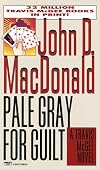
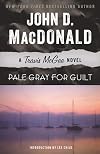
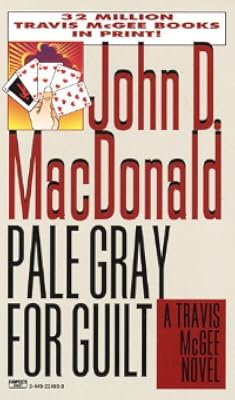
From a beloved master of crime fiction, Pale Gray for Guilt is one of many classic novels featuring Travis McGee, the hard-boiled detective who lives on a houseboat.Travis McGee’s old football buddy Tush Bannon is resisting pressure to sell off his floundering motel and marina to a group of influential movers and shakers. Then he’s found dead. For a big man, Tush was a pussycat: devoted to his wife and three kids and always optimistic about his business—even when things were at show more their worst. So even though his death is ruled a suicide, McGee suspects murder . . . and a vile conspiracy.
“As a young writer, all I ever wanted was to touch readers as powerfully as John D. MacDonald touched me.”—Dean Koontz
Tush Bannon was in the wrong spot at the wrong time. His measly plot of land just so happened to sit right in the middle of a rich parcel of five hundred riverfront acres that big... show less
Tags
Recommendations

















Member Reviews
Travis McGee, if you are unfamiliar with his world, lives on a houseboat, The Busted Flush, in the Bahai Marina in Florida. It is an endless string of parties in a world unlike that of the 9 to 5 Joe. McGee doesn't necessarily work in the general sense, but does collect salvage for people who have been wronged and for who the laws and the system will never make whole. These are not hardboiled detective novels, but somehow they are imbued with the spirit of the lone avenger who all on his own is out to unmask the bad guys. These books contain the most amazingly spot-on characterization as well as capturing so much of a certain time and place.
This particular McGee features the shock of watching a friend ruined and murdered all because he show more wouldn't give up his tiny piece of land to a cutthroat developer. While McGee can't bring his friend back from the dead, he can make this animal bleed and so, with the help of Meyer and a tall redhead, he sets up an elaborate sting. This could have simply been titled The Sting. A throughly enjoyable adventure brilliantly conceived. Great stuff, indeed. show less
This particular McGee features the shock of watching a friend ruined and murdered all because he show more wouldn't give up his tiny piece of land to a cutthroat developer. While McGee can't bring his friend back from the dead, he can make this animal bleed and so, with the help of Meyer and a tall redhead, he sets up an elaborate sting. This could have simply been titled The Sting. A throughly enjoyable adventure brilliantly conceived. Great stuff, indeed. show less
PALE GRAY FOR GUILT starts out dark and stays that way. An old high school football teammate of McGee, who has moved to Florida and bought a small motel and marina on a river, is being squeezed by local land developers and crooked politicians who want to pay him a pittance for his land and who have systematically destroyed his business in an attempt to run him, his wife, and their three kids off. It gets worse from there, and pretty soon McGee is investigating his supposed suicide. There isn’t much McGee won’t do to avenge an old friend, and if it means breaking a few dozen laws along the way, no problem. While it is a pleasure to see McGee running one of his con schemes with the aid of his good buddy Meyer, he really pulls out the show more plugs this time, and the book’s feeble explanations of how he and Meyer can end up scot free and unthreatened at the end don’t convince.
The treatment of women in this book is marginally better than usual, with Connie, a widow running an orange plantation coming across particularly strong. Janice, the wife of McGee’s dead friend, emerges with her dignity intact as well. The private secretary to one of the bad guys is an interesting amoral character, which gives McGee free rein to pontificate for several pages about women who are willing to use their bodies as part of their work. There are also detours to discuss how unexciting American cars are (circa 1968), rock ‘n’ roll, different ways of protesting against a corrupt society, and so on. Every time I return to MacDonald’s work, I am reminded of how consistently pessimistic it all is. And the McGee books have their recurring annoyances, such as the need to get rid of his lady friend in one way or another so that she isn’t an encumbrance for the next book. This book tries yet another approach, since it might be improbable to have another one meet a fatal accident of some sort or another (a shard from an explosion or whatever).
Despite these shortcomings, the book is very readable, and behind the too-frequent overwritten bombast it does have a few things to say about greed and the transformation of much of the Florida coast from a sparsely populated wilderness to what it has now become. MacDonald’s settings are as well drawn as always, giving this flawed book a depth that few genre writers could achieve. show less
The treatment of women in this book is marginally better than usual, with Connie, a widow running an orange plantation coming across particularly strong. Janice, the wife of McGee’s dead friend, emerges with her dignity intact as well. The private secretary to one of the bad guys is an interesting amoral character, which gives McGee free rein to pontificate for several pages about women who are willing to use their bodies as part of their work. There are also detours to discuss how unexciting American cars are (circa 1968), rock ‘n’ roll, different ways of protesting against a corrupt society, and so on. Every time I return to MacDonald’s work, I am reminded of how consistently pessimistic it all is. And the McGee books have their recurring annoyances, such as the need to get rid of his lady friend in one way or another so that she isn’t an encumbrance for the next book. This book tries yet another approach, since it might be improbable to have another one meet a fatal accident of some sort or another (a shard from an explosion or whatever).
Despite these shortcomings, the book is very readable, and behind the too-frequent overwritten bombast it does have a few things to say about greed and the transformation of much of the Florida coast from a sparsely populated wilderness to what it has now become. MacDonald’s settings are as well drawn as always, giving this flawed book a depth that few genre writers could achieve. show less
Starts like a typical McGee mystery, a friend dies and Travis has to figure out why (One gets the impression that it's not too safe to hang around with McGee at the rate his friends get bumped off) . But this one is less violent than many, as it turns out that the friend was swatted away like a fly when he gets in the way of shady Florida real estate dealings. McGee, therefore, rather than going out with battle-axe and broadshield, takes up the financial weapons of leverage and syndicates to avenge him. This is a surprising twist on the McGee stories, at least for the few I've read, but it works out well, and is eerily prescient of some of the financial wheeling and dealing on a national scope to which we've been exposed over the past show more several years.
There is a surprising romantic twist to the story as well, a departure from the usual free-wheeling 1970's love-in that usually takes place in a McGee story, with a tearjerker of an ending. What it comes down to is that this book is quite an accomplishment - providing a sufficient amount of blood, gore and sex to appease its usual target audience, yet with enough additional plot elements to satisfy a more thoughtful reader. I don't know if that was MacDonald's plan, but it is definitely what he accomplished. show less
There is a surprising romantic twist to the story as well, a departure from the usual free-wheeling 1970's love-in that usually takes place in a McGee story, with a tearjerker of an ending. What it comes down to is that this book is quite an accomplishment - providing a sufficient amount of blood, gore and sex to appease its usual target audience, yet with enough additional plot elements to satisfy a more thoughtful reader. I don't know if that was MacDonald's plan, but it is definitely what he accomplished. show less
I found this 9th entry in the Travis McGee series to be above average -- it had the social commentary that I like so much without the sometimes disturbing 1960s view of women & sex. Don't get me wrong, there are women and sex! But some of the earlier books in the series had a bit too much of a masculine 50s/60s attitude about women which bothered me and I found that happily missing in this one.
As I have mentioned in some of my other reviews of the McGee books, Travis McGee is clearly the forerunner of the TV show Leverage; his job is to help out the guy who has been 'done wrong' by the rich & powerful. Usually the deal is for McGee to "recover" what was taken for a 50% cut but this time what was taken was his college buddy Tush Bannon's show more life. Perhaps the con he arranges with the help of his friend Meyer to punish the men who were trying to snatch Bannon's property is illegal or immoral but the reader is rooting for McGee to succeed all the way. show less
As I have mentioned in some of my other reviews of the McGee books, Travis McGee is clearly the forerunner of the TV show Leverage; his job is to help out the guy who has been 'done wrong' by the rich & powerful. Usually the deal is for McGee to "recover" what was taken for a 50% cut but this time what was taken was his college buddy Tush Bannon's show more life. Perhaps the con he arranges with the help of his friend Meyer to punish the men who were trying to snatch Bannon's property is illegal or immoral but the reader is rooting for McGee to succeed all the way. show less
McGee investigates and seeks revenge for the murder of an old friend. It involves an old boy network trying to make a fast buck on a land deal. Travis's relation to women is a bit more nuanced. It of course involves Travis trying to make a narrow escape from a desperate situation.
I found this 9th entry in the Travis McGee series to be above average -- it had the social commentary that I like so much without the sometimes disturbing 1960s view of women & sex. Don't get me wrong, there are women and sex! But some of the earlier books in the series had a bit too much of a masculine 50s/60s attitude about women which bothered me and I found that happily missing in this one.
As I have mentioned in some of my other reviews of the McGee books, Travis McGee is clearly the forerunner of the TV show Leverage; his job is to help out the guy who has been 'done wrong' by the rich & powerful. Usually the deal is for McGee to "recover" what was taken for a 50% cut but this time what was taken was his college buddy Tush Bannon's show more life. Perhaps the con he arranges with the help of his friend Meyer to punish the men who were trying to snatch Bannon's property is illegal or immoral but the reader is rooting for McGee to succeed all the way. show less
As I have mentioned in some of my other reviews of the McGee books, Travis McGee is clearly the forerunner of the TV show Leverage; his job is to help out the guy who has been 'done wrong' by the rich & powerful. Usually the deal is for McGee to "recover" what was taken for a 50% cut but this time what was taken was his college buddy Tush Bannon's show more life. Perhaps the con he arranges with the help of his friend Meyer to punish the men who were trying to snatch Bannon's property is illegal or immoral but the reader is rooting for McGee to succeed all the way. show less
Overall, this is a pretty good tale of revenge in 1960s small town Florida. There's a few details that kinda of ruined it for me though - the plastic villains who just fall in line with McGee's plans, like the finance guru who is sucked into a pump & dump scam that has him losing most of his capital whilst our characters scamper off with hundreds of thousands. It also took a little while to get going, once it did though it was a pretty good romp in typical McGee style.
Members
- Recently Added By
Lists

A Rainbow of Books: Colors in the Title
570 works; 24 members

Best Sellers / Popular 1968
237 works; 5 members
Author Information

231+ Works 32,019 Members
John D. MacDonald was born in Sharon, Pennsylvania on July 24, 1916. He received a B.S. from Syracuse University in 1938 and an M.B.A. from the Harvard Graduate School of Business Administration in 1939. During World War II, he served in the Army. His first novel, Brass Cupcake, was published in 1950. He wrote about 70 books during his lifetime show more including the Travis McGee series, Condominium, No Deadly Drug, Nothing Can Go Wrong, and A Friendship: The Letters of Dan Rowan and John Dann MacDonald. A Flash of Green was adapted into a movie by the same name and The Excuse was adapted into a movie entitled Cape Fear. He received numerous awards including the Ben Franklin Award for the best American short story in 1955, the Grand Prix de Litterature Policiere for A Key to the Suite in 1964, the Mystery Writers of America's Grand Master Award in 1972, the American Book Award for The Green Ripper in 1980. He died from complications of an earlier heart bypass surgery on December 28, 1986 at the age of 70. (Bowker Author Biography) show less
Series

Work Relationships
Common Knowledge
- Canonical title
- Pale Gray For Guilt
- Original publication date
- 1968
- People/Characters
- Travis McGee; Meyer the economist; Jean "Puss" Killian
- Important places
- Florida, USA
- First words
- The next to the last time I saw Tush Bannon alive was the very same day I had that new little boat running the way I wanted it to run, after about six weeks of futzing around with it.
- Last words
- (Click to show. Warning: May contain spoilers.)And Meyer said, "So give me a hand with the lines and we'll take this crock over to the gas dock and top off the tanks."
Classifications
Statistics
- Members
- 963
- Popularity
- 27,328
- Reviews
- 14
- Rating
- (3.81)
- Languages
- English, Portuguese
- Media
- Paper, Audiobook, Ebook
- ISBNs
- 26
- UPCs
- 1
- ASINs
- 35