On This Page
Description
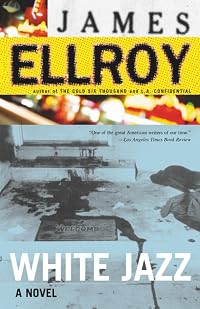
The internationally acclaimed author of the L.A. Quartet and The Underworld USA Trilogy, James Ellroy, presents another literary noir masterpiece of historical paranoia.Los Angeles, 1958. Killings, beatings, bribes, shakedowns—it's standard procedure for Lieutenant Dave Klein, LAPD. He's a slumlord, a bagman, an enforcer—a power in his own small corner of hell. Then the Feds announce a full-out investigation into local police corruption, and everything goes haywire.
Klein's been hung show more out as bait, "a bad cop to draw the heat," and the heat's coming from all sides: from local politicians, from LAPD brass, from racketeers and drug kingpins—all of them hell-bent on keeping their own secrets hidden. For Klein, "forty-two and going on dead," it's dues time.
Klein tells his own story—his voice clipped, sharp, often as brutal as the events he's describing—taking us with him on a journey through a world shaped by monstrous ambition, avarice, and perversion. It's a world he created, but now he'll do anything to get out of it alive.
Fierce, riveting, and honed to a razor edge, White Jazz is crime fiction at its most shattering. show less
Tags
Recommendations
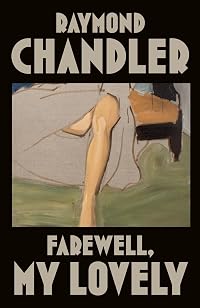
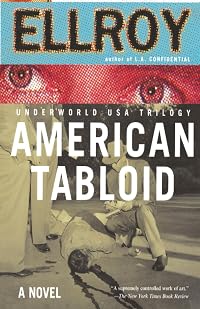
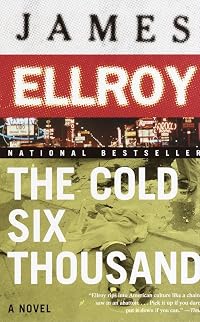
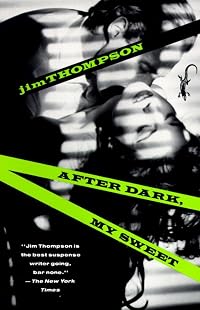
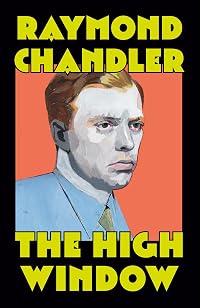
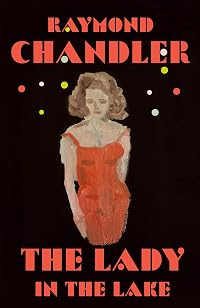
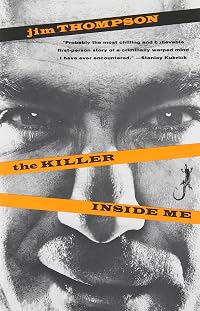
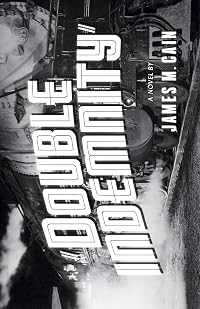
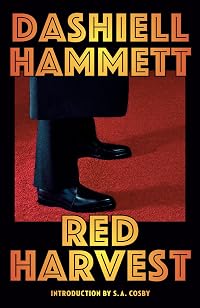
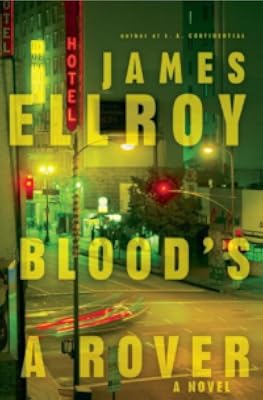
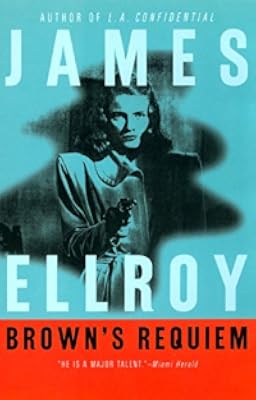


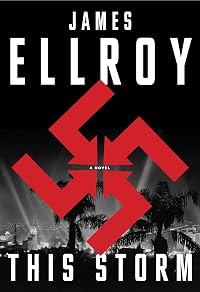
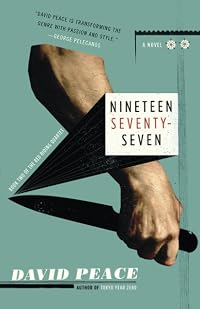
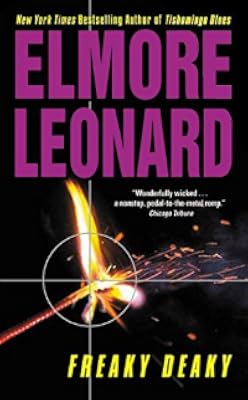
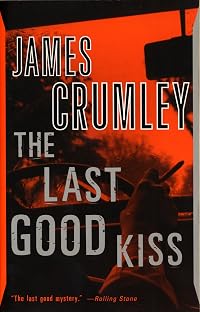
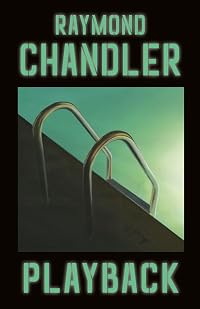
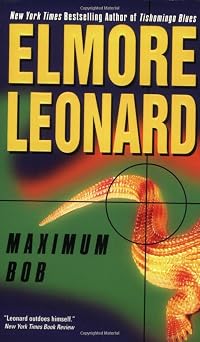
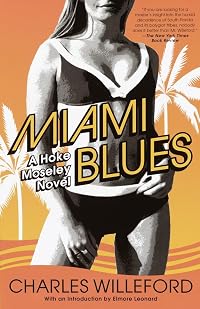
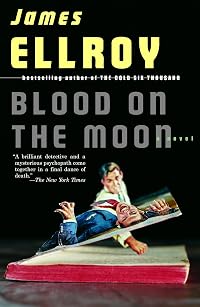


Member Recommendations
by Darco
Member Reviews
The terse, staccato language approaches self-parody, saved by the psychological intensity and the white-knuckle ride into violence, corruption and depravity taken by the plot as it ensnares the utterly rotten Dave Klein, who arguably gets off lightly in the end, but at least he ends up help take down a bunch of people even worse than he is, which, if anything, is the major theme of the LA Quartet. Furiously paced, densely complex and constantly shitfting and swerving, it feels like the crescendo it was presumably meant to be.
Merged review:
The terse, staccato language approaches self-parody, saved by the psychological intensity and the white-knuckle ride into violence, corruption and depravity taken by the plot as it ensnares the show more utterly rotten Dave Klein, who arguably gets off lightly in the end, but at least he ends up help take down a bunch of people even worse than he is, which, if anything, is the major theme of the LA Quartet. Furiously paced, densely complex and constantly shitfting and swerving, it feels like the crescendo it was presumably meant to be. show less
Merged review:
The terse, staccato language approaches self-parody, saved by the psychological intensity and the white-knuckle ride into violence, corruption and depravity taken by the plot as it ensnares the show more utterly rotten Dave Klein, who arguably gets off lightly in the end, but at least he ends up help take down a bunch of people even worse than he is, which, if anything, is the major theme of the LA Quartet. Furiously paced, densely complex and constantly shitfting and swerving, it feels like the crescendo it was presumably meant to be. show less
I'd be tough to call the seedy, lurid dime novels that probably influenced James Ellroy great literature, and, honestly, I think I'd also be pretty tough to call the stuff he produces great literature, too, though some people have certainly tried. As with most Ellroy books, everything's a bit too intense to be taken altogether seriously, which gives this stuff a sort of cartoonish feel. In Ellroy's literary universe, evil characters are unimaginably twisted rather than merely venal, rogue cops are one-man crime waves with police badges rather than guys in blue who overstep the law, and hot dames are all-out sexpots rather than just pretty women. This stuff is evolved trash, but, to Ellroy's credit, it can also be really fun evolved show more trash.
Actually, Ellroy gets a bit of credit for keeping keeping things relatively simple in "White Jazz" and for tamping down some of his more extreme noirish tendencies. The police side of thing is more-or-less limited to the misadventures of a single detective, and the plot's relative economy makes the plot a bit more believable -- not to mention easier to follow -- than most of the other novels that make up the author's "L.A. Quartet." His prose's more reined-in, too, and you can see him developing a sparer, more staccato narrative voice that makes his writing in "The Black Dahlia" seem positively florid. Even so, this doesn't mean that you can't call "White Jazz" minimalist in any sense of the word: the book's too long, and readers who refuse to suspend their disbelief are unlikely to finish it. Still, Ellroy's talent for establishing historical setting -- and for writing snappy, cheerfully profane period dialogue -- is sharp as ever; I suspect he'd be a pretty good historian, or at least a good historical novelist, if he ever wanted to give his neo-noir gig a rest. Anyway, after three or four Ellroy novels, I think I'm ready to take a break from him. It's back to the "literary fiction" section for me. I can always re-watch "The Big Sleep" if I feel the need for a dose of seedy, dangerous mid-century L.A. show less
Actually, Ellroy gets a bit of credit for keeping keeping things relatively simple in "White Jazz" and for tamping down some of his more extreme noirish tendencies. The police side of thing is more-or-less limited to the misadventures of a single detective, and the plot's relative economy makes the plot a bit more believable -- not to mention easier to follow -- than most of the other novels that make up the author's "L.A. Quartet." His prose's more reined-in, too, and you can see him developing a sparer, more staccato narrative voice that makes his writing in "The Black Dahlia" seem positively florid. Even so, this doesn't mean that you can't call "White Jazz" minimalist in any sense of the word: the book's too long, and readers who refuse to suspend their disbelief are unlikely to finish it. Still, Ellroy's talent for establishing historical setting -- and for writing snappy, cheerfully profane period dialogue -- is sharp as ever; I suspect he'd be a pretty good historian, or at least a good historical novelist, if he ever wanted to give his neo-noir gig a rest. Anyway, after three or four Ellroy novels, I think I'm ready to take a break from him. It's back to the "literary fiction" section for me. I can always re-watch "The Big Sleep" if I feel the need for a dose of seedy, dangerous mid-century L.A. show less
Dwell in the fractured mind of a bent L.A cop.
This book is not for the squeamish. It is laced with violence, gore, racism and brilliance. The first person narrative/stream of consciousness left me exhausted, as Ellroy packs more into a paragraph than most authors do into a chapter. The fragmented sentences and hard-hitting style add to the already high level of tension, making this a real page turner.
The ruthless Dave Klein is driven by greed and anger, and has no redeeming side to his character, other than protectiveness of his sister, which itself is engendered by an incestuous love.
All of the usual well-drawn characters are in there, including Ed Exley, Dudley Smith and of course Mickey Cohen.
Overall a great read if you are into show more that gritty, no-holds-barred noir style. show less
This book is not for the squeamish. It is laced with violence, gore, racism and brilliance. The first person narrative/stream of consciousness left me exhausted, as Ellroy packs more into a paragraph than most authors do into a chapter. The fragmented sentences and hard-hitting style add to the already high level of tension, making this a real page turner.
The ruthless Dave Klein is driven by greed and anger, and has no redeeming side to his character, other than protectiveness of his sister, which itself is engendered by an incestuous love.
All of the usual well-drawn characters are in there, including Ed Exley, Dudley Smith and of course Mickey Cohen.
Overall a great read if you are into show more that gritty, no-holds-barred noir style. show less
Dwell in the fractured mind of a bent L.A cop.
This book is not for the squeamish. It is laced with violence, gore, racism and brilliance. The first person narrative/stream of consciousness left me exhausted, as Ellroy packs more into a paragraph than most authors do into a chapter. The fragmented sentences and hard-hitting style add to the already high level of tension, making this a real page turner.
The ruthless Dave Klein is driven by greed and anger, and has no redeeming side to his character, other than protectiveness of his sister, which itself is engendered by an incestuous love.
All of the usual well-drawn characters are in there, including Ed Exley, Dudley Smith and of course Mickey Cohen.
Overall a great read if you are into show more that gritty, no-holds-barred noir style. show less
This book is not for the squeamish. It is laced with violence, gore, racism and brilliance. The first person narrative/stream of consciousness left me exhausted, as Ellroy packs more into a paragraph than most authors do into a chapter. The fragmented sentences and hard-hitting style add to the already high level of tension, making this a real page turner.
The ruthless Dave Klein is driven by greed and anger, and has no redeeming side to his character, other than protectiveness of his sister, which itself is engendered by an incestuous love.
All of the usual well-drawn characters are in there, including Ed Exley, Dudley Smith and of course Mickey Cohen.
Overall a great read if you are into show more that gritty, no-holds-barred noir style. show less
Even burning the dross off of prose leaves something haunted. The menace in Ellroy's streets is a puzzling presence, certainly along the likes of Mieville and Sinclair as it detours into origins and auras, Merleau-Ponty's flux made manifest in gridded streets and contained populations and vices. Ellroy slipped some going into the final act: hyperbole infected his plot and pus reigned supreme. Why have a voyeur/killer plot with incest overtones when one can fashion a virtual tribe of such, all of whom are bereft of conclusive geneology.
Meno conosciuto di altre opere di Ellroy, come Dalia Nera e L.A. Confidential, White Jazz è invece uno dei suoi lavori migliori.
Scritto col consueto stile che mescola articoli di giornale, veline della polizia, dialoghi serrati e scene di violenza estrema, è una storia dove si trova la quintessenza del marciume poliziesco, dove non esistono né buoni né cattivi, e dove il più marcio di tutti è quello dall'animo migliore.
Scritto col consueto stile che mescola articoli di giornale, veline della polizia, dialoghi serrati e scene di violenza estrema, è una storia dove si trova la quintessenza del marciume poliziesco, dove non esistono né buoni né cattivi, e dove il più marcio di tutti è quello dall'animo migliore.
Lt. Dave Klein is put on a burglary case he's disinterested in, but he suspects police chief Edmund Exley is using him for other purposes.
This is the final book in a loose series written by Ellroy; given where the last book ended, I was hoping for a lot more of the story that was started in the previous title. However, this book starts with yet another main character (curiously enough, speaking in a first-person narration, which has not happened since the first book the series) working on a case seemingly unconnected with the issues of the last book. The case itself is not interesting, nor is its nonsensical resolution that basically falls in Klein's lap with him doing minimal police work to get the facts. At this point, Ellroy seems to show more be derivative of himself, repeating the same types of things we saw in the previous books but acting like it's a new angle.
Furthermore, while all of Ellroy's protagonists have been less-than-stellar people (to put it mildly in some cases), this is the first time his main character is downright unlikable. I didn't really feel like there were any high stakes here because I didn't care what happened Klein. In fact, it was disappointing that of all Ellroy's protagonists Klein is one of the fewwho remains alive at the end of his book . This title does end somewhat ambiguously, although not on as much of a cliffhanger as the previous two in the series.
For the audiobook reader, I was amazed to find myself unhappy with Scott Brick as the narrator for this book. While I've loved Brick's narration of other books in the past, he was not a good fit here. He could do distinct voices and accents well, but his tone was all wrong for Klein and for the book as a whole. When I've read other noir-style mystery titles as audiobooks in the past (including ones in this series), the readers have managed to convey that old-film style of speech that fits the genre well. In addition, Ellroy's use of short, staccato sentences did not mesh well with the audiobook format (or perhaps just with Brick's reading of this title).
Overall, this was a big letdown for the finale of a series I had been invested in reading. show less
This is the final book in a loose series written by Ellroy; given where the last book ended, I was hoping for a lot more of the story that was started in the previous title. However, this book starts with yet another main character (curiously enough, speaking in a first-person narration, which has not happened since the first book the series) working on a case seemingly unconnected with the issues of the last book. The case itself is not interesting, nor is its nonsensical resolution that basically falls in Klein's lap with him doing minimal police work to get the facts. At this point, Ellroy seems to show more be derivative of himself, repeating the same types of things we saw in the previous books but acting like it's a new angle.
Furthermore, while all of Ellroy's protagonists have been less-than-stellar people (to put it mildly in some cases), this is the first time his main character is downright unlikable. I didn't really feel like there were any high stakes here because I didn't care what happened Klein. In fact, it was disappointing that of all Ellroy's protagonists Klein is one of the few
For the audiobook reader, I was amazed to find myself unhappy with Scott Brick as the narrator for this book. While I've loved Brick's narration of other books in the past, he was not a good fit here. He could do distinct voices and accents well, but his tone was all wrong for Klein and for the book as a whole. When I've read other noir-style mystery titles as audiobooks in the past (including ones in this series), the readers have managed to convey that old-film style of speech that fits the genre well. In addition, Ellroy's use of short, staccato sentences did not mesh well with the audiobook format (or perhaps just with Brick's reading of this title).
Overall, this was a big letdown for the finale of a series I had been invested in reading. show less
Members
- Recently Added By
Lists

1001 Books You Must Read Before You Die
1,448 works; 1,134 members

Best Historical Fiction
620 works; 261 members

Historical Fiction
889 works; 91 members

Books Read in 2019
4,052 works; 110 members

Tozai Mystery Best 100 | The Top 100 Mystery Novels
111 works; 3 members

A Rainbow of Books: Colors in the Title
570 works; 24 members
Author Information

96+ Works 31,040 Members
James Ellroy was born in Los Angeles in 1948. His L. A. Quartet novels - "The Black Dahlia", "The Big Nowhere", "L. A. Confidential", & "White Jazz" - were international best-sellers. His novel "American Tabloid" was Time magazine's Novel of the Year for 1995; his memoir, "My Dark Places", was a "Time" Best Book of the Year & a "New Yorker Times" show more Notable Book for 1996. He lives in Kansas City. (Publisher Provided) James Ellroy was born in Los Angeles, California on March 4, 1948. His parents were divorced and he moved in with his father after his mother was murdered in 1958. The story of his mother's unsolved murder would become the basis for his 1996 nonfiction work entitled My Dark Places. He attended Fairfax High School, where he sent Nazi pamphlets to girls he liked and criticized JFK, while advocating the reinstatement of slavery. He was eventually expelled for preaching Nazism in his English class. He joined the army after his expulsion from school, but after realizing that he did not belong there, he faked a stutter and convinced the army psychologist that he was not mentally fit for combat. After three months, he received a dishonorable discharge and returned home. His father died soon thereafter. He was thrown in juvenile hall for stealing a steak from the local market. When he got out, his father's friend became his guardian, but by the age of eighteen, he was back on the streets. He was sleeping outside, stealing, drinking and experimenting with drugs. It wasn't long before he was thrown in jail for breaking into a vacant apartment. When he got out of jail, he started a job at an adult book store, his addictions growing progressively larger. He was misusing the drug Benzedrex, a sinus inhalent which nearly drove him to Schizophrenia and his drinking was ruining his health. He contracted pneumonia twice as well as a condition called post-alchohol brain syndrome. Fearing for his sanity, he joined AA, became sober and found a job as a golf caddy. At the age of 30, he wrote his first novel entitled Brown's Requiem, which was published in 1981. His other works include Clandestine, Blood on the Moon, Because the Night, Suicide Hill, Killer on the Road, and The Cold Six Thousand. His works The Black Dahlia and L. A. Confidential were adapted into feature films. Ellroy's title, Perfidia, made the New York Times bestseller list in 2014. 030i show less
Some Editions
Awards and Honors
Awards
Distinctions
Series

Belongs to Publisher Series
Work Relationships
Common Knowledge
- Canonical title
- White Jazz
- Original title
- White Jazz
- Original publication date
- 1992
- People/Characters
- Mickey Cohen; Edmund Exley; Dave Klein; Dudley Smith (Captain); Pete Bondurant
- Important places
- Hollywood, Los Angeles, California, USA; Los Angeles, California, USA; California, USA
- Epigraph
- Het vervolg op L.A. Confidential Strikt Vertrouwelijk.
Verloedering, corruptie en verloren onschuld: het helse Amerika van James Ellroy.
In the end I possess my birthplace and am possessed by its language.
--Ross MacDonald - Dedication
- Voor Helen Node
To Helen Node - First words
- All I have is the will to remember.
- Quotations*
- Ten slotte is mijn geboorteplaats mijn bezit geworden en word ik bezeten door haar taal. (Rossn MacDonald)
- Last words
- (Click to show. Warning: May contain spoilers.)Love me fierce in danger.
*Some information comes from Common Knowledge in other languages. Click "Edit" for more information.
Classifications
Statistics
- Members
- 1,899
- Popularity
- 11,262
- Reviews
- 17
- Rating
- (3.80)
- Languages
- 14 — Danish, Dutch, English, Finnish, French, German, Greek, Italian, Japanese, Lithuanian, Polish, Spanish, Swedish, Portuguese (Brazil)
- Media
- Paper, Audiobook, Ebook
- ISBNs
- 63
- ASINs
- 12