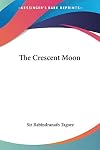
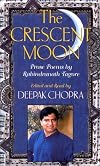
The Crescent Moon
by Rabindranath Tagore
On This Page
Description
Heartfelt poems and engaging stories for and about children by one of the greatest writers of Indian literature. In The Crescent Moon, Rabindranath Tagore brings alive the world of a child-in some poems he describes the simple joys of children at play, while in others, he feels the bonds of affection between mother and child, and in yet others, he expresses wonder at the earthly beauty all around us. Also included here are some of his most thought-provoking stories with themes that are show more relevant for children. In 'The Kabuliwalla' little Minnie becomes friendly with a burly Afghan man, but will she remember him when he returns after many years? 'The Parrot's Tale' is an allegory about the perils of the modern system of education, and 'The Kingdom of Cards', set in a fantasy land of cards, is a powerful statement against the stifling of freedom of any kind. Playful, innocent and full of tender love, with themes that will resonate with readers who are young and old, The Crescent Moon-with a thoughtful introduction by Ruskin Bond-is truly an enduring classic. show lessTags
Recommendations



























Member Reviews
I've enjoyed Tagore in the past, but these poems seemed to mostly be about children and babies and were just too cutsie for my taste.
LB-2
Nov 13, 2020Catalan
Ratings
Members
- Recently Added By
Author Information

1,022+ Works 9,573 Members
Rabindranath Tagore was born on May 7, 1861 in Calcutta, India. He attended University College, at London for one year before being called back to India by his father in 1880. During the first 51 years of his life, he achieved some success in the Calcutta area of India with his many stories, songs, and plays. His short stories were published show more monthly in a friend's magazine and he played the lead role in a few of the public performances of his plays. While returning to England in 1912, he began translating his latest selections of poems, Gitanjali, into English. It was published in September 1912 in a limited edition by the India Society in London. In 1913, he received the Nobel Prize for literature. He was the first non-westerner to receive the honor. In 1915, he was knighted by King George V, but Tagore renounced his knighthood in 1919 following the Amritsar massacre of 400 Indian demonstrators by British troops. He primarily worked in Bengali, but after his success with Gitanjali, he translated many of his other works into English. He wrote over one thousand poems; eight volumes of short stories; almost two dozen plays and play-lets; eight novels; and many books and essays on philosophy, religion, education and social topics. He also composed more than two thousand songs, both the music and lyrics. Two of them became the national anthems of India and Bangladesh. He died on August 7, 1941 at the age of 80. (Bowker Author Biography) show less
Some Editions
Series
Belongs to Publisher Series
Biblioteca [Selecta] (389)
Work Relationships
Is contained in
Common Knowledge
- Canonical title*
- De wassende maan
- Original title
- শিশু [Ṣiṣu]
- Alternate titles*
- De wassende maan (Liederen van het kind) (Liederen van het kind)
- Original publication date
- 1913 (Engels) (Engels); 1917 (Nederlands) (Nederlands)
*Some information comes from Common Knowledge in other languages. Click "Edit" for more information.
Classifications
Statistics
- Members
- 149
- Popularity
- 219,027
- Reviews
- 2
- Rating
- (3.54)
- Languages
- 7 — Catalan, Chinese, Dutch, English, German, Portuguese, Spanish
- Media
- Paper, Audiobook, Ebook
- ISBNs
- 37
- ASINs
- 18