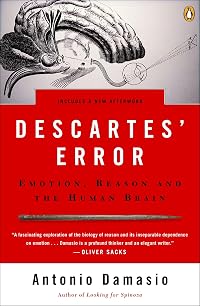
Descartes' Error: Emotion, Reason, and the Human Brain
by Antonio Damasio
On This Page
Description
Since Descartes famously proclaimed, "I think, therefore I am," science has often overlooked emotions as the source of a person's true being. Even modern neuroscience has tended, until recently, to concentrate on the cognitive aspects of brain function, disregarding emotions. This attitude began to change with the publication of Descartes' Error in 1995. Antonio Damasio--"one of the world's leading neurologists" (The New York Times)--challenged traditional ideas about the connection between show more emotions and rationality. In this wondrously engaging book, Damasio takes the reader on a journey of scientific discovery through a series of case studies, demonstrating what many of us have long suspected: emotions are not a luxury, they are essential to rational thinking and to normal social behavior. show lessTags
Recommendations

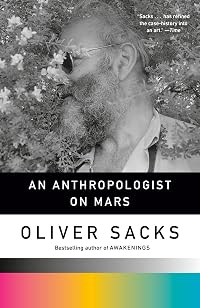
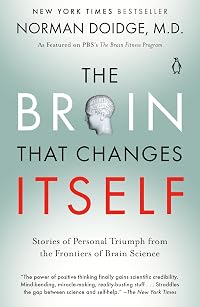
Member Recommendations
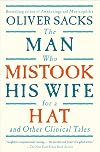
Member Reviews
Since Descartes famously proclaimed, "I think, therefore I am," science has often overlooked emotions as the source of a person’s true being. Even modern neuroscience has tended, until recently, to concentrate on the cognitive aspects of brain function, disregarding emotions. This attitude began to change with the publication of Descartes’ Error in 1995. Antonio Damasio—"one of the world’s leading neurologists" (The New York Times)—challenged traditional ideas about the connection between emotions and rationality. In this wondrously engaging book, Damasio takes the reader on a journey of scientific discovery through a series of case studies, demonstrating what many of us have long suspected: emotions are not a luxury, they are show more essential to rational thinking and to normal social behavior. show less
I’ve been reading Damasio “backwards”. One of the first books I read three years ago to try to understand the neuroscientific view of consciousness was Damasio’s The Feeling of What Happens: Body and Emotion in the Making of Consciousness published in 1999. That gave me a solid grounding in Damasio’s view of embodied consciousness, which has become a foundation of my thinking. Later, I came across Damasio’s paper on the somatic marker hypothesis, which powerfully rejects the idea that abstract thinking can take place without a direct connection to the body’s bio-regulatory processes.
With this context, when I finally read Descartes’ Error, (probably Damasio’s most cited book), it had some of the characteristics of a show more quaint, historical document, making the case for embodied cognition as though it were a radical new idea: “Surprising as it may sound, the mind exists in and for an integrated organism.” I guess that shows the enormous impact Damasio himself (and others such as Edelman, LeDoux, etc.) have had in changing perceptions about consciousness in a mere fifteen years. Thanks to these ground-breaking neuroscientists, “we’ve come a long way, baby.”
I can only agree with the array of distinguished names that cite Descartes’ Error as a key book for understanding human consciousness. Through Damasio, Phineas Gage has become a household name (in certain households!) – the emblematic tragic figure whose prefrontal cortex was severely damaged in 1848, and whose consequent experiences paved the way for the neurological understanding of the prefrontal importance in regulation of emotion, complex decision-making and general executive functioning.
I think there are two fundamental take-aways from Damasio’s classic: (1) the mind is embodied and without this foundation, no approaches to higher cognitive functions or theories of consciousness have much validity, and (2) the prefrontal cortex (pfc) is the crucial mediator between our “innate regulatory circuits” and our self-aware consciousness, with its attributes of reason, willpower, symbolization, abstraction, etc.
Damasio’s work is a significant resource for my research project. However, an initial impression of my thesis of “the tyranny of the pfc” might be that it’s incompatible with Damasio. After all, if the pfc is the key bridge between bodily regulation and self-awareness, how can there be a “tyranny” of the pfc? And what sense does my distinction of conceptual and animate consciousness make if conceptual consciousness is fundamentally connected with animate consciousness? In fact, though, my approach is not only consistent with Damasio, it relies squarely on the work of Damasio and others for its evidence.
My argument is not that an individual’s prefrontal cortex is, by itself, a “tyrant” of our consciousness, but that our Western cultural milieu, imposed on an infant’s perceptions before s/he has even learned to speak, shapes the individual brain in such a way that our sense of identity and values give an inappropriate priority to pfc-mediated attributes (such as planning, reason, abstraction, logic, etc.) at the expense of a balanced self-identity emphasizing such attributes as integrated mind/body experience or full awareness of the present moment.
Here’s a key passage from the book which relates to my notion of a split between animate and conceptual consciousness:
From an evolutionary perspective, the oldest decision-making device pertains to basic biological regulation; the next, to the personal and social realm; and the most recent, to a collection of abstract-symbolic operations under which we can find artistic and scientific reasoning, utilitarian-engineering reasoning, and the developments of language and mathematics. But although ages of evolution and dedicated neural systems may confer some independence to each of these reasoning/decision-making ‘modules,’ I suspect they are all interdependent.
What Damasio describes as the “collection of abstract-symbolic operations” is essentially the same as my idea of “conceptual consciousness.” As he pointedly emphasizes, they are “interdependent.” But Plato, St. Augustine, Descartes and the whole momentum of Western civilization have idealized the conceptual consciousness as “the soul,” as the proof of our very existence, and as the foundation for science and civilization. It’s only when we begin to re-balance our values to give equal import to our bodily existence that we can begin to move towards a ‘democracy of consciousness.’
So thanks, Antonio Damasio, for your ground-breaking classic. Highly recommended for anyone with an interest in gaining a serious understanding of human consciousness. show less
With this context, when I finally read Descartes’ Error, (probably Damasio’s most cited book), it had some of the characteristics of a show more quaint, historical document, making the case for embodied cognition as though it were a radical new idea: “Surprising as it may sound, the mind exists in and for an integrated organism.” I guess that shows the enormous impact Damasio himself (and others such as Edelman, LeDoux, etc.) have had in changing perceptions about consciousness in a mere fifteen years. Thanks to these ground-breaking neuroscientists, “we’ve come a long way, baby.”
I can only agree with the array of distinguished names that cite Descartes’ Error as a key book for understanding human consciousness. Through Damasio, Phineas Gage has become a household name (in certain households!) – the emblematic tragic figure whose prefrontal cortex was severely damaged in 1848, and whose consequent experiences paved the way for the neurological understanding of the prefrontal importance in regulation of emotion, complex decision-making and general executive functioning.
I think there are two fundamental take-aways from Damasio’s classic: (1) the mind is embodied and without this foundation, no approaches to higher cognitive functions or theories of consciousness have much validity, and (2) the prefrontal cortex (pfc) is the crucial mediator between our “innate regulatory circuits” and our self-aware consciousness, with its attributes of reason, willpower, symbolization, abstraction, etc.
Damasio’s work is a significant resource for my research project. However, an initial impression of my thesis of “the tyranny of the pfc” might be that it’s incompatible with Damasio. After all, if the pfc is the key bridge between bodily regulation and self-awareness, how can there be a “tyranny” of the pfc? And what sense does my distinction of conceptual and animate consciousness make if conceptual consciousness is fundamentally connected with animate consciousness? In fact, though, my approach is not only consistent with Damasio, it relies squarely on the work of Damasio and others for its evidence.
My argument is not that an individual’s prefrontal cortex is, by itself, a “tyrant” of our consciousness, but that our Western cultural milieu, imposed on an infant’s perceptions before s/he has even learned to speak, shapes the individual brain in such a way that our sense of identity and values give an inappropriate priority to pfc-mediated attributes (such as planning, reason, abstraction, logic, etc.) at the expense of a balanced self-identity emphasizing such attributes as integrated mind/body experience or full awareness of the present moment.
Here’s a key passage from the book which relates to my notion of a split between animate and conceptual consciousness:
From an evolutionary perspective, the oldest decision-making device pertains to basic biological regulation; the next, to the personal and social realm; and the most recent, to a collection of abstract-symbolic operations under which we can find artistic and scientific reasoning, utilitarian-engineering reasoning, and the developments of language and mathematics. But although ages of evolution and dedicated neural systems may confer some independence to each of these reasoning/decision-making ‘modules,’ I suspect they are all interdependent.
What Damasio describes as the “collection of abstract-symbolic operations” is essentially the same as my idea of “conceptual consciousness.” As he pointedly emphasizes, they are “interdependent.” But Plato, St. Augustine, Descartes and the whole momentum of Western civilization have idealized the conceptual consciousness as “the soul,” as the proof of our very existence, and as the foundation for science and civilization. It’s only when we begin to re-balance our values to give equal import to our bodily existence that we can begin to move towards a ‘democracy of consciousness.’
So thanks, Antonio Damasio, for your ground-breaking classic. Highly recommended for anyone with an interest in gaining a serious understanding of human consciousness. show less
The inability of some brain trauma patients to make appropriate decisions, even though they seem fully intelligent and physically unimpaired, raises questions this book proposes answers to. The particular damage to the prefrontal cortex is also associated with the patients describing themselves as unemotional when they might be expected to be happy or angry and not being able to make decisions that seem simple to those around them.
The author, by examining the structures of the regions damaged and by controlled experiments, has found that these damaged individuals don't retain or recall negative consequences to actions, though they may feel them in the moment. And the same brain regions involved in higher logic are those that are also show more involved in emotions.
So that without the remembered emotional weight of choice consequences—even though the patient remembers the consequences—he does not choose as if he does. That is to say that he makes risky choices avoided by subjects without the same sort of brain damage.
If I had read Descartes' Error within a few years of its publication, I might have ranked it at 5. Now, more than 3 decades later, I spent way too much time concerned that some of his theories, which I found attractive, had been disproven. show less
The author, by examining the structures of the regions damaged and by controlled experiments, has found that these damaged individuals don't retain or recall negative consequences to actions, though they may feel them in the moment. And the same brain regions involved in higher logic are those that are also show more involved in emotions.
So that without the remembered emotional weight of choice consequences—even though the patient remembers the consequences—he does not choose as if he does. That is to say that he makes risky choices avoided by subjects without the same sort of brain damage.
If I had read Descartes' Error within a few years of its publication, I might have ranked it at 5. Now, more than 3 decades later, I spent way too much time concerned that some of his theories, which I found attractive, had been disproven. show less
Can we really “free” our reasoning minds from emotional contexts in our thought processes? Writing in the 17th century, the French philosopher Rene Descartes thought so (or at least I think he thought so, based on the bits and pieces of Meditations I vaguely remember reading). However, as the title of this book implies, Damasio believes otherwise. The product of a cognitive neurologist, Descartes’ Error offers a relatively non-technical description of how our brains work, as well as when and why they do not.
Some of the material the author develops proved to be a lot more than I wanted to know and a few of the concepts are apparently a little dated. Still, he makes an effective case for the proposition that rationality has no show more context without emotion; this in turn suggests that psychological factors can and must matter in our understanding of economic activity and decision-making. At the very least, if you read this book you will know why the pain of Phineas P. Gage’s—the railroad worker who survived a spike being driven through his skull—turns out to be our gain. show less
Some of the material the author develops proved to be a lot more than I wanted to know and a few of the concepts are apparently a little dated. Still, he makes an effective case for the proposition that rationality has no show more context without emotion; this in turn suggests that psychological factors can and must matter in our understanding of economic activity and decision-making. At the very least, if you read this book you will know why the pain of Phineas P. Gage’s—the railroad worker who survived a spike being driven through his skull—turns out to be our gain. show less
This book poses a wonderful hypothesis, in opposition to the views espoused by purists of reason in ages past (Plato and Descartes among them): that not only are emotion and feelings quite inextricably interlaced with reason and rationality, they are also essential to reason's proper functioning.
Damasio introduces the reader to the issue at hand by providing case histories like that of Phineas Gage, the famous 19th century railroad worker whose personality underwent profound change on account of a horrific accident in which an iron rod was driven through his skull, resulting in the destruction of a portion of his brain somehow responsible for making sense of critical events arising in the social and personal spheres of his life. Damasio show more compares Gage with a modern counterpart, a man named "Elliot" who is able "to know but not to feel" (p. 45). Elliot, like Gage, made disastrous decisions, and his life, like that of his 19th century counterpart, spiraled out of control.
What is it that causes such subjects to lose control of their lives? How is it that one can retain one's knowledge, memory, intellect, and power to reason, yet find one's decision-making ability in ruins? How is it that the destruction of neural substance more concerned with "emotional" matters can so profoundly affect "intellectual" ones?
Damasio's central thesis deals with "somatic markers": as neural images of scenarios resulting from potential decisions on our part arise in our minds, unconscious feelings ("background feelings") accompany those images, disposing us to positively or negatively consider the images and the scenarios they represent (see p. 173). The resulting marking narrows our list of potential scenarios by allowing us to discount various options outright, or by strongly encouraging us to pursue various others.
Much of Damasio's book comprises the development of the neural machinery to support this hypothesis, the testing of the hypothesis through experiments performed on Elliot and others with brain damage like his, and the erecting of defenses against possible attacks on the hypothesis.
I've not found this book as engaging as the one that led me to it (Stanislas Dehaene's "The number sense"), but it's been an interesting read nonetheless.
On a personal note, I'm saddened that I most likely won't make it through many more books before Spring Break is over! show less
Damasio introduces the reader to the issue at hand by providing case histories like that of Phineas Gage, the famous 19th century railroad worker whose personality underwent profound change on account of a horrific accident in which an iron rod was driven through his skull, resulting in the destruction of a portion of his brain somehow responsible for making sense of critical events arising in the social and personal spheres of his life. Damasio show more compares Gage with a modern counterpart, a man named "Elliot" who is able "to know but not to feel" (p. 45). Elliot, like Gage, made disastrous decisions, and his life, like that of his 19th century counterpart, spiraled out of control.
What is it that causes such subjects to lose control of their lives? How is it that one can retain one's knowledge, memory, intellect, and power to reason, yet find one's decision-making ability in ruins? How is it that the destruction of neural substance more concerned with "emotional" matters can so profoundly affect "intellectual" ones?
Damasio's central thesis deals with "somatic markers": as neural images of scenarios resulting from potential decisions on our part arise in our minds, unconscious feelings ("background feelings") accompany those images, disposing us to positively or negatively consider the images and the scenarios they represent (see p. 173). The resulting marking narrows our list of potential scenarios by allowing us to discount various options outright, or by strongly encouraging us to pursue various others.
Much of Damasio's book comprises the development of the neural machinery to support this hypothesis, the testing of the hypothesis through experiments performed on Elliot and others with brain damage like his, and the erecting of defenses against possible attacks on the hypothesis.
I've not found this book as engaging as the one that led me to it (Stanislas Dehaene's "The number sense"), but it's been an interesting read nonetheless.
On a personal note, I'm saddened that I most likely won't make it through many more books before Spring Break is over! show less
Antonio Damasio presents a very central thesis in modern philosophy of mind: the interdependence of mind and body, with an extremely solid argumentation from neurology. Along the way he gives a brilliant introduction to neurology (especially the parts relevant for his argumentation and especially his own work).
I can recommend this book both to people interested in neurology ("and please not to much philosophical waffling") and philosophy of mind, as well as the general reader, as it is a very well-written book that will make anybody a little wiser on what it is to be human.
I can recommend this book both to people interested in neurology ("and please not to much philosophical waffling") and philosophy of mind, as well as the general reader, as it is a very well-written book that will make anybody a little wiser on what it is to be human.
Antonio Damasio analiza en profundidad las teorías del Descartes y afirma que el filósofo estaba completamente equivocado sobre su dualismo mente y cuerpo, utilizando como ejemplo a pacientes que exhibían daños en la corteza prefrontal. Por medio de estos casos descubrió que la razón, al igual que casi todos los procesos mentales, está “encarnada" a la entidad física del ser humano. Las emociones y otros estados arraigados en lo físico influyen profundamente en el modo en que razonan. Sin ellas, las personas no pueden tomar decisiones o toman decisiones contraproducentes. Este libro explica cómo Damasio creó, desarrolló y contrastó su teoría de “cognición encarnada,” que en la actualidad ejerce gran influencia en show more las áreas de psicología, neurociencia y economía conductual. Es un libro escrito al estilo de relato y es ameno y refrescante (aunque a veces arbitrario, por lo que ha de ser tomado con cuidado en una investigación experimental) show less
Members
- Recently Added By
Lists

Psicología - Clásicos
165 works; 2 members

Tom's Bookstore
346 works; 2 members

As 50 obras essenciais da literatura portuguesa
50 works; 1 member

Books in the Bibliography of The Illusion of Conscious Will by Daniel Wegne
273 works; 1 member
Author Information

22+ Works 6,941 Members
Antonio Damasio was born in Lisbon, Portugal and studied medicine at the University of Lisbon Medical School, where he also did his neurological residency and completed his doctorate. Eventually, he moved to the United States as a research fellow at the Aphasia Research Center in Boston. From 1976 to 2005, he was M.W. Van Allen Professor and Head show more of Neurology at the University of Iowa Hospitals and Clinics. He is currently the David Dornsife Professor of Neuroscience, Psychology, and Neurology, and director of the Brain and Creativity Institute at the University of Southern California. He has written several books on his research including Descartes' Error: Emotion, Reason, and the Human Brain, which won the Science et Vie prize; The Feeling of What Happens: Body and Emotion in the Making of Consciousness; and Looking for Spinoza: Joy, Sorrow, and the Feeling Brain. He has also received the Prince of Asturias Award in Science and Technology, the Kappers Neuroscience Medal, the Beaumont Medal from the American Medical Association, the Nonino Prize, the Reenpaa Prize in Neuroscience, and the Honda Prize. (Bowker Author Biography) show less
Some Editions
Awards and Honors
Awards
Series
Belongs to Publisher Series
Common Knowledge
- Canonical title*
- El error de Descartes : La emoción, la razón y el cerebro humano
- Original title
- Descartes' Error: Emotion, Reason and the Human Brain
- Original publication date
- 1994
- People/Characters
- Descartes, René, 1596-1650; Phineas Gage; John Harlow; William O. Douglas; Almeida Lima
- Dedication
- For Hanna
- First words
- Although I cannot tell for certain what sparked my interest in the neural underpinnings of reason, I do know when I became convinced that the traditional views on the nature of rationality could not be correct.
- Quotations
- We are, and then we think, and we think only inasmuch as we are, since thinking is indeed caused by the structures and operations of being.
- Last words
- (Click to show. Warning: May contain spoilers.)A difficult and indispensable job indeed, but one without which we will be far better off leaving Descartes' Error uncorrected.
- Blurbers
- Sacks, Oliver; Salk, Jonas; Hubel, David; Ornstein, Robert; Kagan, Jerome; Selzer, Richard (show all 7); Gardner, Howard
- Original language
- English
- Canonical DDC/MDS
- 152.4
*Some information comes from Common Knowledge in other languages. Click "Edit" for more information.
Classifications
Statistics
- Members
- 2,614
- Popularity
- 7,202
- Reviews
- 32
- Rating
- (3.88)
- Languages
- 15 — Czech, Dutch, English, Finnish, French, German, Greek, Hungarian, Italian, Norwegian (Bokmål), Polish, Portuguese, Spanish, Swedish, Turkish
- Media
- Paper, Audiobook, Ebook
- ISBNs
- 55
- UPCs
- 1
- ASINs
- 17