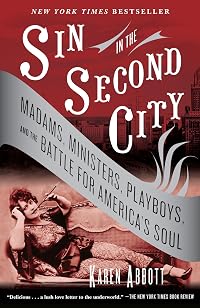
Sin in the Second City: Madams, Ministers, Playboys, and the Battle for America's Soul
by Karen Abbott
On This Page
Description
Step into the perfumed parlors of the Everleigh Club, the most famous brothel in American history---and the catalyst for a culture war that rocked the nation. Operating in Chicago's notorious Levee district at the dawn of the twentieth century, the club's proprietors, two aristocratic sisters named Minna and Ada Everleigh, welcomed moguls and actors, senators and athletes, foreign dignitaries and literary icons, into their stately double mansion, where thirty stunning Everleigh "butterflies" show more awaited their arrival. Courtesans named Doll, Suzy Poon Tang, and Brick Top devoured raw meat to the delight of Prince Henry of Prussia and recited poetry for Theodore Dreiser. Whereas lesser madams pocketed most of a harlot's earnings and kept a "whipper" on staff to mete out discipline, the Everleighs made sure their girls dined on gourmet food, were examined by an honest physician, and were even tutored in the literature of Balzac.Not everyone appreciated the sisters' attempts to elevate the industry. Rival Levee madams hatched numerous schemes to ruin the Everleighs, including an attempt to frame them for the death of department store heir Marshall Field, Jr. But the sisters' most daunting foes were the Progressive Era reformers, who sent the entire country into a frenzy with lurid tales of "white slavery"---the allegedly rampant practice of kidnapping young girls and forcing them into brothels. This furor shaped America's sexual culture and had repercussions all the way to the White House.
With a cast of characters that includes Jack Johnson, John Barrymore, John D. Rockefeller, Jr., William Howard Taft, "Hinky Dink" Kenna, and Al Capone, Sin in the Second City is Karen Abbott's colorful, nuanced portrait of the iconic Everleigh sisters, their world-famous club, and the perennial clash between our nation's hedonistic impulses and Puritanical roots. Culminating in a dramatic last stand between brothel keepers and crusading reformers, Sin in the Second City offers a vivid snapshot of America’s journey from Victorian-era propriety to twentieth-century modernity.
. show less
Tags
Recommendations


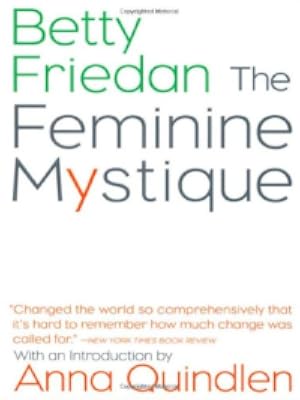
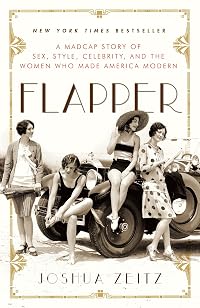
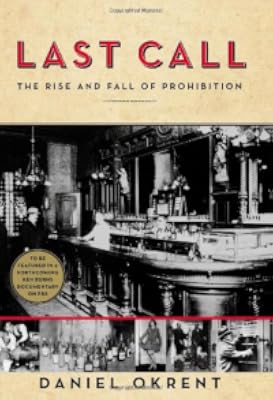
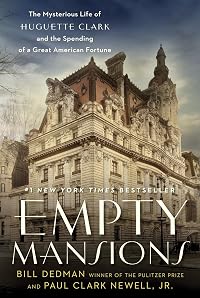



Member Recommendations
Member Reviews
I have an affinity towards the later years of the 1800s and the early 1900s. This was a remarkable time in history when everything seemed to be shifting - rights of citizens, morality, technology. What a fascinating time it would have been to be alive. Beyond my taste for this time period, I was drawn to this book because of its subject matter, appealing both to my prurient and my historical interests.
Abbott has done a great deal of research and uses ample direct quotes taken from primary and secondary documents, resulting in a smooth piece of nonfiction that often reads like a novel. Although she may take liberties with the thoughts and motivations of those involved, I would argue that she likely hits close to the mark. As the story of show more Chicago's underworld mechanics unfolds, so does an intriguing and animated cast of characters.
The main focus of the story is on the Everleigh sisters, chronicling the circumstances of their entrance into Chicago's brothel industry and their mysteriously mutable history before they arrived. The Everleighs owned the most prestigious and opulent brothel in Chicago, unsurpassed and envied by all others, and they masterfully navigated amongst social circles of criminals, prostitutes, brothel owners, politicians, businessmen and ministers.
The Everleighs walked the line between propriety and bawdiness, but so did the whole city. Politicians, businessmen, citizens, and preachers vied to steer the community in the direction of their desires. At one time, brothels could operate relatively openly by paying the right people and staying on their side of the proverbial tracks. As ministers gained more influence and society began to look more negatively on prostitution, brothel owners began to feel a minor pinch. Reports of a white slave trade in young women brought further negative attention upon the trade, resulting in government level action to close down these businesses. I like to imagine what a different place Chicago was one hundred years ago - boundaries unestablished, morals questioned, life wilder. show less
Abbott has done a great deal of research and uses ample direct quotes taken from primary and secondary documents, resulting in a smooth piece of nonfiction that often reads like a novel. Although she may take liberties with the thoughts and motivations of those involved, I would argue that she likely hits close to the mark. As the story of show more Chicago's underworld mechanics unfolds, so does an intriguing and animated cast of characters.
The main focus of the story is on the Everleigh sisters, chronicling the circumstances of their entrance into Chicago's brothel industry and their mysteriously mutable history before they arrived. The Everleighs owned the most prestigious and opulent brothel in Chicago, unsurpassed and envied by all others, and they masterfully navigated amongst social circles of criminals, prostitutes, brothel owners, politicians, businessmen and ministers.
The Everleighs walked the line between propriety and bawdiness, but so did the whole city. Politicians, businessmen, citizens, and preachers vied to steer the community in the direction of their desires. At one time, brothels could operate relatively openly by paying the right people and staying on their side of the proverbial tracks. As ministers gained more influence and society began to look more negatively on prostitution, brothel owners began to feel a minor pinch. Reports of a white slave trade in young women brought further negative attention upon the trade, resulting in government level action to close down these businesses. I like to imagine what a different place Chicago was one hundred years ago - boundaries unestablished, morals questioned, life wilder. show less
Ladies of ill repute are one of my favorite topics, and Chicago is my home town, so this is a natural. The story centers on the Everleigh sisters and their famous/notorious Everleigh Club in the Chicago Levee District at the turn of the 20th century. Alas, it’s kind of hard to tell how much is fact and how much is anecdotal. Ada and Minna Everleigh were extremely secretive about their own lives, and were always loyal to their customers, so author Karen Abbott depends a lot on hearsay.
The Everleigh Sisters ran the most expensive brothel in Chicago – possibly in the world. The entrance fee was $50, at a time when a workingman’s salary was around $50 a week. That didn’t get you anything but in the door (and the bouncers kept out show more anybody that didn’t look reputable, even if they could come up with the cash). Other houses in the Levee presented you with a row of bored ladies lined up in lingerie – at the Everleigh Club, all the girls were dressed in evening gowns and the parlor was supposed to be a place for conversation (in several languages), music, and discrete negotiation. The upstairs rooms all had themes – the Japanese Throne Room, the Blue Bedroom, etc. The girls got regular medical exams for one of the best doctors in Chicago; any girl could leave at any time, no questions asked; no drug use or drinking (by the girls) was allowed; and there was a waiting list pages long.
The very elegance of the Everleigh Club may have contributed to its downfall. The vice crusaders could apparently put up with hovels and cribs but not with something this deluxe. Author Abbott’s sympathies are clearly with the Everleighs; and most likely rightly so. The tack taken by reformers was racist and sexist, even for the times – the prostitution business was controlled by “Russian Jews” or “garlic-scented Italians” or Frenchmen, who turned good, clean American girls into white slaves. It was also claimed that Chicago was even more sinful than Salt Lake City, presumably based on religious prejudice as I expect Salt Lake City was probably the most vice-free city in North America in 1905. The inability of reformers to find a girl who would testify that she was a white slave didn’t hinder them at all; tracts and books claimed 60,000 girls a year entrapped by procurers. (The statistically inclined might want to calculate the population of girls of the appropriate age in, say, 1905 and figure out what percentage would need to be abducted to keep up with demand; this reminds me a little of the claim of a few years back that millions of children a year were being abducted to serve as human sacrifices in Satanist rites. I imagine the strategy was the same – arguing with the numbers made you a pimp or Satanist). Illustrations scattered through the book depict the downfall of a Gibson-girlish country maiden in the big city – first a casual meeting with a handsome stranger in an ice-cream parlor; then a dance hall (“the brilliantly lit entrance to Hell itself”); then the grave (some things may have been left out in between).
Unfortunately confirmable facts about what went on in the Everleigh Club are scarce and Abbott is reduced to various dramatic but unverifiable stories. Writers and poets like Edgar Lee Masters and Theodore Dreiser were reportedly frequent visitors; how did they afford the entrance fee? Did the sisters give them a discount? A millionaire reportedly married one of the girls – a Chinese girl, at that – one would think that would be verifiable. Prince Frederick of Prussia is supposed to have visited, and was treated to a simulated Bacchante orgy in which the girls dressed in skins, tore into a pile of raw steaks supposed to simulate a bloody corpse, then leapt into the laps of the visiting German dignitaries (the same event is supposed to have originated the custom of drinking champagne from a ladies shoe. It might also explain a lot of German foreign policy toward the US, I suppose).
Another annoyance is despite Abbott’s obvious sympathy, the girls are almost always described as “whores” or “harlots”; maybe “courtesans” would have made the book to long?
The Everleigh’s downfall came when they published a brochure. It didn’t show any girls, or even describe what went on in the Club – just photographs of the ornately furnished interior. It was finally too much for the reformers, who demanded action from Chicago politicians or else. With considerable reluctance, the Chicago police shut down the entire Levee. The sisters move to New York, where they started a book club and poetry circle with their presumably clueless neighbors. (The Everleigh Club had been rather famous for having an expensive and extensive library. I can almost imagine myself traveling back in time. Standing nervously in the parlor, I’m approached by a kohl-eyed, saffron-gowned beauty whose musky perfume intoxicates me and whose already impressive décolletage is rendered even more dramatic by her custom corset and sheer blouse. “I’ve been watching you” she says. “You’re the shy, intelligent type – I like that in a man. If you’d like to come upstairs with me, we can do things that you never even imagined”. Rendered speechless and distracted by the caress of a satin-gloved hand, I’m in tow toward the stairs when suddenly I glimpse something just barely visible through my fogged-up spectacles. “Just a moment, Miss; are those books over there?” Ah, well. Feeding the intellect has its rewards, too. I wonder if I’d get my $50 refunded?) show less
The Everleigh Sisters ran the most expensive brothel in Chicago – possibly in the world. The entrance fee was $50, at a time when a workingman’s salary was around $50 a week. That didn’t get you anything but in the door (and the bouncers kept out show more anybody that didn’t look reputable, even if they could come up with the cash). Other houses in the Levee presented you with a row of bored ladies lined up in lingerie – at the Everleigh Club, all the girls were dressed in evening gowns and the parlor was supposed to be a place for conversation (in several languages), music, and discrete negotiation. The upstairs rooms all had themes – the Japanese Throne Room, the Blue Bedroom, etc. The girls got regular medical exams for one of the best doctors in Chicago; any girl could leave at any time, no questions asked; no drug use or drinking (by the girls) was allowed; and there was a waiting list pages long.
The very elegance of the Everleigh Club may have contributed to its downfall. The vice crusaders could apparently put up with hovels and cribs but not with something this deluxe. Author Abbott’s sympathies are clearly with the Everleighs; and most likely rightly so. The tack taken by reformers was racist and sexist, even for the times – the prostitution business was controlled by “Russian Jews” or “garlic-scented Italians” or Frenchmen, who turned good, clean American girls into white slaves. It was also claimed that Chicago was even more sinful than Salt Lake City, presumably based on religious prejudice as I expect Salt Lake City was probably the most vice-free city in North America in 1905. The inability of reformers to find a girl who would testify that she was a white slave didn’t hinder them at all; tracts and books claimed 60,000 girls a year entrapped by procurers. (The statistically inclined might want to calculate the population of girls of the appropriate age in, say, 1905 and figure out what percentage would need to be abducted to keep up with demand; this reminds me a little of the claim of a few years back that millions of children a year were being abducted to serve as human sacrifices in Satanist rites. I imagine the strategy was the same – arguing with the numbers made you a pimp or Satanist). Illustrations scattered through the book depict the downfall of a Gibson-girlish country maiden in the big city – first a casual meeting with a handsome stranger in an ice-cream parlor; then a dance hall (“the brilliantly lit entrance to Hell itself”); then the grave (some things may have been left out in between).
Unfortunately confirmable facts about what went on in the Everleigh Club are scarce and Abbott is reduced to various dramatic but unverifiable stories. Writers and poets like Edgar Lee Masters and Theodore Dreiser were reportedly frequent visitors; how did they afford the entrance fee? Did the sisters give them a discount? A millionaire reportedly married one of the girls – a Chinese girl, at that – one would think that would be verifiable. Prince Frederick of Prussia is supposed to have visited, and was treated to a simulated Bacchante orgy in which the girls dressed in skins, tore into a pile of raw steaks supposed to simulate a bloody corpse, then leapt into the laps of the visiting German dignitaries (the same event is supposed to have originated the custom of drinking champagne from a ladies shoe. It might also explain a lot of German foreign policy toward the US, I suppose).
Another annoyance is despite Abbott’s obvious sympathy, the girls are almost always described as “whores” or “harlots”; maybe “courtesans” would have made the book to long?
The Everleigh’s downfall came when they published a brochure. It didn’t show any girls, or even describe what went on in the Club – just photographs of the ornately furnished interior. It was finally too much for the reformers, who demanded action from Chicago politicians or else. With considerable reluctance, the Chicago police shut down the entire Levee. The sisters move to New York, where they started a book club and poetry circle with their presumably clueless neighbors. (The Everleigh Club had been rather famous for having an expensive and extensive library. I can almost imagine myself traveling back in time. Standing nervously in the parlor, I’m approached by a kohl-eyed, saffron-gowned beauty whose musky perfume intoxicates me and whose already impressive décolletage is rendered even more dramatic by her custom corset and sheer blouse. “I’ve been watching you” she says. “You’re the shy, intelligent type – I like that in a man. If you’d like to come upstairs with me, we can do things that you never even imagined”. Rendered speechless and distracted by the caress of a satin-gloved hand, I’m in tow toward the stairs when suddenly I glimpse something just barely visible through my fogged-up spectacles. “Just a moment, Miss; are those books over there?” Ah, well. Feeding the intellect has its rewards, too. I wonder if I’d get my $50 refunded?) show less
Sin in the Second City was an amazing read, especially if you have ever visited the great city of Chicago. Deliciously decadent with details, Abbott's book makes non-fiction seem like the most interesting of fictional worlds. The insight into both the Levee district and those opposed to vice gives accurate perspectives from almost all involved in the red light district. Familiar names cropped up throughout the entire book, and new historical characters, like the Everleigh sisters, could create a lasting impression on any reader. I thoroughly enjoyed this book, and almost want to buy my copy that I borrowed from the library.
Sin in the Second City is salacious historical non-fiction about Chicago around 1900, starring the sisters Minna and Ada Everleigh, madams of the infamous Everleigh Club, the grandest brothel in a city of sin. The sisters ran a premium service, cultured girls at $50 a night plus drinks and tips, the almost legitimate tip of a vast enterprise of vice. Aldermen, European royalty, and millionaire heirs all came to party in a mansion with rooms decorated in mirrors, precious metals, and oriental fantasies.
But no party could last forever. Crusading reformers worked against 'White Slavery', where innocent girls were corrupted into prostitution with lies, drugs, and force. Preachers and prosecutors waged a decade long battle against corrupt show more political machines, and finally started putting the prostitutes in jail. The Everleighs got out just ahead of the crowd, taking their money and retiring to obscurity in New York, where they walked along Central Park, had a small literary circle, and obscured their past.
Abbott perhaps strays a bit too far into literary non-fiction here, inventing details which are probably right but also unverifiable. She does a masterful job making Chicago, and the sexual weirdness of the age, come alive. show less
But no party could last forever. Crusading reformers worked against 'White Slavery', where innocent girls were corrupted into prostitution with lies, drugs, and force. Preachers and prosecutors waged a decade long battle against corrupt show more political machines, and finally started putting the prostitutes in jail. The Everleighs got out just ahead of the crowd, taking their money and retiring to obscurity in New York, where they walked along Central Park, had a small literary circle, and obscured their past.
Abbott perhaps strays a bit too far into literary non-fiction here, inventing details which are probably right but also unverifiable. She does a masterful job making Chicago, and the sexual weirdness of the age, come alive. show less
This is a pretty entertaining, if somewhat shallow, slice of pop history which derives much of its verve from its vivid subject matter: the Everleigh Club, an exclusive, world-famous brothel founded in fin de siècle Chicago, populated by Balzac-quoting prostitutes and run by sisters Minna and Ada. Sin and the Second City covers the club's foundation, its rise to notoriety, its ongoing battle with reformers and religious campaigners, and its eventual closure, and it rattles along at a breezy pace.
As a narrative, it's very readable, a sort of nonfiction equivalent of an airport thriller, though as history it's much less satisfying. There are things which Abbott claims are unknown which she could surely have made an attempt at verifying show more (though I'm sure that doing so would remove a little of the story's glamour and mystique), things which she states as fact which are surely invented (how on earth does she know what people were thinking or feeling at particular moments?), things which are not explored as thoroughly as they could be (race, gender; the fates of some of the prostitutes who passed through the Everleigh Club, because I'm sure some of them at least could be traced).
Abbott's desire to romanticise the sisters—so much classier than those other madams! and of course she never even tries to question their assertions that they never engaged in the practice of buying women or coercing them into prostitution, though by her own account they barter with another madam over a prostitute at least once—is super problematic on a couple of levels, particularly a class one. Have sex with someone for 50 cents: Awful! Be referred to in the text as a whore! Have sex with someone for $500: Well, nothing inherently wrong with that! Be referred to in the text as a courtesan! Blergh.
Great subject matter, but could probably be treated much more thoughtfully by another writer. show less
As a narrative, it's very readable, a sort of nonfiction equivalent of an airport thriller, though as history it's much less satisfying. There are things which Abbott claims are unknown which she could surely have made an attempt at verifying show more (though I'm sure that doing so would remove a little of the story's glamour and mystique), things which she states as fact which are surely invented (how on earth does she know what people were thinking or feeling at particular moments?), things which are not explored as thoroughly as they could be (race, gender; the fates of some of the prostitutes who passed through the Everleigh Club, because I'm sure some of them at least could be traced).
Abbott's desire to romanticise the sisters—so much classier than those other madams! and of course she never even tries to question their assertions that they never engaged in the practice of buying women or coercing them into prostitution, though by her own account they barter with another madam over a prostitute at least once—is super problematic on a couple of levels, particularly a class one. Have sex with someone for 50 cents: Awful! Be referred to in the text as a whore! Have sex with someone for $500: Well, nothing inherently wrong with that! Be referred to in the text as a courtesan! Blergh.
Great subject matter, but could probably be treated much more thoughtfully by another writer. show less
I picked this book up because I was interested in learning more about Chicago in the era that it takes place. It tells a slightly fictionalized and sensationalized version of the story of the end of sanctioned prostitution in Chicago. Specifically, this book focuses on a specific brothel which existed in Chicago from 1900 to 1911. The Everleigh Club was run by two sisters who despised the typical practices of their profession, and catered to luxury tastes. They lied flagrantly about their pasts and origins, likely because their There were amusing plenty of racy and amusing anecdotes in this book, but there was also an overwhelming amount of sadness and misery. As much as the proprietors of that one particular brothel tried to mitigate show more the worst problems of prostitution in their facility, the whole institution was predatory and rotten in some awful ways. Much of the horrors of the profession are glossed over in this book, or only mentioned in the context of rumors and accusations. The book also covers some of the stories of the reformers who organized, lobbied, demonstrated, and ultimately caused the end of sanctioned prostitution, but their stories are secondary to those of the "Everleigh" sisters.
I wished that there had been less speculation and more cited facts, but I understand that it is impossible to find many sources of reliable information on a criminal enterprise whose members were deliberately deceptive about it afterwards. show less
I wished that there had been less speculation and more cited facts, but I understand that it is impossible to find many sources of reliable information on a criminal enterprise whose members were deliberately deceptive about it afterwards. show less
Sin in the Second City specifically discusses the rise and fall of the Everleigh Club in Chicago at the turn of the 20th century. The Everleigh Club was one of the extravagant attractions of Chicago between 1900 when the high-toned brothel opened and 1912, when a crusade against vice and white slavery forced Chicago's power brokers to close it down. Woven into the story of Minna and Ada Everleigh, the sisters responsible for both the tone and the services of the Club, is the story of the reformers who seek to eradicate vice and the corrupt politicians who patronize the Club, accepting bribes in exchange for protection while publicly outraged by its presence. Abbott thoroughly documents this happy triangle. The sisters ran a clean, show more professional cathouse. The reformers sang hymns in front of the brothels themselves, weeping over the the young girls who fallen into these dens of sin and degradation . And the politicians took advantage of both sides. Abbott's writing style is snappy. The (real) people whose lives the author follows are vividly described. She captures the human foibles that infuse this particular history while unobtrusively suggesting that there are modern parallels.
For more, click through at:
http://individualtake.blogspot.com/2007/08/sin-in-second-city-review.html show less
For more, click through at:
http://individualtake.blogspot.com/2007/08/sin-in-second-city-review.html show less
Members
- Recently Added By
Lists

Chicago Books
87 works; 4 members

Authors from the United States
245 works; 3 members
Author Information

6+ Works 4,243 Members
Karen Abbott was born and raised in Philadelphia, Pennsylvania. She worked as a journalist for several years at Philadelphia magazine and Philadelphia Weekly. She also wrote for Salon.com and other publications. She has written several books including Sin in the Second City and American Rose. (Bowker Author Biography)
Awards and Honors
Awards
Distinctions
Common Knowledge
- Alternate titles
- Sin in the Second City
- Original publication date
- 2007
- People/Characters
- Minna Everleigh; Ada Everleigh; Vic Shaw; Zoe Millard; 'Bathhouse' John Coughlin; Michael 'Hinky Dink' Kenna (show all 22); Ike Bloom; Ed Weiss; Big Jim Colosimo; Maurice Van Bever; Ernest Bell; Melbourne Boynton; Dean Sumner; Clifford Roe; Edwin Sims; James R. Mann; Mayor Edward Dunne; Mayor Fred Busse; Mayor Carter Harrison II; Louis Weiss; Marshall Field; Marshall Field Jr.
- Important places
- Chicago, Illinois, USA; Levee District, Chicago, Illinois, USA; Everleigh Club, Levee District, Chicago, Illinois, USA
- Epigraph
- Chicago, a gaudy circus beginning with the two-bit whore in the alley crib. - Theodore Dreiser
- Dedication
- For Laura Dittmar, my scarlet sister
- First words
- In the winter of 1899, a train clattered toward Chicago, fat coils of smoke whipping the sky.
- Last words
- (Click to show. Warning: May contain spoilers.)"From our Family to yours - Cordially Aida and Minna Lester, " deciding there was room in their lives for one more lie, and this one the loveliest of them all.
- Publisher's editor
- Cheiffetz, Julia
- Blurbers
- Gruen, Sara; Larson, Erik; Greene, Melissa Fay; Strauss, Darin; Rubinstein, Julian
- Canonical DDC/MDS
- 306.74097731109041
- Canonical LCC
- HQ146.C4
Classifications
- Genres
- General Nonfiction, History, Nonfiction
- DDC/MDS
- 306.74097731109041 — Society, government, & culture Social sciences, sociology & anthropology Social Behavior - Dating, Marriage, Divorce Sexual relations Sex work and prostitution Standard subdivisions History, geographic treatment, biography North America
- LCC
- HQ146 .C4 — Social sciences The family. Marriage, Women and Sexuality The Family. Marriage. Women Sexual life Prostitution
- BISAC
Statistics
- Members
- 1,652
- Popularity
- 13,538
- Reviews
- 56
- Rating
- (3.64)
- Languages
- English
- Media
- Paper, Audiobook, Ebook
- ISBNs
- 10
- ASINs
- 11