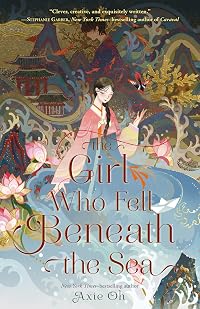
The Girl Who Fell Beneath the Sea
by Axie Oh
On This Page
Description
Fantasy. Folklore. Historical Fiction. Young Adult Fiction. Deadly storms have ravaged Mina's homeland for generations. Floods sweep away entire villages, while bloody wars are waged over the few remaining resources. Her people believe the Sea God, once their protector, now curses them with death and despair. In an attempt to appease him, each year a beautiful maiden is thrown into the sea to serve as the Sea God's bride, in the hopes that one day the "true bride" will be chosen and end the show more suffering. Many believe that Shim Cheong, the most beautiful girl in the village?and the beloved of Mina's older brother Joon?may be the legendary true bride. But on the night Cheong is to be sacrificed, Joon follows Cheong out to sea, even knowing that to interfere is a death sentence. To save her brother, Mina throws herself into the water in Cheong's stead. Swept away to the Spirit Realm, a magical city of lesser gods and mythical beasts, Mina seeks out the Sea God, only to find him caught in an enchanted sleep. With the help of a mysterious young man named Shin?as well as a motley crew of demons, gods, and spirits?Mina sets out to wake the Sea God and bring an end to the killer storms once and for all. But she doesn't have much time: a human cannot live long in the land of the spirits. And there are those who would do anything to keep the Sea God from waking... show lessTags
Recommendations






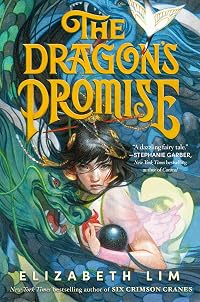
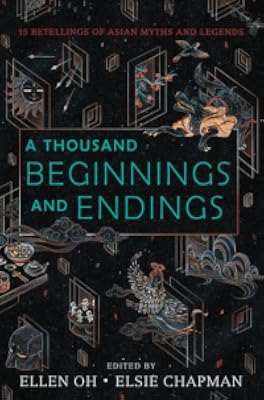
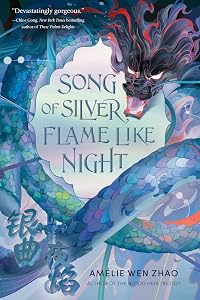

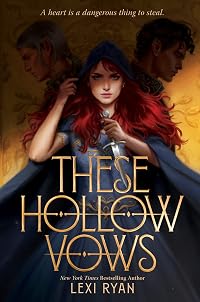
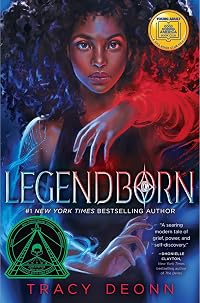







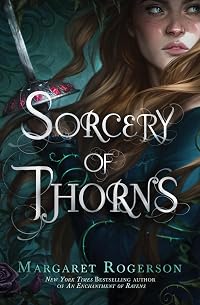
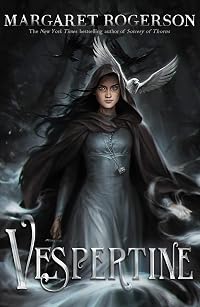




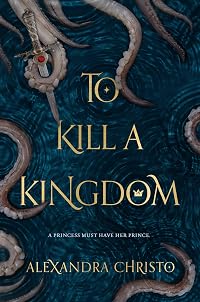







Member Recommendations
by Cecrow
Member Reviews
Over a week or so I read 7 different fairytale- and folklore-based novels. I think this one was my favorite of the bunch. I loved the details of the worlds, both real and magical, and I loved the main character, Mina, and her indomitable spark. The romance in the book, in a genre that's often plagued with a certain unattractive Byronic tendency in its male heros, was surprisingly lovely.
The Girl Who Fell Beneath The Sea is a lovely tale set against a well-imagined backdrop that evokes Hayao Miyazaki’s work at Studio Ghibli.
I love the beautifully-described setting, the whimsical side-characters (Mask and Dai and Miki), and especially the details of Asian culture that infuse the story with a distinctively Korean flavor, adding so much to the mystical lore of the Sea God’s bride.
Mina is a worthy main character, pragmatic and courageous, fiercely loyal and loving.
The author has said that this is the story of her heart, and that the story is about many things, foremost of which is Family. Indeed, the deeper themes go far beyond the usual YA fantasy fare, touching on:
- the malleability of Fate,
- the need to be true to show more ourselves (“Nothing extraordinary is ever done out of reason or logic, but because it’s the only way for your soul to breathe.”),
- the power of Love, and
- the power of Story. (“Stories are both an escape from the truths of the world and the only way to see them clearly.”)
This last quote resonates deeply with me.
A nitpick - I couldn’t understand how a personal loss of memory could cause a collective memory loss. Even so, this is, hands down, the best YA fantasy I’ve read in years. So glad I picked it up on a recommendation. show less
I love the beautifully-described setting, the whimsical side-characters (Mask and Dai and Miki), and especially the details of Asian culture that infuse the story with a distinctively Korean flavor, adding so much to the mystical lore of the Sea God’s bride.
Mina is a worthy main character, pragmatic and courageous, fiercely loyal and loving.
The author has said that this is the story of her heart, and that the story is about many things, foremost of which is Family. Indeed, the deeper themes go far beyond the usual YA fantasy fare, touching on:
- the malleability of Fate,
- the need to be true to show more ourselves (“Nothing extraordinary is ever done out of reason or logic, but because it’s the only way for your soul to breathe.”),
- the power of Love, and
- the power of Story. (“Stories are both an escape from the truths of the world and the only way to see them clearly.”)
This last quote resonates deeply with me.
A nitpick - I couldn’t understand how a personal loss of memory could cause a collective memory loss. Even so, this is, hands down, the best YA fantasy I’ve read in years. So glad I picked it up on a recommendation. show less
While all the strings of the plot were well tied-up (haha) by the time I finished this book, I couldn't help but wish there was more. I had fallen so in love with the characters, their complex relationships, and the setting, and found myself wanting to linger just a little bit longer in the Spirit Realm. This book was exciting and heart-wrenching and so, so enthralling. I personally found the portrayals of life-beyond-living in this book deeply comforting, and though I can't really explain it better, the intermingling of the characters both dead and alive was so...healing. I will be recommending this book to everyone that I know, and (having read the e-book) now plan to add one of its beautifully-bound versions to my physical show more collection. Thank you so much for sharing this story, Axie Oh! show less
Originally posted on Just Geeking by.
Content warnings:
As this book is set in the spirit realm there is a lot of discussion about death, loss and grief. In particular there is a storyline involving the loss of an infant during pregnancy, which may be triggering for readers who have had a miscarriage or lost a family member in this way. It is handled respectfully, and I say that as someone who comes from a family who has lost a baby to stillbirth (my brother). But it did still hit me in the gut, so I would like others to be aware.
While there are no scenes of specific violence towards women, the basis of this novel is that women have been sacrificed to the Sea God to be his bride regularly for years. Some went willingly, some volunteered show more and some did not. This is not romanticised, however, it is a form of violence against women and is based on misogynist attitudes.
The Girl Who Fell Beneath the Sea is a breathtakingly beautiful and haunting tale that is brought to life by Oh’s descriptive prose. As Mina falls beneath the waves and then walks through an abandoned village, everything was brought to life in mind with every word. The visualisation was so strong that I didn’t feel as though I was reading a book most of the time; I was right there alongside Mina, experiencing what she experienced.
Another of the things I liked about Oh’s writing was the way she chose to imagine indescribable and unseeable things, such as fate and a soul. In The Girl Who Fell Beneath the Sea fate is seen as a red string, connecting two people and providing the reader with a clear visual. Likewise, the souls of the Sea God’s brides are represented by birds. Fate and souls are two concepts that can mean something completely different depending on where you’re from, your culture or your beliefs, and by unifying them with a specific visual Oh unites the visualisation. The reader is “seeing” the same thing, and it also makes it less confusing by having a solid construct; souls have a tendency to be explained as some glowy intangible thing. In The Girl Who Fell Beneath the Sea they are real, they are tangible and things can happen to them. The same goes for fate.
The Girl Who Fell Beneath the Sea is a retelling of the Korean folktale “The Tale of Shim Cheong” and the original folktale is retold by Mina during the novel. By moving the tale away from Shim to Mina, to a girl who was not intended as the Sea God’s bride, Oh provides us with a protagonist who is instantly likeable. She’s not the most beautiful girl in the village, she’s just an ordinary person who wants to help. However, it isn’t just that she’s a good person – after all she jumped into the sea instead of someone else – it’s because she did it with just the vaguest of ideas of a plan. Find the Sea God, save village, check. That is as far as Mina had gotten and when she gets beneath the sea she finds that she is way over her head. How many of us have been there? *raises hand*.
She is not the only character that was likeable, and in all honesty, I can only think of one I disliked, and you’re supposed to dislike her. Everyone else was genuine and more importantly flawed. Not one of them was perfect. They either worried because they didn’t have something vital, because they had too much of something and didn’t want to become something bad, or because they were lonely and didn’t know how to express their emotions. Even in the Spirit Realm people have their insecurities. When I say people, I’m referring to a diverse range of creatures from Korean mythology that Oh has brought to life in wonderful detail. From the spirits of deceased humans, to mythical sea creatures, gods and goddesses, and demons.
I often find that in most mythological tales the gods and goddesses are one dimensional, not just seen as aloof but completely unable to change in any way. It was remarkable to come across a book where for once they weren’t set in stone, where they were seen to actively change based on events that happened in their lives (on and off the pages), affected by new people entering their lives.
While it is the spirit realm, it is not a realm full of doom and gloom. Mina finds a world that is worried about the Sea God’s sleep and raids by a mysterious goddess, yet still imbued with life and love. The Girl Who Fell Beneath the Sea is a book of opposites. It’s beautiful and joyful, yet it’s hauntingly emotional and there is one scene especially that will have you reaching for your tissues – I’m not sure if they were unhappy or happy tears (or a mixture of both!) for me! This is a tale about family and found family, of forging your own path while also following fate. Of doing the wrong thing, yet also doing the right thing. In death many characters have found rebirth, and I was strongly reminded of ying and yang, the concept of opposing forces actually be complementary and interconnected rather than total opposites. That is certainly the case in The Girl Who Fell Beneath the Sea where everything is connected.
I had a lot of theories, and while I had a few things worked out, I never quite connected everything. This is a book that is an emotional rollercoaster filled with twists and turns, and Oh keeps you on the edge of your seat. She feeds the reader just enough to get their imagination going, to keep the story moving but without giving the whole game away.
The one downside to The Girl Who Fell Beneath the Sea is that it is a standalone novel. It works as one, I have to admit, but as with all books that I love I always want the author to return to that universe and continue the characters’ story. This fact should not dissuade you from reading The Girl Who Fell Beneath the Sea at all. It is a magical book and one that will whisk you off to a world under the sea, and yes, you may have that song in your head for a few days after reading it ;)
For more of my reviews please visit my blog! show less
Content warnings:
While there are no scenes of specific violence towards women, the basis of this novel is that women have been sacrificed to the Sea God to be his bride regularly for years. Some went willingly, some volunteered
The Girl Who Fell Beneath the Sea is a breathtakingly beautiful and haunting tale that is brought to life by Oh’s descriptive prose. As Mina falls beneath the waves and then walks through an abandoned village, everything was brought to life in mind with every word. The visualisation was so strong that I didn’t feel as though I was reading a book most of the time; I was right there alongside Mina, experiencing what she experienced.
Another of the things I liked about Oh’s writing was the way she chose to imagine indescribable and unseeable things, such as fate and a soul. In The Girl Who Fell Beneath the Sea fate is seen as a red string, connecting two people and providing the reader with a clear visual. Likewise, the souls of the Sea God’s brides are represented by birds. Fate and souls are two concepts that can mean something completely different depending on where you’re from, your culture or your beliefs, and by unifying them with a specific visual Oh unites the visualisation. The reader is “seeing” the same thing, and it also makes it less confusing by having a solid construct; souls have a tendency to be explained as some glowy intangible thing. In The Girl Who Fell Beneath the Sea they are real, they are tangible and things can happen to them. The same goes for fate.
The Girl Who Fell Beneath the Sea is a retelling of the Korean folktale “The Tale of Shim Cheong” and the original folktale is retold by Mina during the novel. By moving the tale away from Shim to Mina, to a girl who was not intended as the Sea God’s bride, Oh provides us with a protagonist who is instantly likeable. She’s not the most beautiful girl in the village, she’s just an ordinary person who wants to help. However, it isn’t just that she’s a good person – after all she jumped into the sea instead of someone else – it’s because she did it with just the vaguest of ideas of a plan. Find the Sea God, save village, check. That is as far as Mina had gotten and when she gets beneath the sea she finds that she is way over her head. How many of us have been there? *raises hand*.
She is not the only character that was likeable, and in all honesty, I can only think of one I disliked, and you’re supposed to dislike her. Everyone else was genuine and more importantly flawed. Not one of them was perfect. They either worried because they didn’t have something vital, because they had too much of something and didn’t want to become something bad, or because they were lonely and didn’t know how to express their emotions. Even in the Spirit Realm people have their insecurities. When I say people, I’m referring to a diverse range of creatures from Korean mythology that Oh has brought to life in wonderful detail. From the spirits of deceased humans, to mythical sea creatures, gods and goddesses, and demons.
I often find that in most mythological tales the gods and goddesses are one dimensional, not just seen as aloof but completely unable to change in any way. It was remarkable to come across a book where for once they weren’t set in stone, where they were seen to actively change based on events that happened in their lives (on and off the pages), affected by new people entering their lives.
While it is the spirit realm, it is not a realm full of doom and gloom. Mina finds a world that is worried about the Sea God’s sleep and raids by a mysterious goddess, yet still imbued with life and love. The Girl Who Fell Beneath the Sea is a book of opposites. It’s beautiful and joyful, yet it’s hauntingly emotional and there is one scene especially that will have you reaching for your tissues – I’m not sure if they were unhappy or happy tears (or a mixture of both!) for me! This is a tale about family and found family, of forging your own path while also following fate. Of doing the wrong thing, yet also doing the right thing. In death many characters have found rebirth, and I was strongly reminded of ying and yang, the concept of opposing forces actually be complementary and interconnected rather than total opposites. That is certainly the case in The Girl Who Fell Beneath the Sea where everything is connected.
I had a lot of theories, and while I had a few things worked out, I never quite connected everything. This is a book that is an emotional rollercoaster filled with twists and turns, and Oh keeps you on the edge of your seat. She feeds the reader just enough to get their imagination going, to keep the story moving but without giving the whole game away.
The one downside to The Girl Who Fell Beneath the Sea is that it is a standalone novel. It works as one, I have to admit, but as with all books that I love I always want the author to return to that universe and continue the characters’ story. This fact should not dissuade you from reading The Girl Who Fell Beneath the Sea at all. It is a magical book and one that will whisk you off to a world under the sea, and yes, you may have that song in your head for a few days after reading it ;)
For more of my reviews please visit my blog! show less
The book made me tear up.
The main character Mina knows how to tell stories, and she has to tell them in order to try and revive the Sea God, and save her village. Of course, we have the mysterious Shin who protects the Sea God in his slumber, but apparently has no soul. We have the goddess of motherhood who needs bribes to answer prayers, we have the goddess of the moon who seems to want to kill Mina for a reason I still don’t understand. We also have these really interesting spirits who seem to be helping her for absolutely no reason but the banter.
“What if someone told you your fate was to climb up the highest waterfall and jump off ? Or to hurt the person you love most in the world? Or worse, to hurt the person who loves you most show more in the world? Fate is a tricky thing. It’s not for you, or me, or even the gods, to question what it is . . . or is not.”
And then as Mina puts the pieces of the hundred year old mystery together, you basically want to cry. I mean the story of Dai and Miki, when Dai is hurt, and who they all are really are to Mina is insanely sweet and perfect. The way things change between her and Shin especially after the visit to the goddess of motherhood is really nicely done.
“It was the boat that carried her. She would have fallen into the River of Souls if it weren’t for that cradle. Something crafted with so much love could never sink.”
I’d never heard of the folktale ‘The Tale of Shim Cheong,’ before this, but honestly one doesn’t need to in order to love this book. And if you aren’t a fan or haven’t watched spirited away and the other things they mention in the blurb, you really don’t have to. The book is beautiful and lyrical and sucks you in.
“That there is no place you can go so far away from forgiveness. Not from someone who loves you.” show less
The main character Mina knows how to tell stories, and she has to tell them in order to try and revive the Sea God, and save her village. Of course, we have the mysterious Shin who protects the Sea God in his slumber, but apparently has no soul. We have the goddess of motherhood who needs bribes to answer prayers, we have the goddess of the moon who seems to want to kill Mina for a reason I still don’t understand. We also have these really interesting spirits who seem to be helping her for absolutely no reason but the banter.
“What if someone told you your fate was to climb up the highest waterfall and jump off ? Or to hurt the person you love most in the world? Or worse, to hurt the person who loves you most show more in the world? Fate is a tricky thing. It’s not for you, or me, or even the gods, to question what it is . . . or is not.”
And then as Mina puts the pieces of the hundred year old mystery together, you basically want to cry. I mean the story of Dai and Miki, when Dai is hurt, and who they all are really are to Mina is insanely sweet and perfect. The way things change between her and Shin especially after the visit to the goddess of motherhood is really nicely done.
“It was the boat that carried her. She would have fallen into the River of Souls if it weren’t for that cradle. Something crafted with so much love could never sink.”
I’d never heard of the folktale ‘The Tale of Shim Cheong,’ before this, but honestly one doesn’t need to in order to love this book. And if you aren’t a fan or haven’t watched spirited away and the other things they mention in the blurb, you really don’t have to. The book is beautiful and lyrical and sucks you in.
“That there is no place you can go so far away from forgiveness. Not from someone who loves you.” show less
I received an advance copy via NetGalley.
The Girl Who Fell Beneath the Sea is a new YA novel brings vivid life to Korean mythology with a fun, engaging story packed with genuine heart. Mina has been raised in a world of violence and terrible storms. Every year, a girl is sacrificed to the wave in an effort to appease the Sea God. This year, the girl is the one that her older brother loves. Mina sacrifices herself instead, and finds herself in the Spirit Realm where new friends help her survive terrible foes. She has 30 days to find out why the Sea God is lost in sadness, or Mina will become a spirit herself and never be able to return to her family.
The structure is nice and cozy--feisty girl defies standards, ends up in a dangerous show more place, meets a cute boy, needs to solve a major mystery to hopefully end up with cute boy in the end. What makes this innovative and fresh is the spin Oh brings to the mythology and the emotional depth interwoven between all of these characters. There were a few moments where tears stung my eyes. This is a book that delivers on every level. I loved it. show less
The Girl Who Fell Beneath the Sea is a new YA novel brings vivid life to Korean mythology with a fun, engaging story packed with genuine heart. Mina has been raised in a world of violence and terrible storms. Every year, a girl is sacrificed to the wave in an effort to appease the Sea God. This year, the girl is the one that her older brother loves. Mina sacrifices herself instead, and finds herself in the Spirit Realm where new friends help her survive terrible foes. She has 30 days to find out why the Sea God is lost in sadness, or Mina will become a spirit herself and never be able to return to her family.
The structure is nice and cozy--feisty girl defies standards, ends up in a dangerous show more place, meets a cute boy, needs to solve a major mystery to hopefully end up with cute boy in the end. What makes this innovative and fresh is the spin Oh brings to the mythology and the emotional depth interwoven between all of these characters. There were a few moments where tears stung my eyes. This is a book that delivers on every level. I loved it. show less
“Nothing extraordinary is ever done out of reason or logic, but because it’s the only way for your soul to breathe.”
This beautifully written and updated twist on a Korean folktale was absolutely delightful from the first word to the last. Strength of heart and character, girl power, good v evil, kindness, cleverness, curiosity and bravery culminate to bring the story full circle.
Oh’s writing is descriptive and allows you to visualize the richness of the tale’s scenery while reading. Her characters are unique, vibrant, humorous, intensely human, each with their own role and personality. This book has catapulted into my top 5 of all time, I am that enthralled, and anyone with pull needs to get it to Disney as this folktale would show more be glorious on screen.
*I received an arc from the publisher through NetGalley for an honest review show less
This beautifully written and updated twist on a Korean folktale was absolutely delightful from the first word to the last. Strength of heart and character, girl power, good v evil, kindness, cleverness, curiosity and bravery culminate to bring the story full circle.
Oh’s writing is descriptive and allows you to visualize the richness of the tale’s scenery while reading. Her characters are unique, vibrant, humorous, intensely human, each with their own role and personality. This book has catapulted into my top 5 of all time, I am that enthralled, and anyone with pull needs to get it to Disney as this folktale would show more be glorious on screen.
*I received an arc from the publisher through NetGalley for an honest review show less
Members
- Recently Added By
Author Information

7+ Works 3,494 Members
Some Editions
Awards and Honors
Awards
Distinctions
Notable Lists
Common Knowledge
- Canonical title*
- The Girl Who Fell Beneath the Sea
- Original title
- The Girl Who Fell Beneath the Sea
- Original publication date
- 2022-02-22
- People/Characters*
- Shim Cheong; Joon, broer van Mina; Mina; Lady Hyeri, Sea Gods bride now married to Shiki God of Death; Sung, broer van Mina; Lord Kirin, The Silver One (show all 20); Namgi, is een Imugi; Lord Shin of Lotus House; Mask, meisje; Miki, zusje van Mask en Dai; Dai, jongen; Shiki, God of the Death of the Star House; Nari, schoolvriendin van Joon; Ryugi, broer van Namgi, servant to the Goddess of Moon and Memory; Hongi, neef van Namgi; Lord Bom of Tiger House; Lord Yu of Crane House; Goddess of Moon and Memory; Shim the Blind, vader van Shim Cheong; Soojin, schoonzusje van Mina
- Dedication
- For my mom,
who has always believed in me. - First words
- The myths of my people say only a true bride of the sea God can bring an end to this insatiable wrath.
- Last words
- (Click to show. Warning: May contain spoilers.)"Let's go home."
- Original language
- English
*Some information comes from Common Knowledge in other languages. Click "Edit" for more information.
Classifications
- Genres
- Teen, Fantasy, Fiction and Literature, Young Adult
- DDC/MDS
- 813.6 — Literature & rhetoric American literature in English American fiction in English 2000-
- LCC
- PZ7.1 .O39 .G — Language and Literature Fiction and juvenile belles lettres Fiction and juvenile belles lettres Juvenile belles lettres
- BISAC
Statistics
- Members
- 2,120
- Popularity
- 9,687
- Reviews
- 55
- Rating
- (4.08)
- Languages
- 9 — Dutch, English, French, German, Indonesian, Italian, Polish, Portuguese, Spanish
- Media
- Paper, Audiobook, Ebook
- ISBNs
- 20
- ASINs
- 8