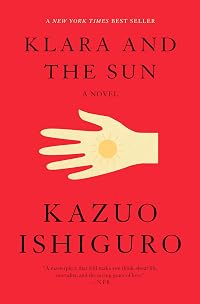
Klara and the Sun
by Kazuo Ishiguro
On This Page
Description
"From her place in the store that sells artificial friends, Klara--an artificial friend with outstanding observational qualities--watches carefully the behavior of those who come in to browse, and of those who pass in the street outside. She remains hopeful a customer will soon choose her, but when the possibility emerges that her circumstances may change forever, Klara she is warned not to invest too much in the promises of humans. In this luminous tale, Klara and the Sun, Nobel Prize show more winner Kazuo Ishiguro looks at our rapidly changing modern world through the eyes of an unforgettable narrator to explore a fundamental question: what does it mean to love?"-- show lessTags
Recommendations



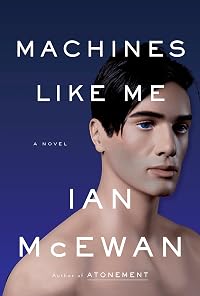




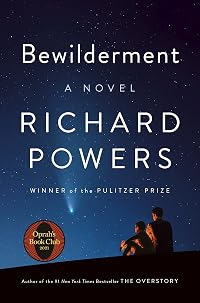
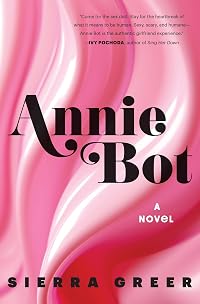
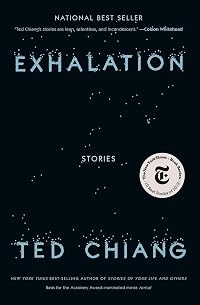

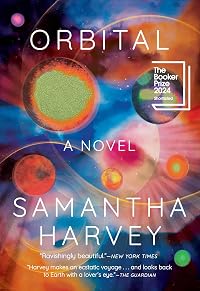
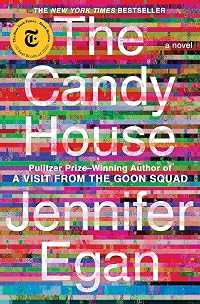

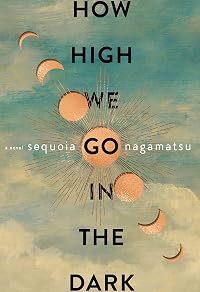




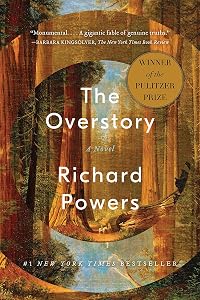
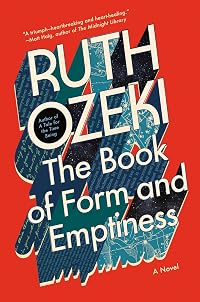




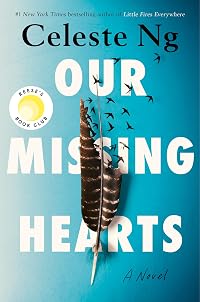
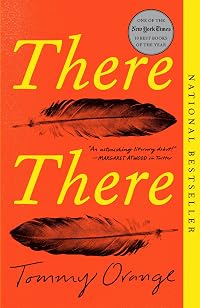
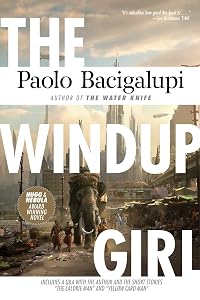

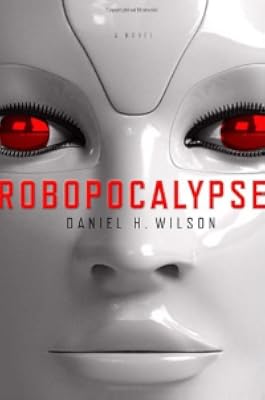
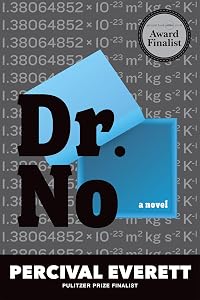
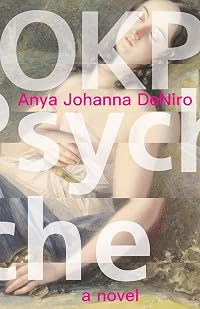
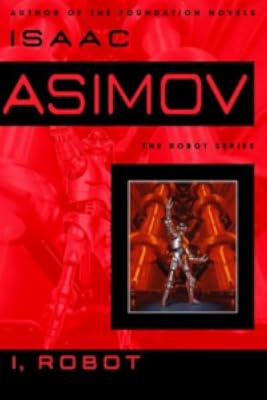
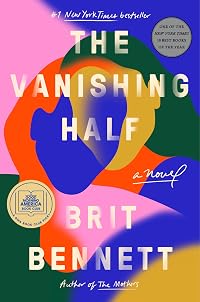
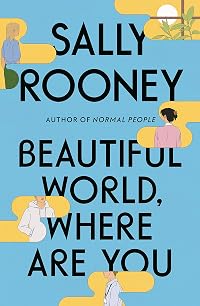

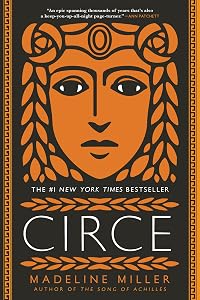


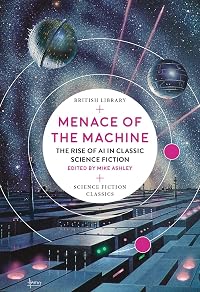
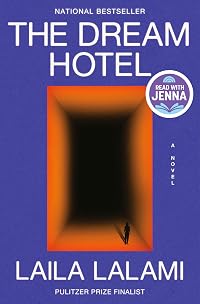
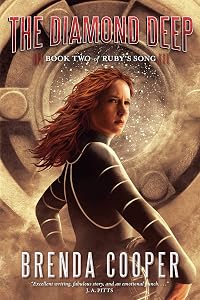

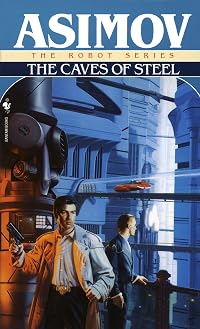
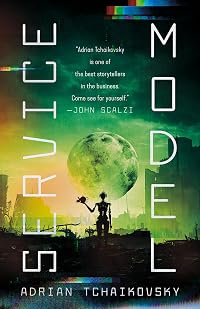

Member Recommendations
91
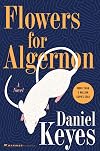
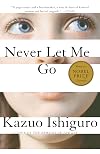
JuliaMaria Intelligente Roboter als Ersatz für menschliche Freundschaften und Liebe.
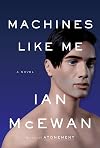
kjuliff SciFi and computers - possibility of them having souls.

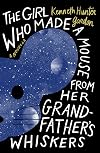
anonymous user Another view of non-human intelligence
Member Reviews
Set in the near future, Klara is a solar-powered artificial friend (AF), a companion robot for kids. As the story opens, she and other AFs are in a store waiting to be purchased. In this society, parents have the option of genetically enhancing their children, known as being “lifted,” which also comes with health risks. The storyline includes a “lifted’ child and her friend, who has not been lifted.
The story is told by Klara. People know AFs are programmed to learn, so they explain things to her, allowing the reader to gain information about this world. Each AF has a distinct personality. Klara is acutely perceptive. She notices details and the emotional states of humans around her. She is encoded to alleviate loneliness. She show more loves the sun and sees it as a source of strength for humans as well as AFs.
In this society, the gap between the wealthy and impoverished has increased to the point where some people are “post-employed.” Pollution is an ongoing issue. Questions of individuality are brought up and characters take opposing sides – does each person have a unique essence or not? What does it mean to be human? If AFs existed, would we treat them as life-forms or store them in the closet with no second thoughts?
Ishiguro is drawing attention to the challenges we will face as we deal with ethical issues involving gene editing, artificial intelligence, environmental issues, and how they may be incorporated into society. We are at a point where these changes are just starting, and this book is a warning to make sure we address them with forethought and intention. I waited a few days after reading it to write this review, and I find I am repeatedly revisiting the ideas in this novel. To me, this lingering thought process is a mark of a great book. show less
The story is told by Klara. People know AFs are programmed to learn, so they explain things to her, allowing the reader to gain information about this world. Each AF has a distinct personality. Klara is acutely perceptive. She notices details and the emotional states of humans around her. She is encoded to alleviate loneliness. She show more loves the sun and sees it as a source of strength for humans as well as AFs.
In this society, the gap between the wealthy and impoverished has increased to the point where some people are “post-employed.” Pollution is an ongoing issue. Questions of individuality are brought up and characters take opposing sides – does each person have a unique essence or not? What does it mean to be human? If AFs existed, would we treat them as life-forms or store them in the closet with no second thoughts?
Ishiguro is drawing attention to the challenges we will face as we deal with ethical issues involving gene editing, artificial intelligence, environmental issues, and how they may be incorporated into society. We are at a point where these changes are just starting, and this book is a warning to make sure we address them with forethought and intention. I waited a few days after reading it to write this review, and I find I am repeatedly revisiting the ideas in this novel. To me, this lingering thought process is a mark of a great book. show less
Set in the near future, Klara is a solar-powered artificial friend (AF), a companion robot for kids. As the story opens, she and other AFs are in a store waiting to be purchased. In this society, parents have the option of genetically enhancing their children, known as being “lifted,” which also comes with health risks. The storyline includes a “lifted’ child and her friend, who has not been lifted.
The story is told by Klara. People know AFs are programmed to learn, so they explain things to her, allowing the reader to gain information about this world. Each AF has a distinct personality. Klara is acutely perceptive. She notices details and the emotional states of humans around her. She is encoded to alleviate loneliness. She show more loves the sun and sees it as a source of strength for humans as well as AFs.
In this society, the gap between the wealthy and impoverished has increased to the point where some people are “post-employed.” Pollution is an ongoing issue. Questions of individuality are brought up and characters take opposing sides – does each person have a unique essence or not? What does it mean to be human? If AFs existed, would we treat them as life-forms or store them in the closet with no second thoughts?
Ishiguro is drawing attention to the challenges we will face as we deal with ethical issues involving gene editing, artificial intelligence, environmental issues, and how they may be incorporated into society. We are at a point where these changes are just starting, and this book is a warning to make sure we address them with forethought and intention. I waited a few days after reading it to write this review, and I find I am repeatedly revisiting the ideas in this novel. To me, this lingering thought process is a mark of a great book. show less
The story is told by Klara. People know AFs are programmed to learn, so they explain things to her, allowing the reader to gain information about this world. Each AF has a distinct personality. Klara is acutely perceptive. She notices details and the emotional states of humans around her. She is encoded to alleviate loneliness. She show more loves the sun and sees it as a source of strength for humans as well as AFs.
In this society, the gap between the wealthy and impoverished has increased to the point where some people are “post-employed.” Pollution is an ongoing issue. Questions of individuality are brought up and characters take opposing sides – does each person have a unique essence or not? What does it mean to be human? If AFs existed, would we treat them as life-forms or store them in the closet with no second thoughts?
Ishiguro is drawing attention to the challenges we will face as we deal with ethical issues involving gene editing, artificial intelligence, environmental issues, and how they may be incorporated into society. We are at a point where these changes are just starting, and this book is a warning to make sure we address them with forethought and intention. I waited a few days after reading it to write this review, and I find I am repeatedly revisiting the ideas in this novel. To me, this lingering thought process is a mark of a great book. show less
Kazuro Ishiguro gives me well-told speculative fiction about a human-like machine, an AF (artificial friend), Klara, as she/it waits in a shop, watches and learns about humans, is chosen as a companion by a teenage girl, and her/its existence as the human girl, Josie, grows while facing a life-threatening illness.
Klara is intelligent, empathetic, polite, protective, and wants to be helpful. Klara is solar powered, and maybe because of that has a near-religious, loving belief in the sun's power to be helpful.
The entire story is told in the first person by Klara, so as a reader I'm privileged to know what her world is like. She exists to serve and help, and I don't believe she understands herself as an object that is bought and sold. show more The humans, Josie, Josie's mother, a housekeeper/nanny, and the few other humans in the book, live in a different kind of world that that of Klara.
Throughout the book I could not stop thinking of Klara as "she", as a person. Ishiguro describes how she learns and reasons, how for example, when viewing new or stressful situations she first sees objects in "boxes" that eventually are resolved into ordinary scenes. There is little other description of how Klara looks, or is constructed. It's about how she acts.
This kind of novel helps me consider what a high-order artificial intelligence might be like, especially an embodied one like Klara. It is a much deeper novel than I can describe, but also a very readable one. show less
Klara is intelligent, empathetic, polite, protective, and wants to be helpful. Klara is solar powered, and maybe because of that has a near-religious, loving belief in the sun's power to be helpful.
The entire story is told in the first person by Klara, so as a reader I'm privileged to know what her world is like. She exists to serve and help, and I don't believe she understands herself as an object that is bought and sold. show more The humans, Josie, Josie's mother, a housekeeper/nanny, and the few other humans in the book, live in a different kind of world that that of Klara.
Throughout the book I could not stop thinking of Klara as "she", as a person. Ishiguro describes how she learns and reasons, how for example, when viewing new or stressful situations she first sees objects in "boxes" that eventually are resolved into ordinary scenes. There is little other description of how Klara looks, or is constructed. It's about how she acts.
This kind of novel helps me consider what a high-order artificial intelligence might be like, especially an embodied one like Klara. It is a much deeper novel than I can describe, but also a very readable one. show less
Klara and the Sun - Ishiguro
4 stars
I put this book aside for several months after I first started it. Klara made me uncomfortable. She was too sweet, too naive, too compliant. My initial reaction to her was that she wasn’t very interesting. At the same time, I felt that there was a big, flashing warning sign that something sinister was lurking just under the superficial surface. That’s the sort of thing I’d expect from Ishiguro. I was right.
I think this book is a perfect companion piece to Never Let Me Go. On the surface nothing seems to be terribly wrong. A young orphan gets to go to a nice boarding school. A sick girl gets a friendly robot to look after her needs and keep her company. This is where Ishiguro is such a genius. show more It all sounds good, but something doesn’t fit. Despite Klara’s limited perspective or Kathy H.’s restricted viewpoint, all of the underlying societal corruption and exploitation is eventually revealed.
I had the obvious expectation that Josie would die. All of Klara’s acute observations point that way. However, Josie’s survival was the perfect plot twist, if not the happy ending. The ‘lifted’ child goes off to her exclusive, competitive university. She’s on track to continue her privileged life. The disadvantaged ‘normal’ boy takes his talents to the revolutionary underground. Clearly there’s something brewing in the subculture of unemployed people like Josie’s father. Klara is content with her patch of sun as she is discarded in the junkyard. She is content because she is programmed to be agreeable. She doesn’t have any choice. show less
4 stars
I put this book aside for several months after I first started it. Klara made me uncomfortable. She was too sweet, too naive, too compliant. My initial reaction to her was that she wasn’t very interesting. At the same time, I felt that there was a big, flashing warning sign that something sinister was lurking just under the superficial surface. That’s the sort of thing I’d expect from Ishiguro. I was right.
I think this book is a perfect companion piece to Never Let Me Go. On the surface nothing seems to be terribly wrong. A young orphan gets to go to a nice boarding school. A sick girl gets a friendly robot to look after her needs and keep her company. This is where Ishiguro is such a genius. show more It all sounds good, but something doesn’t fit. Despite Klara’s limited perspective or Kathy H.’s restricted viewpoint, all of the underlying societal corruption and exploitation is eventually revealed.
A Dystopian tale of what it is to be human. Narrated by Klara, an Artificial Friend, whose sole purpose for existing is to be a young person’s companion. Klara, and therefore the reader's view of this world is very child-like initially, but when Klara is bought for 14 year old Josie, we get insights into the human’s that Klara interacts with. Klara’s view remains rather naive throughout the book, but she is exceptional at understanding Josie, so much so that part of her purpose is to ‘continue’ Josie.
The tone is rather unusual as Klara is devoid of emotion or feeling, which lends the book a rather cold feeling. The narrative is emotionless, except where humans interact and the reader perhaps comprehends more than Klara can show more about the nuances of being human. She has a belief that the Sun, which recharges her, also has the power of life and death over humans, and that she must strike a bargain, make a sacrifice to the Sun so that Josie can survive.
It is partially this emotionless tone coupled with Klara's naivety and the torrent of human emotions that are not so much understood by Klara, but re-told in such a way that the reader fills in the gaps based on their own experiences and understanding. It feels quite haunting when you realise it is about gene manipulation and artificial intelligence and its outcomes, and is depicting a world that we may not be far from.
I liked the book, even though it made me feel quite uncomfortable, which I think was due to the emotionless narration which struck me early on and held me at a distance from the story. Ishiguro has said that this is in a similar vein to Never Let Me Go, so it will be interesting to read that and then perhaps come back to this one.
It did also make me think of The Remains of the Day, not just the style but the focus on human traits and weaknesses. It is compelling and slightly chilling at the same time. show less
The tone is rather unusual as Klara is devoid of emotion or feeling, which lends the book a rather cold feeling. The narrative is emotionless, except where humans interact and the reader perhaps comprehends more than Klara can show more about the nuances of being human. She has a belief that the Sun, which recharges her, also has the power of life and death over humans, and that she must strike a bargain, make a sacrifice to the Sun so that Josie can survive.
It is partially this emotionless tone coupled with Klara's naivety and the torrent of human emotions that are not so much understood by Klara, but re-told in such a way that the reader fills in the gaps based on their own experiences and understanding. It feels quite haunting when you realise it is about gene manipulation and artificial intelligence and its outcomes, and is depicting a world that we may not be far from.
I liked the book, even though it made me feel quite uncomfortable, which I think was due to the emotionless narration which struck me early on and held me at a distance from the story. Ishiguro has said that this is in a similar vein to Never Let Me Go, so it will be interesting to read that and then perhaps come back to this one.
It did also make me think of The Remains of the Day, not just the style but the focus on human traits and weaknesses. It is compelling and slightly chilling at the same time. show less
I rarely read science fiction, and this was my first novel by Kazuo Ishiguro. I must admit that I was dazzled by the inventiveness of his storyline.
Klara, narrator and protagonist, is an AF (artificial friend), a robot who serves as a companion to the adolescent children of the elite. At the book's start, she is in an AF shop waiting to be purchased. Then, in a detached analytic, voice she describes her impressions of the human world from her perch in various sections of the store, from the back aisles to the front windows. Her observations, while childlike, reveal an earnest wish to serve her future human friend.
In Ishiguro's futuristic world, privileged children are " lifted," genetically engineered to provide them with an academic show more advantage in the highly polarized and stratified world. However, this advantage has its downsides. They are socially isolated, educated by tutors on "oblong" devices, only meeting with their peers at contrived social gatherings. In addition, the genetic engineering procedure can have adverse side effects resulting in illness or even death.
Josie, a sickly fourteen-year-old, selects Klara as her companion. Josie's older sister had been "lifted," causing illness that led to her death. As Klara enters Josie's home, she learns that Josie is suffering from the same symptoms as her sister and that Josie's mother wants Klara to engage in a bizarre scientific project to help her assuage her grief and guilt.
Klara is a solar-powered robot. Through her experience and observation of the world, she believes that the sun has Godlike powers and attempts to seek the sun's assistance in solving the family's dilemma as a way of circumventing the mother's plan.
The story includes astute social commentary, satire, philosophical dilemmas, and intriguing subplots. As I continue to think about the book and its ramifications, I look forward to reading other books by Ishiguro. show less
Klara, narrator and protagonist, is an AF (artificial friend), a robot who serves as a companion to the adolescent children of the elite. At the book's start, she is in an AF shop waiting to be purchased. Then, in a detached analytic, voice she describes her impressions of the human world from her perch in various sections of the store, from the back aisles to the front windows. Her observations, while childlike, reveal an earnest wish to serve her future human friend.
In Ishiguro's futuristic world, privileged children are " lifted," genetically engineered to provide them with an academic show more advantage in the highly polarized and stratified world. However, this advantage has its downsides. They are socially isolated, educated by tutors on "oblong" devices, only meeting with their peers at contrived social gatherings. In addition, the genetic engineering procedure can have adverse side effects resulting in illness or even death.
Josie, a sickly fourteen-year-old, selects Klara as her companion. Josie's older sister had been "lifted," causing illness that led to her death. As Klara enters Josie's home, she learns that Josie is suffering from the same symptoms as her sister and that Josie's mother wants Klara to engage in a bizarre scientific project to help her assuage her grief and guilt.
Klara is a solar-powered robot. Through her experience and observation of the world, she believes that the sun has Godlike powers and attempts to seek the sun's assistance in solving the family's dilemma as a way of circumventing the mother's plan.
The story includes astute social commentary, satire, philosophical dilemmas, and intriguing subplots. As I continue to think about the book and its ramifications, I look forward to reading other books by Ishiguro. show less
Klara is an AF (artificial friend), designed to be a companion for a teenage child. She's not the newest model, but she has unusual powers of observation and a keen desire to learn. She is chosen by Josie, a kind, but frail girl, and after some unusual questions from the Mother, is purchased and sent to their home. There she settles into her role as Josie's friend, and all seems quietly domestic, despite Josie's illness, until halfway through the book when Klara learns why she was really chosen.
[Klara and the Sun] reminds me of another Ishiguro novel, [Never Let Me Go]. In both, the author explores the definition of what it means to be human. In an age of artificial emotional intelligence, the line becomes less clear. What does it look show more like when the AI character is more loyal, forgiving, and understanding than the human one? Is one of the defining characteristics of being human the ability and desire to represent oneself differently to different people at different times? What would faith mean to an AI? If it is a soul which makes humans unique, can we say that an AI with a distinct personality has one?
I like the kinds of questions that Ishiguro poses, and in Klara we are presented with the most current societal dilemmas: genetic manipulation, success-oriented parenting, climate change, and even the social isolation of teens learning from home rather than school. Seeing these issues through the eyes of an AI removes the veneer of politics and presents them more as existential problems for the human race, not personal ones.
My favorite parts of the book were in the beginning when Klara is still in the store waiting to be bought. Her observations of the world through the display window were well-written. Things slowed a bit for me when she first arrives at Josie's home, but then at the halfway point, things picked up, and I read the second half in a single sitting. Ishiguro does a wonderful job creating a voice for Klara that is intelligent and innocent, yet inciteful in ways that I could imagine an AI being. If you liked [Never Let Me Go], I highly recommend this one as well. show less
[Klara and the Sun] reminds me of another Ishiguro novel, [Never Let Me Go]. In both, the author explores the definition of what it means to be human. In an age of artificial emotional intelligence, the line becomes less clear. What does it look show more like when the AI character is more loyal, forgiving, and understanding than the human one? Is one of the defining characteristics of being human the ability and desire to represent oneself differently to different people at different times? What would faith mean to an AI? If it is a soul which makes humans unique, can we say that an AI with a distinct personality has one?
I like the kinds of questions that Ishiguro poses, and in Klara we are presented with the most current societal dilemmas: genetic manipulation, success-oriented parenting, climate change, and even the social isolation of teens learning from home rather than school. Seeing these issues through the eyes of an AI removes the veneer of politics and presents them more as existential problems for the human race, not personal ones.
My favorite parts of the book were in the beginning when Klara is still in the store waiting to be bought. Her observations of the world through the display window were well-written. Things slowed a bit for me when she first arrives at Josie's home, but then at the halfway point, things picked up, and I read the second half in a single sitting. Ishiguro does a wonderful job creating a voice for Klara that is intelligent and innocent, yet inciteful in ways that I could imagine an AI being. If you liked [Never Let Me Go], I highly recommend this one as well. show less
Members
- Recently Added By
Published Reviews
ThingScore 100
In de licht dystopische roman voert Ishiguro een balanseer act uit op de rand van kitch. Hij slaagt er echter op een uitzonderlijke wijze in om in evenwicht te blijven. Klara en de zon is een zeer geslaagde, enigszins verontrustende en gelaagde nieuwe roman van de meesterverteller en Nobelprijswinnaar…lees verder>
added by Jordaan
Most of Ishiguro’s novels are slender books that are more complicated than they at first seem; Klara and the Sun is by contrast more simple than it seems, less novel than parable. Though much is familiar here—the restrained language, the under-stated first-person narration—the new book is much more overt than its predecessors about its concerns.... Ishiguro is unsentimental—indeed, one show more of the prevailing criticisms of him is that he’s too cold, his novels overly designed, his language detached. (Some of the worst writing on Ishiguro ascribes this to his being Japanese, overlooking that he’s lived in England since he was a small child.) In most hands, this business of the mother-figure who sacrifices all for a child would be mawkish. Here it barely seems like metaphor. Every parent has at times felt like an automaton. Every parent has pleaded with some deity for the safety of their child. Every parent is aware of their own, inevitable obsolescence. And no child can offer more than Josie’s glib goodbye, though perhaps Ishiguro wants to; the book is dedicated to his mother. show less
added by Lemeritus
It explores many of the subjects that fill our news feeds, from artificial intelligence to meritocracy. Yet its real political power lies not in these topical references but in its quietly eviscerating treatment of love. Through Klara, Josie, and Chrissie, Ishiguro shows how care is often intertwined with exploitation, how love is often grounded in selfishness ... this book focuses on those we show more exploit primarily for emotional labor and care work—a timely commentary during a pandemic in which the essential workers who care for us are too often treated as disposable ... If Never Let Me Go demonstrates how easily we can exploit those we never have to see, Klara and the Sun shows how easily we can exploit even those we claim to love ... a story as much about our own world as about any imagined future, and it reminds us that violence and dehumanization can also come wrapped in the guise of love. show less
added by Lemeritus
Lists

2022 Tournament of Books
18 works; 15 members

1001 Books You Must Read Before You Die
1,448 works; 1,133 members

Best Science Fiction Novels
816 works; 426 members

Top Five Books of 2021
604 works; 181 members
Best of British Literature
226 works; 41 members

Best Contemporary Literary Fiction (Around the Last 30 Years)
388 works; 124 members

Best 21st Century Books (So Far)
670 works; 85 members

Japanese Literature
230 works; 40 members

Books recommended by Barack Obama
295 works; 28 members

Favourite Books
1,819 works; 316 members

Books Set in Great Britain
191 works; 13 members

Nonhuman Protagonists
235 works; 34 members

2022 Notable Books for Adults
25 works; 3 members

Books Read in 2023
5,547 works; 145 members

2022 Hugo Awards -- Eligible Works -- Novels
43 works; 10 members

Best Japanese Fiction
41 works; 10 members

Fiction with Women's Names in the Title
378 works; 15 members

Book Club 2022
6 works; 1 member

The Economist Best Books 2021: Fiction
8 works; 1 member

Maybe This Year? Books to Look Forward To
412 works; 9 members

Phi Beta Kappa reading list
260 works; 8 members

Wishlist
10 works; 1 member

Books Read in 2022
5,168 works; 114 members

Obama Reads
181 works; 3 members
2022 To Read List
11 works; 2 members

Books in the Bibliography of Humans: A Monstrous History by Surekha Davies
346 works; 1 member

Recommend the 20 best books you've read in the last five years
2,168 works; 606 members

Books Read in 2025
4,091 works; 97 members

Top Five Books of 2025
954 works; 303 members

Fiction: Asia
85 works; 2 members

Books Read in 2026
1,940 works; 66 members
Fiction Published in 2021
27 works; 1 member

Books Read in 2021
5,361 works; 114 members

Books in English
14 works; 1 member

Books Read in 2024
4,623 works; 126 members

Barack Obama's Summer Reading List 2021
11 works; 2 members

NYT Readers best of 21st C
100 works; 8 members

Books recommended by Calgary Public Library staff
1,588 works; 4 members

Top Five Books of 2023
767 works; 317 members

Recommended Science-Fiction Books
40 works; 3 members
Washington Post The 10 Best Books of 2021
10 works; 1 member
KayStJ's to-read list
1,616 works; 11 members
Favourite Booker Prize contenders
73 works; 21 members

READ IN 2021
239 works; 4 members
Favorite Science Fiction
456 works; 218 members
Talk Discussions
Past Discussions
2021 Booker Prize Longlist: Klara and the Sun by Kazuo Ishiguro in Booker Prize (October 2021)
Author Information

Kazuo Ishiguro was born in Nagasaki, Japan on November 8, 1954. In 1960, his family moved to England. He received a bachelor's degree in English and philosophy from the University of Kent in 1978 and a master's degree in creative writing from the University of East Anglia in 1980. He became a British citizen in 1982. His first novel, A Pale View show more of Hills, received the Winifred Holtby Award from the Royal Society of Literature. His second novel, An Artist of the Floating World, received the Whitbread Book of the Year Award in 1986. His third novel, The Remains of the Day, received the Man Booker Prize for Fiction in 1989 and was adapted into a film starring Anthony Hopkins and Emma Thompson. His other works include The Unconsoled, When We Were Orphans, Never Let Me Go, Nocturnes: Five Stories of Music and Nightfall, and The Buried Giant. He was awarded the OBE in 1995 for services to literature and the Chevalier de l'Ordre des Arts et des Lettres by the French government in 1998. He received the 2017 Nobel Prize in Literature. He has also written several songs for jazz singer Stacey Kent and screenplays for both film and television. (Bowker Author Biography) show less
Some Editions
Awards and Honors
Series
Belongs to Publisher Series
Work Relationships
Is contained in
Common Knowledge
- Canonical title
- Klara and the Sun
- Original title
- Klara and the Sun
- Original publication date
- 2021-03-01
- People/Characters
- Klara; Josie; The Mother; Rick; The Father; Melania the Housekeeper (show all 9); Manager; Beggar Man; Miss Helen
- Dedication
- In memory of my mother
Shizuko Ishiguro
(1926-2019) - First words
- When we were new, Rosa and I were mid-store, on the magazines table side, and could see through more than half of the window.
- Quotations
- We're both of us sentimental. We can't help it. Our generation still carry the old feelings. A part of us refuses to let go. The part that wants to keep believing there's something unreachable inside each of us. Something tha... (show all)t's unique and won't transfer. But there's nothig like that, we know that now. (68%)
Mr Capaldi believed there was nothing special inside Josie that couldn’t be continued. He told the Mother he’d searched and searched and found nothing like that. But I believe now he was searching in the wrong place. Ther... (show all)e was something very special, but it wasn’t inside Josie. It was inside those who loved her. (98%) - Last words
- (Click to show. Warning: May contain spoilers.)Then she continued to walk away.
- Blurbers
- Menand, Louis; Atwood, Margaret; Gaiman, Neil; Grossman, Lev; The Swedish Academy
- Original language
- English
- Canonical DDC/MDS
- 823.914
- Canonical LCC
- PR6059.S5
Classifications
Statistics
- Members
- 7,578
- Popularity
- 1,515
- Reviews
- 306
- Rating
- (3.85)
- Languages
- 25 — Catalan, Chinese, Czech, Danish, Dutch, English, Estonian, Finnish, French, German, Hungarian, Italian, Japanese, Korean, Norwegian, Polish, Portuguese, Romanian, Russian, Slovenian, Spanish, Swedish, Turkish, Ukrainian, Vietnamese
- Media
- Paper, Audiobook, Ebook
- ISBNs
- 84
- ASINs
- 17