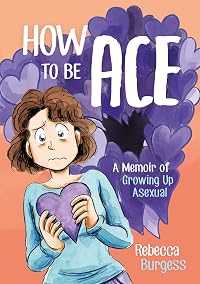
How to Be Ace: A Memoir of Growing Up Asexual
by Rebecca Burgess
On This Page
Description
"Brave, witty and empowering, this graphic memoir follows Rebecca as she navigates her asexual identity and mental health in a world obsessed with sex. From school to work to relationships, this book offers an unparalleled insight into asexuality."--Provided by publisher.Tags
Recommendations

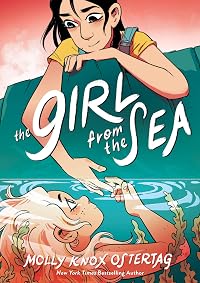
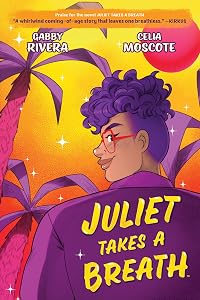
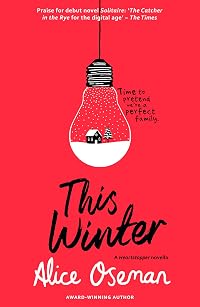
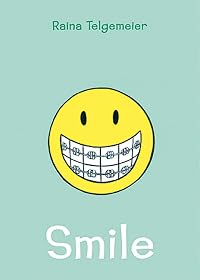




Member Recommendations

Member Reviews
(Note on pronouns: I used they/them pronouns for the author because that's what the bio on the back of this volume uses.)
This deals primarily with the time before Burgess knew asexuality existed (high school, college). Burgess worried about not feeling the way everyone else seemed to feel and initially tried to "fix" it by forcing themselves to do things that everyone else seemed to consider normal and natural - dating, kissing, touching - even though they didn't really want to and, in fact, sometimes became incredibly anxious while attempting those things. Although Burgess did eventually end up in a relationship with an asexual woman, they learned to stop thinking that relationships were some kind of ultimate goal that had to progress show more in a particular way. This memoir also touches on the author's struggles with OCD and anxiety, as well as job hunting after graduating from art school during the recession.
I got this on a whim after hearing about it, I think, on Twitter. The first part of the title was worrisome - it sounded prescriptive, and I wondered whether this would be a "one true way to be asexual" sort of book. Thankfully, I didn't get that impression at all from the work itself. Burgess wrote about their own experiences but made it clear that asexuality is a spectrum that encompasses a wide range of experiences that weren't necessarily the same as theirs.
I found that I could relate to quite a few things in this memoir, which was both good and bad. "Good" in the sense that it's nice to be reminded that I'm not the only one who thinks or feels this way or has had these experiences, because sometimes it sure feels like it. "Bad" in the sense that being able to relate to some of these experiences made me surprisingly anxious.
I appreciated that Burgess discussed both asexuality and their OCD and anxiety, and I particularly connected to this bit, in which Burgess forced themselves to sleep in the same bed with a guy they were dating (just sleep - there's no forced sex in the volume, for those worried about that possibility):
This ties in pretty well with my experience with anxiety. For example, one thing that makes me really anxious is driving long distances and/or to places I'm unfamiliar with, especially if the driving conditions aren't absolutely perfect (great weather, no construction, little traffic). Forcing myself to do driving that's even just a little outside my comfort zone has helped me gradually expand my comfort zone, but I've also found that it makes it really difficult for me to accurately judge dangerous situations, because every situation feels dangerous. So I spent a portion of this graphic novel worried about what Burgess might force themselves to do and what red flags they might miss because it was too hard to recognize the difference between "this will be better once I expand my comfort zone" and "this is something I neither want nor need."
Burgess ends up in a decent place by the end of the volume: more comfortable in their own skin, doing work that pays the bills and uses the skills they learned in art school, and in a relationship with someone who understands them. I do wonder about the therapy aspect - the volume showed up to the point where Burgess's therapist accidentally pushed them to a breaking point that they eventually seemed to get past with the help of family. Did Burgess go back to that therapist, or find a better one who also wouldn't pathologize asexuality?
This didn't 100% work for me for reasons I can't articulate (aside from the "sympathetic anxiety" aspect), but overall I thought it was a good read.
(Original review posted on A Library Girl's Familiar Diversions.) show less
This deals primarily with the time before Burgess knew asexuality existed (high school, college). Burgess worried about not feeling the way everyone else seemed to feel and initially tried to "fix" it by forcing themselves to do things that everyone else seemed to consider normal and natural - dating, kissing, touching - even though they didn't really want to and, in fact, sometimes became incredibly anxious while attempting those things. Although Burgess did eventually end up in a relationship with an asexual woman, they learned to stop thinking that relationships were some kind of ultimate goal that had to progress show more in a particular way. This memoir also touches on the author's struggles with OCD and anxiety, as well as job hunting after graduating from art school during the recession.
I got this on a whim after hearing about it, I think, on Twitter. The first part of the title was worrisome - it sounded prescriptive, and I wondered whether this would be a "one true way to be asexual" sort of book. Thankfully, I didn't get that impression at all from the work itself. Burgess wrote about their own experiences but made it clear that asexuality is a spectrum that encompasses a wide range of experiences that weren't necessarily the same as theirs.
I found that I could relate to quite a few things in this memoir, which was both good and bad. "Good" in the sense that it's nice to be reminded that I'm not the only one who thinks or feels this way or has had these experiences, because sometimes it sure feels like it. "Bad" in the sense that being able to relate to some of these experiences made me surprisingly anxious.
I appreciated that Burgess discussed both asexuality and their OCD and anxiety, and I particularly connected to this bit, in which Burgess forced themselves to sleep in the same bed with a guy they were dating (just sleep - there's no forced sex in the volume, for those worried about that possibility):
"Despite not liking being this close, I persevered through the night. A lot of people might think 'Why didn't you just say no?' But, I didn't know that asexuality existed... And when you've never felt anything before, you assume that everyone feels this way at first, and that the nice part must come after forcing yourself to do things."
This ties in pretty well with my experience with anxiety. For example, one thing that makes me really anxious is driving long distances and/or to places I'm unfamiliar with, especially if the driving conditions aren't absolutely perfect (great weather, no construction, little traffic). Forcing myself to do driving that's even just a little outside my comfort zone has helped me gradually expand my comfort zone, but I've also found that it makes it really difficult for me to accurately judge dangerous situations, because every situation feels dangerous. So I spent a portion of this graphic novel worried about what Burgess might force themselves to do and what red flags they might miss because it was too hard to recognize the difference between "this will be better once I expand my comfort zone" and "this is something I neither want nor need."
Burgess ends up in a decent place by the end of the volume: more comfortable in their own skin, doing work that pays the bills and uses the skills they learned in art school, and in a relationship with someone who understands them. I do wonder about the therapy aspect - the volume showed up to the point where Burgess's therapist accidentally pushed them to a breaking point that they eventually seemed to get past with the help of family. Did Burgess go back to that therapist, or find a better one who also wouldn't pathologize asexuality?
This didn't 100% work for me for reasons I can't articulate (aside from the "sympathetic anxiety" aspect), but overall I thought it was a good read.
(Original review posted on A Library Girl's Familiar Diversions.) show less
What a way to feel validated. Rebecca Burgess covers topics that don't only pertain to identifying as asexual, but also her OCD, her anxiety, and other concerns she had/faced growing up, making this memoir relevant even if you aren't under the ace umbrella (which, if you are or are exploring your identify, I highly recommend this book). I've always struggled with figuring out how to tell my friends and family about my identity, and now honestly I feel like I can just give them this book to read to provide insight into how my mind and feelings work.
I think it’s interesting that the author chose to focus on “growing up ace” and left “...and autistic” out of the title, since that’s clearly a huge part of their experience. It’s a very particular version of an ace experience, but no book can be every book, and I’m very glad this exists!
Rebecca Burgess learns to cope with their asexuality surrounded by people who are either ignorant about or enraged by its existence or convinced they are one good lay away from a "cure." They also discuss their OCD, and while they don't explore any connection, I am curious about the frequency of any correlations that may occur between the two, how they might overlap in a Venn diagram say. The author bio on the back cover says they are autistic, but that seems to be only indirectly addressed in the narrative.
I found the anecdotes and information in the book to be interesting in an introductory sort of way. I was occasionally frustrated by the shortness of chapters as a topic seemed finished off without delving as deeply as I would have show more hoped. And while I liked the insights and info offered in the out-of-narrative chapter interstitials, I found their placement confusing or even spoiler-y. It might have been better to gather these factoids into their own chapter or an end matter section.
I'll certainly check out anything Burgess might do next. I see they have some webcomics too that I might explore soon. show less
I found the anecdotes and information in the book to be interesting in an introductory sort of way. I was occasionally frustrated by the shortness of chapters as a topic seemed finished off without delving as deeply as I would have show more hoped. And while I liked the insights and info offered in the out-of-narrative chapter interstitials, I found their placement confusing or even spoiler-y. It might have been better to gather these factoids into their own chapter or an end matter section.
I'll certainly check out anything Burgess might do next. I see they have some webcomics too that I might explore soon. show less
Rebecca Burgess writes about their experiences growing up uninterested in crushes and dating, and being in distress about being abnormal and broken due to society's messages. They find out about asexuality and write about their struggles getting others to accept and understand them, as well as dealing with anxiety and OCD. Society's pressure about dating and having sex as markers of adulthood are dwelled on a lot in this book. Burgess tries dating, but they hate the physical contact that is expected. You can't help but to root for Burgess as they come to understand and accept themself and find a relationship that works for them. I loved the Good Omens shout-out in this book; Burgess says they see their own asexual relationship reflected show more in Aziraphale's and Crowley's. I think the intended audience for this book is young adult and older, based on the mentions of sex. The drawing style is a very 'childish' style and makes the book seem younger than it is. The page where it depicts various ace approaches to sex actually has illustrations of couples engaging in these activities, and with the cutesy cartoony drawing style it kind of takes you aback. Overall, this was a valuable book and I'm glad I read it. This is also a book I wish I'd had in high school.
Read the full review, including trigger warnings and representation list, at https://fileundermichellaneous.blogspot.com/2023/10/ace-week-books.html show less
Read the full review, including trigger warnings and representation list, at https://fileundermichellaneous.blogspot.com/2023/10/ace-week-books.html show less
This is a solid memoir, one which I related to a lot in my own asexual experiences. I appreciated the information breaks at the end of each chapter. I felt they didn’t interrupt the story too much, and they could be helpful for someone without knowledge of asexuality. I also really appreciated the parts about Burgess’s OCD and anxiety. A quick read with solid information and a great message of self acceptance and understanding.
*Thank you to Netgalley and the publisher for providing an eARC in exchange for an honest review.*
How To Be Ace is a graphic memoir that explores the author's journey to learn about and come to terms with being ace as she graduates high school and starts at art school.
The watercolor art was so cool and I really liked the way the story was told.
The title kind of makes it sound like there's only one way to be asexual, which is obviously false and the book does shortly touch on different labels under the ace umbrella. But I also feel like I should note that this is a memoir about one person's experiences and that being ace can be so different from one person to another. There were a few pages of more fact based info and I almost wished show more there'd been just slightly more of those.
That noted...
I really liked this book. It was great a great read. I loved how the asexual experience was portraited in words and illustrations. There were many times where the story got a little bit too relatable.
This book is also about more than just being ace, since Rebecca also has OCD which is also covered.
Overall a beautiful, hopeful, and emotional memoir. show less
How To Be Ace is a graphic memoir that explores the author's journey to learn about and come to terms with being ace as she graduates high school and starts at art school.
The watercolor art was so cool and I really liked the way the story was told.
The title kind of makes it sound like there's only one way to be asexual, which is obviously false and the book does shortly touch on different labels under the ace umbrella. But I also feel like I should note that this is a memoir about one person's experiences and that being ace can be so different from one person to another. There were a few pages of more fact based info and I almost wished show more there'd been just slightly more of those.
That noted...
I really liked this book. It was great a great read. I loved how the asexual experience was portraited in words and illustrations. There were many times where the story got a little bit too relatable.
This book is also about more than just being ace, since Rebecca also has OCD which is also covered.
Overall a beautiful, hopeful, and emotional memoir. show less
Members
- Recently Added By
Lists

Neuro Pride Book Club Book Shares
98 works; 1 member

Books Read in 2026
1,993 works; 67 members

The Five Books That Represent Us
391 works; 148 members

The Best LGBTQ Nonfiction
210 works; 69 members
Author Information
3 Works 234 Members
Awards and Honors
Awards
Distinctions
Notable Lists
Common Knowledge
- Original publication date
- 2021
- People/Characters
- Rebecca Burgess; Sarah Burgess (twin sister of Rebecca Burgess); Sherlock Holmes; Dexter Morgan (of Jeff Lindsay's Dexter); Jughead Jones; Anthony J. Crowley (of Good Omens) (show all 9); Aziraphale (of Good Omens); Boris Johnson; David Cameron
- Important places
- England, UK; Bristol, England, UK
- First words
- When I was in school, everyone got to a certain age where they became interested in talking about only one thing: boys, girls and sex. Me though? I was only interested in talking about comics.
- Last words
- (Click to show. Warning: May contain spoilers.)Life can never be perfect . . . but I'm glad that I've figured out how to be okay with that.
- Original language
- English
Classifications
- Genres
- LGBTQ+, Graphic Novels & Comics, Teen
- DDC/MDS
- 306.762 — Society, government, & culture Social sciences, sociology & anthropology Social Behavior - Dating, Marriage, Divorce Sexual relations Sexual orientation, transgender identity, intersexuality Asexuality [previously included eunuchs and castrati]
- LCC
- HQ73.85 .G7 .B87 — Social sciences The family. Marriage, Women and Sexuality The Family. Marriage. Women Sexual life
- BISAC
Statistics
- Members
- 187
- Popularity
- 175,272
- Reviews
- 11
- Rating
- (3.79)
- Languages
- English
- Media
- Paper, Ebook
- ISBNs
- 2
- ASINs
- 1