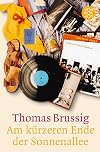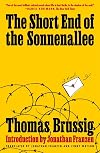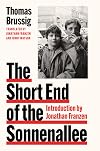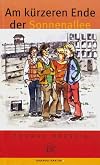
The Short End of the Sonnenallee
by Thomas Brussig
On This Page
Description
The Short End of the Sonnenallee, is a satire set, literally, on the Sonnenallee, the famed "boulevard of the sun" in East Berlin. Within this boulevard lives Michael, an adolescent who faces daily ridicule whenever he steps out of his apartment building and comes into view of the observation platform on the West side. "Look, a real Zonie. Can we take your picture?" Hopelessly in love with the most beautiful girl on the street, Michael is batted away in favour of the Western boys who are show more free to cross the border. show lessTags
Recommendations











Member Recommendations

Member Reviews
The Sonnenallee has been split unequally by the Berlin Wall, and Mischa and his friends are growing up on the short end of it, the part that was allocated to East Berlin. They experience the same kinds of problem as kids anywhere else — they fall in love, hopelessly or not, they are exasperated by the behaviour of their parents, they quarrel with teachers and petty authority, they worry about how their lives are going to turn out, and they try to listen to the right music, read the right books, and wish for the right clothes, hairstyles and personal transport. Like all young people, they push against boundaries, but in the DDR these boundaries can turn out to be a lot harder than they are elsewhere, leading to comical and sometimes show more frightening situations.
Brussig wrote this book in a rush, when he realised that he had a lot of extra Sonnenallee material he hadn’t used in the film he wrote it for. Of course, the tie-in novel had to come out no later than the release date of the film, so there was a sharp deadline, and that comes across in the taut, fast-paced narrative and the brilliantly laconic dialogue. (And the scene where Mischa boasts to Miriam about how he records his feelings in his diaries, and then has to write seven years worth of retrospective diary entries for her in a single night...) He makes it clear that this isn’t supposed to be read as an account of East Berlin as it really was, but as “pleasant memories of unpleasant times”. When we remember our childhood, we do so in particular ways, and that always has more to do with nostalgia than with accurate socio-political analysis. It’s a feel-good book, and that’s a good thing, but we shouldn’t try to read more than that into it. show less
Brussig wrote this book in a rush, when he realised that he had a lot of extra Sonnenallee material he hadn’t used in the film he wrote it for. Of course, the tie-in novel had to come out no later than the release date of the film, so there was a sharp deadline, and that comes across in the taut, fast-paced narrative and the brilliantly laconic dialogue. (And the scene where Mischa boasts to Miriam about how he records his feelings in his diaries, and then has to write seven years worth of retrospective diary entries for her in a single night...) He makes it clear that this isn’t supposed to be read as an account of East Berlin as it really was, but as “pleasant memories of unpleasant times”. When we remember our childhood, we do so in particular ways, and that always has more to do with nostalgia than with accurate socio-political analysis. It’s a feel-good book, and that’s a good thing, but we shouldn’t try to read more than that into it. show less
I still sort of remember watching the film as "Eastie Boys" in Prague, I think in German with Czech subtitles. I enjoyed that, and the book as well. I should write something clever about the transcendence of nostalgia for our childhoods - but I'm not going to.
I had to read this book as a Hauslektüre for my German class. I find it thoroughly enjoyable. The setting of the story is East Germany (DDR: Deutsche Demokratische Republik) in the time after World War II. The story is about the lives in East Germany, and focuses mainly on the protagonist Michael (aka Micha). Michael Kuppich is in love with a girl called Miriam, whom he describes as the most beautiful girl in the world. Throughout the book we'll see how Micha is trying to get the girl, how the lives of teenagers there are like, and how the 'system' works in the DDR. It's a story about going through life and growing up. I really like this book.
The story about a group of boys growing up on the shorter end of Sonnenallee, a street in Berlin that was split in two by the wall. It's a coming of age story set in the time before the wall came down.
"Denn die Erinnerung kann viel mehr: Sie vollbringt beharrlich das Wunder, einen Frieden mit der Vergangenheit zu schließen, in dem sich jeder Groll verflüchtigt und der weiche Schleier der Nostalgie über alles legt, was mal scharf und schneidend empfunden wurde."
Das ist einer der letzten Sätze dieses Buches und er drückt ziemlich genau aus, was im Buch stattfindet. Erzählt wird über das Jungsein direkt an der Mauer und trotz aller Einschränkungen ist es, wie das Jungsein eben ist, voller Verrücktheiten, voller Hoffnungen, voller Träume. Sowohl was die Jugend betrifft als auch was den Osten betrifft, ist die Darstellung ziemlich idealisierend. Aber genau das macht das Buch so charmant.
Das ist einer der letzten Sätze dieses Buches und er drückt ziemlich genau aus, was im Buch stattfindet. Erzählt wird über das Jungsein direkt an der Mauer und trotz aller Einschränkungen ist es, wie das Jungsein eben ist, voller Verrücktheiten, voller Hoffnungen, voller Träume. Sowohl was die Jugend betrifft als auch was den Osten betrifft, ist die Darstellung ziemlich idealisierend. Aber genau das macht das Buch so charmant.
Nov 21, 2018German
Skæg lille bagatel, nærmest fortalt i anekdoteform, om Micha og hans venners liv i 80'ernes Østberlin. Det er både de almene ungdomshistorier om pigerne og de mere satiriske absurditeter fra livet i DDR's sidste dage.
Sjovt, underholdende og fint nok, men der kunne sagtens have gjort meget mere ved bogen, der er skrevet efter, at filmen af samme navn kom. Det kan desværre godt mærkes... Den er mere et stykke filmmerchandise end en roman i sig selv.
Sjovt, underholdende og fint nok, men der kunne sagtens have gjort meget mere ved bogen, der er skrevet efter, at filmen af samme navn kom. Det kan desværre godt mærkes... Den er mere et stykke filmmerchandise end en roman i sig selv.
Feb 21, 2010Danish
A delightfully funny book, with a very serious undertone: being a teenager in the former GDR.
Jul 25, 2025 (Edited)English (UK)
Members
- Recently Added By
Published Reviews
ThingScore 75
Thomas Brussigs neues Werk ist ein Episodenroman. Wie Perlen an einer Kette reiht der Autor kleine Grotesken, Komödien und Melodramen aneinander. "Am kürzeren Ende der Sonnenallee" geht aus einem Drehbuch hervor, das Brussig gemeinsam mit Leander Haußmann verfaßt hat. Haußmanns Film ist laut, fahrig und sehr komisch. Brussig hat für seine Romanfassung den Ton gedämpft, ohne dabei an show more Witz einzubüßen. Er hat zudem das atemlose Lamento seines Erfolgsroman "Helden wie wir" abgelegt, es eingetauscht gegen bedächtige, leise Melancholie. "Mensch, was haben wir die Luft bewegt", schreibt Micha ins erfundene Tagebuch. "Es wäre ewig so weitergegangen. Es war von vorn bis hinten zum Kotzen, aber wir haben uns prächtig amüsiert. Wir waren alle so klug, so belesen, so interessiert, aber unterm Strich war´s idiotisch. Wir stürmten in die Zukunft, aber wir waren sowas von gestern. Mein Gott, waren wir komisch, und wir haben es nicht einmal gemerkt." Brussig ist unversöhnt mit dem untergegangenen Land, dessen verlorener Zeit er nachspürt. Sein Buch ist dort besonders eindringlich, wo die Figuren dem Regime in seiner verästelten, ausgreifenden Herrschaft begegnen. Mitten im Leben sind sie von der Staatsmacht umgeben, auch wenn Micha und sein Potential diese Macht veralbern, unterlaufen und zurückdrängen, ihre Schwächen und Absurditäten freilegen. Eine kommode Diktatur ist ihre DDR keineswegs. show less
added by Indy133
Lists

German Literature
518 works; 56 members

Books I've read
87 works; 2 members
Author Information

Some Editions
Awards and Honors
Series
Belongs to Publisher Series
Fischer Taschenbuch (14847)
Work Relationships
Has the adaptation
Is abridged in
Has as a student's study guide
Common Knowledge
- Canonical title
- The Short End of the Sonnenallee
- Original title
- Am kürzeren Ende der Sonnenallee
- Alternate titles*
- Het kortste stukje van de Sonnenallee
- Original publication date
- 1995
- People/Characters
- Mihail Gorbatjov; Frau Kuppisch
- Important places
- Sonnenallee, Berlin, Germany
- Related movies
- Sonnenallee (1999 | IMDb)
- Dedication*
- Für meine Eltern,
Sigune und Siegfried Brussig - First words
- Life abounds with opportunities to divulge your home address, and Michael Kuppisch had found that whenever he mentioned the Sonnenalle, the street where he lived in Berlin, people responded warmly, even sentimentally.
- Quotations*
- Glückliche Menschen haben ein schlechtes Gedächtnis und reiche Erinnerungen.
- Last words*
- (Click to show. Warning: May contain spoilers.)Glückliche Menschen haben ein schlechtes Gedächtnis und reiche Erinnerungen.
- Original language
- German
- Canonical DDC/MDS
- 833.92
*Some information comes from Common Knowledge in other languages. Click "Edit" for more information.
Classifications
Statistics
- Members
- 372
- Popularity
- 84,755
- Reviews
- 14
- Rating
- (3.80)
- Languages
- 11 — Czech, Danish, Dutch, English, German, Italian, Norwegian (Bokmål), Portuguese, Russian, Spanish, Swedish
- Media
- Paper, Audiobook, Ebook
- ISBNs
- 33
- ASINs
- 7