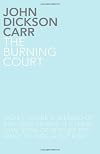
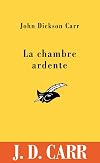
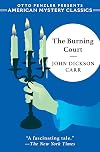
The Burning Court
by John Dickson Carr
On This Page
Description
"When Edward Stevens, an editor at Herald and Son's publishing house, learns of the mysterious events that befell his neighbor's rich uncle, he shrugs off their seemingly supernatural circumstances. He's a logical man and doesn't give much credence to claims of a ghostly figure visiting the man before his death, or the witch's ladder discovered under his pillow after he passed. But as suspicions of strange murder begin to creep in, it becomes harder for Stevens to ignore their eerie show more potential. His neighbor breaks into the cement-sealed crypt where his uncle is buried, only to learn that the corpse has vanished. Witness testimony further implicates the intrusion of the spirit world into the affair of the murdered uncle, and unsettling echoes of the past into the present push things even further past Stevens' understanding of reality. Will the events be logically explained, or is there something unexplainable at work?"--Provided by publisher. show lessTags
Recommendations


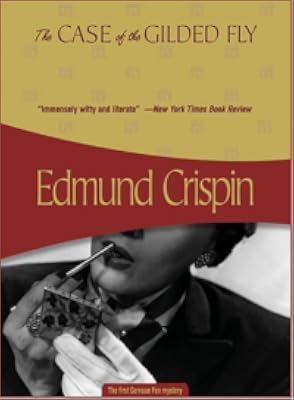


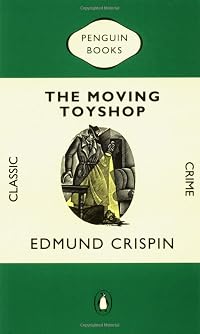


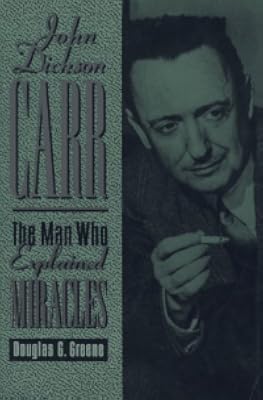


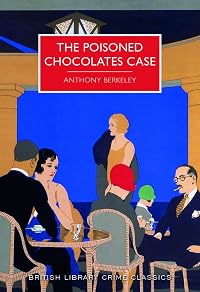









Member Reviews
This book has all the Carr elements - a great setting, a taste of the supernatural, and an excellent locked room mystery that is also accompanied by a locked tomb mystery. This is a truly chilling ghost story that fires on all cylinders right up to the very end. We have an old man that appeared to die of natural causes, but clues point to poisoning, and when they go into the sealed and locked tomb to get his body in order to do tests, well, the body isn't there! That is all I'm going to say about the plot because half the fun is the getting there in this book. Carr who is often considered as one of the most "British" detective story writers was actually born in Pennsylvania. He writes with a subtelty and ingenuity that is still show more enjoyable today, even though his books were written mostly in the 30's and 40's. He did write up until his death in 1977 though, and his body of work is long and critically acclaimed. show less
I'd first heard of John Dickson Carr through the many excellent scripts he did for the old time radio show Suspense. I picked up The Burning Court because it is held as one of his classic novels and it is not part of a series.
At first, I was very put off by the writing. The book was written in that very old fashioned, arch-British 'Dash it all' style. That always seems phony to me, but especially for a novel that is set in Pennsylvania in 1929 (though the novel was written in 1937). F. Scott Fitzgerald had written The Great Gatsby in 1925 and those characters are so much less stiff than The Burning Court's stuffed shirts. I don't expect John Dickson Carr to write like F. Scott Fitzgerald, I just want to point out that the characters in show more this novel don't act the way they do because of historical accuracy.
Despite its flaws, they become less noticeable once the mystery starts. Even giving a brief synopsis of this one is difficult, not because of giving possible spoilers, but because the tale is such a twisted knot. A man is convinced that his recently deceased uncle was poisoned. A trip to the (hermetically sealed) tomb shows that the coffin is empty! From there we read an interesting and complex tale involving witchcraft, family secrets and possible reincarnation or possession.
Mr Carr did an excellent job of setting up an impossible situation and then piling on ever more convoluted details. I got a giddy feeling as Mr. Carr stacked each new twist on to the mystery, thinking 'There's no way he's going to have a solution for this one!' The solution is satisfactory, though it seems wildly improbable that the characters in the novel would have been able to figure it out without more investigation. The tale is told mainly through scenes of groups of characters sitting in a room and hashing it out, endlessly. These have got to be the most talkative people in Pennsylvania. Really all of the characters and their actions were unbelievable. I don't think anybody acts the way these people do outside of a mystery novel.
I was surprised by frank mentions of abortion and sexual excitement. I can only imagine how scandalous they must have been when the book was first published. There are also a few moments of humor in the book that worked surprisingly well given the general dark mood of the story being told.
Overall, I enjoyed the book and can see why it is a classic in the mystery field. As for myself, it looks like I will continue to prefer my mysteries to be more hard boiled. show less
At first, I was very put off by the writing. The book was written in that very old fashioned, arch-British 'Dash it all' style. That always seems phony to me, but especially for a novel that is set in Pennsylvania in 1929 (though the novel was written in 1937). F. Scott Fitzgerald had written The Great Gatsby in 1925 and those characters are so much less stiff than The Burning Court's stuffed shirts. I don't expect John Dickson Carr to write like F. Scott Fitzgerald, I just want to point out that the characters in show more this novel don't act the way they do because of historical accuracy.
Despite its flaws, they become less noticeable once the mystery starts. Even giving a brief synopsis of this one is difficult, not because of giving possible spoilers, but because the tale is such a twisted knot. A man is convinced that his recently deceased uncle was poisoned. A trip to the (hermetically sealed) tomb shows that the coffin is empty! From there we read an interesting and complex tale involving witchcraft, family secrets and possible reincarnation or possession.
Mr Carr did an excellent job of setting up an impossible situation and then piling on ever more convoluted details. I got a giddy feeling as Mr. Carr stacked each new twist on to the mystery, thinking 'There's no way he's going to have a solution for this one!' The solution is satisfactory, though it seems wildly improbable that the characters in the novel would have been able to figure it out without more investigation. The tale is told mainly through scenes of groups of characters sitting in a room and hashing it out, endlessly. These have got to be the most talkative people in Pennsylvania. Really all of the characters and their actions were unbelievable. I don't think anybody acts the way these people do outside of a mystery novel.
I was surprised by frank mentions of abortion and sexual excitement. I can only imagine how scandalous they must have been when the book was first published. There are also a few moments of humor in the book that worked surprisingly well given the general dark mood of the story being told.
Overall, I enjoyed the book and can see why it is a classic in the mystery field. As for myself, it looks like I will continue to prefer my mysteries to be more hard boiled. show less
The epilogue to this locked room mystery ruined it for me. I can't go into why without spoilers...
I really liked how Gaudin Cross figured out a non-supernatural solution to this mystery and if the book had ended there, I would have given it 4*. I could enjoy the spooky atmosphere and Stevens' doubts & fears about his wife Marie even more once a logical explanation had been produced. However, I am not a big fan of books featuring the paranormal or supernatural so when the epilogue returned me to that realm, I was very disappointed.
Capably done but too grim for my taste --a serious horror novel with an unpleasant ending, quite unlike his humorous mysteries. It involves a woman who may be a reincarnation of a 17th century witch involved in the Affaire of the Poisons at the court of Louis XIV
I like this one because it is set in the Philadelphia suburbs. The puzzle is not really one of Carr's best, however, and the disappointing double-surprise-twist a reminder that less is often more.
The Master of the Locked Room Mystery is in top form with this story of not just one,but two superb puzzles. Miles Despard is found dead in bed of ,it is thought natural causes. But when a silver chalice in which the dregs of arsenic have been found, it is then obvious that the old man has been poisoned .
All the entrances to his bedroom are locked,but when a servant peers through a small chink in a curtained window,she sees a mysterious woman in old-fashioned clothes handing Miles the poisoned chalice and then disappearing through a door that has been bricked-up for many years.
The second,and even more mysterious event is that the old man's body is then buried in a rather curious crypt. It is an underground building with solid show more stone-block walls,the steps down to it have been covered with a heavy stone slab,then covered with earth and finally covered again with paving-slabs which have been cemented down. When several concerned people take all this up with great difficulty,the body has disappeared.
As often happens with this author,there is much talk of ghosts and witches,and indeed witch burning - hence the title 'The Burning Court' show less
All the entrances to his bedroom are locked,but when a servant peers through a small chink in a curtained window,she sees a mysterious woman in old-fashioned clothes handing Miles the poisoned chalice and then disappearing through a door that has been bricked-up for many years.
The second,and even more mysterious event is that the old man's body is then buried in a rather curious crypt. It is an underground building with solid show more stone-block walls,the steps down to it have been covered with a heavy stone slab,then covered with earth and finally covered again with paving-slabs which have been cemented down. When several concerned people take all this up with great difficulty,the body has disappeared.
As often happens with this author,there is much talk of ghosts and witches,and indeed witch burning - hence the title 'The Burning Court' show less
Great book. Enjoyed it very much with the twist at the end.
Members
- Recently Added By
Published Reviews
ThingScore 88
I enjoyed The Burning Court, by John Dickson Carr, more than the novels of any of these ladies. There is a tinge of black magic that gives it a little of the interest of a horror story, and the author has a virtuosity at playing with alternative hypotheses that makes this trick of detective fiction more amusing than it usually is.
added by SnootyBaronet
The Burning Court (Carr, 1937) is many people's favourite and also extraordinary. Yes, but the detective, a non-recurring character, is commonplace; true, the structure demands that he should be commonplace, but I still miss Dr Fell. That apart, the enterprise is of irreproachable quality. As a series of crimes develops, it seems more and more inescapable that they have been done by show more witchcraft. In due course the investigating detective propounds a solution of the crimes whereby every known fact is naturalistically and convincingly explained. That brings matters to the last couple of pages, of which I will say nothing.
Words like 'gripping' and 'absorbing' should have been allowed to remain in the womb of language until the advent of Carr/Dickson. His reader feels more than the pressure of ordinary suspense or the desire to follow an exciting and puzzling story. There is an almost painful curiosity besides, a looking for deliverance from the incredible. The hero of The Burning Court comes across, in the most prosaic way possible, a photograph of a Frenchwoman who according to the caption was guillotined for murder in 1861. 'He was looking at a photograph of his own wife.' End of Chapter One. There must be those who, on reaching that point for the first time, would be able to lay the book aside and go out to a Mahler concert, say, without turning a hair. Not I; I had a hard enough time just now getting my copy back on to its shelf after checking that reference. show less
Words like 'gripping' and 'absorbing' should have been allowed to remain in the womb of language until the advent of Carr/Dickson. His reader feels more than the pressure of ordinary suspense or the desire to follow an exciting and puzzling story. There is an almost painful curiosity besides, a looking for deliverance from the incredible. The hero of The Burning Court comes across, in the most prosaic way possible, a photograph of a Frenchwoman who according to the caption was guillotined for murder in 1861. 'He was looking at a photograph of his own wife.' End of Chapter One. There must be those who, on reaching that point for the first time, would be able to lay the book aside and go out to a Mahler concert, say, without turning a hair. Not I; I had a hard enough time just now getting my copy back on to its shelf after checking that reference. show less
added by SnootyBaronet
Lists

Golden Age of Detection
35 works; 10 members

Murder Mysteries
57 works; 11 members

Books mentioned in Julian Symons’ Bloody Murder
438 works; 6 members

Jones & Newman: Best Horror Books Further Recommended Reading
577 works; 4 members

Tozai Mystery Best 100 | The Top 100 Mystery Novels
111 works; 3 members

Books We Couldn't Put Down
443 works; 197 members
A Locked Room Library
71 works; 1 member
Author Information

231+ Works 19,063 Members
John Dickson Carr, the master of locked room mysteries, was born in Uniontown, Pennsylvania, in 1906. He was educated at Haverford College and the Sorbonne in Paris. Carr is a prolific writer with more than 80 novels and collections of short stories to his credit. He began his writing career at the age of 26 with his first published novel, It show more Walks At Night. Some of his most popular works are The Three Coffins (1935), The Burning Coat (1937), and The Bride of Newgate (1951). Carr also collaborated with Adrian Doyle, the son of Sir Arthur Conan Doyle in The Exploits of Sherlock Holmes (1954). Carr met his wife in 1932 and settled in England in 1933. He was drafted by the United States military in World War II, and was ordered to remain in England and work with the BBC. He lived in many cities throughout the world until 1967, when he permanently moved to Greenville, South Carolina. John Dickson Carr also wrote mystery novels under the name Carter Dickson. He died in Greenville in 1977. (Bowker Author Biography) show less
Some Editions
Awards and Honors
Series
Belongs to Publisher Series
Crime de la Crime (Arbeiderspers)
Adey's Locked Room Murders (0297)
I classici del giallo [Mondadori] (909, 331)
Work Relationships
Is contained in
Has the adaptation
Common Knowledge
- Canonical title
- The Burning Court
- Original title
- The Burning Court
- Alternate titles
- EL TRIBUNAL DEL FUEGO; De heksenrechters
- Original publication date
- 1937
- People/Characters
- Edward Stevens; Marie Stevens; Mark Despard; Gaudan Cross; Lucy Despard; Ogden Despard (show all 14); Edith Despard; Miles Despard; Captain Brennan; Myra Corbett; Dr. Partington; Joe Henderson; Mrs. Henderson; Margaret Lightner
- Important places
- Crispen, Pennsylvania
- Epigraph
- "Here we supped ,very merry, and late to bed; Sir William telling me that old Edgeborrow,-his predecessor, did die and walk in my chamber, did make me somewhat afraid---but not so much as, for mirth sake, I did seem," - -SAMU... (show all)EL PEPYS, April 8th, 1663
- First words
- "THERE was a man lived by a churchyard---" is an intriguing beginning for a story left unfinished.
- Last words
- (Click to show. Warning: May contain spoilers.)At this point there was some commotion, and Judge David R. Anderson said that if any more laughter were heard in a court of justice, he would order the court to be cleared.
- Disambiguation notice*
- aka De heksenrechters
*Some information comes from Common Knowledge in other languages. Click "Edit" for more information.
Classifications
Statistics
- Members
- 378
- Popularity
- 83,022
- Reviews
- 10
- Rating
- (3.56)
- Languages
- 11 — Dutch, English, Finnish, French, German, Italian, Japanese, Norwegian (Bokmål), Norwegian, Spanish, Swedish
- Media
- Paper, Audiobook, Ebook
- ISBNs
- 28
- ASINs
- 18