Waiting for the Dark, Waiting for the Light
by Ivan Klima
On This Page
Description
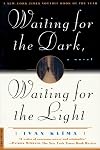
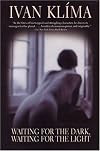
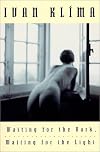
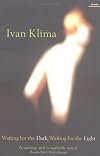
A New York Times Notable Book and a Publishers Weekly Best Book of the Year, Waiting for the Dark, Waiting for the Light is the story of Pavel, once a promising, award-winning documentary filmmaker, forced to survive under communism by working as a cameraman for the state-run television station. Now middle-aged, he dreams of one day making a film - a searing portrait of his times that the authorities would never allow. When the communist regime collapses, Pavel is unprepared for the new show more world of supposedly unlimited freedom, unable to make the film he has always wanted to make. Waiting for the Dark, Waiting for the Light is a powerful, important novel about the struggle between the ideal and the temptations of freedom. show lessTags
Recommendations

















Member Reviews
Reason read: February BOTM. This book has been on the shelf since 2017. Ivan Klima, Czech author, died in 2025 and I thought it was time to read this book. This story is a window into the Velvet revolution when the country through off communism. It tells the story of Pavel, a cameraman before, during and after the revolution. Freedom and the end of Political oppression does not automatically guarantee happiness. Pavel is externally focused and doesn't realize that happiness is from inside from the soul. pg 74 "you place too much importance on things, and too little on your soul."
"Indians say that the soul is woven from consciousness and spirit. From life and vision. From earth and water. From lightness and darkness. They say it is what show more is divine in man."
There are a lot of female characters in the novel and mostly they serve to show that Pavel is unable to connect with them. They are also the source of life and Pavel has a recurring thought of "having a son" which would reflect connections and legacy. Besides not creating the "film" Pavel is also unable to have a son.
The overall importance of the book is understood but it was a hard book to like. The protagonist does not make any positive growth. The people he is involved with suffer because of their connections with him or in addition to their connections to Pavel. I also struggled with the magical realism and disjointed aspects of the novel. I will rate this book a 3.75 stars show less
"Indians say that the soul is woven from consciousness and spirit. From life and vision. From earth and water. From lightness and darkness. They say it is what show more is divine in man."
There are a lot of female characters in the novel and mostly they serve to show that Pavel is unable to connect with them. They are also the source of life and Pavel has a recurring thought of "having a son" which would reflect connections and legacy. Besides not creating the "film" Pavel is also unable to have a son.
The overall importance of the book is understood but it was a hard book to like. The protagonist does not make any positive growth. The people he is involved with suffer because of their connections with him or in addition to their connections to Pavel. I also struggled with the magical realism and disjointed aspects of the novel. I will rate this book a 3.75 stars show less
This is a sad, slow, well-written book. It takes place in Prague before the fall of the Communist regime and deals with the accommodations that people must make and the decline of idealism. Pavel, the main character, is a filmmaker who works for the government-run television station. He films the events (political protests) but doesn’t participate in any way – perhaps a bit of an obvious symbolism for his detached character. However, the filmmaker also has the potential to be an artist who can create something meaningful. The book explores this dualism – detachment vs creative activity - in Pavel’s frustrated ambition to be a director/producer making art films and the sections of the book entitled “Film” which describe show more actual films that Pavel has made, only changed and twisted.
Pavel himself is not the most likeable or interesting character. He fits in the group of middle-aged disillusioned men often with frustrated ambitions/disdainful of material success/in indifferent relationships/filled with ennui/having a midlife crisis. In a relationship with a separated woman, Pavel doesn’t love her and nostalgically remembers past relationships. This is also a rather predictable element of the disillusioned man character. However, his ideal women are shown, at the end, to be constructs like many of his dreams. Pavel is different from many of these characters in that he has a legitimate grievance and is not just some bored artist with a midlife crisis. His constant questioning – written in the book as the third person narration – is a probing examination of the government, as well as individual reactions and accommodations. The narrator will pose a question then answer it, often succinctly and bleakly. Pavel’s reaction here is, in fact, useless, but just one of the ways that he deals with his situation. The Film sections are another. Pavel describes several of the films that he is required to make – a profile of the president, a documentary describing an incident where two men took a bus full of children hostage and demanded to be let over the border – which are given a slightly altered, psychologically developed life in the Film chapters. Especially good is Pavel’s description of the president who is going slowly insane and becoming increasingly paranoid.
The author uses an interesting technique that can be a bit confusing. He describes Pavel’s memories seamlessly in another scene, so that it often seems as though he has actually described the future. For example, for a while I didn’t realize that one of the relationships that he was describing was in the past. Still, memories are always simultaneous – constantly there as a reminder or check to the present and I suppose this is Klima’s way of approximating this.
Klima in the end shows characters at every level capable of betrayal and accommodation of the regime. After the new government takes over, Pavel doesn’t go off to make artistic films and doesn’t go back to the woman he loves. As a young man, he tried to escape the country, was caught, paid the price, then joined the government-run station. While he imagined it was the system keeping him back, he finds that he has gotten used to his steady paycheck and starts making profitable commercials and pornography. But he’s not the only one. His coworkers are described as assessing the political situation, ready to make films for the current government or the opposition. Even personal relationships are dependent on whether the Communists are in power, as Pavel’s unloved girlfriend decides her husband is a better bet after the fall of the Communists. Pavel’s co-conspirator in the escape plan didn’t “sell out” as he did – though educated, he took a job as a caretaker to avoid dealing with his enemies. He, too, is capable of betrayal and jumps at an opportunity to do the same kind of censoring in the new government. Pavel’s creative work, the film sections, provides some relief for getting around the constant compromises, but in the end, even that is not enough. show less
Pavel himself is not the most likeable or interesting character. He fits in the group of middle-aged disillusioned men often with frustrated ambitions/disdainful of material success/in indifferent relationships/filled with ennui/having a midlife crisis. In a relationship with a separated woman, Pavel doesn’t love her and nostalgically remembers past relationships. This is also a rather predictable element of the disillusioned man character. However, his ideal women are shown, at the end, to be constructs like many of his dreams. Pavel is different from many of these characters in that he has a legitimate grievance and is not just some bored artist with a midlife crisis. His constant questioning – written in the book as the third person narration – is a probing examination of the government, as well as individual reactions and accommodations. The narrator will pose a question then answer it, often succinctly and bleakly. Pavel’s reaction here is, in fact, useless, but just one of the ways that he deals with his situation. The Film sections are another. Pavel describes several of the films that he is required to make – a profile of the president, a documentary describing an incident where two men took a bus full of children hostage and demanded to be let over the border – which are given a slightly altered, psychologically developed life in the Film chapters. Especially good is Pavel’s description of the president who is going slowly insane and becoming increasingly paranoid.
The author uses an interesting technique that can be a bit confusing. He describes Pavel’s memories seamlessly in another scene, so that it often seems as though he has actually described the future. For example, for a while I didn’t realize that one of the relationships that he was describing was in the past. Still, memories are always simultaneous – constantly there as a reminder or check to the present and I suppose this is Klima’s way of approximating this.
Klima in the end shows characters at every level capable of betrayal and accommodation of the regime. After the new government takes over, Pavel doesn’t go off to make artistic films and doesn’t go back to the woman he loves. As a young man, he tried to escape the country, was caught, paid the price, then joined the government-run station. While he imagined it was the system keeping him back, he finds that he has gotten used to his steady paycheck and starts making profitable commercials and pornography. But he’s not the only one. His coworkers are described as assessing the political situation, ready to make films for the current government or the opposition. Even personal relationships are dependent on whether the Communists are in power, as Pavel’s unloved girlfriend decides her husband is a better bet after the fall of the Communists. Pavel’s co-conspirator in the escape plan didn’t “sell out” as he did – though educated, he took a job as a caretaker to avoid dealing with his enemies. He, too, is capable of betrayal and jumps at an opportunity to do the same kind of censoring in the new government. Pavel’s creative work, the film sections, provides some relief for getting around the constant compromises, but in the end, even that is not enough. show less
Waiting for the Light, Waiting for the Dark by Ivan Klima
In 1968 when the Russians invaded Czechoslovakia, Klima was in London. Unlike the quarter of a million Czechs, including the writers Skvorecky and Kundera, who escaped into exile, Klima chose to return to Prague. His books were banned for twenty years, but smuggled out in samizdat and published overseas.
The book's main character is Pavel Fuca, a film director who can no longer make his own films, so works as a camera man under state censorship producing trivia and sacrificing his principles to expedience. Pavel consoles himself by planning the film he will make when he is free, but when that freedom arrives he has already lost hope.
Some passages that made an show more impression:
Wretchedness was the lot of those who hadn't the strength to be honourable nor the courage to be dishonourable.
There's nothing easier than persuading yourself you could really do something if you tried, as long as you know that you'll never get the chance. the system never allowed you to win, and so it saved you from defeat as well. show less
In 1968 when the Russians invaded Czechoslovakia, Klima was in London. Unlike the quarter of a million Czechs, including the writers Skvorecky and Kundera, who escaped into exile, Klima chose to return to Prague. His books were banned for twenty years, but smuggled out in samizdat and published overseas.
The book's main character is Pavel Fuca, a film director who can no longer make his own films, so works as a camera man under state censorship producing trivia and sacrificing his principles to expedience. Pavel consoles himself by planning the film he will make when he is free, but when that freedom arrives he has already lost hope.
Some passages that made an show more impression:
Wretchedness was the lot of those who hadn't the strength to be honourable nor the courage to be dishonourable.
There's nothing easier than persuading yourself you could really do something if you tried, as long as you know that you'll never get the chance. the system never allowed you to win, and so it saved you from defeat as well. show less
Ivan Klima's book "Waiting for the Dark, Waiting for the Light" was a really interesting look at the fallout from the fall of the Communist regime in Prague.
Set in the days before and after the Velvet Revolution, its narrator, Pavel, is going through a midlife crisis of sorts. He lives in a world where there are few choices and then too many-- either way he is completely stuck and unsure of where he is going.
Pavel has a rich fantasy life that really bleeds into the story... it was difficult to keep what was supposed to be true and what was supposed to be fantasy straight.
Overall, it was an interesting and thought-provoking book, but hard to follow in places.
Set in the days before and after the Velvet Revolution, its narrator, Pavel, is going through a midlife crisis of sorts. He lives in a world where there are few choices and then too many-- either way he is completely stuck and unsure of where he is going.
Pavel has a rich fantasy life that really bleeds into the story... it was difficult to keep what was supposed to be true and what was supposed to be fantasy straight.
Overall, it was an interesting and thought-provoking book, but hard to follow in places.
Apparently I read this in 2000, I ofund a bookmark to attest to such and I found references on our samizdat site. For the life of me, I can't recall this book.
Spoiler alert
Beetje dubbel gevoel bij dit boek. Aan de ene kant is het erg interessant als evocatie van de grote omwentelingen in Oost-Europa na de val van de Muur in 1989 (hoewel nergens landen en namen genoemd worden); de hoofdfiguur, cameraman Pavel, heeft zich na een mislukte ontsnappingspoging in zijn jeugd, aangepast aan het oude regime en volgt, net als al zijn landgenoten, gedwee de officiële lijn, ook al ziet hij in dat hij meewerkt aan “het regime van de leugen”; Pavel klampt zich vast aan de vage hoop dat hij ooit ruimte zal krijgen voor zijn artistieke dromen. Dit boek levert dus andermaal een mooie tekening van de beklemming in Oost-Europa onder het communisme, het “leven in de leugen”, met vooral een fantastisch show more portret van de oude, bijna seniele president in zijn kasteel (duidelijk naar het beeld van Gustav Husak), vol paranoïde gedachten. Klima legt ook treffend de band met het persoonlijke leven van Pavel dat volledig vastgelopen is: zijn relaties springen allemaal af, het kind dat hij graag wou, is geaborteerd door de vrouw van zijn dromen; hij loopt depressief door het leven; net als het regime is Pavel in een doodlopende straat beland. En dan komt de omwenteling, die door Klima maar fragmentair beschreven wordt. Maar door de ogen van Pavel zien we dat de nieuwe toekomst eigenlijk geen echte veranderingen brengt, een boel oude apparatsjiks wurmen zich op de vrijgekomen plaatsen terwijl de echte (idealistische) revolutionairen zich in de kortste keren vastrijden, Pavel zelf blijkt ook niet (meer) in staat om de ruimte die hij nu krijgt te benutten om zijn droom waar te maken en in zijn persoonlijke leven verliest hij zelfs de laatste band met de mensen waarvan hij houdt. Als u nu denkt: wat een deprimerend verhaal, dan heeft u volop gelijk, maar Klima weet het wel mooi onder woorden te brengen; je ziet duidelijke verwantschap met Kafka en vooral Kundera.
Toch is dit naar mijn gevoel niet helemaal een geslaagde roman. Klima gooit verschillende tijdlagen door elkaar, schakelt ook geregeld over naar het ambitieuze filmscenario waar Pavel al jarenlang aan werkt, en dat zorgt wel voor een zekere dynamiek en mooie spiegeleffecten, maar het maakt de lectuur niet echt gemakkelijk. Bovendien komen sommige verhaallijnen niet helemaal tot hun recht en blijven enkele personages (vooral de vrouwelijke) nogal vlak. Tenslotte, en dat stoort me echt wel het meest, vindt Klima het nodig om een beroep te doen op magisch-realistische elementen en dat vind ik altijd een zwaktebod. show less
Beetje dubbel gevoel bij dit boek. Aan de ene kant is het erg interessant als evocatie van de grote omwentelingen in Oost-Europa na de val van de Muur in 1989 (hoewel nergens landen en namen genoemd worden); de hoofdfiguur, cameraman Pavel, heeft zich na een mislukte ontsnappingspoging in zijn jeugd, aangepast aan het oude regime en volgt, net als al zijn landgenoten, gedwee de officiële lijn, ook al ziet hij in dat hij meewerkt aan “het regime van de leugen”; Pavel klampt zich vast aan de vage hoop dat hij ooit ruimte zal krijgen voor zijn artistieke dromen. Dit boek levert dus andermaal een mooie tekening van de beklemming in Oost-Europa onder het communisme, het “leven in de leugen”, met vooral een fantastisch show more portret van de oude, bijna seniele president in zijn kasteel (duidelijk naar het beeld van Gustav Husak), vol paranoïde gedachten. Klima legt ook treffend de band met het persoonlijke leven van Pavel dat volledig vastgelopen is: zijn relaties springen allemaal af, het kind dat hij graag wou, is geaborteerd door de vrouw van zijn dromen; hij loopt depressief door het leven; net als het regime is Pavel in een doodlopende straat beland. En dan komt de omwenteling, die door Klima maar fragmentair beschreven wordt. Maar door de ogen van Pavel zien we dat de nieuwe toekomst eigenlijk geen echte veranderingen brengt, een boel oude apparatsjiks wurmen zich op de vrijgekomen plaatsen terwijl de echte (idealistische) revolutionairen zich in de kortste keren vastrijden, Pavel zelf blijkt ook niet (meer) in staat om de ruimte die hij nu krijgt te benutten om zijn droom waar te maken en in zijn persoonlijke leven verliest hij zelfs de laatste band met de mensen waarvan hij houdt. Als u nu denkt: wat een deprimerend verhaal, dan heeft u volop gelijk, maar Klima weet het wel mooi onder woorden te brengen; je ziet duidelijke verwantschap met Kafka en vooral Kundera.
Toch is dit naar mijn gevoel niet helemaal een geslaagde roman. Klima gooit verschillende tijdlagen door elkaar, schakelt ook geregeld over naar het ambitieuze filmscenario waar Pavel al jarenlang aan werkt, en dat zorgt wel voor een zekere dynamiek en mooie spiegeleffecten, maar het maakt de lectuur niet echt gemakkelijk. Bovendien komen sommige verhaallijnen niet helemaal tot hun recht en blijven enkele personages (vooral de vrouwelijke) nogal vlak. Tenslotte, en dat stoort me echt wel het meest, vindt Klima het nodig om een beroep te doen op magisch-realistische elementen en dat vind ik altijd een zwaktebod. show less
Aug 15, 2015Dutch
1
Ratings
Members
- Recently Added By
Author Information

50+ Works 2,116 Members
Author and playwright Ivan Klima was born in Prague, Czechoslovakia in 1931. In 1968, he acted as an editor for the journal of the Czech Writer's Union. Following that, he was briefly a professor at the University of Michigan before returning to his homeland in 1970. His works, which include The Spirit of Prague, a collection of essays, were show more banned in Czechoslovakia until 1989. They address issues such as totalitarianism and intellectual freedom, which Klima also lectures on. (Bowker Author Biography) show less
Some Editions
Awards and Honors
Common Knowledge
- Canonical title
- Waiting for the Dark, Waiting for the Light
- Original title
- Čekání na tmu, čekání na světlo
- Original publication date
- 1993
- People/Characters*
- Pavel; Husák; Alice
- Important places
- Praag, Tsjechië; Czech Republic
- Important events
- Fluwelen Revolutie (1989); International IMPAC Dublin Literary Award Longlist (1996)
*Some information comes from Common Knowledge in other languages. Click "Edit" for more information.
Classifications
- Genres
- General Fiction, Fiction and Literature
- DDC/MDS
- 891.8635 — Literature & rhetoric Literatures of other languages East Indo-European and Celtic literatures West and South Slavic languages (Bulgarian, Slovene, Polish, Czech, Slovak, Serbo-Croatian, and Macedonian) Czech Czech fiction 1900–1989
- LCC
- PG5039.21 .L5 .C4513 — Language and Literature Slavic languages and literatures. Baltic languages. Albanian language Slavic. Baltic. Albanian Slavic Czech
- BISAC
Statistics
- Members
- 308
- Popularity
- 104,181
- Reviews
- 6
- Rating
- (3.61)
- Languages
- 11 — Czech, Danish, Dutch, English, German, Greek, Hungarian, Italian, Norwegian (Bokmål), Slovenian, Swedish
- Media
- Paper, Ebook
- ISBNs
- 17
- ASINs
- 4