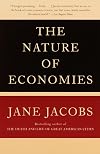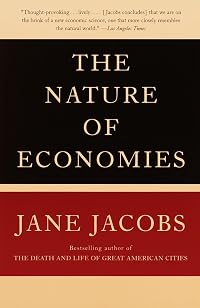
The Nature of Economies
by Jane Jacobs
On This Page
Description
"Nearly forty years after The Death and Life of Great American Cities changed the field of urban studies, Jane Jacobs brings us a modern classic on economies and ecology. This new book looks at the connection between the economy and nature, arguing that the principles of development, common to both systems, are the proper subject of economic study." "The Nature of Economics is written in the form of a Platonic dialogue, a conversation over coffee among five contemporary New Yorkers. The show more question they discuss is: Does economic life obey the same rules as those governing the systems in nature? For example, can the way fields and forests maximize their intakes and uses of sunlight teach us something about how economies expand wealth and jobs and can do this in environmentally beneficial ways? The underlying question is both simple and profound, and the answers that emerge will shape the way people think about how economies really work."--Jacket. show lessTags
Recommendations


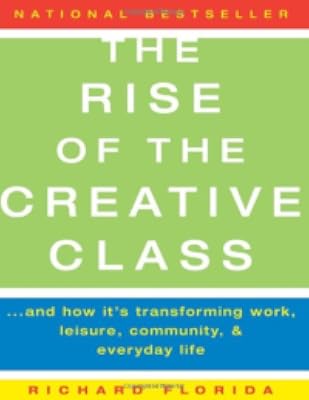
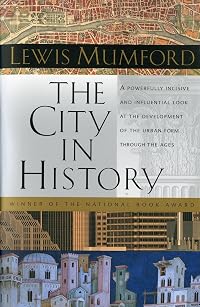
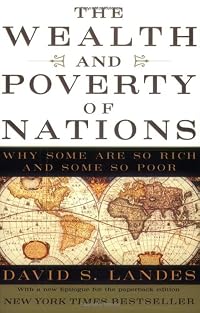

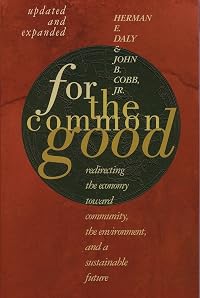





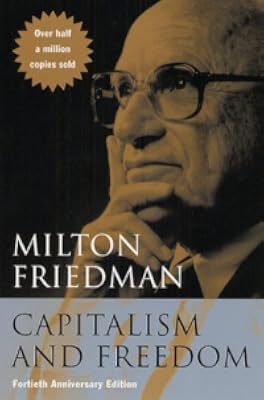
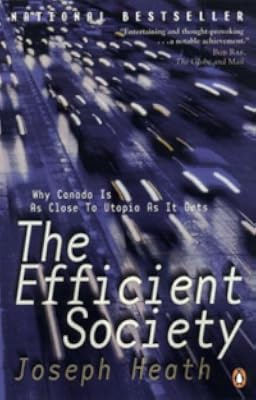
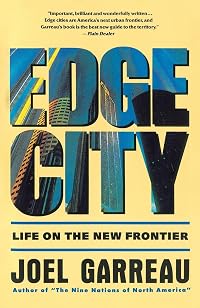
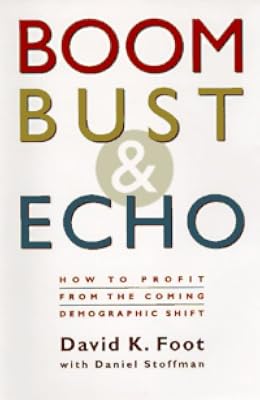
Member Recommendations
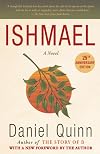
aneurysm1985 Both are about similar social-ecological issues. And both are the result of the authors (Jacobs and Quinn) enlightening readers about non-fiction topics through the use of fictional characters and Platonic dialogue. Both novels are written with the overarching purpose of educating their readers about unfamiliar topics.
Member Reviews
Jane Jacobs' The Nature of Economies uses the same platonic dialogue format so successful, for me, in her previous Systems of Survival, a format different from her other books, including her most famous The Death and Life of Great American Cities.
The title plays on the book's basic idea that economic systems can be understood by using the same analysis as ecological systems are understood. This means complex networks of diverse elements that work together, change together, and grow or not in qualitative and quantitative ways. Another given is that we humans, and the objects and systems we build, are part of nature, not different from it.
Since I already had a grasp of ecology, the book gave me a clearer, and more enjoyable, view of show more economics than I'd ever gotten from learning about it as a subject in itself. It presents econ as a process, rather than a collection of things.
She does coin some terms I'm sure are not part of economist's lingo. I'm still not sure I know what she means exactly by import-stretching, for example. But aside from such quibbles, the book is very useful in viewing how the economies of cities and countries, and the global economy may work. show less
The title plays on the book's basic idea that economic systems can be understood by using the same analysis as ecological systems are understood. This means complex networks of diverse elements that work together, change together, and grow or not in qualitative and quantitative ways. Another given is that we humans, and the objects and systems we build, are part of nature, not different from it.
Since I already had a grasp of ecology, the book gave me a clearer, and more enjoyable, view of show more economics than I'd ever gotten from learning about it as a subject in itself. It presents econ as a process, rather than a collection of things.
She does coin some terms I'm sure are not part of economist's lingo. I'm still not sure I know what she means exactly by import-stretching, for example. But aside from such quibbles, the book is very useful in viewing how the economies of cities and countries, and the global economy may work. show less
A fairly interesting approach to writing about a certain way to view economic structures, Jacobs invents a cast of characters (named, I have to assume, after dead 18th century English folks...plus a Kate. Or maybe these are common names in contemporary Toronto - the late Jacob's adopted hometown? I dunno.) in a series of dialogues, or rather, politely interrupted monologues offered up by some cat named Hiram to the perpetuity potentially offered by Armbruster's tape recorder (yeah, really). Ostensibly it's about the guy's theory that, while not directly modeled on natural processes, general economic structures are governed by the same systems that govern nature, in fact, that necessarily govern everything. I think that was the general show more thrust.
To make these curious discussions support this concept, or to at least prove interesting to the reader, Jacobs seemingly draws examples from a grab bag filled with everything from some unpublished 1950-something lecture to numerous recent articles from the The Globe and Mail. So all this comes off as unbridled randomness ever-so-slightly reined in by these peculiar seminar-like scenarios. Nonetheless, I found it engaging – if only because my exposure to non-architecture/urban stuff is woefully inadequate. I would recommend, at the conclusion of each chapter, looking to the non-footnoted notes in the back as she dedicates a brief description and source(s) for each specific item thrown out during these “conversations.” show less
To make these curious discussions support this concept, or to at least prove interesting to the reader, Jacobs seemingly draws examples from a grab bag filled with everything from some unpublished 1950-something lecture to numerous recent articles from the The Globe and Mail. So all this comes off as unbridled randomness ever-so-slightly reined in by these peculiar seminar-like scenarios. Nonetheless, I found it engaging – if only because my exposure to non-architecture/urban stuff is woefully inadequate. I would recommend, at the conclusion of each chapter, looking to the non-footnoted notes in the back as she dedicates a brief description and source(s) for each specific item thrown out during these “conversations.” show less
Jacobs, Jane. The Nature of Economies. The Modern Library, New York, 2000. This book draws parallels between ecosystems and economies. These are two things that I have always thought very similar; on a first reading, there is little in Jacobs's book that adds fundamental clarity to my thoughts --- she just raises the same intuitive notions that I've long had. The one section that I found new and exciting, however, was the section on economic expansion. Measuring the fundamental health of an economy in terms of import-stretching makes perfect intuitive sense and it adds much insight to the contemplation of macroeconomics. Reading this short book is worth it for that idea alone. I intend to chase down the references in the notes to see if show more I can find more interesting general principles for complex systems that can be applied to ecosystems, economies, and perhaps even the development of computer software (the chic ``complexity theory'' everybody's talking about these days). show less
Jacobs tries to turn what should have been a work of pure theory/commentary, into a novel with narrative, to make it readable. It is a bit awkward, but if you can get beyond that it is another good book from this great thinker.
A good continuation of her previous work, Systems of Survival. The Nature of Economies is not quite as good, but it's still very worthwhile. The idea of import replacement has stuck with me ever since I read this.
Little too eclectic for may taste. Platonic dialogue of friends is superfluous - it doesn't add clarity nor interest.
Ratings
Members
- Recently Added By
Author Information

16+ Works 7,921 Members
Jane Jacobs lives in Toronto. (Publisher Provided) Author and community activist Jane Jacobs was born in Scranton, Pennsylvania on May 4, 1916. She spent two years at Columbia University in the School of General Studies. She was interrogated by the U.S. government over her loyality to the country on March 25, 1952 and was arrested during a show more demonstration against the Vietnam War on April 10, 1968. She also helped defeat a plan, proposed by the New York City park commissioner Robert Moses, to build an expressway through Washington Square in the early 1960s. She moved to Toronto in 1969 partially because of her objection to the Vietnam War. She became a Canadian citizen in 1974. Her most influential book, The Death and Life of Great American Cities, is a critique of 1950's urban renewal policies which, according to her, destroyed communities and created isolated, unnatural urban spaces. She received numerous honors including a lifetime achievement award from the National Building Foundation in 2000 and was appointed to the Order of Canada in 1996. In 1997, the Jane Jacobs prize was created by the City of Toronto at the Jane Jacobs: Ideas That Matter conference. She died on April 25, 2006 at the age of 89. (Bowker Author Biography) show less
Some Editions
Awards and Honors
Common Knowledge
- Original publication date
- 2001
Classifications
Statistics
- Members
- 387
- Popularity
- 80,845
- Reviews
- 6
- Rating
- (3.56)
- Languages
- English, French, Portuguese
- Media
- Paper, Audiobook, Ebook
- ISBNs
- 11
- ASINs
- 1