On This Page
Description
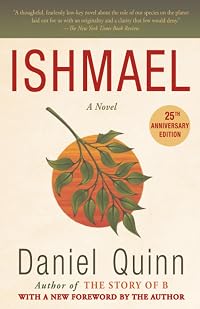
The narrator of this extraordinary tale is a man in search for truth. He answers an ad in a local newspaper from a teacher looking for serious pupils, only to find himself alone in an abandoned office with a full-grown gorilla who is nibbling delicately on a slender branch. "You are the teacher?" he asks incredulously. "I am the teacher," the gorilla replies. Ishmael is a creature of immense wisdom and he has a story to tell, one that no other human being has ever heard. It is a story that show more extends backward and forward over the lifespan of the earth from the birth of time to a future there is still time save. Like all great teachers, Ishmael refuses to make the lesson easy; he demands the final illumination to come from within ourselves. Is it man's destiny to rule the world? Or is it a higher destiny possible for him-- one more wonderful than he has ever imagined? show lessTags
Recommendations
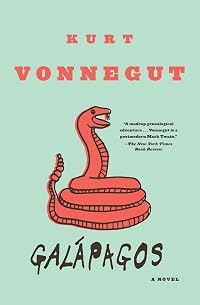
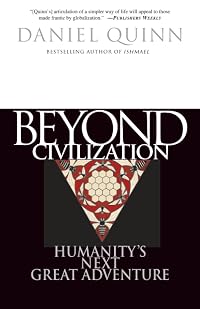
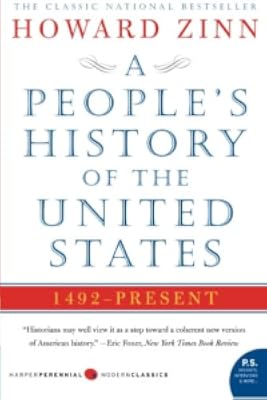
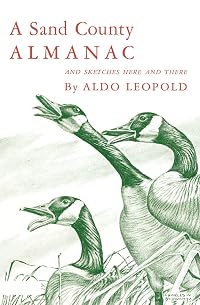


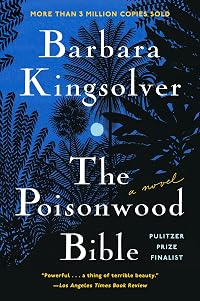



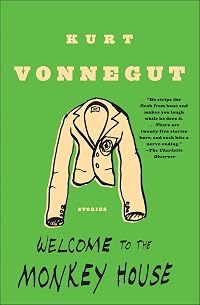
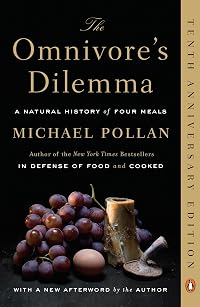
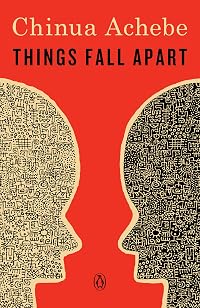
Member Recommendations
Lucy_Skywalker but without being didactic and irritating
weeksj10 Their both lecture style novels which use fiction to present a variety of different thoughts and philosophies.
11
fyrefly98 Another perspective on the spread of our culture and civilization.
23
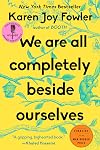
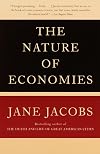
aneurysm1985 Both are about similar social-ecological issues. And both are the result of the authors (Quinn and Jacobs) enlightening readers about non-fiction topics through the use of fictional characters and Platonic dialogue. Both novels are written with the overarching purpose of educating their readers about unfamiliar topics.
Member Reviews
When people talk about the books they had to read in school, they usually name them boring, terrible, irrelevant etc - heck, even I've called some of my required reading that, but never 'Ishmael'. Daniel Quinn's book was on my 6th grade teacher's reading list, and so, 12 year old me had to read the book. Up until that moment, I only really enjoyed your typical YA books, 'Ishmael' was a turning point in my reading life. It's one of the first books that changed me, as it changed the way I thought and the way I looked at the world (and surprisingly enough, I was just as thrilled when I reread it this month). While the plot and the main idea of the book do have their flaws (which is why I'm so thankful to have had a book discussion with my show more teacher after reading it), it does fit every criteria for my 5 star books - especially the way it stayed with me, almost haunting me. (+ it is also one of the books that helped me stay an avid reader to this day, always curious, always willing to learn more) show less
The narrator of this extraordinary tale is a man in search for truth. He answers an ad in a local newspaper from a teacher looking for serious pupils, only to find himself alone in an abandoned office with a full-grown gorilla who is nibbling delicately on a slender branch. "You are the teacher?" he asks incredulously. "I am the teacher," the gorilla replies. Ishmael is a creature of immense wisdom and he has a story to tell, one that no other human being has ever heard. It is a story that extends backward and forward over the lifespan of the earth from the birth of time to a future there is still time save. Like all great teachers, Ishmael refuses to make the lesson easy; he demands the final illumination to come from within ourselves. show more Is it man's destiny to rule the world? Or is it a higher destiny possible for him-- one more wonderful than he has ever imagined? show less
When I was in HS, my Chemistry teacher gave me this book because he thought I would appreciate it. While everyone else was concerned with having fun, social status, and impressing the teachers and peers- I was just looking for the next book to impress me. He was absolutely right.
Socially urgent (not exactly forward and blunt in presentation, but definitely profound and strong in delivery), thought-provoking and makes you have a conversation with yourself. It covers a lot of deep topics like ethics, sustainability, evolution, global crisis, and where modern civilization went wrong in general.
If all of that sounds painfully dry or boring to you- I want you to consider this. Imagine a telepathic gorilla that caused a mutiny and show more disagreement amongst a judge's table that eventually awarded it $500,000 dollars and an ecological prize. (That's not the plot, but quite literally this book caused this little uproar in real life)
Because that's what happened with this book. It gives me chills. This book was published in the early 90s, and it aged so well. So many of its topics are still relevant, perhaps even more shockingly to this day. It sort of predicted the future. Let Ishmael teach you something.
“You’re captives of a civilizational system that more or less compels you to go on destroying the world in order to live.”
~ quote from the book that I think is a good summary in one sentence show less
Socially urgent (not exactly forward and blunt in presentation, but definitely profound and strong in delivery), thought-provoking and makes you have a conversation with yourself. It covers a lot of deep topics like ethics, sustainability, evolution, global crisis, and where modern civilization went wrong in general.
If all of that sounds painfully dry or boring to you- I want you to consider this. Imagine a telepathic gorilla that caused a mutiny and show more disagreement amongst a judge's table that eventually awarded it $500,000 dollars and an ecological prize. (That's not the plot, but quite literally this book caused this little uproar in real life)
Because that's what happened with this book. It gives me chills. This book was published in the early 90s, and it aged so well. So many of its topics are still relevant, perhaps even more shockingly to this day. It sort of predicted the future. Let Ishmael teach you something.
“You’re captives of a civilizational system that more or less compels you to go on destroying the world in order to live.”
~ quote from the book that I think is a good summary in one sentence show less
There are books that divide your life, into the time before you read it, and the time after. Ishmael is for me one of those books. It was a turning point in my life. Ishmael brought to the surface a number of things I had thought about and just not explored properly. It brought to my attention things I should have been thinking about for a long time. I questioned my life, and found it lacking, and formulated new plans to make my time here more meaningful. his book is not for everyone. If you are not willing to have your head turned around so that you're looking back at yourself, if you are comfortable with your life, if you are willing to accept things as they are, maybe this book is not for you - but then maybe it is for you, maybe show more you're the one who needs to read it the most. No, I'm not going to summarize the book. It doesn't lend itself to summaries. The Tao that can be told is not the true Tao. Read this book. Decide for yourself what it means. show less
This isn't really fiction. It's more of a didactic philosophical diatribe against western civilization with the hippie sensibilities of the 70s (despite being written in the new age 90s), written in a dialogue between a man and a gorilla. Does a telepathic gorilla matter at all as far as the story is concerned? Nope. It's just an avatar for nature, and a gimmick that the target audience loved. As was rewording attacking western civilization as "takers vs leavers" (a bit transparent as the verbal boot is given explicitly to "whites", while glossing over or ignoring outright the many civilizations that did not start in the middle east or evolve in Europe).
Very much a product of its time, much of the details presented are just factually show more wrong. It's an eco warrior's understanding of history, combined with some noble savage mythology. You get classics such as "only man kills indiscriminately" which the average housecat disproves (the impact of cats on bird populations alone should be an eco warrior talking point but isn't because they're cuddly), let alone the evidence for chimpanzee warfare and wanton killing which would have been thematically appropriate with the gorilla.
The big thrust of the whole book is a malthusian understanding of food supply and population growth. As we're now entering a time of incredible excess coupled to population decline, even the central point is wrong. There are some ideas that dovetail with sustainability, but as far as the ecological debate goes it's left this 70s view in the dust. The author also acknowledges that it doesn't have anything to say about what to do about it, as that is left for the sequel. show less
Very much a product of its time, much of the details presented are just factually show more wrong. It's an eco warrior's understanding of history, combined with some noble savage mythology. You get classics such as "only man kills indiscriminately" which the average housecat disproves (the impact of cats on bird populations alone should be an eco warrior talking point but isn't because they're cuddly), let alone the evidence for chimpanzee warfare and wanton killing which would have been thematically appropriate with the gorilla.
The big thrust of the whole book is a malthusian understanding of food supply and population growth. As we're now entering a time of incredible excess coupled to population decline, even the central point is wrong. There are some ideas that dovetail with sustainability, but as far as the ecological debate goes it's left this 70s view in the dust. The author also acknowledges that it doesn't have anything to say about what to do about it, as that is left for the sequel. show less
When we study the intelligence of our ape cousins, we usually take the role of the teacher, or the expert. What if we reversed the relationship? What could our cousins teach us?
That’s what happens here. A man, the narrator, answers a personals ad, “Teacher seeks pupil.” It turns out that the “teacher” is a captive gorilla, behind a thick glass window in a bare room.
But the gorilla is able to communicate, telepathically. It also turns out that the gorilla has been doing a lot of observing, thinking, and learning, having been on exhibit and in other situations with ample opportunities to observe humans, listen to and learn their speech, and reach conclusions of his own. His name is Ishmael.
The great bulk of the story is the show more dialogue that follows, session after session, between the narrator and Ishmael. Ishmael volunteers that what he has to teach is something he knows very well — captivity. He has lived almost his entire life in captivity.
But the captivity he teaches isn’t physical captivity, it’s cultural captivity. He asks one question to frame his teaching. He asks what our (members of the narrator’s culture) explanation is “for how things came to be this way.” A creation story, the story that gives our culture meaning, goals, the basis for our intentions and actions.
Why captivity? As Ishmael explains, we are captives of this story. In fact, it takes considerable reflection and effort to see the story at all. And escaping it would be even harder.
The story that holds us captive is one in which humans are the crown and endpoint of creation, of evolution. Everything that has come before us has happened for the sake of our emergence. And the entire world around us is here for our use, to make something of for our purposes.
I’m cutting things very short here. The value of reading the book is experiencing the development of the story, in dialogue with Ishmael. By following the dialogue, we can see the extent and the pervasiveness of that cultural story, how inescapable it is in the tiniest details of everyday life.
The story, like I said, is told through dialogue. And the dialogue does at times mimic (uncomfortably and pedantically) a Socratic dialogue, with Ishmael standing in as Socrates (or the Socrates of Plato’s dialogues). The same disassembling and reassembling of arguments and assertions.
But you can’t get lost in the style. The point is there — the cultural story that holds us captive. Ishmael distinguishes a different story, one in which cultures other than our own live, so-called “primitive” or “uncivilized” cultures in which the world has not become resources for our manipulations and productions.
Those other cultures are, as Ishmael calls them, “Leaver” cultures. They leave the world as they find it, as for example a gorilla in the wild feeds, mates, sleeps, and lives his entire life, leaving everything as he found it. Our own culture, a “Taker” culture, possesses, transforms, dominates what it finds. It tames the soil in agriculture, it tames the forests, turning wood to lumber, . . .
The problem for Takers of course is the consequence of their “taking” — the destruction, the throwing out of balance of everything that life, their own and the lives of every other living thing, depends upon. A crisis, and we’ve hit it.
The book was written in the wake of the demise of the sixties counter-culture. And, as Ishmael explains, the counter-culture failed in part because it had no positive story to displace the current one that holds us captive.
So what is the positive story? What would you do if you recognized the story for what it is? That’s the crux, and, in the dialogue, an answer starts to surface — one that seeks to incorporate “leaving” into the civilized, technological life we are bound into. Nobody said it was going to be easy.
There is also a framing story for the book. Ishmael is, after all, a captive, physically. His condition is obviously the consequence of our cultural story. His own fate matters in that context. That’s something to think about after you’ve read the book. show less
That’s what happens here. A man, the narrator, answers a personals ad, “Teacher seeks pupil.” It turns out that the “teacher” is a captive gorilla, behind a thick glass window in a bare room.
But the gorilla is able to communicate, telepathically. It also turns out that the gorilla has been doing a lot of observing, thinking, and learning, having been on exhibit and in other situations with ample opportunities to observe humans, listen to and learn their speech, and reach conclusions of his own. His name is Ishmael.
The great bulk of the story is the show more dialogue that follows, session after session, between the narrator and Ishmael. Ishmael volunteers that what he has to teach is something he knows very well — captivity. He has lived almost his entire life in captivity.
But the captivity he teaches isn’t physical captivity, it’s cultural captivity. He asks one question to frame his teaching. He asks what our (members of the narrator’s culture) explanation is “for how things came to be this way.” A creation story, the story that gives our culture meaning, goals, the basis for our intentions and actions.
Why captivity? As Ishmael explains, we are captives of this story. In fact, it takes considerable reflection and effort to see the story at all. And escaping it would be even harder.
The story that holds us captive is one in which humans are the crown and endpoint of creation, of evolution. Everything that has come before us has happened for the sake of our emergence. And the entire world around us is here for our use, to make something of for our purposes.
I’m cutting things very short here. The value of reading the book is experiencing the development of the story, in dialogue with Ishmael. By following the dialogue, we can see the extent and the pervasiveness of that cultural story, how inescapable it is in the tiniest details of everyday life.
The story, like I said, is told through dialogue. And the dialogue does at times mimic (uncomfortably and pedantically) a Socratic dialogue, with Ishmael standing in as Socrates (or the Socrates of Plato’s dialogues). The same disassembling and reassembling of arguments and assertions.
But you can’t get lost in the style. The point is there — the cultural story that holds us captive. Ishmael distinguishes a different story, one in which cultures other than our own live, so-called “primitive” or “uncivilized” cultures in which the world has not become resources for our manipulations and productions.
Those other cultures are, as Ishmael calls them, “Leaver” cultures. They leave the world as they find it, as for example a gorilla in the wild feeds, mates, sleeps, and lives his entire life, leaving everything as he found it. Our own culture, a “Taker” culture, possesses, transforms, dominates what it finds. It tames the soil in agriculture, it tames the forests, turning wood to lumber, . . .
The problem for Takers of course is the consequence of their “taking” — the destruction, the throwing out of balance of everything that life, their own and the lives of every other living thing, depends upon. A crisis, and we’ve hit it.
The book was written in the wake of the demise of the sixties counter-culture. And, as Ishmael explains, the counter-culture failed in part because it had no positive story to displace the current one that holds us captive.
So what is the positive story? What would you do if you recognized the story for what it is? That’s the crux, and, in the dialogue, an answer starts to surface — one that seeks to incorporate “leaving” into the civilized, technological life we are bound into. Nobody said it was going to be easy.
There is also a framing story for the book. Ishmael is, after all, a captive, physically. His condition is obviously the consequence of our cultural story. His own fate matters in that context. That’s something to think about after you’ve read the book. show less
A man sees an ad in the personal section: "Teacher seeks pupil. Must have an earnest desire to save the world. Apply in person." And what follows is something as filled with heartbreak and humor as it is with ideas and magic.
File this under philosophical fiction or environmental fiction or weird fiction, or none of the above, but this is a smart and wonderful book--one of those rare ones which I'd say everyone ought to have read, and passed on to more readers, and perhaps read again. I'm thankful I stumbled upon it, and somewhat heartbroken that I Had to stumble upon it, when really I feel like someone should have thrust it upon me even back when I was in high school, demanding that I sit down and start reading, or perhaps once I got to show more college, at least. This is the sort of book that helps you see the world and yourself in a slightly different manner, and makes you want to be better, and push others to be better. It's the sort that makes me want to write, and keep writing, and discover whatever comes tomorrow in a more careful and clever manner than I saw today. It's also the sort of book that should simply be read, and absorbed, and appreciated, just so much as possible.
In any case, if you haven't read it by now, you should. Really, you should. show less
File this under philosophical fiction or environmental fiction or weird fiction, or none of the above, but this is a smart and wonderful book--one of those rare ones which I'd say everyone ought to have read, and passed on to more readers, and perhaps read again. I'm thankful I stumbled upon it, and somewhat heartbroken that I Had to stumble upon it, when really I feel like someone should have thrust it upon me even back when I was in high school, demanding that I sit down and start reading, or perhaps once I got to show more college, at least. This is the sort of book that helps you see the world and yourself in a slightly different manner, and makes you want to be better, and push others to be better. It's the sort that makes me want to write, and keep writing, and discover whatever comes tomorrow in a more careful and clever manner than I saw today. It's also the sort of book that should simply be read, and absorbed, and appreciated, just so much as possible.
In any case, if you haven't read it by now, you should. Really, you should. show less
Members
- Recently Added By
Lists

Recommend the 20 best books you've read in the last five years
2,168 works; 603 members

Favourite Books
1,820 works; 316 members

Nonhuman Protagonists
245 works; 35 members

Books Read in 2005
185 works; 7 members

Books Read in 2017
4,249 works; 130 members

BingoDOG - Animals in Adult Fiction
78 works; 20 members

Non-Fiction Worth Reading
1,025 works; 264 members

Best Environmental Books
32 works; 2 members

Fiction to Read for Earth Day
50 works; 8 members

Literary Works Read in College
316 works; 15 members

Islam & the Middle East
127 works; 1 member

Mo's Reading List
218 works; 1 member

Mo's Reading List (Abridged)
75 works; 1 member

Books Read in 2024
4,727 works; 128 members

Blue Pyramid 1,276 Best Books of All Time
1,248 works; 32 members
Author Information

38+ Works 11,969 Members
Daniel Quinn was born in 1935 and raised in Omaha, Nebraska. He graduated from Creighton Prep and attended St. Louis University, the University of Vienna and Loyola University of Chicago. Quinn worked in educational and consumer publishing, holding editorial positions with the American Peoples Encyclopedia, the Greater Cleveland Mathematics show more Program, the Encyclopedia Britannica Educational Corporation, Fuller and Dees Publishing and the Society for Visual Education. He is best known for his award-winning novel Ishmael (1992), which is about a gorilla able to telepathically communicate, but he has written other novels as well as short fiction. (Bowker Author Biography) show less
Awards and Honors
Awards
Series

Common Knowledge
- Canonical title
- Ishmael
- Original title
- Ishmael
- Original publication date
- 1992
- People/Characters
- Ishmael; Alan Lomax
- Related movies
- Instinct (1999 | IMDb)
- First words
- The first time I read the ad, I choked and cursed and spat and threw the paper to the floor.
- Last words
- (Click to show. Warning: May contain spoilers.)It wasn't till I got Ishmael's poster to the framing shop that I discovered there were messages on both sides. I had it framed so that both can be seen. The message on one side is the one Ishmael displayed on the wall of his den: WITH MAN GONE, WILL THERE BE HOPE FOR GORILLA? The message on the other side reads: WITH GORILLA GONE, WILL THERE BE HOPE FOR MAN?
- Blurbers
- Britell, Jim
- Canonical DDC/MDS
- 813.54
- Canonical LCC
- PS3567.U338
Classifications
Statistics
- Members
- 7,037
- Popularity
- 1,685
- Reviews
- 131
- Rating
- (3.93)
- Languages
- 16 — Danish, Dutch, English, Estonian, Finnish, French, German, Greek, Hungarian, Italian, Lithuanian, Norwegian (Bokmål), Spanish, Swedish, Turkish, Portuguese (Portugal)
- Media
- Paper, Audiobook, Ebook
- ISBNs
- 42
- UPCs
- 2
- ASINs
- 22