On This Page
Description
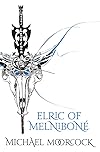
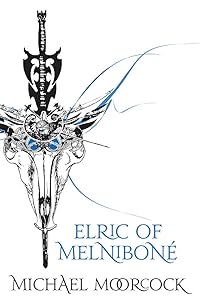
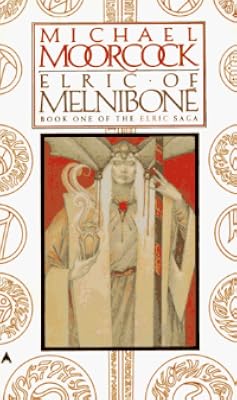
Elric of Melniboné is the haunted, treacherous and doomed albino sorcerer-prince. An introspective weakling in thrall to his black-bladed, soul-eating sword, Stormbringer, he is yet a hero whose bloody adventures and wanderings through brooding, desolate lands leads inexorably to his decisive intervention in the war between the forces of Law and Chaos. This volume brings together The Stealer of Souls and Stormbringer, the first two published books of Elric¿s adventures, and confirms show more Michael Moorcock¿s place as one of the most important fantasy writers of our time. show lessTags
Recommendations













Member Reviews
Hmm, old-school heroic fantasy just isn't my cup of tea, I'm afraid. There's some powerful and some vivid imagery here, but overall the prose is (horribly) dated and the characterisation is paper-thin (especially for the few female characters *shudder*). The concept itself is still an interesting one (the last king of an ancient and cruel folk is a frail albino with a cursed, soul-drinking sword), but we get endless scenes of the emo antihero angsting shallowly and not much else, despite all the potential for some really substantial storytelling about a non-traditional warrior-sorceror. And the fact that Elric, who has always been a completely self-immersed and immoral character, suddenly gives two hoots about the ultimate fate of the show more world in the final stages of the book feels very hollow. Still worth reading for its place in fantasy canon (pretty radical stuff when it was written, I believe), but it doesn't make me want to pick up any other of the Elric books. show less
http://nwhyte.livejournal.com/1230921.html
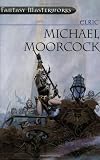
This is the Fantasy Masterworks edition which brings together The Stealer of Souls and Stormbringer, which I think are the first two Elric books published though apparently several more were subsequently inserted into the internal continuity.
I found the stories a quick and undemanding read. Elric's tortured relationship with his soul-drinking sword and his own family heritage makes him an unusually compolex hero. Moorcock's prose is always engaging and often rises to the entertainingly baroque. His roots in Robert E. Howard and H.P. Lovecraft are clear (I think a bit less Tolkien). As I have noted before, immersive fantasies don't always work for me but this was an entertaining enough ride.
This is the Fantasy Masterworks edition which brings together The Stealer of Souls and Stormbringer, which I think are the first two Elric books published though apparently several more were subsequently inserted into the internal continuity.
I found the stories a quick and undemanding read. Elric's tortured relationship with his soul-drinking sword and his own family heritage makes him an unusually compolex hero. Moorcock's prose is always engaging and often rises to the entertainingly baroque. His roots in Robert E. Howard and H.P. Lovecraft are clear (I think a bit less Tolkien). As I have noted before, immersive fantasies don't always work for me but this was an entertaining enough ride.
Possibly Moorcock's finest creation. Bold, exciting and straight to the point - this puts many so-called epic fantasy to shame!
Elric is my favourite fantasy character of all time, a classic anti-hero who you can't help but admire despite his obvious dark side.
And what serious fantasy fan can help but love a character with an intelligent sword which steals enemies' souls and is called Stormbringer!?
And what serious fantasy fan can help but love a character with an intelligent sword which steals enemies' souls and is called Stormbringer!?
Ratings
Members
- Recently Added By
Lists

Fantasy Masterworks
66 works; 5 members
Author Information

659+ Works 65,152 Members
Michael Moorcock, 1939 - Writer Michael Moorcock was born December 18, 1939 in Mitcham, Surrey, England. Moorcock was the editor of the juvenile magazine Tarzan Adventures from 1956-58, an editor and writer for the Sexton Blake Library and for comic strips and children's annuals from 1959-61, an editor and pamphleteer for Liberal Party in 1962, show more and became editor and publisher for the science fiction magazine New Worlds in 1964. He has worked as a singer-guitarist, has worked with the rock bands Hawkwind and Blue Oyster Cult and is a member of the rock band Michael Moorcock and the Deep Fix. Moorcock's writing covers a wide range of science fiction and fantasy genres. "The Chronicles of Castle Brass" was a sword and sorcery novel, and "Breakfast in the Ruins: A Novel of Inhumanity" uses the character Karl Glogauer as a different person in different times. Karl participates in the political violence of the French Revolution, the Paris Commune, and a Nazi concentration camp. Moorcock also wrote books and stories that featured the character Jerry Cornelius, who had no consistent character or appearance. "The Condition of Muzak" completed the initial Jerry Cornelius tetralogy and won Guardian Literary Prize in 1977. "Byzantium Endures" and "The Laughter of Carthage" are two autobiographical novels of the Russian emigre Colonel Pyat and were the closest Moorcock came to conventional literary fiction. "Byzantium Endures" focuses on the first twenty years of Pyat's life and tells of his role in the Russian revolution. Pyat survives the revolution and the subsequent civil war by working first for one side and then another. "The Laughter of Carthage" covers Pyat's life from 1920-1924 telling of his escape from Communist Russia and his travels in Europe and America. It's a sweeping picture of the world during the 1920's because it takes the character from living in Constantinople to Hollywood. Moorcock returned to the New Wave style in "Blood: A Southern Fantasy" (1994) and combined mainstream fiction with fantasy in "The Brothel of Rosenstrasse," which is set in the imaginary city of Mirenburg. MoorCock won the 1967 Nebula Award for Behold the Man and the 1979 World Fantasy Award for his novel, Gloriana. (Bowker Author Biography) show less
Some Editions
Series

Belongs to Publisher Series
Fantasy Masterworks (17)
Work Relationships
Contains
Common Knowledge
- Original title
- Elric
- Original publication date
- 2001-05
- Original language
- English
- Disambiguation notice
- This is not the same book as the 1998 Elric: The Stealer of Souls by White Wolf (Tales of the Eternal Champion #11), nor Elric: The Stealer of Souls by Del Rey (Chronicles of the Last Emperor of Melniboné #1); they should no... (show all)t be combined!
Classifications
Statistics
- Members
- 288
- Popularity
- 112,070
- Reviews
- 4
- Rating
- (3.92)
- Languages
- English
- Media
- Paper, Audiobook, Ebook
- ISBNs
- 2
- ASINs
- 3