On This Page
Description
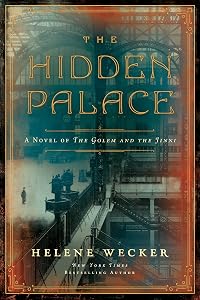
In this enthralling historical epic set in New York City and the Middle East in the early years of the twentieth century, Helene Wecker revisits her beloved characters Chava and Ahmad as they confront unexpected new challenges in a rapidly changing human world. Chava is a golem, a woman made of clay, who can hear the thoughts and longings of those around her and feels compelled by her nature to help them. Ahmad is a jinni, a restless creature of fire, once free to roam the desert but now show more imprisoned in the shape of a man. Fearing they'll be exposed as monsters, these magical beings hide their true selves and try to pass as human--just two more immigrants in the bustling world of 1900s Manhattan. Brought together under calamitous circumstances, their lives are now entwined--but they're not yet certain of what they mean to each other. Both Chava and Ahmad have changed the lives of the people around them. Park Avenue heiress Sophia Winston, whose brief encounter with Ahmad left her with a strange illness that makes her shiver with cold, travels to the Middle East to seek a cure. There she meets Dima, a tempestuous female jinni who's been banished from her tribe. Back in New York, in a tenement on the Lower East Side, a little girl named Kreindel helps her rabbi father build a golem they name Yossele--not knowing that she's about to be sent to an orphanage uptown, where the hulking Yossele will become her only friend and protector. Spanning the tumultuous years from the turn of the twentieth century to the beginning of World War I, The Hidden Palace follows these lives and others as they collide and interleave. Can Chava and Ahmad find their places in the human world while remaining true to each other? Or will their opposing natures and desires eventually tear them apart--expecially once they encounter, thrillingly, other beings like themselves?-- show lessTags
Recommendations




























Member Reviews
I loved this sequel, even though my recall of the original was pretty hazy. Despite that, I was able to quickly immerse myself in the multiple worlds the author so ably describes, and the old (Ahmad) and new jinni and old (Chava) and new golem. Set in a historically rich time period, events impacting the characters include the Triangle Shirtwaist Fire, the Titanic and the Luisitania, WW I, the Armenian Genocide, and even real people, like T.E. Lawrence (of Arabia). The settings, on the Lower East Side and Upper West Side of NYC and in the Middle East, are beautifully rendered, and the pairings the readers assumes will occur - don't. It's reminiscent of the almost perfect novel Ragtime by E.L. Doctrow. There's room for a third book; in show more fact, the characters almost demand it. show less
Great book. A continuation of the events which take place in the Golem and Jinni. The characters are nothing less than superb. Wecker creates an atmosphere THICK with turn of the century New York immigrants. The superstitions of Jewish and Muslim cultures clash in a whirlwind of reality and things not so rooted in reality. Wecker is beyond with her character development. The reader has no choice but to embrace them all. Wonderful story full of life, love and longing which shows us how much consequence can come to bear but also makes it clear that there is no mountain which we cannot climb as long as our hearts are in it. However, it is made very clear that even though we can climb that mountain...we might not make it to the other side show more in one piece. show less
Note: Some spoilers for the previous book. No spoilers for this sequel.
This book, melding magical realism with historical fiction, continues the story that began with the 2013 novel, The Golem and The Jinni. I reread that book before taking on the sequel, and although it probably wasn’t necessary, I am glad I did so, having forgotten many small details.
The story takes place for the most part in Manhattan, a place which the author clearly knows thoroughly - even in its historic aspects - and loves. It is set at the beginning of the 20th Century.
Most of the characters are the same as in the previous novel, although there are a few important additions.
It's an immigrant story in a way, about two very different beings who ended up in the show more melting pot of New York in 1899. One is a golem, and one a jinni.
In Jewish folklore, a golem is a human-like figure made out of clay and brought to life by esoteric magic known only to a select few adept at Jewish mysticism, or Kabbalah. Golems – unnaturally strong and unquestionably obedient to their creators - were said to have been created from time to time in olden days to help defend Jews from anti-Semitic attacks.
In Wecker’s first book, a Prussian man who could not find a wife went to an old man with reputed occult knowledge to request that a golem be made for him to serve as a wife. He packed up the golem and set out for New York. He died en route, however, and the golem was left to fend for herself. Rabbi Avram Meyer, a kindly rabbi, saw the golem, recognized what she was, and took her in to protect her, naming her Chava.
Meanwhile, a parallel story concerned the unexpected release of a jinni from an old copper flask in a tinsmith shop in New York's Little Syria. Jinnis (or genies) are the products of Middle Eastern and Muslim mythology, and are said to be spirits made of fire. Many, however, can make themselves look like humans. Boutros Arbeely, the tinsmith who inadvertently released the jinni, who was in the guise of a handsome young man, vowed to protect him much as the rabbi did with Chava, and named him Ahmad.
It is only a matter of time before this woman of earth and man of fire meet, and realize they have more in common than might at first be apparent. As they navigated through their unexpected lives in America, they also get to know each other, helping each other to understand what it means to be human, and maybe even what it means to love.
The sequel begins a year later, with Chava working at a bakery and Ahmad working at the tinsmith’s. Neither Ahmad nor Chava sleep, so they use their time in the evenings to walk together through the streets and on the rooftops of Manhattan. They have a close relationship, although one characterized by a great deal of philosophical disagreement. They are very different in some ways. The jinni muses that Chava had a prudish streak, was serious-minded, and rarely laughed. He thought “She would make a terrible jinniyeh.”
Ahmad is so good at using his inner fire to shape metals that the small tinsmith shop in Little Syria in Manhattan is now Arbeely & Ahmad, All Metals.
Ahmad lives like a human now, having given up not only the jinn language but jinn ways:
“He followed rules and conventions, as far as he deemed himself reasonably able. He guarded his speech, and checked his desires, and tried, at all times, to remember that his actions had consequences.” Chava too, was making her way as a human as well as she could. Both have to be very careful however not to reveal their great strength and their inhuman characteristics. In fact, when people at the bakery notice that Chava never seems to age, she knows she has to leave even though she loves the job. She enrolls in school for “Domestic Sciences” to become a teacher.
Sophia Winston, a young girl with whom the jinni had a brief relationship, is now off traveling through the Middle East try to find a cure for her constant lack of warmth since her affair with Ahmad.
Rabbi Meyer has died, and Rabbi Lev Altschul took over his collection of mystical books. He becomes obsessed with making a golem himself, eventually letting his young daughter Kreindel help him. The two are alone; the Rabbi’s wife died years earlier. The outcome of his efforts play a significant role in the story.
Complicating matters, Yehudah Schaalman, the villainous man who created Chava, has come to New York to find the golem and find the key, if he could, to eternal life. He has no moral compass, and perfectly willing to do all the damage necessary to attain his goal.
As the story progresses and the years pass, we see all the characters gradually come together in a momentous denouement, taking place sixteen years after the golem and the jinni first arrived in Manhattan.
Evaluation: I loved this sequel, and enjoyed following the clever threads woven by the author to flesh out other lives and make them intersect with those of Chava and Ahmad. It is not at all clear if they will survive, and in what state, and how the others will fare in their wake. Altogether a satisfying story! show less
This book, melding magical realism with historical fiction, continues the story that began with the 2013 novel, The Golem and The Jinni. I reread that book before taking on the sequel, and although it probably wasn’t necessary, I am glad I did so, having forgotten many small details.
The story takes place for the most part in Manhattan, a place which the author clearly knows thoroughly - even in its historic aspects - and loves. It is set at the beginning of the 20th Century.
Most of the characters are the same as in the previous novel, although there are a few important additions.
It's an immigrant story in a way, about two very different beings who ended up in the show more melting pot of New York in 1899. One is a golem, and one a jinni.
In Jewish folklore, a golem is a human-like figure made out of clay and brought to life by esoteric magic known only to a select few adept at Jewish mysticism, or Kabbalah. Golems – unnaturally strong and unquestionably obedient to their creators - were said to have been created from time to time in olden days to help defend Jews from anti-Semitic attacks.
In Wecker’s first book, a Prussian man who could not find a wife went to an old man with reputed occult knowledge to request that a golem be made for him to serve as a wife. He packed up the golem and set out for New York. He died en route, however, and the golem was left to fend for herself. Rabbi Avram Meyer, a kindly rabbi, saw the golem, recognized what she was, and took her in to protect her, naming her Chava.
Meanwhile, a parallel story concerned the unexpected release of a jinni from an old copper flask in a tinsmith shop in New York's Little Syria. Jinnis (or genies) are the products of Middle Eastern and Muslim mythology, and are said to be spirits made of fire. Many, however, can make themselves look like humans. Boutros Arbeely, the tinsmith who inadvertently released the jinni, who was in the guise of a handsome young man, vowed to protect him much as the rabbi did with Chava, and named him Ahmad.
It is only a matter of time before this woman of earth and man of fire meet, and realize they have more in common than might at first be apparent. As they navigated through their unexpected lives in America, they also get to know each other, helping each other to understand what it means to be human, and maybe even what it means to love.
The sequel begins a year later, with Chava working at a bakery and Ahmad working at the tinsmith’s. Neither Ahmad nor Chava sleep, so they use their time in the evenings to walk together through the streets and on the rooftops of Manhattan. They have a close relationship, although one characterized by a great deal of philosophical disagreement. They are very different in some ways. The jinni muses that Chava had a prudish streak, was serious-minded, and rarely laughed. He thought “She would make a terrible jinniyeh.”
Ahmad is so good at using his inner fire to shape metals that the small tinsmith shop in Little Syria in Manhattan is now Arbeely & Ahmad, All Metals.
Ahmad lives like a human now, having given up not only the jinn language but jinn ways:
“He followed rules and conventions, as far as he deemed himself reasonably able. He guarded his speech, and checked his desires, and tried, at all times, to remember that his actions had consequences.” Chava too, was making her way as a human as well as she could. Both have to be very careful however not to reveal their great strength and their inhuman characteristics. In fact, when people at the bakery notice that Chava never seems to age, she knows she has to leave even though she loves the job. She enrolls in school for “Domestic Sciences” to become a teacher.
Sophia Winston, a young girl with whom the jinni had a brief relationship, is now off traveling through the Middle East try to find a cure for her constant lack of warmth since her affair with Ahmad.
Rabbi Meyer has died, and Rabbi Lev Altschul took over his collection of mystical books. He becomes obsessed with making a golem himself, eventually letting his young daughter Kreindel help him. The two are alone; the Rabbi’s wife died years earlier. The outcome of his efforts play a significant role in the story.
Complicating matters, Yehudah Schaalman, the villainous man who created Chava, has come to New York to find the golem and find the key, if he could, to eternal life. He has no moral compass, and perfectly willing to do all the damage necessary to attain his goal.
As the story progresses and the years pass, we see all the characters gradually come together in a momentous denouement, taking place sixteen years after the golem and the jinni first arrived in Manhattan.
Evaluation: I loved this sequel, and enjoyed following the clever threads woven by the author to flesh out other lives and make them intersect with those of Chava and Ahmad. It is not at all clear if they will survive, and in what state, and how the others will fare in their wake. Altogether a satisfying story! show less
We waited almost a decade for the continuation of the Golem and Jinni’s story, but it was totally worth the wait, as Wecker throws us back into the lively early 20th century New York that set the pace and place of the first novel. Centred on New York’s Jewish and Syrian communities, she brings the setting to life with true to history details that immediately immerse us in these unique cultures that are brought together in a fascinating way by their respective mythical creatures, who play an excellent role as our protagonists. As the Jinni returns from his pilgrimage to the Syrian desert to dispose of the “sorcerer” who plagued the first novel, we once again get to walk the night time streets as he and Chava explore their show more relationship. The two might not be human, and their concerns are as unique as their supernatural powers, but their time alongside their respective communities has clearly shaped them into beings who have taken on some of humanity’s nature - for better or worse. It was almost inevitable that the challenges of living in New York would come to a head in this storyline, but Wecker does an excellent job of grounding their concerns in their unique reality and keeps a steady pace through the ups and downs of Chava’s and Ahmad’s lives. Alongside their stories also come voices from each community, with carefully crafted characters who grow and evolve alongside Chava and Ahmad, and who become the supports of an accidental yet organic community that grows to surround the two. Ahmad may have locked himself within the Amherst building constructing a physical ironworks palace for a lengthy period of time after the unexpected death of his friend and business partner Boutros Arbeely, but by the final pages it becomes clear that Chava and Ahmad may not be able to live completely as humans, it is equally impossible for them to expect to be able to live as separate supernatural entities from their communities. A strength of character and faith is required of everyone (and a little creativity), since there are no ready-made answers to the challenges of life, and it is the combined efforts of the group that provide the truest creations. show less
As wonderful as Wecker's The Golem and the Jinni is, to me, this sequel was even better. The first book was an exploration of humanity. Could magical creatures, one an iron-bound energy being stuck in human form and another a clay being brought to life truly be human? There was a sinister undertone, too, to the first book, with threats to their very existence. In this book, Ahmad the Jinni and Chava the Golem are quietly living their lives, hiding their true nature inearly-1900s New York City. The danger of discovery and possible extinction has lessened considerably, provided they're careful. As the years pass, their emotional lives deepen, leading to more character development. Real world events are worked in seamlessly, such as the show more Titanic disaster and the start of World War I.
Characters from the previous book as well as new ones get caught up in the Jinni and Golem's lives, including the daughter of an Orthodox rabbi who has secrets of her own, the son of Chava's friend Anna whohas been haunted by a nightmare since he was a baby, and an exiled female jinni searching for the iron-bound jinni of legend. Wecker weaves their stories together and brings them to a satisfying ending that is also a beginning. I hope she writes more with these characters I've come to love. show less
Characters from the previous book as well as new ones get caught up in the Jinni and Golem's lives, including the daughter of an Orthodox rabbi who has secrets of her own, the son of Chava's friend Anna whohas been haunted by a nightmare since he was a baby, and an exiled female jinni searching for the iron-bound jinni of legend. Wecker weaves their stories together and brings them to a satisfying ending that is also a beginning. I hope she writes more with these characters I've come to love. show less
What did I think? I loved it! Beautiful, melancholic, poignant, vast in scope—it was everything it needed to be.
Stuff it does well:
• The first book was an immigrant tale, too, but this, in many ways, does a stellar job of showing some of the long-term difficulties of making a home in a new land. The first book’s conflicts were more immediate, whereas this book shows more long-term issues, as well as the strain on families and children.
• The timeline. The first book described some events that all happened in pretty short order. This book, however, takes many years to unfold. This gives Wecker a bit more latitude as she explores the characters' relationships over time. (It also gives her a chance to work in a few significant show more events from history . . . )
• Character development. Any sequel ought to expand the characters. It ought to let them grow a bit, and it should give the readers a chance to see these characters in a whole new light. This does that, not just with Chava and Ahmad, but with the supporting characters, too.
• Historical detail. Some big events from the early 20th century are woven into this story, such as the sinking of Titanic and the tensions of WWI. Smaller details are worked in as well, little touches that add a great deal to the tale.
Stuff that disappoints:
• Some of the conflict felt a little forced. Chava and Ahmad are a couple for much of this tale, but we never get to see them in a supportive relationship. They never feel like a team, they way there were in the first story. They argue all the time, and it’s about things that would be resolved easily if the characters would just talk to each other. These magical beings who never sleep spend hour after hour together every day but don’t ever talk about their feelings. I suppose it’s possible, but it just feels, well, contrived. I won’t give any spoilers here, but it does fall into that sequel trap of having minor problems become major for really no reason. There are genuine threats at different parts of the story, and the plot is sprinkled with some legit sorrowful and poignant moments, but there are also so many instances when the bad stuff gets dragged on too long, when if only Character A had told Character B about xyz, the whole thing could have been cleared up a lot sooner.
• The epilogue. Again, no specific spoilers, but it’s very open-ended, and it raises a bunch of questions. Not sure it was necessary. I had the distinct impression she was trying to set things up for a third installment, although as far as I know, this is a duology.
Final thoughts:
• The tone is great. It’s been a while since I read the first one, but I think this book’s style is a great match. It seems to blend seamlessly with its predecessor, and it picks up right where the first left off.
• Different enough focus to justify itself. This isn’t just a re-hash. The first book told of the Golem and the Jinni coming to New York and making a life in a new country. It led up to an intense climax in which they had to face the main villain. This book, however, isn’t about a single life-changing event, such as arriving somewhere new. It’s about living with the consequences of such an event. In the first book, Chava and Ahmad needed to survive. Here, they need to find a way to live a meaningful life in a rapidly changing foreign land. There is no villain, no final showdown—just a handful of characters over the course of 15 years looking for meaning and purpose. It all leads to connection. Instead of building to a big life-and-death battle, the real climax of this story happen as the characters come together and watch out for each other. It’s a beautiful culmination of much of the novel’s conflict.
5 gold stars show less
Stuff it does well:
• The first book was an immigrant tale, too, but this, in many ways, does a stellar job of showing some of the long-term difficulties of making a home in a new land. The first book’s conflicts were more immediate, whereas this book shows more long-term issues, as well as the strain on families and children.
• The timeline. The first book described some events that all happened in pretty short order. This book, however, takes many years to unfold. This gives Wecker a bit more latitude as she explores the characters' relationships over time. (It also gives her a chance to work in a few significant show more events from history . . . )
• Character development. Any sequel ought to expand the characters. It ought to let them grow a bit, and it should give the readers a chance to see these characters in a whole new light. This does that, not just with Chava and Ahmad, but with the supporting characters, too.
• Historical detail. Some big events from the early 20th century are woven into this story, such as the sinking of Titanic and the tensions of WWI. Smaller details are worked in as well, little touches that add a great deal to the tale.
Stuff that disappoints:
• Some of the conflict felt a little forced. Chava and Ahmad are a couple for much of this tale, but we never get to see them in a supportive relationship. They never feel like a team, they way there were in the first story. They argue all the time, and it’s about things that would be resolved easily if the characters would just talk to each other. These magical beings who never sleep spend hour after hour together every day but don’t ever talk about their feelings. I suppose it’s possible, but it just feels, well, contrived. I won’t give any spoilers here, but it does fall into that sequel trap of having minor problems become major for really no reason. There are genuine threats at different parts of the story, and the plot is sprinkled with some legit sorrowful and poignant moments, but there are also so many instances when the bad stuff gets dragged on too long, when if only Character A had told Character B about xyz, the whole thing could have been cleared up a lot sooner.
• The epilogue. Again, no specific spoilers, but it’s very open-ended, and it raises a bunch of questions. Not sure it was necessary. I had the distinct impression she was trying to set things up for a third installment, although as far as I know, this is a duology.
Final thoughts:
• The tone is great. It’s been a while since I read the first one, but I think this book’s style is a great match. It seems to blend seamlessly with its predecessor, and it picks up right where the first left off.
• Different enough focus to justify itself. This isn’t just a re-hash. The first book told of the Golem and the Jinni coming to New York and making a life in a new country. It led up to an intense climax in which they had to face the main villain. This book, however, isn’t about a single life-changing event, such as arriving somewhere new. It’s about living with the consequences of such an event. In the first book, Chava and Ahmad needed to survive. Here, they need to find a way to live a meaningful life in a rapidly changing foreign land. There is no villain, no final showdown—just a handful of characters over the course of 15 years looking for meaning and purpose. It all leads to connection. Instead of building to a big life-and-death battle, the real climax of this story happen as the characters come together and watch out for each other. It’s a beautiful culmination of much of the novel’s conflict.
5 gold stars show less
I initially picked up “The Hidden Palace” when it first came out in 2020, knowing that this was a book that I needed to have but wasn’t yet ready to read. Finally, two years later, the time came for me to turn to it, and as expected, it amply fulfilled all my expectations. This is a sequel to “The Golem and the Jinni,” which introduced us to Chava Levy, a female masterless Golem, and Ahmad, a Jinni confined to a pot for a thousand years and then freed by a Syrian metalworker in turn of the 20th Century New York City. “The Hidden Palace” continues their stories, separately and together, from 1901 until 1915; we are reunited with Sophia, a human whose interactions with Ahmad led to great difficulties in her life; with Anna, show more a sometime friend of Chava’s who is also an enemy; and with Maryam, a Lebanese Christian who knows more about both Ahmad and Chava than she would like. In addition there are many new characters, both human and not, whose lives become entwined with our main creatures in ways both good and bad. This is wonderful storytelling, with a depth of knowledge about both Jewish and Arabic mythology, a deep dive into a very dynamic and change-filled period of history, and a full sense of human (and other) strengths and frailties and how those play out on the rich canvas of multicultural New York City. Very highly recommended, but it is absolutely essential to read “The Golem and the Jinni” first or none of this book will make much sense to you! show less
Members
- Recently Added By
Lists

Books Read in 2023
5,547 works; 145 members

Can't Wait Books of 2021
8 works; 1 member

Anticipated SFF 2021
86 works; 3 members

al.vick-wishlist-next-in-series
110 works; 1 member

Books Read in 2026
1,952 works; 66 members
Author Information

9+ Works 7,344 Members
Helene Wecker received a BA in English from Carleton College and an MFA from Columbia University. Her first novel, The Golem and the Jinni, was published in 2013. (Bowker Author Biography)
Awards and Honors
Awards
Series

Common Knowledge
- Canonical title
- The Hidden Palace
- Original title
- The Hidden Palace
- Alternate titles
- The Iron Season (working title) (working title)
- Original publication date
- 2021
- People/Characters
- Chava Levy; Ahmad al-Hadid; Boutros Arbeely; Avram Meyer; Yehudah Schaalman; Sophia Winston (show all 14); Maryam Faddoul; Kreindel Meyer; Anna Blumberg; Toby Blumberg; T.E. Lawrence; Gertrude Bell; D.G. Hogarth; Dima
- Important places
- New York, New York, USA; Syria; Little Syria, New York, New York, USA
- Dedication
- For Maya and Gavin
- First words
- [Prologue] Of all the myriad races of thinking creatures in the world, the two that most delight in telling stories are the flesh-and-blood humans and the long-lived, fiery jinn.
A man and a boy exited the Third Avenue Elevated and walked westward along 67th Street, into the wind. - Last words
- (Click to show. Warning: May contain spoilers.)[Prologue] Even if you were to find them, and earn their trust, it's unlikely that you'd ever hear the tale--which is told as follows:
(Click to show. Warning: May contain spoilers.)She plucked the paper from its stack, folded in into her purse, and walked out into the city. - Blurbers
- Bohialian, Chris
- Original language
- English
Classifications
Statistics
- Members
- 1,048
- Popularity
- 24,605
- Reviews
- 33
- Rating
- (4.06)
- Languages
- English, Russian
- Media
- Paper, Audiobook, Ebook
- ISBNs
- 12
- ASINs
- 3