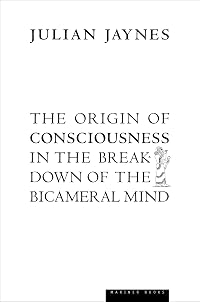
The Origin of Consciousness in the Breakdown of the Bicameral Mind
by Julian Jaynes
On This Page
Description
At the heart of this classic, seminal book is Julian Jaynes's still-controversial thesis that human consciousness did not begin far back in animal evolution but instead is a learned process that came about only three thousand years ago and is still developing. The implications of this revolutionary scientific paradigm extend into virtually every aspect of our psychology, our history and culture, our religion--and indeed our future.Tags
Recommendations
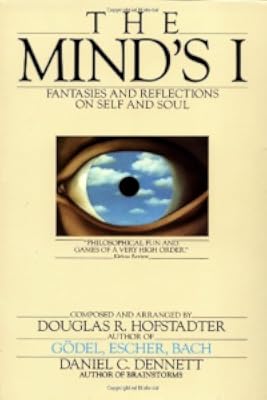
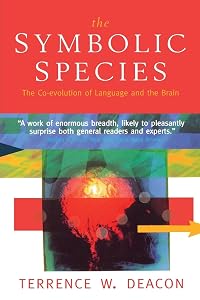
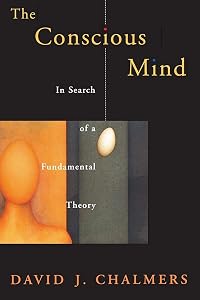
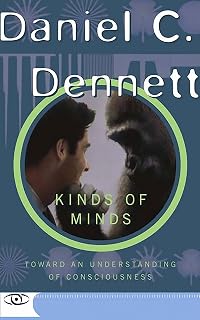

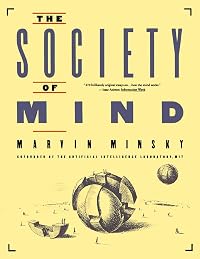
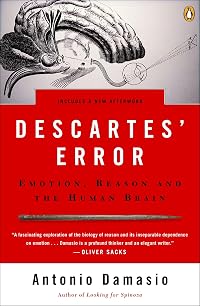
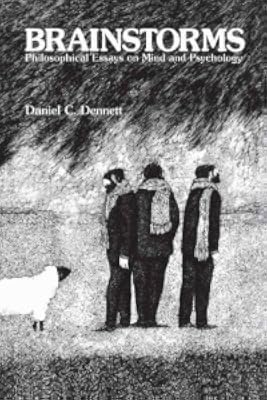
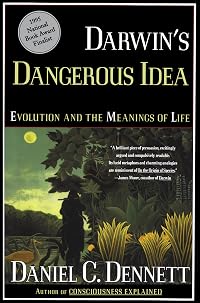


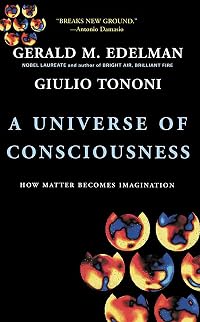
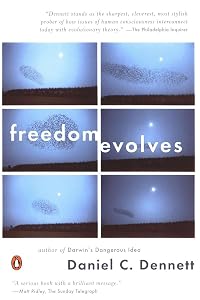
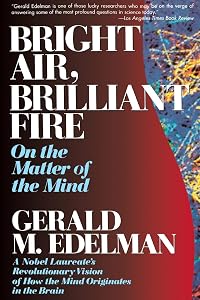

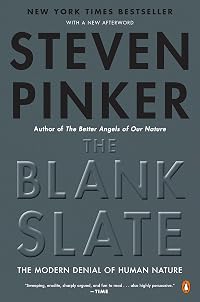




Member Recommendations
themulhern Both books discuss a bicameral mind, but have different ways of understanding or explaining the breakdown.
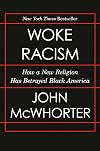
themulhern John McWhorter identifies a new religion; Julian Jaynes explains why it exists.
04
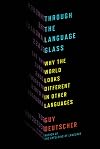
chmod007 The first few chapters of Through The Language Glass talk about color as a cultural construct, drawing upon 19th century inquiries into the works of Homer and his seeming indifference to the finer hues of the spectrum. The beginning of TOOCITBOTBM starts with a similar exploration of ancient conceptions (or lack thereof) of consciousness, supported by linguistic evidence.

themulhern Well, "Origins" is a work of literature almost more than science and Stephenson has never stopped being influenced by it, from "The Big U" to his most recent work.

themulhern "The Big U" has a note about "The Origin" at the front and a plot influenced by the ideas.

themulhern Jaynes would argue that Theseus was a pre-conscious here; Renault, on the other hand, makes him very self-aware. However, the god does speak to Theseus, to tell him of impending earthquakes.
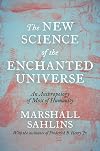
waitingtoderail Sahlins's description of humans' relations with the gods in immanent societies sounds a lot like Jaynes's descriptions of the bicameral mind.
Member Reviews
Here's an idea: what if consciousness - self-awareness, the 'I' and that private inner 'space' it seems to inhabit - is no emergent phenomenon, result of millions of years of brain evolution, but a purely cultural one derived from language, via metaphor, and which didn't appear sometime back in the Pleistocene, but recently (very recently, around 1200 BC in Julian Jaynes' estimation)?
As ideas go, it's a corker. By that date we were already tilling fields and founding the first cities, the Pyramids had been built and the Iliad written - all by non-conscious human beings according to Jaynes. He was no crank though: graduate of Yale and lecturer at Princeton, the nature of consciousness was the lifelong focus of his work as an show more ethologist. His theory was presented at a meeting of the American Psychological Society in Washington DC (admittedly to a mostly nonplussed audience) and The Origin of..., published in 1976, was runner-up in the USA's National Book Awards' nonfiction category a couple of years later. His theory rests on the brain's division into two hemispheres: earlier than around 1200 BC, instead of the introspective thinking familiar to us today, the right hemisphere solved problems non-consciously, passing on its instructions to the left where they were experienced as hallucinations (particularly auditory hallucinations) which the people themselves interpreted as the voices of gods. The gods, in other words, seemed entirely real to them and directed their lives; the resulting societies were authoritarian, rigidly stratified and stable, almost like those of social insects (think Ancient Egypt). In the Near East though, around Jaynes' critical date, this 'bicameral' mentality broke down due to demographic (and other) stresses, and was gradually replaced by the self-aware modern mind; the resulting societies, this time, were composed of true individuals.
This book is in three parts: the first outlines the theory, the second examines the evidence and the third considers possible vestiges of the bicameral mind still around today; and if all this sounds like Velikovsky or von Daniken, well it isn't exactly. In Jaynes' case the most common reaction, from academics in particular, has been a sort of head-scratching bafflement. I think this is at least partly because The Origin is beautifully written - even its trickiest ideas are explained simply, clearly, and in prose which a lot of good fiction writers would envy. What criticism there has been has focused mostly on the extraordinary timescale involved, and on Jaynes' interpretation of the Iliad - and anyone interested in Mesopotamian archaeology, or who knows the Iliad well (or the Old Testament, or the Epic of Gilgamesh) will soon see why.
I can't help wondering, too, how much of the scepticism is a gut-reaction to Jaynes' choice of the term 'hallucinations' (a word which comes with a lot of baggage: drug use, mental disorder) and the idea of Achilles and Abraham resembling schizophrenics. There's also the presence of the Julian Jaynes Society which issues newsletters and books defending and promoting the theory, but which has precisely the opposite effect (on me at least): it makes the whole thing look a bit cultish, like Scientology. My own scepticism comes from a different direction altogether though: another implication of this theory is that, if true, it would mean that only human beings are conscious - something I don't believe for a minute. Apes, elephants, cetaceans, corvids and perhaps others all show every sign of self-awareness.
Overall, I'm left with the feeling that this isn't all nonsense, that there's truth lurking at the heart of Jaynes' theory; I thought the first chapter, where he outlines what consciousness is not, what it doesn't do, by far the best - I agreed with every word of that. It's just that, from that starting point, he immediately veered off in a direction very different from the one I would have gone in. It's still, though, as thought-provoking a read as I've come across for some time. show less
As ideas go, it's a corker. By that date we were already tilling fields and founding the first cities, the Pyramids had been built and the Iliad written - all by non-conscious human beings according to Jaynes. He was no crank though: graduate of Yale and lecturer at Princeton, the nature of consciousness was the lifelong focus of his work as an show more ethologist. His theory was presented at a meeting of the American Psychological Society in Washington DC (admittedly to a mostly nonplussed audience) and The Origin of..., published in 1976, was runner-up in the USA's National Book Awards' nonfiction category a couple of years later. His theory rests on the brain's division into two hemispheres: earlier than around 1200 BC, instead of the introspective thinking familiar to us today, the right hemisphere solved problems non-consciously, passing on its instructions to the left where they were experienced as hallucinations (particularly auditory hallucinations) which the people themselves interpreted as the voices of gods. The gods, in other words, seemed entirely real to them and directed their lives; the resulting societies were authoritarian, rigidly stratified and stable, almost like those of social insects (think Ancient Egypt). In the Near East though, around Jaynes' critical date, this 'bicameral' mentality broke down due to demographic (and other) stresses, and was gradually replaced by the self-aware modern mind; the resulting societies, this time, were composed of true individuals.
This book is in three parts: the first outlines the theory, the second examines the evidence and the third considers possible vestiges of the bicameral mind still around today; and if all this sounds like Velikovsky or von Daniken, well it isn't exactly. In Jaynes' case the most common reaction, from academics in particular, has been a sort of head-scratching bafflement. I think this is at least partly because The Origin is beautifully written - even its trickiest ideas are explained simply, clearly, and in prose which a lot of good fiction writers would envy. What criticism there has been has focused mostly on the extraordinary timescale involved, and on Jaynes' interpretation of the Iliad - and anyone interested in Mesopotamian archaeology, or who knows the Iliad well (or the Old Testament, or the Epic of Gilgamesh) will soon see why.
I can't help wondering, too, how much of the scepticism is a gut-reaction to Jaynes' choice of the term 'hallucinations' (a word which comes with a lot of baggage: drug use, mental disorder) and the idea of Achilles and Abraham resembling schizophrenics. There's also the presence of the Julian Jaynes Society which issues newsletters and books defending and promoting the theory, but which has precisely the opposite effect (on me at least): it makes the whole thing look a bit cultish, like Scientology. My own scepticism comes from a different direction altogether though: another implication of this theory is that, if true, it would mean that only human beings are conscious - something I don't believe for a minute. Apes, elephants, cetaceans, corvids and perhaps others all show every sign of self-awareness.
Overall, I'm left with the feeling that this isn't all nonsense, that there's truth lurking at the heart of Jaynes' theory; I thought the first chapter, where he outlines what consciousness is not, what it doesn't do, by far the best - I agreed with every word of that. It's just that, from that starting point, he immediately veered off in a direction very different from the one I would have gone in. It's still, though, as thought-provoking a read as I've come across for some time. show less
I have not read something that has changed my mind and the view of the world as much as this in years. I understand this hypothesis is probably impossible to prove one way or another but it has amazing explanatory power. It makes all of history fall into place for me. I find the chapters dealing with modern brain dysfunctions and hypnosis as a window to the bicameral mode less convincing but still thought-provoking. Despite the profundity of the subject it's written in an extremely approachable manner and requires no specialist knowledge. I'd recommend it to everyone, there's not that many books that offer a completely new view of the (history of the) world.
It's stunt theory, pure and simple. A fairly hefty catalogue could be made of Jaynes' reach exceeding his grasp, but you don't go to an Evel Knievel show and complain about reckless driving - you go to gawp at an act of staggering audaciousness. Sure, maybe in this case Jaynes missed the landing ramp and ended up crumpled in a heap, but that doesn't mean everybody didn't have a damn good time.
I have absolutely no memory of how I came across 'The Origin of Consciousness in the Breakdown of the Bicameral Mind' or who recommended it to me. If it was you, many thanks. Not only was a fascinating read in its own right, it seems to have inducted me back into challenging nonfiction. For the last two months my mind kept skittering around too much for anything not focused on narrative. Jaynes is undoubtedly an engaging writer, with a delightful intellectual panache, for example: 'A theory is thus a metaphor between a model and data. And understanding in science is the feeling of similarity between complicated data and a familiar model.'
Jaynes starts strongly by briefly explaining why he considers all pre-existing theories of show more consciousness to be badly flawed. This is quite jaw-dropping for the casual reader like me who has not previously studied the subject, or even given it sustained thought. Despite his conviction and excellent explanations, though, I must admit that his sweeping theory on the bicameral mind did not entirely persuade me. His book was enjoyable in part because it gave me the opportunity to systematise my own thoughts about consciousness. The most satisfyingly thought-provoking books do this, by presenting a theory clearly and thoroughly but not dogmatically. I was pleased to find my main point of contention discussed in the 1990 afterword; the book was first published 1977. Consciousness is incredibly difficult to unpick, at least for me, as the experience of it seems so cohesive. It jolted me to realise that memory is not really part of consciousness, for instance, although the sense of self and process of contemplation both lean heavily upon it. Or rather, the presence of memory does not necessarily mean consciousness follows.
When I mentioned to people that I was reading this book, they tended to ask, "What is the bicameral mind?" It is the name Jaynes gives to his hypothesis of how pre-conscious human brains worked, based on changed relations between the right and left hemispheres. Bicameral humans did not have a sense of self or internal mindspace as we do, Jaynes claims. They made decisions based essentially on auditory and visual hallucinations, experienced as separate from their own minds. Perhaps more shocking, at least to me, is the timing that Jaynes suggests for the change from bicameral to conscious brains: a mere three thousand years ago. Personally, I found the proposition that the architecture, technology, organisation, and art created by early human civilisations did not require consciousness hard to accept. Indeed, I am only willing to agree with the weaker version of Jaynes' theory, which he admits to the existence of only in the afterword and of which more later. However, I found it invigorating to contemplate what consciousness actually is, whether what we call civilisation requires consciousness, and how the mental life of humans may have utterly changed over thousands of years.
One of the strongest points of the argument for a bicameral mind, in my view, was its explanation of the intense and consistent veneration of the dead across the ancient world. Jaynes suggests that statues of gods and bodies of rulers were accorded great privileges as their voices lived on as auditory hallucinations, which allowed power structures to persist. This is a compelling explanation for the fact that the spectacular ruins that survive to this day are mausoleums and temples, built to glorify the intangible and the dead rather than serve practical functions for the living. On the ancient Eygptian pantheon:
This is by no means the only point when Jaynes critiques translators for projecting modern ideas onto the distant past. He also does this in some detail for both the Iliad and Old Testament, as well as complaining that applying terms like 'money' to the Code of Hammurabi is simply inaccurate. ([b:Debt: The First 5,000 Years|6617037|Debt The First 5,000 Years|David Graeber|https://i.gr-assets.com/images/S/compressed.photo.goodreads.com/books/1390408633l/6617037._SY75_.jpg|6811142] by David Graeber echoed this, I believe.) While Jaynes certainly has a point, it is impossible to completely avoid projecting contemporary ideas on the past. Translation is an active interpretation of text by a mind anchored in a particular point in history. The history of the Iliad can be traced through its translations, all of which say something about the person who did the translating and the culture in which they lived.
An important feature of Jaynes' thesis is that consciousness cannot exist without language and that it began to emerge with writing. It is less plausible, at least to me, that written language developed for more than a thousand years in the absence of consciousness. The question is, what level of complexity in technical innovation, interpersonal organisation, and literary endeavour could be possible without consciousness? Many mammals, birds, and insects manage incredible feats of architecture and co-operation, apparently without consciousness. Constructing a pyramid perhaps did not require it, but I cannot believe that the Iliad was composed by pre-conscious minds. While reciting it from memory needn't necessarily require consciousness, its creation surely involved some sense of the characters as conscious beings. It cannot be only the act of translation that gives the Iliad its emotional depth. The poem begins with the anger of Achilles, based on vanity, frustration, and arrogance. I find it very hard to reconcile such emotions with a bicameral person whose every action is directly motivated by voices of the gods. Jaynes argues that the gods control everything that happens in the Iliad, which is broadly justifiable from what I know of it. I've only ever read the Iliad in translation, however I vividly remember the feelings of love, hate, compassion, and cruelty that the characters exhibit. To my mind, consciousness is a necessity for such depths of emotion. Is romantic love, resentment, or mercy possible without consciousness? I'm inclined to think not. Each requires a sense of self and of others as having selves separate from one's own. Perhaps translators have added all of this to the poem, however I think it more likely that the Iliad has retained its appeal through the ages in part due its intensity of feeling. Now I want to re-read it, of course.
Returning to what is and isn't possible without consciousness, I agreed with this comment:
While the law of the Iliad is that of the gods, I still would not describe it as wholly amoral. Although that could be due to the work of translators. I'd love to discuss this book with my high school classics teacher, who actually knew ancient Greek.
The final third of 'The Origins of Consciousness in the Breakdown of the Bicameral Mind' considers the vestiges and legacy of the bicameral mind, including oracles, hypnosis, and schizophrenia. These are as ingenious and compelling as the theory itself. Given when the book was first published, the neuroscience and psychiatric material is rather speculative. I'd be very interested to find out whether Jaynes' hypotheses have been supported or not by more recent fMRI research. That said, a great strength of the book is the emphasis on neuroplasticity (which I know subsequent research has supported) and the culturally mediated nature of human consciousness. This is sensibly put and convincing:
That final sentence seems technical, but this book is very good at explaining its terms and is very readable even at its most theoretical.
Now back to the afterword, which considers the reception of the bicameral mind theory and research since. In this Jaynes touches upon the point about emotions, which I was apparently not the only reader to pick up on. He also concedes this:
Although he presents this as the weaker theory, I consider it the stronger because I find it more plausible. I do not see why bicameral hallucinations could not coexist with some, initially subordinate, sense of self. As for disprovability, even if humanity developed time travel, we would struggle to conclusively determine exactly how the mental worlds of people in 3000BC differed from our own. Maybe if we developed telepathy, but even then I doubt it. (Parenthetically, I think telepathy would be a dubious research tool, because any mind-reading would require the mind-reader to engage in translation. Thoughts are slippery and ambiguous things. Surely two telepaths could read the same mind very differently; I wish more fiction explored this possibility.)
Jaynes convinced me that ancient peoples very likely heard the voices of the dead and of gods, and that such hallucinations preceded consciousness. He did not convince me that such hallucinations could not coexist with consciousness, albeit with a sense of self perhaps very different to our own. I very much enjoyed thinking this through and was thrilled by the vertiginous sense of how much consciousness could have changed in thousands of years, and how it might continue changing in the future. 'The Origin of Consciousness in the Breakdown of the Bicameral Mind' was an excellent lockdown read. I highly recommend it as an escape into the distant past and the recesses of the human brain. show less
Jaynes starts strongly by briefly explaining why he considers all pre-existing theories of show more consciousness to be badly flawed. This is quite jaw-dropping for the casual reader like me who has not previously studied the subject, or even given it sustained thought. Despite his conviction and excellent explanations, though, I must admit that his sweeping theory on the bicameral mind did not entirely persuade me. His book was enjoyable in part because it gave me the opportunity to systematise my own thoughts about consciousness. The most satisfyingly thought-provoking books do this, by presenting a theory clearly and thoroughly but not dogmatically. I was pleased to find my main point of contention discussed in the 1990 afterword; the book was first published 1977. Consciousness is incredibly difficult to unpick, at least for me, as the experience of it seems so cohesive. It jolted me to realise that memory is not really part of consciousness, for instance, although the sense of self and process of contemplation both lean heavily upon it. Or rather, the presence of memory does not necessarily mean consciousness follows.
When I mentioned to people that I was reading this book, they tended to ask, "What is the bicameral mind?" It is the name Jaynes gives to his hypothesis of how pre-conscious human brains worked, based on changed relations between the right and left hemispheres. Bicameral humans did not have a sense of self or internal mindspace as we do, Jaynes claims. They made decisions based essentially on auditory and visual hallucinations, experienced as separate from their own minds. Perhaps more shocking, at least to me, is the timing that Jaynes suggests for the change from bicameral to conscious brains: a mere three thousand years ago. Personally, I found the proposition that the architecture, technology, organisation, and art created by early human civilisations did not require consciousness hard to accept. Indeed, I am only willing to agree with the weaker version of Jaynes' theory, which he admits to the existence of only in the afterword and of which more later. However, I found it invigorating to contemplate what consciousness actually is, whether what we call civilisation requires consciousness, and how the mental life of humans may have utterly changed over thousands of years.
One of the strongest points of the argument for a bicameral mind, in my view, was its explanation of the intense and consistent veneration of the dead across the ancient world. Jaynes suggests that statues of gods and bodies of rulers were accorded great privileges as their voices lived on as auditory hallucinations, which allowed power structures to persist. This is a compelling explanation for the fact that the spectacular ruins that survive to this day are mausoleums and temples, built to glorify the intangible and the dead rather than serve practical functions for the living. On the ancient Eygptian pantheon:
If it is assumed that all of these figures are particular voice hallucinations heard by kings and their next in rank, and that the voice of a king could continue after his death and 'be' the guiding voice of the next, and that the myths about various contentions and relationships with other gods are attempted rationalisations of conflicting admonitory authoritative voices mingled with the authoritative structure in the actuality of the society, at least we are are given a new way to look at the subject.
Osiris, to go directly to the important part of this, was not a 'dying god', not 'life caught in the spell of death', or 'a dead god' as modern interpreters have said. He was the hallucinated voice of a dead king whose admonitions could still carry weight. And since he could still be heard, there is no paradox in the fact that the body from which the voice once came should be mummified, with all the equipment of the tomb providing life's necessities: food, drink, slaves, women, the lot.
This is by no means the only point when Jaynes critiques translators for projecting modern ideas onto the distant past. He also does this in some detail for both the Iliad and Old Testament, as well as complaining that applying terms like 'money' to the Code of Hammurabi is simply inaccurate. ([b:Debt: The First 5,000 Years|6617037|Debt The First 5,000 Years|David Graeber|https://i.gr-assets.com/images/S/compressed.photo.goodreads.com/books/1390408633l/6617037._SY75_.jpg|6811142] by David Graeber echoed this, I believe.) While Jaynes certainly has a point, it is impossible to completely avoid projecting contemporary ideas on the past. Translation is an active interpretation of text by a mind anchored in a particular point in history. The history of the Iliad can be traced through its translations, all of which say something about the person who did the translating and the culture in which they lived.
An important feature of Jaynes' thesis is that consciousness cannot exist without language and that it began to emerge with writing. It is less plausible, at least to me, that written language developed for more than a thousand years in the absence of consciousness. The question is, what level of complexity in technical innovation, interpersonal organisation, and literary endeavour could be possible without consciousness? Many mammals, birds, and insects manage incredible feats of architecture and co-operation, apparently without consciousness. Constructing a pyramid perhaps did not require it, but I cannot believe that the Iliad was composed by pre-conscious minds. While reciting it from memory needn't necessarily require consciousness, its creation surely involved some sense of the characters as conscious beings. It cannot be only the act of translation that gives the Iliad its emotional depth. The poem begins with the anger of Achilles, based on vanity, frustration, and arrogance. I find it very hard to reconcile such emotions with a bicameral person whose every action is directly motivated by voices of the gods. Jaynes argues that the gods control everything that happens in the Iliad, which is broadly justifiable from what I know of it. I've only ever read the Iliad in translation, however I vividly remember the feelings of love, hate, compassion, and cruelty that the characters exhibit. To my mind, consciousness is a necessity for such depths of emotion. Is romantic love, resentment, or mercy possible without consciousness? I'm inclined to think not. Each requires a sense of self and of others as having selves separate from one's own. Perhaps translators have added all of this to the poem, however I think it more likely that the Iliad has retained its appeal through the ages in part due its intensity of feeling. Now I want to re-read it, of course.
Returning to what is and isn't possible without consciousness, I agreed with this comment:
Consciousness and morality are a single development. For without gods, morality based on a consciousness of the consequences of action must tell men what to do. The dike or justice of the Works and Days is developed even further in Solon. It is now moral right that must be fitted together with might in government (Fragment 36) and which is the basis of law and lawful action.
While the law of the Iliad is that of the gods, I still would not describe it as wholly amoral. Although that could be due to the work of translators. I'd love to discuss this book with my high school classics teacher, who actually knew ancient Greek.
The final third of 'The Origins of Consciousness in the Breakdown of the Bicameral Mind' considers the vestiges and legacy of the bicameral mind, including oracles, hypnosis, and schizophrenia. These are as ingenious and compelling as the theory itself. Given when the book was first published, the neuroscience and psychiatric material is rather speculative. I'd be very interested to find out whether Jaynes' hypotheses have been supported or not by more recent fMRI research. That said, a great strength of the book is the emphasis on neuroplasticity (which I know subsequent research has supported) and the culturally mediated nature of human consciousness. This is sensibly put and convincing:
The vestiges of the bicameral mind do not exist in any empty psychological space. That is, they should not be considered as isolated phenomena that simply appear in a culture and loiter around doing nothing but leaning on their own antique merits. Instead, they always live at the very heart of a culture or subculture, moving out and filling up the unspoken and the unrationalised. They become indeed the irrational and unquestionable support and structural integrity of the culture. And the culture in turn is the substrate of its individual consciousnesses, of how the metaphor 'me' is 'perceived' by the analog 'I', of the nature of excerption and the constraints on narratisation and conciliation.
That final sentence seems technical, but this book is very good at explaining its terms and is very readable even at its most theoretical.
Now back to the afterword, which considers the reception of the bicameral mind theory and research since. In this Jaynes touches upon the point about emotions, which I was apparently not the only reader to pick up on. He also concedes this:
The third general hypothesis is that consciousness was learned only after the breakdown of the bicameral mind. I believe this is true, that the anguish of not knowing what to do in the chaos resulting from the loss of the gods provided the social conditions that could result in the invention of a new mentality to replace the old one.
But actually there are two possibilities here. A weak form of the theory would state that, yes, consciousness is based on language, but instead of being so recent, it began back at the beginning of language, perhaps even before civilisation, say, about 12,000BC, at about the time of the beginning of the bicameral mentality of hearing voices. Both systems of mind then could have gone on together until the bicameral mind became unwieldy and was sloughed off, leaving consciousness on its own as the medium of human decisions. This is an extremely weak position because it could then explain almost anything and is almost undisprovable.
Although he presents this as the weaker theory, I consider it the stronger because I find it more plausible. I do not see why bicameral hallucinations could not coexist with some, initially subordinate, sense of self. As for disprovability, even if humanity developed time travel, we would struggle to conclusively determine exactly how the mental worlds of people in 3000BC differed from our own. Maybe if we developed telepathy, but even then I doubt it. (Parenthetically, I think telepathy would be a dubious research tool, because any mind-reading would require the mind-reader to engage in translation. Thoughts are slippery and ambiguous things. Surely two telepaths could read the same mind very differently; I wish more fiction explored this possibility.)
Jaynes convinced me that ancient peoples very likely heard the voices of the dead and of gods, and that such hallucinations preceded consciousness. He did not convince me that such hallucinations could not coexist with consciousness, albeit with a sense of self perhaps very different to our own. I very much enjoyed thinking this through and was thrilled by the vertiginous sense of how much consciousness could have changed in thousands of years, and how it might continue changing in the future. 'The Origin of Consciousness in the Breakdown of the Bicameral Mind' was an excellent lockdown read. I highly recommend it as an escape into the distant past and the recesses of the human brain. show less
This book is very stimulating.
That is not to say it is correct or incorrect as a theory of consciousness, but there are enough examples and provocative ideas to make me *think* it might be right. And that's the whole problem. I can't immediately discount it. It keeps creeping back into my consciousness.
Even when reading it with deep suspicions, the very meme of this core idea breaks down the wall between my right and left hemispheres and I no longer have an external agent telling me what I must do. No voices, no riding in my body like I'm not an agent of my own destiny, and not even the god of the right side of my brain giving me instructions!
I jest, kinda. For this is the key to the book. It postulates that humanity was more like a show more zombie agent in the philosophical parlance than any true consciousness before the advent of writing. That language, itself, was a meme that forced us to develop, and re-develop our cognitions until we became our own agents, doing things by our own decisions.
Before, we were all highly perceptive creatures that always acted without reflection. We went through our lives, followed orders, did what needed to be done, but never thought of ourselves as actors. No "I". Language, as a meme, destroyed that boundary. Brought creativity into motive, the idea of self into all equations.
It explains why a mass of humanity could accomplish the pyramids on either side of the ocean, probably without complaint. There was no self. Death masks and spirits of the dead, gods, oracles, etc., could be heard by anyone and it all came from the "outside". Separate from us, but undeniable, like an edict from high. The theory is that these commands came from the right hemisphere. The creative center of the brain.
It fits. And so much of this book is devoted to the Homeric epics, to poetry, to possession, art, and music. When it became commonplace, the reliance on "gods" diminished. Rapidly. We internalized it, and it was thanks to language.
So seductive.
And it sparks my imagination, too. I think about how many people today want to submerge their consciousnesses again, be it by faith in God, alcohol, drugs, or any number of addictions (including internet!). It feels like a biological callback to the times when we did not have guilt or worry. We just followed outside orders from kings and gods, not caring if we lived or died because there was no "self" at all to care. It's a freedom in the most literal sense of the word. Freedom from self. I think of Buddhism. Or being welcomed in the arms of God in heaven. Of raptures and release.
This is what language freed us from. This is also the story of the Tree of Knowledge. Which happens to come from right after the time we developed this facility, according to Jaynes.
Interesting, no? Why have we come so far, so fast? Our humanity is much older than this timeframe, and yet it is not this chaotic, developed, or fractured. We selected ourselves, either genetically or socially, to increase the likelihood of a greater mix of both the left and right hemispheres of our brains. And here we are.
Very interesting. show less
That is not to say it is correct or incorrect as a theory of consciousness, but there are enough examples and provocative ideas to make me *think* it might be right. And that's the whole problem. I can't immediately discount it. It keeps creeping back into my consciousness.
Even when reading it with deep suspicions, the very meme of this core idea breaks down the wall between my right and left hemispheres and I no longer have an external agent telling me what I must do. No voices, no riding in my body like I'm not an agent of my own destiny, and not even the god of the right side of my brain giving me instructions!
I jest, kinda. For this is the key to the book. It postulates that humanity was more like a show more zombie agent in the philosophical parlance than any true consciousness before the advent of writing. That language, itself, was a meme that forced us to develop, and re-develop our cognitions until we became our own agents, doing things by our own decisions.
Before, we were all highly perceptive creatures that always acted without reflection. We went through our lives, followed orders, did what needed to be done, but never thought of ourselves as actors. No "I". Language, as a meme, destroyed that boundary. Brought creativity into motive, the idea of self into all equations.
It explains why a mass of humanity could accomplish the pyramids on either side of the ocean, probably without complaint. There was no self. Death masks and spirits of the dead, gods, oracles, etc., could be heard by anyone and it all came from the "outside". Separate from us, but undeniable, like an edict from high. The theory is that these commands came from the right hemisphere. The creative center of the brain.
It fits. And so much of this book is devoted to the Homeric epics, to poetry, to possession, art, and music. When it became commonplace, the reliance on "gods" diminished. Rapidly. We internalized it, and it was thanks to language.
So seductive.
And it sparks my imagination, too. I think about how many people today want to submerge their consciousnesses again, be it by faith in God, alcohol, drugs, or any number of addictions (including internet!). It feels like a biological callback to the times when we did not have guilt or worry. We just followed outside orders from kings and gods, not caring if we lived or died because there was no "self" at all to care. It's a freedom in the most literal sense of the word. Freedom from self. I think of Buddhism. Or being welcomed in the arms of God in heaven. Of raptures and release.
This is what language freed us from. This is also the story of the Tree of Knowledge. Which happens to come from right after the time we developed this facility, according to Jaynes.
Interesting, no? Why have we come so far, so fast? Our humanity is much older than this timeframe, and yet it is not this chaotic, developed, or fractured. We selected ourselves, either genetically or socially, to increase the likelihood of a greater mix of both the left and right hemispheres of our brains. And here we are.
Very interesting. show less
Jaynes argues that consciousness, and self consciousness, are recent cultural developments. His argument has been comprehensively critiqued, debunked and dismissed. It remains, however, a marvellously stimulating book, filled with sharp insights, which will survive many of the well founded, and tedious, objections of his critics. Take and enjoy it as a stimulant to the imagination and as an enjoyable tour of Homeric and other ancient literature.
What an exhilarating experience. This extraordinary book is improbable in a number of ways:
* improbable that a book with such a leaden (but totally descriptive!) title would ever have appealed to the mass market;
* improbable that such a "heavy" subject could be delivered in such light, graceful and playful prose;
* improbable that, seeing as it asserts a novel and revolutionary scientific hypothesis, this book was distributed and published outside the usual academic channels;
* improbable that a single individual, apparently working more or less alone, authored such an imaginative, dazzling and, to be frank, brilliant, multi-discipline synthesis (I counted anthropology, philosophy, psychology, psychiatry, neurology, and classics among show more the unrelated disciplines Jaynes writes insightfully on); and
* improbable that, without the imprimatur of serious academic support (as I understand it Jaynes never had tenure, though he was friends with W. V. O. Quine, which doubtless stands for something), this book was even taken seriously, let alone proved as resistant to serious academic challenge (philosopher Ned Block had a half-hearted go, and there was a well publicised review by Daniel Dennett ("Julian Jaynes' Software Archaeology" - available online) but its critique was of emphasis rather than substance, and was otherwise largely complimentary. Other than that, Richard Dawkins (whose non-zoological opinions I have little time for) has spent a lazy couple of sides outlining the theory, only to feebly remark that the book "is either complete rubbish or a work of consummate genius ..." and while he suspects the former, can't muster the intellectual energy to decide so is "hedging his bets").
But there's one way it isn't improbable, and that's the most remarkable of all: its credibility. The thesis at first blush seems outlandish, yet in Jaynes capable hands it explains deftly and plausibly a number of cultural artefacts of antiquity, including religion itself, that traditional anthropology has been quite unable to sensibly account for, such as that our religious forebears, on their own account spoke with burning bushes, followed fiery pillars, buried their dead with food, gold and even wives, worshipped idols and thought they had daily interaction with gods. Traditional views tend to shrug shoulders and mark these phenomena down as "just some of the crazy stuff they used to do in the olden days" (exhibit a, by none other than Dick Dawkins: "all religious people are deluded") or worse, contrived some far less plausible explanations for them.
Jaynes takes these behavioural artefacts seriously, which seems only fair seeing as the ancients obviously did (not for the hell of it do you build 500 foot pyramids) and proposes a theory for why. Not just that they were (and are) deluded, but that their cognitive architecture was arranged that they heard voices, more or less exactly as schizophrenics do today. Not as a disease of the mind, but as an evolutionary strategy. On the stronger form of Jaynes' bicameral theory, human beings *were not conscious* before about 500A.D.
That is, to say the least, controversial. Jaynes states it upfront, at which point it seems nothing short of outrageous, then patiently, elegantly and compellingly sets out his case. His exegesis is always a pleasure to read, and truly enlightening at times (his discussion of the difference between "consciousness" and "perception" is fascinating - essentially it makes the point that a lot less of our cognitive experience is conscious than we generally apprehend (when Bertrand Russell exemplified consciousness in the the proposition "I see a table" Jaynes suggests "Russell was not conscious of a table, but of the argument he was writing about" - namely that he saw a table.) Jaynes routes consciousness, in the more prescriptive sense he uses it, in the origin of language, and in particular the metaphor. Again, a controversial view, but by no means inconsistent with the sort of outlook you might find in Wittgenstein, for example.
So is Jaynes right? In my view the wrong question to ask, of Jaynes, or any theory. A better question is whether it is helpful in describing our world, and I certainly think it is (you can never have too many tools in the toolbox).
Jaynes' particular elucidation of the bicameral mind may or may not be right, but dispositionally questions he ask seem to be ones in need of an answer, and the anthropological evidence for a need for clear direction and certainty in an uncertain world which was provided through a actual dialogue with apprehended gods (rather than the weak and decidedly figurative religious experiences humans tend to experience these days) seems well answered by the hallucinatory model, and the explanation of consciousness's origin in the failure of the hallucinatory model to deal with the encroaching size and complexity of civilisation in the millennium before Christ seems oddly plausible. Consciousness, then, emerged like one of Steve Gould's spandrels from an existing cognitive architecture which had developed contemplating something quite different. I dare say Dickie Dawkins wouldn't like that idea too much, either.
And for the essentialists, it gets worse: hard core reductionists will shudder at the thought wherein Jaynes turns his attention to vestiges of the bicameral world in the modern day. Religion, you'll not be surprised to hear, is proposed as just such a vestige - the striving of mankind for certainty in the absence of compelling voices instructing how to act - but so is science. Jaynes is typically eloquent as he closes his book:
"For what is the nature of this blessing of certainty that science so devoutly demands in its very Jacob-like wrestling with nature? Why should we demand that the universe make itself clear to us? Why should we care?
"... Science, then, for all its pomp and factness, is not unlike some of the more easily disparaged outbreaks of pseudoreligions. In this period of transition from its religious basis, science often shares with the celestial maps of astrology, or a hundred other irrationalisms, the same nostalgia for the Final Answer, the One Truth, the Single Cause."
As are almost all the verbal constructions in this 450 page tome, that is beautifully put. show less
* improbable that a book with such a leaden (but totally descriptive!) title would ever have appealed to the mass market;
* improbable that such a "heavy" subject could be delivered in such light, graceful and playful prose;
* improbable that, seeing as it asserts a novel and revolutionary scientific hypothesis, this book was distributed and published outside the usual academic channels;
* improbable that a single individual, apparently working more or less alone, authored such an imaginative, dazzling and, to be frank, brilliant, multi-discipline synthesis (I counted anthropology, philosophy, psychology, psychiatry, neurology, and classics among show more the unrelated disciplines Jaynes writes insightfully on); and
* improbable that, without the imprimatur of serious academic support (as I understand it Jaynes never had tenure, though he was friends with W. V. O. Quine, which doubtless stands for something), this book was even taken seriously, let alone proved as resistant to serious academic challenge (philosopher Ned Block had a half-hearted go, and there was a well publicised review by Daniel Dennett ("Julian Jaynes' Software Archaeology" - available online) but its critique was of emphasis rather than substance, and was otherwise largely complimentary. Other than that, Richard Dawkins (whose non-zoological opinions I have little time for) has spent a lazy couple of sides outlining the theory, only to feebly remark that the book "is either complete rubbish or a work of consummate genius ..." and while he suspects the former, can't muster the intellectual energy to decide so is "hedging his bets").
But there's one way it isn't improbable, and that's the most remarkable of all: its credibility. The thesis at first blush seems outlandish, yet in Jaynes capable hands it explains deftly and plausibly a number of cultural artefacts of antiquity, including religion itself, that traditional anthropology has been quite unable to sensibly account for, such as that our religious forebears, on their own account spoke with burning bushes, followed fiery pillars, buried their dead with food, gold and even wives, worshipped idols and thought they had daily interaction with gods. Traditional views tend to shrug shoulders and mark these phenomena down as "just some of the crazy stuff they used to do in the olden days" (exhibit a, by none other than Dick Dawkins: "all religious people are deluded") or worse, contrived some far less plausible explanations for them.
Jaynes takes these behavioural artefacts seriously, which seems only fair seeing as the ancients obviously did (not for the hell of it do you build 500 foot pyramids) and proposes a theory for why. Not just that they were (and are) deluded, but that their cognitive architecture was arranged that they heard voices, more or less exactly as schizophrenics do today. Not as a disease of the mind, but as an evolutionary strategy. On the stronger form of Jaynes' bicameral theory, human beings *were not conscious* before about 500A.D.
That is, to say the least, controversial. Jaynes states it upfront, at which point it seems nothing short of outrageous, then patiently, elegantly and compellingly sets out his case. His exegesis is always a pleasure to read, and truly enlightening at times (his discussion of the difference between "consciousness" and "perception" is fascinating - essentially it makes the point that a lot less of our cognitive experience is conscious than we generally apprehend (when Bertrand Russell exemplified consciousness in the the proposition "I see a table" Jaynes suggests "Russell was not conscious of a table, but of the argument he was writing about" - namely that he saw a table.) Jaynes routes consciousness, in the more prescriptive sense he uses it, in the origin of language, and in particular the metaphor. Again, a controversial view, but by no means inconsistent with the sort of outlook you might find in Wittgenstein, for example.
So is Jaynes right? In my view the wrong question to ask, of Jaynes, or any theory. A better question is whether it is helpful in describing our world, and I certainly think it is (you can never have too many tools in the toolbox).
Jaynes' particular elucidation of the bicameral mind may or may not be right, but dispositionally questions he ask seem to be ones in need of an answer, and the anthropological evidence for a need for clear direction and certainty in an uncertain world which was provided through a actual dialogue with apprehended gods (rather than the weak and decidedly figurative religious experiences humans tend to experience these days) seems well answered by the hallucinatory model, and the explanation of consciousness's origin in the failure of the hallucinatory model to deal with the encroaching size and complexity of civilisation in the millennium before Christ seems oddly plausible. Consciousness, then, emerged like one of Steve Gould's spandrels from an existing cognitive architecture which had developed contemplating something quite different. I dare say Dickie Dawkins wouldn't like that idea too much, either.
And for the essentialists, it gets worse: hard core reductionists will shudder at the thought wherein Jaynes turns his attention to vestiges of the bicameral world in the modern day. Religion, you'll not be surprised to hear, is proposed as just such a vestige - the striving of mankind for certainty in the absence of compelling voices instructing how to act - but so is science. Jaynes is typically eloquent as he closes his book:
"For what is the nature of this blessing of certainty that science so devoutly demands in its very Jacob-like wrestling with nature? Why should we demand that the universe make itself clear to us? Why should we care?
"... Science, then, for all its pomp and factness, is not unlike some of the more easily disparaged outbreaks of pseudoreligions. In this period of transition from its religious basis, science often shares with the celestial maps of astrology, or a hundred other irrationalisms, the same nostalgia for the Final Answer, the One Truth, the Single Cause."
As are almost all the verbal constructions in this 450 page tome, that is beautifully put. show less
Members
- Recently Added By
Lists

David Bowie's Top 100
97 works; 23 members

Alan Kay's Reading List
103 works; 3 members

David Bowie's List of Top 100 Books
94 works; 6 members

Mustich's 1000 Books to Read Before You Die: A Life Changing List
1,001 works; 19 members

My List
302 works; 1 member

Books recommended by Calgary Public Library staff
1,588 works; 4 members

Books That Changed Our Perspective
423 works; 168 members
David Bowie’s Top 100 Favourite Reads
100 works; 3 members

Books in the Bibliography of The Illusion of Conscious Will by Daniel Wegne
273 works; 1 member
Author Information

6+ Works 2,476 Members
Awards and Honors
Awards
Series
Belongs to Publisher Series
Work Relationships
Is contained in
Is replied to in
Inspired
Common Knowledge
- Canonical title
- The Origin of Consciousness in the Breakdown of the Bicameral Mind
- Original title
- The Origin of Consciousness in the Breakdown of the Bicameral Mind
- Original publication date
- 1976
- First words
- O, what a world of unseen visions and heard silences, this insubstantial country of the mind!
The central ideas of this inquiry were first summarized publicly in an Invited Address to the American Psychological Association in Washington in September 1969.
Few questions have endured longer or traversed a more perplexing history than this, the problem of consciousness and its place in nature.
When asked the question, what is consciousness? we become conscious of consciousness. - Quotations
- Men have been conscious of the problem of consciousness almost since consciousness began.
And the feeling of a great uninterrupted stream of rich inner experiences, now slowly gliding through dreamy moods, now tumbling in excited torrents down gorges of precipitous insight, or surging evenly through our nobler day... (show all)s, is what it is on this page, a metaphor for how subjective consciousness seems to subjective consciousness.
For if we ever achieve a language that has the power of expressing everything, then metaphor will no longer be possible. I would not say, in that case, my love is like a red, red rose, for love would have exploded into terms ... (show all)for its thousands of nuances, and applying the correct term would leave the rose metaphorically dead.
We have been brought to the conclusion that consciousness is not what we generally think it is. It is not to be confused with reactivity. It is not involved in hosts of perceptual phenomena. It is not involved in the performa... (show all)nce of skills and often hinders their execution. It need not be involved in speaking, writing, listening, or reading. It does not copy down experience, as most people think. Consciousness is not at all involved in signal learning, and need not be involved in the learning of skills or solutions, which can go on without any consciousness whatever. It is not necessary for making judgements or in simple thinking. It is not the seat of reason, and indeed some of the most difficult instances of creative reasoning go on without any attending consciousness. And it has no location except for an imaginary one! The immediate question therefore is, does consciousness exist at all? But that is the problem of the next chapter. Here it is only necessary to conclude that consciousness does not make all that much difference to a lot of our activities.
These scientisms, as I shall call them, are clusters of scientific ideas which come together and almost surprise themselves into creeds of belief, scientific mythologies which fill the very felt void left by the divorce of sc... (show all)ience and religion in our time. They differ from classical science and its common debates in the way they evoke the same response as did the religions which they seek to supplant. And they share with religions many of their most obvious characteristics: a rational splendor that explains everything, a charismatic leader or succession of leaders who are highly visible and beyond criticism, a series of canonical texts which are somehow outside the usual arena of scientific criticism, certain gestures of idea and rituals of interpretation, and a requirement of total commitment. In return the adherent receives what the religions had once given him more universally: a world view, a hierarchy of importances, and an auguring place where he may find out what to do and think, in short, a total explanation of man. And this totality is obtained not by actually explaining everything, but by an encasement of its activity, a severe and absolute restriction of attention, such that everything that is not explained is not in view.
Science then, for all its pomp of factness, is not unlike some of the more easily disparaged outbreaks of pseudoreligions. In this period of transition from its religious basis, science often shares with the celestial maps of... (show all) astrology, or a hundred other irrationalisms, the same nostalgia for the Final Answer, the One Truth, the Single Cause.
Curiously, none of these contemporary movements tells us anything about what we are supposed to be like after the wrinkles in our nutrition have been ironed smooth, or "the withering away of the state" has occurred, ..., or t... (show all)he chaos of reinforcements has been made straight. Instead, their allusion is mostly backward, telling us what has gone wrong, hinting of some cosmic disgrace, some earlier stunting of our potential. It is, I think, yet another characteristic of the religious form which such movements have taken over in the emptiness caused by the retreat of ecclesiastical certainty---that of a supposed fall of man. - Last words
- (Click to show. Warning: May contain spoilers.)The very idea of a universal stability, an eternal firmness of principle out there that can be sought for through the world as might an Arthurian knight for the Grail, is, in the morphology of history, a direct outgrowth of the search for lost gods in the first two millennia after the decline of the bicameral mind. What was then an augury for direction of action among the ruins of fallen divinities is now the search for an innocence of certainty among these bright mythologies of facts.
(Click to show. Warning: May contain spoilers.)Thomas Posey is continuing his studies of verbal hallucinations, Ross Maxwell is doing further historical studies, and many others, such as D. C. Stove, I also thank for their support and encouragement. - Blurbers
- Hilgard, Ernest R.; Updike, John; Harrington, William; Profitt, Edward; Headlee, Raymond
- Original language
- English
Classifications
Statistics
- Members
- 2,466
- Popularity
- 7,876
- Reviews
- 46
- Rating
- (4.16)
- Languages
- 6 — English, French, German, Italian, Farsi/Persian, Spanish
- Media
- Paper, Audiobook, Ebook
- ISBNs
- 24
- UPCs
- 4
- ASINs
- 22