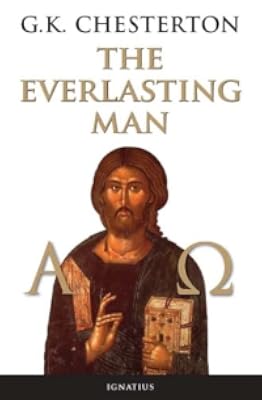
The Everlasting Man
by G. K. Chesterton
On This Page
Description
Highly influential in C. S. Lewis' conversion from atheism to Christianity, The Everlasting Man continues to inspire new generations of readers. Considered by many to be Chesterton's greatest masterpiece, this book declares his comprehensive view of world history as informed by the Incarnation. Retelling mankind's story from the very beginning, he shows how all human desires are fulfilled in the person of Christ and Christ's church. With his characteristic brilliance and irony, he argues show more that Christianity is not just a religion to stand beside other religions, for the fact of the Incarnation sets it apart. One of the most original and controversial theological works ever written, The Everlasting Man offers a commanding perspective of world history and aims to restore our sense of wonder in the universe, our God, and ourselves. show lessTags
Recommendations


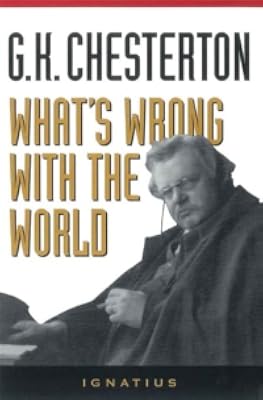
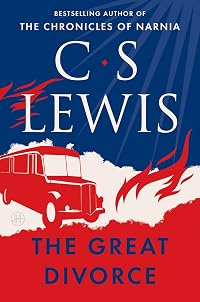
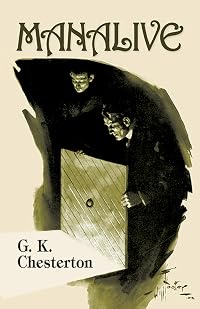
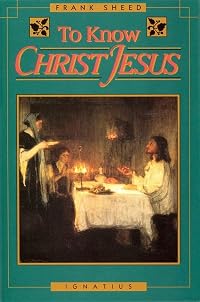

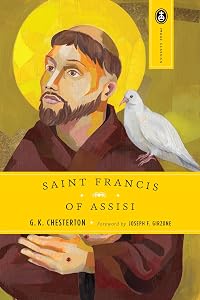
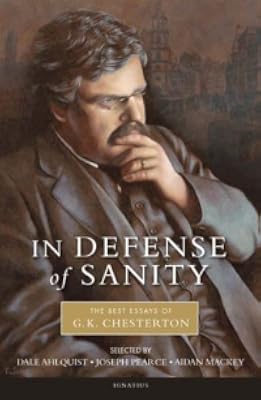

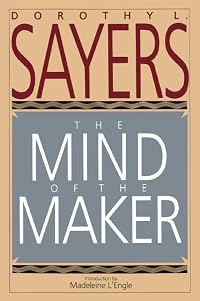
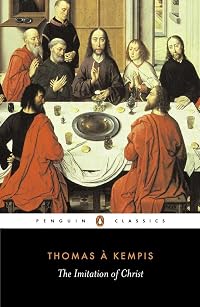

Member Recommendations

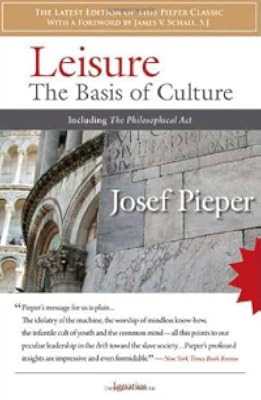
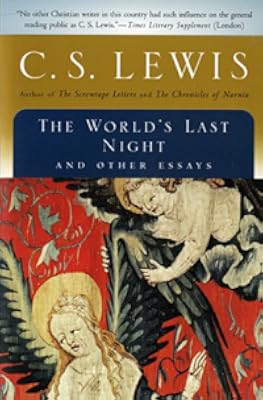
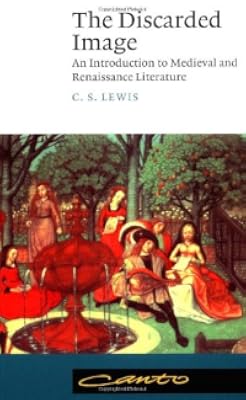
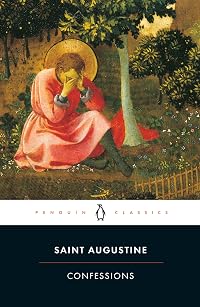
themulhern Chesterton's work is a reply to Wells's, although this is not made explicit in the title.
themulhern Both books discuss a bicameral mind, but have different ways of understanding or explaining the breakdown.
themulhern Both seek to explain why humans differ so astonishingly from their nearest living relatives.
11
Member Reviews
It's difficult for me to review The Everlasting Man adequately, largely for two reasons.
One is that G.K. Chesterton, being both a philosopher and a man of letters, here speaks in a style both rambling and strongly reminiscent of a lecture (or series of lectures). It's not patronizing, but the most important ideas Chesterton means to communicate can easily become buried. Ask me what the book is about, and from remembering the description I saw before I read it, I can tell you it's supposed to be a study of history and anthropology working under the assumption that the Bible is true and Jesus Christ is who He said He is; but press me to tell you what the book is about based on what I actually read in it, and I 'll probably have to show more say..."lots of things." C.S. Lewis is easier to follow.
The other is that Chesterton (also a Catholic par excellence) draws very extensively on Catholic philosophy for his interpretation of history and anthropology. I'm mostly ignorant of Catholic doctrine and philosophy, leaving me unable to fully appreciate (meaning "absorb," not "like" or "accept") all the...nuances, probably...of everything he says to illustrate his broader points. But something I picked up that I hadn't really thought of is that there were, according to Chesterton, two kinds of paganism. One was the "diabolism" represented by the Canaanite tribes' worship of their monstrous fire god Molech; the other was a softer idolatry born of the demands of the imagination; it's related to poetry and the need to make it.
I just remembered to mention something else, the real failing of the book. I already knew Chesterton was Eurocentric, having read that in reviews; but Chesterton's displays of cultural and (occasionally) racial arrogance are more blatant than I expected. He makes it clear that he considers everything outside European civilization the province of ignorant savages. That was enough to roll my eyes at (and I'm a conservative), but after he stepped below that by making some reference to "niggers" (he might not have been referring to Africans--I forget), I felt embarrassed for him while simultaneously appreciating the rest of what he has to teach. It doesn't help that later in the book, he takes a gratuitous cheap shot at Americans.
It's a book I should read again in the near future.
__________________________________________
11/5/2016
Since I first read The Everlasting Man, it has steadily risen in my esteem. I have many times taken it down to reread certain sections. I always reread it with fascination and delight; one can tell because I've long since underlined liberally on almost every page. I gave my review another star, but still won't ascribe a fifth star, because of Chesterton's embarrassing use of a racial epithet. show less
One is that G.K. Chesterton, being both a philosopher and a man of letters, here speaks in a style both rambling and strongly reminiscent of a lecture (or series of lectures). It's not patronizing, but the most important ideas Chesterton means to communicate can easily become buried. Ask me what the book is about, and from remembering the description I saw before I read it, I can tell you it's supposed to be a study of history and anthropology working under the assumption that the Bible is true and Jesus Christ is who He said He is; but press me to tell you what the book is about based on what I actually read in it, and I 'll probably have to show more say..."lots of things." C.S. Lewis is easier to follow.
The other is that Chesterton (also a Catholic par excellence) draws very extensively on Catholic philosophy for his interpretation of history and anthropology. I'm mostly ignorant of Catholic doctrine and philosophy, leaving me unable to fully appreciate (meaning "absorb," not "like" or "accept") all the...nuances, probably...of everything he says to illustrate his broader points. But something I picked up that I hadn't really thought of is that there were, according to Chesterton, two kinds of paganism. One was the "diabolism" represented by the Canaanite tribes' worship of their monstrous fire god Molech; the other was a softer idolatry born of the demands of the imagination; it's related to poetry and the need to make it.
I just remembered to mention something else, the real failing of the book. I already knew Chesterton was Eurocentric, having read that in reviews; but Chesterton's displays of cultural and (occasionally) racial arrogance are more blatant than I expected. He makes it clear that he considers everything outside European civilization the province of ignorant savages. That was enough to roll my eyes at (and I'm a conservative), but after he stepped below that by making some reference to "niggers" (he might not have been referring to Africans--I forget), I felt embarrassed for him while simultaneously appreciating the rest of what he has to teach. It doesn't help that later in the book, he takes a gratuitous cheap shot at Americans.
It's a book I should read again in the near future.
__________________________________________
11/5/2016
Since I first read The Everlasting Man, it has steadily risen in my esteem. I have many times taken it down to reread certain sections. I always reread it with fascination and delight; one can tell because I've long since underlined liberally on almost every page. I gave my review another star, but still won't ascribe a fifth star, because of Chesterton's embarrassing use of a racial epithet. show less
A dead thing can go with the stream, but only a living thing can go against it.
Rating: 4.5/5 – Beautiful writing and a unique perspective on apologetics.
I started this book on the recommendation of C.S. Lewis, for whom it was an instrumental part of his conversion.
This is a literary, poetic, and totally unique approach to apologetics that I have never encountered before, all told in beautiful, enchanting prose.
Chesterton makes two principle arguments: That man is wholly unlike the other animals and that Jesus is wholly unlike the other men. On this foundation he builds his case for the truth and power of the Gospel over all other supposedly competing narratives.
I came away from this book with a host of new thoughts and a desire to show more read a lot more Chesterton’s other works. I don’t know if I can pay a book a bigger compliment than that. show less
Rating: 4.5/5 – Beautiful writing and a unique perspective on apologetics.
I started this book on the recommendation of C.S. Lewis, for whom it was an instrumental part of his conversion.
This is a literary, poetic, and totally unique approach to apologetics that I have never encountered before, all told in beautiful, enchanting prose.
Chesterton makes two principle arguments: That man is wholly unlike the other animals and that Jesus is wholly unlike the other men. On this foundation he builds his case for the truth and power of the Gospel over all other supposedly competing narratives.
I came away from this book with a host of new thoughts and a desire to show more read a lot more Chesterton’s other works. I don’t know if I can pay a book a bigger compliment than that. show less
I don't understand how this book continues to get such high ratings and still is being praised. Agreed, it clearly contains 'strokes of genius', insights that were cleverly found on the basis of the information available at the time (1925). So I'm not going to dispute that Chesterton had a very sharp mind. But this book is nearly a century old, which is an insurmountable handicap for a work that claims to offer a history of the world. His passages about prehistoric man and about the earliest civilizations are completely obsolete according to current insights. And Chesterton's language is – and I’ll try to stay polite – very derogatory and sometimes utterly racist: for example, he constantly uses the words 'rude savages' when show more talking about Australian aborigines, and the infamous n-word also crops up regularly. The whole book, exudes an exclusively white, Eurocentric spirit; you can't really blame Chesterton for being a child of his time, but he’s really laying it on thick. And then there’s his horrible, pedantic style, with a constant ridicule of dissenting opinions, especially those based on scientific research (which, by the way, immediately prompted him to make a slight adjustment in an appendix). Obviously, this is an extremely polemical work, with a single goal: namely jamming it down our throat that with the introduction of Christianity world history has taken a fundamentally different path. I could follow that somewhat philosophically and theologically (but not in the terms Chesterton uses), but historically this just doesn't make sense. I really looked forward to reading this, but unfortunately, it was another disappointment. I don't understand how this book continues to get such high ratings and still is being praised. Agreed, it clearly contains 'strokes of genius', insights that were cleverly found on the basis of the information available at the time (1925). So I'm not going to dispute that Chesterton had a very sharp mind. But this book is nearly a century old, which is an insurmountable handicap for a work that claims to offer a history of the world. His passages about prehistoric man and about the earliest civilizations are completely obsolete according to current insights. And Chesterton's language is – and I’ll try to stay polite – very derogatory and sometimes utterly racist: for example, he constantly uses the words 'rude savages' when talking about Australian aborigines, and the infamous n-word also crops up regularly. The whole book, exudes an exclusively white, Eurocentric spirit; you can't really blame Chesterton for being a child of his time, but he’s really laying it on thick. And then there’s his horrible, pedantic style, with a constant ridicule of dissenting opinions, especially those based on scientific research (which, by the way, immediately prompted him to make a slight adjustment in an appendix). Obviously, this is an extremely polemical work, with a single goal: namely jamming it down our throat that with the introduction of Christianity world history has taken a fundamentally different path. I could follow that somewhat philosophically and theologically (but not in the terms Chesterton uses), but historically this just doesn't make sense. I really looked forward to reading this, but unfortunately, it was another disappointment.
For a view positive remarks, see my History-account on Goodreads: https://www.goodreads.com/review/show/4399439729 show less
For a view positive remarks, see my History-account on Goodreads: https://www.goodreads.com/review/show/4399439729 show less
From beginning to end this book is a defense of Roman Catholicism and an endless attack on all contrary opinion. It is not an easy read. It is not for some one with an elementary school education nor even a high school education. Unless you are fortunate enough to have had some Latin, maybe a little Greek, studied Greek and Roman mythology, possibly some archeology, ancient history much of this is likely to go completely past you. For those relatively few scholars amongst us this is a glorious exposition of heaven and earth. For others it may turn into a case of, what in the world is he ranting about. Whether Catholic or not it is worth a try. Don’t give up. An understanding of the world as heaven and earth, believers and show more non-believers is there waiting for exposure. show less
This wasn't quite what I was expecting, but I did still enjoy it for the most part. I don't know if I am just too jaded by apologetics and deep into church history, but I wasn't struck by anything here as profound or paradigm-shifting. This is certainly a book for those who already hold Christian beliefs, as I didn't find the evidence against other belief systems that impressive. There is something unique about original Christianity, and it feels like a lot of that is utterly lost today in Christian nationalism.
Christian apologetics is not my thing. On the other hand, Chesterton could be insightfully witty about ignorant anti-Christians. Like Oscar Wilde, Chesterton seems to write very insubstantially, and his work is best consumed in quotations, rather than in whole-book chunks. I don't think he's quite so precious as Wilde, though.
https://www.chesterton.org advertises a new, thoroughly annotated version of the book. Chesterton was an exceptionally erudite person so some of his allusions, being both erudite and dated, would be incomprehensible to many contemporary readers.
https://www.chesterton.org advertises a new, thoroughly annotated version of the book. Chesterton was an exceptionally erudite person so some of his allusions, being both erudite and dated, would be incomprehensible to many contemporary readers.
Theological tractate as an adventure novel?
"Why not?" Chesterton said.
I can argue with some details, but in general... Five Stars.
"Why not?" Chesterton said.
I can argue with some details, but in general... Five Stars.
Members
- Recently Added By
Lists

Christianity Books You've Read
179 works; 19 members

Books read 2017
29 works; 1 member
GreatBooks Worldview Academy Lists
133 works; 4 members

CCE 1000 Good Books List
1,033 works; 12 members

Books from the Gentle Traditionalist's Bookshelf
29 works; 1 member

Books That Most Shaped Me
8 works; 1 member


1001 Books You Must Read Before You Die
1,448 works; 1,134 members

Recommendations by Peter Kreeft
45 works; 4 members
Author Information

797+ Works 59,828 Members
Gilbert Keith Chesterton was born in London, England, in 1874. He began his education at St Paul's School, and later went on to study art at the Slade School, and literature at University College in London. Chesterton wrote a great deal of poetry, as well as works of social and literary criticism. Among his most notable books are The Man Who Was show more Thursday, a metaphysical thriller, and The Everlasting Man, a history of humankind's spiritual progress. After Chesterton converted to Catholicism in 1922, he wrote mainly on religious topics. Chesterton is most known for creating the famous priest-detective character Father Brown, who first appeared in "The Innocence of Father Brown." Chesterton died in 1936 at the age of 62. (Bowker Author Biography) show less
Some Editions
Awards and Honors
Series
Belongs to Publisher Series
Work Relationships
Is contained in
The Collected Works of G. K. Chesterton, Vol. 02 : The Everlasting Man, St. Francis of Assisi, St Thomas Aquinas by G. K. Chesterton
Has as a reference guide/companion
Common Knowledge
- Canonical title
- The Everlasting Man
- Original title
- The Everlasting Man; The everlasting man
- Original publication date
- 1925
- People/Characters
- H. G. Wells; Grant Allen
- First words
- There are two ways of going home; and one of them is to stay there.
- Quotations
- Art is the signature of man.
there are no rules of architecture for a castle in the clouds.
It never came into the mind of a monkey to bury another monkey with nuts in his grave to help him to the heavenly monkey house.
Talking of skulls, I am also aware of the story of the Cro-Magnam[sic] skull that was much larger and finer than a modern skull. It is a very funny story; because an eminent evolutionist, awakening to a somewhat belated cauti... (show all)on, protested against anything being inferred from one specimen. It is the duty of a solitary skull to prove that our fathers were our inferiors. Any solitary skull presuming to prove that they were superior is felt to be suffering from swelled head.
Otherwise the two sides of the human mind could never have touched at all; and the brain of man would have remained cloven and double; one lobe of it dreaming impossible dreams and the other repeating invariable calculations.
Pessimism is not in being tired of evil but in being tired of good. Despair does not lie in being weary of suffering, but in being weary of joy. It is when for some reason or other the good things in society no longer work th... (show all)at the society begins to decline; when its blessings refuse to bless.
Take for example the Aztecs and American Indians of the ancient empires of Mexico and Peru. They were at least as elaborate as Egypt or China and only less lively than that central civilization which is our own. But those who... (show all) criticize that central civilization (which is always their own civilization) have a curious habit of not merely doing their legitimate duty in condemning its crimes, but of going out of their way to idealise its victims. They always assume that before the advent of Europe there was nothing anywhere but Eden. And Swinburne, in that spirited chorus of the nations in "Songs Before Sunrise", used an expression about Spain in her South American conquests which always struck me as very strange. He said something about 'her sins and sons through sinless lands dispersed', and how they 'made accursed the name of man and thrice accursed the name of God.' It may be reasonable enough that he should say the Spaniards were sinful, but why in the world should he say that the South Americans were sinless? Why should he have supposed that continent to be exclusively populated by archangels or saints perfect in heaven? It would be a strong thing to say of the most respectable neighborhood; but when we come to think of what we really do know of that society the remark is rather funny.
But the devil really kept his appointments and even in one sense kept his promises; even if a man sometimes wished afterwards, like Macbeth, that he had broken them.
But with the idea of employing the demons who get things done, a new idea appears more worthy of the demons. It may indeed be truly described as the idea of being worthy of the demons; of making oneself fit for their fastidio... (show all)us and exacting society. ... Sooner or later a man deliberately sets himself to do the most disgusting thing he can think of. It is felt that the extreme of evil will extort a sort of attention or answer from the evil powers under the surface of the world.
These Victorian theories have shifted a great deal in their shape and scope; but this habit of a rapid hardening of a hypothesis into a theory, and of a theory into an assumption, has hardly yet gone out of fashion.
But even here the admirable archaeologists who have deciphered line after line of miles of hieroglyphics may be tempted to read too much between the lines; even the real authority on Babylon may forget how fragmentary is his ... (show all)hard-won knowledge; may forget that Babylon has only heaved half a brick at him, though half a brick is better than no cuneiform.
It is chiefly interesting as evidence that the boldest plans for the future invoke the authority of the past; and that even a revolutionary seeks to satisfy himself that he is also a reactionary.
Democracy is a thing which is always breaking down through the complexity of civilization.
If there is one fact we really can prove, from the history that we really do know, it is that despotism can be a development, often a late development and very often indeed the end of societies that have been highly democrati... (show all)c. A despotism may almost be defined as a tired democracy. As fatigue falls on a community, the citizens are less inclined for that eternal vigilance which has truly been called the price of liberty;
But even about these unwritten histories of humanity, when humanity was quite certainly human, we can only conjecture with the greatest doubt and caution. And unfortunately doubt and caution are the last things commonly encou... (show all)raged by the loose evolutionism of current culture. For that culture is full of curiosity; and the one thing that it cannot endure is the agony of agnosticism. It was in the Darwinian age that the word first became known and the thing first became impossible.
It is necessary to say plainly that all this ignorance is simply covered by impudence. Statements are made so plainly and positively that men have hardly the moral courage to pause upon them and find that they are without support.
The trouble with the professor of the prehistoric is that he cannot scrap his scrap. The marvellous and triumphant aeroplane is made out of a hundred mistakes. The student of origins can only make one mistake and stick to it. - Last words
- (Click to show. Warning: May contain spoilers.)Pyramids are plainer than the tracks of the desert; without denying that wiser men than I may see tracks in what is to me the trackless sand.
- Original language
- English UK
Classifications
Statistics
- Members
- 3,470
- Popularity
- 4,814
- Reviews
- 25
- Rating
- (4.19)
- Languages
- 8 — Dutch, English, French, Italian, Polish, Russian, Spanish, Portuguese (Portugal)
- Media
- Paper, Audiobook, Ebook
- ISBNs
- 129
- UPCs
- 1
- ASINs
- 71