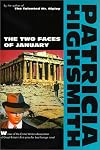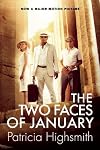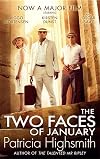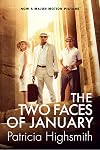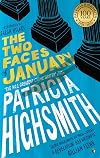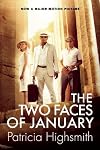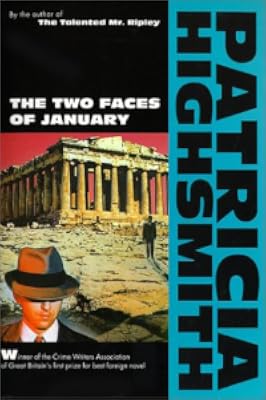
The Two Faces of January
by Patricia Highsmith
On This Page
Description
Originally published in 1964, and the winner of the CWA Best Foreign Novel Award, Patricia Highsmith's The Two Faces of January is a chilling tale of suspense, suffused with her trademark slow, creeping unease.In a grubby Athens hotel, Rydal Keener is bored and killing time with petty scams. But when he runs into another American, Chester MacFarland, dragging a man's body down the hotel hall, Rydan impulsively agrees to help, perhaps because Chester looks like his father. Then Rydal meets show more Collete, Chester's younger wife, and captivated, becomes entangled in their sordid lives, as the drama marches to a shocking climax at the ruins of the labyrinth at Knossos.A film version of The Two Faces of January, starring Viggo Mortensen, Kirsten Dunst, and Oscar Isaac (Drive, Inside Llewelyn Davis) is in production. Adapted by Academy Award nominee Hossein Amini (Drive), and produced by Working Title and Timnick Films (The Talented Mr. Ripley), it will be released later this fall. show lessTags
Recommendations




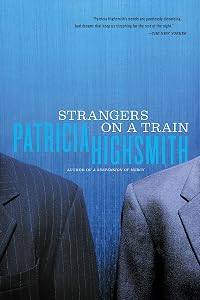




Member Recommendations
Member Reviews
Warning: this review may contain spoilers.
****
Chester Macfarland and his wife, Colette, are hiding out in Greece while they wait for the fallout from a scam of his to die down. Trouble arises when a member of the Greek police puts together his name and face and attempts to question him. Even more trouble arises when Chester accidentally kills the man and is caught hauling the body to a supply cupboard. He's caught by another American, Rydal Keener, who decides to help Chester out because Chester reminds him of his father. This begins a strange, dependent relationship between the three of them that is bound to end in tragedy.
It was impressive how quickly the dynamics changed in the relationship between Rydal and Chester, where Rydal show more learned exactly what buttons to push and how to make Chester react in an amusing way. By the end of the book I was horrified on everyone's behalf, and the final chapters were actually shocking. This might be almost too painful to watch in movie form.
Overall, this was pretty thrilling, but the middle felt somewhat slow. This could have been because of the large margins and high page count of my edition. I am also not sure how much I believe that Rydal could transform into a blackmailer and emotional manipulator so quickly. But maybe the signs were there all along and I just did not spot them. So with that in mind I would still recommend this book. show less
****
Chester Macfarland and his wife, Colette, are hiding out in Greece while they wait for the fallout from a scam of his to die down. Trouble arises when a member of the Greek police puts together his name and face and attempts to question him. Even more trouble arises when Chester accidentally kills the man and is caught hauling the body to a supply cupboard. He's caught by another American, Rydal Keener, who decides to help Chester out because Chester reminds him of his father. This begins a strange, dependent relationship between the three of them that is bound to end in tragedy.
It was impressive how quickly the dynamics changed in the relationship between Rydal and Chester, where Rydal show more learned exactly what buttons to push and how to make Chester react in an amusing way. By the end of the book I was horrified on everyone's behalf, and the final chapters were actually shocking. This might be almost too painful to watch in movie form.
Overall, this was pretty thrilling, but the middle felt somewhat slow. This could have been because of the large margins and high page count of my edition. I am also not sure how much I believe that Rydal could transform into a blackmailer and emotional manipulator so quickly. But maybe the signs were there all along and I just did not spot them. So with that in mind I would still recommend this book. show less
With the action mostly set in Athens, Crete and Marseille — the French port's an ancient Greek colony — it’s hardly surprising that Highsmith’s crime novel has the feel of a classical legend. From the title (The Two Faces of January is a nod to the Roman two-headed god Janus whose month opened the year) to a crucial scene in Knossos (reputedly the inspiration for the Cretan labyrinth) we can’t help but be aware that this very 20th-century tragedy has its affinities, its roots even, in the ancient world; for all its modern trappings the story turns on eternal human failings like hubris, that pride that can bring down both the guilty and the innocent.
This novel is a play with just three leading characters and a small cast of bit show more players. Chester MacFarlane is an American conman hiding out in Europe with his young wife Colette. Rydal Keener is an intelligent young American avoiding confrontation with his critical father before feeling guilty for having not attended his funeral. Chester survives under numerous aliases but has little facility with modern foreign languages like Greek; Rydal is fluent in French, Italian and Greek and so is in a position to help Chester and Colette when a Greek detective is inadvertently killed. Why does Rydal help the couple? Is it just because Chester reminds him of his father and Colette of his first love?
Patricia Highsmith expertly gets into the minds of the two male leads, alternating between their two points of view; Colette herself is a little more of an enigma — that she is attracted to the younger man is clear but Chester’s jealousy and Rydal’s ambiguous responses are intriguing enough for her to play a two-timing game, albeit Platonic at first. As we follow their furtive flight from Athens to Iraklion, to Rethymnon and Chania, back to Athens and then on to Paris and Marseille we sense that their cat-and-mouse game, as well as that between the trio and the police, can only end badly for some if not all of them.
Highsmith’s playing with classical myths is light, never overplayed. One doesn’t need to be aware of the subtle references to enjoy her psychological thriller, but I can’t help noting parallels. There’s Oedipus, who unwittingly kills his father Laius and is attracted to Jocasta, his father’s wife. Then there’s Theseus who sets sail from Athens to defeat Minos’ creature the Minotaur in his maze with the help of Minos’ daughter Ariadne, who subsequently dies; when, on returning to Athens, Theseus forgets to signal the success of his quest, his father Aegeus kills himself. And of course the protagonists’ journey from one end of the Mediterranean to the other is nothing less than an odyssey with all its attendant dangers, and a happy outcome never guaranteed.
Above all what impresses is Highsmith’s ability to persuade us to empathise a little with anti-heroes and almost-lost souls who have to survive by their wits and connivances, whatever the cost to others. While Chester at times seems irredeemable there is a moment when he comes over like a modern-day Sydney Carton in Dickens’ A Tale of Two Cities: you could almost hear him thinking “It’s a far, far better thing I do than I have ever done.” Colette is a thoroughly decent enigma who doesn’t deserve the roll of the dice Fate deals her, while Rydal — well, does this chancer survive like cunning Odysseus or will he become morally blind like Oedipus?
This is such a well-crafted novel which satisfies on many levels. A Cretan holiday taken many Easters ago meant that I had some familiarity with its northern locations — the three main towns and Knossos itself — and so was able to imagine the trio in situ as they treaded their labyrinthine path (away, as they hoped, from the authorities) that January, over half a century ago.
http://wp.me/s2oNj1-january show less
This novel is a play with just three leading characters and a small cast of bit show more players. Chester MacFarlane is an American conman hiding out in Europe with his young wife Colette. Rydal Keener is an intelligent young American avoiding confrontation with his critical father before feeling guilty for having not attended his funeral. Chester survives under numerous aliases but has little facility with modern foreign languages like Greek; Rydal is fluent in French, Italian and Greek and so is in a position to help Chester and Colette when a Greek detective is inadvertently killed. Why does Rydal help the couple? Is it just because Chester reminds him of his father and Colette of his first love?
Patricia Highsmith expertly gets into the minds of the two male leads, alternating between their two points of view; Colette herself is a little more of an enigma — that she is attracted to the younger man is clear but Chester’s jealousy and Rydal’s ambiguous responses are intriguing enough for her to play a two-timing game, albeit Platonic at first. As we follow their furtive flight from Athens to Iraklion, to Rethymnon and Chania, back to Athens and then on to Paris and Marseille we sense that their cat-and-mouse game, as well as that between the trio and the police, can only end badly for some if not all of them.
Highsmith’s playing with classical myths is light, never overplayed. One doesn’t need to be aware of the subtle references to enjoy her psychological thriller, but I can’t help noting parallels. There’s Oedipus, who unwittingly kills his father Laius and is attracted to Jocasta, his father’s wife. Then there’s Theseus who sets sail from Athens to defeat Minos’ creature the Minotaur in his maze with the help of Minos’ daughter Ariadne, who subsequently dies; when, on returning to Athens, Theseus forgets to signal the success of his quest, his father Aegeus kills himself. And of course the protagonists’ journey from one end of the Mediterranean to the other is nothing less than an odyssey with all its attendant dangers, and a happy outcome never guaranteed.
Above all what impresses is Highsmith’s ability to persuade us to empathise a little with anti-heroes and almost-lost souls who have to survive by their wits and connivances, whatever the cost to others. While Chester at times seems irredeemable there is a moment when he comes over like a modern-day Sydney Carton in Dickens’ A Tale of Two Cities: you could almost hear him thinking “It’s a far, far better thing I do than I have ever done.” Colette is a thoroughly decent enigma who doesn’t deserve the roll of the dice Fate deals her, while Rydal — well, does this chancer survive like cunning Odysseus or will he become morally blind like Oedipus?
This is such a well-crafted novel which satisfies on many levels. A Cretan holiday taken many Easters ago meant that I had some familiarity with its northern locations — the three main towns and Knossos itself — and so was able to imagine the trio in situ as they treaded their labyrinthine path (away, as they hoped, from the authorities) that January, over half a century ago.
http://wp.me/s2oNj1-january show less
(24) I enjoyed this psychological thriller from the author of 'The Talented Mr. Ripley.' I have seen the (~1990s) movie but I actually don't think I have read 'Ripley,' nor any of her other books for some strange reason that must be remedied. Very atmospheric and compelling narrative. Set in Greece and in particular scenes at the palace of Knossos ruins on Crete. A young American ex-patriot on the equivalent of a gap year after family strife meets another American couple in Athens. Chester and Colette McFarland may not be who they are pretending to be. Rydal follows Chester after noting a striking resemblance to his own late father and happens to witness a shocking event to which he soon becomes an accomplice. The entanglements between show more the two men get.. well.. complicated. Who is pursuing who in the end? The dynamics between the two men evolve into a dark and fascinating dynamic.
I like the way Highsmith writes. Is she the literary mystery writer I have been looking for? Just from perusing her other books it seems this theme of two men becoming in linked in potentially nefarious almost homo erotic ways is a theme throughout her novels and I vaguely remember that from the movie, 'Talented Mr. Ripley,' with Matt Damon which I loved. Highsmith writes without adornment. Just the facts yet with carefully selected contextual detail that allows the novel to spool out like a flickering film reel. No character is entirely sympathetic and their actions and motivations are human, not Hollywood. This perhaps makes the novel at times slow and some might argue unrewarding. But ultimately for this reader, the realism wins out and I quite enjoyed.
I think I may read 'Ripley,' despite perhaps having had a spoiler via the movie a decade or so ago. Excellent rainy weekend for an obsessive well-written read. And perhaps this book is also now some sort of television series that I need to check out. show less
I like the way Highsmith writes. Is she the literary mystery writer I have been looking for? Just from perusing her other books it seems this theme of two men becoming in linked in potentially nefarious almost homo erotic ways is a theme throughout her novels and I vaguely remember that from the movie, 'Talented Mr. Ripley,' with Matt Damon which I loved. Highsmith writes without adornment. Just the facts yet with carefully selected contextual detail that allows the novel to spool out like a flickering film reel. No character is entirely sympathetic and their actions and motivations are human, not Hollywood. This perhaps makes the novel at times slow and some might argue unrewarding. But ultimately for this reader, the realism wins out and I quite enjoyed.
I think I may read 'Ripley,' despite perhaps having had a spoiler via the movie a decade or so ago. Excellent rainy weekend for an obsessive well-written read. And perhaps this book is also now some sort of television series that I need to check out. show less
From the book jacket. Athens, 1962. Rydal Keener is an American expat working as a tour guide and running cons on the side. He is mostly killing time, searching for adventure. But in Cheter MacFarland, a charismatic American businessman, and his flirtatious and beautiful young wife, Colette, Rydal finds more than he bargained for. After an incident at a hotel puts the wealthy couple in danger, Rydal ties his fate to theirs.
My reactions
The only book by Patrician Highsmith that I’ve read previously was The Talented Mr Ripley. Once again, Highsmith manages to give us unlikeable characters that behave in ways that just keep this reader enthralled and interested, turning pages to find out what twists, turns and surprises the plot has in show more store.
As with Ripley, Keener is subject to “thinking” not with his head, but with his …. Well, he reacts based on lust and desire. Why he gets involved with these two to begin with is a mystery to me. And he gets entangled in their mess to a greater extent than he ever dreamed possible. But “in for a penny, in for a pound.”
Rydal and Chester try to outmaneuver one another, always thinking two or three steps ahead (or not). They are both facile liars, but hardly a match for Colette. Frankly you can’t trust a word any of them says. But that only adds to the suspense. The ending was a complete surprise to me, and I can’t say it was completely satisfying.
Still, this was a fast and entertaining read, though I did have to remind myself of the time and place and recall how much easier it was to change one’s identity in that era. Apparently, there was a movie made around 2014, but I never saw it nor even remember hearing much about it. show less
My reactions
The only book by Patrician Highsmith that I’ve read previously was The Talented Mr Ripley. Once again, Highsmith manages to give us unlikeable characters that behave in ways that just keep this reader enthralled and interested, turning pages to find out what twists, turns and surprises the plot has in show more store.
As with Ripley, Keener is subject to “thinking” not with his head, but with his …. Well, he reacts based on lust and desire. Why he gets involved with these two to begin with is a mystery to me. And he gets entangled in their mess to a greater extent than he ever dreamed possible. But “in for a penny, in for a pound.”
Rydal and Chester try to outmaneuver one another, always thinking two or three steps ahead (or not). They are both facile liars, but hardly a match for Colette. Frankly you can’t trust a word any of them says. But that only adds to the suspense. The ending was a complete surprise to me, and I can’t say it was completely satisfying.
Still, this was a fast and entertaining read, though I did have to remind myself of the time and place and recall how much easier it was to change one’s identity in that era. Apparently, there was a movie made around 2014, but I never saw it nor even remember hearing much about it. show less
I really like Patricia Highsmith's writing, really. She manages to spin a sense of suspense out of almost nothing. This one left me a little flat, though. It starts out well enough. A con man, Chester, and his young wife, Colette, are traveling in Greece--waiting for things to cool off at home. A policeman confronts Chester in his hotel room and he accidentally-on-purpose kills him. While he is struggling to hide the body, he encounters a younger man, Rydal, in the hallway who has, in truth, been sort of tailing Chester because he reminds Rydal of his estranged and now deceased father. Rydal has a bit of a shady past too; he gradually becomes less sympathetic as the story winds on.
So Rydal, on impulse, helps Chester out with the body, show more and these three become entangled. Colette flirts with Rydal, Chester gets jealous--a nice, tense triangle is put in place. Then the main turning point of the story:Chester kills Colette while actually trying to kill Rydal. For me, this was where the story started to deflate. Without Colette, the suspense was gone, and as a character, I was much more interested in her than in either of the two men. Even though this is a short novel, the remainder seemed to drag on to what I felt was a fairly foregone conclusion.
Highsmith is a taut, compact writer. The exotic yet somewhat seedy setting is perfect for this type of story. It's too bad that it wasn't quite the story I wanted it to be. show less
So Rydal, on impulse, helps Chester out with the body, show more and these three become entangled. Colette flirts with Rydal, Chester gets jealous--a nice, tense triangle is put in place. Then the main turning point of the story:
Highsmith is a taut, compact writer. The exotic yet somewhat seedy setting is perfect for this type of story. It's too bad that it wasn't quite the story I wanted it to be. show less
Another good psychological thriller by Patricia Highsmith. American con-man, Chester MacFarland, is in Athens with his young wife Colette. A private detective tracks down MacFarland and confronts him about his business scams in the US. MacFarland shoves the detective who falls, hits his head, and dies. While MacFarland is trying to hide the body, Rydal Keener, a young American expat, catches him in the act. Keener helps hide the body then proceeds to help MacFarland and his wife get new passports so they can leave Athens. And so begins an unfortunate adventure which ends in another accidental death. This is one of the few Highsmith novels where the protagonist actually feels remorse about his ill deeds.
Con artist Chester MacFarland is wanted by the police back in America, but here in Greece, he feels free to roam with his young Colette. That was until he accidently kills a police officer in his hotel room. The young American law graduate, Rydal Keener is there to help them escape the city. This accident has brought the three together but is this for the best or is there something else at play?
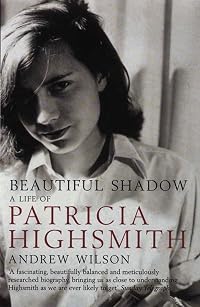
Patricia Highsmith is often referred to as the queen of suspense and The Two Faces of January does not do anything to contradict this. The title alone gives the reader a pretty clear idea of what to expect; the month of January is named after the Roman god Janus. Janus has two faces, one looking to the future while the other looks at the past. show more The term Janus-faced means “having two sharply contrasting aspects or characteristics”. In the biography Beautiful Shadow: A Life of Patricia Highsmith by Andrew Wilson, Highsmith stated that the title was a reference to the flux-like nature of the characters that she likes to create.
When it comes to character development, Patricia Highsmith really shines like no other. She has a great ability to create complex characters that feel authentic, and that is an ability that I find lacking in a lot of suspense novels. In The Two Faces of January, Highsmith creates a love triangle that is actually interesting to read about. There is the homoerotic relationship between Chester and Rydal and Colette is also quite taken by this young law graduate. This turns the book into more of a psychological look at the shifting nature of relationships rather than a thriller. It does depends on how the reader decides to read The Two Faces of January but for me the depth is what stood out for me.
I probably should mention that The Two Faces of January was adapted into a movie back in 2014 starring Viggo Mortensen, Kirsten Dunst and Oscar Isaac. This was the directorial debut for Hossein Amini, who is best known writing the screenplay for the novels Drive and Our Kind of Traitor; he even wrote the script for The Two Faces of January. I know I need to have more Highsmith within my reading life and I am thinking about re-reading The Talented Mr Ripley, before continuing on with the series. I have noticed there are new editions of the Highsmith’s novels lately and I think I should take advantage of the availability while they are easily accessible.
This review originally appeared on my blog; http://www.knowledgelost.org/literature/book-reviews/genre/thriller/the-two-face... show less
Patricia Highsmith is often referred to as the queen of suspense and The Two Faces of January does not do anything to contradict this. The title alone gives the reader a pretty clear idea of what to expect; the month of January is named after the Roman god Janus. Janus has two faces, one looking to the future while the other looks at the past. show more The term Janus-faced means “having two sharply contrasting aspects or characteristics”. In the biography Beautiful Shadow: A Life of Patricia Highsmith by Andrew Wilson, Highsmith stated that the title was a reference to the flux-like nature of the characters that she likes to create.
When it comes to character development, Patricia Highsmith really shines like no other. She has a great ability to create complex characters that feel authentic, and that is an ability that I find lacking in a lot of suspense novels. In The Two Faces of January, Highsmith creates a love triangle that is actually interesting to read about. There is the homoerotic relationship between Chester and Rydal and Colette is also quite taken by this young law graduate. This turns the book into more of a psychological look at the shifting nature of relationships rather than a thriller. It does depends on how the reader decides to read The Two Faces of January but for me the depth is what stood out for me.
I probably should mention that The Two Faces of January was adapted into a movie back in 2014 starring Viggo Mortensen, Kirsten Dunst and Oscar Isaac. This was the directorial debut for Hossein Amini, who is best known writing the screenplay for the novels Drive and Our Kind of Traitor; he even wrote the script for The Two Faces of January. I know I need to have more Highsmith within my reading life and I am thinking about re-reading The Talented Mr Ripley, before continuing on with the series. I have noticed there are new editions of the Highsmith’s novels lately and I think I should take advantage of the availability while they are easily accessible.
This review originally appeared on my blog; http://www.knowledgelost.org/literature/book-reviews/genre/thriller/the-two-face... show less
Members
- Recently Added By
Lists

Read the book and saw the movie
1,170 works; 195 members

Sense of place
156 works; 13 members

1960s
281 works; 16 members

Domestic Suspense Reading List
10 works; 1 member

Books Read in 2017
4,249 works; 130 members

Books With Numbers in the Title
308 works; 13 members

1960s, Best books published therein
254 works; 22 members

Global Reads: Books Set in Western Europe
186 works; 10 members
Books With Time Words in the Title
160 works; 4 members

Books With Winter Words in the Title
42 works; 6 members
Author Information

302+ Works 32,979 Members
Patricia Highsmith wrote twenty-one novels including "Strangers on a Train" & the "Ripley" series. She died in 1995 in Switzerland, where she resided much of her life. (Publisher Provided) Patricia Highsmith (January 19, 1921 -- February 4, 1995) was an American novelist and short story writer, most widely known for her psychological thrillers, show more which led to more than two dozen film adaptations. She was born in Fort Worth, Texas. Highsmith grew up with her maternal grandmother in Astoria, Queens, and attended Barnard College. Her first novel, Strangers on a Train (1950), was adapted for stage and screen numerous times, notably by Alfred Hitchcock in 1951. In addition to her acclaimed series about murderer Tom Ripley, which was made into a film in 1955, she wrote many short stories, often macabre, satirical or tinged with black humor. Highsmith liked to examine the ways in which people can get to the point where they are capable of murder, as well as who they become after they have committed a crime. In carefully constructed stories and novels, she integrated this scrutiny of the human psyche into complex plots that often took unexpected twists. In Strangers on a Train, architect Guy Haines meets Charles Bruno on a train. Bruno conceives a plan to have Haines kill Bruno's father, while Bruno will kill Haines's wife. The effect that this plan has on Haines is the focus of the story. Highsmith's awards include: O. Henry Award for best publication of first story, for "The Heroine" in Harper's Bazaar (1946), Grand Prix de Littérature Policière, for The Talented Mr. Ripley (1957), and the Dagger Award -- Category Best Foreign Novel, for The Two Faces of January from the Crime Writers' Association of Great Britain (1964). Highsmith died of aplastic anemia and cancer in Locarno, Switzerland, at age 74. Her last novel, Small G: A Summer Idyll, was published one month after her death in 1995. (Bowker Author Biography) show less
Some Editions
Series
Belongs to Publisher Series
Work Relationships
Has the adaptation
Common Knowledge
- Canonical title*
- Die zwei Gesichter des Januars
- Original title
- The Two Faces of January
- Original publication date
- 1961
- People/Characters*
- Chester MacFarland; Collette MacFarland; Rydal Keener
- Important places
- Athens, Greece; Paris, France; Crete, Greece
- Related movies
- The Two Faces of January (2013 | IMDb)
- Dedication
- For my friend Rolf Tietgens
- First words
- At half past three of a morning in early January, Chester MacFarland was awakened in his berth on the San Gimignano by an alarming sound of scraping.
- Last words
- (Click to show. Warning: May contain spoilers.)"Yes, I'm going," he said.
- Original language
- English
*Some information comes from Common Knowledge in other languages. Click "Edit" for more information.
Classifications
Statistics
- Members
- 530
- Popularity
- 55,895
- Reviews
- 18
- Rating
- (3.54)
- Languages
- 16 — Czech, Danish, Dutch, English, Finnish, French, German, Greek, Hungarian, Italian, Norwegian (Bokmål), Norwegian, Portuguese, Spanish, Swedish, Turkish
- Media
- Paper, Audiobook, Ebook
- ISBNs
- 46
- UPCs
- 1
- ASINs
- 15