On This Page
Description
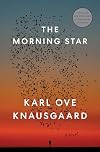
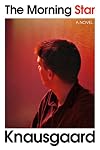
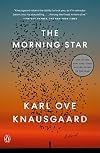
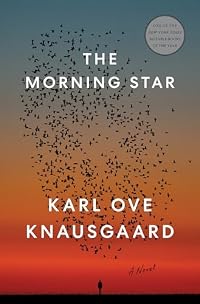
"A major new work from the author of the renowned My Struggle series, MORNING STAR is an astonishing, ambitious, and rich novel about what we don't understand, and our attempts to make sense of our world nonetheless Last night a new star appeared in the sky. The Morning Star. I know what it means. It means that it has begun. One long night in August, Arne and Tove are staying with their children in their summer house in southern Norway. Their friend Egil has his own place nearby. Kathrine, a show more priest, is flying home from a Bible seminar, questioning her marriage. Journalist Jostein is out drinking for the night, while his wife, Turid, a nurse at a psychiatric care unit, is on a nightshift when one of her patients escapes. Above them all, a huge star suddenly appears blazing in the sky. It brings with it a mysterious sense of foreboding. Strange things start to happen as nine lives come together under the star. Hundreds of crabs amass on the road as Arne drives at night; Jostein receives a call about a death metal band found brutally murdered in a Satanic ritual; Kathrine conducts a funeral service for a man she met at the airport - but is he actually dead? The Morning Star is about life in all its mundanity and drama, the strangeness that permeates our world, and the darkness in us all. Karl Ove Knausgaard's astonishing new novel, his first after the My Struggle cycle, goes to the utmost limits of freedom and chaos, to what happens when forces beyond our comprehension are unleashed, and the realms of the living and the dead collide"-- show lessTags
Recommendations























Member Recommendations

Member Reviews
Each chapter in this book it told from the perspective of different people whose lives are all intertwined, some more obviously than others, with the common thread being that all see a large new star arrive in the sky out of nowhere. In Isaiah 14 the Morning Star was the name given to the devil before his fall from grace, and for the narrators in each chapter it symbolises bad times to come. Some of these are domestic unravellings which had already begun, while others are much darker.
It's an unusual yet familiar book in many ways. It bears much of Knausgaard's familiar stamp present in the My Struggle series - only he can make descriptions of Norwegians stacking their dishwashers something that transfixes me in some weird, show more rubber-necking way. (And the number of cigarette lit - are Norwegians still a big smoking nation, or is this coloured by Knausgaard's own addiction? It feels quite alien now in the UK, where smoking has become the territory of a small minority). There's a strong Nordic pull in his writing for me - his depiction is of a society / country quite different to my experience of growing up in the UK, where children seem to be allowed much more freedom and independence at a young age, and where marriages and relationships seem generally ultimately doomed. Whether that's a fair representation of Norwegian reality or is just more a representation of Knausgaard I will never know (or perhaps it's just total fiction), but nonetheless it fascinates me and I can't look away.
For the first half of the book I wasn't sure that he needed the morning star as a plot device - I was enjoying the individual stories of characters screwing up in various ways, and introducing that supernatural element felt unnecessary. As the novel progresses, however, he takes the bad omen element into a much darker place in some of the chapters, on occasion blurring the lines between what is reality and what is imagined, and I felt ultimately it worked. Whereas other authors may have taken this magical realism in another direction, Knausgaard uses it to lightly prod concepts such as the occult and the undead, but he doesn't lose his trademark 'reality bites' narrative style by getting overly lost in the idea, and instead it feels intriguing and unsure territory for the reader.
Those who have read Knausgaard previously will know that he can't help himself when it comes to interjecting a generous peppering of philosophy into his books, and in this one his thoughts are relating to death itself and whether it is actually inevitable. This becomes a much wider scientific and philosophical discussion than Christian belief in immortality, and as is often the case I felt like Knausgaard indulged himself in that a little longer than the book warranted. Having said that, although these deep-thinking bursts in many of his books always feel very much self-gratifying, they're also interesting in an unexpected way.
It's a hefty read at 666 pages (see what he did there?), but it never felt a chore to read (although I won't miss its weight in hardback form). If you like your book endings nicely tied up then this is not the book for you as Knausgaard leaves us all over the place with the various stories, but apparently there's a sequel in the works so I for one am delighted.
4 stars - I think for sure this will be a love it or hate it novel for people, but if you're already a paid up member of the Knausgaard fan club I think you'll enjoy it. show less
It's an unusual yet familiar book in many ways. It bears much of Knausgaard's familiar stamp present in the My Struggle series - only he can make descriptions of Norwegians stacking their dishwashers something that transfixes me in some weird, show more rubber-necking way. (And the number of cigarette lit - are Norwegians still a big smoking nation, or is this coloured by Knausgaard's own addiction? It feels quite alien now in the UK, where smoking has become the territory of a small minority). There's a strong Nordic pull in his writing for me - his depiction is of a society / country quite different to my experience of growing up in the UK, where children seem to be allowed much more freedom and independence at a young age, and where marriages and relationships seem generally ultimately doomed. Whether that's a fair representation of Norwegian reality or is just more a representation of Knausgaard I will never know (or perhaps it's just total fiction), but nonetheless it fascinates me and I can't look away.
For the first half of the book I wasn't sure that he needed the morning star as a plot device - I was enjoying the individual stories of characters screwing up in various ways, and introducing that supernatural element felt unnecessary. As the novel progresses, however, he takes the bad omen element into a much darker place in some of the chapters, on occasion blurring the lines between what is reality and what is imagined, and I felt ultimately it worked. Whereas other authors may have taken this magical realism in another direction, Knausgaard uses it to lightly prod concepts such as the occult and the undead, but he doesn't lose his trademark 'reality bites' narrative style by getting overly lost in the idea, and instead it feels intriguing and unsure territory for the reader.
Those who have read Knausgaard previously will know that he can't help himself when it comes to interjecting a generous peppering of philosophy into his books, and in this one his thoughts are relating to death itself and whether it is actually inevitable. This becomes a much wider scientific and philosophical discussion than Christian belief in immortality, and as is often the case I felt like Knausgaard indulged himself in that a little longer than the book warranted. Having said that, although these deep-thinking bursts in many of his books always feel very much self-gratifying, they're also interesting in an unexpected way.
It's a hefty read at 666 pages (see what he did there?), but it never felt a chore to read (although I won't miss its weight in hardback form). If you like your book endings nicely tied up then this is not the book for you as Knausgaard leaves us all over the place with the various stories, but apparently there's a sequel in the works so I for one am delighted.
4 stars - I think for sure this will be a love it or hate it novel for people, but if you're already a paid up member of the Knausgaard fan club I think you'll enjoy it. show less
Epigram: "And in those days shall men seek death, and shall not find it; and shall desire to die, and Death shall flee from them."
First line: "The sudden thought that the boys were asleep in their beds inside the house behind me while the darkness descended on the sea was so pleasant and peaceful that I wouldn't let go of it at first, but tried instead to sustain it and pin down what was good about it."
Last line: "It means that it has begun."
This novel takes place over two days over which we follow in turn the stories of a dozen or so characters, each generally narrating their sections in the first person. Some of the characters have several sections devoted to them, a couple appear in only one section, and most of the characters have show more two sections. Some of the characters are related, sometimes only subtly, and appear in each other's sections, but some have apparently nothing to do with any of the other characters. What connects them all, however, is that on the evening of the first day each sees the appearance in the sky of a giant luminous star that has never been there before. Some view it as a natural phenomenon. Others think it is a sign or omen of something. For the reader, however, as we move through these characters' stories, the star is a massive forboding presence, and we sense and dread that something (good or bad, we don't know) is about to happen. And along with the star, all the characters, as they go about their day-to-day lives experience other unusual events. Many of these involve animals--a herd of crabs crossing the road, thousands (maybe millions) of ladybugs landing on a verandah, a fact-to-face soul-searching encounter with a deer. Others have strange human encounters--a mentally ill man previously unable to communicate tells his health aide, "You are doomed." A strange man in McDonald's tells a young woman, "I am the Lord," and his touch on her head electrifies her. A priest looks into the coffin of the deceased (who passed away several days before) whose funeral she was conducting, and sees the man who accosted her at the airport the night before. Several see faces or creatures that don't seen human. And so on, and so on.
Now all of this might ordinarily have annoyed me and made me impatient, and I wouldn't have believed in the world the author was creating. I'm thinking in particular of a book in which the author was attempting to create a sense of dread and forboding by having her characters experience all kinds of unusual, disconcerting, and yes, unreal, events. I hated that book, Leave the World Behind by Rumaan Alam, and yet I loved this one. Why? I don't know if I have a satisfactory answer, but one big difference is that Knausgaard's characters are so real, and they act and react in ways that are inherently consistent. If we have difficulty in understanding some of these weird things that are happening, we can understand these characters. They react in ways we would expect, based on their characters as presented to us. In Leave the World Behind I found the characters to react randomly, without rhyme or reason, in ways that made no sense.
It has been said of Knausgaard that he takes the mundane (in great detail) and makes it mesmerizing. I agree. I think Alison said in her review something along the lines that when she reads Knausgaard, he makes even his descriptions of loading the dishwasher fascinating. And in this book, I found the accounts of the two days in the lives of these dozen or so characters mundane details, and oddball events, mesmerizing.
Now, what I didn't like. There is a definite lack of resolution to the book. We are left hanging in the air as to several of the characters. And there is no information/resolution as to what the morning star (which appears each evening) is. But maybe we have a hint, in the last line of the novel, quoted above, "It means that it has begun."
The other thing I didn't care for is an issue that was raised on another thread re Knausgaard in general, his philosophizing. In his other books I've read, I didn't recall this as being an issue. However, in this book, there is definitely a lot of philosophizing, particularly in the sections relating to Katherine, the priest, and Egil, the documentary film maker, who is also the "author" of the final essay, "Death and the Dead." I will admit to not having read these parts as closely as I should have.
Despite these two dislikes, overall I loved the book. It was "unputdownable," and I read it compulsively. Highly recommended.
4 stars show less
First line: "The sudden thought that the boys were asleep in their beds inside the house behind me while the darkness descended on the sea was so pleasant and peaceful that I wouldn't let go of it at first, but tried instead to sustain it and pin down what was good about it."
Last line: "It means that it has begun."
This novel takes place over two days over which we follow in turn the stories of a dozen or so characters, each generally narrating their sections in the first person. Some of the characters have several sections devoted to them, a couple appear in only one section, and most of the characters have show more two sections. Some of the characters are related, sometimes only subtly, and appear in each other's sections, but some have apparently nothing to do with any of the other characters. What connects them all, however, is that on the evening of the first day each sees the appearance in the sky of a giant luminous star that has never been there before. Some view it as a natural phenomenon. Others think it is a sign or omen of something. For the reader, however, as we move through these characters' stories, the star is a massive forboding presence, and we sense and dread that something (good or bad, we don't know) is about to happen. And along with the star, all the characters, as they go about their day-to-day lives experience other unusual events. Many of these involve animals--a herd of crabs crossing the road, thousands (maybe millions) of ladybugs landing on a verandah, a fact-to-face soul-searching encounter with a deer. Others have strange human encounters--a mentally ill man previously unable to communicate tells his health aide, "You are doomed." A strange man in McDonald's tells a young woman, "I am the Lord," and his touch on her head electrifies her. A priest looks into the coffin of the deceased (who passed away several days before) whose funeral she was conducting, and sees the man who accosted her at the airport the night before. Several see faces or creatures that don't seen human. And so on, and so on.
Now all of this might ordinarily have annoyed me and made me impatient, and I wouldn't have believed in the world the author was creating. I'm thinking in particular of a book in which the author was attempting to create a sense of dread and forboding by having her characters experience all kinds of unusual, disconcerting, and yes, unreal, events. I hated that book, Leave the World Behind by Rumaan Alam, and yet I loved this one. Why? I don't know if I have a satisfactory answer, but one big difference is that Knausgaard's characters are so real, and they act and react in ways that are inherently consistent. If we have difficulty in understanding some of these weird things that are happening, we can understand these characters. They react in ways we would expect, based on their characters as presented to us. In Leave the World Behind I found the characters to react randomly, without rhyme or reason, in ways that made no sense.
It has been said of Knausgaard that he takes the mundane (in great detail) and makes it mesmerizing. I agree. I think Alison said in her review something along the lines that when she reads Knausgaard, he makes even his descriptions of loading the dishwasher fascinating. And in this book, I found the accounts of the two days in the lives of these dozen or so characters mundane details, and oddball events, mesmerizing.
Now, what I didn't like. There is a definite lack of resolution to the book. We are left hanging in the air as to several of the characters. And there is no information/resolution as to what the morning star (which appears each evening) is. But maybe we have a hint, in the last line of the novel, quoted above, "It means that it has begun."
The other thing I didn't care for is an issue that was raised on another thread re Knausgaard in general, his philosophizing. In his other books I've read, I didn't recall this as being an issue. However, in this book, there is definitely a lot of philosophizing, particularly in the sections relating to Katherine, the priest, and Egil, the documentary film maker, who is also the "author" of the final essay, "Death and the Dead." I will admit to not having read these parts as closely as I should have.
Despite these two dislikes, overall I loved the book. It was "unputdownable," and I read it compulsively. Highly recommended.
4 stars show less
The writing is excellent and the characters intriguing (though not in a likable way). I loved the essay-within-a-book at the end that made the book make a lot more sense. I wish the book had opened with it, because the rest of the book was convoluted, confusing and kind of a mess. Too many characters, not enough time with each, and the mixing in of various dead people vs dreams left me totally disoriented. Probably the point, but just couldn't really get into it. I spent most of the book worrying about the children (and the pets, for that matter).
Something out of control and unpredictable is going on.
“The Morning Star” is about people who are alike and yet are very different at the same time. The book is well organized and takes place over two days, each section labeled. Within each day, detailed accounts revolve around the activities of specific well-defined, diverse, and complex characters. They share thoughts, fears, and opinions; readers get to know them well. Everyday activities and encounters with family and friends seem to be friendly, but they have an undercurrent of trouble, sometimes unstated, but at other times overt and open. Gossip, suspicion, and insinuations abound.
The narrative paints pictures with words. “The only light left in the landscape came from the show more shining moon, spectral in its reflection on the surface of the bay.” However, into this idyllic setting, a “celestial phenomenon” arrives. An expert from the university says it is most likely a supernova. But no matter the label, it is something out of control, something volatile, and something dreadful. Birds start singing strangely, and other animals become unpredictable. Death is all around.
“The Morning Star” is a modern gothic tale. It is the story of ordinary families and friends, going about their daily activities. However, something else very different, very strange is going on as well. The story is filled with people whose very beliefs are challenged. The book is long; the plot moves slowly but with purpose, and I anxiously turned every page, wondering what would be next. I received a review copy of “The Morning Star” from Karl Ove Knausgaard, Martin Aitken who translated it from Norwegian, Penguin Press, and Random House LLC. It is compelling and haunting. show less
“The Morning Star” is about people who are alike and yet are very different at the same time. The book is well organized and takes place over two days, each section labeled. Within each day, detailed accounts revolve around the activities of specific well-defined, diverse, and complex characters. They share thoughts, fears, and opinions; readers get to know them well. Everyday activities and encounters with family and friends seem to be friendly, but they have an undercurrent of trouble, sometimes unstated, but at other times overt and open. Gossip, suspicion, and insinuations abound.
The narrative paints pictures with words. “The only light left in the landscape came from the show more shining moon, spectral in its reflection on the surface of the bay.” However, into this idyllic setting, a “celestial phenomenon” arrives. An expert from the university says it is most likely a supernova. But no matter the label, it is something out of control, something volatile, and something dreadful. Birds start singing strangely, and other animals become unpredictable. Death is all around.
“The Morning Star” is a modern gothic tale. It is the story of ordinary families and friends, going about their daily activities. However, something else very different, very strange is going on as well. The story is filled with people whose very beliefs are challenged. The book is long; the plot moves slowly but with purpose, and I anxiously turned every page, wondering what would be next. I received a review copy of “The Morning Star” from Karl Ove Knausgaard, Martin Aitken who translated it from Norwegian, Penguin Press, and Random House LLC. It is compelling and haunting. show less
I am still processing this book and I am not sure if I will get there before reading the sequel, The Wolves of Eternity. On the surface K deals in great detail with the lives of various Norwegians dealing with mundane problems. But then weird twists in their lives leave us dealing with the boundaries of life and death, what is death, the existence of God, etc. Imagine Kierkegaard writing a Proust novel.
in the end, a little disappointing as the puntillistic narration doesn't succeed in conjuring up the anticipated epiphany
nie wieder knausgard. furchtbar
Members
- Recently Added By
Published Reviews
ThingScore 75
If you can imagine HP Lovecraft having studied German romanticism, throw in some Emmanuel Carrère-style theological musings, some Jo Nesbø-ish gore, and set it all in the forested backdrop of Norway, then that might give something of the unusual flavour of this unclassifiable book.
added by Nevov
Lists

Books Read in 2023
5,547 works; 145 members

Fiction: Crime, Detective, Mystery
350 works; 3 members

Dublin Literary Award 2023 Longlist
67 works; 5 members

Llibres que he llegit el 2023
38 works; 1 member

Top Five Books of 2023
767 works; 317 members

contemporary literary fiction list to check out
47 works; 1 member
Author Information

69+ Works 12,546 Members
Karl Ove Knausgaard is a Norwegian author known for his six autobiographical novels called "My Struggle". His debut novel Out of This World won the Norwegian Critics Prize and his A Time for Everything was a finalist for the Nordic Council Prize. My Struggle: Book One was a New Yorker Book of the Year and Book Two was listed among the Wall Street show more Journal's 2013 Books of the Year. In 2014, Book Three was named a New York Times Notable Book of the Year. His new autobiographical quartet is based on the four seasons. Autumn was relased in August 2017. (Bowker Author Biography) show less
Some Editions
Awards and Honors
Awards
Distinctions
Series

Common Knowledge
- Canonical title
- The Morning Star
- Original title
- Morgenstjernen
- Original publication date
- 2020; 2022 (Deutsche Ausgabe) (Deutsche Ausgabe)
- People/Characters*
- Katherine; Kristian Hadeland; Arne Larsen; Gaute; Emil; Iselin (show all 12); Solveig Kvamme; Jostein Lindland; Turid Lindland; Vebike; Egil Stray; Tove
- Important places
- Norway
- Epigraph*
- Und in jenen Tagen werden die Menschen den Tod suchen und nicht finden, sie werden begehren zu sterben und der Tod wird vor ihnen fliehen.
- Dedication*
- Für Michal
- First words*
- Der plötzliche Gedanke, dass die Jungen hinter mir im Haus lagen und schliefen, während sich die Dunkelheit aufs Meer senkte, war so friedvoll und freundlich, dass ich bei ihm verharrte, als er auftauchte, und versuchte, da... (show all)s Gute an ihm zu bestimmen, statt ihn ziehen zu lassen.
- Last words*
- (Click to show. Warning: May contain spoilers.)Es bedeutet, dass es begonnen hat.
- Blurbers
- The Boston Globe; Jeffrey Eugenides; James Wood; Zadie Smith
- Original language*
- Norwegisch
*Some information comes from Common Knowledge in other languages. Click "Edit" for more information.
Classifications
- Genres
- General Fiction, Fiction and Literature
- DDC/MDS
- 839.8238 — Literature & rhetoric German & related literatures Other Germanic literatures Danish and Norwegian literatures Norwegian literature Norwegian Bokmål fiction 2000–
- LCC
- PT8951.21 .N38 .M6713 — Language and Literature German, Dutch and Scandinavian literatures Norwegian literature Individual authors or works 1961-2000
- BISAC
Statistics
- Members
- 660
- Popularity
- 43,487
- Reviews
- 12
- Rating
- (3.82)
- Languages
- 13 — Danish, Dutch, English, Estonian, Finnish, French, German, Italian, Norwegian (Bokmål), Norwegian, Portuguese, Spanish, Swedish
- Media
- Paper, Audiobook, Ebook
- ISBNs
- 37
- ASINs
- 8