On This Page
Description
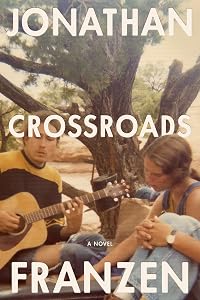
"It's December 23, 1971, and heavy weather is forecast for Chicago. Russ Hildebrandt, the associate pastor of a liberal suburban church, is on the brink of breaking free of a marriage he finds joyless -- unless his wife, Marion, who has her own secret life, beats him to it. Their eldest child, Clem, is coming home from college on fire with moral absolutism, having taken an action that will shatter his father. Clem's sister, Becky, long the social queen of her high-school class, has sharply show more veered into the counterculture, while their brilliant younger brother Perry, who's been selling drugs to seventh graders, has resolved to be a better person. Each of the Hildebrandts seeks a freedom that each of the others threatens to complicate. Jonathan Franzen's novels are celebrated for their unforgettably vivid characters and for their keen-eyed take on contemporary America. Now, in Crossroads, Franzen ventures back into the past and explores the history of two generations. With characteristic humor and complexity, and with even greater warmth, he conjures a world that resonates powerfully with our own. A tour de force of interwoven perspectives and sustained suspense, its action largely unfolding on a single winter day, Crossroads is the story of a Midwestern family at a pivotal moment of moral crisis. Jonathan Franzen's gift for melding the small picture and the big picture has never been more dazzlingly evident."-- show lessTags
Recommendations





Member Recommendations
Member Reviews
Holy mother this is a complicated book, the closest thing to the great American novel I have read in a very long time (maybe since The Corrections?) and it is going to take some time for me to process it.
I used to know a religion professor, a brilliant and delightful guy, who spent most of his waking hours neck deep in Western religion texts. He was an Atheist. The way he talked about religion, the intricacy of the liturgy, the impact of interpretation on history, the connection to philosophical texts that predated various versions of the Christian bible, all without the sparkly eyes of the true believer, changed my understanding of and relation to God and to religion as a part of life (in the macro sense, as it influences the behaviors show more of most everyone around us, even non-believers.) Reading this book reminded me of those conversations in the best way. I feel challenged and shaken. In all honesty, I want to take a class on this book. I feel like I need someone to shepherd me through parts of it. I imagine if I had a better grounding in Christian theology I would see even more in here, but I got plenty even without that.
On its face this is, like The Corrections, a story of a Midwestern family in the 70's (with other supporting timelines set in the parents' pasts.) In this case we have the Hildebrandt family. The father is Russ, a pastor who is quite sure of his goodness, rightness, and supremacy. The mother, Marion, is a pastor's wife with a deeply buried past. To my mind she is the most interesting and complex of the Hildebrandts. I wanted so much better for her. Russ and Marion have four children. The three eldest children are products of their upbringing, and things are not looking great for them. Russ and Marion and those three children are all at a "crossroads" in the novel, each having their own crises of faith. Not just crises of faith in God, but faith in their family and in all they have been told is right and good. We the reader ride shotgun as the Hildebrandts face their defining moments at these crossroads and do not (I don't think this counts as a spoiler) make great decisions. (The name of the book definitely comes in part from these personal moments of choice, but also there is a Christian teen group called Crossroads that is at the center of a lot of the storylines and Russ is a huge Robert Johnson fan, so we have the specter of Mr. Johnson selling his soul to the devil, and perhaps of some characters doing the same.)
I guess I need to put in a disclaimer here -- I grew up in the 70's in the Midwest, I am roughly the same age as the youngest of the children in the family, a boy whom we don't learn a ton about in this first book of the trilogy, but we know he is watching and absorbing the clusterfuck around him. The reason I say this is a disclaimer is that I hated being a being a child in the Midwest in the 1970's, and I was watching and absorbing the clusterfuck around me (I was also the youngest), and I still have a lot of feelings. I am not great at processing those feelings so they came out strong while I was reading this and affected my review. The pity and the anger and the frustration that ran through me as I read was as sharp and real as if these things were happening to me. Sure, there was some sympathy and some empathy, but most of the feelings were of a less healthy variety. The way Franzen broke things down though, the way the characters reacted to things, refracted my view of my own experiences, things I thought I had figured out years ago. I am not confident Franzen brings more truth to analysis than I did/do on my own, but he certainly gave me some new perspectives, and that is pretty amazing.
So I started out talking about this as a book founded in Christianity, and then moved to this discussion of the product of dysfunctional families who bury what they really feel and that seems inconsistent, but it is not. The dysfunction comes, in part, from trying to live while suffocating under the cloaks of religious community and Midwestern community. These forces create synergies and those synergies are what we see.
Perry, the third Hildebrandt child, and the spark for most of the action in this story (and not in a good way) talks a good deal about how even generosity is self-serving because we are generous in order to make people see us as generous so we can reap the endorphin rush of their adulation. I am not quite as cynical as a screwed up teenager so I am not quite so absolute as Perry, but also, the kid ain't entirely wrong. And living as he does, a preacher's kid in Illinois, it probably is true of most of the generosity he sees around him. One of the hallmarks of a certain kind of Midwestern ethos (I recognize this is not true of all Midwestern families, and I also recognize I am biased by my specific experience) is that things have not occurred and are neither right nor wrong until the neighbors see them and decide if those things make them think less or more of you - it is a weird sort of metaphysical morality, and its not great. So this is where I throw mental illness into the stew of Midwestern passive-aggressive grit/repression and Christian groupthink. Several members of the Hildebrandt family feel the personal impact of mental illness, and all feel its impact on the family. The effects of mental illness (almost certainly there is a genetic predisposition at play) are exacerbated by the repression and groupthink. This comes out in some characters' efforts to make themselves invisible (if you are not seen you cannot be judged), in others as an inability to accept that anything exists if you do not see it, and in other ways as well.
Unrelatedly (kind of), Franzen really shows us how toxic masculinity (something he is sort of expert in) damages the toxic men themselves and that too was really interesting. Yes, there is a lot of stuff about penises, and a little about vaginas (all definitely not written by or proofed by a woman) and some really gross sexual congress, so there is that. But the toxicity material that is interesting to me is how the character's lives and their opportunity for any kind of quenching connection are destroyed by their conscious and unconscious definitions of who they are in the world and in their relationships as a result of their whiteness and their maleness. This is especially true of Russ and the eldest son Clem who are unable to connect to any women in nonsexual ways, even when sexual connection with a female would be completely inappropriate and/or illegal and who march off to do their savior penance with laser-focused self-satisfaction and no broader look at how their actions effect their families or those they have decided they should be saving. That is a part I most need to sit with a bit longer before I discuss it, but I thought it was worth mentioning. I know Franzen is a lightning rod, and he can be an ass, but he is a self-aware lightning rod and ass and he presents these nuanced men who I want to know so much more about even though I have a pretty healthy dislike for many of them based at least in part on those people having characteristics and making choices I suspect come directly from the author. Its complicated. It is also worth mentioning that Franzen has written Marion really beautifully so his insight is not limited to the men.
This is an enduring book, it is a document of a certain type of person and life, a unique story of a group of fleshed out characters, and a meditation of some of the most fundamental moral questions human beings wrestle with. What does it mean to be a good person? To be a bad person? How do we live to honor god or goodness or intellectual coherence or whatever we worship.
A couple endnotes for those with issues with Franzen. I was really glad he didn't talk about birds or climate change for the most part. For those who found Franzen's humor falls flat for them (sometimes I count myself in that group, but mostly I like it in other books) they will be glad to know this is pretty humor free. For those that are bothered by Franzen's dismissal or castigation of religion in other books, this is a religious book, and it is not arch or snarky. The book is deeply respectful of faith and of ethical grappling with existential questions, while also poking at certain rules of the road when it comes to practicing faith as defined by an established church.
So yeah, its pretty great. show less
I used to know a religion professor, a brilliant and delightful guy, who spent most of his waking hours neck deep in Western religion texts. He was an Atheist. The way he talked about religion, the intricacy of the liturgy, the impact of interpretation on history, the connection to philosophical texts that predated various versions of the Christian bible, all without the sparkly eyes of the true believer, changed my understanding of and relation to God and to religion as a part of life (in the macro sense, as it influences the behaviors show more of most everyone around us, even non-believers.) Reading this book reminded me of those conversations in the best way. I feel challenged and shaken. In all honesty, I want to take a class on this book. I feel like I need someone to shepherd me through parts of it. I imagine if I had a better grounding in Christian theology I would see even more in here, but I got plenty even without that.
On its face this is, like The Corrections, a story of a Midwestern family in the 70's (with other supporting timelines set in the parents' pasts.) In this case we have the Hildebrandt family. The father is Russ, a pastor who is quite sure of his goodness, rightness, and supremacy. The mother, Marion, is a pastor's wife with a deeply buried past. To my mind she is the most interesting and complex of the Hildebrandts. I wanted so much better for her. Russ and Marion have four children. The three eldest children are products of their upbringing, and things are not looking great for them. Russ and Marion and those three children are all at a "crossroads" in the novel, each having their own crises of faith. Not just crises of faith in God, but faith in their family and in all they have been told is right and good. We the reader ride shotgun as the Hildebrandts face their defining moments at these crossroads and do not (I don't think this counts as a spoiler) make great decisions. (The name of the book definitely comes in part from these personal moments of choice, but also there is a Christian teen group called Crossroads that is at the center of a lot of the storylines and Russ is a huge Robert Johnson fan, so we have the specter of Mr. Johnson selling his soul to the devil, and perhaps of some characters doing the same.)
I guess I need to put in a disclaimer here -- I grew up in the 70's in the Midwest, I am roughly the same age as the youngest of the children in the family, a boy whom we don't learn a ton about in this first book of the trilogy, but we know he is watching and absorbing the clusterfuck around him. The reason I say this is a disclaimer is that I hated being a being a child in the Midwest in the 1970's, and I was watching and absorbing the clusterfuck around me (I was also the youngest), and I still have a lot of feelings. I am not great at processing those feelings so they came out strong while I was reading this and affected my review. The pity and the anger and the frustration that ran through me as I read was as sharp and real as if these things were happening to me. Sure, there was some sympathy and some empathy, but most of the feelings were of a less healthy variety. The way Franzen broke things down though, the way the characters reacted to things, refracted my view of my own experiences, things I thought I had figured out years ago. I am not confident Franzen brings more truth to analysis than I did/do on my own, but he certainly gave me some new perspectives, and that is pretty amazing.
So I started out talking about this as a book founded in Christianity, and then moved to this discussion of the product of dysfunctional families who bury what they really feel and that seems inconsistent, but it is not. The dysfunction comes, in part, from trying to live while suffocating under the cloaks of religious community and Midwestern community. These forces create synergies and those synergies are what we see.
Perry, the third Hildebrandt child, and the spark for most of the action in this story (and not in a good way) talks a good deal about how even generosity is self-serving because we are generous in order to make people see us as generous so we can reap the endorphin rush of their adulation. I am not quite as cynical as a screwed up teenager so I am not quite so absolute as Perry, but also, the kid ain't entirely wrong. And living as he does, a preacher's kid in Illinois, it probably is true of most of the generosity he sees around him. One of the hallmarks of a certain kind of Midwestern ethos (I recognize this is not true of all Midwestern families, and I also recognize I am biased by my specific experience) is that things have not occurred and are neither right nor wrong until the neighbors see them and decide if those things make them think less or more of you - it is a weird sort of metaphysical morality, and its not great. So this is where I throw mental illness into the stew of Midwestern passive-aggressive grit/repression and Christian groupthink. Several members of the Hildebrandt family feel the personal impact of mental illness, and all feel its impact on the family. The effects of mental illness (almost certainly there is a genetic predisposition at play) are exacerbated by the repression and groupthink. This comes out in some characters' efforts to make themselves invisible (if you are not seen you cannot be judged), in others as an inability to accept that anything exists if you do not see it, and in other ways as well.
Unrelatedly (kind of), Franzen really shows us how toxic masculinity (something he is sort of expert in) damages the toxic men themselves and that too was really interesting. Yes, there is a lot of stuff about penises, and a little about vaginas (all definitely not written by or proofed by a woman) and some really gross sexual congress, so there is that. But the toxicity material that is interesting to me is how the character's lives and their opportunity for any kind of quenching connection are destroyed by their conscious and unconscious definitions of who they are in the world and in their relationships as a result of their whiteness and their maleness. This is especially true of Russ and the eldest son Clem who are unable to connect to any women in nonsexual ways, even when sexual connection with a female would be completely inappropriate and/or illegal and who march off to do their savior penance with laser-focused self-satisfaction and no broader look at how their actions effect their families or those they have decided they should be saving. That is a part I most need to sit with a bit longer before I discuss it, but I thought it was worth mentioning. I know Franzen is a lightning rod, and he can be an ass, but he is a self-aware lightning rod and ass and he presents these nuanced men who I want to know so much more about even though I have a pretty healthy dislike for many of them based at least in part on those people having characteristics and making choices I suspect come directly from the author. Its complicated. It is also worth mentioning that Franzen has written Marion really beautifully so his insight is not limited to the men.
This is an enduring book, it is a document of a certain type of person and life, a unique story of a group of fleshed out characters, and a meditation of some of the most fundamental moral questions human beings wrestle with. What does it mean to be a good person? To be a bad person? How do we live to honor god or goodness or intellectual coherence or whatever we worship.
A couple endnotes for those with issues with Franzen. I was really glad he didn't talk about birds or climate change for the most part. For those who found Franzen's humor falls flat for them (sometimes I count myself in that group, but mostly I like it in other books) they will be glad to know this is pretty humor free. For those that are bothered by Franzen's dismissal or castigation of religion in other books, this is a religious book, and it is not arch or snarky. The book is deeply respectful of faith and of ethical grappling with existential questions, while also poking at certain rules of the road when it comes to practicing faith as defined by an established church.
So yeah, its pretty great. show less
As soon as I finished, I read six or eight published professional reviews, which varied so widely that it sometimes seemed they were reviewing different books. One thought it was written so breezily that they likened it to a "beach read"; another valued the intense psychological depth given to all the characters. One thought the prose was flat and careless; another admired the skill with which each sentence was obviously constructed. One experienced it as a period family melodrama; another considered it a serious social portrait of its era. Let me go on the record as being in the second camp of all these divides. I read this book over three weeks, thinking intensely about it whenever it wasn't in my hands. I've rarely read anything so show more vivid. I'm certain that it's destined either to be one of a handful of books read a hundred years from now by people who want to understand the early 1970s, or it's going to be a "cult classic" read by amateur lovers of period novels and assigned by particularly perceptive professors. In either case, it's going to be a classic.
The divide extends to my own house. My wife read it in about four sittings, which flabbergasts me. For me, involving as it was ("This is like watching the best movie I've ever seen," I said at one point), Crossroads was a sometimes painful revisit of my own adolescence, including a life-changing involvement in a church-sponsored youth group later in the '70s. It was also an empathetic but pitiless deep dive into the mindsets of five people, all very different, whom it's almost impossible not to judge in the same harsh way we judge ourselves, simply because we are taken so deeply into their thoughts and feelings. But just as we flog ourselves over our awkwardnesses, stupidities and secret shame, all the while insisting that we're not bad people, it's difficult to consider any of these people villains—however close each of them may come. It can be a squirmy experience watching the train wrecks these people get into. But at the same time, each of them can truthfully call out the primal scream of the human condition: "I'm doing the best I can!"
I will say (and despite our different experiences of the book, my wife agrees with me on this) that the ending is a bit sudden and inconclusive, with only slight attention being paid to the novelistic need to make things tidy. Franzen has announced this as the beginning of a trilogy and further works will have to be published to make this one feel complete. That's realistic, too, since none of our personal stories are yet ended either. Crossroads is the closest I ever expect to get to the telepathic-empathic experience of being in someone else's head, and that's good enough for me. show less
The divide extends to my own house. My wife read it in about four sittings, which flabbergasts me. For me, involving as it was ("This is like watching the best movie I've ever seen," I said at one point), Crossroads was a sometimes painful revisit of my own adolescence, including a life-changing involvement in a church-sponsored youth group later in the '70s. It was also an empathetic but pitiless deep dive into the mindsets of five people, all very different, whom it's almost impossible not to judge in the same harsh way we judge ourselves, simply because we are taken so deeply into their thoughts and feelings. But just as we flog ourselves over our awkwardnesses, stupidities and secret shame, all the while insisting that we're not bad people, it's difficult to consider any of these people villains—however close each of them may come. It can be a squirmy experience watching the train wrecks these people get into. But at the same time, each of them can truthfully call out the primal scream of the human condition: "I'm doing the best I can!"
I will say (and despite our different experiences of the book, my wife agrees with me on this) that the ending is a bit sudden and inconclusive, with only slight attention being paid to the novelistic need to make things tidy. Franzen has announced this as the beginning of a trilogy and further works will have to be published to make this one feel complete. That's realistic, too, since none of our personal stories are yet ended either. Crossroads is the closest I ever expect to get to the telepathic-empathic experience of being in someone else's head, and that's good enough for me. show less
Everyone in the family is struggling to be good, and for most of them this means twisting themselves in knots of self-punishment. Don't read this book looking for a model of mentally healthy Christianity.
Crossroads is a monument, not so much because of what is written in it, because of its plot (the story of a decidedly dysfunctional family, dysfunctionality aggravated by religious mania or the revengeful atheism of all its members, in the United States coming out of Vietnam) but because of how it is written. Every time he brings one of his characters onto the scene, Franzen gives them his full attention, and yet the points of view slip as naturally as possible into each other and the same story is told from different angles without ever seeming repetitive. And this also applies to the extras. There are no likable characters in Crossroads, except, perhaps, Tanner, but even this aspect is handled masterfully by the author, who does not show more pass judgement, does not overload the narrative, but expounds the events with the air of saying: 'this is life, you draw your own conclusions'. Remarkable, definitely. show less
The setting is the 1970s in suburban Chicago in New Prospect Township, and Crossroads delves into the complexity of family and community. Russ Hildebrandt is a reverend at the local First Reformed Church, and he is struggling in relationships with his colleagues and his family. His wife, Marion, is unhappy and is at a crossroads in determining how to proceed with her marriage. As we learn about their four children, it is apparent that the parents' disharmony is surfacing in the next generation with vestiges of unresolved issues from previous generations.
Since the family lives in the parsonage, religion plays a role in the characters' daily lives. The pages of the novel contain a discussion of many religious beliefs, and each character show more questions God and the appropriate manner of worship. Marion's "father had been a nonobservant Jew, her mother, a 'Whiskeypalian.'" After a series of life-altering events as a young adult, she began practicing Catholicism. Russ had been raised as a Mennonite and then became enamored with Navajo religion before choosing to serve in the First Reformed Church. Religious beliefs, stereotypes, conflicts between belief systems, and spirituality, in general, are pervasive in the novel as each character becomes known to the reader. In exploring the characters' psyches, there is an analysis of deadly sins, which Christian teachings emphasize. There are interesting references to self-pity and vanity as they may relate to sinfulness.
Franzen emphasizes characters more than the plot, which I like about his writing. I enjoy getting to know everything about a character—backstory, current thoughts and challenges, plans, and goals for the future. One of the comments on Goodreads says that Franzen is a master at creating characters who hate themselves. I didn't think of it that way, but upon further reflection, maybe that is why his writing appeals to me. I believe that we all hate ourselves sometimes, and Franzen's character development is so thorough that we can all see something in each character that reminds us of ourselves and our struggles to live a successful and fulfilling life.
The title, Crossroads, refers literally to the youth group's name at the church. Metaphorically, Russ's inability to relate to his children and the congregation's teenagers indicates a crossroads in his life. Also, organized religion is at a crossroads in culture, prevalent in the 1970s. Each character is at a crossroads in life, and the far-reaching effects of their decisions are integral to the novel and its messages, themes, and conflicts. As I read, some conflicts that were most prevalent in my mind were psychology vs. morality; traditional vs. "groovy" ministry; "cool" kids vs. the others; and urban vs. suburban living. Themes include friendship, betrayal, competition, racism, addiction, mental illness, and the complexities of the human spirit. Additionally, Franzen creates multifaceted situations related to humiliation, shame, and one's ability or inability to forgive. I particularly liked the detailed explorations of power imbalances and family dynamics. Some of the characters' transformations in their lives were also thought-provoking and made this lengthy novel a worthwhile read for me.
See my reviews at https://quipsandquotes.net/ show less
Since the family lives in the parsonage, religion plays a role in the characters' daily lives. The pages of the novel contain a discussion of many religious beliefs, and each character show more questions God and the appropriate manner of worship. Marion's "father had been a nonobservant Jew, her mother, a 'Whiskeypalian.'" After a series of life-altering events as a young adult, she began practicing Catholicism. Russ had been raised as a Mennonite and then became enamored with Navajo religion before choosing to serve in the First Reformed Church. Religious beliefs, stereotypes, conflicts between belief systems, and spirituality, in general, are pervasive in the novel as each character becomes known to the reader. In exploring the characters' psyches, there is an analysis of deadly sins, which Christian teachings emphasize. There are interesting references to self-pity and vanity as they may relate to sinfulness.
Franzen emphasizes characters more than the plot, which I like about his writing. I enjoy getting to know everything about a character—backstory, current thoughts and challenges, plans, and goals for the future. One of the comments on Goodreads says that Franzen is a master at creating characters who hate themselves. I didn't think of it that way, but upon further reflection, maybe that is why his writing appeals to me. I believe that we all hate ourselves sometimes, and Franzen's character development is so thorough that we can all see something in each character that reminds us of ourselves and our struggles to live a successful and fulfilling life.
The title, Crossroads, refers literally to the youth group's name at the church. Metaphorically, Russ's inability to relate to his children and the congregation's teenagers indicates a crossroads in his life. Also, organized religion is at a crossroads in culture, prevalent in the 1970s. Each character is at a crossroads in life, and the far-reaching effects of their decisions are integral to the novel and its messages, themes, and conflicts. As I read, some conflicts that were most prevalent in my mind were psychology vs. morality; traditional vs. "groovy" ministry; "cool" kids vs. the others; and urban vs. suburban living. Themes include friendship, betrayal, competition, racism, addiction, mental illness, and the complexities of the human spirit. Additionally, Franzen creates multifaceted situations related to humiliation, shame, and one's ability or inability to forgive. I particularly liked the detailed explorations of power imbalances and family dynamics. Some of the characters' transformations in their lives were also thought-provoking and made this lengthy novel a worthwhile read for me.
See my reviews at https://quipsandquotes.net/ show less
This is the first book in a trilogy about a dysfunctional American family, the Hildebrandts, in the early 1970s. They are a family of six. Marion, the mom, is a former Catholic who has experienced mental health issues and is secretly going to a therapist. Russ, the dad, is a former Mennonite and currently a pastor of a suburban church. He is pursuing Frances, one of his parishoners, while knowing it is wrong and feeling guilty about it. The four children are Clem, Becky, Perry, and Judson. Clem is going to college and decides to give up his scholarship to fight in Vietnam, which leads to a fallout with his father. Becky has found religion and develops a romantic relationship with a rock and roll front man. Perry is a brilliant teen who show more develops a problem with drugs. Judson is too young to have too many of his own problems, but he watches as his family falls apart. In-depth backstories are provided for each character.
On the plus side, the novel contains deeply drawn believable characters. The 1970s setting is realistic, describing the counterculture, activism, the generation gap, drugs, Vietnam, etc. Crossroads is a Christian youth group, and these scenes are some of most convincing in the book. On the minus side, it is overly long (almost 700 pages). It is a book about "life" and there is not much of a storyline. It is obviously setting up the next book in the series, and the ending leaves a lot up in the air. So, overall, it was a mixed bag for me. I probably will not continue the series, especially if the next book is as long as this one. I liked it more than The Corrections, and I will read another of his works, but I have a feeling this author is not for me. show less
On the plus side, the novel contains deeply drawn believable characters. The 1970s setting is realistic, describing the counterculture, activism, the generation gap, drugs, Vietnam, etc. Crossroads is a Christian youth group, and these scenes are some of most convincing in the book. On the minus side, it is overly long (almost 700 pages). It is a book about "life" and there is not much of a storyline. It is obviously setting up the next book in the series, and the ending leaves a lot up in the air. So, overall, it was a mixed bag for me. I probably will not continue the series, especially if the next book is as long as this one. I liked it more than The Corrections, and I will read another of his works, but I have a feeling this author is not for me. show less
A continuation of Franzen's Roth-ian obsession with the world of relatively privileged seekers after the kinds of truth that keep the seeker in the middle of the frame. This one does a solid job of capturing the unseen forces behind family dysfunction - unseen to outsiders, to the families (often wilfully), and to the dysfunctional people themselves.
Two characters - the children - wander helplessly in the unconsciousness of adolescence (sex, addiction, faith, status). One - our narrator - bumbles through a stereotypical mid-life crisis (resentment, sexual longing, suppressed rage, jealousy). Another - the mother - either reverts to a previous delusional state or rediscovers her truth, depending on your point of view.
Each of these show more portraits rings true. Each has the peculiar airlessness of lives lived with only a simulacrum of self-awareness. As with all of Franzen's novels so far, just when I'm about to throw the book across the room, the interweaving narratives suck me in. show less
Two characters - the children - wander helplessly in the unconsciousness of adolescence (sex, addiction, faith, status). One - our narrator - bumbles through a stereotypical mid-life crisis (resentment, sexual longing, suppressed rage, jealousy). Another - the mother - either reverts to a previous delusional state or rediscovers her truth, depending on your point of view.
Each of these show more portraits rings true. Each has the peculiar airlessness of lives lived with only a simulacrum of self-awareness. As with all of Franzen's novels so far, just when I'm about to throw the book across the room, the interweaving narratives suck me in. show less
Members
- Recently Added By
Lists

Recommend the 20 best books you've read in the last five years
2,168 works; 606 members

Best 21st Century Books (So Far)
670 works; 86 members

Top Five Books of 2021
604 works; 180 members

Top Five Books of 2022
736 works; 272 members

Books recommended by Barack Obama
295 works; 28 members

Religious Fiction
58 works; 13 members

Five star books
1,767 works; 110 members

FT Best books of 2021: Fiction
12 works; 1 member

Obama Reads
181 works; 3 members

Books Read in 2022
5,168 works; 114 members

Books Read in 2021
5,361 works; 114 members

Washington Post The 10 Best Books of 2021
10 works; 1 member

Dublin Literary Award 2023 Longlist
67 works; 5 members
Author Information

34+ Works 41,253 Members
Jonathan Franzen was born in Western Springs, Illinois on August 17, 1959. He graduated from Swarthmore College in 1981, and went on to study at the Freie University in Berlin as a Fulbright scholar. He worked in a seismology lab at Harvard University's Department of Earth and Planetary Sciences after graduation. His works include The show more Twenty-Seventh City (1988), Strong Motion (1992), How to Be Alone (2002), and The Discomfort Zone (2006). The Corrections (2001) won a National Book Award and the 2002 James Tait Black Memorial Prize for fiction. Freedom (2010) is an Oprah Book Club selection. He also won a Whiting Writers' Award in 1988 and the American Academy's Berlin Prize in 2000. He is also a frequent contributor to Harper's and The New Yorker. In 2015 his title Purity made The New Yort Times and New Zealand Best Seller List. (Bowker Author Biography) show less
Some Editions
Awards and Honors
Awards
Distinctions
Notable Lists
Series

Common Knowledge
- Canonical title
- Crossroads
- Original title
- Crossroads
- Original publication date
- 2021; 2021 (Nederlands) (Nederlands)
- People/Characters*
- Russ Hildebrandt; Marion Hildebrandt; Clem Hildebrandt; Becky Hildebrandt; Perry Hildebrandt; Frances Cottrell (show all 127); Dominee Dwight Haefle; Mevrouw O'Dwyer; Jim Deveraux; Rick Ambrose; Kitty Reynolds; Theo Crenshaw; Ronnie; Larry Cottrell; Ike Isner; Ansel Roder; Bobby Jett; Keith Stratton; David Goya; Shirley Collins; Kent Carducci; Lester; Trip Bradfield; Jeannie Cross; De Boylans; Carl Jackson; Tanner Evans; Laura Dobrinsky; Brenda Maser; Glen Kiel; Marcie Ackerman; Kim Perkins; Sharon; Danny Dickman; Toby Isner; Topper Morgan; Mike; Keith Durochie; Gus; Judson Hildebrandt; Tim Schaeffer; Stokely Carmichael; Sophie Serafimides; Ruben; Isabel Collins; Nibs Price; James Collins; Roy Collins; Isabelle Washburn; Dick Stabler; Bradley Grant; Harry Lerner; Anne; Meneer Peters; Hal Chamers; Pokie Turner; Isabelle Grant; Philip; Amy Cottrell; Sally Perkins; Marcie Ackermans; Quince Travers; Gig Benedetti; Darryl Bruce; Biff Allard; Burgemeester Daley; Clarice; Juanita Fuller; Wilma St. John; June Goya; Doris Heafle; Adam Walsh; Rabbi Meyer; Ricky Walsh; Darra Jernigan; Carol Pinella; Jimmy; Rosalita; Antonio; Jane Walsh; Dwight Heafle; Amy Jenner; Kelly Woehlke; John Goya; Tommie Durochie; Kay; Louise; Annette Roder; Randy Toft; Bill; Carolyn Polley; Bobby Cottrell; Jim Stratton; Linda Stratton; Wanda; Daisy Benally; Ted Jernigan; Judy Pinella; Craig Dilkes; Kevin Anderson; Clement Hildebrandt; Cal Sanborn; Estelle; George Ginchy; Stella; Vader Fergus; Roger Hangartner; Darcie Mandell; Alice Raimond; Gerri Kohl; Ollie; Ruth Benalli; Clyde; Katy; Bear; Casey Jones; Eddie; Flint Stone? = Cliff?; Clark Lawless; Tom Deveraux; Betsy Deveraux; Edoardo; Renate; Volker; Felipe Cuéllar; Morton; Kent Carducci
- Important places*
- Chicago, Illinois, Verenigde Staten
- Dedication*
- Voor Kathy!
- First words
- De grauwe hemel, doorstreept met kale eiken en iepen van het voorstadje New Prospect, beloofde de samengang van twee weersfronten in een witte kerst toen Russ Hildebrandt in zijn Plymouth Fury-sattionwagen stapte voor zijn oc... (show all)htendronde langs de huizen van bedlegerige en seniele gemeenteleden van zijn hervormde kerk.
The sky broken by the bare oaks and elms of New Prospect was full of moist promise, a pair of frontal systems grayly colluding to deliver a white Christmas, when Russ Hildebrandt made his morning rounds among the homes of bed... (show all)ridden and senile parishioners in his Plymouth Fury wagon. - Last words*
- (Click to show. Warning: May contain spoilers.)'Ik denk erover na,'zei hij, maar hij wist al wat hij ging doen.
- Original language
- English US
*Some information comes from Common Knowledge in other languages. Click "Edit" for more information.
Classifications
Statistics
- Members
- 1,899
- Popularity
- 11,284
- Reviews
- 74
- Rating
- (3.95)
- Languages
- 12 — Catalan, Danish, Dutch, English, Finnish, French, German, Italian, Polish, Portuguese, Spanish, Swedish
- Media
- Paper, Audiobook, Ebook
- ISBNs
- 45
- ASINs
- 13