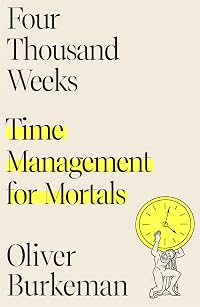
Four Thousand Weeks: Time Management for Mortals
by Oliver Burkeman
On This Page
Description
AN INSTANT NEW YORK TIMES BESTSELLER"Provocative and appealing . . . well worth your extremely limited time." —Barbara Spindel, The Wall Street Journal
The average human lifespan is absurdly, insultingly brief. Assuming you live to be eighty, you have just over four thousand weeks.
Nobody needs telling there isn't enough time. We're obsessed with our lengthening to-do lists, our overfilled inboxes, work-life balance, and the ceaseless battle against distraction; and we're deluged with show more advice on becoming more productive and efficient, and "life hacks" to optimize our days. But such techniques often end up making things worse. The sense of anxious hurry grows more intense, and still the most meaningful parts of life seem to lie just beyond the horizon. Still, we rarely make the connection between our daily struggles with time and the ultimate time management problem: the challenge of how best to use our four thousand weeks.
Drawing on the insights of both ancient and contemporary philosophers, psychologists, and spiritual teachers, Oliver Burkeman delivers an entertaining, humorous, practical, and ultimately profound guide to time and time management. Rejecting the futile modern fixation on "getting everything done," Four Thousand Weeks introduces readers to tools for constructing a meaningful life by embracing finitude, showing how many of the unhelpful ways we've come to think about time aren't inescapable, unchanging truths, but choices we've made as individuals and as a society—and that we could do things differently.
. show less
Tags
Recommendations
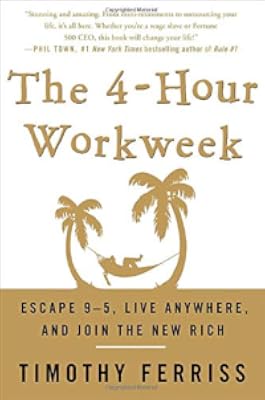
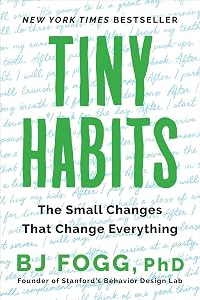
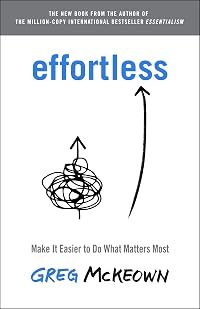
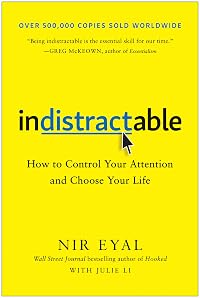

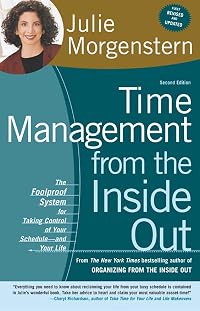
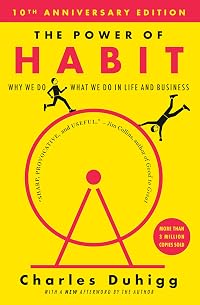
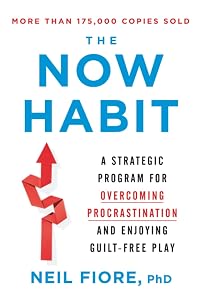
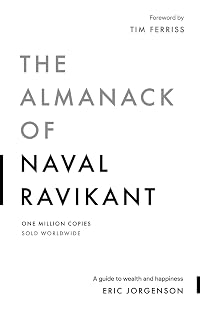



Member Recommendations

Member Reviews
Can I say that this may be the best book I've ever read, and still be taken seriously? Burkeman just NAILS it. And can I say that by "it," I mean "what it means to be human," without totally losing you? What it means to have human neuroses - what if I put it that way? To always be looking toward the future. To always be failing when we deliberately try to be in the moment. To always feel too "busy." To always be thinking that somehow, someday, we'll get on top of everything, stop having problems, live in nirvana.
I'm not sure I can really do justice to this book in a review I write in one sitting; I have a feeling I'm going to be revisiting it many times, always finding more and more I feel compelled to share.
I'm not sure I can really do justice to this book in a review I write in one sitting; I have a feeling I'm going to be revisiting it many times, always finding more and more I feel compelled to share.
An anti-time management time management book. Where others might try to convince you to pare a little over here, add a little over there, and organize everywhere, Burkeman points out that ALL of that activity is built on a faulty premise: that we're dealing with an infinite amount of time. Instead, we need to acknowledge our morality and the fact that we have a finite existence here on Earth. Sourced with different aspects of philosophy and *some* spiritual teaching, he leads on us on what that means for the time-management decisions we make - and NEED to make.
I gained a lot of wisdom and insight from this book, even if Burkeman & I have differing ideas of spirituality and religion. Highly recommended to anyone who is interested in time show more management and the decisions that follow, especially those who have tried various methods and can never quite find enough time for everything. Prepare to recognize our Sisyphian tendencies. show less
I gained a lot of wisdom and insight from this book, even if Burkeman & I have differing ideas of spirituality and religion. Highly recommended to anyone who is interested in time show more management and the decisions that follow, especially those who have tried various methods and can never quite find enough time for everything. Prepare to recognize our Sisyphian tendencies. show less
When I first saw this book in a bookstore, I walked away because I didn't want a reminder of how little time I have left on this planet.
But the Four Thousand Weeks by Oliver Burkeman kept getting mentions from like-minded post-productivity folks in my social media universe, so I decided to give it a whirl.
And I liked it.
This book is along the lines of some of my favorite time management books that have come out in recent years such as:
How to Do Nothing by Jenny Odell
Deep Work by Cal Newport
Wintering by Katherine May
There are many things to think about from this book; in fact, I will read it one more time to take notes.
If you feel you don't have enough time to do everything you want (you don't), if you find yourself wondering why you and show more your friends don't have time to meet up (it is answered here), and you want to know the secret to time management (focus on few things, forget the rest), then you will find solace in this book.
One chapter I liked talked about having hobbies and how we've built this culture of turning hobbies into a side hustle or making them part of a larger unattainable goal and how it is OK to want to learn how to play guitar or build a model train city like Rod Stewart has and not feel guilty. For me, that is making virtual things in Conan Exiles, and now I don't feel bad that I spent 30 minutes reading a Garfield cartoon book. show less
But the Four Thousand Weeks by Oliver Burkeman kept getting mentions from like-minded post-productivity folks in my social media universe, so I decided to give it a whirl.
And I liked it.
This book is along the lines of some of my favorite time management books that have come out in recent years such as:
How to Do Nothing by Jenny Odell
Deep Work by Cal Newport
Wintering by Katherine May
There are many things to think about from this book; in fact, I will read it one more time to take notes.
If you feel you don't have enough time to do everything you want (you don't), if you find yourself wondering why you and show more your friends don't have time to meet up (it is answered here), and you want to know the secret to time management (focus on few things, forget the rest), then you will find solace in this book.
One chapter I liked talked about having hobbies and how we've built this culture of turning hobbies into a side hustle or making them part of a larger unattainable goal and how it is OK to want to learn how to play guitar or build a model train city like Rod Stewart has and not feel guilty. For me, that is making virtual things in Conan Exiles, and now I don't feel bad that I spent 30 minutes reading a Garfield cartoon book. show less
I really enjoyed this. I heard about the book from an author interview that I think was just aiming to get practical tips and there are a few but there is much more that is thought provoking and hefty dose of philosophy. Burkeman has an approachable style but he talks about some deep issues of why we spend our time doing This Thing instead of That Thing and what we might want to bring to those decisions. As a To Do list addict, he really gave me lots to chew over. I feel like I have read alot of books in this sphere over the past few years but this one spoke to me in ways the others didn't and I appreciate that I am thinking about it still and perhaps will for some time to come.
The premise is simple and straightforward: our lives are short--an average of four thousand weeks--and we need to understand we are always making choices, whether conscious or not. In the digital age, we have virtually expanded out of sync with our physical, mental and spiritual capabilities. We have to choose, and own our choices if we want to be satisfied with our lives. We cannot hack our way through managing our time.
"Our days are spent trying to 'get through' tasks, in order to get them 'out of the way,' with the result that we live mentally in the future, waiting for when we’ll finally get around to what really matters."
I'm terribly guilty of this sentiment, as well as the hack of getting rid of your 'easy' to-dos to build the show more feeling of success and gear one up towards managing the 'majors.' Alas; Burkeman catches me out; I rarely step toward the task of my major goals.
He has one interesting theory that the capitalistic-industrialist conceptualization of time is partially to blame. Time became an object to be used—and it’s this shift that serves as the precondition for all the uniquely modern ways in which we struggle with time today.
"Soon, your sense of self-worth gets completely bound up with how you’re using time: it stops being merely the water in which you swim and turns into something you feel you need to dominate or control, if you’re to avoid feeling guilty, panicked, or overwhelmed... the belief that if I could only find the right time management system, build the right habits, and apply sufficient self-discipline, I might actually be able to win the struggle with time, once and for all. "
He takes this a step further and notes a connection to identity in how we manage time:
"Moreover, most of us seek a specifically individualistic kind of mastery over time—our culture’s ideal is that you alone should control your schedule, doing whatever you prefer, whenever you want—because it’s scary to confront the truth that almost everything worth doing, from marriage and parenting to business or politics, depends on cooperating with others, and therefore on exposing yourself to the emotional uncertainties of relationships."
That's a big thought, with a lot of meat. I don't know about everything but certainly a lot depends on interaction and connection. I can only check off my task list in a satisfying way if they are tasks that don't require coordinating with others. And maybe that's why the 'big' tasks are big and take so long to get to--I have to rely others to be in the mood, or be available, or bring the resources, or whatever. It transitions from my to our task.
I am also very guilty--along with countless of my peers of the 'time management trick' of keeping my options open. In our effort to not limit choices, we commit to nothing. He has a few choice notes on this strategy I need to pay attention to, particularly when planning vacations:
"It also means resisting the seductive temptation to “keep your options open”—which is really just another way of trying to feel in control—in favor of deliberately making big, daunting, irreversible commitments, which you can’t know in advance will turn out for the best, but which reliably prove more fulfilling in the end.
The Efficiency Trap
The general principle in operation is one you might call the “efficiency trap.” Rendering yourself more efficient--either by implementing various productivity techniques or by driving yourself harder—won’t generally result in the feeling of having “enough time,” because, all else being equal, the demands will increase to offset any benefits.
You begin to grasp that when there’s too much to do, and there always will be, the only route to psychological freedom is to let go of the limit-denying fantasy of getting it all done and instead to focus on doing a few things that count.
I read this at the same time as [b:Severance|36348525|Severance|Ling Ma|https://i.gr-assets.com/images/S/compressed.photo.goodreads.com/books/1507060524l/36348525._SY75_.jpg|58029884]. I tell you, there's nothing more inspiring for a job search than that! show less
"Our days are spent trying to 'get through' tasks, in order to get them 'out of the way,' with the result that we live mentally in the future, waiting for when we’ll finally get around to what really matters."
I'm terribly guilty of this sentiment, as well as the hack of getting rid of your 'easy' to-dos to build the show more feeling of success and gear one up towards managing the 'majors.' Alas; Burkeman catches me out; I rarely step toward the task of my major goals.
He has one interesting theory that the capitalistic-industrialist conceptualization of time is partially to blame. Time became an object to be used—and it’s this shift that serves as the precondition for all the uniquely modern ways in which we struggle with time today.
"Soon, your sense of self-worth gets completely bound up with how you’re using time: it stops being merely the water in which you swim and turns into something you feel you need to dominate or control, if you’re to avoid feeling guilty, panicked, or overwhelmed... the belief that if I could only find the right time management system, build the right habits, and apply sufficient self-discipline, I might actually be able to win the struggle with time, once and for all. "
He takes this a step further and notes a connection to identity in how we manage time:
"Moreover, most of us seek a specifically individualistic kind of mastery over time—our culture’s ideal is that you alone should control your schedule, doing whatever you prefer, whenever you want—because it’s scary to confront the truth that almost everything worth doing, from marriage and parenting to business or politics, depends on cooperating with others, and therefore on exposing yourself to the emotional uncertainties of relationships."
That's a big thought, with a lot of meat. I don't know about everything but certainly a lot depends on interaction and connection. I can only check off my task list in a satisfying way if they are tasks that don't require coordinating with others. And maybe that's why the 'big' tasks are big and take so long to get to--I have to rely others to be in the mood, or be available, or bring the resources, or whatever. It transitions from my to our task.
I am also very guilty--along with countless of my peers of the 'time management trick' of keeping my options open. In our effort to not limit choices, we commit to nothing. He has a few choice notes on this strategy I need to pay attention to, particularly when planning vacations:
"It also means resisting the seductive temptation to “keep your options open”—which is really just another way of trying to feel in control—in favor of deliberately making big, daunting, irreversible commitments, which you can’t know in advance will turn out for the best, but which reliably prove more fulfilling in the end.
The Efficiency Trap
The general principle in operation is one you might call the “efficiency trap.” Rendering yourself more efficient--either by implementing various productivity techniques or by driving yourself harder—won’t generally result in the feeling of having “enough time,” because, all else being equal, the demands will increase to offset any benefits.
You begin to grasp that when there’s too much to do, and there always will be, the only route to psychological freedom is to let go of the limit-denying fantasy of getting it all done and instead to focus on doing a few things that count.
I read this at the same time as [b:Severance|36348525|Severance|Ling Ma|https://i.gr-assets.com/images/S/compressed.photo.goodreads.com/books/1507060524l/36348525._SY75_.jpg|58029884]. I tell you, there's nothing more inspiring for a job search than that! show less
How long is the average human lifespan? See title. Not very long, even for the longest-lived.
There is almost nothing unfamiliar in Four Thousand Weeks. It reformats wisdom all of us have surely heard before. And yet I would love to meet the enlightened being who couldn’t benefit from this liberating book. Perhaps this is true of all wisdom. The task isn’t so much to assimilate the radically new; it’s how not to forget.
Time management traditionally helps overly busy people to become more efficient in getting stuff done. Organize, prioritize, eliminate distraction, improve focus. Burkeman has done us the service of writing a time management book whose central suggestion is that instead of trying to get more done, we ought to show more acknowledge the reality: we will never get done even a fraction of what we consider worth doing. We are finite creatures. The brevity of life is almost an absurdity. Time is the currency of our lives. All the frenetic energy spent trying to accomplish a minute portion of what is worth doing would be better spent in greater balance with the sense of wonder and gratitude that we exist at all.
We know this. We find elements of it in diverse cultural and spiritual traditions. Edward Young, writing in the eighteenth century, memorably wrote: “All men think all men mortal but themselves.” Marcus Aurelius’ admonished in the second century CE: “Don’t behave as if you are destined to live forever. Death hangs over you. While you live, while it is in your power, be good. Now.” Earlier still came the Buddhist insight that all we have is the present moment.
Efficiency will never empty our inboxes. The decks cannot be cleared. The mistake is in pretending otherwise. The good news, Burkeman suggests, is that we can admit defeat, and move on with living within what’s gloriously attainable. This way lies what freedom is humanly possible. show less
There is almost nothing unfamiliar in Four Thousand Weeks. It reformats wisdom all of us have surely heard before. And yet I would love to meet the enlightened being who couldn’t benefit from this liberating book. Perhaps this is true of all wisdom. The task isn’t so much to assimilate the radically new; it’s how not to forget.
Time management traditionally helps overly busy people to become more efficient in getting stuff done. Organize, prioritize, eliminate distraction, improve focus. Burkeman has done us the service of writing a time management book whose central suggestion is that instead of trying to get more done, we ought to show more acknowledge the reality: we will never get done even a fraction of what we consider worth doing. We are finite creatures. The brevity of life is almost an absurdity. Time is the currency of our lives. All the frenetic energy spent trying to accomplish a minute portion of what is worth doing would be better spent in greater balance with the sense of wonder and gratitude that we exist at all.
We know this. We find elements of it in diverse cultural and spiritual traditions. Edward Young, writing in the eighteenth century, memorably wrote: “All men think all men mortal but themselves.” Marcus Aurelius’ admonished in the second century CE: “Don’t behave as if you are destined to live forever. Death hangs over you. While you live, while it is in your power, be good. Now.” Earlier still came the Buddhist insight that all we have is the present moment.
Efficiency will never empty our inboxes. The decks cannot be cleared. The mistake is in pretending otherwise. The good news, Burkeman suggests, is that we can admit defeat, and move on with living within what’s gloriously attainable. This way lies what freedom is humanly possible. show less
I listened to a summary of this as a LinkedIn Learning session and was totally captivated by Mr. Burkeman's words. So glad I decided to listen to the entire book.
I believe the essence of the message is, "There's no way to do all the things you want to do, learn to live with that and you'll be a lot happier." It's all very Buddha-like and fits right in with my life philosophies.
He talks a lot about distractions, social media most of all, and how diabolically it all works to distract you and teach you to need that distraction.
He also talks a lot about the "guilt" that people feel when they try to relax (when there is so much to get done) and how most people (including me) can't really just "throw away time doing nothing" (my words not show more his), but how they should try it sometimes.
This is definitely not your usual "self-help" condescension. It's coming from someone who was obsessed with all of that, and it didn't work for him. This book is probably something people should re-read every couple years, just to remind them that, their lifetime, and what they're going to achieve in it, really is ephemeral, and so the goal should be to live for the now and not some hoped for point in the future where they'll be "caught up". show less
I believe the essence of the message is, "There's no way to do all the things you want to do, learn to live with that and you'll be a lot happier." It's all very Buddha-like and fits right in with my life philosophies.
He talks a lot about distractions, social media most of all, and how diabolically it all works to distract you and teach you to need that distraction.
He also talks a lot about the "guilt" that people feel when they try to relax (when there is so much to get done) and how most people (including me) can't really just "throw away time doing nothing" (my words not show more his), but how they should try it sometimes.
This is definitely not your usual "self-help" condescension. It's coming from someone who was obsessed with all of that, and it didn't work for him. This book is probably something people should re-read every couple years, just to remind them that, their lifetime, and what they're going to achieve in it, really is ephemeral, and so the goal should be to live for the now and not some hoped for point in the future where they'll be "caught up". show less
Members
- Recently Added By
Published Reviews
This wise meditation on human transience strikes a perfect balance between self-help manual and philosophical odyssey.
n the current average human lifespan we get 4,000 of each day of the week: 4,000 Saturday nights, 4,000 lazy Sundays, 4,000 Monday mornings. When we are young, that might feel like a dizzying number of tomorrows. As the years go by, not so much. Oliver Burkeman’s midlife show more inquiry into how we might most meaningfully approach those days is perfectly pitched somewhere between practical self-help book and philosophical quest. Having been the Guardian’s resident “pursuit of happiness” correspondent for a decade, offering the weekly promise that “This column will change your life”, this is something like his accumulated wisdom.
It starts with some necessary caveats. The day will never arrive when you have emptied your inbox. There will always be too many demands on your time, or nowhere near enough. Anything might happen in the next half an hour. Burkeman’s own journey as he describes it over the past years is perhaps a familiar one. He started out in his adult life believing there might be a trick to optimising personal productivity. He was a planner, a to-do lister, a buyer of highlighter pens. He was half-persuaded that there might be three or seven or 12 robust habits that allowed you finally to feel in control, on top of things.
Slowly, as plans never quite went to plan, and choices were made, and kids arrived, he came to understand that in any interesting life, time will almost never be your own to “spend” efficiently, and that most of the secret lay in embracing that fact. As he works his way towards these truths, Burkeman provides a brief history of human ideas of time. The definition that we are most familiar with, the stuff that might require urgent management, was really, he suggests, the product of two things: the sharp decline of faith in an afterlife, and the Industrial Revolution. Our acceptance of finite time – of this being all there is – roughly coincided with clocking on and clocking off. This made time more pressured and precious. Most of our anxieties, Burkeman argues, derive from the fact that “every moment of our existence is shot through with what Heidegger called finitude”, or a nagging sense that we might be wasting what little time we have.
One hero of this book is the hobbyist, who can steal an afternoon for no purpose. As he explores more closely what this might mean, he also proposes some strategies, or thoughts, to counter that anxiety. The traditional airport-bookshop volumes about time-management tend to emphasise the importance of finding focus. These concerns have been exacerbated by the great global engine of digital distraction; social media companies make their billions from the time you aimlessly, addictively provide them, “making you care about things you don’t want to care about”, as Burkeman says.
It helps, he suggests, rather to understand certain basic human limitations. Procrastination is unavoidable, though we can get better at ignoring the right things. Fomo – fear of missing out – is only debilitating if you fail to realise “that missing out is basically guaranteed” in life, the inevitable consequence of one path chosen over another. The self-help gurus might tell us never “to settle” in a relationship or a job. Burkeman argues rather that “you should definitely settle, or to be more precise, you don’t have a choice”. It is inevitable that you come to realise any chosen partner or job is not all other potential partners or jobs. Happiness is a factor of what you do with that information.
Productivity is also revealed as a fairly dubious modern virtue. “The Latin word for business, negotium, translates as not-leisure, reflecting the view that work was a deviation from the higher calling [of ease],” he says. If we make leisure only another arena for self-improvement then it sacrifices the present in favour of an imagined future. One hero of this book is the hobbyist, who can steal an afternoon for no purpose; another is the person who “develops a taste for having problems”, in the knowledge that the state of having no problems only arrives postmortem. Burkeman ends his book, as his publisher perhaps insisted, with 10 tips to take away. The how-to is not necessary; as with all the best quests, its many pleasures don’t require a fast-forward button, but happen along the way. show less
n the current average human lifespan we get 4,000 of each day of the week: 4,000 Saturday nights, 4,000 lazy Sundays, 4,000 Monday mornings. When we are young, that might feel like a dizzying number of tomorrows. As the years go by, not so much. Oliver Burkeman’s midlife show more inquiry into how we might most meaningfully approach those days is perfectly pitched somewhere between practical self-help book and philosophical quest. Having been the Guardian’s resident “pursuit of happiness” correspondent for a decade, offering the weekly promise that “This column will change your life”, this is something like his accumulated wisdom.
It starts with some necessary caveats. The day will never arrive when you have emptied your inbox. There will always be too many demands on your time, or nowhere near enough. Anything might happen in the next half an hour. Burkeman’s own journey as he describes it over the past years is perhaps a familiar one. He started out in his adult life believing there might be a trick to optimising personal productivity. He was a planner, a to-do lister, a buyer of highlighter pens. He was half-persuaded that there might be three or seven or 12 robust habits that allowed you finally to feel in control, on top of things.
Slowly, as plans never quite went to plan, and choices were made, and kids arrived, he came to understand that in any interesting life, time will almost never be your own to “spend” efficiently, and that most of the secret lay in embracing that fact. As he works his way towards these truths, Burkeman provides a brief history of human ideas of time. The definition that we are most familiar with, the stuff that might require urgent management, was really, he suggests, the product of two things: the sharp decline of faith in an afterlife, and the Industrial Revolution. Our acceptance of finite time – of this being all there is – roughly coincided with clocking on and clocking off. This made time more pressured and precious. Most of our anxieties, Burkeman argues, derive from the fact that “every moment of our existence is shot through with what Heidegger called finitude”, or a nagging sense that we might be wasting what little time we have.
One hero of this book is the hobbyist, who can steal an afternoon for no purpose. As he explores more closely what this might mean, he also proposes some strategies, or thoughts, to counter that anxiety. The traditional airport-bookshop volumes about time-management tend to emphasise the importance of finding focus. These concerns have been exacerbated by the great global engine of digital distraction; social media companies make their billions from the time you aimlessly, addictively provide them, “making you care about things you don’t want to care about”, as Burkeman says.
It helps, he suggests, rather to understand certain basic human limitations. Procrastination is unavoidable, though we can get better at ignoring the right things. Fomo – fear of missing out – is only debilitating if you fail to realise “that missing out is basically guaranteed” in life, the inevitable consequence of one path chosen over another. The self-help gurus might tell us never “to settle” in a relationship or a job. Burkeman argues rather that “you should definitely settle, or to be more precise, you don’t have a choice”. It is inevitable that you come to realise any chosen partner or job is not all other potential partners or jobs. Happiness is a factor of what you do with that information.
Productivity is also revealed as a fairly dubious modern virtue. “The Latin word for business, negotium, translates as not-leisure, reflecting the view that work was a deviation from the higher calling [of ease],” he says. If we make leisure only another arena for self-improvement then it sacrifices the present in favour of an imagined future. One hero of this book is the hobbyist, who can steal an afternoon for no purpose; another is the person who “develops a taste for having problems”, in the knowledge that the state of having no problems only arrives postmortem. Burkeman ends his book, as his publisher perhaps insisted, with 10 tips to take away. The how-to is not necessary; as with all the best quests, its many pleasures don’t require a fast-forward button, but happen along the way. show less
added by AntonioGallo
Lists

Top Five Books of 2021
604 works; 181 members

Macmillan Publishers
129 works; 3 members

Books Read in 2021
5,361 works; 114 members

Books Read in 2022
5,168 works; 114 members

Books Read in 2023
5,547 works; 145 members

Non-fiction
55 works; 1 member

Men's healing resources
747 works; 1 member

Education
16 works; 1 member
Author Information

16+ Works 4,331 Members
Awards and Honors
Awards
Distinctions
The Guardian Book of the Day (2021-09-01)
The Guardian Book of the Day (2021-08-16)
Work Relationships
Common Knowledge
- Canonical title*
- Come fare per avere più tempo? Time management per comuni mortali
- Original title
- Four Thousand Weeks: Time Management for Mortals
- Original publication date
- 2021
- Epigraph
- It's the very last thing, isn't it, we feel grateful for: having happened. You know, you needn't have happened. You needn't have happened. But you did happen.
- Douglas Harding
What makes it unbearable... (show all) is your mistaken belief that it can be cured.
- Charlotte Joko Beck - Dedication
- To Heather and Rowan
- First words
- The average human lifespan is absurdly, terrifyingly, insultingly short.
- Last words
- (Click to show. Warning: May contain spoilers.)Then you get to roll up your sleeves and start work on what's gloriously possible instead.
- Publisher's editor
- Chinski, Eric
- Blurbers
- Grant, Adam; Evans, Chris
- Original language
- English
*Some information comes from Common Knowledge in other languages. Click "Edit" for more information.
Classifications
Statistics
- Members
- 2,426
- Popularity
- 8,040
- Reviews
- 75
- Rating
- (4.26)
- Languages
- 16 — Czech, Danish, Dutch, English, Finnish, French, German, Italian, Japanese, Polish, Serbian, Spanish, Swedish, Turkish, Portuguese (Portugal), Chinese, traditional
- Media
- Paper, Audiobook, Ebook
- ISBNs
- 37
- ASINs
- 12