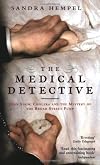
The Medical Detective: John Snow, Cholera and the Mystery of the Broad Street Pump
by Sandra Hempel
On This Page
Description
In 1831, an unknown, horrifying, and deadly disease from Asia swept across continental Europe and North America, killing millions and throwing the medical profession into confusion. A killer with little respect for class or wealth, cholera ravaged the squalid streets of Soho and rocked the great centers of Victorian power. In this gripping book, Sandra Hempel tells the story of John Snow, a reclusive doctor without money or social position, who - alone and unrecognized - had the genius to show more look beyond the conventional wisdom of his day and uncover the truth behind the pandemic. She describes how Snow discovered that cholera was spread through drinking water and how this subsequently laid the foundations for the modern, scientific investigation of today's fatal plagues. A dramatic account with a colorful cast of characters, The Strange Case of the Broad Street Pump features diversions into fascinating facets of medical and social history, such as Snow's tending of Queen Victoria in childbirth, Dutch microbiologist Leeuwenhoek's deliberate breeding of lice in his socks, Dickensian children's farms, and riotous nineteenth-century anesthesia parties. An afterword discusses the new threat of infectious diseases - including malaria, yellow fever, and cholera - with today's global warming. show lessTags
Recommendations



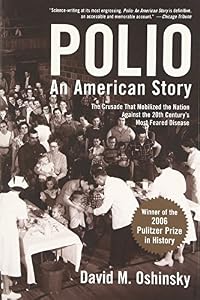
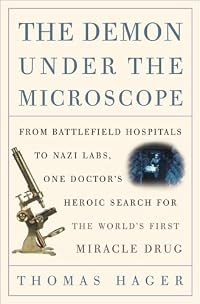
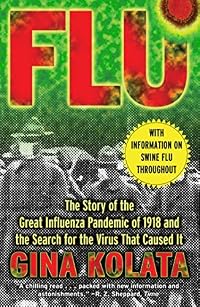
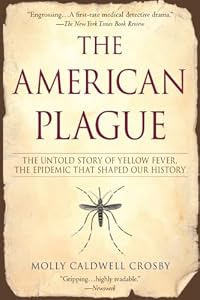























Member Recommendations
Member Reviews
I tell you, the more things change, the more they stay the same.
"Local businessmen...packed into the Commission Room...roaring their anger and denouncing reports of cholera as a 'malicious and wicked falsehood." This excerpt describes Sunderland money makers claiming cholera as fake news. The book begins as a ticking time bomb as cholera makes its way across Europe into the UK. Chapters 4-5 introduces John Snow, who "took no wine nor strong drink...and found every amusement in his science books his experiments and simple exercise" and believed in a most humane approach to animal experiments. By the time Snow qualified as a doctor, 32,000 people died of cholera in the UK. His first major medical breakthrough was the administration of show more chloroform as an anesthetic during surgery. He even administered chloroform to Queen Victoria during the birth of her 8th and 9th child. He was rewarded for minding the obstetrician, using the chemical sparingly, and his gentleness. It was during this time that cholera reappeared and became part John Snow's true legacy. He traced cholera's path and changed public health in ways we take for granted. He found cess pools near water tanks, privies near clogged drains, and then one particular water pump...
It was compelling, horrifying, relatable, and John Snow is likeable man, a true professional. You're cheering for him every step of the way, as he faces public ignorance and derision. show less
"Local businessmen...packed into the Commission Room...roaring their anger and denouncing reports of cholera as a 'malicious and wicked falsehood." This excerpt describes Sunderland money makers claiming cholera as fake news. The book begins as a ticking time bomb as cholera makes its way across Europe into the UK. Chapters 4-5 introduces John Snow, who "took no wine nor strong drink...and found every amusement in his science books his experiments and simple exercise" and believed in a most humane approach to animal experiments. By the time Snow qualified as a doctor, 32,000 people died of cholera in the UK. His first major medical breakthrough was the administration of show more chloroform as an anesthetic during surgery. He even administered chloroform to Queen Victoria during the birth of her 8th and 9th child. He was rewarded for minding the obstetrician, using the chemical sparingly, and his gentleness. It was during this time that cholera reappeared and became part John Snow's true legacy. He traced cholera's path and changed public health in ways we take for granted. He found cess pools near water tanks, privies near clogged drains, and then one particular water pump...
It was compelling, horrifying, relatable, and John Snow is likeable man, a true professional. You're cheering for him every step of the way, as he faces public ignorance and derision. show less
In the early- to mid-1800's, cholera ravaged Europe. It swept into neighborhoods in the blink of an eye, killed hundreds or thousands in days, and then just as quickly disappeared completely...only to pop up again somewhere else.. Family members watched as their loved ones went from perfect health to extreme dehydration and death in mere hours. Whole houses...whole streets were decimated, erasing the lives of everyone who lived within. Yet just as astonishingly some places were left entirely untouched, like the house next door left standing after last night's tornado.
The most horrifying aspect of cholera was how little was known about it. The speed and unpredictability of this illness flabbergasted scientists and public health officials show more alike, and doctors were at a loss as to how to cure the endless supply of dying patients. The mad scramble to stop this unseen menace resulted in some alarming solutions, most of which only killed people and saved barely any.
And then John Snow, father of epidemiology and anesthesia, stood glowing like a radiant sun cresting over a shadow-casting mountain and proclaimed with insurmountable logical and wisdom, maybe....just maybe, it's in the water! Sadly, only to be dismissed by his peers, his advice going unacknowledged and unknown by the general public.
John Snow is one of my favorite historical figures, and this is another fantastic book on his work during the cholera epidemics of the 1800's. So yes, of course I loved the book. It was a wonderful account of those terrible events, and this book in particular had a strong focus on Mr. Snow himself, which made it all the better in my opinion. Highly recommended. show less
The most horrifying aspect of cholera was how little was known about it. The speed and unpredictability of this illness flabbergasted scientists and public health officials show more alike, and doctors were at a loss as to how to cure the endless supply of dying patients. The mad scramble to stop this unseen menace resulted in some alarming solutions, most of which only killed people and saved barely any.
And then John Snow, father of epidemiology and anesthesia, stood glowing like a radiant sun cresting over a shadow-casting mountain and proclaimed with insurmountable logical and wisdom, maybe....just maybe, it's in the water! Sadly, only to be dismissed by his peers, his advice going unacknowledged and unknown by the general public.
John Snow is one of my favorite historical figures, and this is another fantastic book on his work during the cholera epidemics of the 1800's. So yes, of course I loved the book. It was a wonderful account of those terrible events, and this book in particular had a strong focus on Mr. Snow himself, which made it all the better in my opinion. Highly recommended. show less
Gripping story well told ( apart from a few digressions here and there). The resistance of the establishment including Florence Nightingale to what appeared so obvious, simple and concrete; namely that Cholera is water-borne, thus calls for clean water. Shows the strong grip of the scientific paradigm (a la Thomas Kuhn): data and logic are powerless in the face of the accepted wisdom of the day. Snow as an outsider has no voice, though he had treated Q Victoria, for goodness sake. How high did you have to go to be in the in-crowd?). Food for thought in that all this squalor and ignorance was just 100 years before I was born. And more in reading this as the Legionnaire's disease breaks out in Edinburgh (source untraceable,1 death so far, show more friend living in the danger zone). Notice the book came out at the same time as "The Ghost Map" - on the same subject - which made a bigger splash. show less
A fascinating account of the birth of epidemiology, public medicine, and even public sanitation. Very well researched and even better written. Highly recommended!
Part history, part biography. I found it quite interesting, but there were too many digressions with side personages and anecdotes, and the author seemed too condescending towards the miasmists.
Epidemiology, and disease mapping in it's infancy. Great book on the development of medical research...may the miasmatists fall!
Members
- Recently Added By
Author Information

8 Works 425 Members
Sandra Hempel is a medical journalist and the author of the award-winning The Strange Case of the Broad Street Pump. She lives in London.
Common Knowledge
- Canonical title
- The Medical Detective: John Snow, Cholera and the Mystery of the Broad Street Pump
- Original publication date
- 2006
- People/Characters
- John Snow; David Barry; Sir Henry Halford; James Butler Kell; Dr. William Reid Clanny; James Paget (show all 9); Benjamin Ward Richardson; Joshua Parsons; James Simpson
- Important places
- St. Petersburg, Russia
- Dedication
- To my beloved husband,
Bob Nibbs, 1947-2004
Until I see you again - First words
- Cholera first stepped out onto the world stage in 1817.
Classifications
- Genres
- Nonfiction, History, General Nonfiction, Biography & Memoir, Science & Nature
- DDC/MDS
- 614.514094109034 — Applied Science & Technology Medicine & health Epidemics, Poisons, Alternative Medicine Incidence of and public measures to prevent specific diseases and kinds of diseases Salmonella infections, bacillary diseases, clostridium infections, diphtheria, cholera, dysenteries, influenza Cholera
- LCC
- RA644 .C3 .H46 — Medicine Public aspects of medicine Public aspects of medicine Public health. Hygiene. Preventive medicine Disease (Communicable and noninfectious) and public
- BISAC
Statistics
- Members
- 161
- Popularity
- 202,478
- Reviews
- 9
- Rating
- (3.97)
- Languages
- English
- Media
- Paper, Ebook
- ISBNs
- 3
- ASINs
- 2