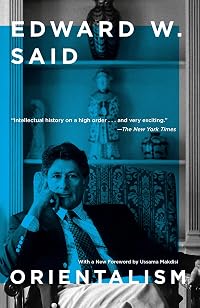
Orientalism
by Edward W. Said
On This Page
Description
More than three decades after its first publication, Edward Said's groundbreaking critique of the West's historical, cultural, and political perceptions of the East has become a modern classic.In this wide-ranging, intellectually vigorous study, Said traces the origins of orientalism to the centuries-long period during which Europe dominated the Middle and Near East and, from its position of power, defined the orient simply as other than the occident. This entrenched view continues to show more dominate western ideas and, because it does not allow the East to represent itself, prevents true understanding. Essential, and still eye-opening, Orientalism remains one of the most important books written about our divided world. From the Trade Paperback edition. show lessTags
Recommendations

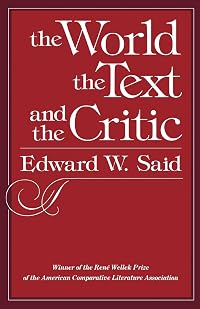
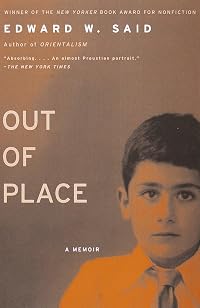

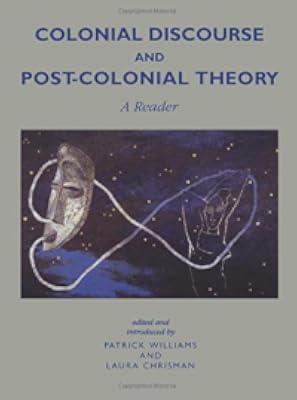
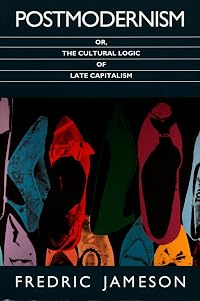
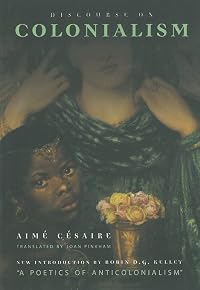
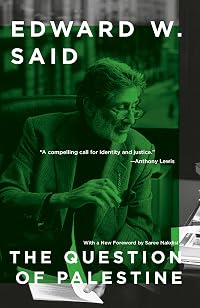



Member Recommendations
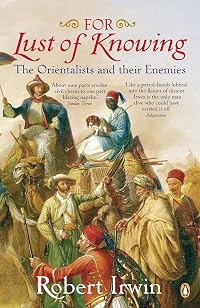
_Zoe_ Irwin disagrees strongly with many of Said's points, so this may make for an interesting companion read.
60
Beholderess A useful companion read, pointing out flaws and overgeneralisations but not shy of praise where it's due
20

Member Reviews
Edward Said's Orientalism is a masterwork, one of the earliest and most thorough examinations of the "colonialism of consciousness." Establishing an early beach head, it was the harbinger of an entire school of post colonial history. And, as a Palestinian, a person made invisible by colonialism, it is deeply felt.
One of the central tenets of the book is that the rise of "Orientalism" - the area studies of the Non-occidental East - coincided with the West's domination of that region for purposes of economic exploitation. The task Said gives himself is to study the patterns of bias through which generations of scholars, paying particular attention to the French, British and later American, came to analysize the lands they dominated. He is show more well suited to the task because not only was he on the receiving end of these prejudices but because working in the precincts of Western intellectual institutions, primarily Columbia University, he could well anticipate the hostile reaction his provocations would engender, not least because he was familiar, having been subjected to it, with prejudice against the Arabs and racism. Another key element of his thesis is that successive generations of scholars never adequately interrogated the underlying assumptions of their predecessors but built upon their biases. He created an astonishingly thorough evaluation of the West's attitude and understanding of the Orient beginning with Homer but picking up speed with Napolean's invasion of Egypt straight through to Bernard Lewis who he despises. To be fair, Said would rail against anyone's attempt to summarize or claim to enunciate the essential in another culture. His intellectual approach owes much to Foucault and others. You should be warmed that given the French influence on the region and the amount of scholarship the French have devoted to the subject long French excerpts are not translated as if to say, if you are serious about this topic you damn well better speak French. Year by year, decade by decade, Said excavates the prejudices and ignorance that went into building the institutions, though located exclusively in the West, of Oriental study. Again knowing how marginalized and anticipating the hostility, Said is extraordinarily thorough.
There are, however, two difficulties, the reader should prepare for. One is that Siad frequently criticizes texts that you are probably not familiar with so we have only his view. I found, for instance, his assertion that the West repeatedly prioritizes the Orient through sex, to be unpersuasive. Though the book is some what time stamped because only in passing does he mention the androcentric bias in history, something which will become far more prevalent in years after this publication. Secondly Said is a very pedantic writer. He has the tedious habit of using lists in virtually every sentence until it becomes a compulsion and it makes the book with its obsessive thoroughness a hard slog.
But not all is hopeless. He finds scholarly progress, those able to look past the blinders of colonial intellectual hegemony, in the works of HR Gibbs and Louis Massignol.
This book has such prominence because it opened the way for a whole wave of post-Colonial, post modernist theory. A true groundbreaker and necessary reading. show less
One of the central tenets of the book is that the rise of "Orientalism" - the area studies of the Non-occidental East - coincided with the West's domination of that region for purposes of economic exploitation. The task Said gives himself is to study the patterns of bias through which generations of scholars, paying particular attention to the French, British and later American, came to analysize the lands they dominated. He is show more well suited to the task because not only was he on the receiving end of these prejudices but because working in the precincts of Western intellectual institutions, primarily Columbia University, he could well anticipate the hostile reaction his provocations would engender, not least because he was familiar, having been subjected to it, with prejudice against the Arabs and racism. Another key element of his thesis is that successive generations of scholars never adequately interrogated the underlying assumptions of their predecessors but built upon their biases. He created an astonishingly thorough evaluation of the West's attitude and understanding of the Orient beginning with Homer but picking up speed with Napolean's invasion of Egypt straight through to Bernard Lewis who he despises. To be fair, Said would rail against anyone's attempt to summarize or claim to enunciate the essential in another culture. His intellectual approach owes much to Foucault and others. You should be warmed that given the French influence on the region and the amount of scholarship the French have devoted to the subject long French excerpts are not translated as if to say, if you are serious about this topic you damn well better speak French. Year by year, decade by decade, Said excavates the prejudices and ignorance that went into building the institutions, though located exclusively in the West, of Oriental study. Again knowing how marginalized and anticipating the hostility, Said is extraordinarily thorough.
There are, however, two difficulties, the reader should prepare for. One is that Siad frequently criticizes texts that you are probably not familiar with so we have only his view. I found, for instance, his assertion that the West repeatedly prioritizes the Orient through sex, to be unpersuasive. Though the book is some what time stamped because only in passing does he mention the androcentric bias in history, something which will become far more prevalent in years after this publication. Secondly Said is a very pedantic writer. He has the tedious habit of using lists in virtually every sentence until it becomes a compulsion and it makes the book with its obsessive thoroughness a hard slog.
But not all is hopeless. He finds scholarly progress, those able to look past the blinders of colonial intellectual hegemony, in the works of HR Gibbs and Louis Massignol.
This book has such prominence because it opened the way for a whole wave of post-Colonial, post modernist theory. A true groundbreaker and necessary reading. show less
I’ve been ashamed I hadn’t read Orientalism, and now I know I had reason to be ashamed. It’s rightly a classic. Though its ideas have seeped out so that much was familiar, there was a lot of clarity in going back to source.
I expected a more ‘pugnacious’ book, to use a word from the back cover. But it’s not pugnacious in style or content. Perhaps in the first shock of publication it seemed so. It’s a fair-minded book, ‘humanist’ in a word he refuses to relinquish (that wins my heart). His point is not to condemn or consign to oblivion the entirety of the West’s scholarship and art on the Orient. He just makes us aware of the structures of thought in place. When it came to figures I have an attachment to (T.E. show more Lawrence; his hero Charles Doughty; other travelers), I never felt Said was telling me I have to cease to read them. And I wasn’t disenchanted, because I knew these guys were riddled with Orientalism even if I didn’t have the terms (in fact, I’m stalled in Doughty from years back where he has an egregious instance; I’ll get over it and pick him up again, for his wonderful observation and the prose style Lawrence so admired). You cannot say fairer than what he says of Richard Burton, along with the useful analysis that only Said has said.
This book is a feat of thought that probably has its little inexactitudes as his detractors like to point out. It re-visioned things and has a larger scope than the still-contentious area of 'Islam' and 'the West' (still? I’m glad he’s not alive). He explains how scholarship isn't innocent of politics – not just in the case of the West on Islam, and not even to fault that case, because scholarship cannot exist in a safe bubble, away from the hustle and bustle of the politicised world around us. I think it is this which gets backs up, more than the charge that he is anti-West (he isn’t). I’ve seen scholars respond that they are indeed innocent of politics; but if I ever cherished that thought, too much reading history has ruined me. If I can tell a not-irrelevant tale: in my own research area, in Asia, in his Orient, as an innocent researcher who didn’t know much about historiography, I grew increasingly flummoxed and exasperated by the attitudinal problems in mainstream, prestigious histories. It turns out, the best thing I could have done in order to understand what I saw was wrong with Mongol history-writing, was read Said. Its applicability goes wider than Islam-and-the-West.
The only time I think he’s irascible in tone is in the 1995 Afterword, when he’s obviously been in a feud with Bernard Lewis. I’m sorry his book met hostility in certain quarters, because, as I say, it’s not damnatory of the tradition, and if Orientalists or their heirs don’t see there’s room for criticism, that’s sad. With his 2003 Preface – the year he died – he has returned to the serene tones of the main work, although, with the downturn in world events, he sounds a sadder and a wiser man.
The book was written as a classic ought to be, without the jargon of the day and a pleasure to read. It may become too detailed in its case studies for most people’s purposes; I used the skip button, but this is not my last encounter with Said’s great work. show less
I expected a more ‘pugnacious’ book, to use a word from the back cover. But it’s not pugnacious in style or content. Perhaps in the first shock of publication it seemed so. It’s a fair-minded book, ‘humanist’ in a word he refuses to relinquish (that wins my heart). His point is not to condemn or consign to oblivion the entirety of the West’s scholarship and art on the Orient. He just makes us aware of the structures of thought in place. When it came to figures I have an attachment to (T.E. show more Lawrence; his hero Charles Doughty; other travelers), I never felt Said was telling me I have to cease to read them. And I wasn’t disenchanted, because I knew these guys were riddled with Orientalism even if I didn’t have the terms (in fact, I’m stalled in Doughty from years back where he has an egregious instance; I’ll get over it and pick him up again, for his wonderful observation and the prose style Lawrence so admired). You cannot say fairer than what he says of Richard Burton, along with the useful analysis that only Said has said.
This book is a feat of thought that probably has its little inexactitudes as his detractors like to point out. It re-visioned things and has a larger scope than the still-contentious area of 'Islam' and 'the West' (still? I’m glad he’s not alive). He explains how scholarship isn't innocent of politics – not just in the case of the West on Islam, and not even to fault that case, because scholarship cannot exist in a safe bubble, away from the hustle and bustle of the politicised world around us. I think it is this which gets backs up, more than the charge that he is anti-West (he isn’t). I’ve seen scholars respond that they are indeed innocent of politics; but if I ever cherished that thought, too much reading history has ruined me. If I can tell a not-irrelevant tale: in my own research area, in Asia, in his Orient, as an innocent researcher who didn’t know much about historiography, I grew increasingly flummoxed and exasperated by the attitudinal problems in mainstream, prestigious histories. It turns out, the best thing I could have done in order to understand what I saw was wrong with Mongol history-writing, was read Said. Its applicability goes wider than Islam-and-the-West.
The only time I think he’s irascible in tone is in the 1995 Afterword, when he’s obviously been in a feud with Bernard Lewis. I’m sorry his book met hostility in certain quarters, because, as I say, it’s not damnatory of the tradition, and if Orientalists or their heirs don’t see there’s room for criticism, that’s sad. With his 2003 Preface – the year he died – he has returned to the serene tones of the main work, although, with the downturn in world events, he sounds a sadder and a wiser man.
The book was written as a classic ought to be, without the jargon of the day and a pleasure to read. It may become too detailed in its case studies for most people’s purposes; I used the skip button, but this is not my last encounter with Said’s great work. show less
Show me a more influential work of literary criticism than this one. Said's argument is reductive, ungenerous, exhilarating, compendious, and has supersaturated the way we see world and life. Without him how do we understand Bhabha, the Afghan war, MIA, the weirdo who trained us at the American school in Japan? He tars with a broad brush - throws a wild rock - and yet ends up right on target. This review isn't saying much, but it's in the nature of this brave-and-bold counterhegemonic riposte that you want to affirm rather than engage with it--or I do, at least. Everybody, be a little less essentialist, a little less triumphalist, today.
Let me start off by saying that this is a vitally important book. This is not to say that I consistently enjoyed reading it, but that I understand the importance of the book to the world. I should have rated it higher if the review was related to the importance of the book to society. But instead, I rated it based on my experience of it. The book is insightful and hardhitting. It is rigorous and brilliant. It is not, however, accessible.
This book is for academics, and it is about the academy. It is assumed you know the names Flaubert, Renan, Dante, Schwab, Nerval, Goethe, etc, and can appreciate their works. The lessons are of course valid and extrapolatable to outside of the academy, however, the book relies fairly heavily on show more referencing these authors. This is of course natural. In addition to being a seminal work of postcolonialism, it is also a comparative literature book. The rating that I gave is due to my immense enjoyment of the former aspects and my ignorance of and indifference to the latter.
It is also assumed that you speak English (naturally) but also French and German. There are untranslated passages- sometimes mere sentences, sometimes several paragraphs- in the aforementioned languages. Had I read the book, rather than listened to it, I would have skipped over these sections. But since it was an audiobook, I just waited them out.
Orientalism is about how colonialism creates archetypes for entire swaths of unrelated peoples, and the political consequences of thinking this way. This has been done for hundreds of years, but it has much more dire political consequences in the age of unmanned Predator drones and resource wars. "This system now culminates in the very institutions of the state. To write about the Arab Oriental world, therefore is to write [...] with the unquestioned certainty of absolute truth backed by absolute force." Orientalism is an example of colonialist mindset. It "calls in question not only the possibility of nonpolitical scholarship, but also the advisability of too close a relationship between the scholar and the state."
The Arab Mind, Oriental despotism, Arabic sensuality, sloth, fatalism, cruelty, degradation and splendor, all of these are Orientalist myths that persist to this day, and shape how we have constructed this other, as a result of colonialism. Colonialism created a need to hate this enormous swath of humanity in order that they could be colonized without guilty conscience. In so doing, "Orientalism failed to identify with human experience, failed also to see it as human experience."
This colonialist mindset had incredibly serious consequences in shaping not only the attitude of the "West" towards the "East," but how the people who make up the "West" concieve themselves, and how they construct their own identities. "Debates today about Frenchness and Englishness in France and Britain respectively, or about Islam in countries like Egypt and Pakistan are part of the same interpretive process, which involves the identities of different others, whether they be outsiders and refugees or apostates and infidels. It should be obvious in all cases that these processes are not mental excersizes but urgent social contests, involving such concrete political issues as immigration laws, the legislation of personal condict, the constitution of orthodoxy, the legitimization of violence and/or insurrection, the character and content of education, and the direction of foreign policy, which very often has to do with the designation of official enemies. In short the construction of identity is bound up with the disposition of power and powerlessness in each society, and is therefore anything but mere academic wool-gathering."
Though it was not the purpose of the book, it also provided me some clarity on other, related subjects, such as Liberalism, and modern anti-Semitism.
Liberalism that accomodates Orientalism (soft Orientalism) is torn to shreds by Said, and in the process he exposes one of the most insipid weaknesses of Liberalism: the illusion of the independence of different thought structures of politics, economy, kinship and culture. A liberal scholar points to Islam's supposed totality (that it encompasses a culture, a religion, an economy, a politics, etc subordinated to one school of thought: Islam), and reveals the weakness in his own. These things are not only interdependent, but to consider them to be apart is foolishness. Consider capitalism, our current mode: can we honestly say that any deviation from the needs of capital are significant enough to render politics a separate sphere? How about culture? All of these things are contained within the totality of capitalism, because that is what capital demands. Liberalism insists on these things being separate because it is weak and wants to misdirect struggle away from the root of the problem. (And so, incidentally, how silly does it make the Liberals of the "ParEcon" gospel sound, when they want ParEcon, but also ParPolity, ParKin (??), etc?)
(Disclaimer, the author of this review is Jewish) Anti-Semitism seems largely to have disappeared as a major ideological motivation in the postmodern world. Or has it? Edward Said brings up some compelling evidence that the whitening of the people Israel (Jews inside and outside of the nationstate which shares its name) has merely shifted much of the Anti-Semitism to the Arabs, who are, after all, also Semitic. "By a concatonation of events and circumstances, the Semitic myth bifurcated in the Zionist movement. One Semite went the way of Orientalism. The other, the Arab, was forced to go the way of the Oriental." Jews by assimilating and accepting the wages of whiteness sidestepped their own identification as Semites, but the Semitic stereotype is kept alive in the depictions of Arabs. "[After 1973, c]artoons depicting an Arab sheik standing behind a gasoline pump turned up consistantly. These Arabs, however, were clearly Semitic. Their sharply-hooked noses, the evil mustachioed leer on their faces, were obvious reminders, to a largely non-Semitic population, that Semites were at the bottom of all our troubles, which in this case was principally a gasoline shortage. The transference of a popular anti-Semitic animus from a Jewish to an Arab target was made smoothly, since the figure was essentially the same."
This took a slight of hand from Jews as well, who strongly identified with the oppressors of the Arabs since the founding of Israel. Said describes a Jewish Orientalist named Bernard Lewis who describes an anti-imperialist riot against Israel in Cairo as "anti-Jewish." "Yet, in neither instance does he tell us how it was anti-Jewish. In fact, as his material evidence for anti-Jewishness, he produces the somewhat surprising intelligence that several churches, Catholic, Armenian and Greek Orthodox were attacked and damaged." Finally, one can glean from the text that this escape from oppression is no escape at all. As Proust reminds us, when a Jew appears in aristocratic society, he is still a Jew: "The Romanians, the Egyptians, the Turks, may hate the Jews. But in a French drawing room, the differences between those people are not so apparent. And an Israelite making his entry as if he were from the heart of the desert, his body crouching like a hyenas, his neck stretched obliquely forward, spreading himself in proud "Salaam"s completely satisfies a certain taste for the Oriental."
The Afterword that Said includes is a true gift. There are a dozen amazing quotations I could pull from it, describing accurately our current situation, and the impact that his work has had in it, and the confusing situation we live under in these times. It was a fitting end to a challenging book.
2020 update: Tragically, an economic recession and the failure of liberalism to address either its causes or effects has birthed an epidemic of antisemitism. This isn't an indictment of the book or of my earlier review so much as it is evidence that antisemitism continued during the global war on terror formally with Islamophobia, which kept the disease dormant in its effects towards Jews until this recent outbreak. show less
This book is for academics, and it is about the academy. It is assumed you know the names Flaubert, Renan, Dante, Schwab, Nerval, Goethe, etc, and can appreciate their works. The lessons are of course valid and extrapolatable to outside of the academy, however, the book relies fairly heavily on show more referencing these authors. This is of course natural. In addition to being a seminal work of postcolonialism, it is also a comparative literature book. The rating that I gave is due to my immense enjoyment of the former aspects and my ignorance of and indifference to the latter.
It is also assumed that you speak English (naturally) but also French and German. There are untranslated passages- sometimes mere sentences, sometimes several paragraphs- in the aforementioned languages. Had I read the book, rather than listened to it, I would have skipped over these sections. But since it was an audiobook, I just waited them out.
Orientalism is about how colonialism creates archetypes for entire swaths of unrelated peoples, and the political consequences of thinking this way. This has been done for hundreds of years, but it has much more dire political consequences in the age of unmanned Predator drones and resource wars. "This system now culminates in the very institutions of the state. To write about the Arab Oriental world, therefore is to write [...] with the unquestioned certainty of absolute truth backed by absolute force." Orientalism is an example of colonialist mindset. It "calls in question not only the possibility of nonpolitical scholarship, but also the advisability of too close a relationship between the scholar and the state."
The Arab Mind, Oriental despotism, Arabic sensuality, sloth, fatalism, cruelty, degradation and splendor, all of these are Orientalist myths that persist to this day, and shape how we have constructed this other, as a result of colonialism. Colonialism created a need to hate this enormous swath of humanity in order that they could be colonized without guilty conscience. In so doing, "Orientalism failed to identify with human experience, failed also to see it as human experience."
This colonialist mindset had incredibly serious consequences in shaping not only the attitude of the "West" towards the "East," but how the people who make up the "West" concieve themselves, and how they construct their own identities. "Debates today about Frenchness and Englishness in France and Britain respectively, or about Islam in countries like Egypt and Pakistan are part of the same interpretive process, which involves the identities of different others, whether they be outsiders and refugees or apostates and infidels. It should be obvious in all cases that these processes are not mental excersizes but urgent social contests, involving such concrete political issues as immigration laws, the legislation of personal condict, the constitution of orthodoxy, the legitimization of violence and/or insurrection, the character and content of education, and the direction of foreign policy, which very often has to do with the designation of official enemies. In short the construction of identity is bound up with the disposition of power and powerlessness in each society, and is therefore anything but mere academic wool-gathering."
Though it was not the purpose of the book, it also provided me some clarity on other, related subjects, such as Liberalism, and modern anti-Semitism.
Liberalism that accomodates Orientalism (soft Orientalism) is torn to shreds by Said, and in the process he exposes one of the most insipid weaknesses of Liberalism: the illusion of the independence of different thought structures of politics, economy, kinship and culture. A liberal scholar points to Islam's supposed totality (that it encompasses a culture, a religion, an economy, a politics, etc subordinated to one school of thought: Islam), and reveals the weakness in his own. These things are not only interdependent, but to consider them to be apart is foolishness. Consider capitalism, our current mode: can we honestly say that any deviation from the needs of capital are significant enough to render politics a separate sphere? How about culture? All of these things are contained within the totality of capitalism, because that is what capital demands. Liberalism insists on these things being separate because it is weak and wants to misdirect struggle away from the root of the problem. (And so, incidentally, how silly does it make the Liberals of the "ParEcon" gospel sound, when they want ParEcon, but also ParPolity, ParKin (??), etc?)
(Disclaimer, the author of this review is Jewish) Anti-Semitism seems largely to have disappeared as a major ideological motivation in the postmodern world. Or has it? Edward Said brings up some compelling evidence that the whitening of the people Israel (Jews inside and outside of the nationstate which shares its name) has merely shifted much of the Anti-Semitism to the Arabs, who are, after all, also Semitic. "By a concatonation of events and circumstances, the Semitic myth bifurcated in the Zionist movement. One Semite went the way of Orientalism. The other, the Arab, was forced to go the way of the Oriental." Jews by assimilating and accepting the wages of whiteness sidestepped their own identification as Semites, but the Semitic stereotype is kept alive in the depictions of Arabs. "[After 1973, c]artoons depicting an Arab sheik standing behind a gasoline pump turned up consistantly. These Arabs, however, were clearly Semitic. Their sharply-hooked noses, the evil mustachioed leer on their faces, were obvious reminders, to a largely non-Semitic population, that Semites were at the bottom of all our troubles, which in this case was principally a gasoline shortage. The transference of a popular anti-Semitic animus from a Jewish to an Arab target was made smoothly, since the figure was essentially the same."
This took a slight of hand from Jews as well, who strongly identified with the oppressors of the Arabs since the founding of Israel. Said describes a Jewish Orientalist named Bernard Lewis who describes an anti-imperialist riot against Israel in Cairo as "anti-Jewish." "Yet, in neither instance does he tell us how it was anti-Jewish. In fact, as his material evidence for anti-Jewishness, he produces the somewhat surprising intelligence that several churches, Catholic, Armenian and Greek Orthodox were attacked and damaged." Finally, one can glean from the text that this escape from oppression is no escape at all. As Proust reminds us, when a Jew appears in aristocratic society, he is still a Jew: "The Romanians, the Egyptians, the Turks, may hate the Jews. But in a French drawing room, the differences between those people are not so apparent. And an Israelite making his entry as if he were from the heart of the desert, his body crouching like a hyenas, his neck stretched obliquely forward, spreading himself in proud "Salaam"s completely satisfies a certain taste for the Oriental."
The Afterword that Said includes is a true gift. There are a dozen amazing quotations I could pull from it, describing accurately our current situation, and the impact that his work has had in it, and the confusing situation we live under in these times. It was a fitting end to a challenging book.
2020 update: Tragically, an economic recession and the failure of liberalism to address either its causes or effects has birthed an epidemic of antisemitism. This isn't an indictment of the book or of my earlier review so much as it is evidence that antisemitism continued during the global war on terror formally with Islamophobia, which kept the disease dormant in its effects towards Jews until this recent outbreak. show less
Reading Orientalism was sorta inevitable, as it cast such a long shadow over the social sciences in the 35 years since its writing. The subject sounds kinda baroque and obscure: how the West defined the Orient as a separate and opposite mirror to itself, the "Occident". But to his credit, Said pursues his thesis well, teasing apart the historical lineage of oriental studies, especially in Napoleon's invasion of Egypt, the crossroads between the Orient and the West. For sure, Said's book was a large part of why you never really hear about "Oriental Studies" today at the university level.
But Said's specific case also doubles to demonstrate one of his larger points, a big ambitious idea that becomes inarguable by the end. The trite quip show more about how the observer affects the observer is true—that culture, studies, and texts are used as tools of power, and often as an extension of efforts to subjegate the studied.
Now a weaker version of this hypothesis is pretty common-sense; we all know about explicitly political works, didactic fables, and the like. In a mildly more subtle fashion, we can also point to marxist/feminist/etc. readings of texts that expose the hidden assumptions, or we can recognize that culture was often funded towards explicitly political goals, such as the CIA funding the arts to demonstrate American superiority during the Cold War.
But even the academy was—and still is—infected by this same problem. Sciences were born under the assumption that we had to study and define cultures because the natives couldn't handle it themselves. Or even worse, we defined those cultures in our own minds *without* consulting the native peoples, as their input would surely complicate any self-satisfied narrative. Archeology was one tool, for sure, but it extended to where most of the "canonical" works that chronicle Asian, African, or South American cultures are actually written by outsiders.
In essence, Said is arguing for the importance of post-colonial fiction, a field that only started to cohere after he wrote *Orientalism*. More widely, it's a call to read more works in translation, to learn about cultures through the way they know themselves.
Now what I've typed so far makes the book sound great, right? But while Said's book starts out strong—explicating his thesis and making a case for its importance—after the first 100 pages it rapidly gets lost in the weeds. The problem is partially a function of his thesis, arguing that Westerners fell pray to useful simplifications that ignored the actual reality of the people in the "Orient". So to avoid biting that critique himself, Said needs to provide those very details to support his thesis. He can't afford to be too sweeping, since that's what he's warning against!
But the writing style, and the detail of the source exegesis, makes me think that the bigger obstacle is that Said's book was aimed at an academic audience. It's possible to be scholarly yet narrative, and there are any number of works that accomplish both. (My personal favorite: Caro's work on LBJ, which both tells an epic story and is supported by a mountain of original research.) But to put it frankly, Said's work falls flat after the first section, cataloguing endless previous works and name-dropping the hell out of scholars and gentlemen-adventurers who helped form the field of oriental studies.
In the end, I could only stand about 100 pages of the close-readings, eventually skipping large chunks in the hope that something—anything—would be worthwhile in the rest of the book. And to my dismay, there really wasn't. I should have been cautious due to Said's early-and-often asshole move of quoting French sources without providing any sort of translation, but quickly learned my lesson in trudging through the rest.
In the end, Said's book constitutes a lovely forest, yet gets lost in telling us all about every single one of the trees. There's material out there for a great and fascinating book, chronicling how the assumptions continued to be expressed in "reputable" works of the present; it just isn't this one. show less
But Said's specific case also doubles to demonstrate one of his larger points, a big ambitious idea that becomes inarguable by the end. The trite quip show more about how the observer affects the observer is true—that culture, studies, and texts are used as tools of power, and often as an extension of efforts to subjegate the studied.
Now a weaker version of this hypothesis is pretty common-sense; we all know about explicitly political works, didactic fables, and the like. In a mildly more subtle fashion, we can also point to marxist/feminist/etc. readings of texts that expose the hidden assumptions, or we can recognize that culture was often funded towards explicitly political goals, such as the CIA funding the arts to demonstrate American superiority during the Cold War.
But even the academy was—and still is—infected by this same problem. Sciences were born under the assumption that we had to study and define cultures because the natives couldn't handle it themselves. Or even worse, we defined those cultures in our own minds *without* consulting the native peoples, as their input would surely complicate any self-satisfied narrative. Archeology was one tool, for sure, but it extended to where most of the "canonical" works that chronicle Asian, African, or South American cultures are actually written by outsiders.
In essence, Said is arguing for the importance of post-colonial fiction, a field that only started to cohere after he wrote *Orientalism*. More widely, it's a call to read more works in translation, to learn about cultures through the way they know themselves.
Now what I've typed so far makes the book sound great, right? But while Said's book starts out strong—explicating his thesis and making a case for its importance—after the first 100 pages it rapidly gets lost in the weeds. The problem is partially a function of his thesis, arguing that Westerners fell pray to useful simplifications that ignored the actual reality of the people in the "Orient". So to avoid biting that critique himself, Said needs to provide those very details to support his thesis. He can't afford to be too sweeping, since that's what he's warning against!
But the writing style, and the detail of the source exegesis, makes me think that the bigger obstacle is that Said's book was aimed at an academic audience. It's possible to be scholarly yet narrative, and there are any number of works that accomplish both. (My personal favorite: Caro's work on LBJ, which both tells an epic story and is supported by a mountain of original research.) But to put it frankly, Said's work falls flat after the first section, cataloguing endless previous works and name-dropping the hell out of scholars and gentlemen-adventurers who helped form the field of oriental studies.
In the end, I could only stand about 100 pages of the close-readings, eventually skipping large chunks in the hope that something—anything—would be worthwhile in the rest of the book. And to my dismay, there really wasn't. I should have been cautious due to Said's early-and-often asshole move of quoting French sources without providing any sort of translation, but quickly learned my lesson in trudging through the rest.
In the end, Said's book constitutes a lovely forest, yet gets lost in telling us all about every single one of the trees. There's material out there for a great and fascinating book, chronicling how the assumptions continued to be expressed in "reputable" works of the present; it just isn't this one. show less
doing this review on my phone so i don't expect the formatting to turn out great. honestly, this is quite different from what i had expected from such a heavyweight title; while Orientalism deserves credit for the intensive dedication and research put into it, i had expected from it a broader focus on (constructed) western views on asia. nonetheless, said does a thorough job of pointing out which french and english philologists and historians molded the perception of islam in the west—notably, he highlights their charged language, the motivation for their studies, and the repercussions of their research. he's rather anal about the definition of orientalism (fairly enough i suppose), though it is a bit of drag to read about four show more hundred pages' worth of different french terms that contributed to the concept of orientalism. i don't mean to sound above it all, but i think said hit his stride only in the middle and ending sections of the book, where he respectively noted major events in the construction and dissemination of orientalism as a concept and very sassily put down orientalist scholars for constructing perverted interpretations of islam. it took me hella long to read this both because i'd been packing for/on a trip and because dude repeated himself too many times for me to keep myself interested. an important work despite its staleness, all told. show less
Mr Said presents us with a vigorous pointed criticism of the historical, collective writings and attitudes of the West towards the East that he portrays as ossified and hopelessly jaundiced. His particular focus is on how Islam and the Arab are viewed. Shown is how British, French, and American colonial and imperial imperatives are an inseparable and often prime movers of Orientalism. His antagonism to the Jewish state (portrayed as as an imperial enterprise imposed on the Palestinians) is not directly stated but many huge clues are left. I am not sure who can ultimately be the fair judge of Mr. Said's charges as to their validity but certainly this was a needed discussion to clear away an oppressive and stagnant system at the time as show more it is now. This is a historically important work .
Quotes: (page 6) “One ought never assume that the structure of Orientalism is nothing more than a structure of lies or of myths which, were the truth about them told would simply blow away. I myself believe that Orientalism is more particularly valuable as a sign of European-Atlantic power over the Orient then it is a veridic discourse about the Orient (which is what, in it's academic and scholarly form it claims to be). Nevertheless, what we must respect and try to grasp is the sheer knitted-together strength of Orientalist discourse, its very close ties to the enabling socio-economic and , political institutions, and its redoubtable durability. After all, any system of ideas that can remain unchanged as teachable wisdom (in academies, books, congresses, universities, foreign service institutes) from the period of Ernest Renan in the late 1840s until the present in the United States must be something more formidable than a mere collection of lies. Orientalism, therefore, is not an airy European fantasy about the Orient, but a created body of theory and practice in which, for many generations, there has been a considerable material investment. Continued investment made Orientalism, as a system of knowledge about the Orient, an accepted grid for filtering through the Orient into Western consciousness, just as the same investment multiplied---indeed, made truly productive---the statements proliferating out from Orientalism into the general culture.”
(page 204) “It is therefore correct that every European in what he could say about the Orient, was consequently a racist, an imperialists, and almost totally ethnocentric. Some of the immediate sting will be taken out of these labels if we recall additionally that human societies, at least the more advanced cultures, have rarely offered the individual anything but racism, imperialism, and ethnocentrism for dealing with the 'other' cultures. So Orientalism aided and was aided by general cultural pressures that tended to make more rigid the sense of difference between the European and Asiatic parts of the world. My contention is that Orientalism is fundamentally a political doctrine willed over the Orient because the Orient was weaker than the West, which elided the Orient's difference with its weakness.”
(pages 253-254) ...“modern Orientalism already carried within itself the imprint of the great European fear of Islam, and this was aggravated by the political challenges of the entre-deux-guerres. My point is that the metamorphosis of a relatively innocuous philological subspeciality into a capacity for managing political movements, administering colonies, making nearly apocalyptic statements representing the White Man's difficult civilizing mission---all this is something at work within a purportedly liberal culture, one full of concern for its vaunted norms of catholicity, Oriental in the ways I have indicated, then liberality was not more than a form of oppression and mentalistic prejudice.
The extent of such illiberality was not---and is not---often recognized from within the culture, for reasons that this book is trying to explore.” show less
Quotes: (page 6) “One ought never assume that the structure of Orientalism is nothing more than a structure of lies or of myths which, were the truth about them told would simply blow away. I myself believe that Orientalism is more particularly valuable as a sign of European-Atlantic power over the Orient then it is a veridic discourse about the Orient (which is what, in it's academic and scholarly form it claims to be). Nevertheless, what we must respect and try to grasp is the sheer knitted-together strength of Orientalist discourse, its very close ties to the enabling socio-economic and , political institutions, and its redoubtable durability. After all, any system of ideas that can remain unchanged as teachable wisdom (in academies, books, congresses, universities, foreign service institutes) from the period of Ernest Renan in the late 1840s until the present in the United States must be something more formidable than a mere collection of lies. Orientalism, therefore, is not an airy European fantasy about the Orient, but a created body of theory and practice in which, for many generations, there has been a considerable material investment. Continued investment made Orientalism, as a system of knowledge about the Orient, an accepted grid for filtering through the Orient into Western consciousness, just as the same investment multiplied---indeed, made truly productive---the statements proliferating out from Orientalism into the general culture.”
(page 204) “It is therefore correct that every European in what he could say about the Orient, was consequently a racist, an imperialists, and almost totally ethnocentric. Some of the immediate sting will be taken out of these labels if we recall additionally that human societies, at least the more advanced cultures, have rarely offered the individual anything but racism, imperialism, and ethnocentrism for dealing with the 'other' cultures. So Orientalism aided and was aided by general cultural pressures that tended to make more rigid the sense of difference between the European and Asiatic parts of the world. My contention is that Orientalism is fundamentally a political doctrine willed over the Orient because the Orient was weaker than the West, which elided the Orient's difference with its weakness.”
(pages 253-254) ...“modern Orientalism already carried within itself the imprint of the great European fear of Islam, and this was aggravated by the political challenges of the entre-deux-guerres. My point is that the metamorphosis of a relatively innocuous philological subspeciality into a capacity for managing political movements, administering colonies, making nearly apocalyptic statements representing the White Man's difficult civilizing mission---all this is something at work within a purportedly liberal culture, one full of concern for its vaunted norms of catholicity, Oriental in the ways I have indicated, then liberality was not more than a form of oppression and mentalistic prejudice.
The extent of such illiberality was not---and is not---often recognized from within the culture, for reasons that this book is trying to explore.” show less
Members
- Recently Added By
Lists

The Emergence of the Modern Middle East
289 works; 13 members

Universtiy of Toronto - NMC473/2173H - Intellectuals of the Arab World
91 works; 2 members
Books I want to read
25 works; 3 members

Decolonize Palestine's Reading List
126 works; 3 members

Bibliography of How the Old World Ended by Jonathan Scott
308 works; 1 member

Reading LIst
648 works; 1 member

Books Read in 2020
4,379 works; 123 members

Hakim's Marxist Book List
46 works; 3 members

Mo's Reading List
218 works; 1 member

Books Read in 2013
1,630 works; 51 members
Biblioteca de não ficção
41 works; 1 member

Books I Wrote Essays on
34 works; 1 member

Blackwell's Five Foot Bookshelf
72 works; 4 members

Books Read in College
80 works; 5 members

Books Read in 2018
4,360 works; 110 members

Exposing the Man Behind the Curtain
28 works; 3 members

Diplomacy / International Relations
14 works; 1 member
Author Information

105+ Works 16,793 Members
Born in Jerusalem and educated at Victoria College in Cairo and at Princeton and Harvard universities, Edward Said has taught at Columbia University since 1963 and has been a visiting professor at Harvard and Johns Hopkins University. He has had an unusual dual career as a professor of comparative literature, a recognized expert on the novelist show more and short story writer Joseph Conrad, (see Vol. 1) and as one of the most significant contemporary writers on the Middle East, especially the Palestinian question and the plight of Palestinians living in the occupied territories. Although he is not a trained historian, his Orientalism (1978) is one of the most stimulating critical evaluations of traditional Western writing on Middle Eastern history, societies, and literature. In the controversial Covering Islam (1981), he examined how the Western media have biased Western perspectives on the Middle East. A Palestinian by birth, Said has sought to show how Palestinian history differs from the rest of Arabic history because of the encounter with Jewish settlers and to present to Western readers a more broadly representative Palestinian position than they usually obtain from Western sources. Said is presently Old Dominion Foundation Professor in the Humanities at Columbia, editor of Arab Studies Quarterly, and chair of the board of trustees of the Institute of Arab Studies. He is a member of the Palestinian National Council as well as the Council on Foreign Relations in New York. (Bowker Author Biography) Edward W. Said is University Professor of English & Comparative Literature at Columbia University. He is the author of nineteen books, including "Orientalism" (which was nominated for a National Book Critics Circle Award), "Culture & Imperialism", "The End of the Peace Process", & "Out of Place", a memoir. He lives in New York City. (Bowker Author Biography) show less
Some Editions
Awards and Honors
Awards
Notable Lists
Series
Belongs to Publisher Series
Work Relationships
Common Knowledge
- Canonical title
- Orientalism
- Original title
- Orientalism
- Original publication date
- 1978
- Epigraph
- They cannot represent themselves; they must be represented. -Karl Marx, The Eighteenth Brumaire of Louis Bonapart
The East is a career. -Benjamin Disraeli, Tancred - Dedication
- For Janet and Ibrahim
- First words
- On a visit to Beirut during the terrible civil war of 1975-1976 a French journalist wrote regretfully of the gutted downtown area that, "it had once semed to belong to . . . the Orient of Chateaubriand and Nerval."
- Last words
- (Click to show. Warning: May contain spoilers.)Now perhaps more than before
- Blurbers
- Hourani, Albert; Seale, Patrick; Rejwans, Nissim; Eagleton, Terry
Classifications
Statistics
- Members
- 6,790
- Popularity
- 1,770
- Reviews
- 53
- Rating
- (3.95)
- Languages
- 23 — Arabic, Catalan, Chinese, Czech, Danish, Dutch, English, Finnish, French, German, Greek, Hebrew, Hungarian, Indonesian, Italian, Lithuanian, Norwegian (Bokmål), Polish, Portuguese, Romanian, Spanish, Swedish, Turkish
- Media
- Paper, Audiobook, Ebook
- ISBNs
- 75
- ASINs
- 18