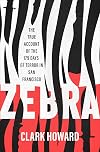
Zebra
by Clark Howard
On This Page
Description
Edgar Award Finalist: The true story of a string of brutal crimes committed in the name of religious fanaticism and racial hatred in 1970s San Francisco. In the early 1970s, a small band of well-dressed, clean-cut African American men began terrorizing the residents of San Francisco with guns and machetes. Their victims ranged from a teenage Salvation Army cadet to a middle-aged Jordanian grocer to an eighty-one-year-old janitor. The streets became deserted and tourism plunged. It took show more months before the culprits could be identified, with the help of an informer. They were members of a Black Muslim cult aspiring to earn the title "Death Angel" by slaughtering white victims. Combining history and dramatic recreations, this is the "repellent but riveting" in-depth story of a horrifying killing spree and the fanatical hatred that drove it--and the SFPD's desperate quest to take the culprits down (Kirkus Reviews). "[Clark Howard's] pounding narrative meticulously describes the so-called Zebra killings of 1973-74, when 23 white San Franciscans were murdered or maimed by a group of Black Muslim extremists. In the retelling, the cold jargon of police files leaps starkly to life." --Time show lessTags
Recommendations
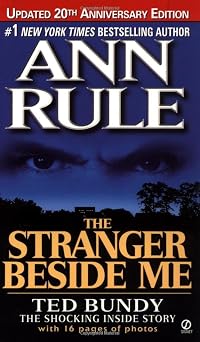
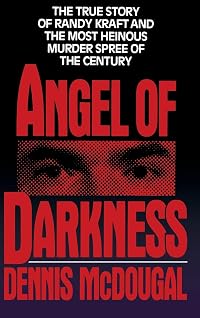

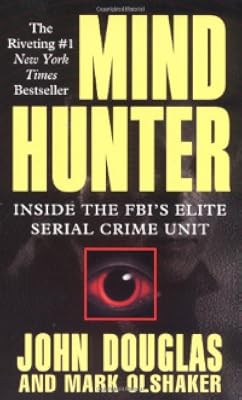

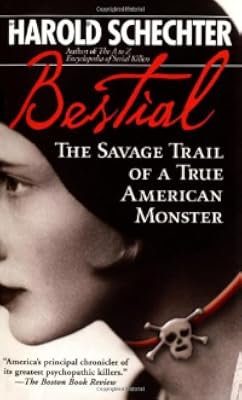















Member Reviews
Zebra, by Clark Howard, is a true-crime novel based on the so-called Zebra killings in San Francisco in 1973 and 1974. During that time, a group within the Nation of Islam calling itself the Death Angels killed or wounded more than twenty whites. That, at any rate, was the number for the four men convicted and one who snitched. The book strongly suggests that such killings were encouraged by certain higher-ups in the Nation and were part of a spree going on across California, designed either to spark a race war or drive whites out of California as a whole and San Francisco in particular. The book was of course a quite interesting account and Howard's prose is highly readable, though of course knowledge of the case was limited to what show more came out in court. Even Howard hints that his portrayal of the informer, Anthony Hopkins, was probably a little too positive. "Notice how everyone's a killer except him?" one of the investigators observes when it comes to his confessions. But given that the voice at trial was Hopkins', and Hopkins was interviewed for the book, it would be hard for things to be otherwise. The book is also probably written a little too close to the time for it to properly contextualize what was going on. The Zodiac killer, the Black Panthers, Black Liberation Army, Symbionese Liberation Army, Vietnam War, etc., etc. (including many factors of which I am no doubt ignorant), which had such an influence on the climate at the time are scarcely mentioned. Part of that is no doubt due to length -- the book is already over four hundred pages -- and partly due to the desire to tell a story. But one suspects that Howard could assume in 1979 that the reader knew all about such things, which have largely been forgotten today. At any rate, on the whole, if one enjoys true crime novels, this one's worth looking into. show less
I read this years ago, but some scenes remain vivid in my mind. A very disturbing book about a racially-motivated murder spree in San Francisco.
Ratings
Members
- Recently Added By
Author Information

48+ Works 357 Members
Awards and Honors
Awards
Common Knowledge
- Important places
- San Francisco, California, USA
Classifications
- Genres
- Nonfiction, General Nonfiction, Politics and Government, Religion & Spirituality, History
- DDC/MDS
- 364.1 — Society, government, & culture Social problems and social services Crime Criminal offenses
- LCC
- HV6534 .S3 .H68 — Social sciences Social pathology. Social and public welfare. Criminology Social pathology. Social and public welfare. Criminology Crimes and offenses
Statistics
- Members
- 81
- Popularity
- 391,305
- Reviews
- 2
- Rating
- (3.70)
- Languages
- Czech, English
- Media
- Paper, Ebook
- ISBNs
- 6
- ASINs
- 2